- Stay Connected

Socialize


 Abraham Lincoln
If given the truth, the people can be depended upon to meet any national crisis...
Abraham Lincoln
If given the truth, the people can be depended upon to meet any national crisis...

 Guildford news...
for Guildford people, brought to you by Guildford reporters - Guildford's own news service
Guildford news...
for Guildford people, brought to you by Guildford reporters - Guildford's own news service
Birdwatcher’s Diary No.354
Published on: 25 Aug, 2026
Updated on: 25 Aug, 2026
By Malcolm Fincham
Moving into August, high pressure remained static over southern areas of the UK.
Dry conditions continued with temperatures increasing surpassing the mid-thirties Celsius as we approached the middle of the month.
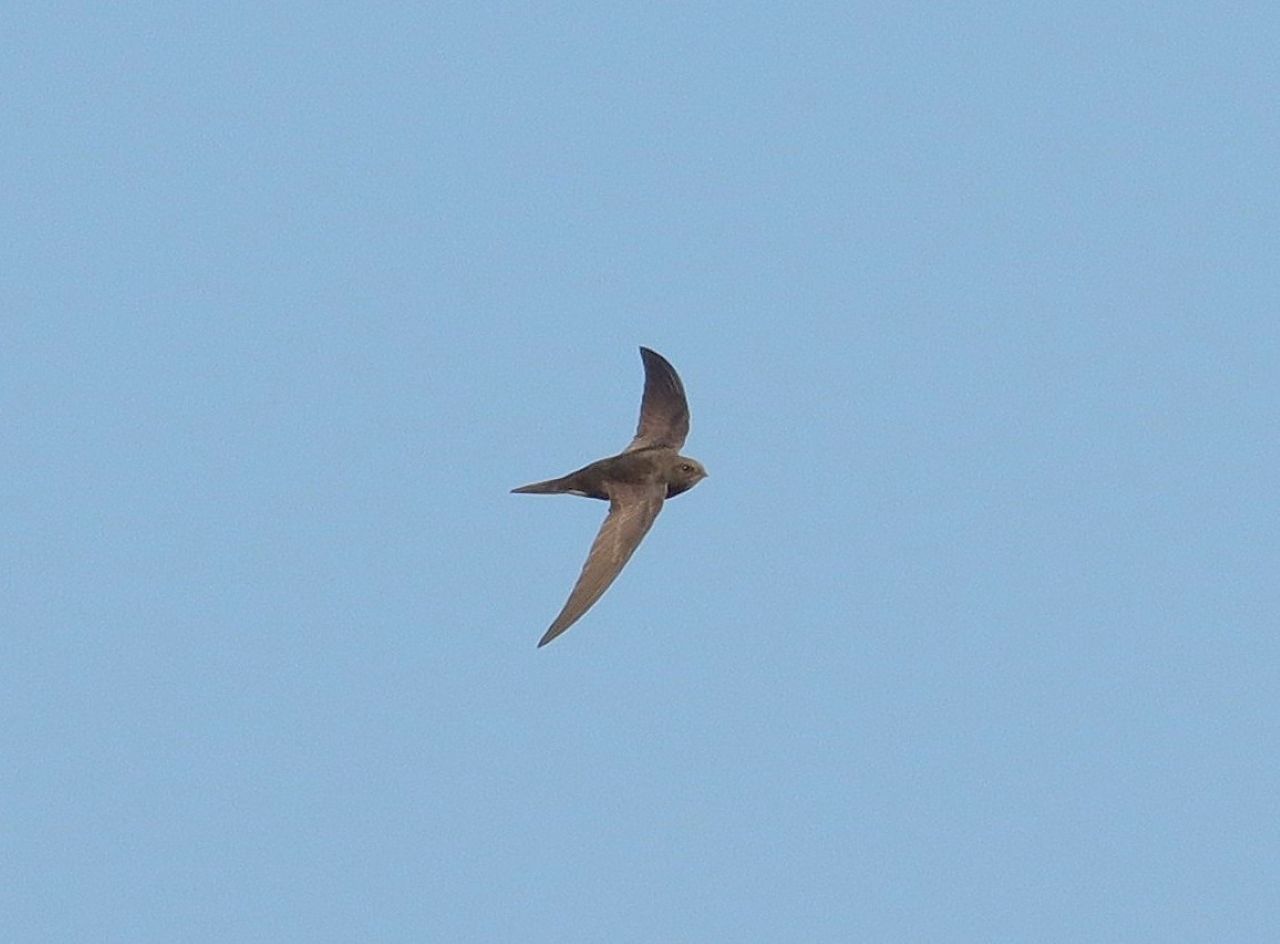
Swift.
By the end of the first week of the month nearly all of the local swifts had departed.
The last recorded parent and fledgling, 42 days after hatching, leaving the nest box on August 9 after nightfall to make their journey back to Africa.
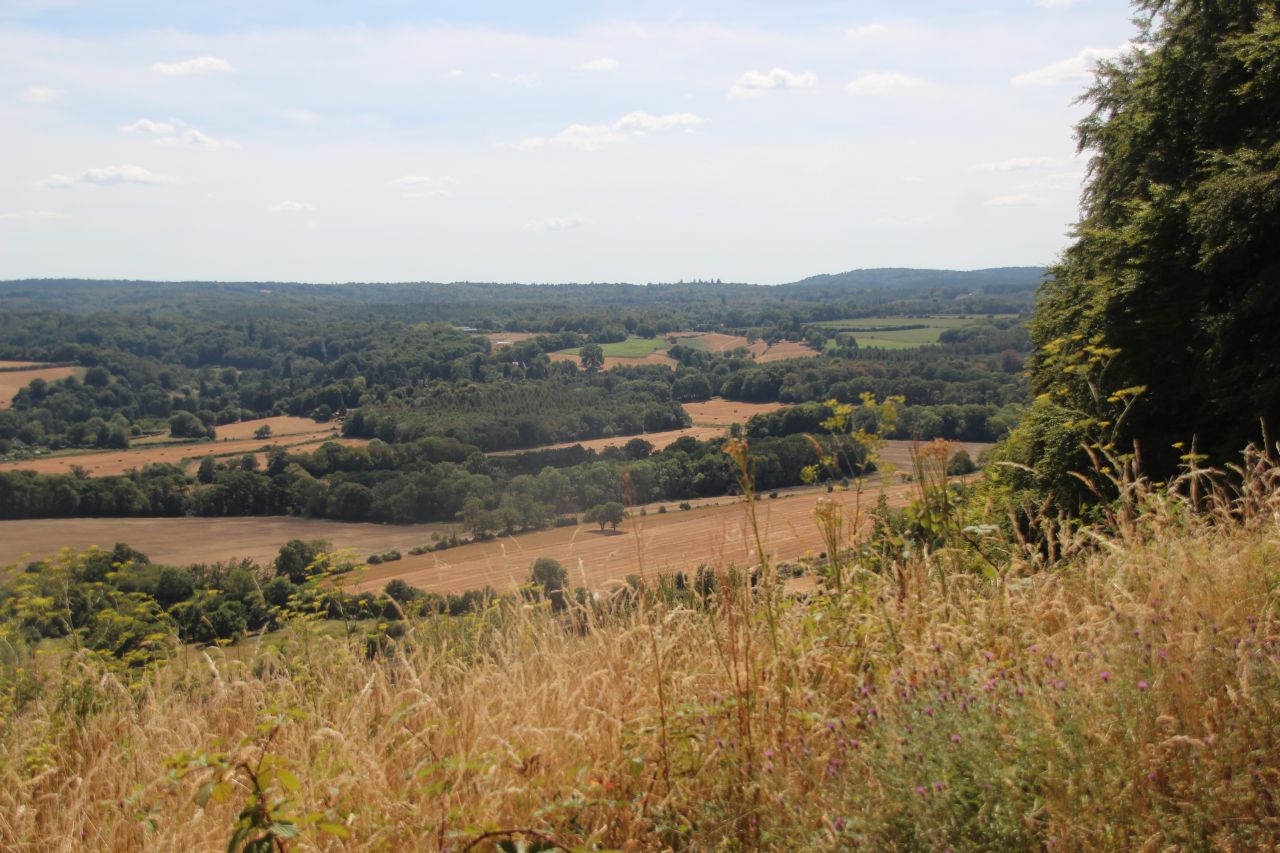
Denbies Hillside.

Painted lady butterfly, Denbies Hillside.
A return to Denbies Hillside at Ranmore Common near Dorking early in the month as temperatures began to rise, allowed a continued influx of painted lady butterflies.
Clouded yellow butterflies could also be viewed, seemingly present at most locations visited, counting at least six as we traversed the hillside.

Clouded yellow butterfly nectaring on scabious flowers at Denbies Hillside.
Even capturing a photo of one as it settled on a flowering scabious plant.

Adonis blue butterfly on Denbies Hillside.
A second brood of Adonis blues had begun to emerge, noting a dozen or so males in flight by their iridescent sky blue wings, even getting photos of a few that had briefly settled.

Chalkhill blues mating, Denbies Hillside.
Numerous chalkhill blues could be viewed along the hillside with some already seen mating.
My main hope was to get some better angled photos of silver-spotted skippers as I had only photographed them from above in my previous report.
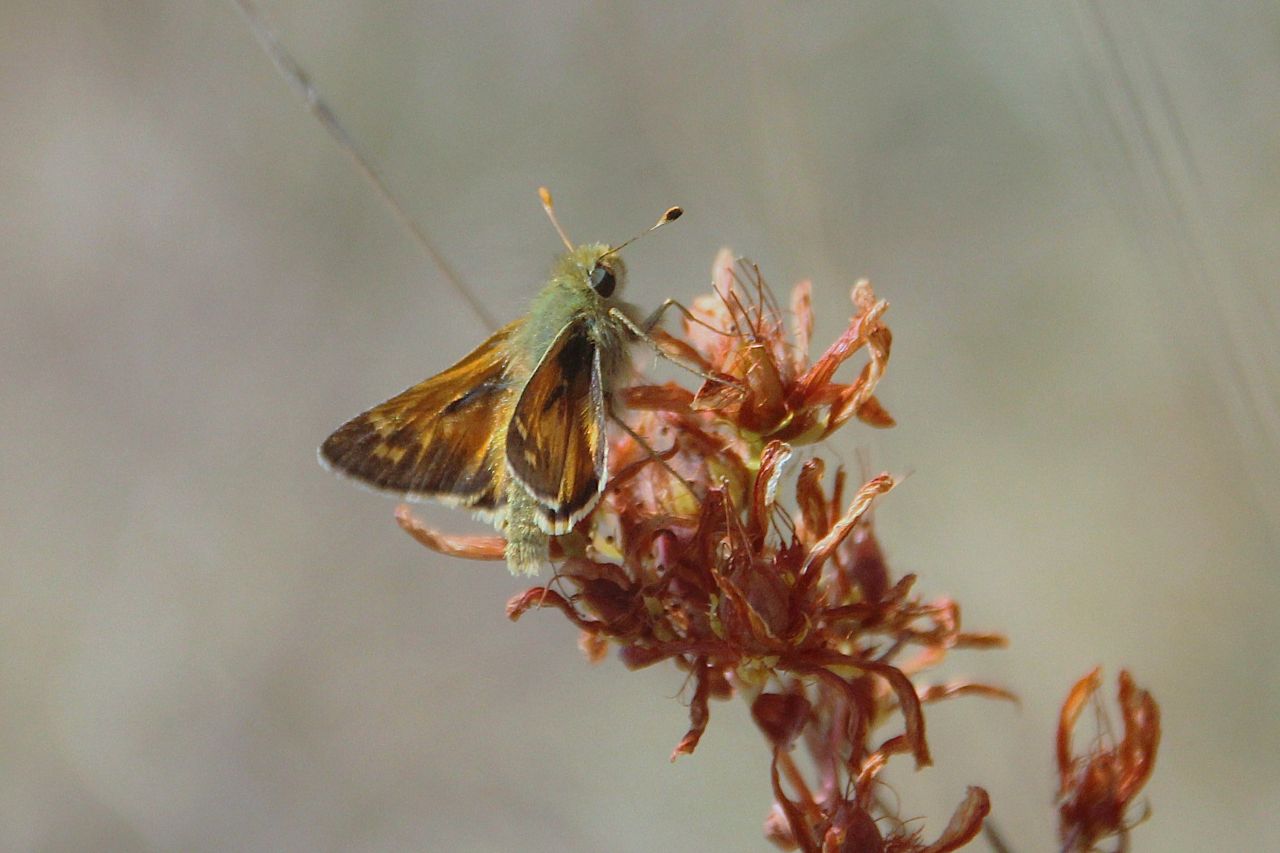
Silver-spotted skipper butterfly on Denbies Hillside.
A few successful side-view shots on this occasion allowed me to show the spots on their underwings for which they get their name.
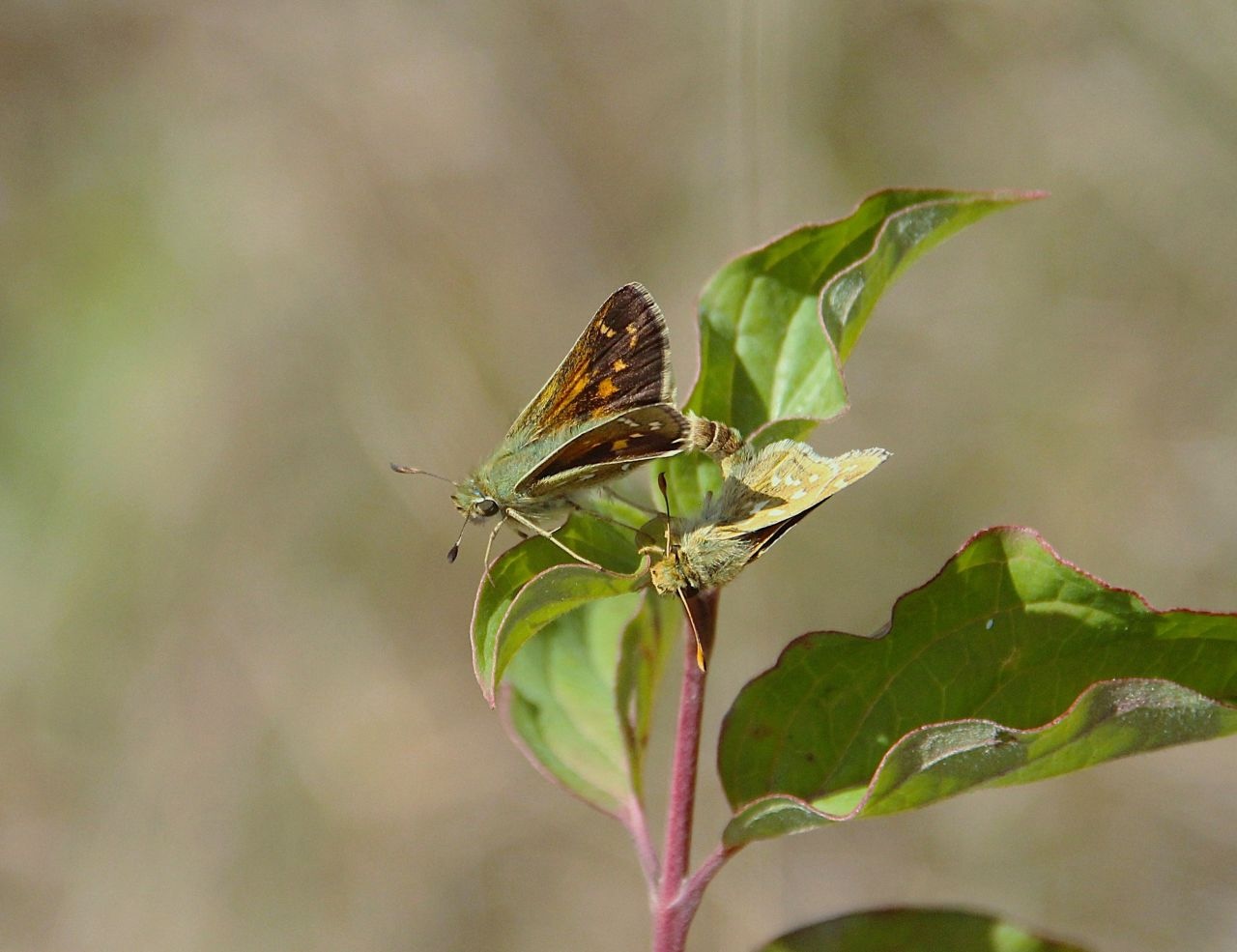
Silver-spotted skipper butterflies mating on Denbies Hillside.
Even getting a few photos of a male and female pairing up.
On August 4 I continued to be delighted by the sightings of the white storks that have taken up residence in and around the Slyfield Industrial Estate.

White storks at Slyfield.
On this occasion within what is to be part of the Weyside Urban Village housing complex and next to what is currently the recycling centre.

White storks at Slyfield.
Thus allowing numerous opportunistic photos of at least seven as they flew about the area often settling on lamp-posts and recently erected directional signposts.

White stork at Slyfield.
Although their departure is now imminent, as they contemplate their migration south for the winter, reports of as many as 24 were recorded at their favoured roosting tree in a field on Bowers Court Farm.
I being one of many to welcome them if they return next spring.

Red kite at Slyfield.
The recycling depot is also a favoured spot for me to photograph the many red kites that circled among the large number of resident gulls present.
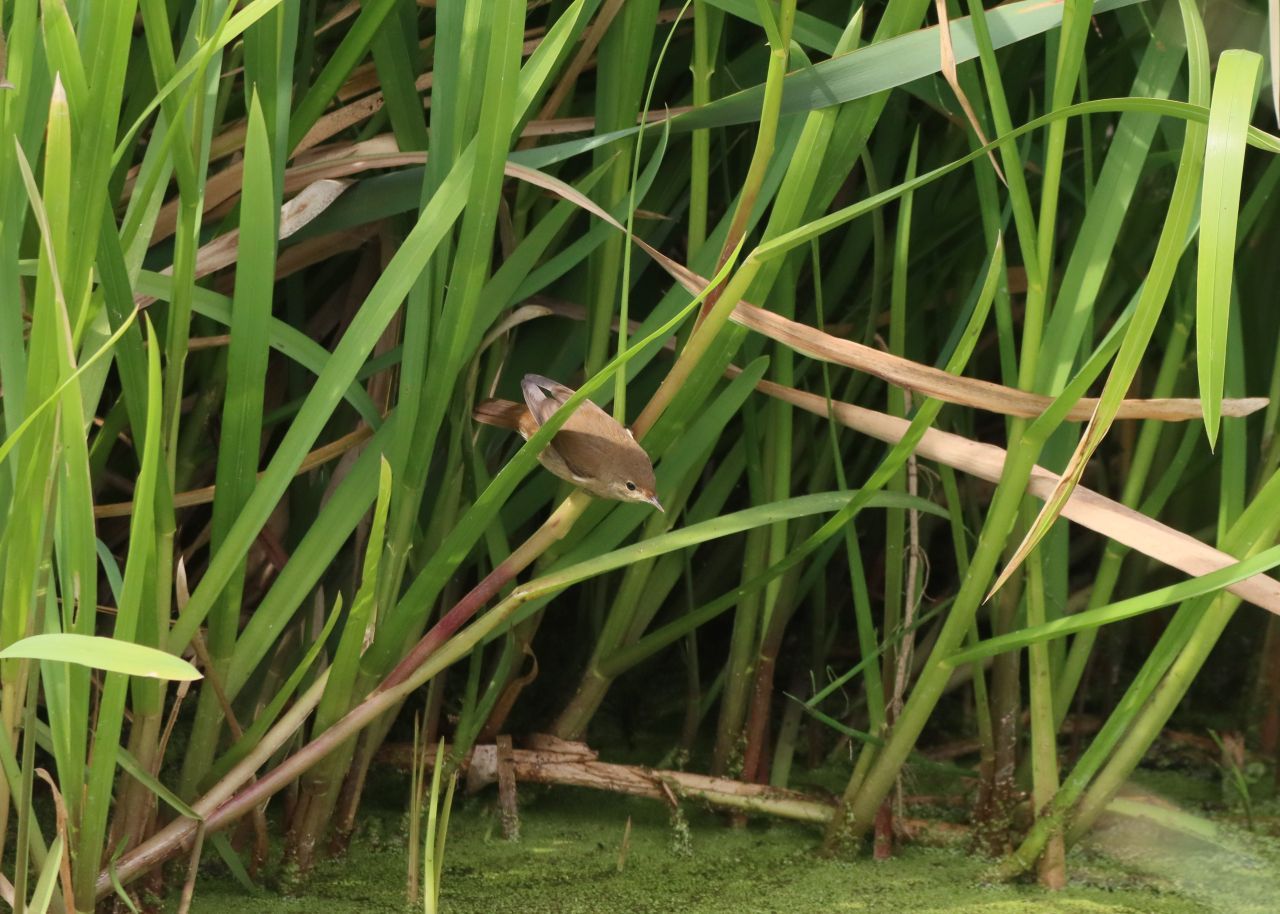
Reed warbler, Riverside Nature Reserve.
At the nearby Riverside Nature Reserve near Burpham during the first week of the month, a reed warbler allowed me a few photos as it flitted about the reeds at the back of the small pond beside the boardwalk.

Clouded yellow butterfly nectaring on purple loosestrife by the boardwalk at the Riverside Nature Reserve.
What was to be my second clouded yellow butterfly at the reserve could also be viewed and photographed. And like the previous one, seen nectaring on the still flowering purple loosestrife beside the boardwalk.

Painted lady butterfly on flowering water mint by the boardwalk at the Riverside Nature Reserve.
While painted lady butterflies also continued to be seen about the reserve.
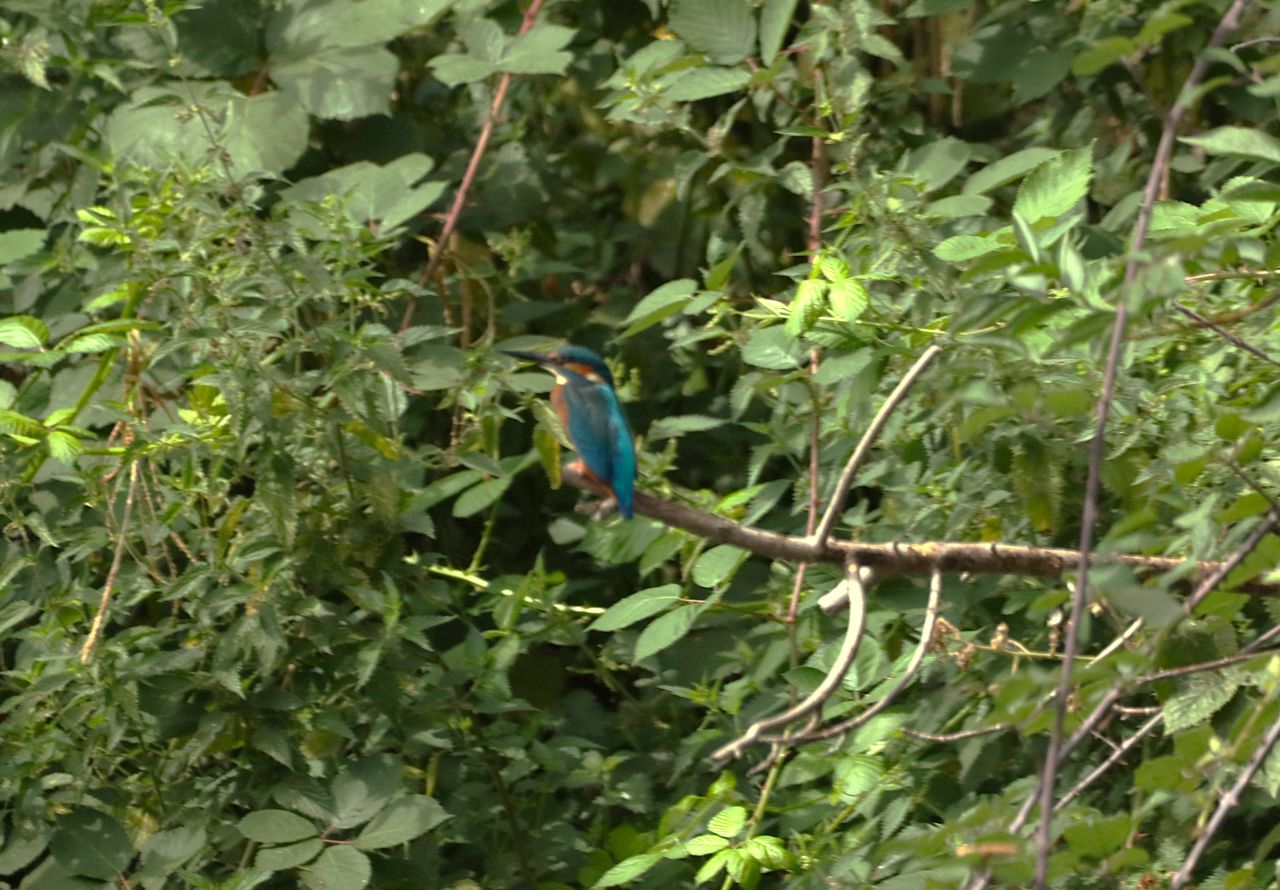
Kingfisher, Riverside Nature Reserve.
My first photo in recent months of a kingfisher came my way having heard it pass by me and perch up on a branch across the River Wey.
Later seeing two flying across Stoke Lake, but unable to photograph them.
On August 12 a fire broke out in the field at the southern side of Stoke Lake.
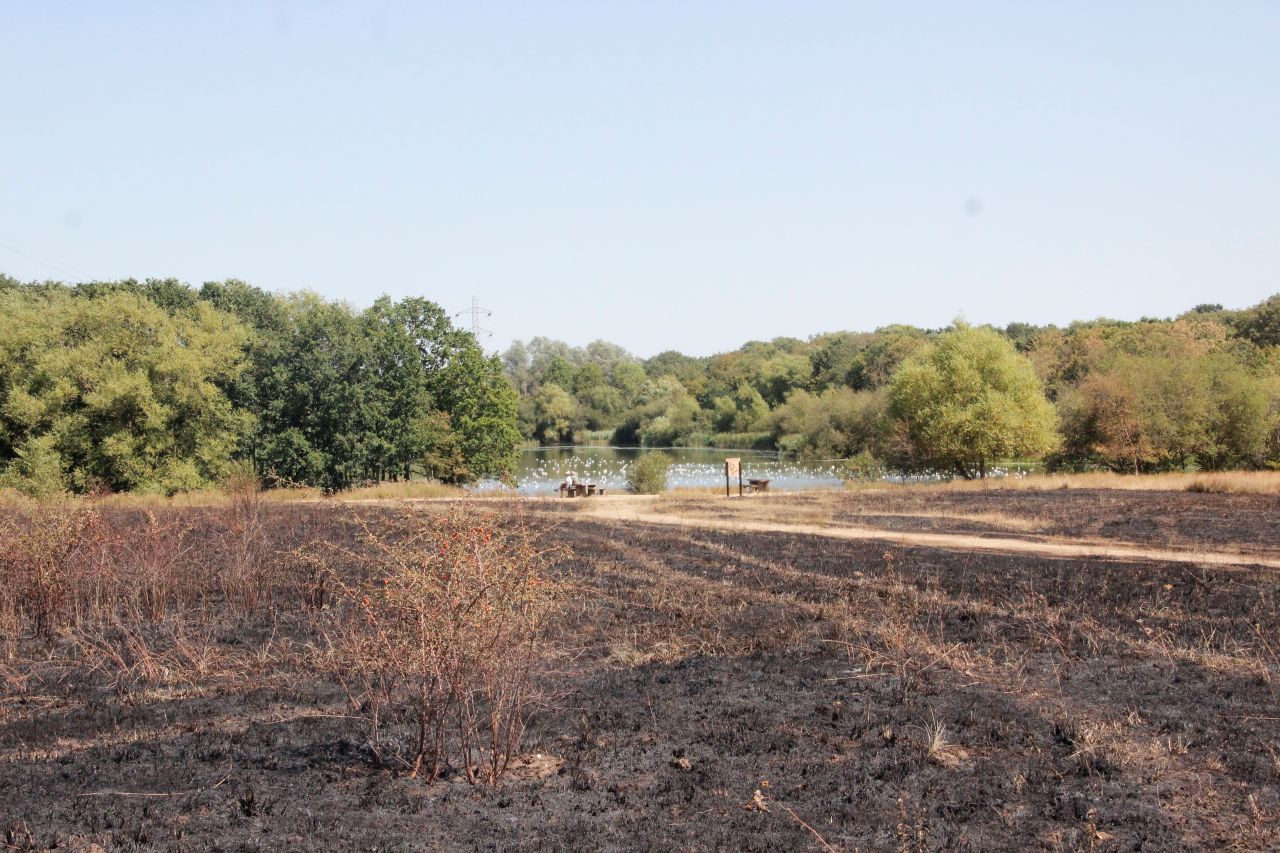
Burnt landscape at the southern end of Stoke Lake.
Looking suspiciously like arson and seemingly becoming a trend, as with many that have broken out in what had become bone-dry countryside areas throughout southern and midland counties of the UK.

Common sandpiper on the island at Stoke Lake.
From the lakeside a common sandpiper could be viewed on the island, stopping off on its migration south from its more northerly breeding grounds.

Common sandpiper on the near-side bank of Stoke Lake.
With some patience I was also able to get a few closer shots of it as it flew low across the water and settled on the near-side bank of the lake.
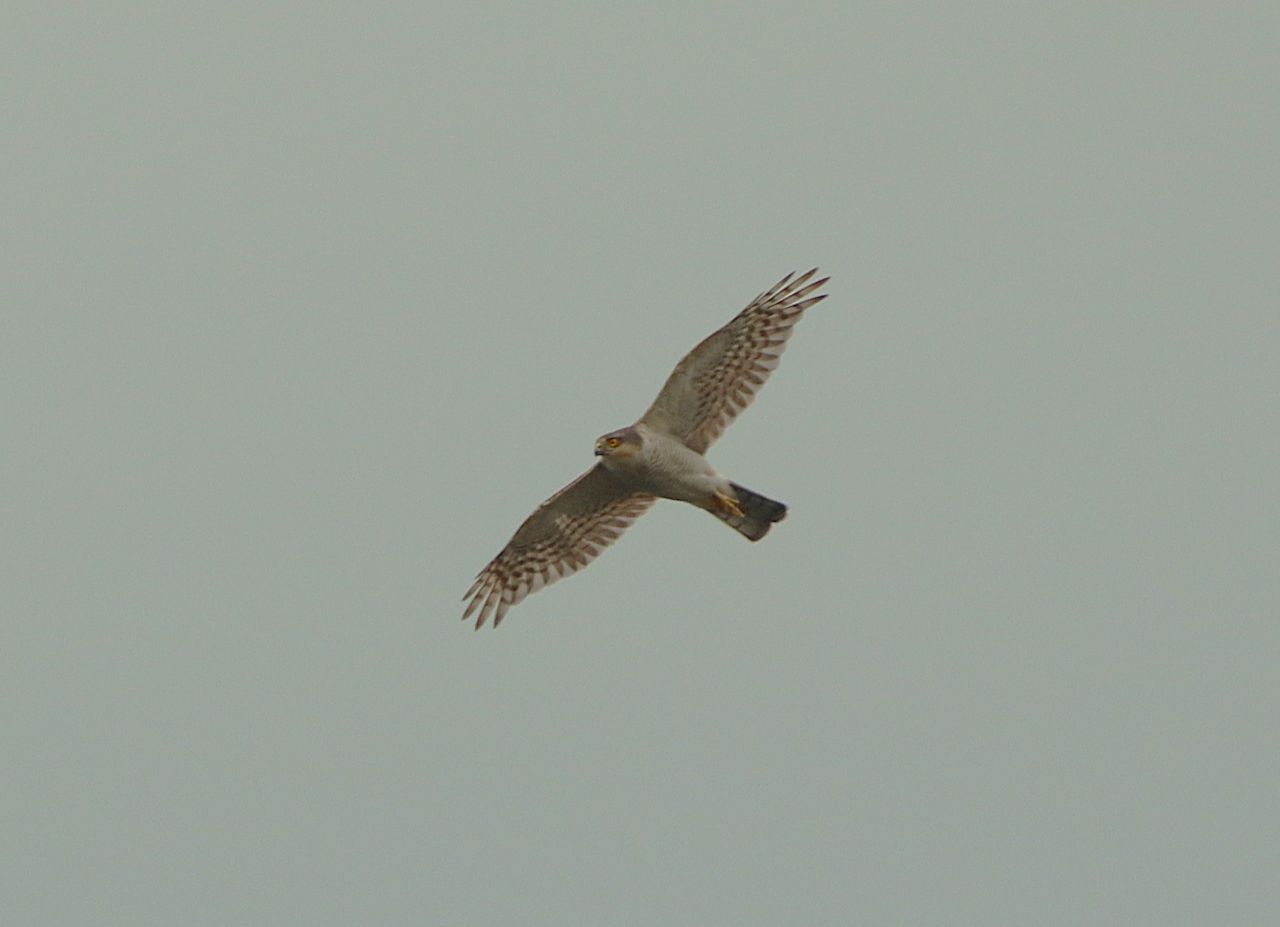
Sparrowhawk, Riverside Nature Reserve.
Above the lake a sparrowhawk circled overhead.
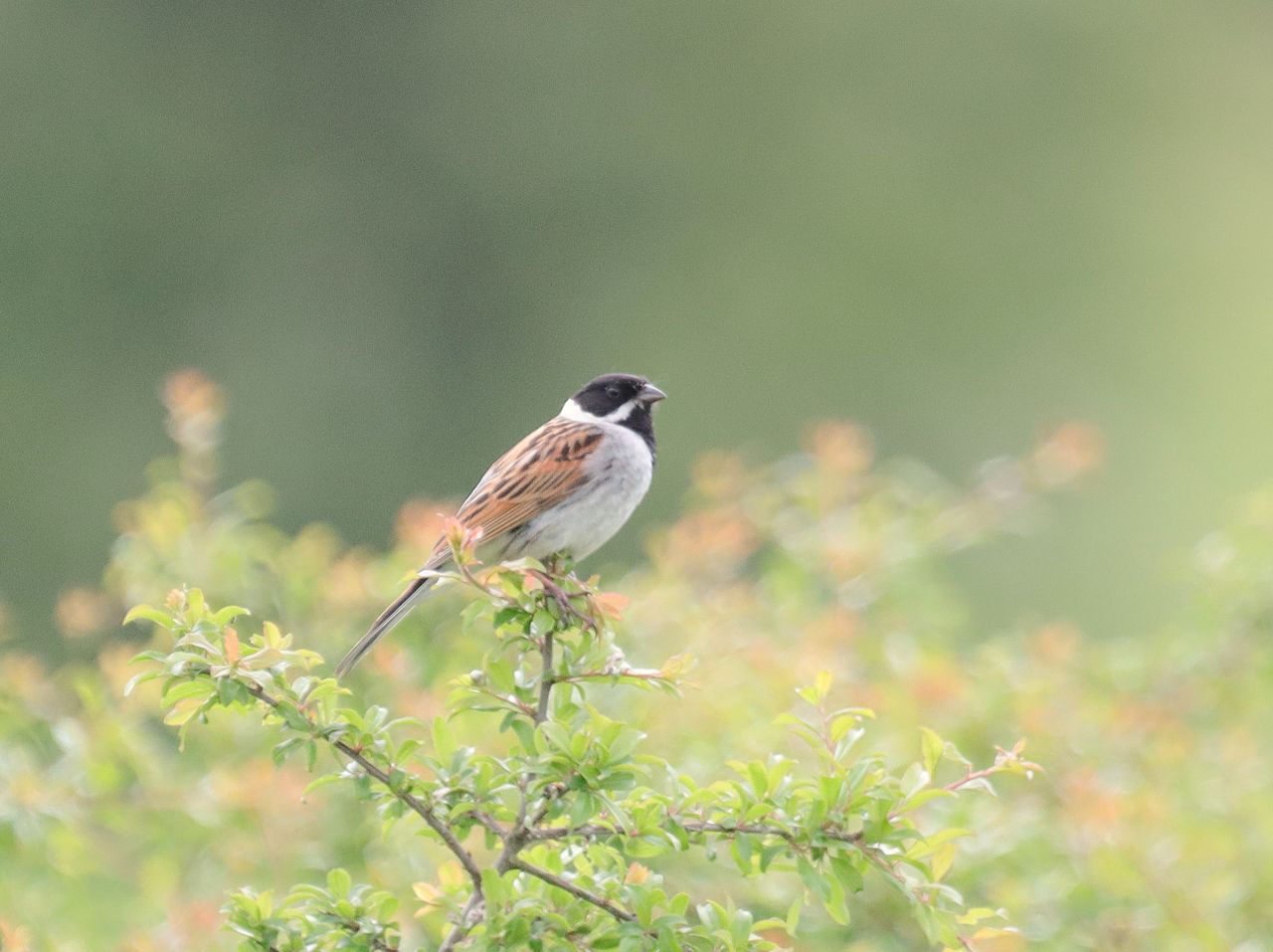
Reed bunting, Riverside Nature Reserve.
And a reed bunting added to the day’s photos.
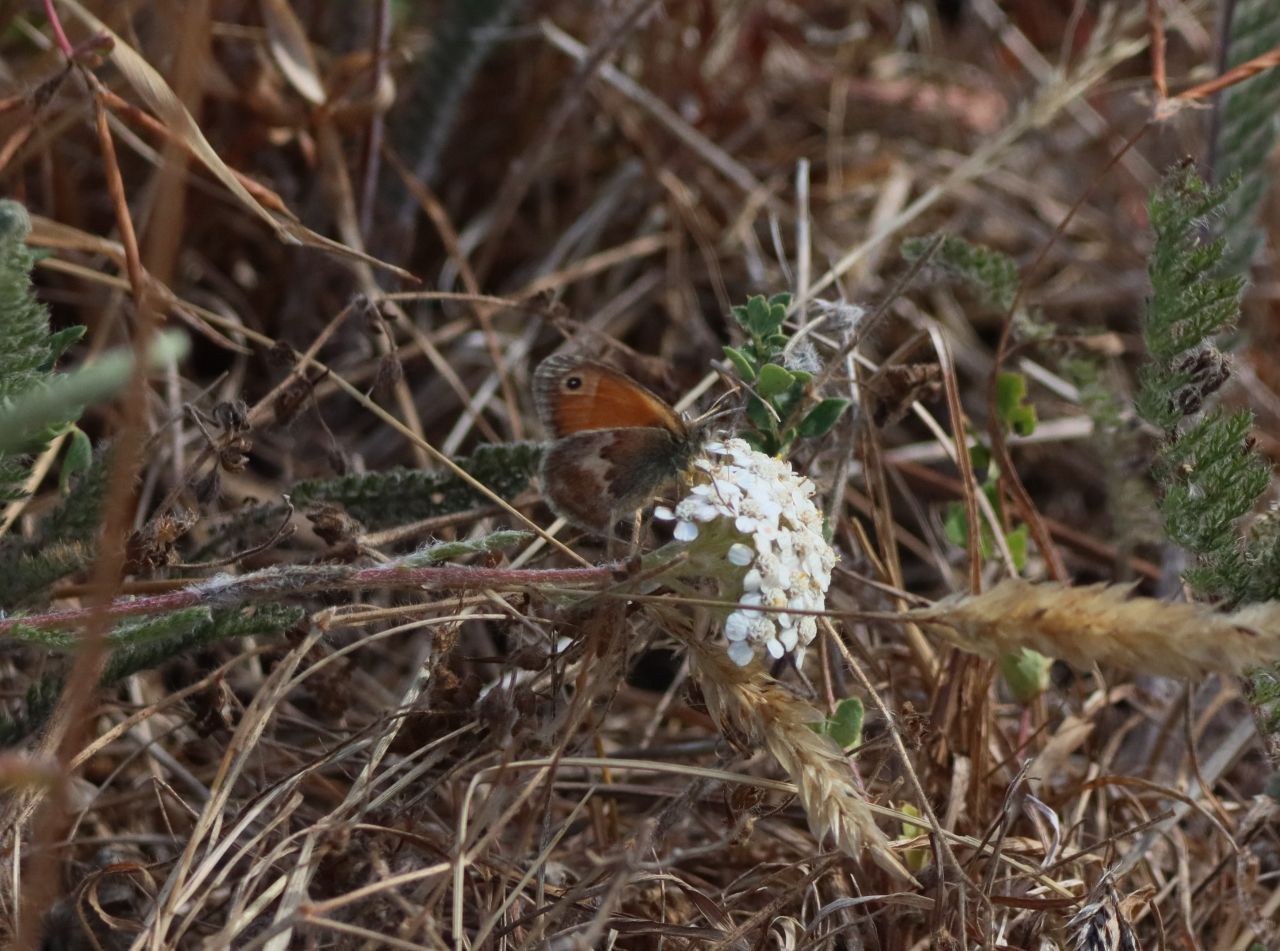
Small heath butterfly, Whitmoor Common.
On my visits to Whitmoor Common, and as at most places visited in recent weeks, small heath butterflies had started to become the most dominant species seen.

Clouded yellow butterfly nectaring on a thistle in the old horse field, Whitmoor Common.
Once again clouded yellow butterflies continued to be seen in the old horse field, counting at least four each time I visited. This one nectaring on a thistle.

Common blue butterfly in the old horse field, Whitmoor Common.
Also still present were common blue butterflies.
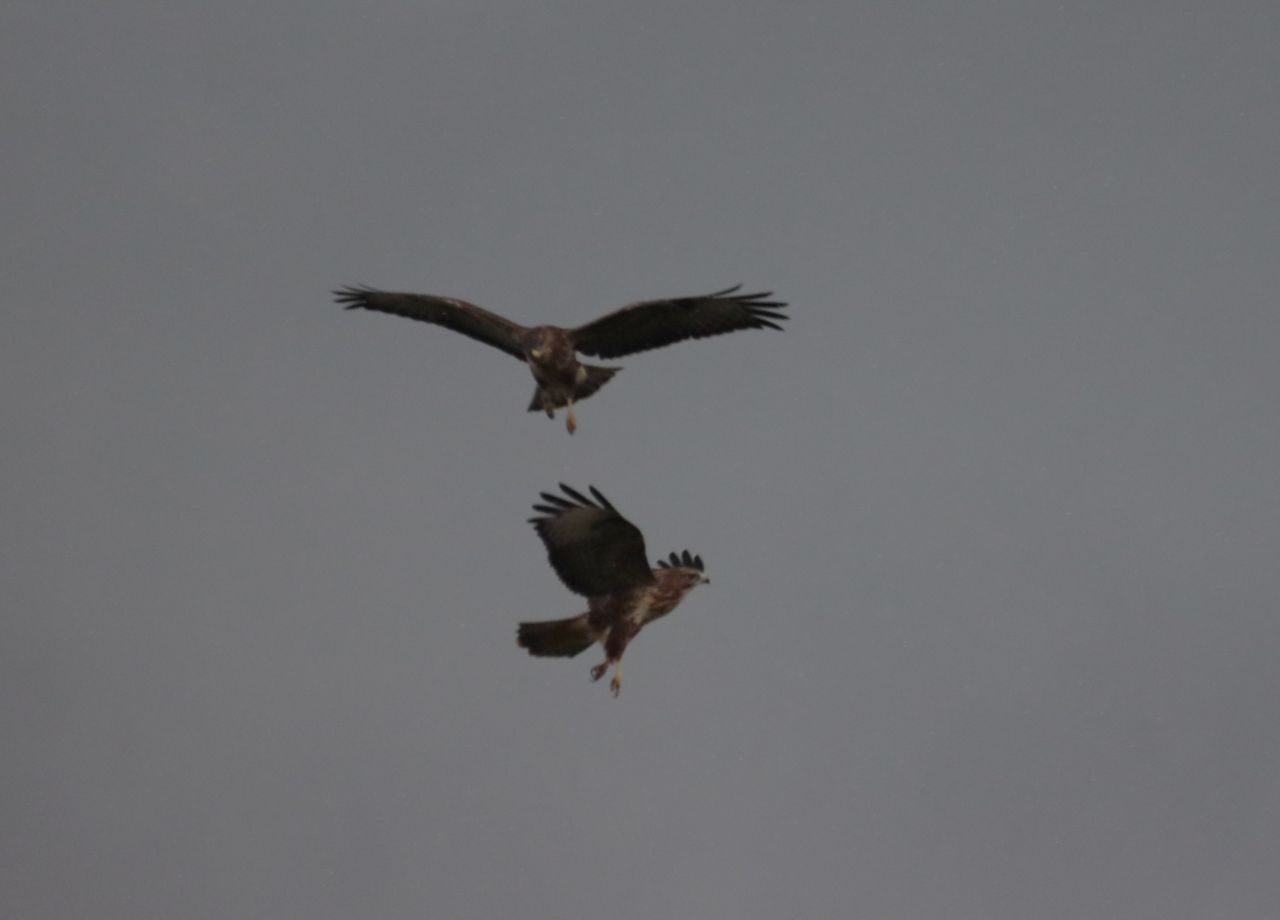
Common buzzards, Whitmoor Common.
Two common buzzards could regularly be viewed flying together on the other side of the field just above the treeline.
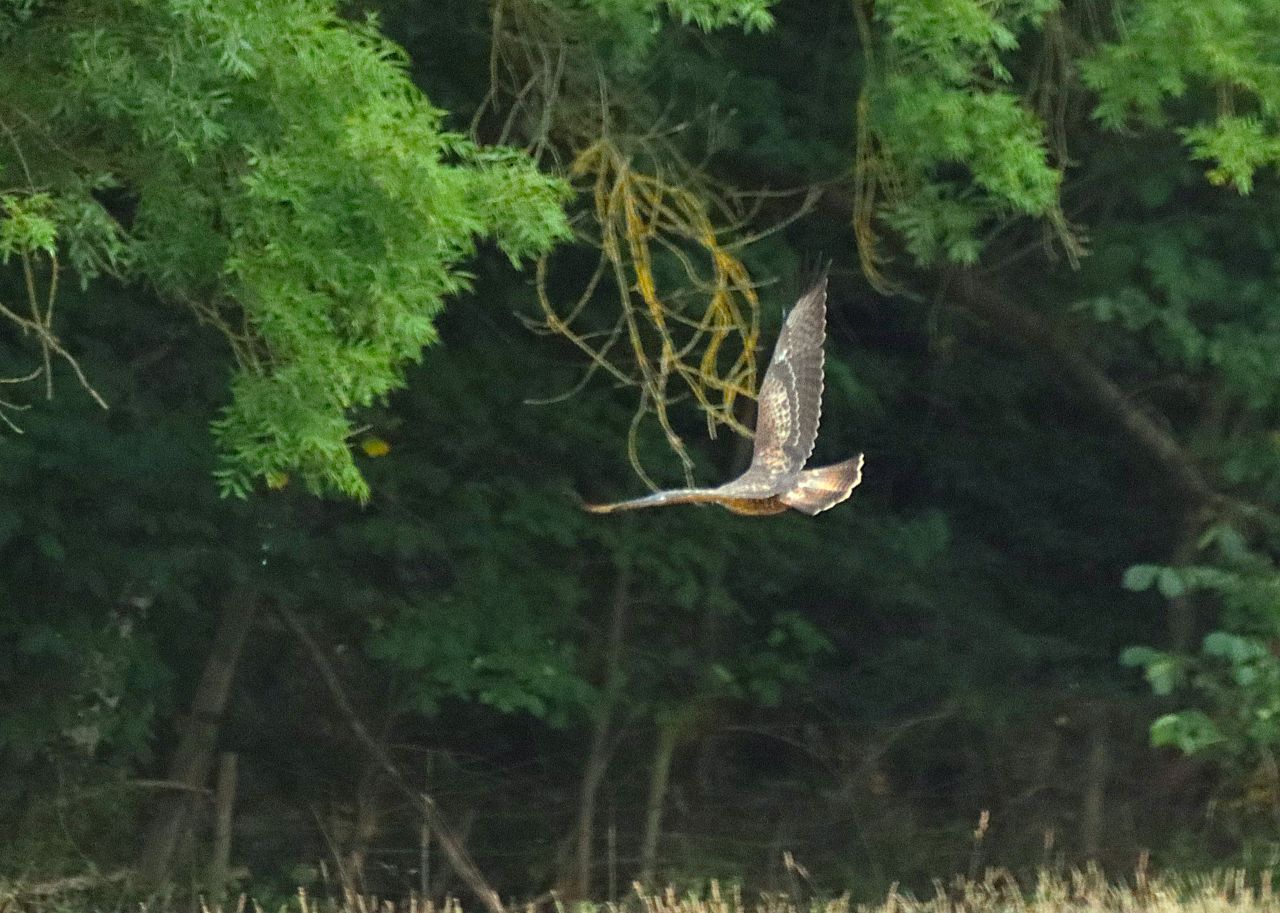
Common buzzard (possibly a juvenile), Whitmoor Common.
While what looked and sounded to be a juvenile could occasionally be seen flying low across the field.
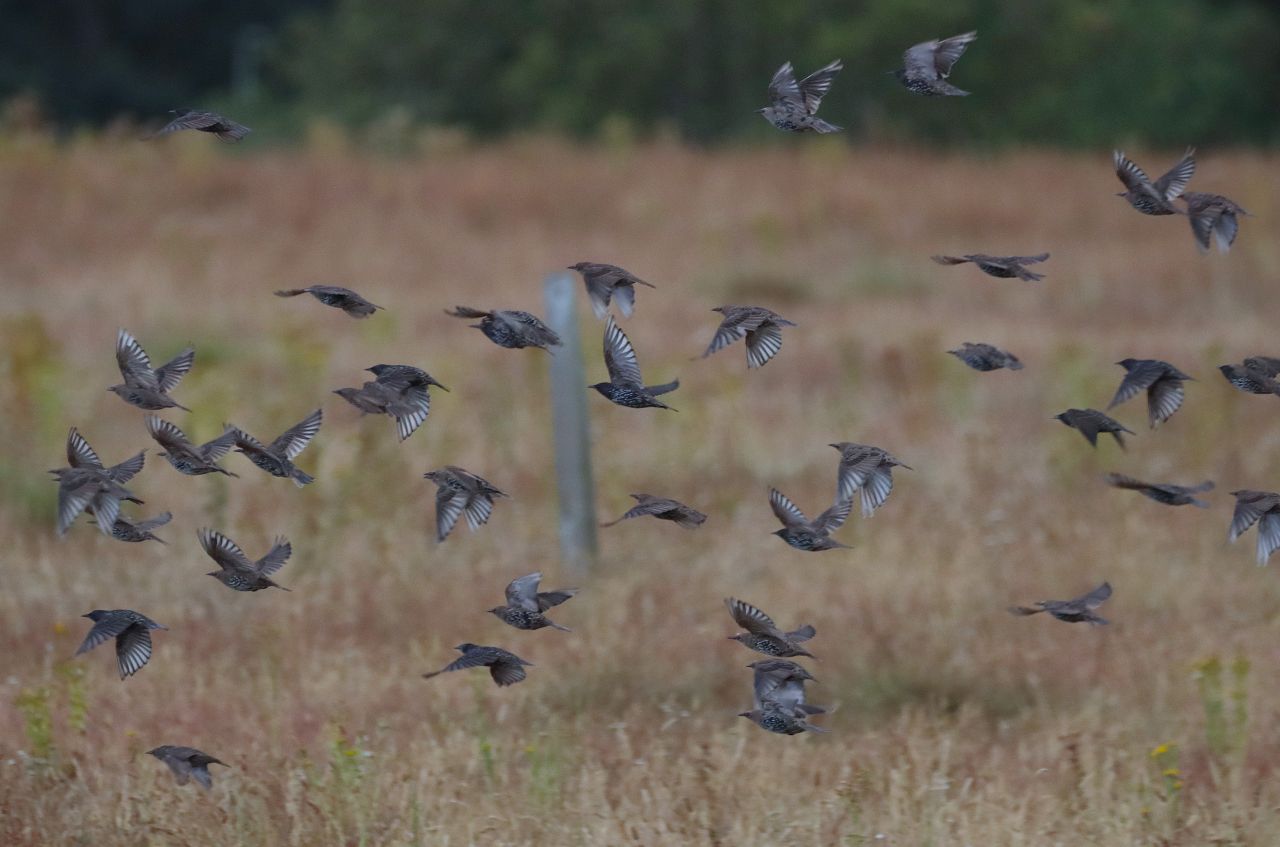
Starlings, Whitmoor Common.
A group of 40 or so starlings gathered about the field, finishing off the remaining blackberries in the large clump of brambles.
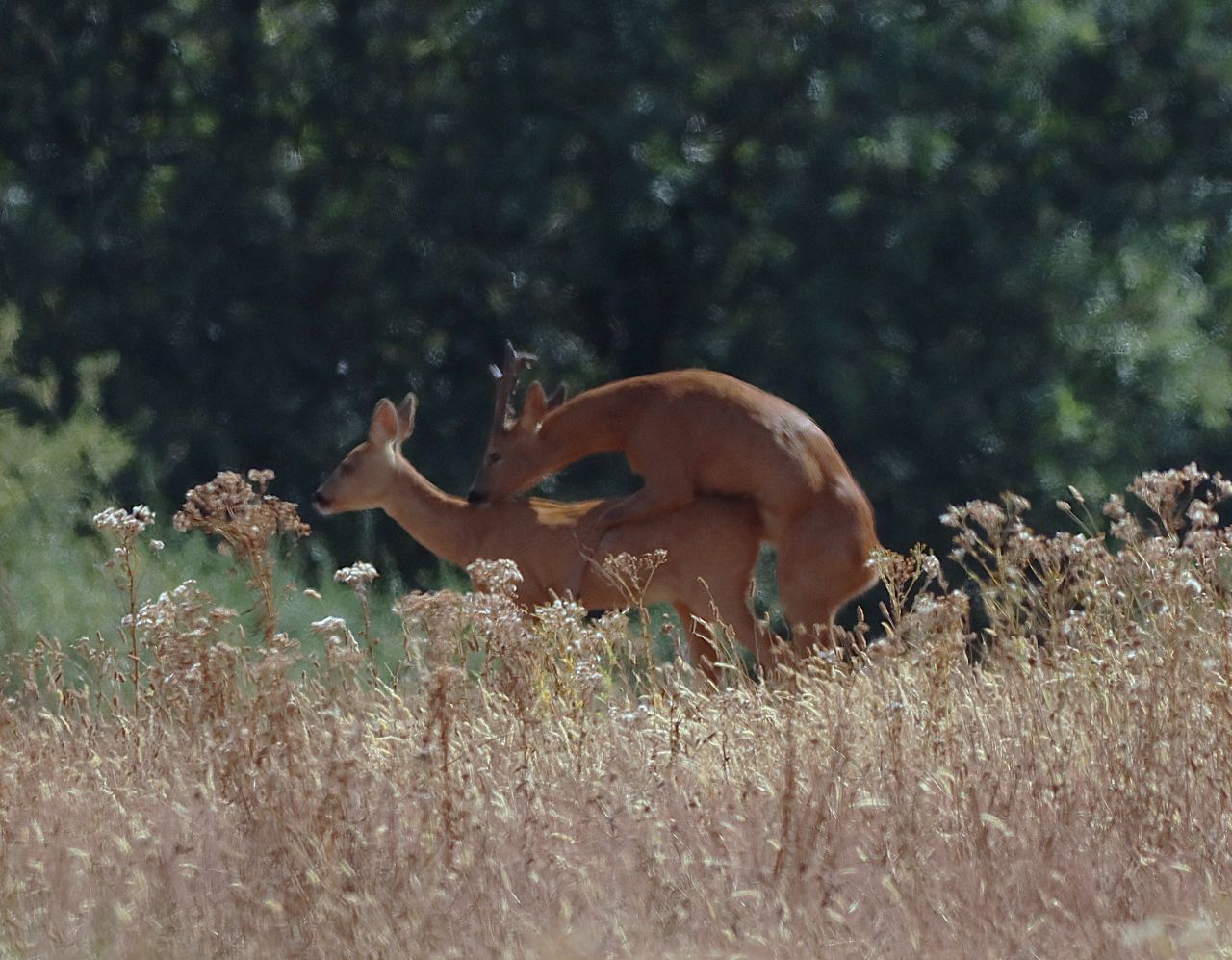
Roe deer mating, Whitmoor Common.
On one occasion a pair of roe deer could be seen briefly mating out in the field.
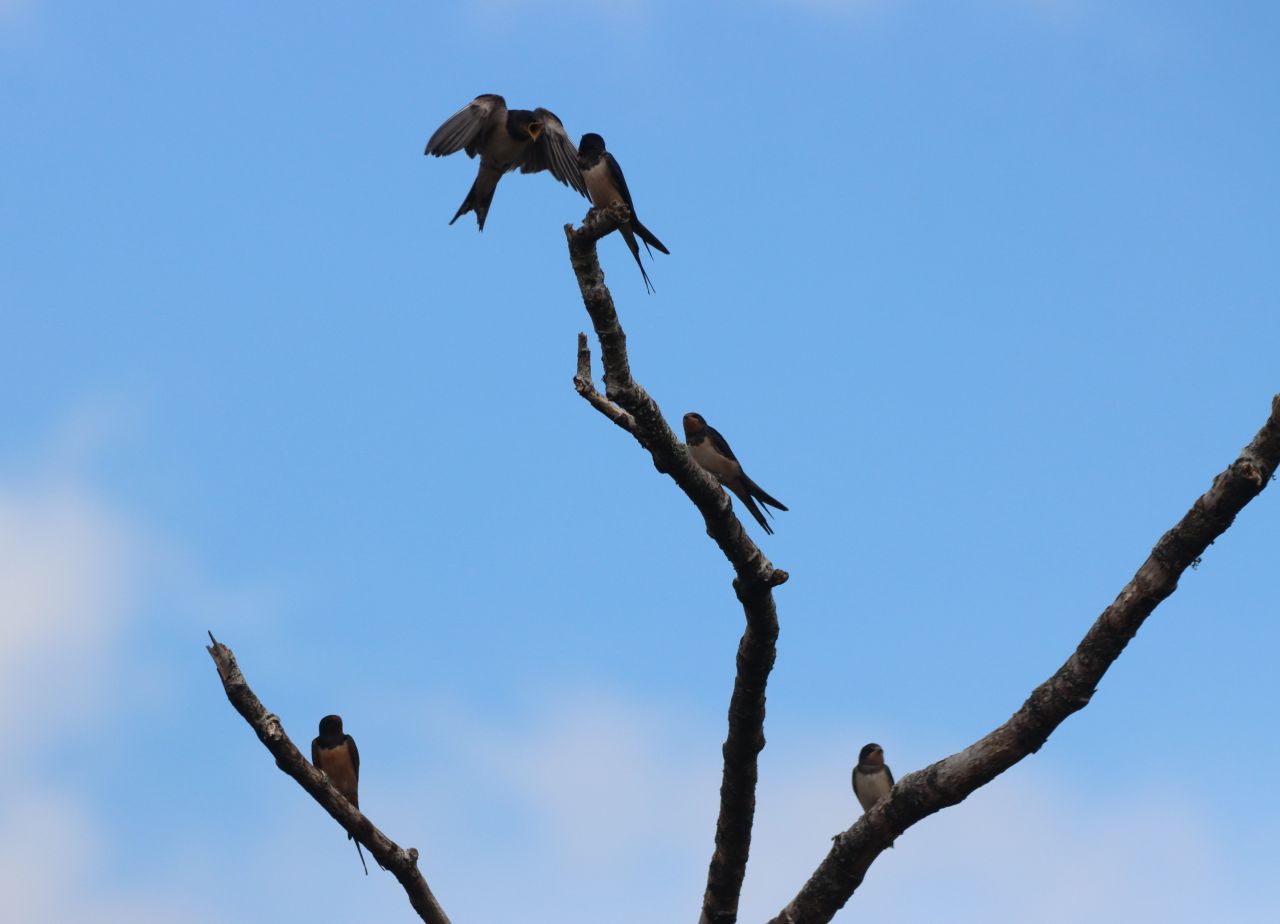
Swallows, Whitmoor Common.
On the heathland at Whitmoor a few families of swallows had begun to move through, stopping a while to feed up on insects over the gorse and around the silver birches.

Swallow feeding its young, Whitmoor Common.
The youngsters often resting up and being fed by their parents, while others could be seen feeding on the wing.
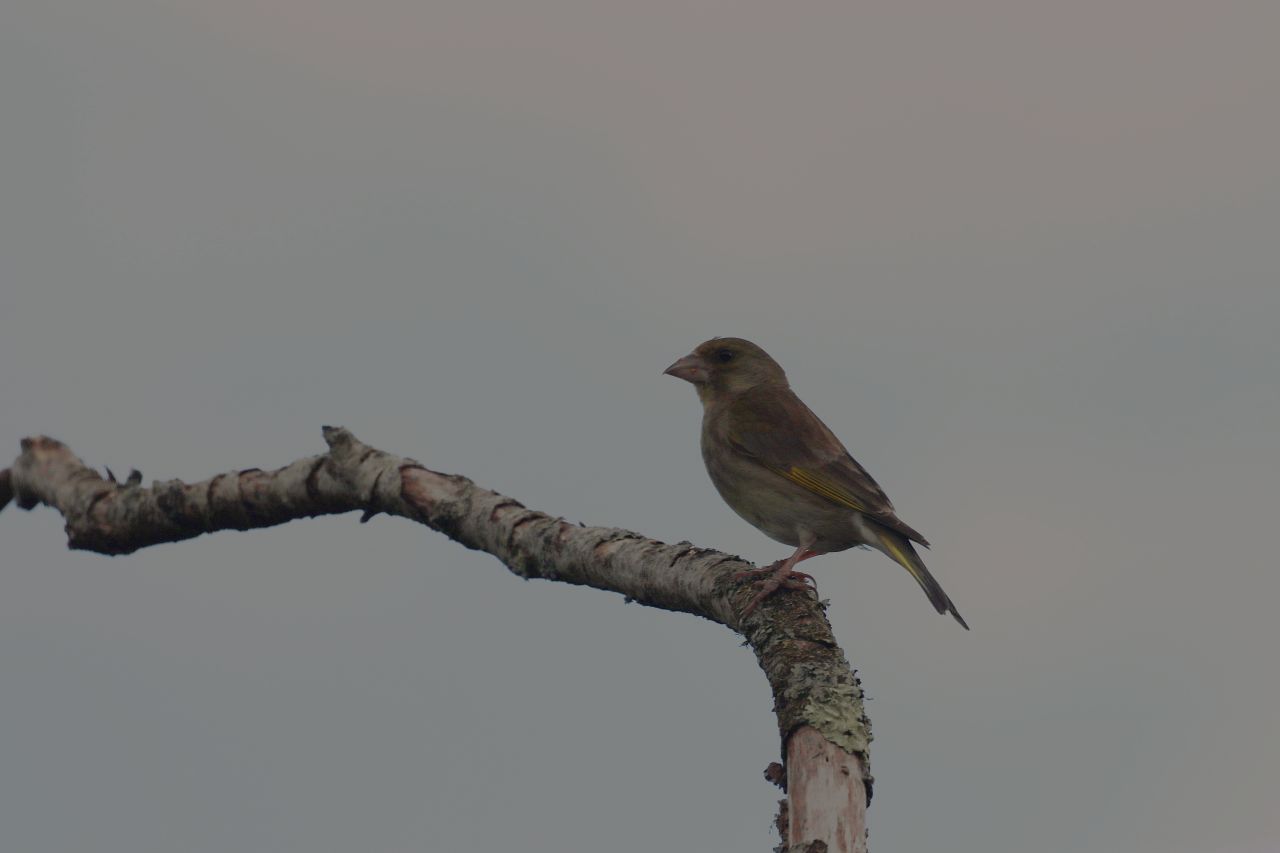
Greenfinch, Whitmoor Common.
A pair of greenfinches could be viewed in the same proximity as the swallows.
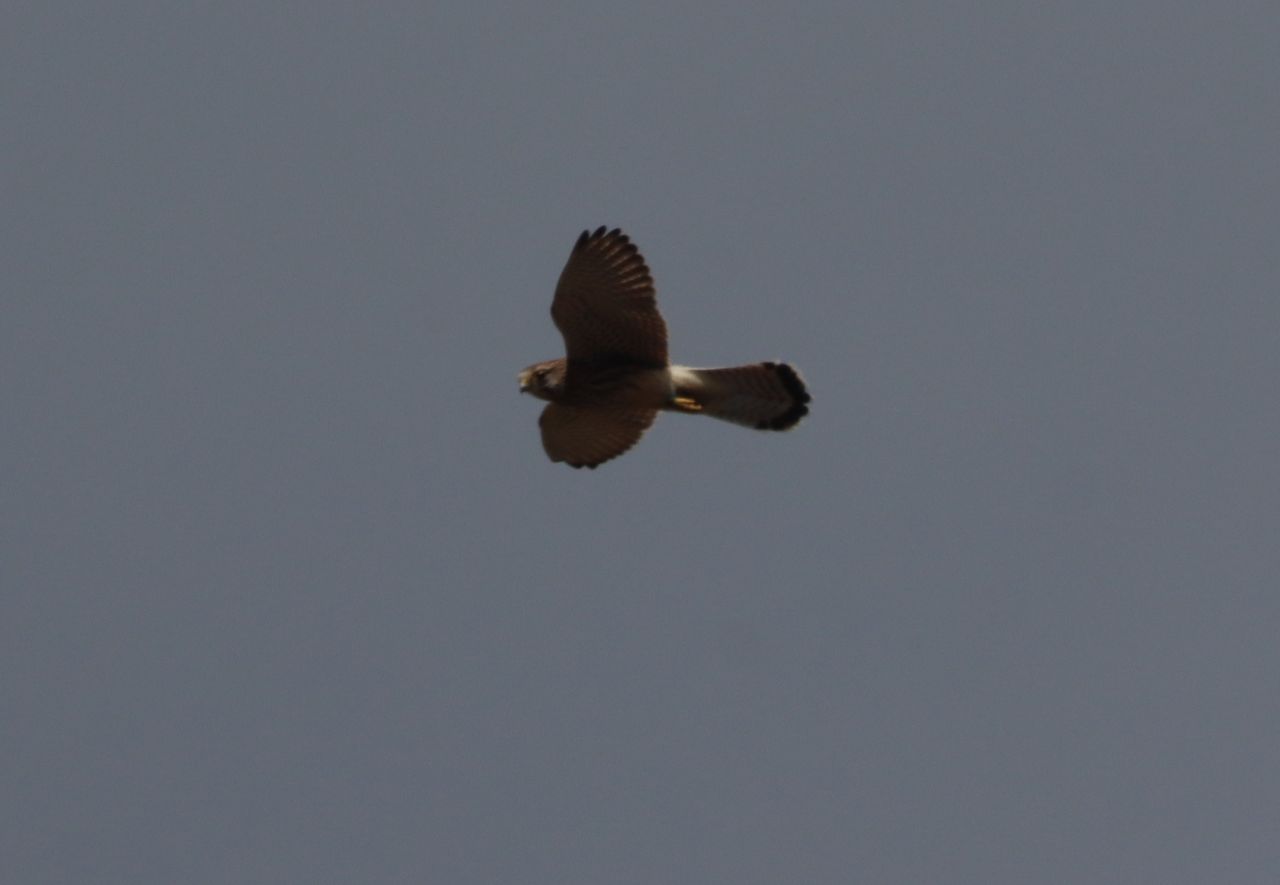
Kestrel, Whitmoor Common.
While across the heath a kestrel passed through.

Stonechat on utility wire, Whitmoor Common.
Families of stonechats were visible, photographing a male perched on the utility wires that run over the heathland.
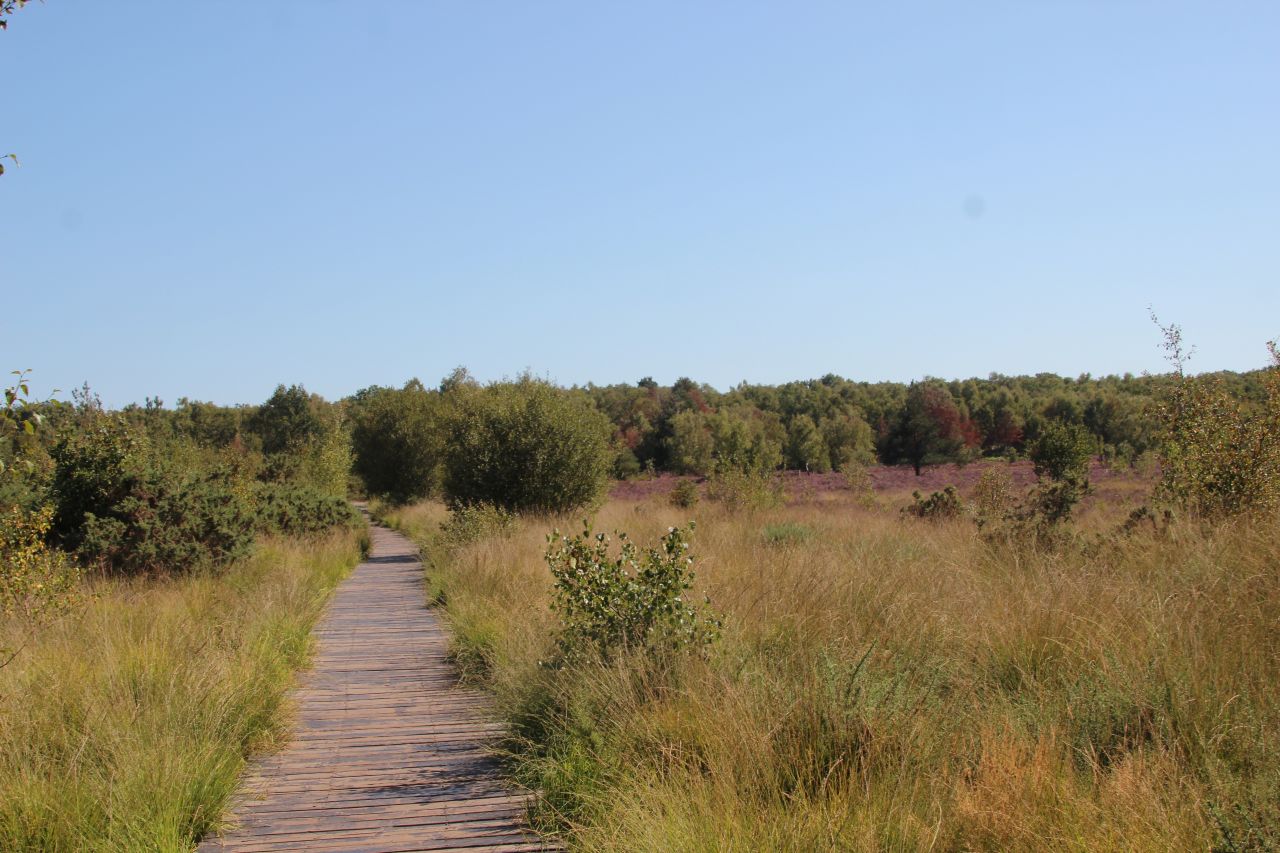
Boardwalk, Whitmoor Common.
A walk across the boardwalk towards Brook Pond on the far side of the common, saw water levels in the stream that passes through the common extremely low after the long dry spell of dry weather.
It also saw the water level very low across the pond itself, with at least half of it reduced to just a muddy scrape.

Green sandpiper, Brook Pond, Whitmoor Common.
However, this was an ideal condition to pick out a green sandpiper at the far end of the pond, as I had in previous years in times of low water levels.

Kingfisher, Brook Pond, Whitmoor Common.
The whistling call of a kingfisher in flight alerted my attention but only taking a glimpsing a shot of it as it flew swiftly across the water.
A visit to Tice’s Meadow near Badshot Lea saw water levels exceedingly low there too!

Looking out from the lower viewing hide at Tice’s Meadow.
The lower viewing hide, usually inaccessible during many months of the year, saw a reasonably sized bank between the hide and the waterline.

Common sandpiper, Tice’s Meadow.
Enough even to get some close-up photos of one of at least two common sandpipers.
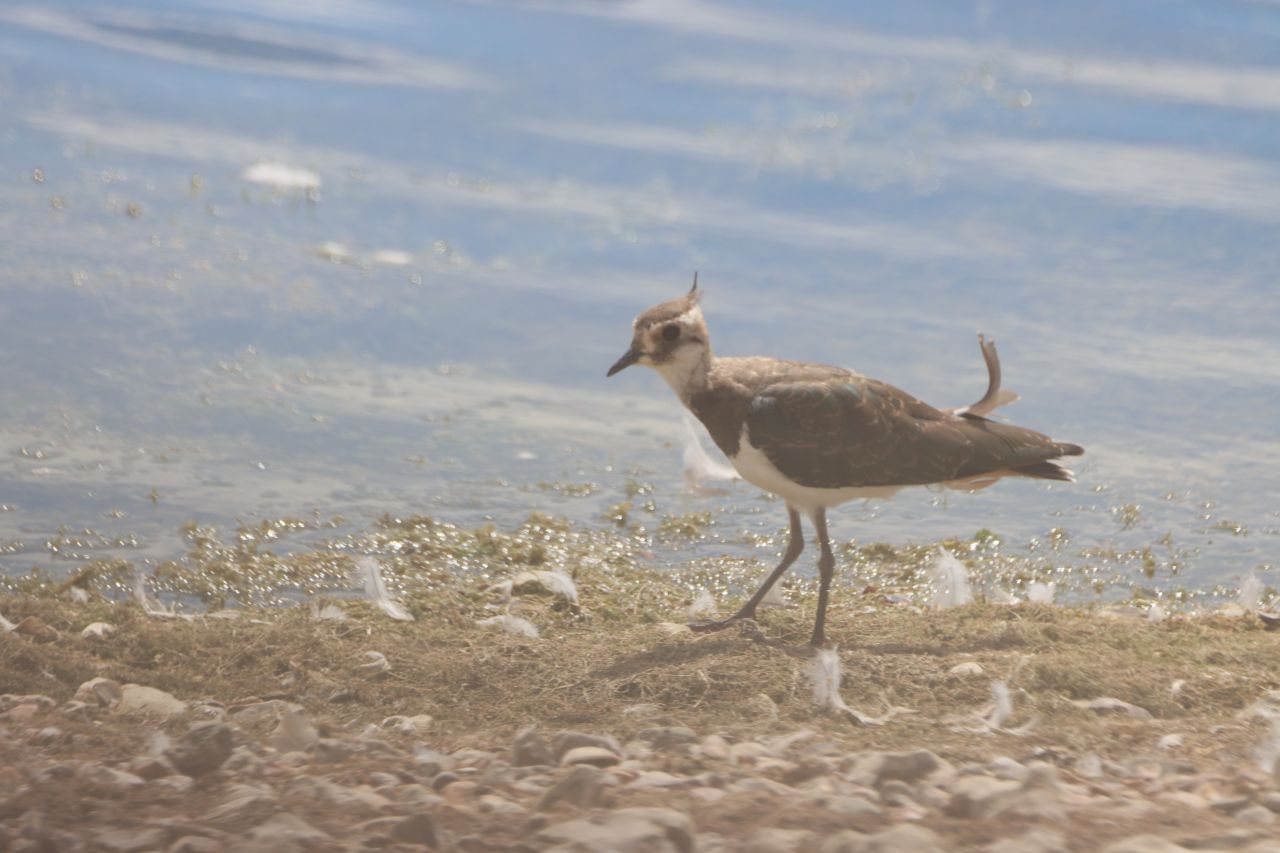
Juvenile lapwing in front of the hide at Tice’s Meadow.
As well as a juvenile lapwing that posed a while in front of the hide.
One of a small group lapwings that could be observed on the more distant islands at the reserve.

Green sandpiper in flight at Tice’s meadow.
At least three green sandpipers were present, although for the most part too distant to photograph.
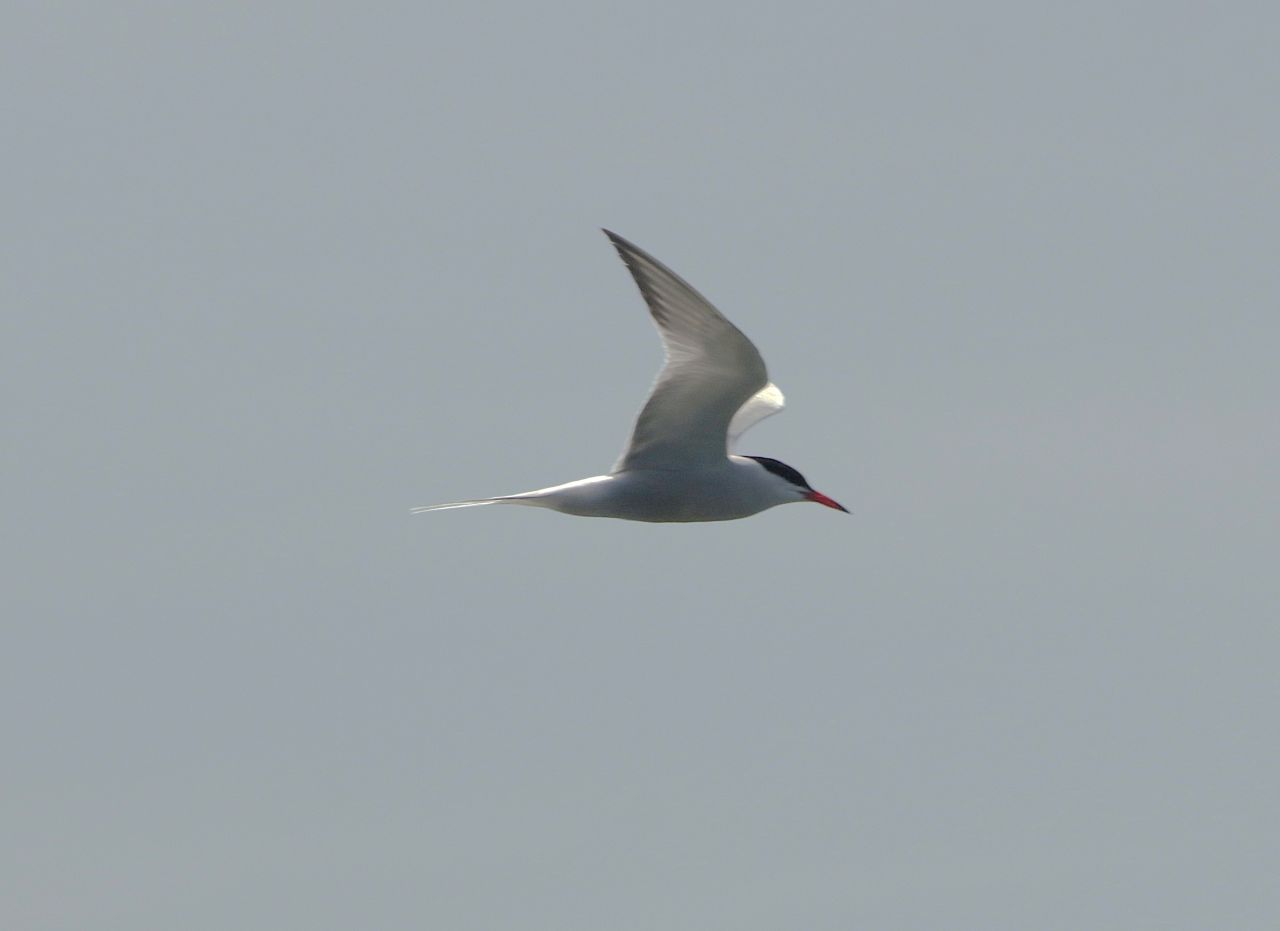
Common tern at Tice’s Meadow.
While an adult common tern could be still viewed occasionally fishing over the water.
And a juvenile, too distant to photo, could be seen with the aid of a ‘scope’ on one of the distant islands.

Queen of Spain fritillary butterfly.
Back in the company of Bob and Dougal, on August 10 we decided to follow up on reports of several Queen of Spain fritillary butterflies that had been reported at Monk Sherborne on the outskirts of Basingstoke.
This species is resident in North Africa and mainland Europe and a very rare migrant to the UK.

Queen of Spain fritillary butterfly.
It is thought a number of females arrived during the early days of the hot spell back in June laying eggs within various southern parts of the British Isles.
These we went to see are thought to be the next generation from the original arrivals, which had taken their usual period of just under a month to emerge.

Queen of Spain fritillary butterfly.
Monk Sherborne had seen a particularly noteworthy emergence, numbering into double figures. Although we only found four or five in what seemed a random area of a set-aside field in what appeared to be the middle of nowhere!
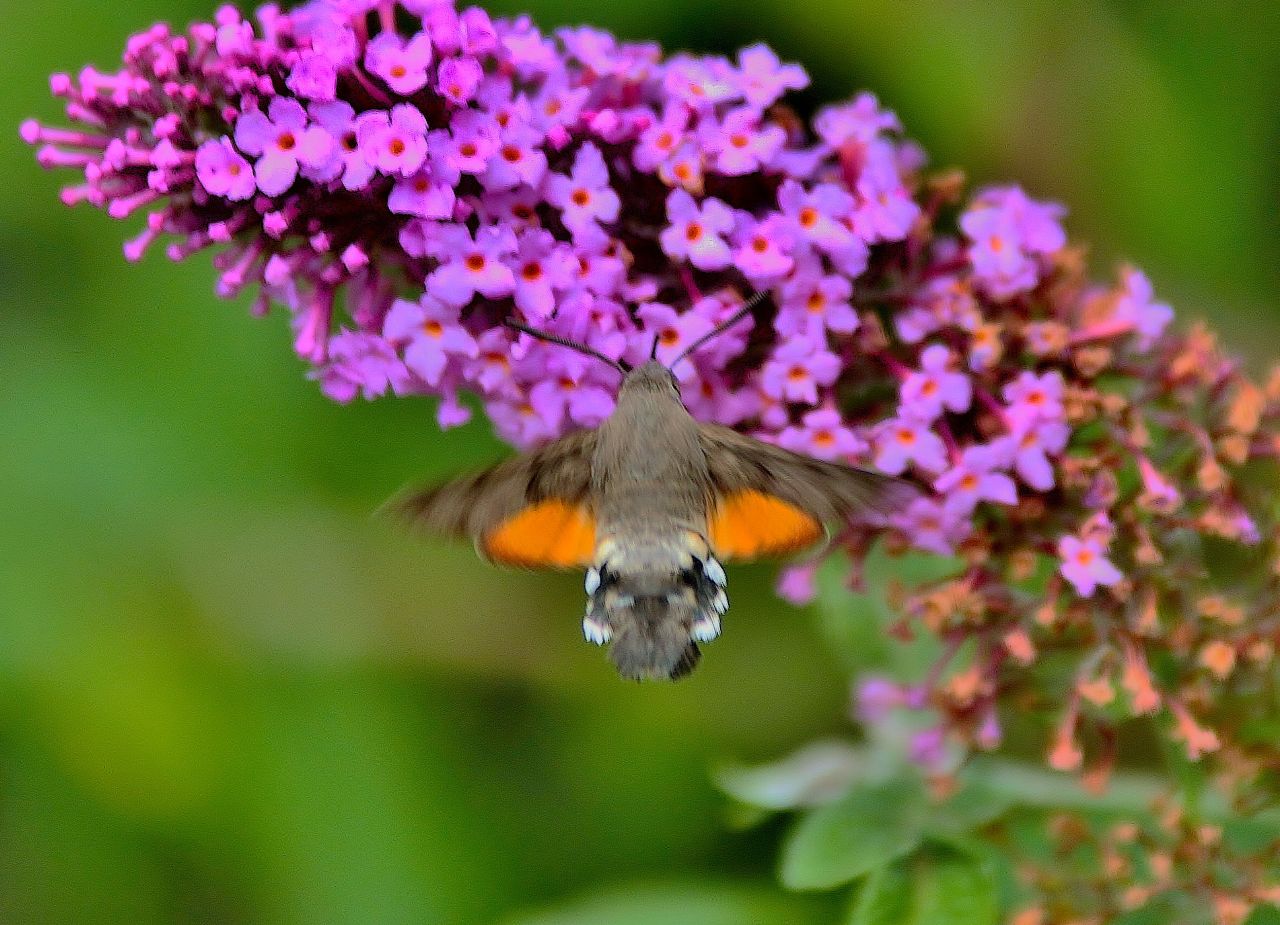
Hummingbird hawk-moth on buddleia in my garden.
Back at home during the early days of the month I also had the privilege, though only briefly, of a visiting hummingbird hawk-moth on buddleia in my garden.
An interesting sighting and photo sent to me taken by Clive, one of my avid readers, was that of a box-tree moth photographed on a wall at his home late last month.
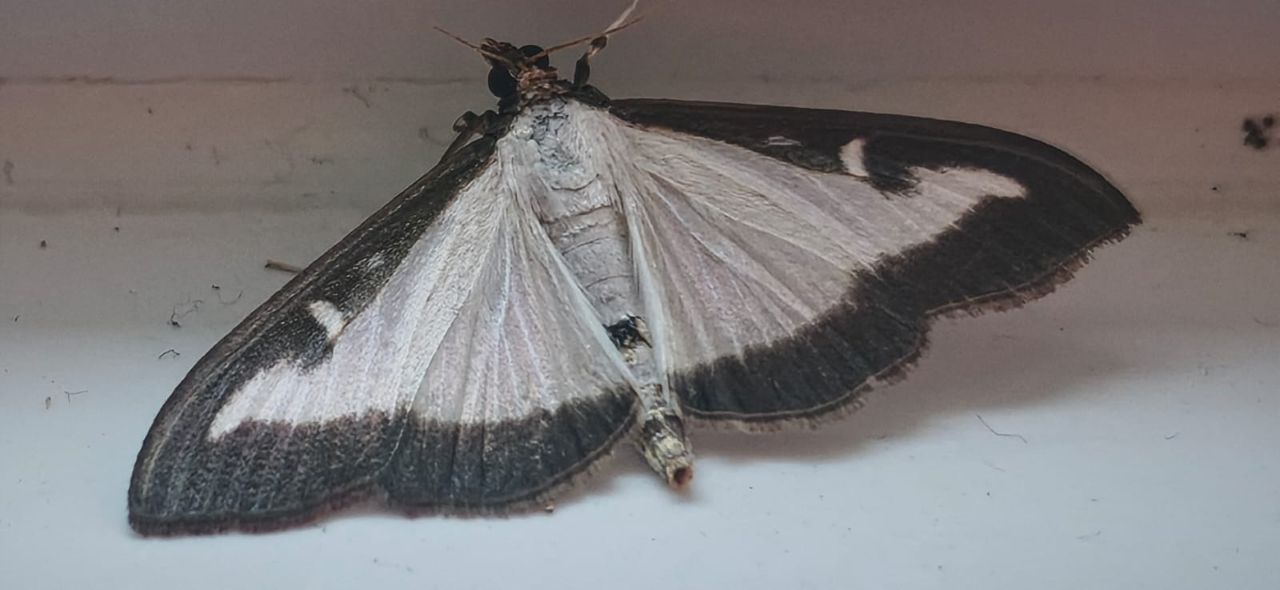
Box-tree moth.
Originating from south-east Asia, box-tree moths were accidentally introduced to the UK almost certainly via an imported box.
The larvae feed on various species of the box tree. The first report was from Kent in 2007, with caterpillars first found in 2008 at a plant nursery in Surrey.
The species is now well established in southern counties, including Surrey.
Where caterpillar numbers are high, they can disfigure ornamental box hedgerows and topiaries, eventually defoliating the box-plants completely.
Share This Post


Responses to Birdwatcher’s Diary No.354
Leave a Comment Please see our comments policy. All comments are moderated and may take time to appear. Full names, or at least initial and surname, must be given.


PM You say you're worried about the reaction in Surrey to council reorganisation. How many Labour MP's does Surrey elect? Angela Rayner: None, ever. PM Next item!











K White
August 26, 2026 at 6:35 pm
As far as I’m aware, the lake in the Riverside Nature Reserve has no name. I’m intrigued as to why you constantly refer to it as Stoke Lake.
David Rose (who edits Malcom Fincham’s Birdwatcher’s Diary) writes: You are correct in that Guildford Borough Council does not seem to use the term in conjunction with the Riverside Nature Reserve. The lake was created in the early 1980s, dug out of the marsh and in conjunction with the A3 road improvements. I guess many people may not realise that much of today’s nature reserve was already a haven for wildlife. We did, as we used to go there before the lake was created! When the lake was new, although scant of vegetation, wild birds soon began to visit. It was probably us that simply called it Stoke Lake, it being close to Stoke Lock, the River Wey Navigation, and the natural river.
And that’s why we refer to it as Stoke Lake. Having to refer to it each time something like “the lake at the nature reserve saw ….” seems a bit wordy, so Stoke Lake it is.
Malcolm Fincham
August 27, 2026 at 6:54 pm
In addition to David Rose’s comprehensive reply, the area surrounding the lake was always referred to as ‘Stoke water meadows’ during my youth, and the marshland was seasonally visited by birds rarely seen there today.
Surrey Bird Club still often refers to the area by its original name to conform with original site data gathered, rather than its relativity recent name ‘Riverside Nature Reserve’.
Hence on the construction of the lake on what was once water meadows it has since adopted the name by locals of a certain vintage as well as birdwatchers, using the name ‘Stoke Lake’ as a reference point as it was once a part of where the Stoke water meadows once existed.