- Stay Connected

Socialize


 Abraham Lincoln
If given the truth, the people can be depended upon to meet any national crisis...

 Guildford news...
for Guildford people, brought to you by Guildford reporters - Guildford's own news service
Birdwatcher’s Diary No.358
Published on: 19 Oct, 2026
Updated on: 19 Oct, 2026
By Malcolm Fincham
Dry warm sunny periods continued for the most part as we moved into the first weeks of October.
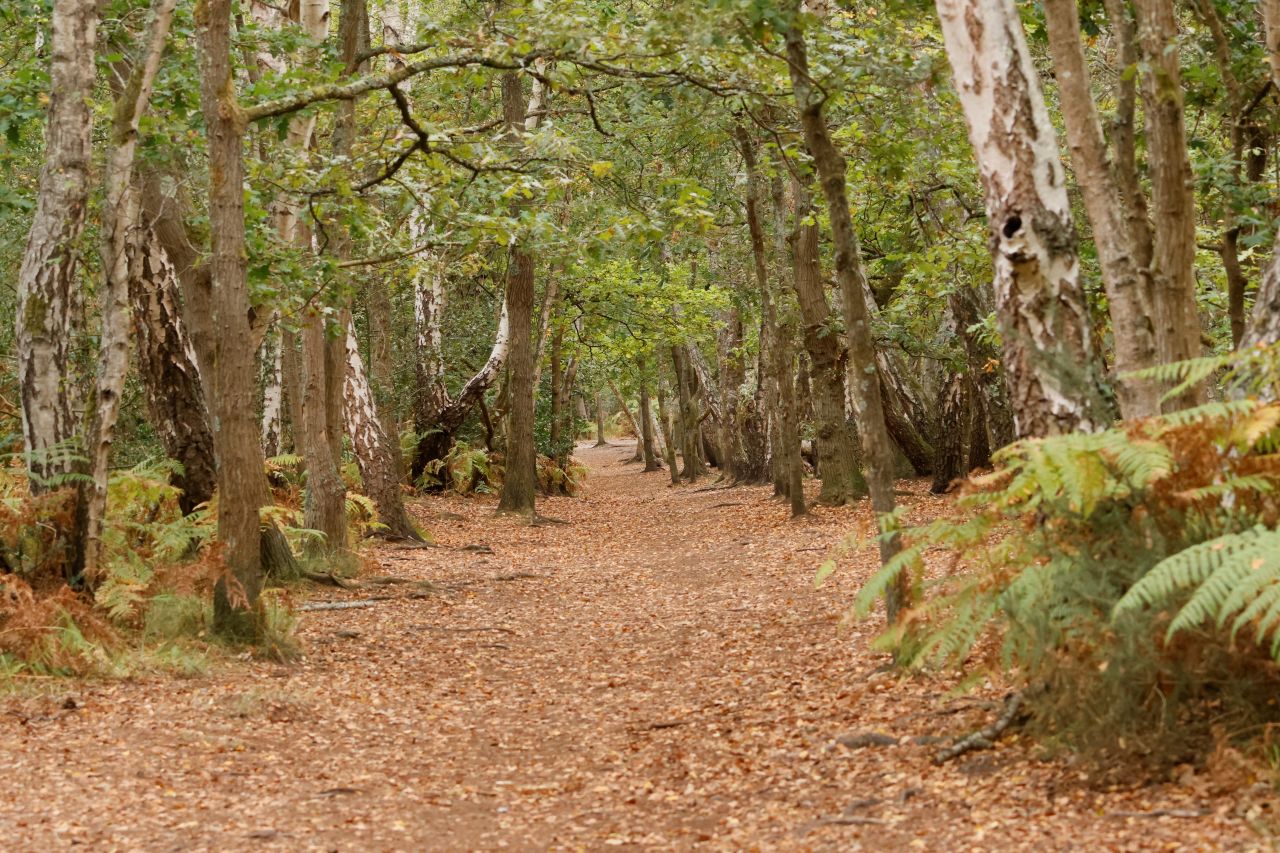
Trees still with green leaves on Whitmoor Common.
Although temperatures remained in the low 20s Celsius, many of the trees were still leafed in green.
As I continued my excursions about local areas of the Surrey countryside, the feel of autumn had begun to creep in as night-time hours were noticeably increasing from daylight.
By October 3, the first sightings of redwings had started to be reported flying overhead in several locations throughout Surrey.
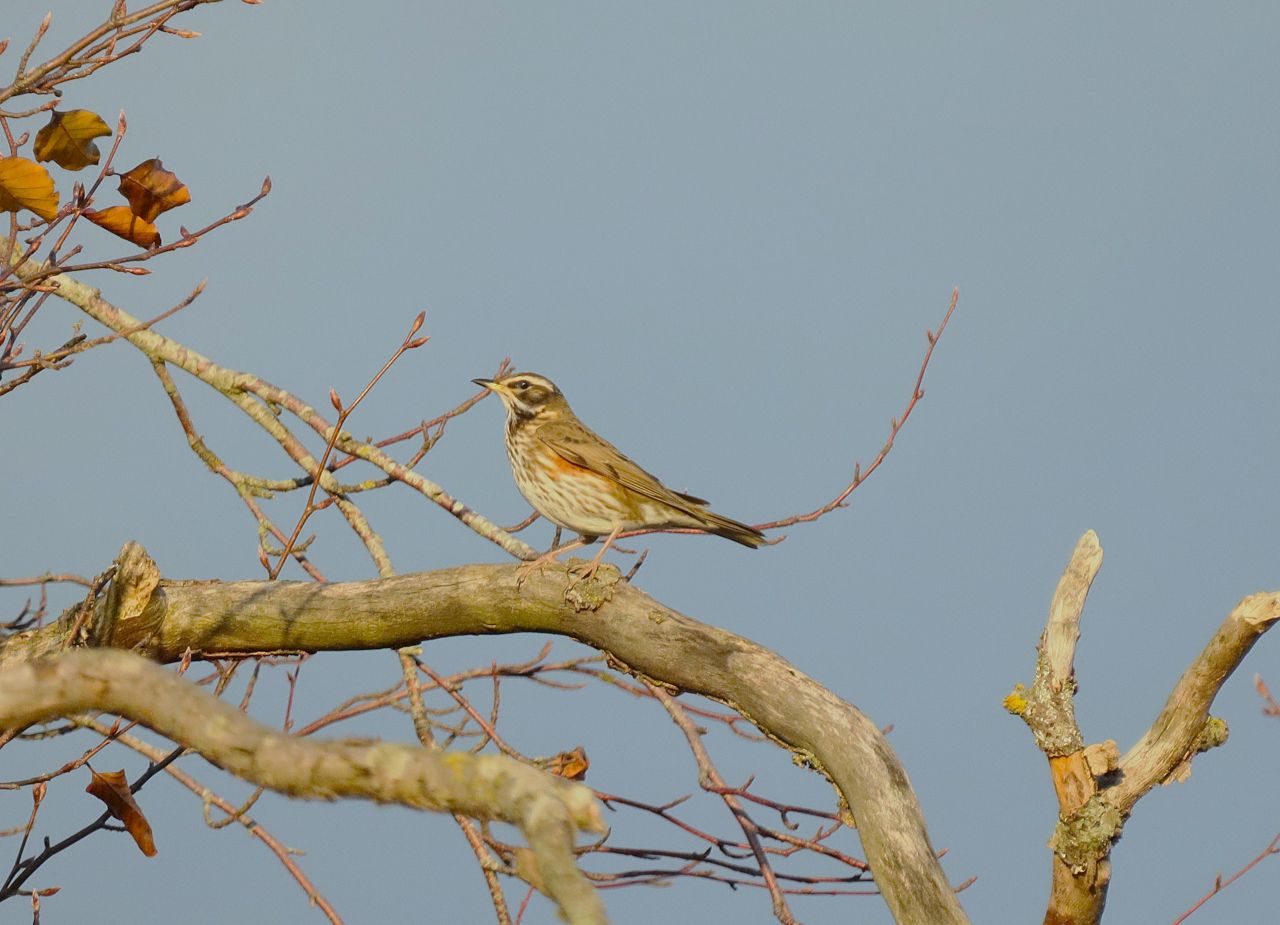
Redwing.
Mostly in singles or pairs, signalling their annual winter influx had already begun, with the majority due to arrive mid to late in the month.
In medieval times it was thought their ‘t’seep, (or t’zeeer’) calls were witches on broomsticks as they flew overhead, as many larger flocks arrived after dark on foggy nights later in the month and near to Halloween!
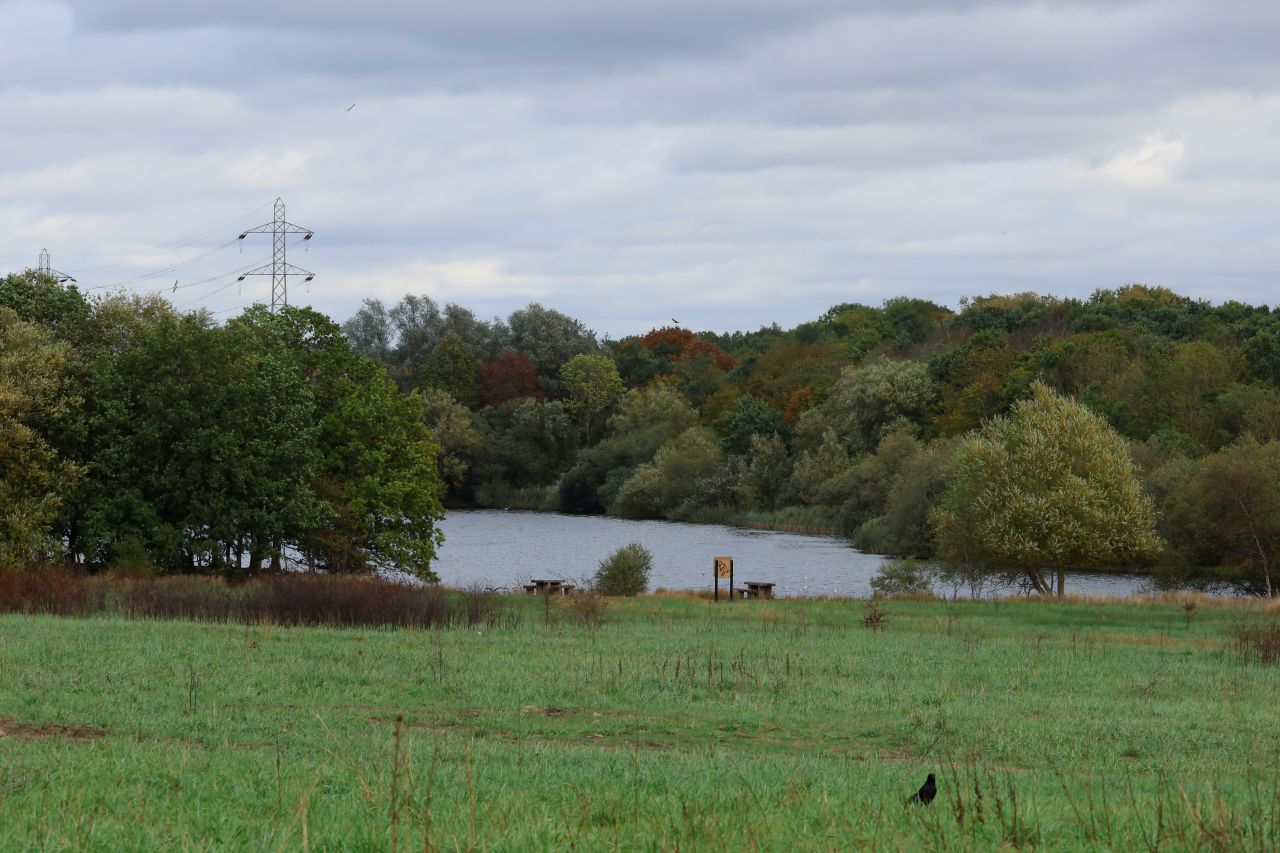
Stoke Lake at the Riverside Nature Reserve.
On my visit to the Riverside Nature Reserve near Burpham on October 4, I was most grateful to be allowed to try out my birthday present.
A new camera had been kindly gifted by my wife, and more than a week earlier than I was due to have received it.
Hand-held photography has become almost impossible for me in recent times and having to use a tripod to steady my shots.
However, the inbuilt stabiliser on my new camera and lens will hopefully aid my restricted abilities.
In the area by the recycling centre across the River Wey from the reserve, as many as 10 or more red kites continued to be viewed, weaving among the many gulls present.
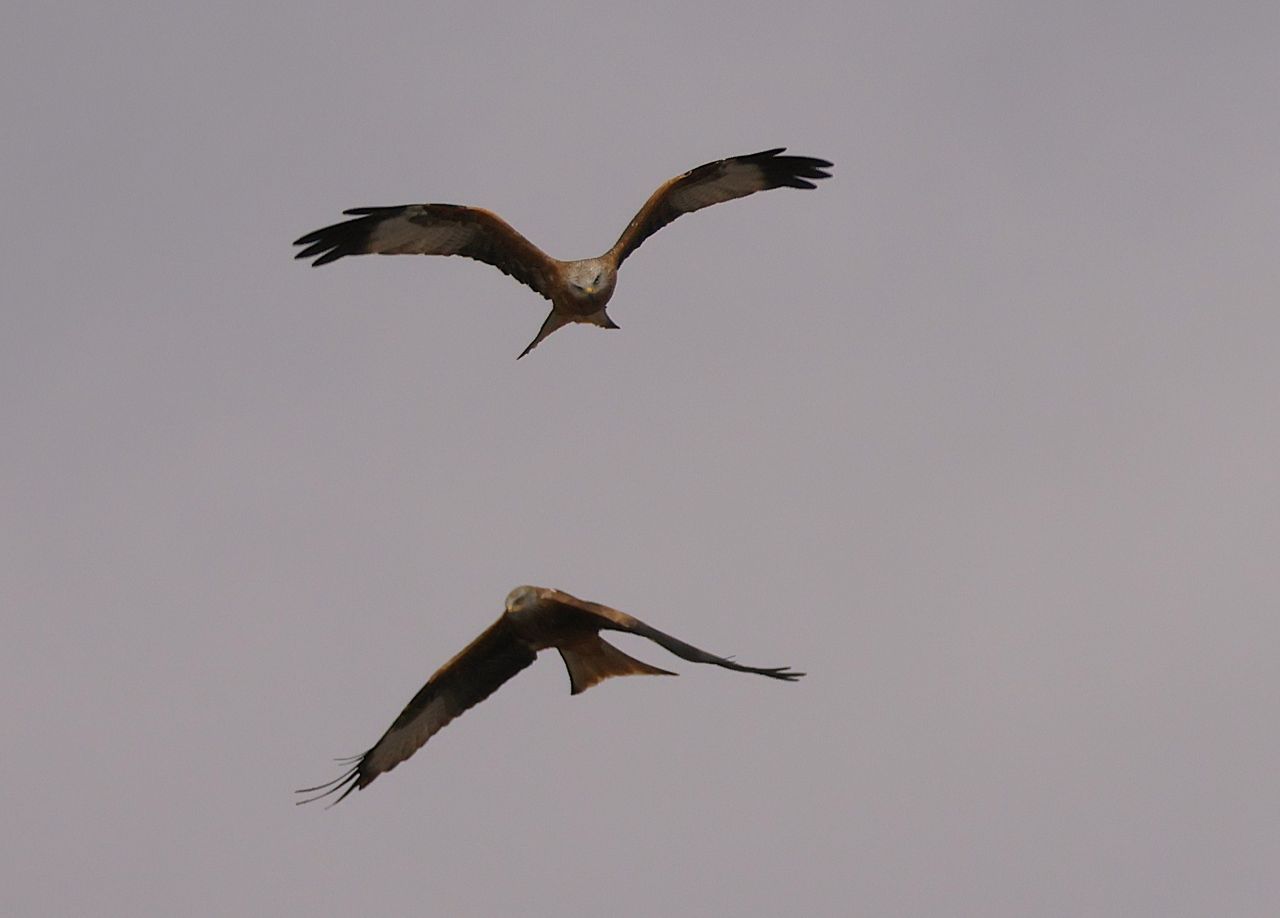
Red kites.
This allowing a sequence of what I felt were sometimes reasonably successful shots while I attempted to test the camera’s increased abilities.
Apart from the gulls, mixed flocks of corvids and red kites, it seemed quiet for birdlife there that day.
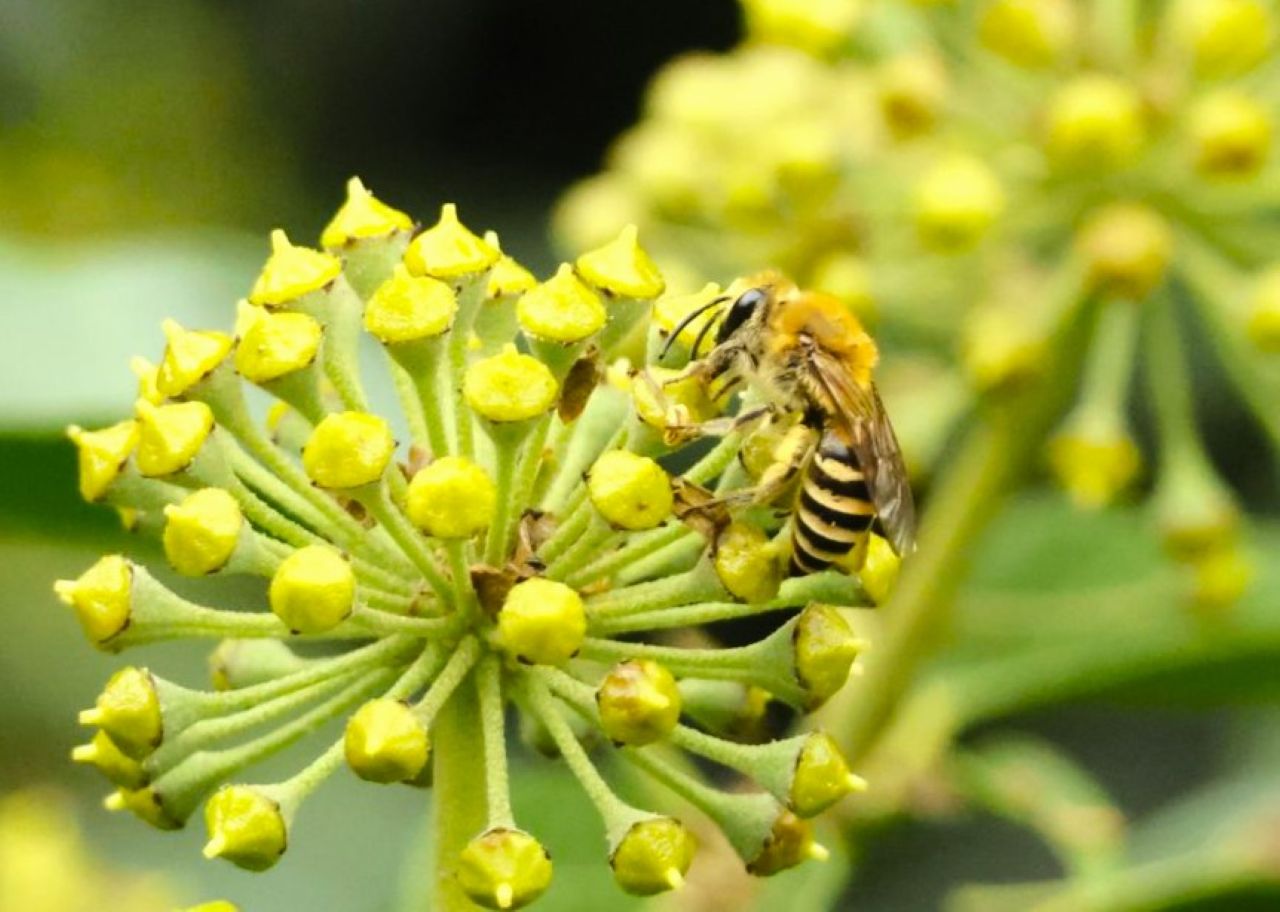
Ivy bee.
A few ivy bees could still be seen nectaring on ivy blossom.
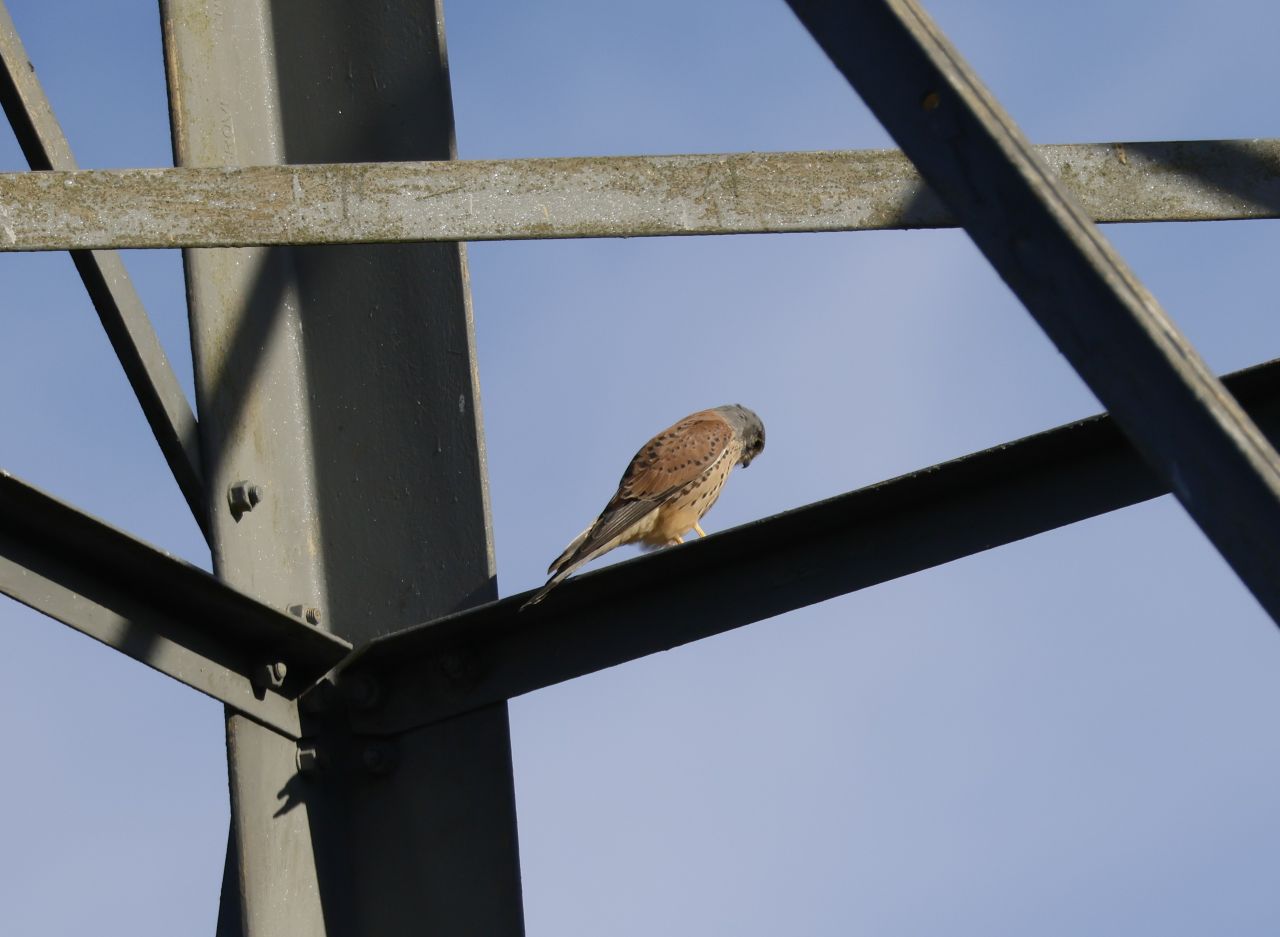
Kestrel on pylon, at the Riverside Nature Reserve.
While a kestrel could once again be viewed perched on the utility pylon at the reserve.
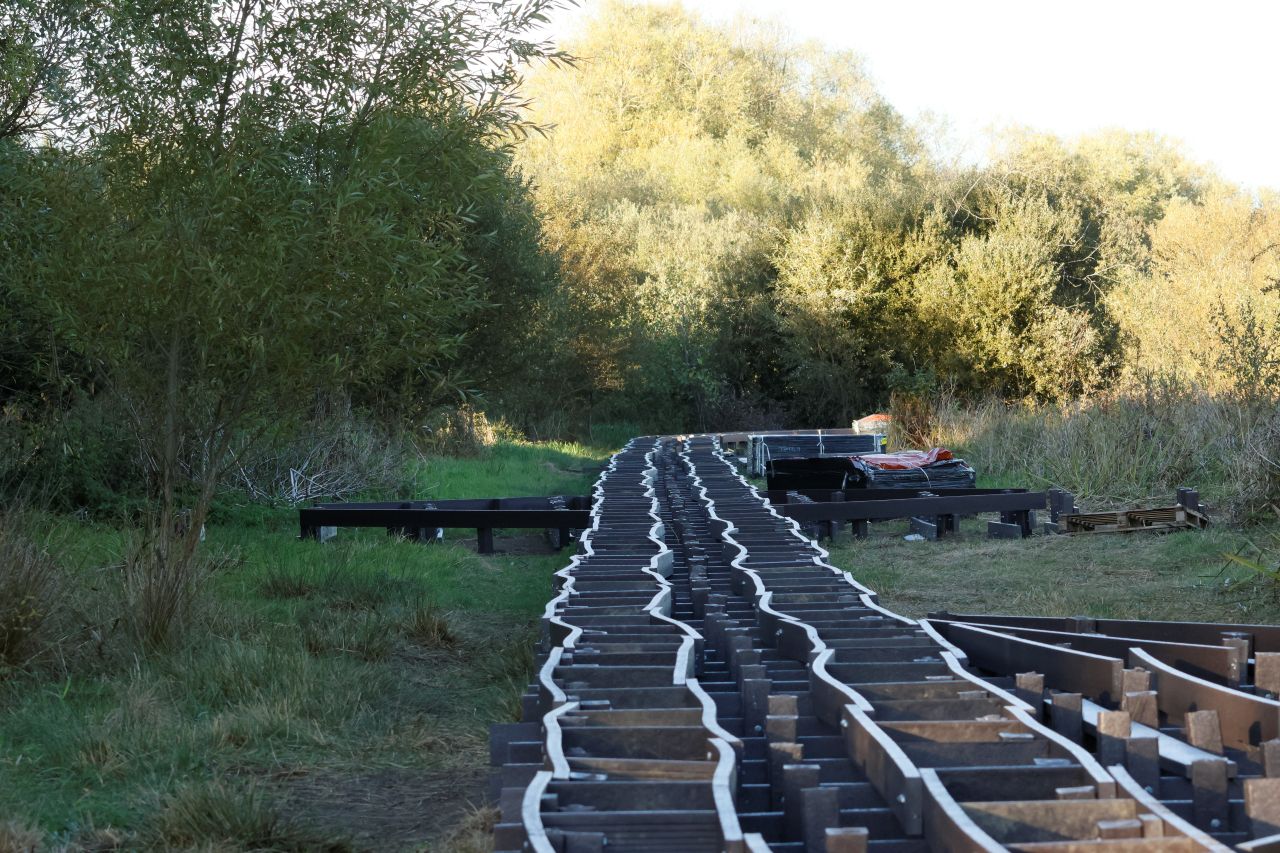
Replacement boardwalk under construction at the Riverside Nature Reserve.
Work also continued to progress with the construction of the replacement boardwalk.
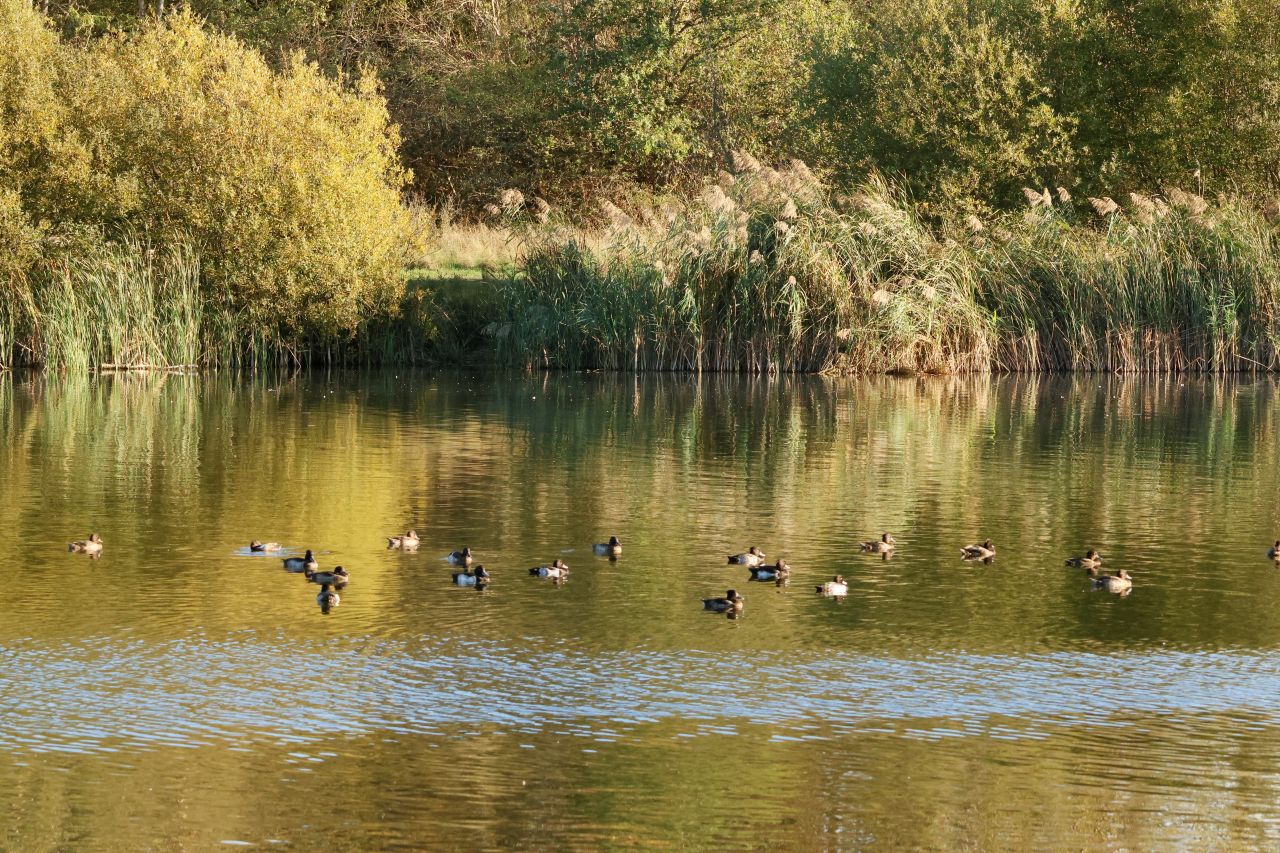
Tufted ducks, Stoke Lake.
At Stoke Lake as many as 35 tufted ducks could be counted, having returned to winter there.

Migrant hawker dragonfly.
In the warmth of the sun, it was pleasing to see a few late summer dragonflies still hawking over the water.
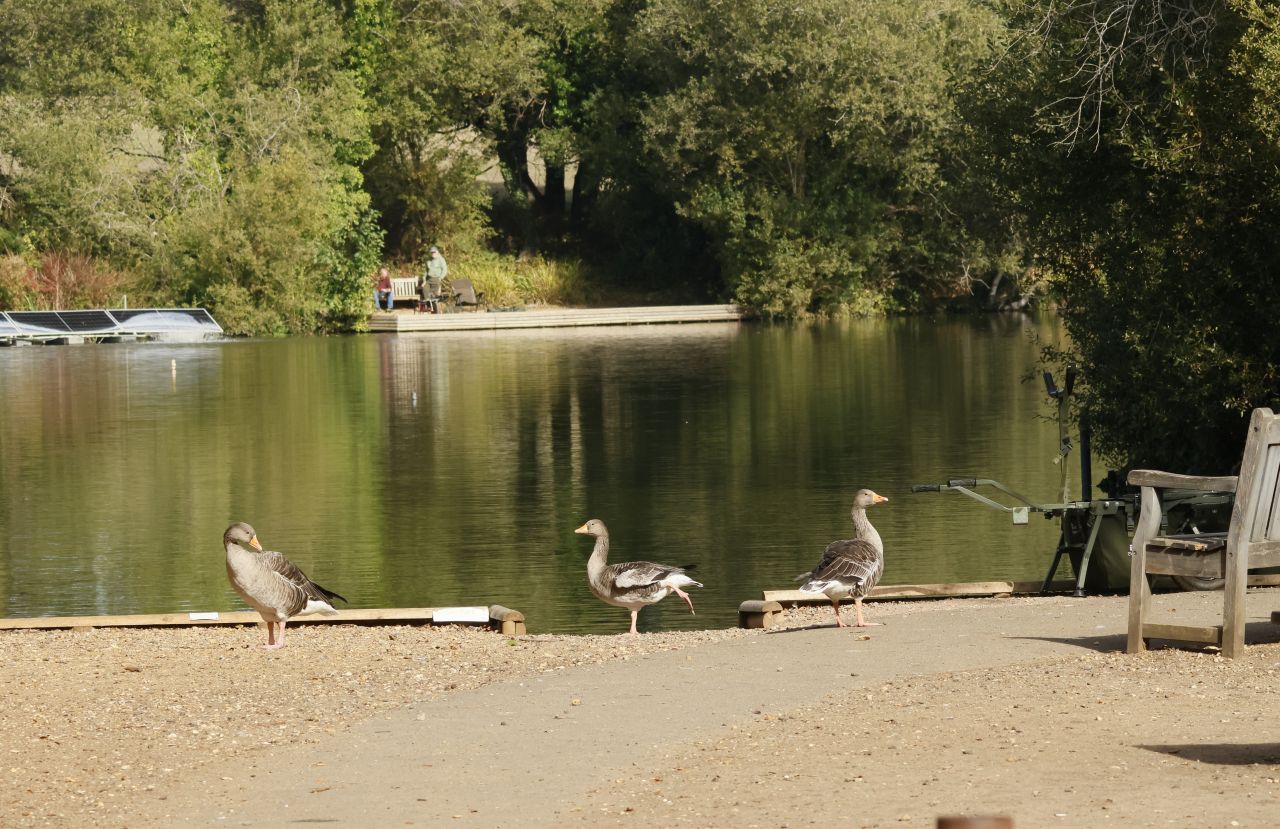
Greylag geese, Britten’s Pond.
On October 5, my visit to Britten’s Pond was welcomed by the three resident greylag geese that in recent years have wintered there.
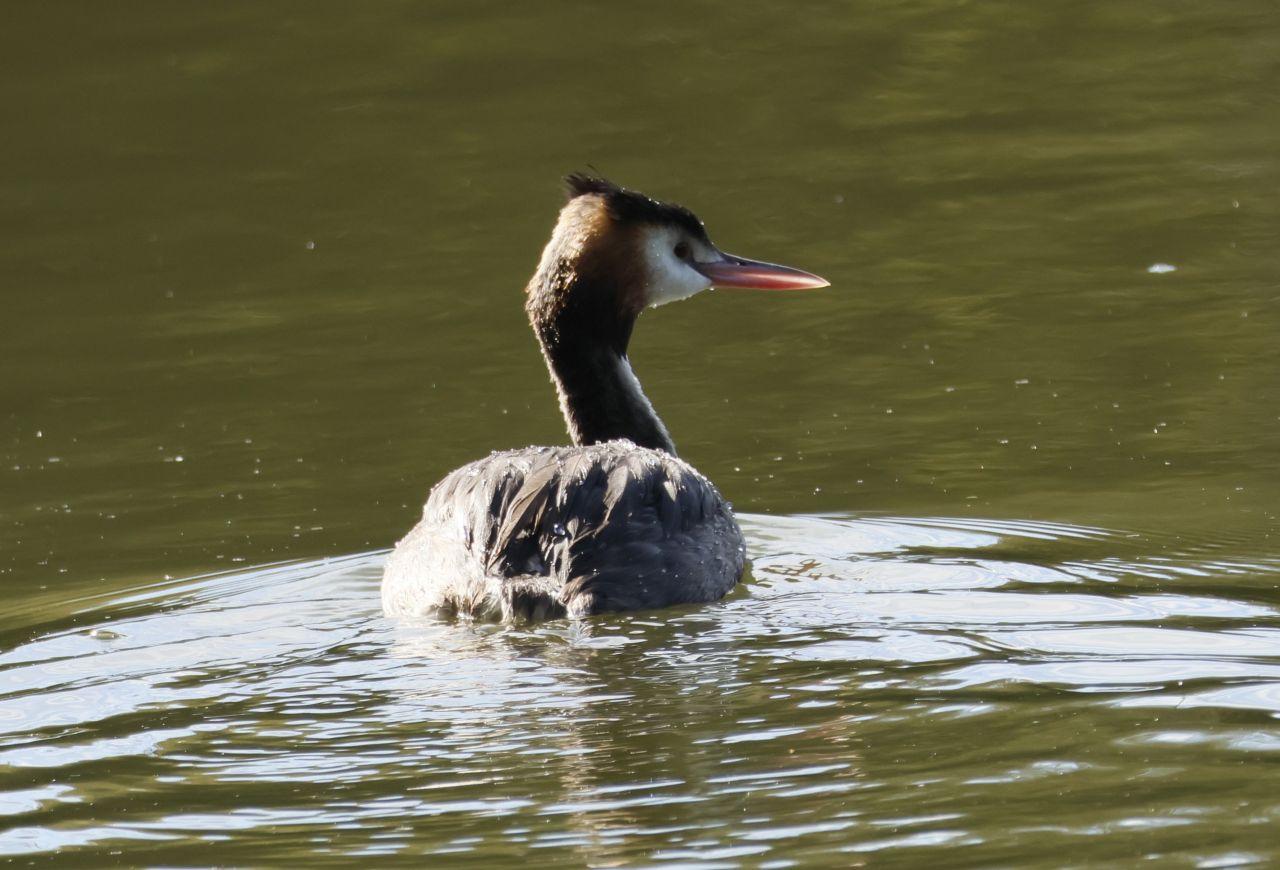
Great crested grebe, Britten’s Pond.
A long-staying adult great crested grebe still showed some summer plumage while out on the water.
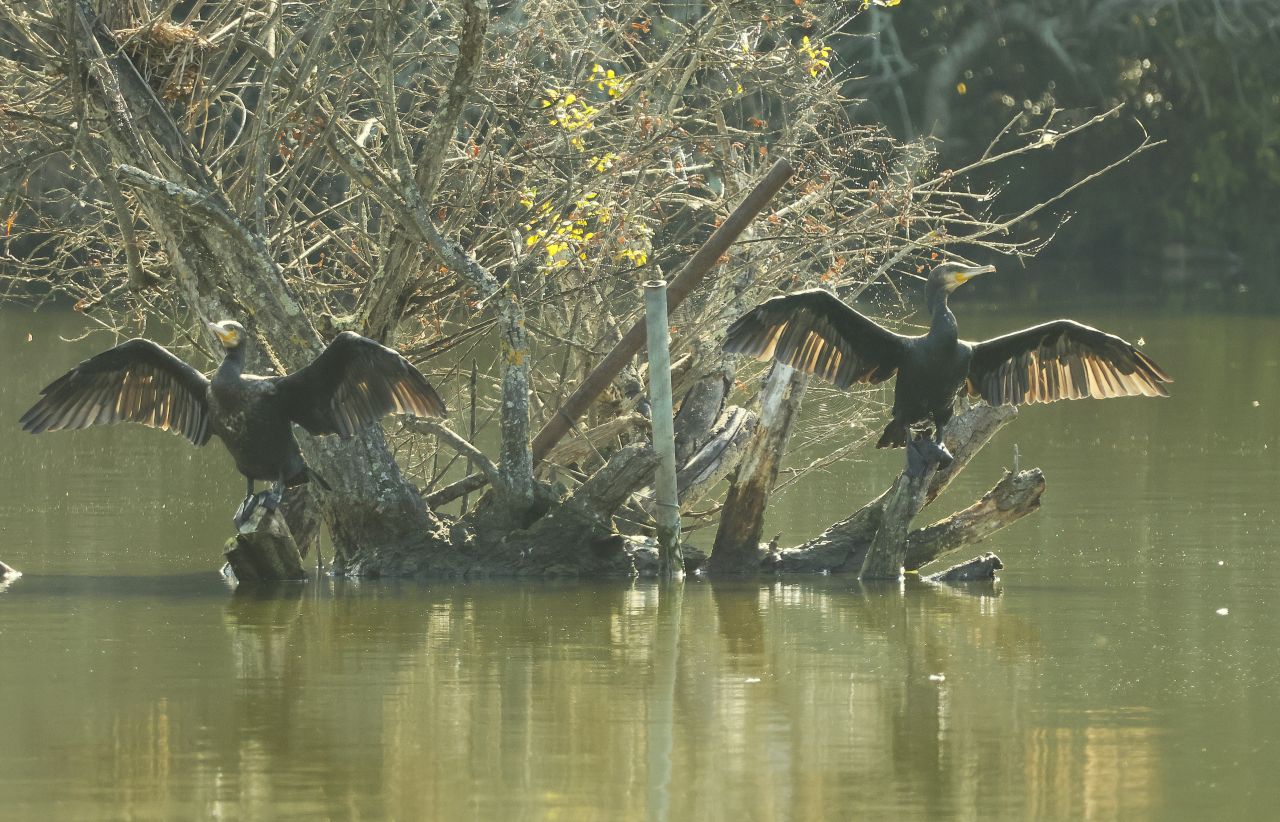
Cormorants, Britten’s Pond.
And the regular views of cormorants could be often seen drying their wings on one of the islands.
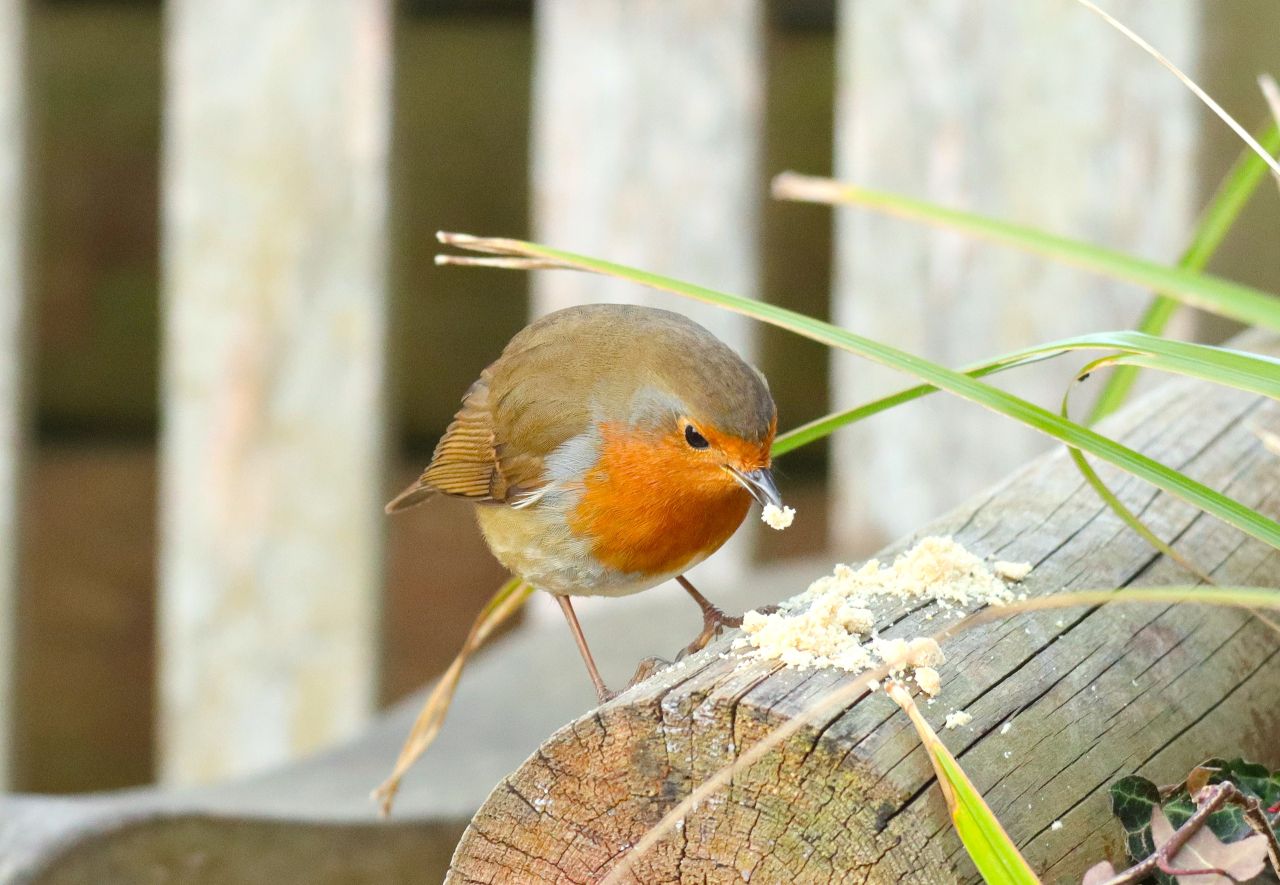
Robin, Britten’s Pond.
At this time of the year, and throughout the winter, a resident robin can be noted at almost every anglers’ ‘swim’ (fishing spot) around the pond.
The robin welcomes the sight of anglers and visitors alike, especially any with a morsel of crumbs to feed on.
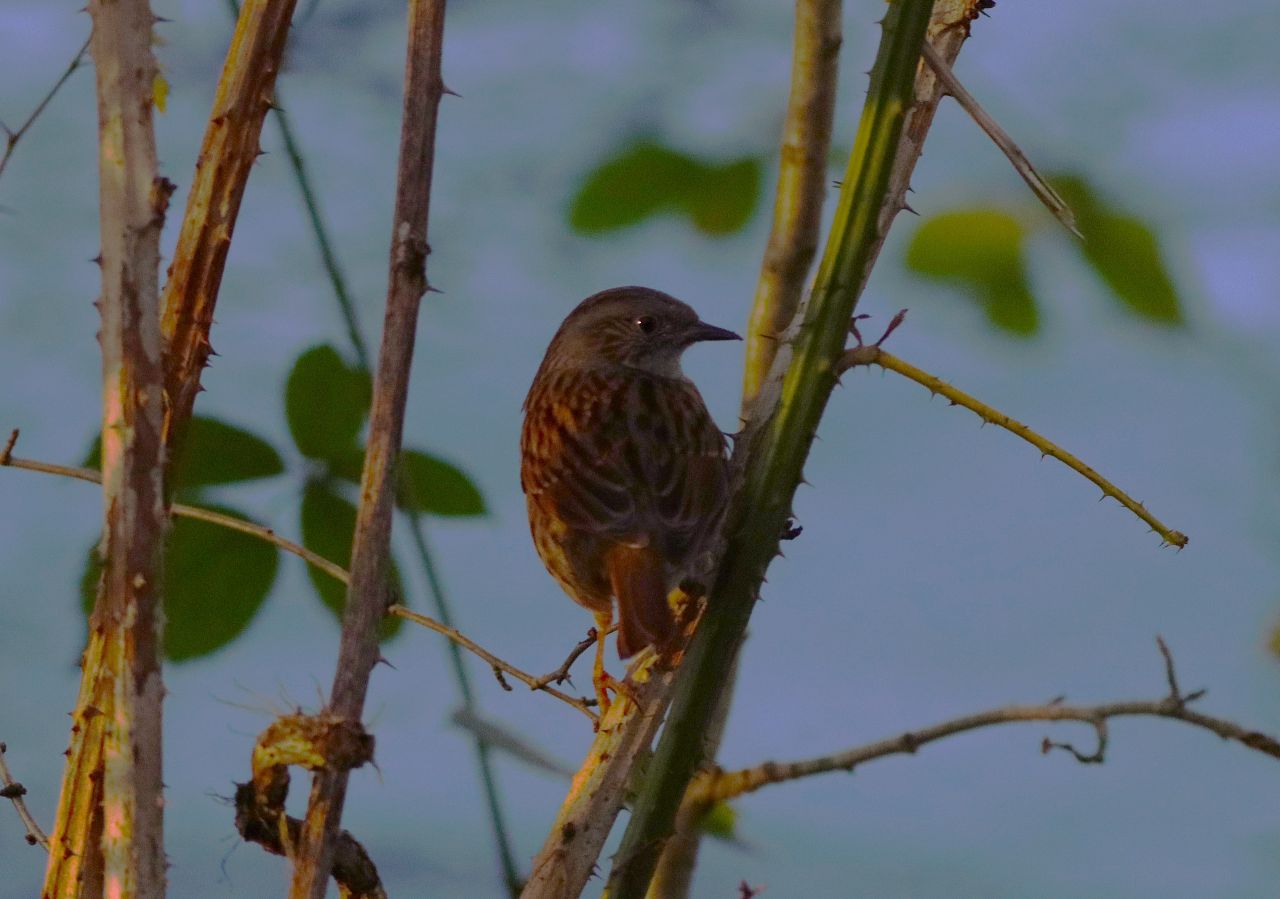
Dunnock, Britten’s Pond.
Numerous small birds such as chiffchaffs and nuthatches could be glimpsed on my circular walk around the pond, although only getting photos of a dunnock.
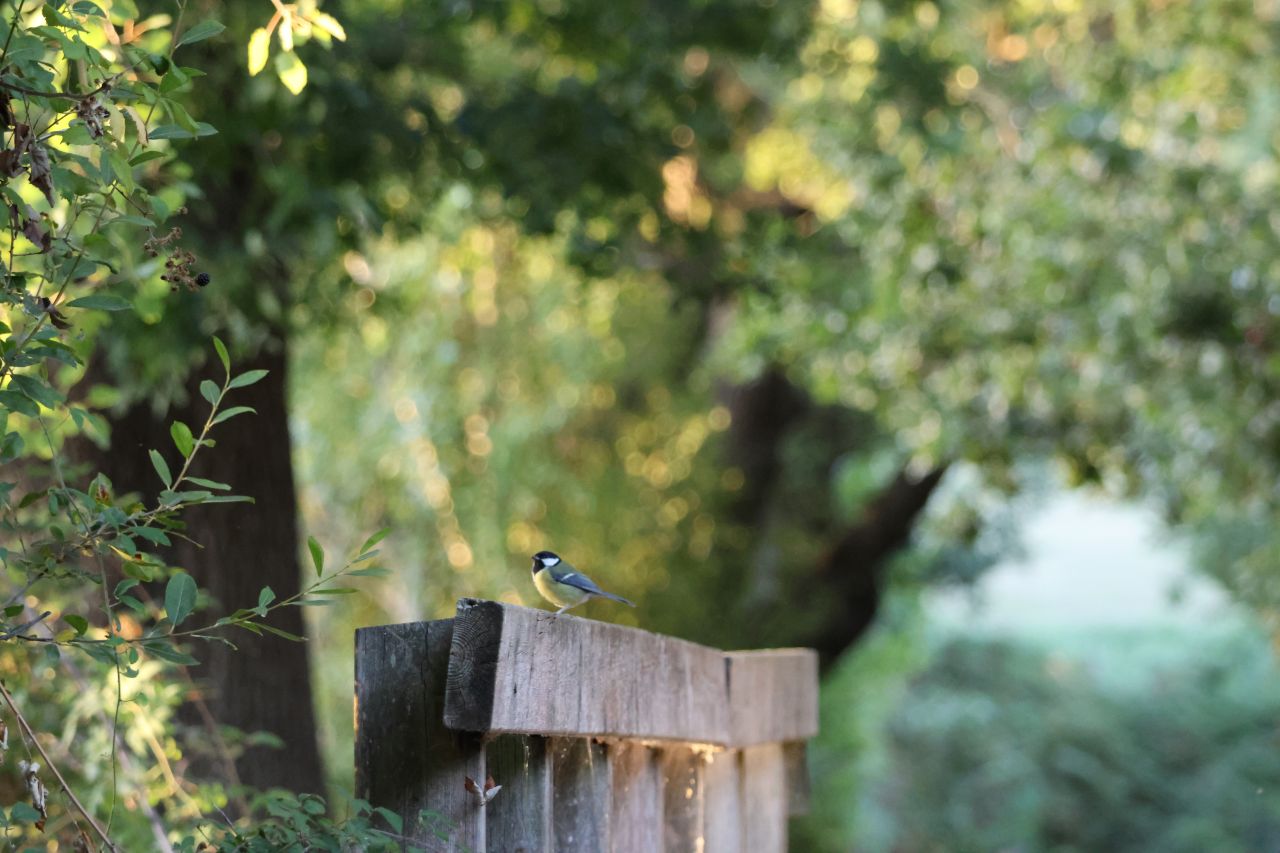
Great tit, Britten’s Pond.
And a great tit that perched on the footbridge.
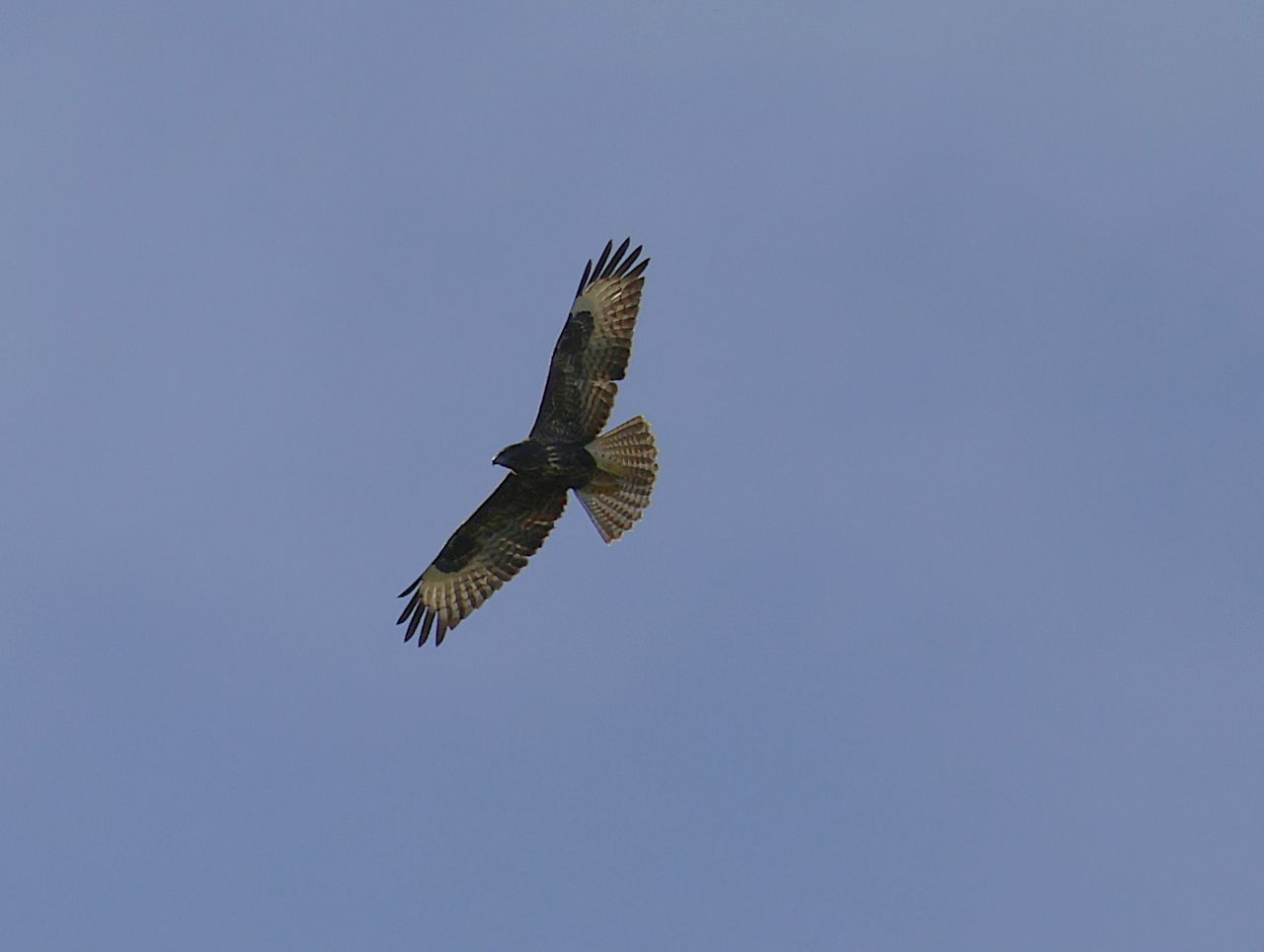
Common buzzard over Britten’s Pond.
A common buzzard allowed me a photograph as it flew over the pond.
The concern of my visit, however, was a juvenile mute swan that had arrived earlier that day. At this time of the year many of this year’s young (especially males) are evicted by their parents, often joining other groups of first winter swans.

Juvenile mute swan at Britten’s Pond.
This unfortunate juvenile had found itself on a pond with an unwelcoming pair of resident adult swans that were immediately very aggressive to its presence.
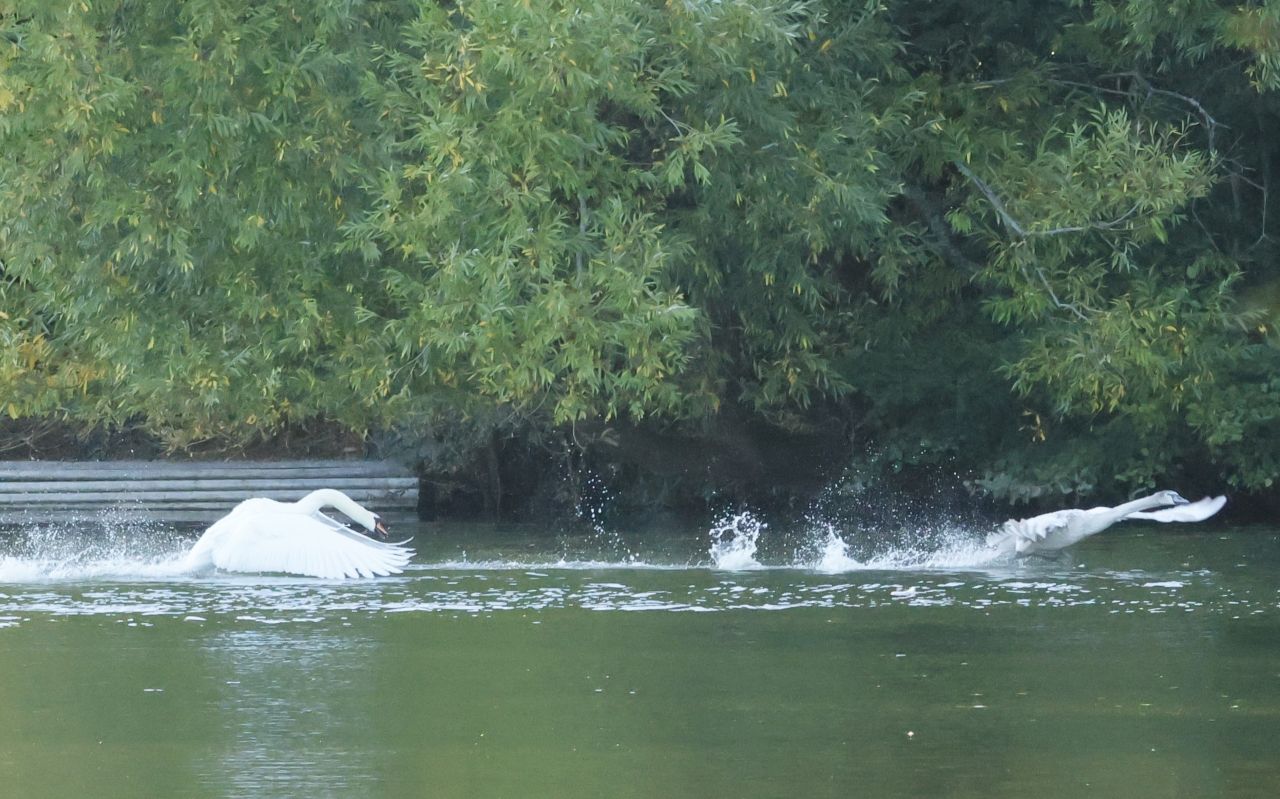
Agressive resident adult mute swan chasing the visiting juvenile interloper at Britten’s Pond.
For whatever reason, it was unable to gain enough height to leave the waters of its own accord and continued to be harassed for the most part of the day, spending much of its time vulnerable to possible predators on the banks of the water.
With much thanks to Simon, one of the angling committee members there, a swan rescue group was informed. Early the following morning it was safely caught and taken to a safer residence.
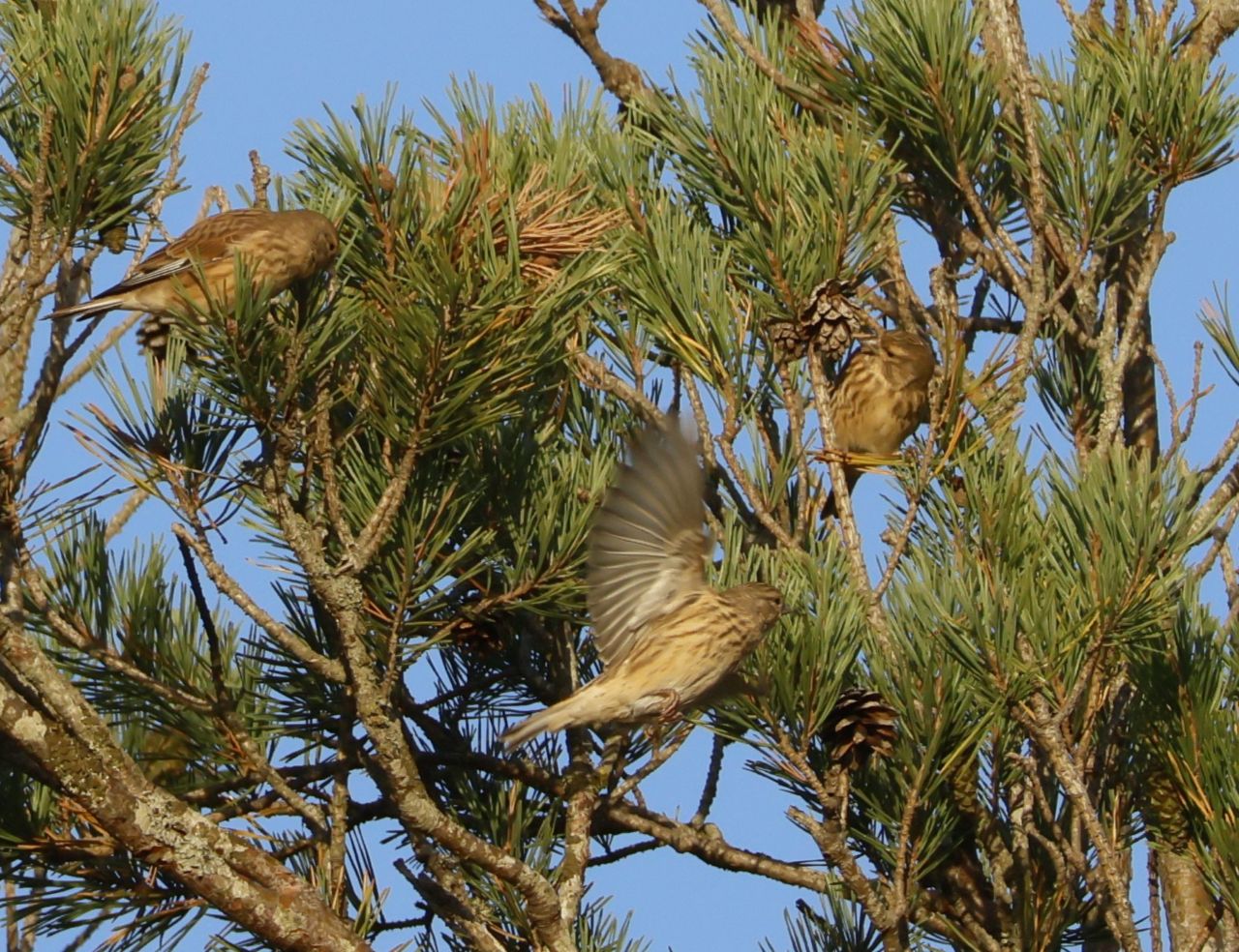
Linnets feeding on pine cones, Whitmoor Common.
Adjacent to Britten’s Pond on Whitmoor Common during early October flocks of linnets had increased in number about the heathland.
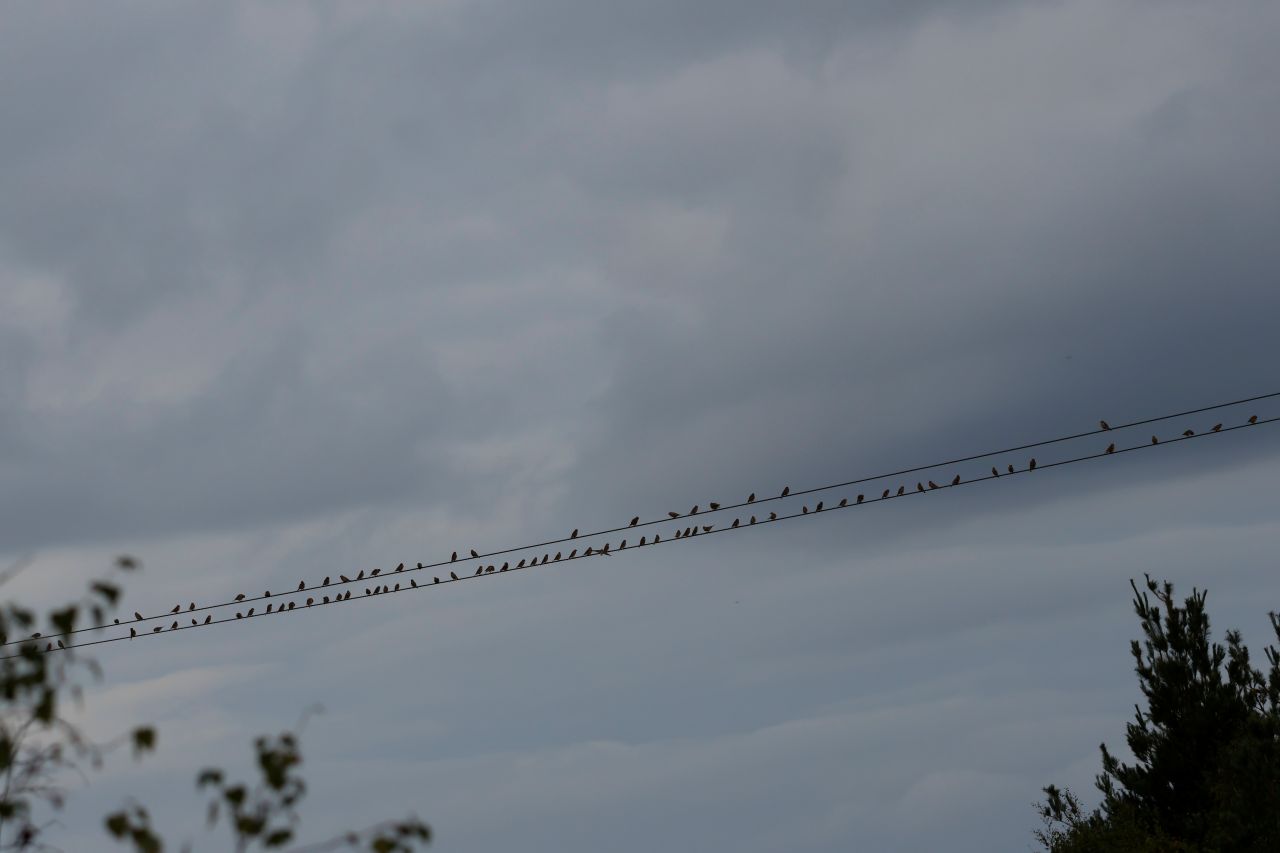
Linnets on utility wires, Whitmoor Common.
During the hours prior to sunset, more than 40 could be counted on the utility wires that run across the heathland.
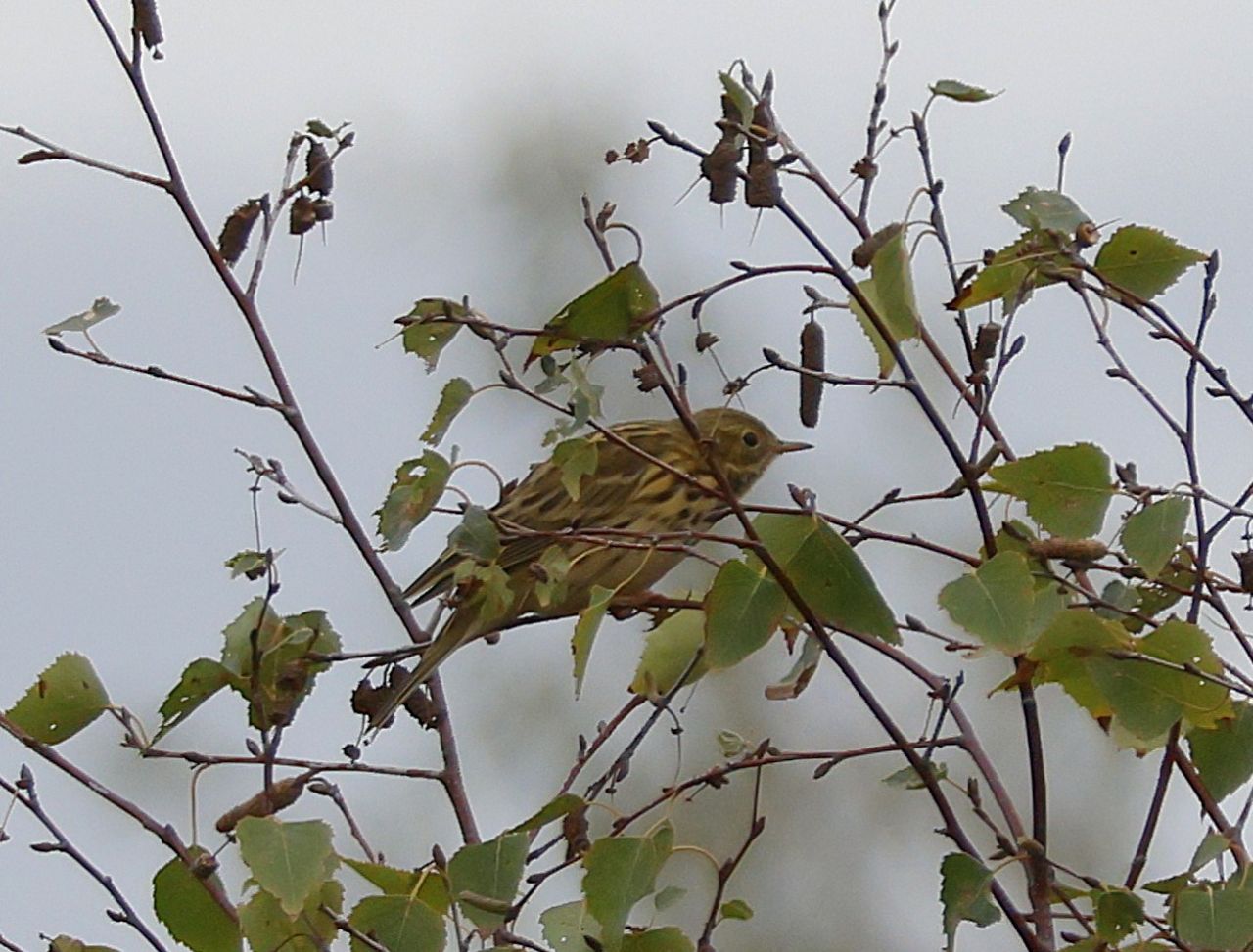
Meadow pipit, Whitmoor Common.
Meadow pipits were also continuing to increase, counting more than 30 during the late afternoon on most of my visits.

Clouded yellow butterfly nectaring on a few remaining sprigs of heather still in blossom on Whitmoor Common.
A few last sprigs of heather still in blossom had attracted what had indeed been a record year for clouded yellow butterflies. This one briefly stopping to nectar.
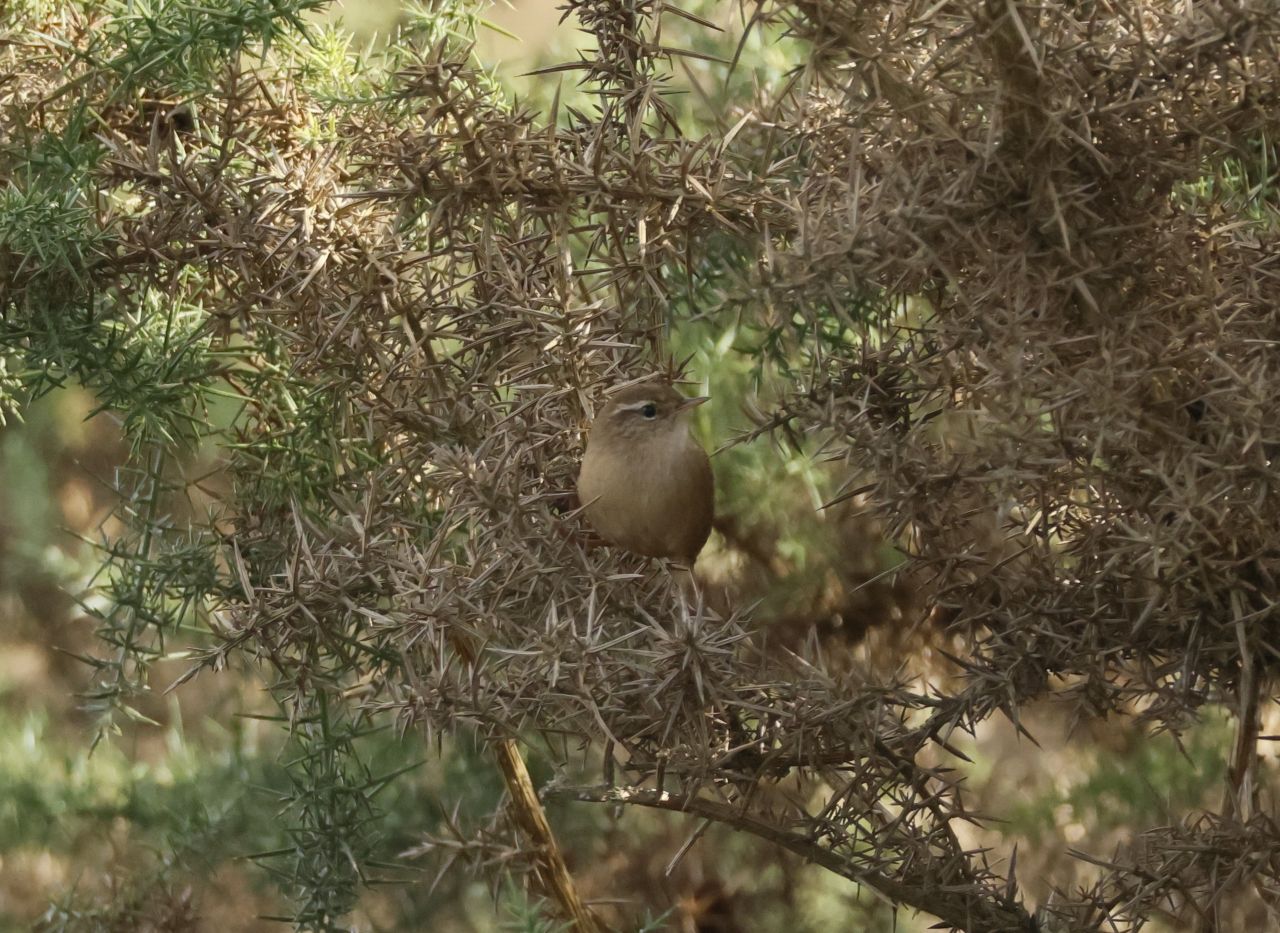
Wren, Whitmoor Common.
Expecting a Dartford warbler, a wren made a brief appearance from a cluster of gorse bushes.
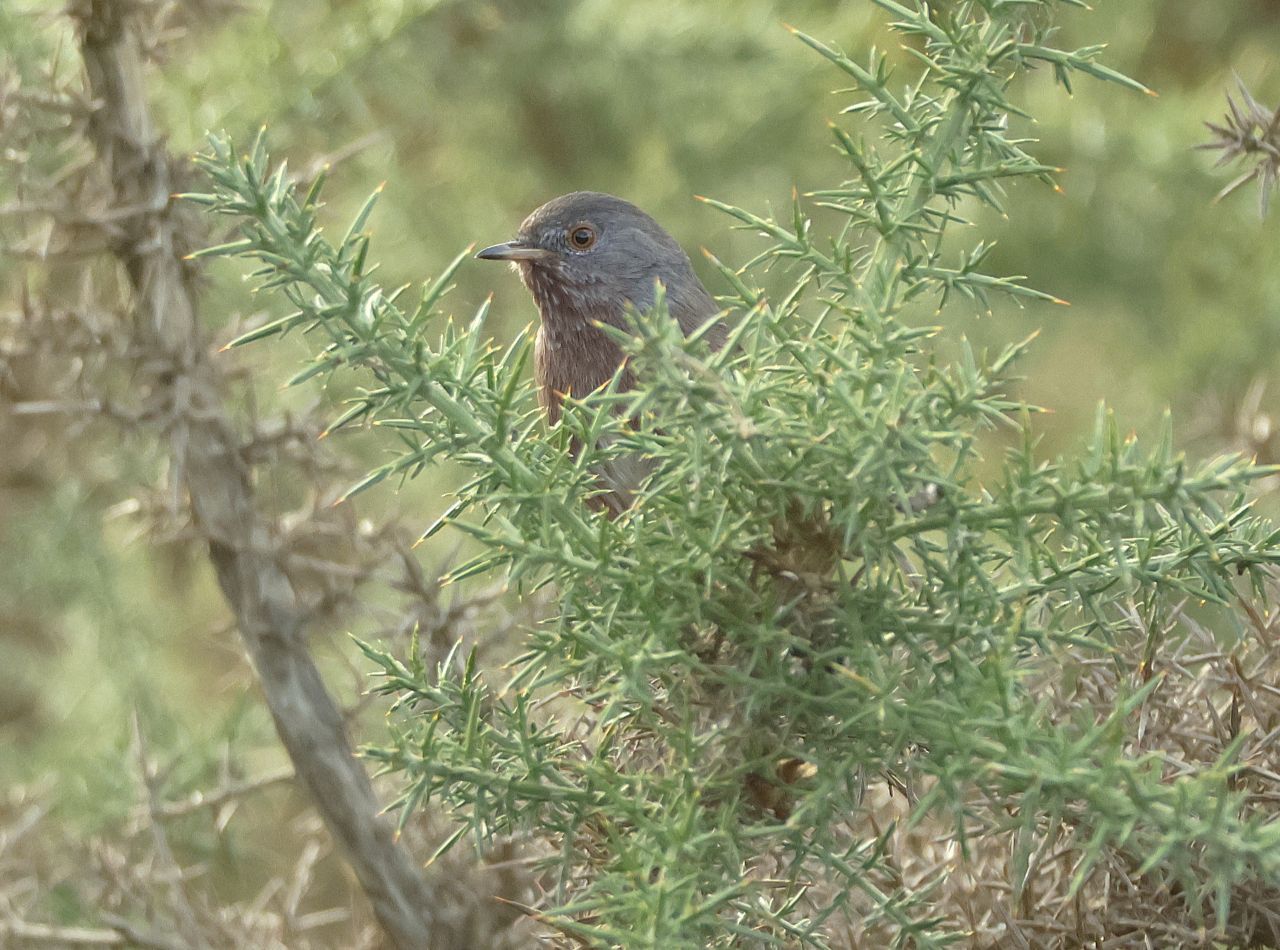
Dartford warbler, Whitmoor Common.
But later getting a glimpsed photo of a Dartford warbler on another part of the heathland.
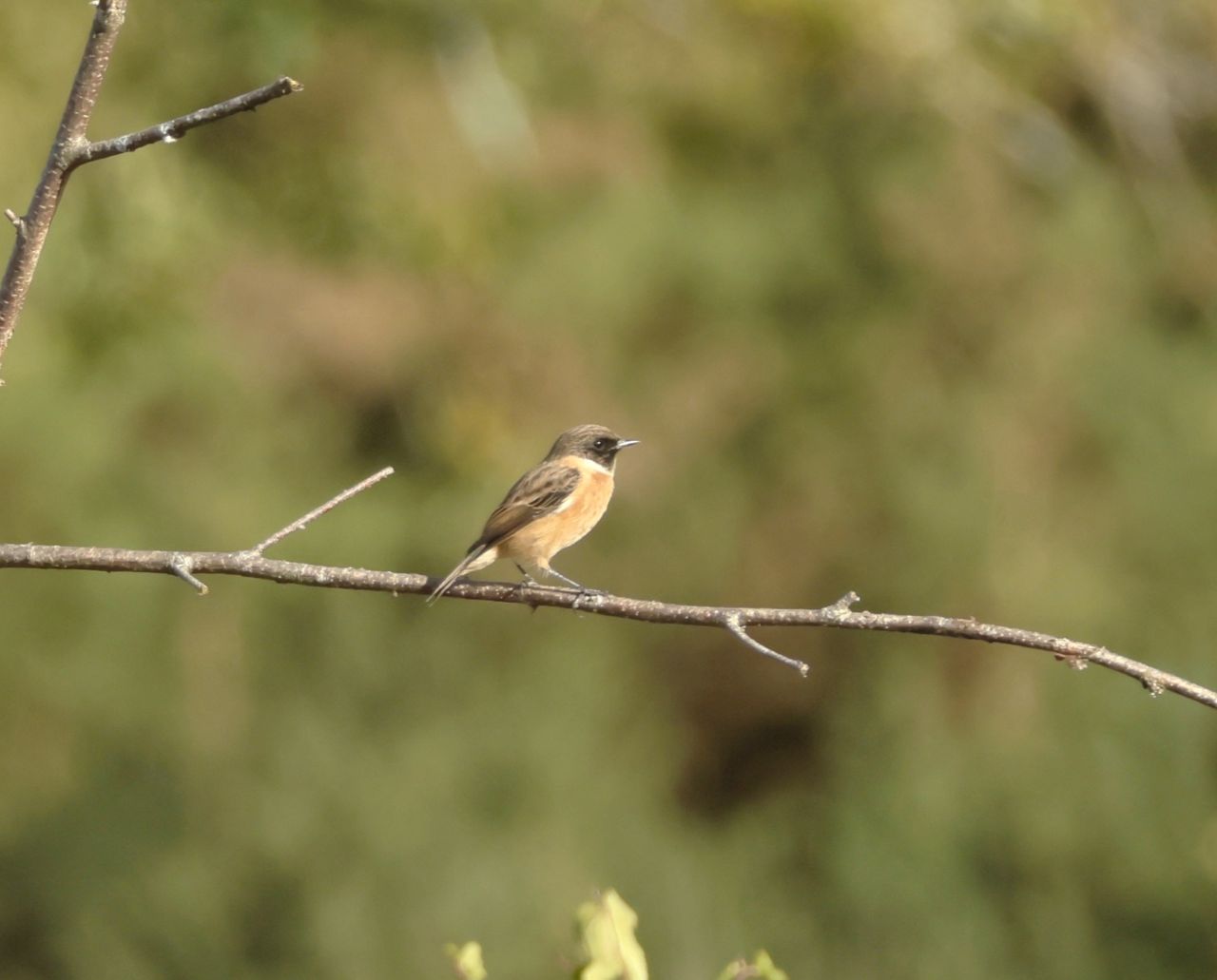
Male stonechat, Whitmoor Common.
Both male and female stonechats remained reliable for photos about the common.

Great spotted woodpecker, Whitmoor Common.
And great spotted woodpeckers continued to be heard and viewed.
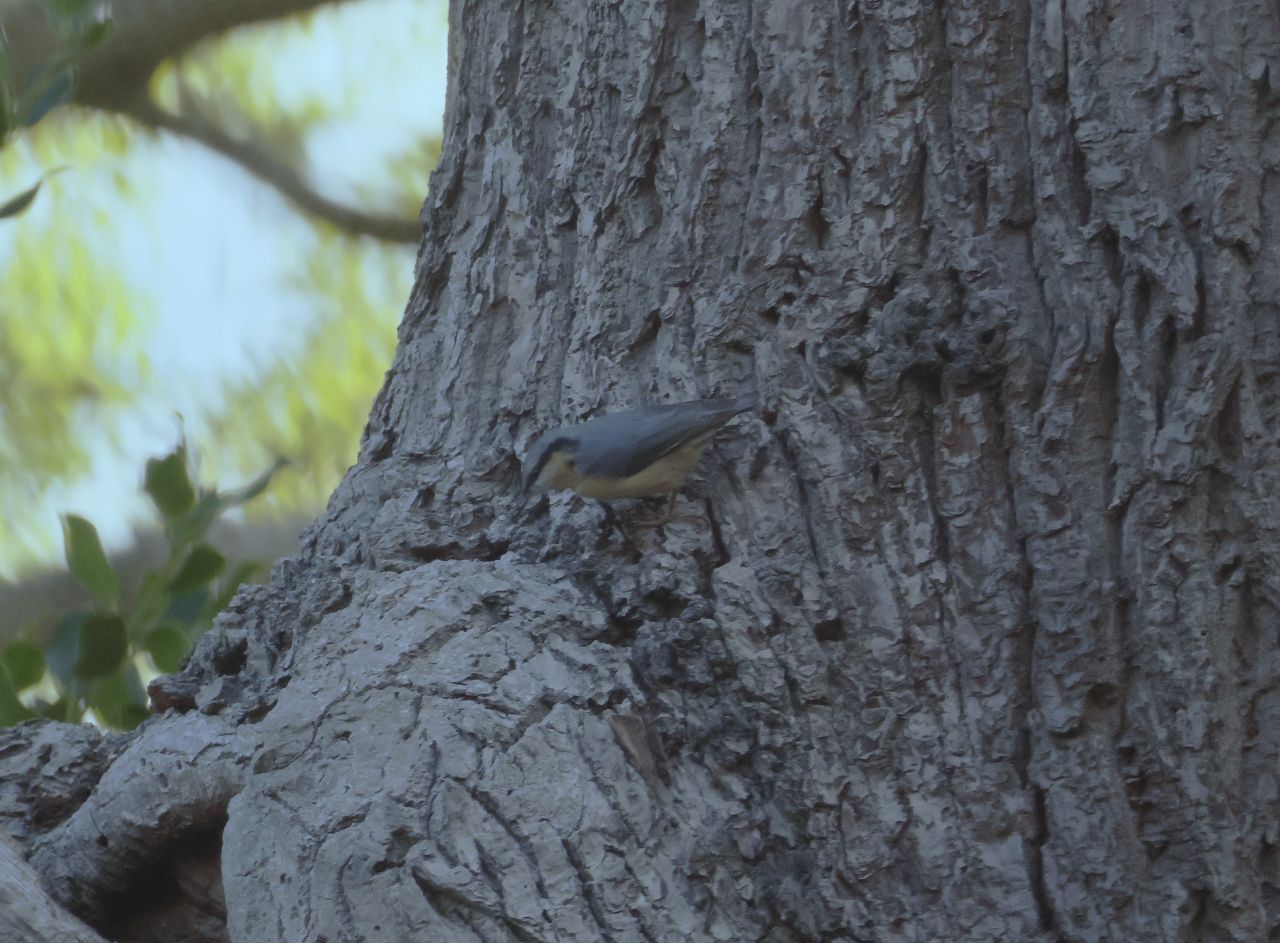
Nuthatch, Whitmoor Common.
Within the understory of trees in the woodland area, nuthatches were present.
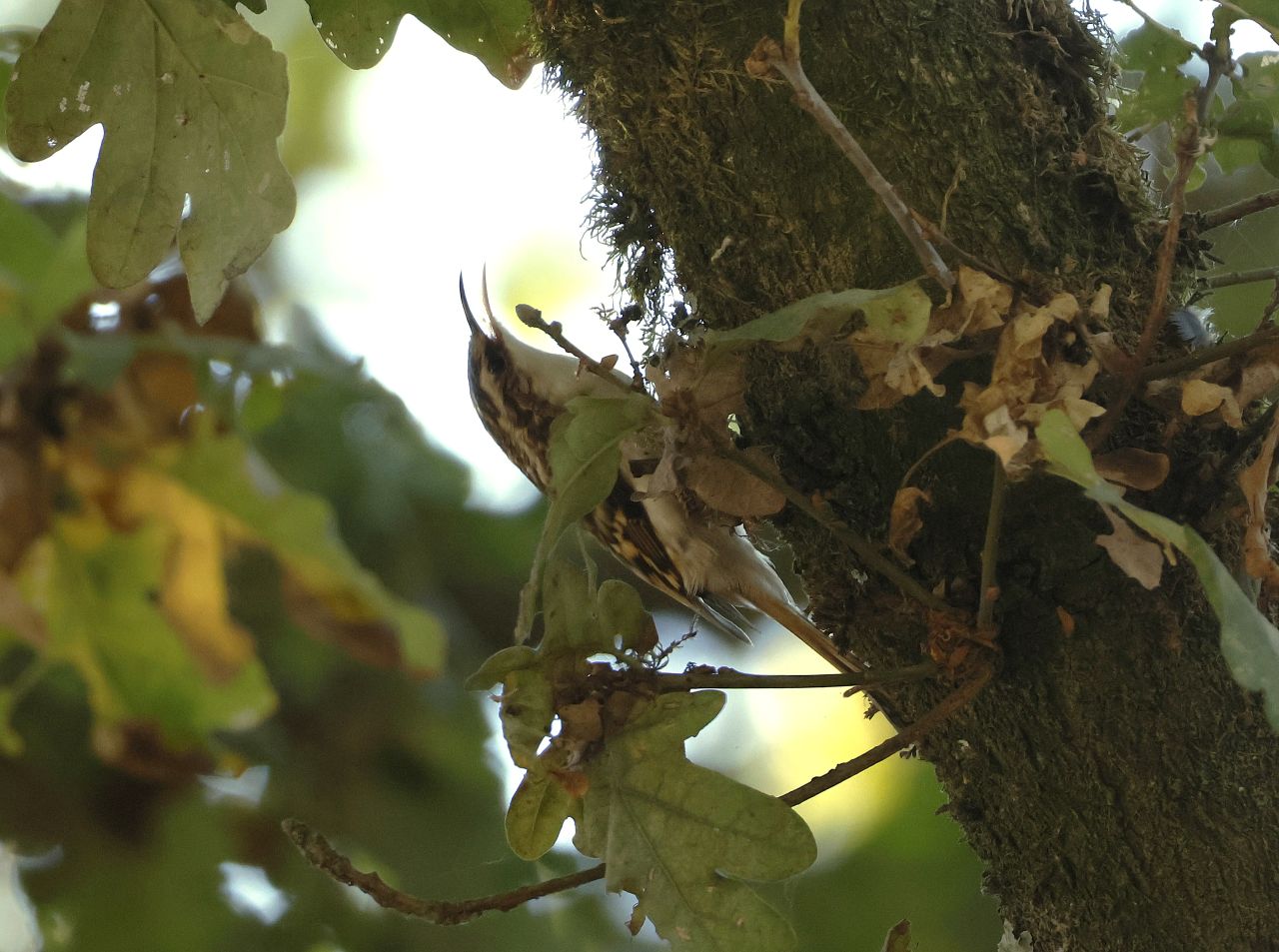
Treecreeper, Whitmoor Common.
And several treecreepers could be heard and viewed.
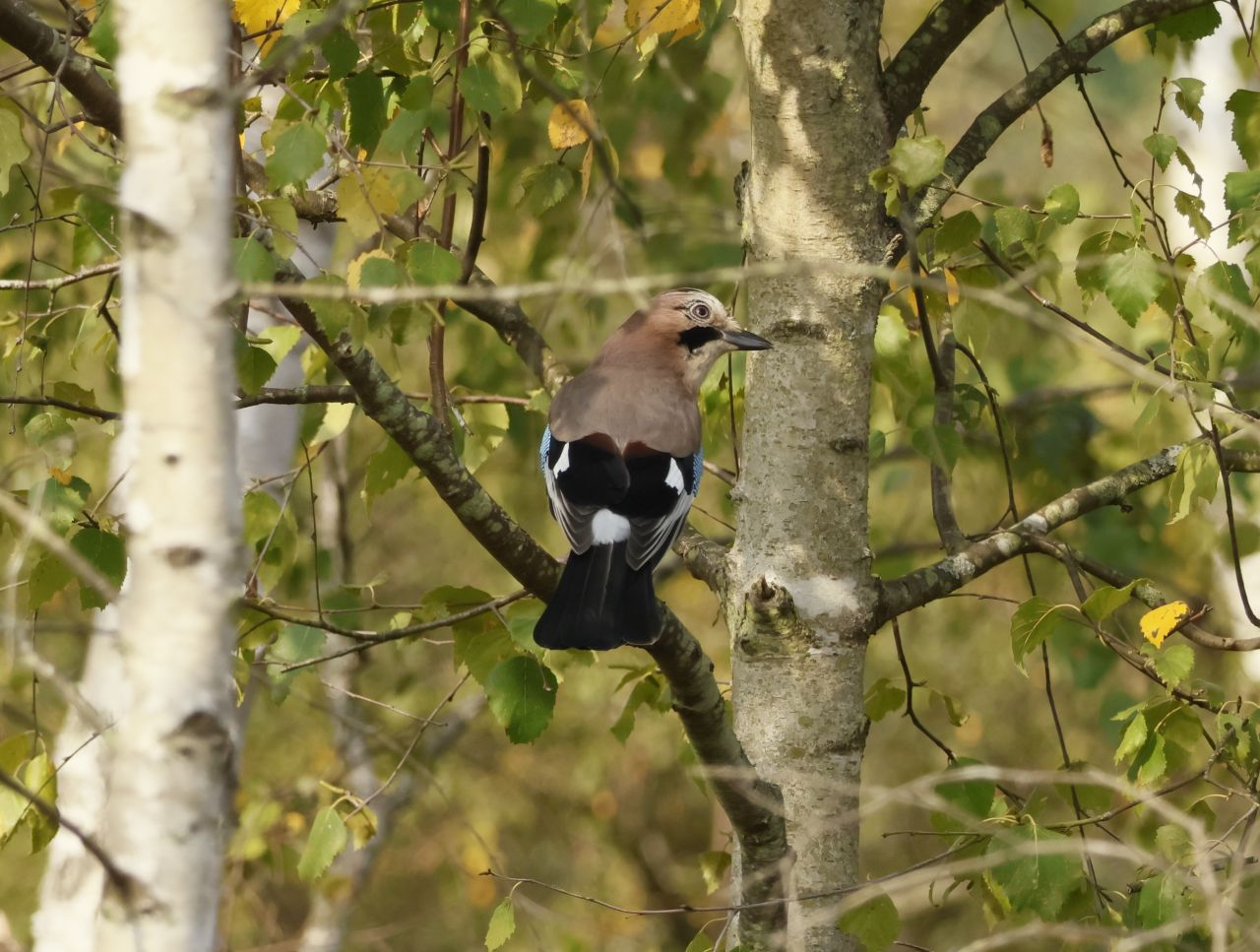
Jay, Whitmoor Common.
And jay also allowed me a photo.
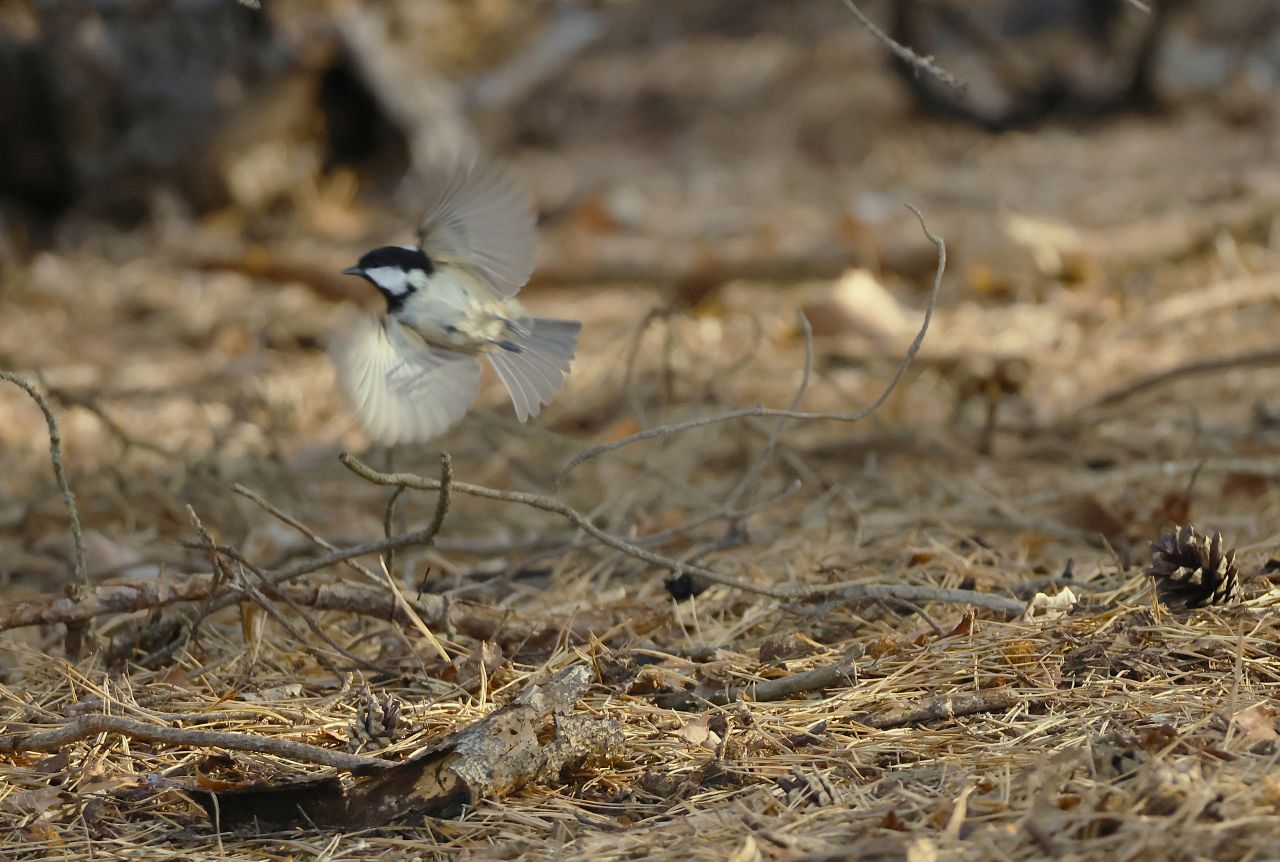
Coal tit, Whitmoor Common.
In a mature pine tree, a few coal tits could be seen feeding.
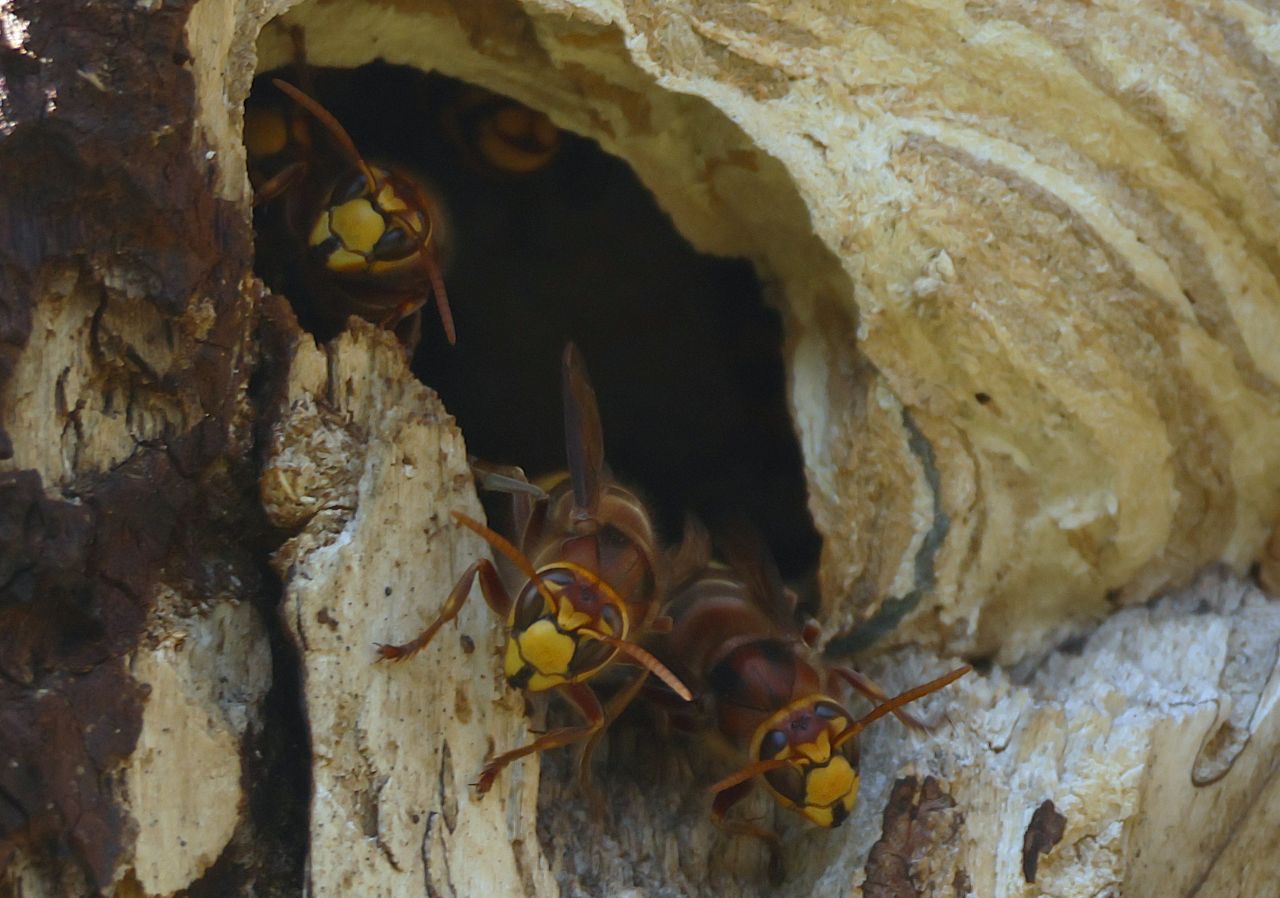
Hornets’ nest, Whitmoor Common.
And in a dead silver birch tree a hornets’ nest continued to be active.
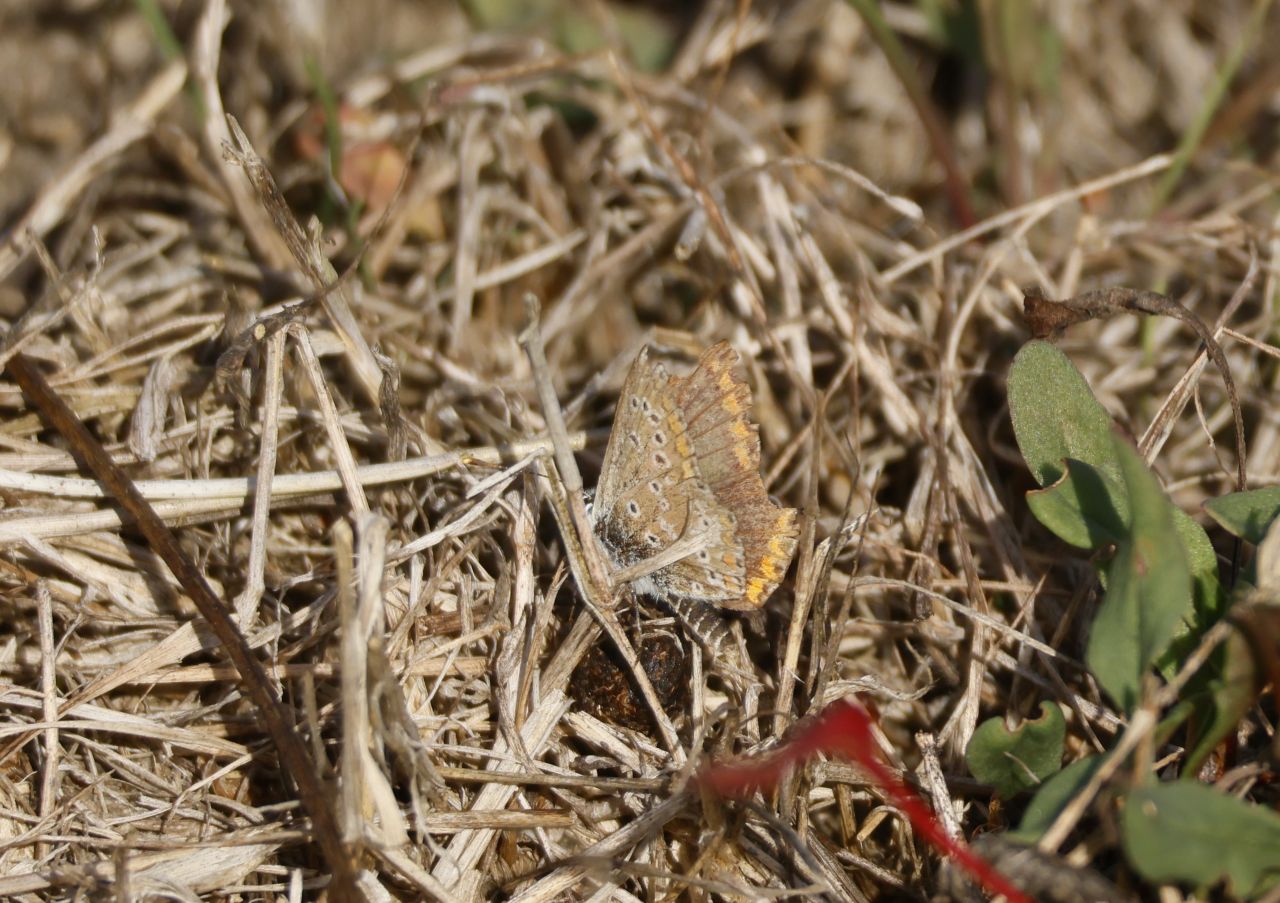
Brown argus butterfly in the old horse field, Whitmoor Common.
In the old horse field adjacent to the common the warm weather conditions continued to see brown argus butterflies on the wing.
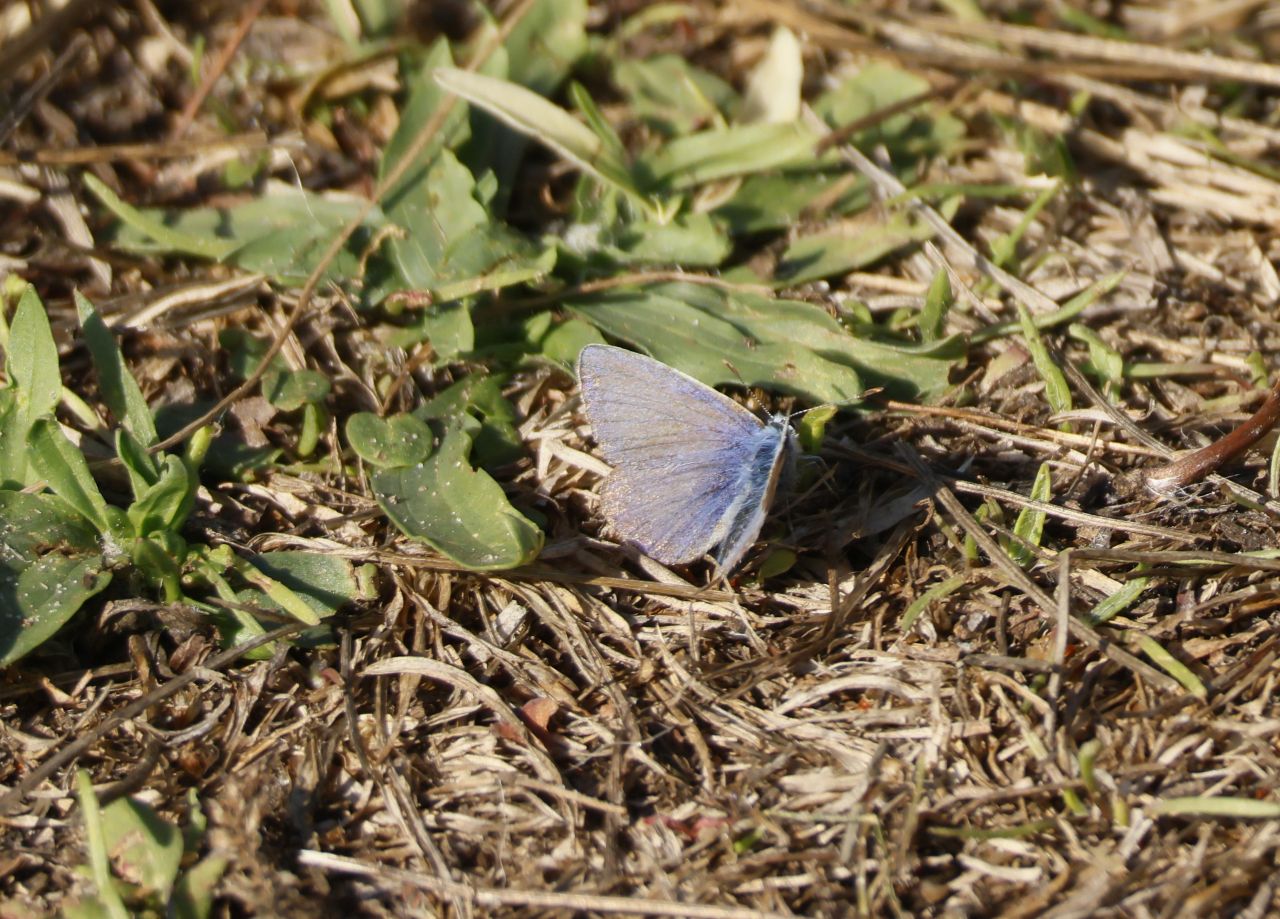
Common blue butterfly in the old horse field, Whitmoor Common.
As well as a few common blue butterflies, although both now starting to look rather tatty.
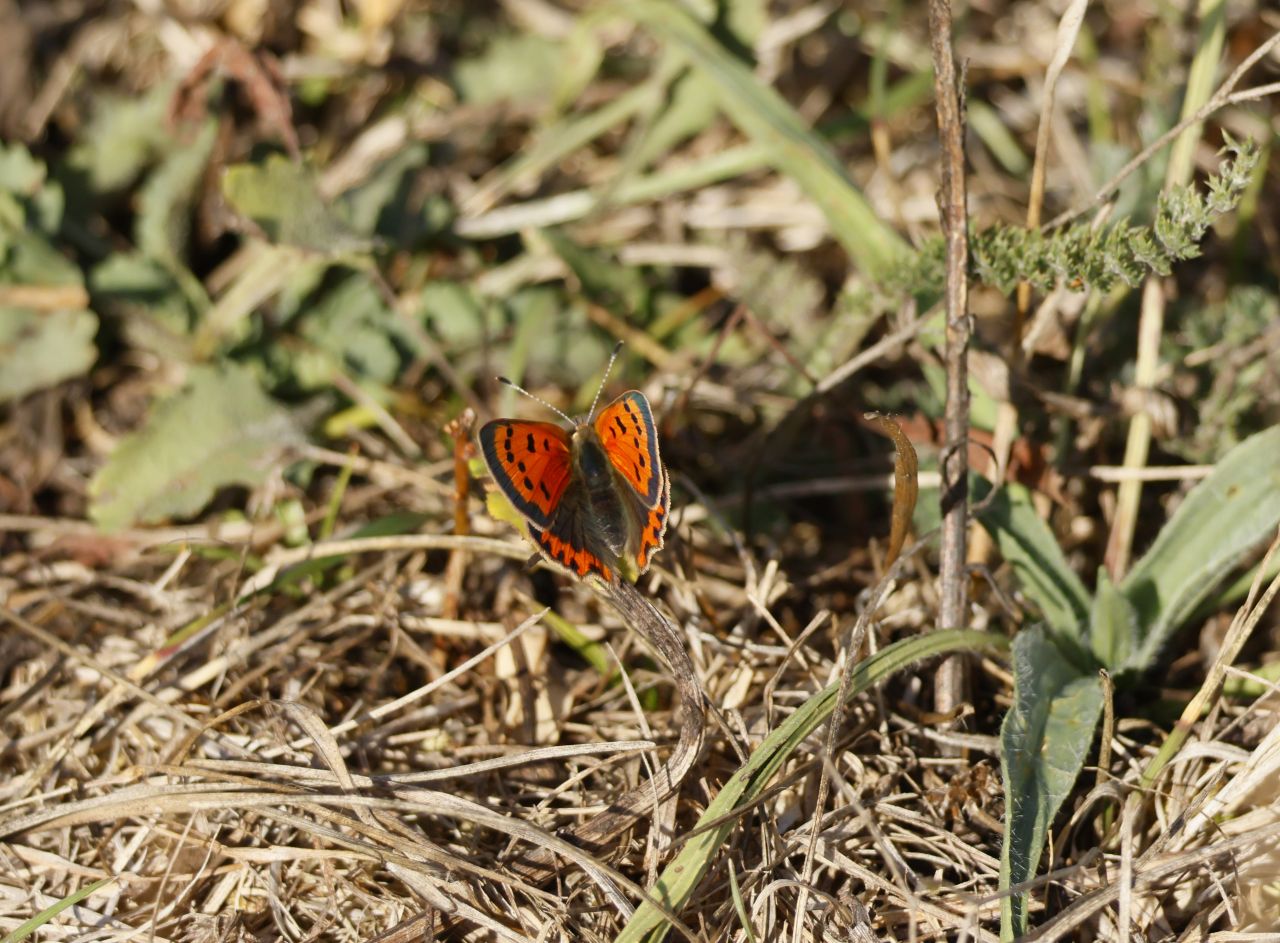
Small copper butterfly in the old horse field, Whitmoor Common.
However, small copper butterflies were still in smart condition.
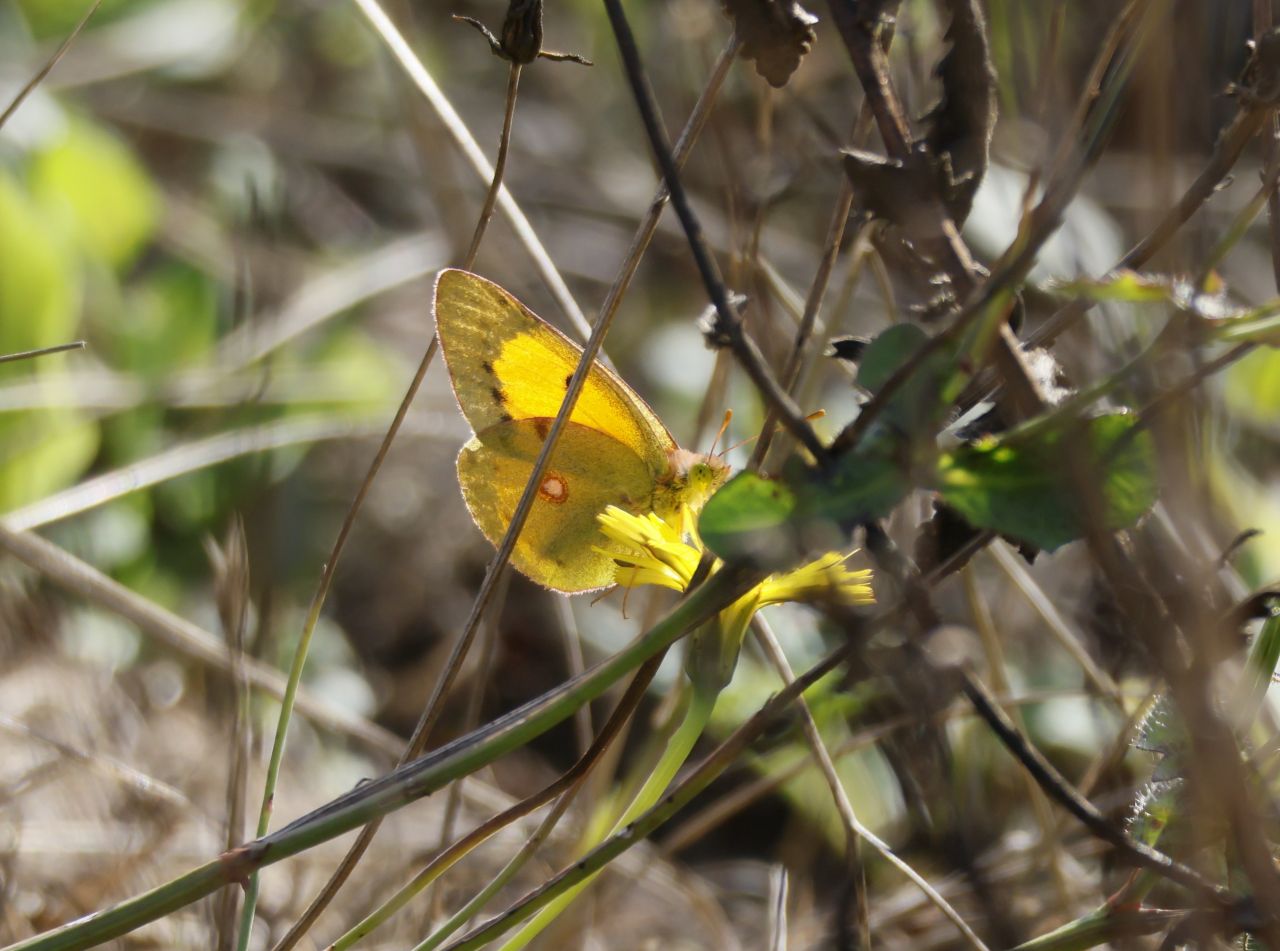
Clouded yellow butterfly in the old horse field, Whitmoor Common.
And at least four clouded yellow butterflies could still be counted there during the first week of the month.
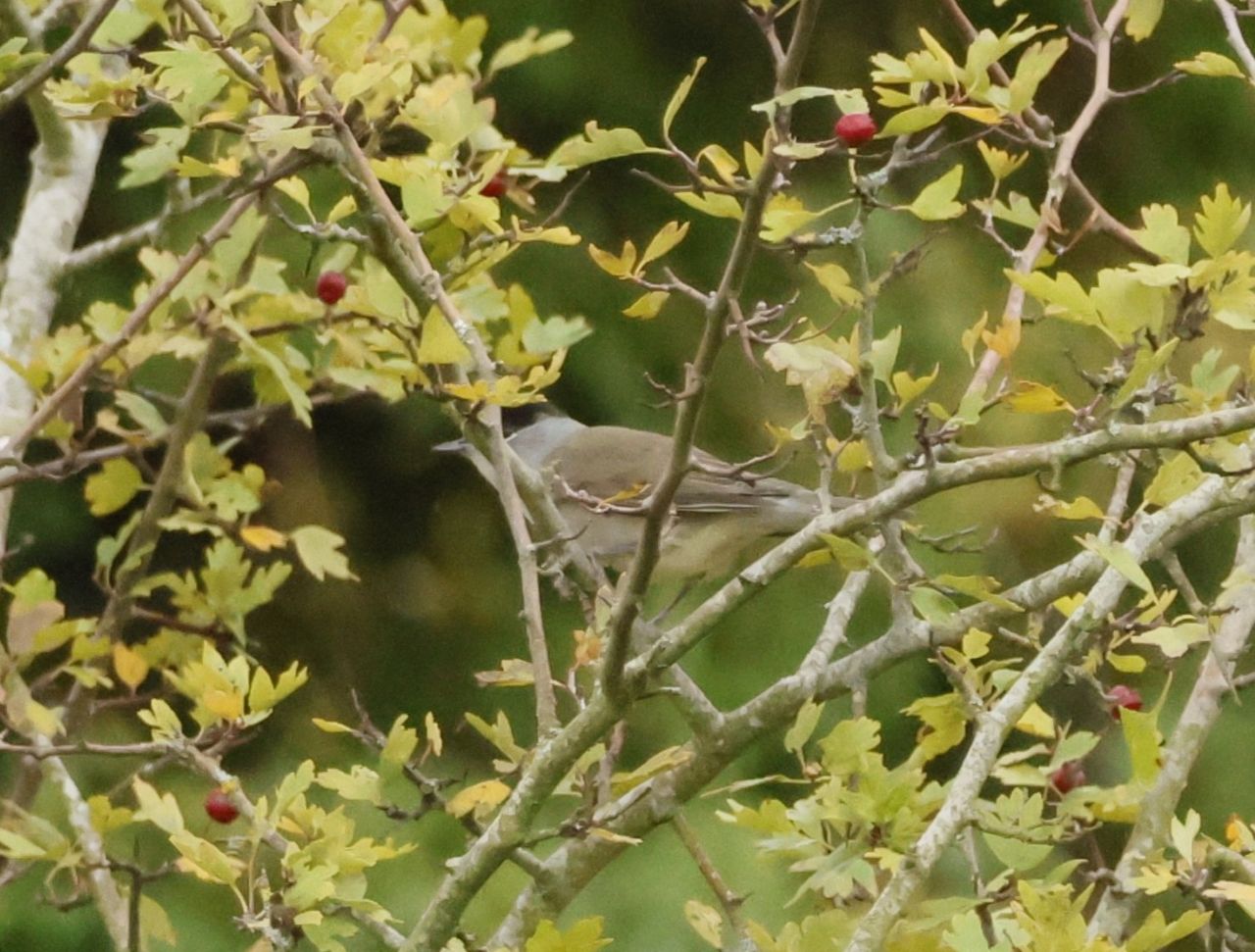
Blackcap, Whitmoor Common.
A blackcap could occasionally be viewed feeding within a large clump of brambles.
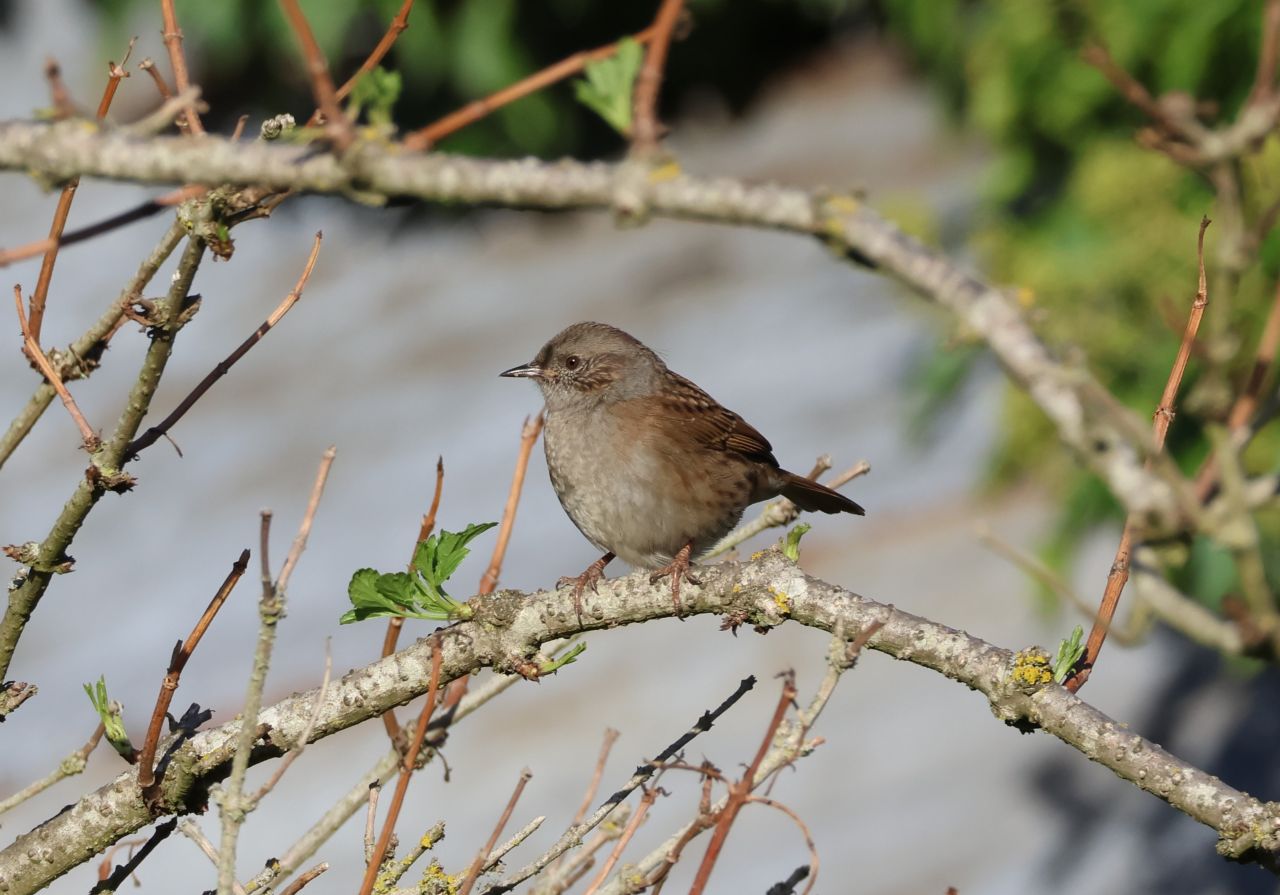
Dunnock in the old horse field, Whitmoor Common.
While a dunnock perched nearby.
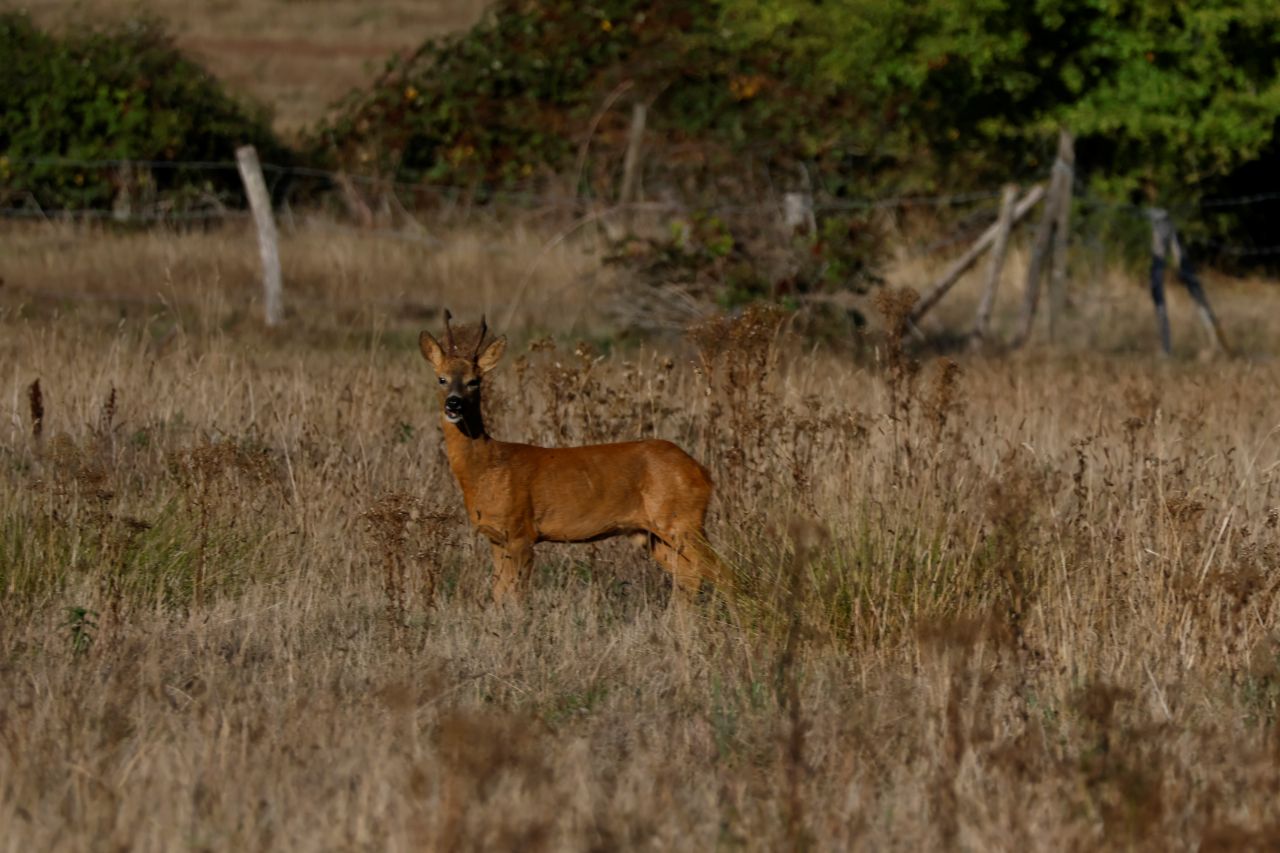
Buck roe deer in the old horse field, Whitmoor Common.
A buck roe deer continued to be a regular sighting across the field.
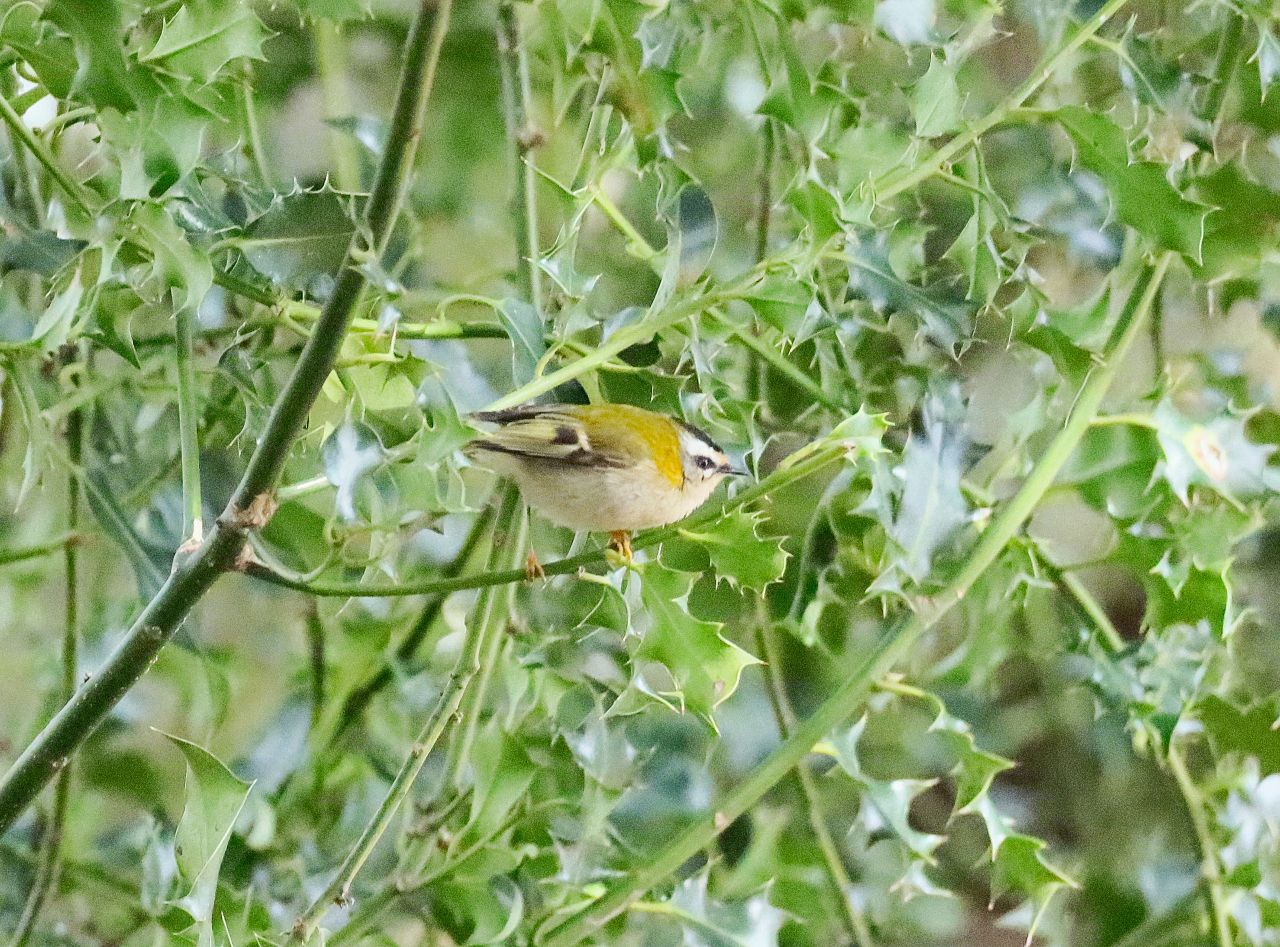
Firecrest.
And I was alerted by the sound of a firecrest in a small section of hollies that lined the field.
On my visit to Lydling Farm, in Shackleford on October 8, I continued to struggle to remain optimistic.
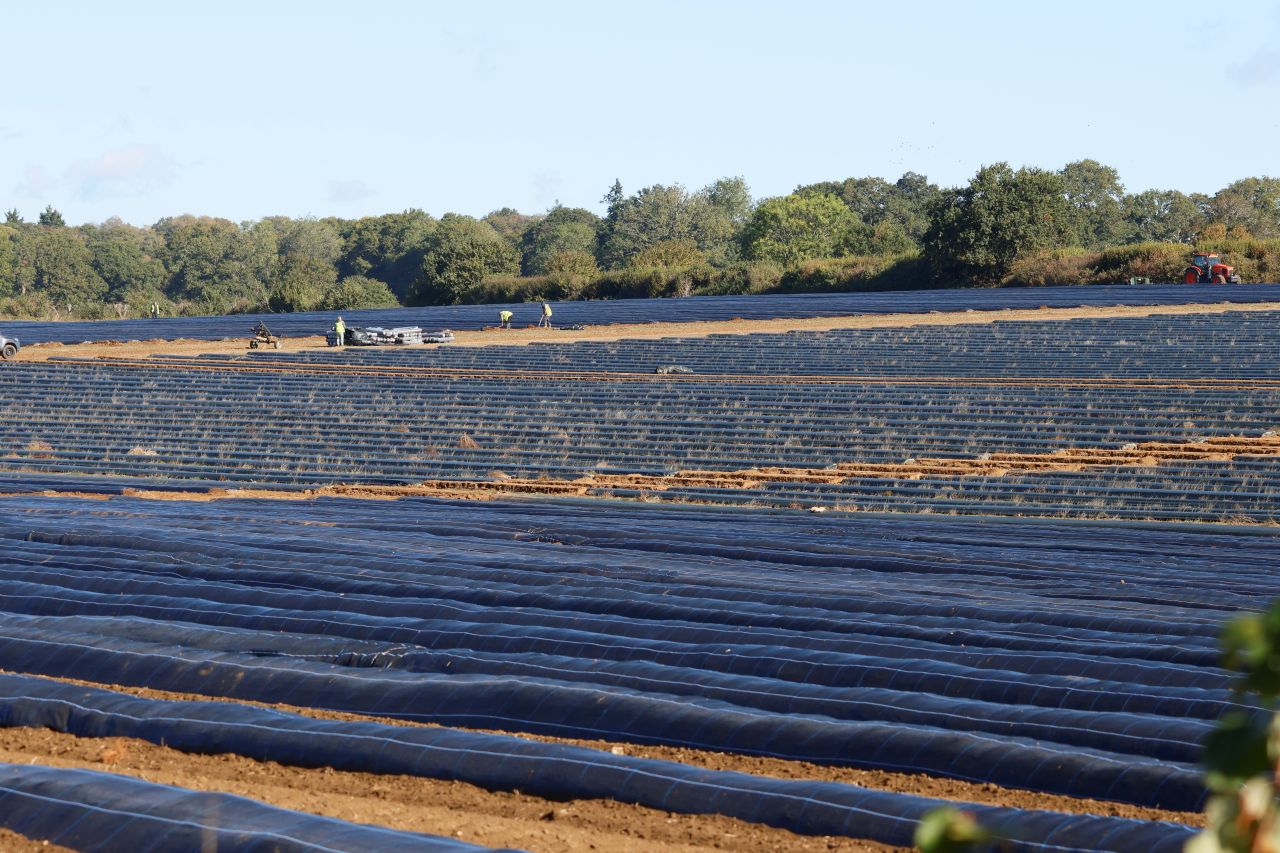
Lydling Farm, Shackleford.
This on seeing more and more of the fields there now being covered by long strips of robust plastic sheeting.
As mentioned in my previous report, this is apparently in aid of developing a large commercial fruit farm across the landscape. How it will affect the wildlife in the area only time will tell.

Little owl, Lydling Farm, Shackleford.
However, on the plus side the little owl continued to show well, although distant and at its usual residence in a mature oak tree across the field.
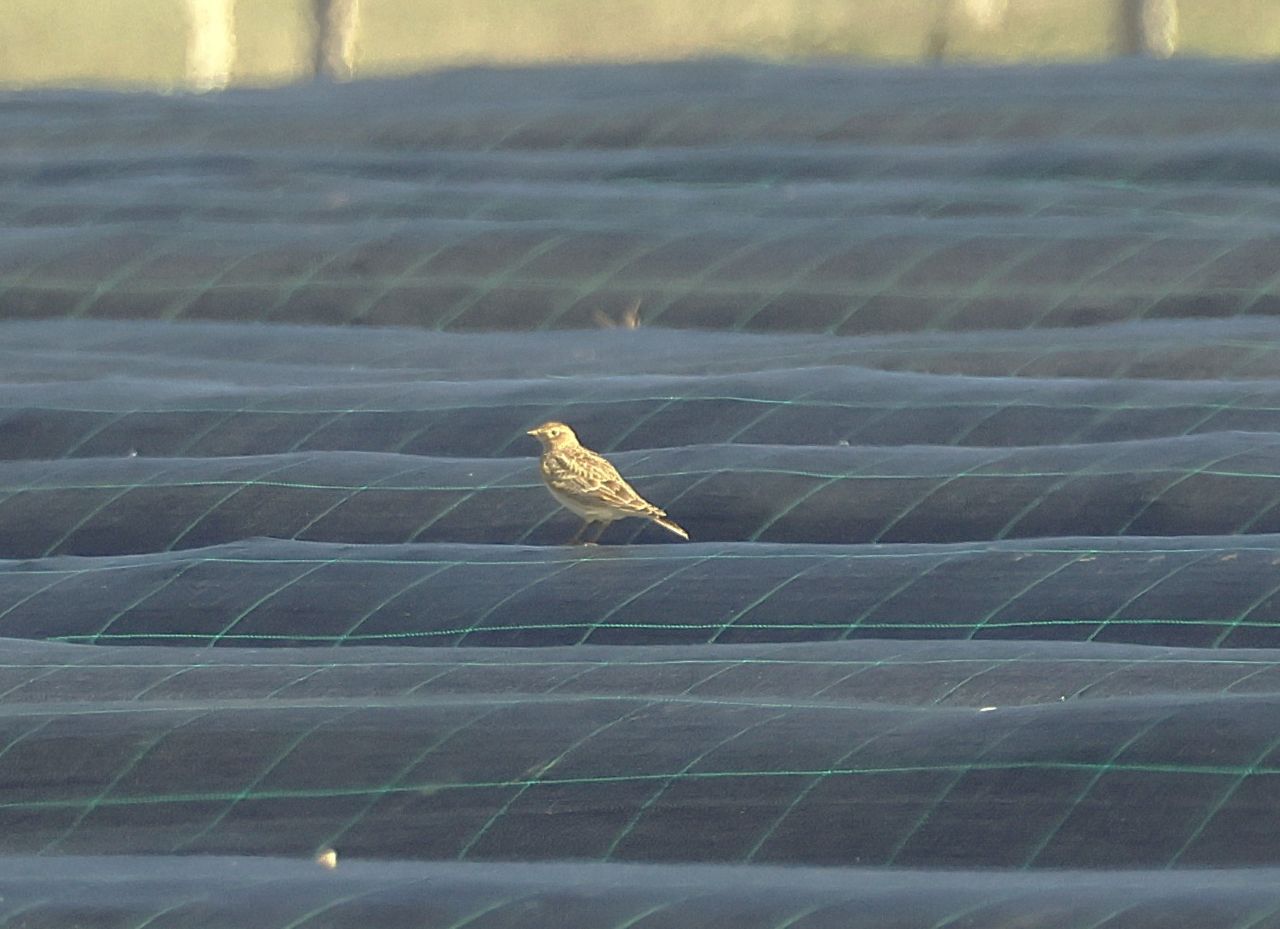
Skylark, Lydling Farm, Shackleford.
A few skylarks could still be viewed in the fields, with some perched up on the newly installed plastic sheeting.
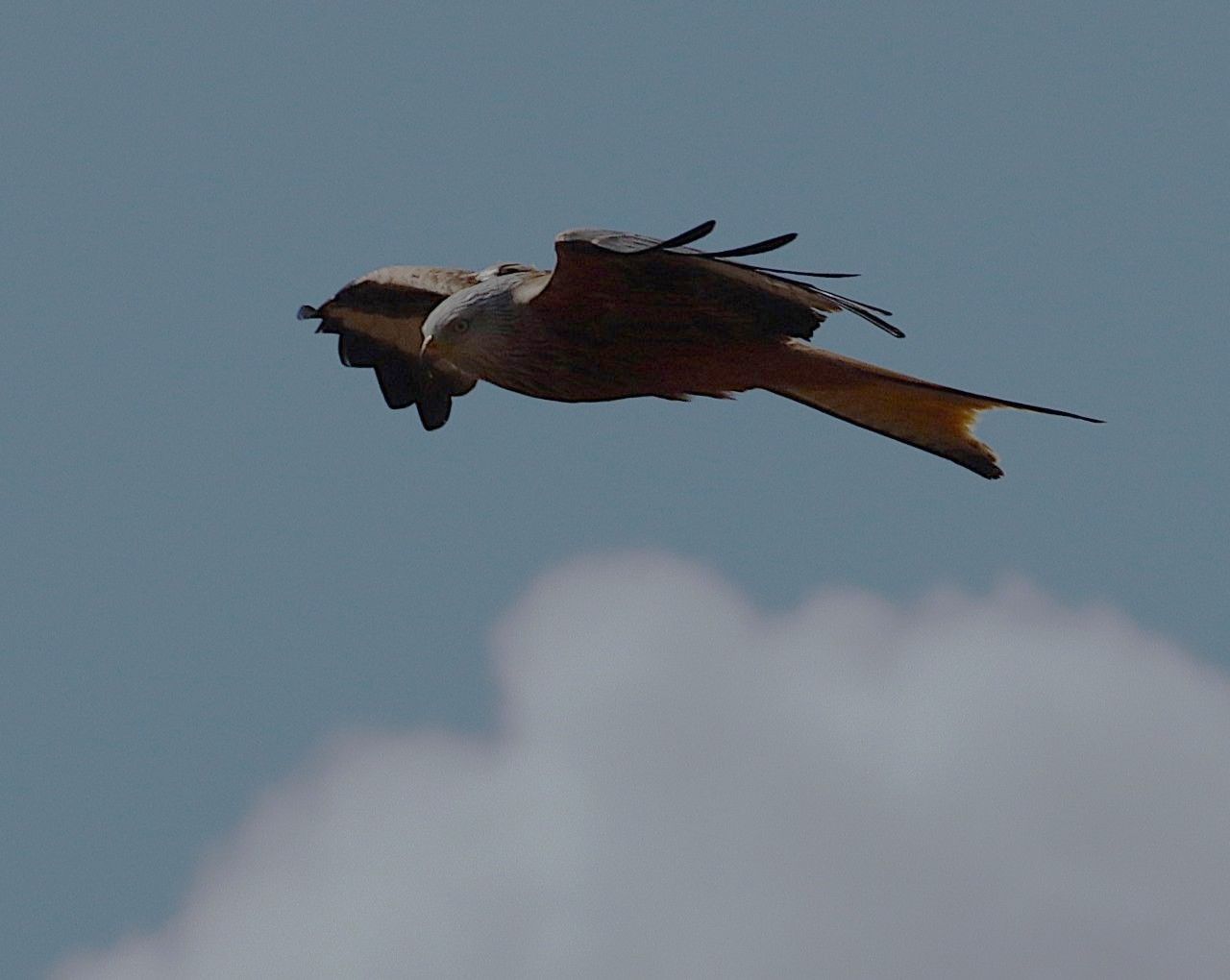
Red kite, Lydling Farm, Shackleford.
And a red kite flew low overhead.
The highlight of the day for me was a late migrating wheatear and almost certainly my last to be seen this year as it headed back to Africa.

Wheatear, Lydling Farm, Shackleford.
Managing to achieve several pictures to show why in old English it was commonly known as a white-arse.

Wheatear, Lydling Farm, Shackleford.
In those days the word ‘arse’ wasn’t considered to be vulgar. And with its white rump, it was considered an apt name for the bird.
However, by Victorian times its original name had become increasingly embarrassing to mention, so it was then officially changed to wheatear (with white deriving from white and ear, a derision of rear.
Share This Post




"But I was sure that at least Guildford, in Surreyland, would make me an Alderman. Such a nice robe." (Click here to see: Proposed List of Honorary Aldermen Rejected)









Recent Comments