- Stay Connected

Socialize


 Abraham Lincoln
If given the truth, the people can be depended upon to meet any national crisis...
Abraham Lincoln
If given the truth, the people can be depended upon to meet any national crisis...

 Guildford news...
for Guildford people, brought to you by Guildford reporters - Guildford's own news service
Guildford news...
for Guildford people, brought to you by Guildford reporters - Guildford's own news service
Dangerous E Coli Levels Found in River Wey
Published on: 8 Sep, 2026
Updated on: 9 Sep, 2026

Wild swimmers in the River Wey at St Catherine’s into which, at times, sewage continues to be deposited.
By Esme Campbell
Swimmers in the River Wey face a higher risk of illness as tests show E.coli levels rocketed to over double the safe maximum in August.
St Catherine’s swimming spot in Guildford contained 2.4 times the guideline figure for E coli bacteria, tests by the Trust and Water Rangers revealed.
The figures coincide with a national trend in sewage spill increases, despite this year’s low rainfall, although Alistair Young from the Water Rangers said that sewage isn’t the likely cause in this case.
“We’ve recently run some tests to understand the originating type of E. coli, and it demonstrates a very different story,” Young said. “Pollution is a much more complex problem, and E coli are probably not the worst thing we should be paying attention to.”
While evidence paints a different picture for the River Wey, water companies have once again been criticised over sewage handling amid a national increase in dry-day spills earlier this year.
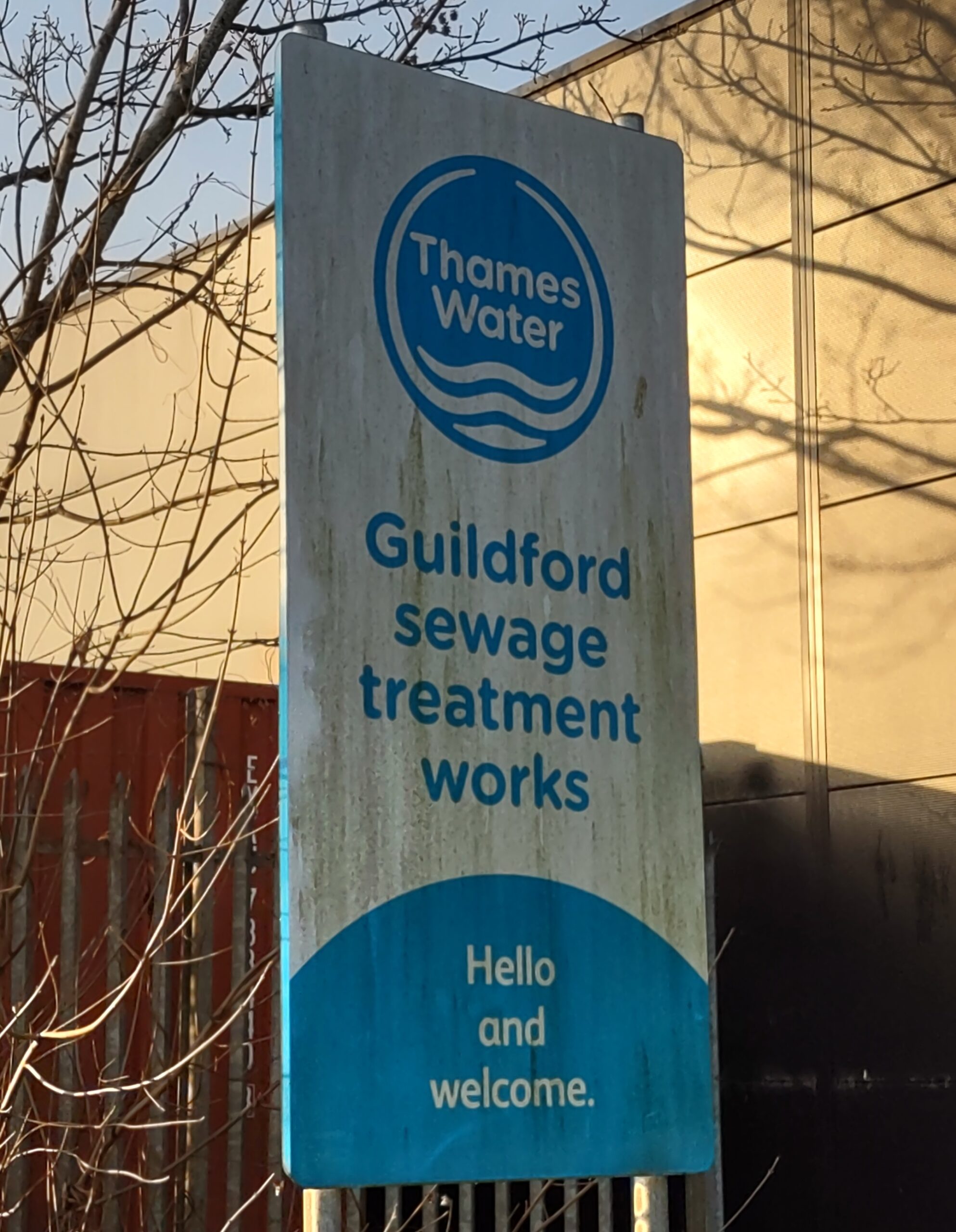
Guildford sewage treatment works at Slyfield.
Thames Water is a leading culprit, having registered 1,052 incidents of sewage discharge on days with little to no rainfall between January and May.
Companies use storm overflows to dump waste into waterways during periods of heavy rainfall to stop sewage backing up into homes. They have permits to do so, but releasing sewage on dry days is illegal unless in exceptional circumstances.
A spokesperson for Thames Water said: “Heavy rainfall can have an instant, adverse impact on our sewer infrastructure. However, over wider catchment areas, rainwater and groundwater move more slowly.
“As a result, there can be a delay between a period of heavy rain and the increased flow reaching an overflow point, sometimes even occurring during a period with no direct rainfall.”
Despite these promises, Thames Water hasn’t been able to avoid the backlash from billpayers and environmental groups, with some refusing to pay their wastewater bills.
The figures have also been met with calls for nationalisation, and a petition will see Parliament debate the possibility next week.
Share This Post


Responses to Dangerous E Coli Levels Found in River Wey
Leave a Comment Please see our comments policy. All comments are moderated and may take time to appear. Full names, or at least initial and surname, must be given.











Victor Howarth
September 8, 2026 at 10:07 am
I think that we are all suffering from past designs for our water system being sold by our government to companies who are in it to make money.
The design was for pressure in the waste water part of the system to be relieved by pushing waste water into the sea or nearest river. Extra rain water goes into the waste water which includes sewerage from houses, hospitals etc.
The lack of rain might mean that the waste water system is overloaded with sewerage so poor design leads to only the excess sewerage being pumped away to where it was designed to go.
I used to live on an island where all sewerage at one time went into the sea. It would have been difficult to design a system with mechanical pumps to push it into the system on the mainland.
Nigel Searle
September 8, 2026 at 10:46 am
This article pays a lot of attention to the undesirable practise of sewage discharge into watercourses, however: “The figures coincide with a national trend in sewage spill increases, despite this year’s low rainfall, although Alistair Young from the Water Rangers said that sewage isn’t the likely cause in this case.
“We’ve recently run some tests to understand the originating type of E coli, and it demonstrates a very different story,” Young said. “Pollution is a much more complex problem, and E coli are probably not the worst thing we should be paying attention to.”
These comments by the Water Rangers require a more detailed explanation if, as stated, “sewage isn’t the likely cause” what is “the very different story”? Pollution from farmland immediately comes to mind, but this might be an unjustified & unfair accusation.