- Stay Connected

Socialize

 Abraham Lincoln
If given the truth, the people can be depended upon to meet any national crisis...
Abraham Lincoln
If given the truth, the people can be depended upon to meet any national crisis...

 Guildford news...
for Guildford people, brought to you by Guildford reporters - Guildford's own news service
Guildford news...
for Guildford people, brought to you by Guildford reporters - Guildford's own news service
Birdwatcher’s Diary No.336
Published on: 6 Oct, 2025
Updated on: 6 Oct, 2025
By Malcolm Fincham
Weather conditions became more settled as we moved into the latter weeks of September.
A high pressure system held back the Atlantic flow for a time, conveying a stream of cooler northerly air on its cyclonic leading edge bringing daytime temperatures down to mid to high teens Celsius in south-eastern counties of the UK.
A visit to Pulborough Brooks, West Sussex, in the company of Bob and Dougal, also included the addition of Steve on one of his whirlwind visits from his home now in Scotland, hoping to add a few new sightings to his year list.
September 15 saw temperatures still in the low 20s with pleasant sunny spells, enough to still attract a few late summer butterflies out on the wing.

Comma butterfly, Pulborough Brooks.
In some of the sunnier spots comma butterflies could be viewed resting on nettles.
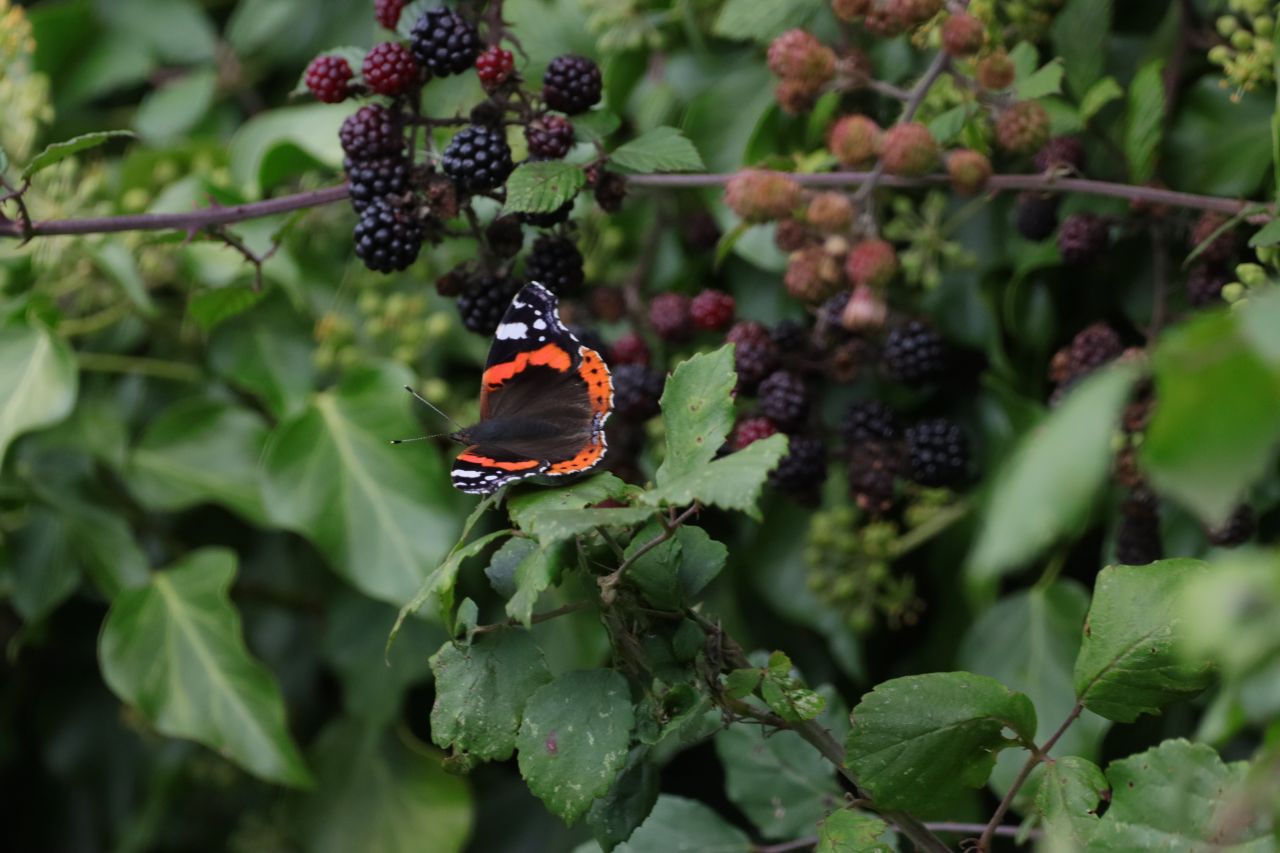
Red admiral butterfly, Pulborough Brooks.
While red admirals sunned themselves on shrubs about the ivy bushes, occasionally feeding on the ivy flower now attracting a variety of bees and several hornets to feed.
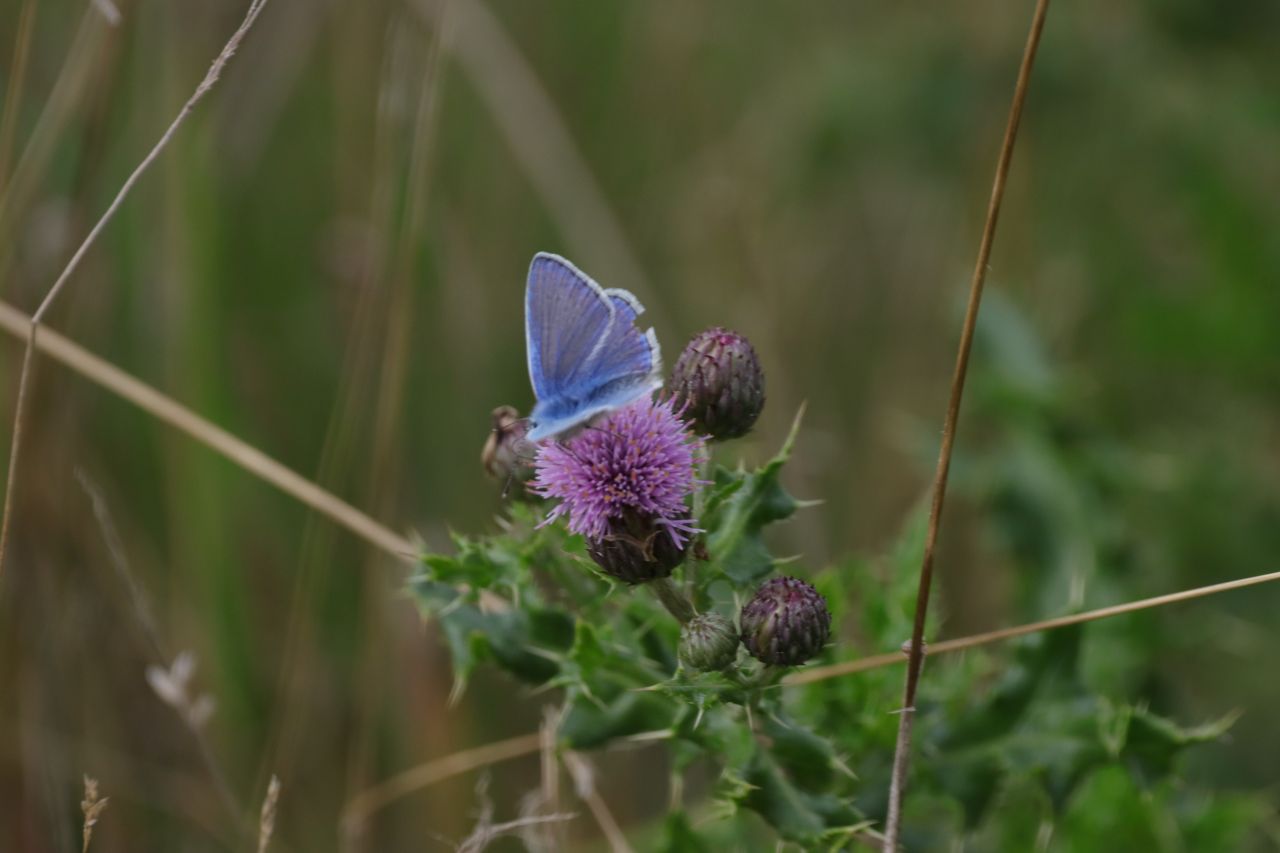
Common blue butterfly, Pulborough Brooks.
A few common blues could still be found about the grassland areas.
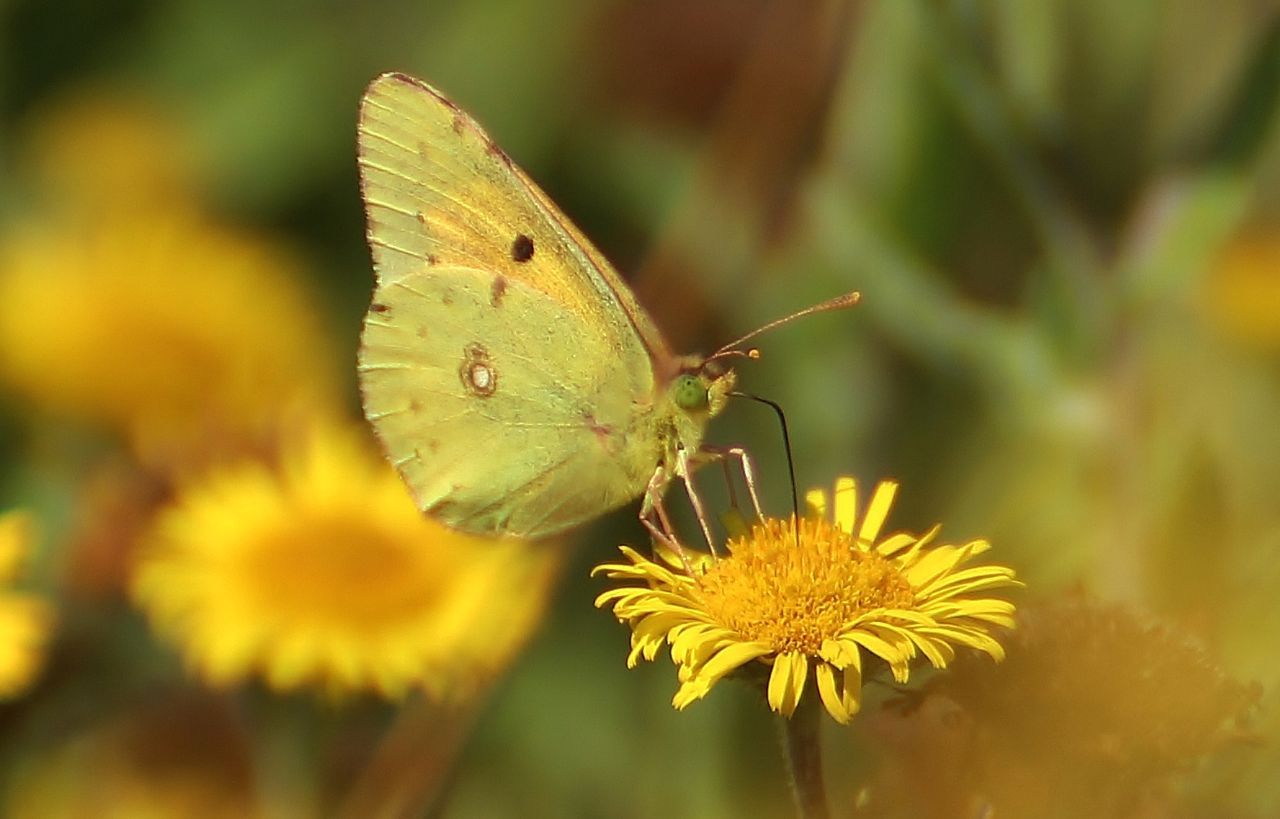
Clouded yellow butterfly, Pulborough Brooks.
Two unexpected butterflies to add to our sightings that day were also a clouded yellow.
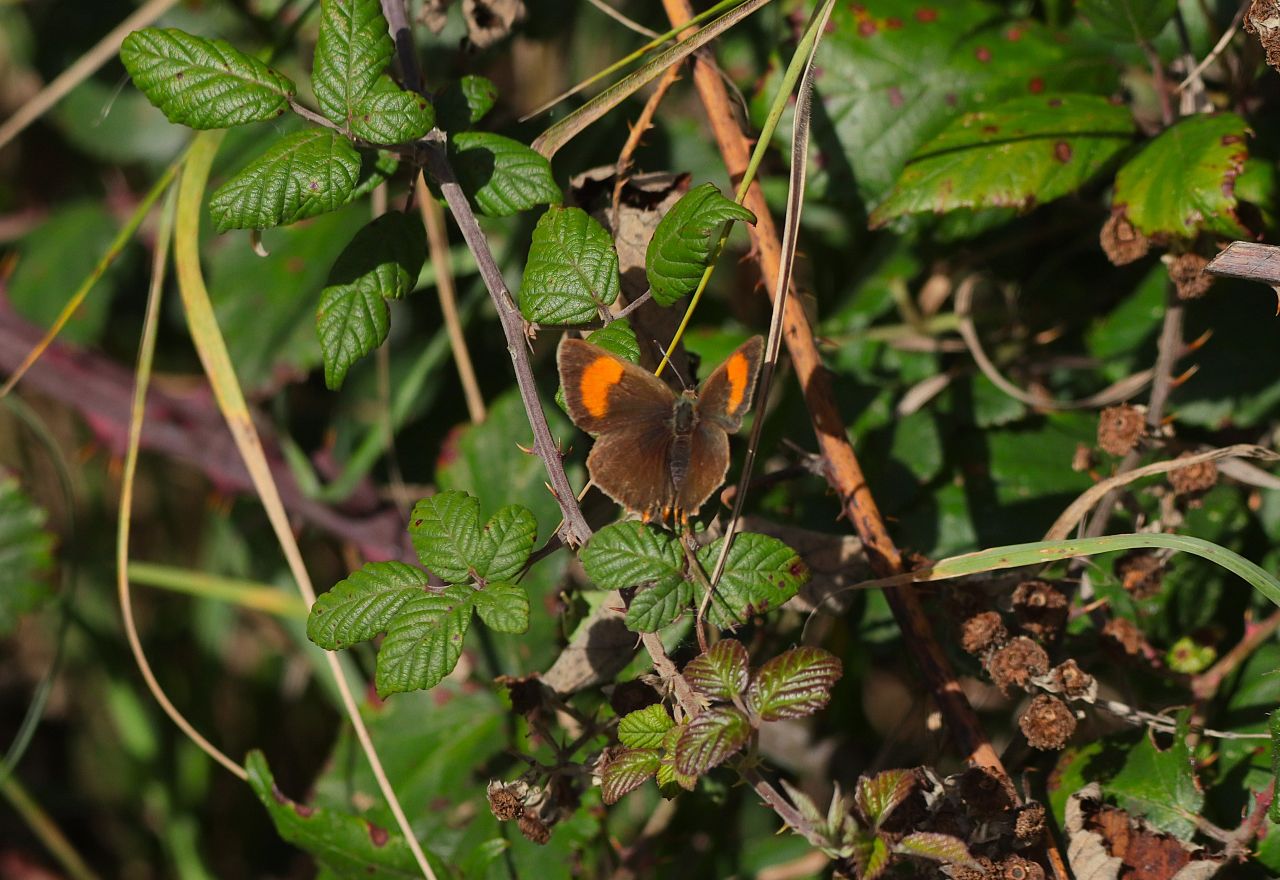
Brown hairstreak butterfly, Pulborough Brooks.
As well as a brown hairstreak butterfly looking for a place to lay its eggs among the blackthorn bushes.

Spotted flycatcher, Pulborough Brooks.
Adding to the highlights there were six spotted flycatchers feeding on insects from along a fence-line.
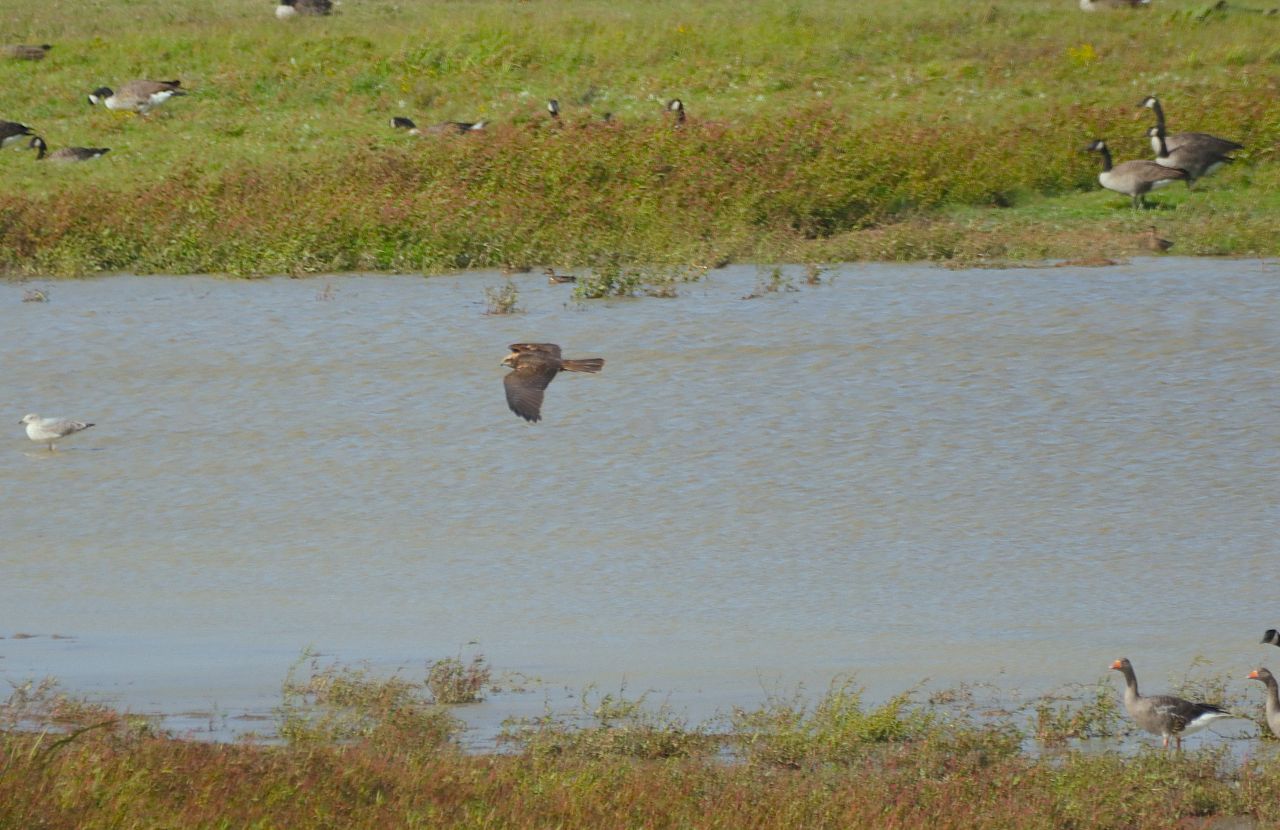
Marsh harrier, Pulborough Brooks.
And a distant marsh harrier hunting over the Brooks.
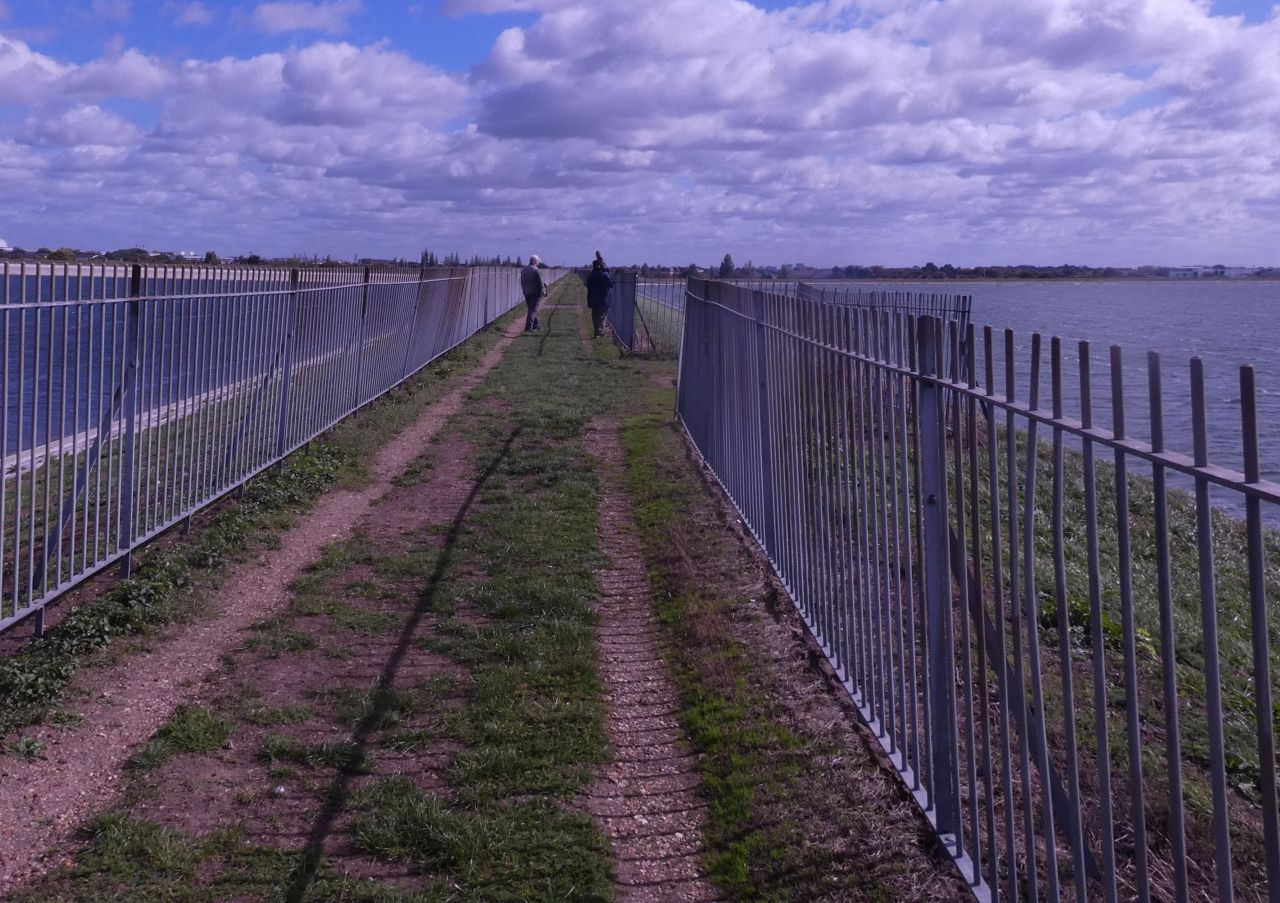
Causeway at Staines Reservoir.
The following day we headed off in the opposite direction from Guildford, visiting Staines Reservoir and Staines Moor.
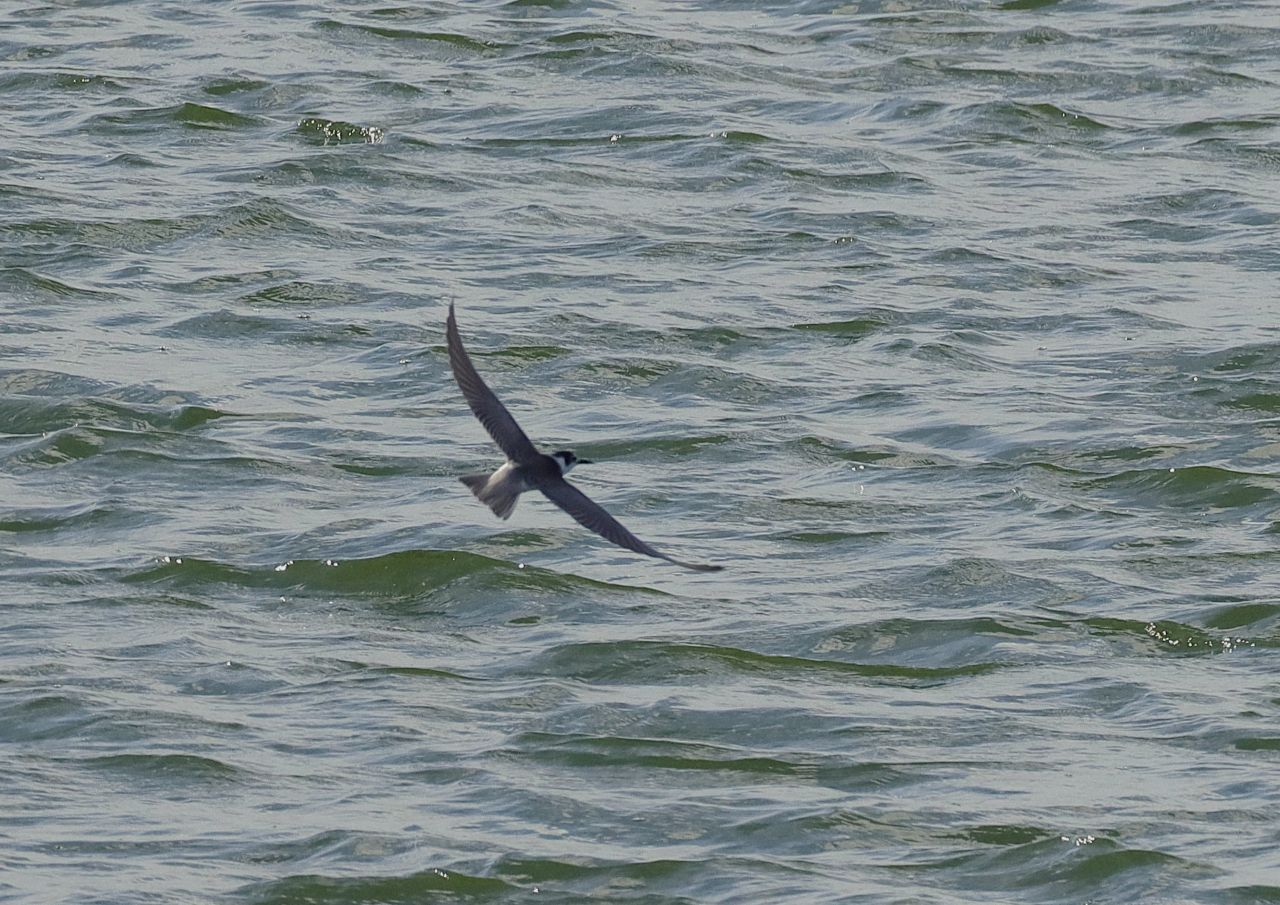
Black tern, Staines Reservoir.
At the reservoir as many as four black terns were present and could be viewed flying around on its south basin of the reservoir.
Although having seen one this year several weeks before at Frensham Great Pond, these were surprisingly closer to view as they flew about the water, and on this occasion managing a few, what I felt, reasonable in-flight photos.
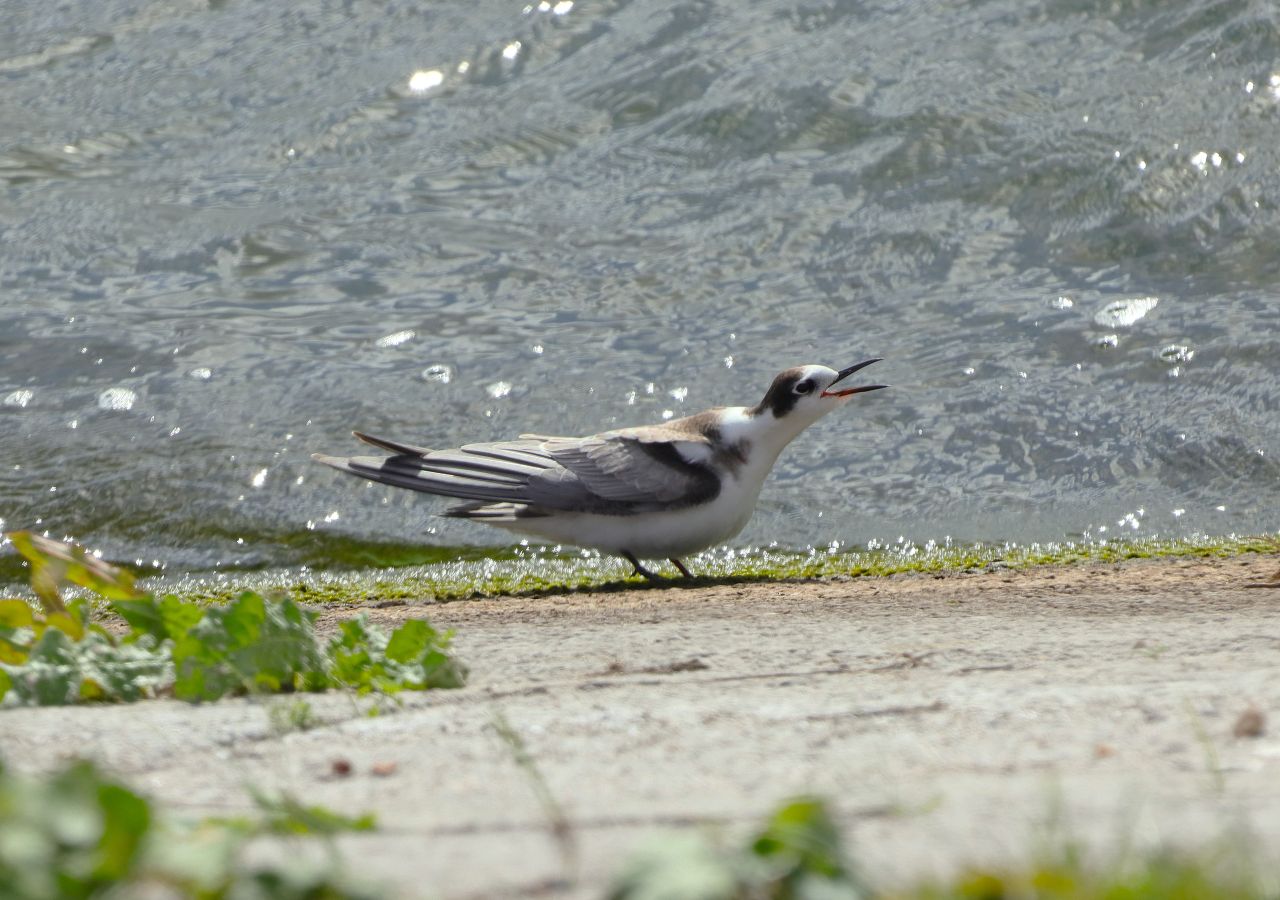
Black tern, Staines Reservoir.
A real bonus for me was to have one perch briefly on the concrete at the water’s edge by the causeway where I stood.
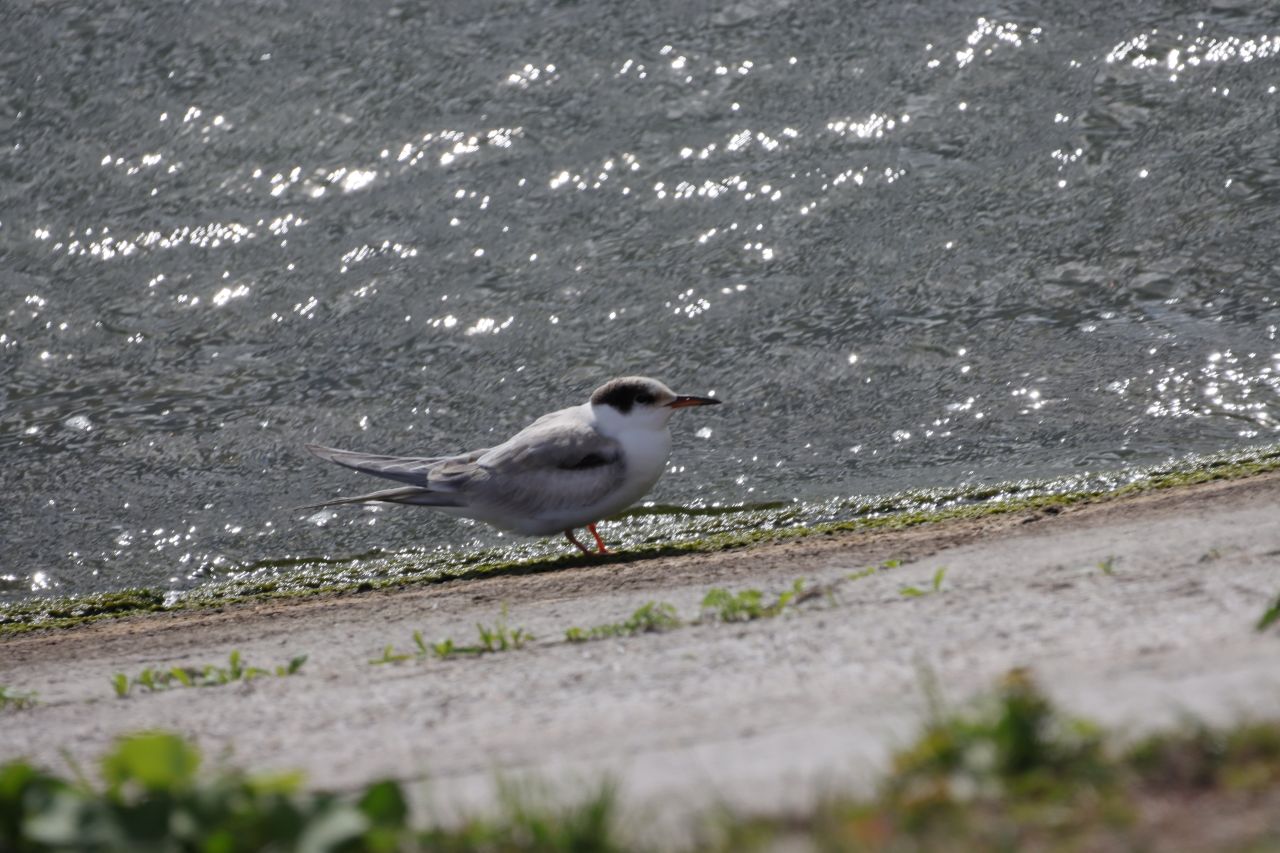
Common tern, Staines Reservoir.
Alongside it one of several common terns present that day also rested for a few moments, allowing a comparison.
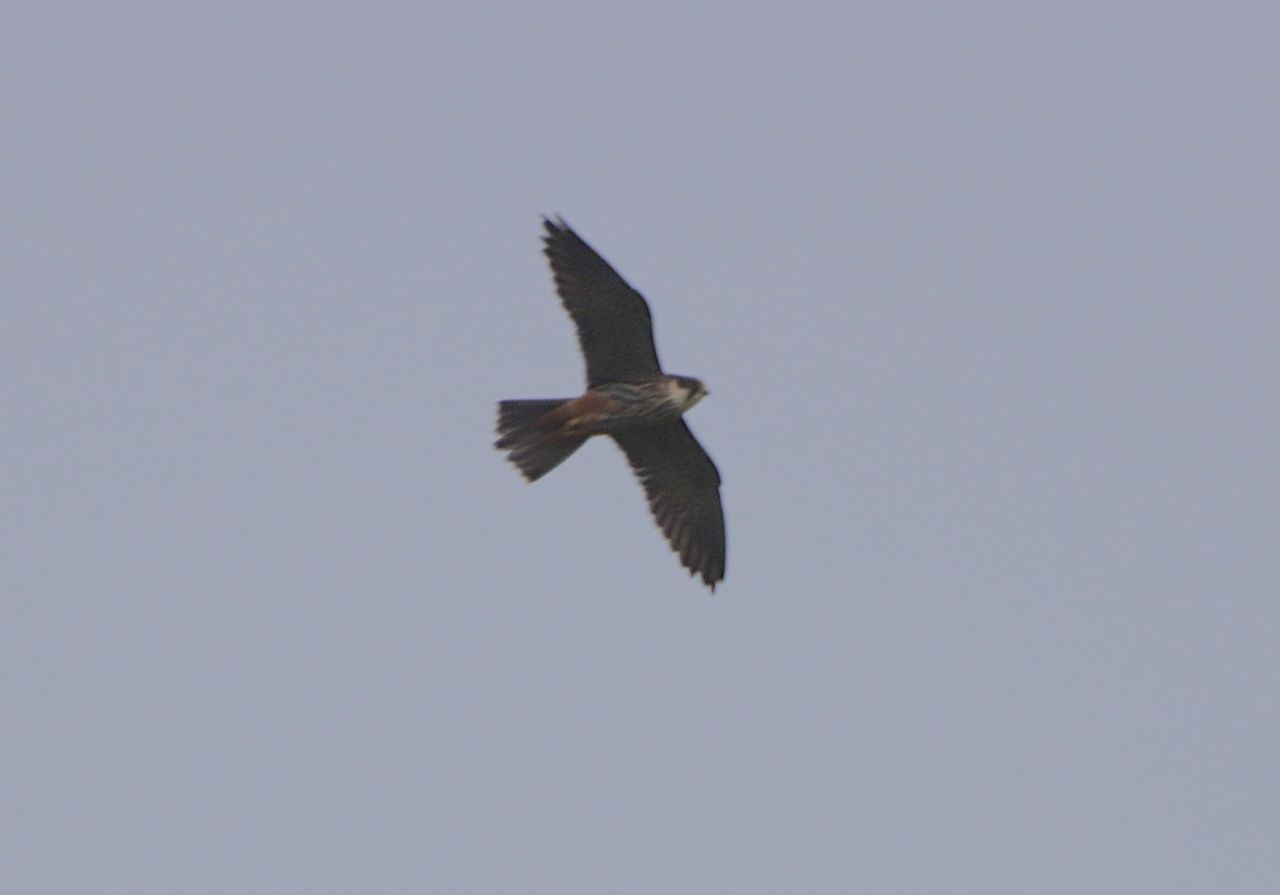
Hobby in flight.
The visit to Staines Moor included what would most likely be my last hobby of the year, with many, by then, in progress of migrating south.
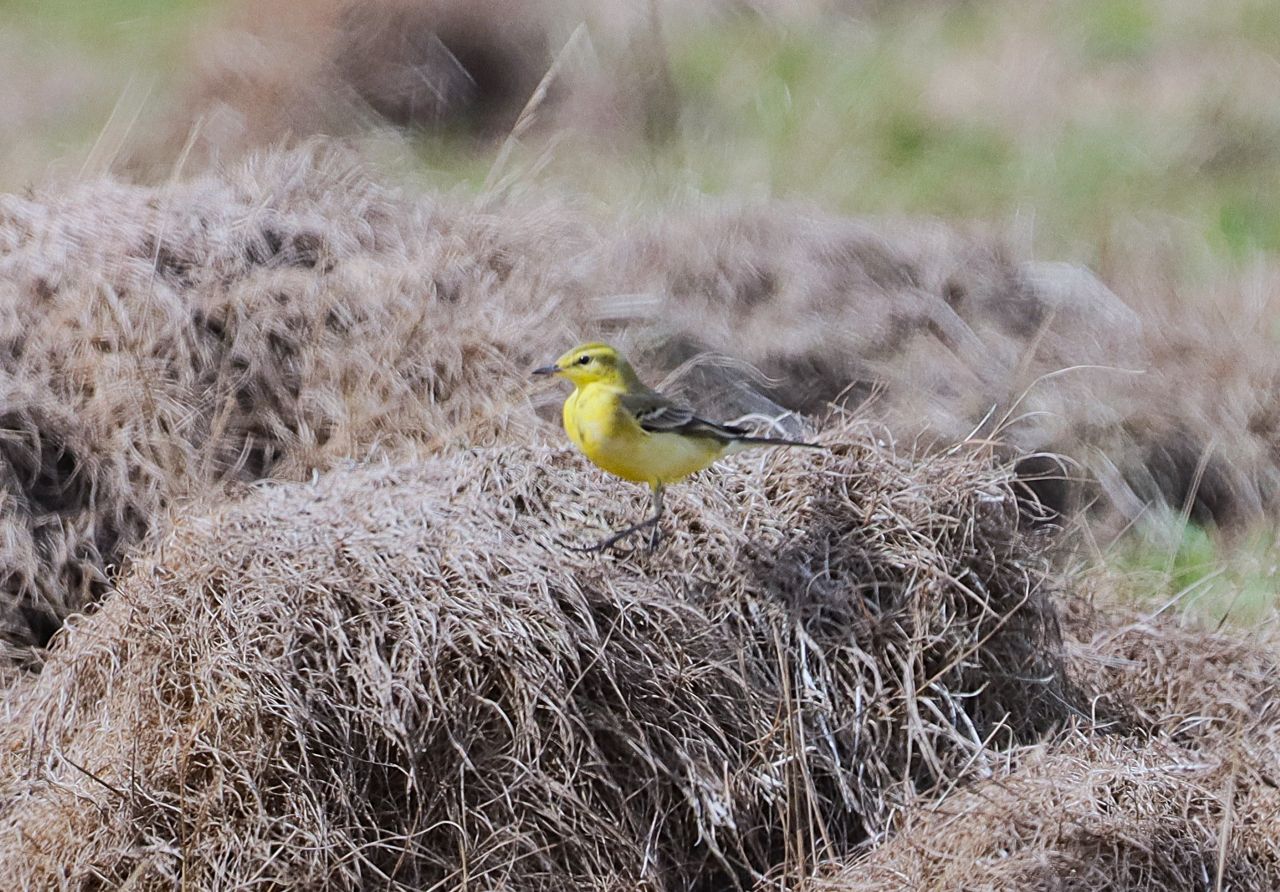
Yellow wagtail, Staines Moor.
Also adding a few yellow wagtails feeding among the cattle there.
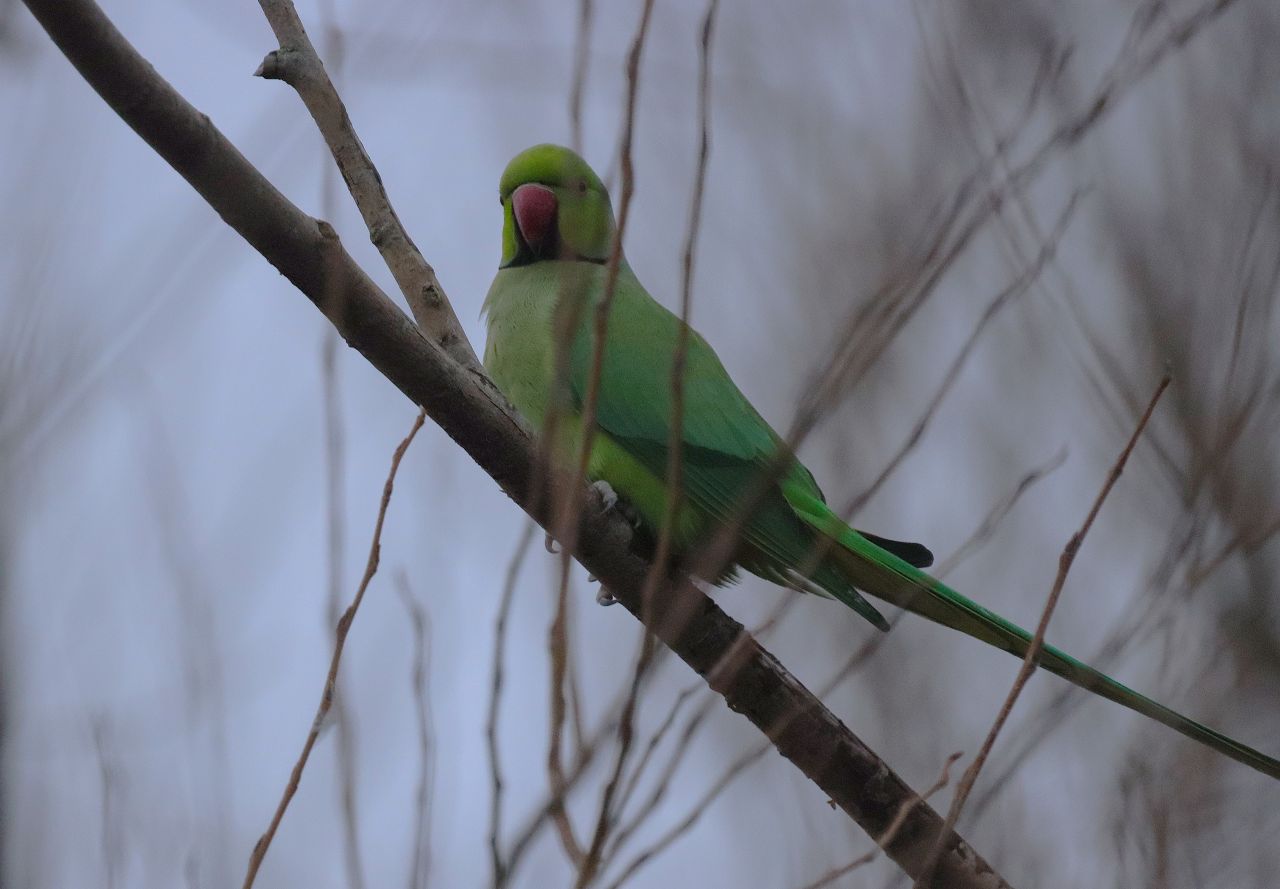
Ring-necked parakeet, Staines Moor.
As well as the usual sights and sounds of those noisy ring-necked parakeets now abundant in the area.
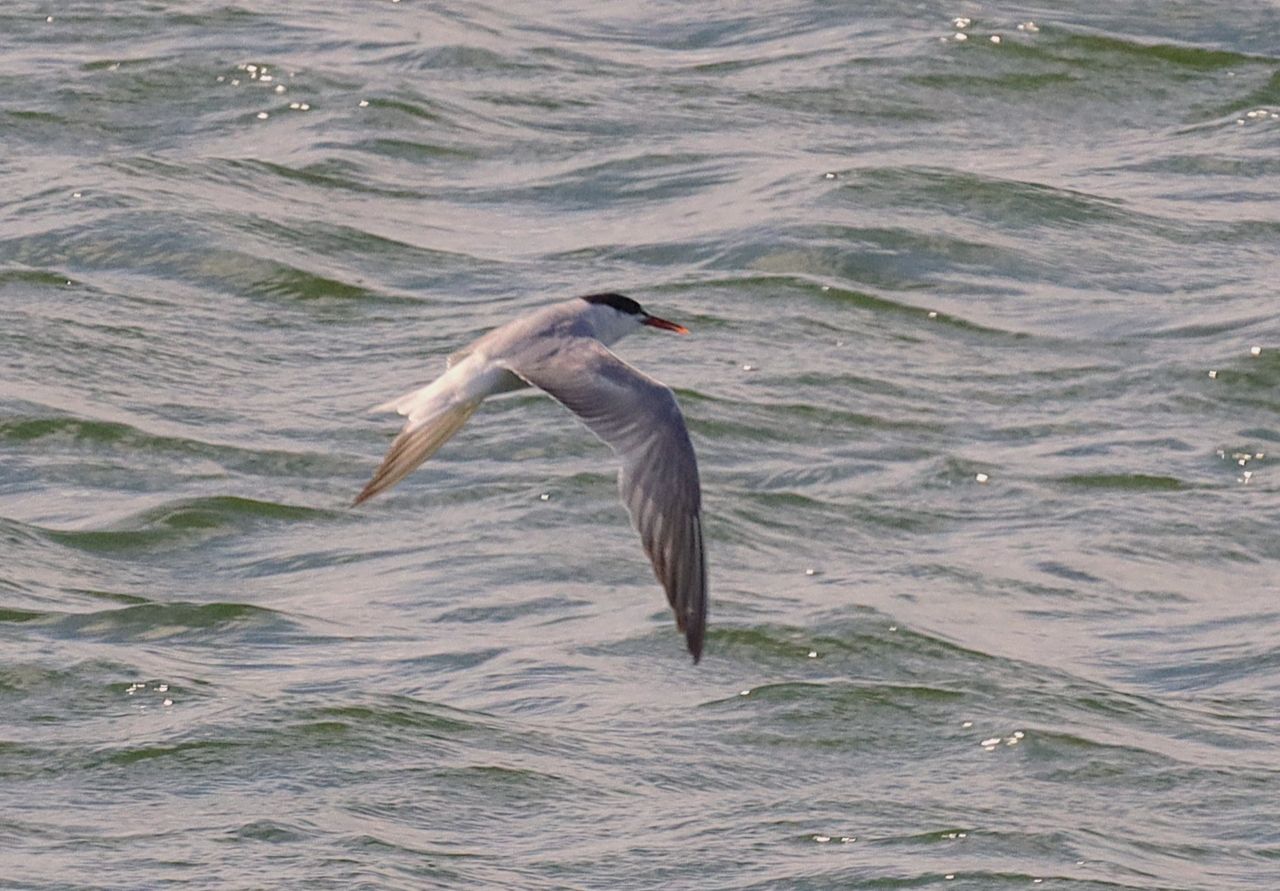
Common tern, Staines Reservoir.
A return visit to Staines Reservoir on September 20 saw that by then the black terns had moved on. Just three common terns could be counted fishing over the reservoir.

Black-necked grebe, Staines Reservoir.
Closer to view on this occasion were a couple of the seven, at least, black-necked grebes now present there.
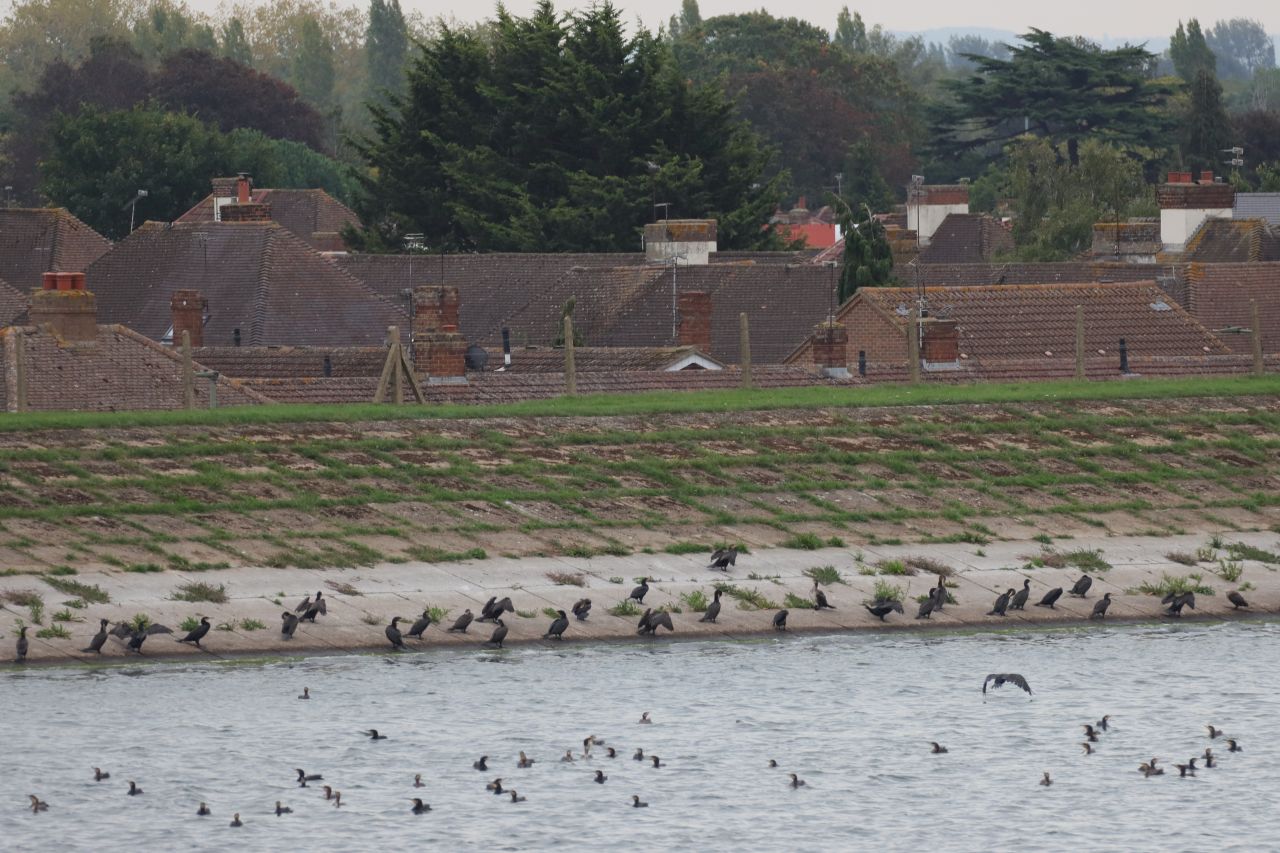
Cormorants, Staines Reservoir.
A large flock of 80 or more cormorants flew in as we walked along the causeway settling on the water and distant concrete banks of the south basin.
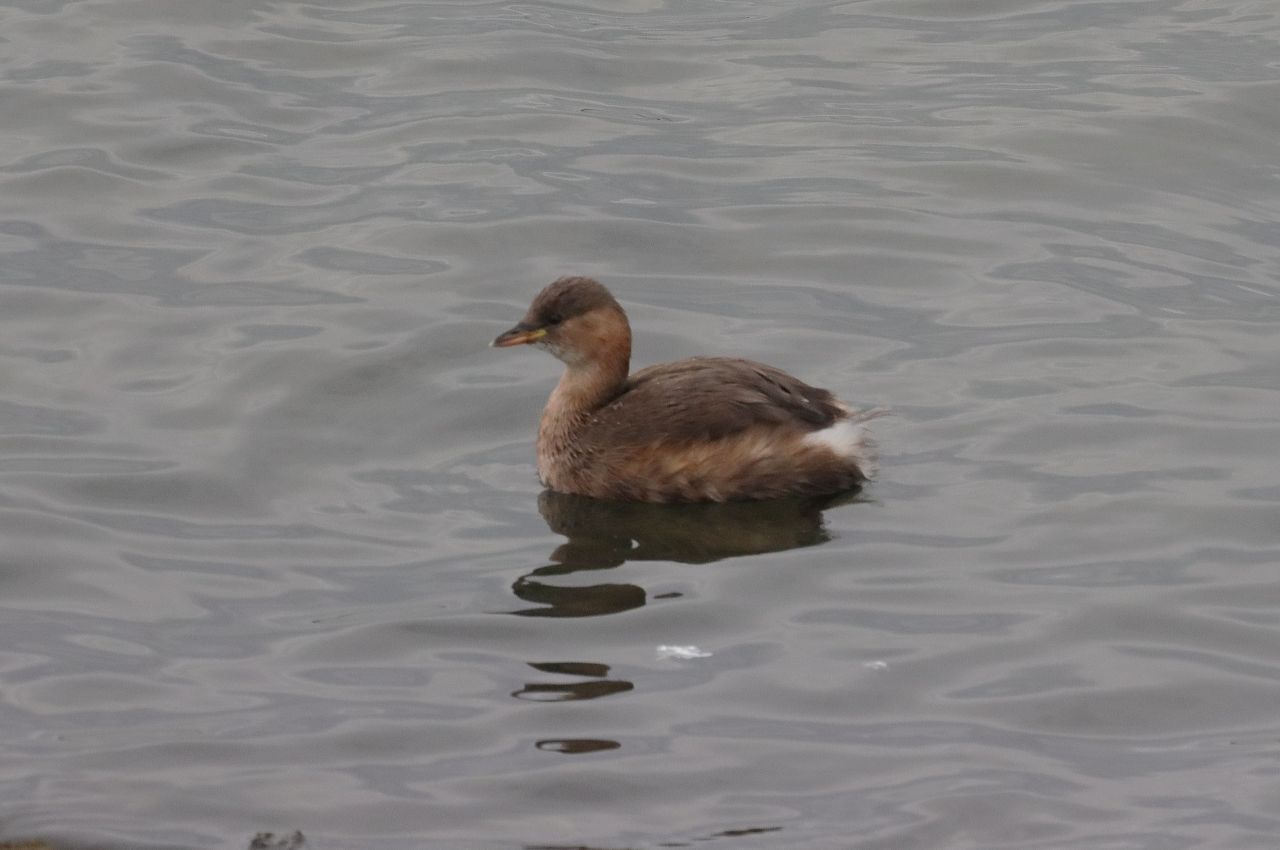
Little grebe, Staines Reservoir.
While there were a few little grebes.

Tufted duck, Staines Reservoir.
Tufted ducks.
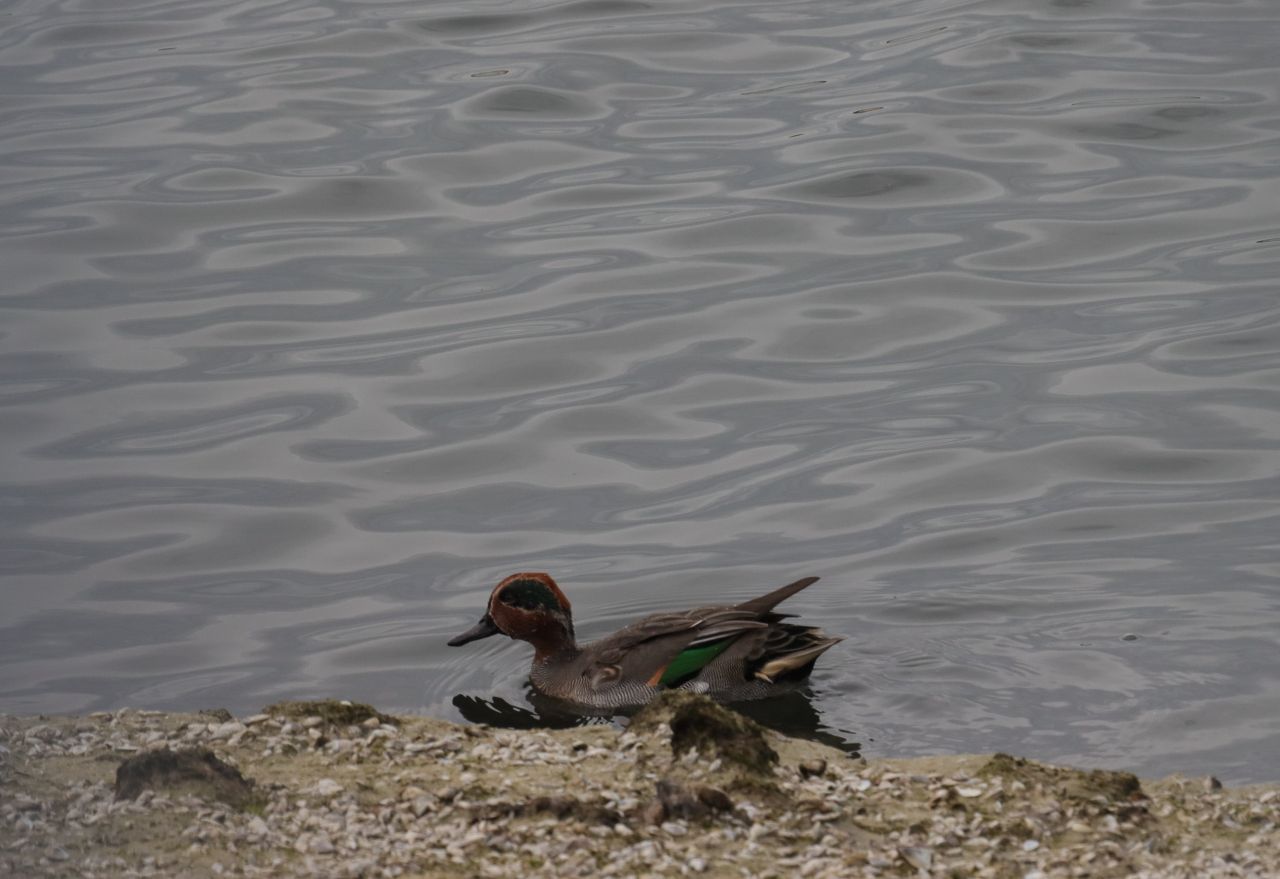
Teal, Staines Reservoir.
And a not too distant teal could be viewed within reach of my camera lens.
The main reason for our visit on this occasion was to follow up on reports of two grey phalaropes that had been viewed out on the south basin, but with it being such a large expanse of water I had little optimism before our arrival of getting any reasonable photos.
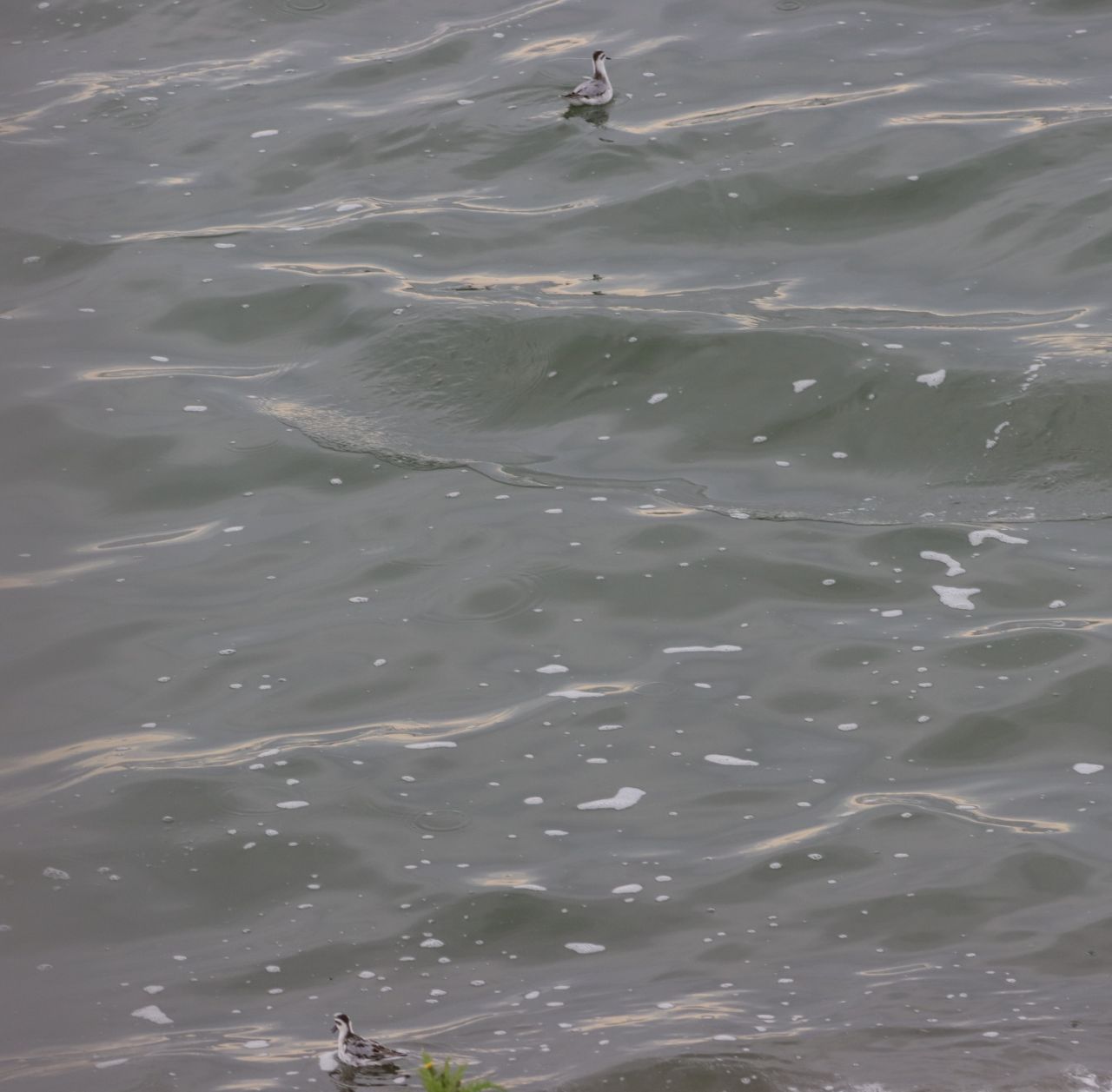
Two grey phalaropes, just within the width of my camera lens, at Staines Reservoir.
To my delight, however, they were both quite close to the water’s edge even managing at one point getting them both within the same photo frame (just!).
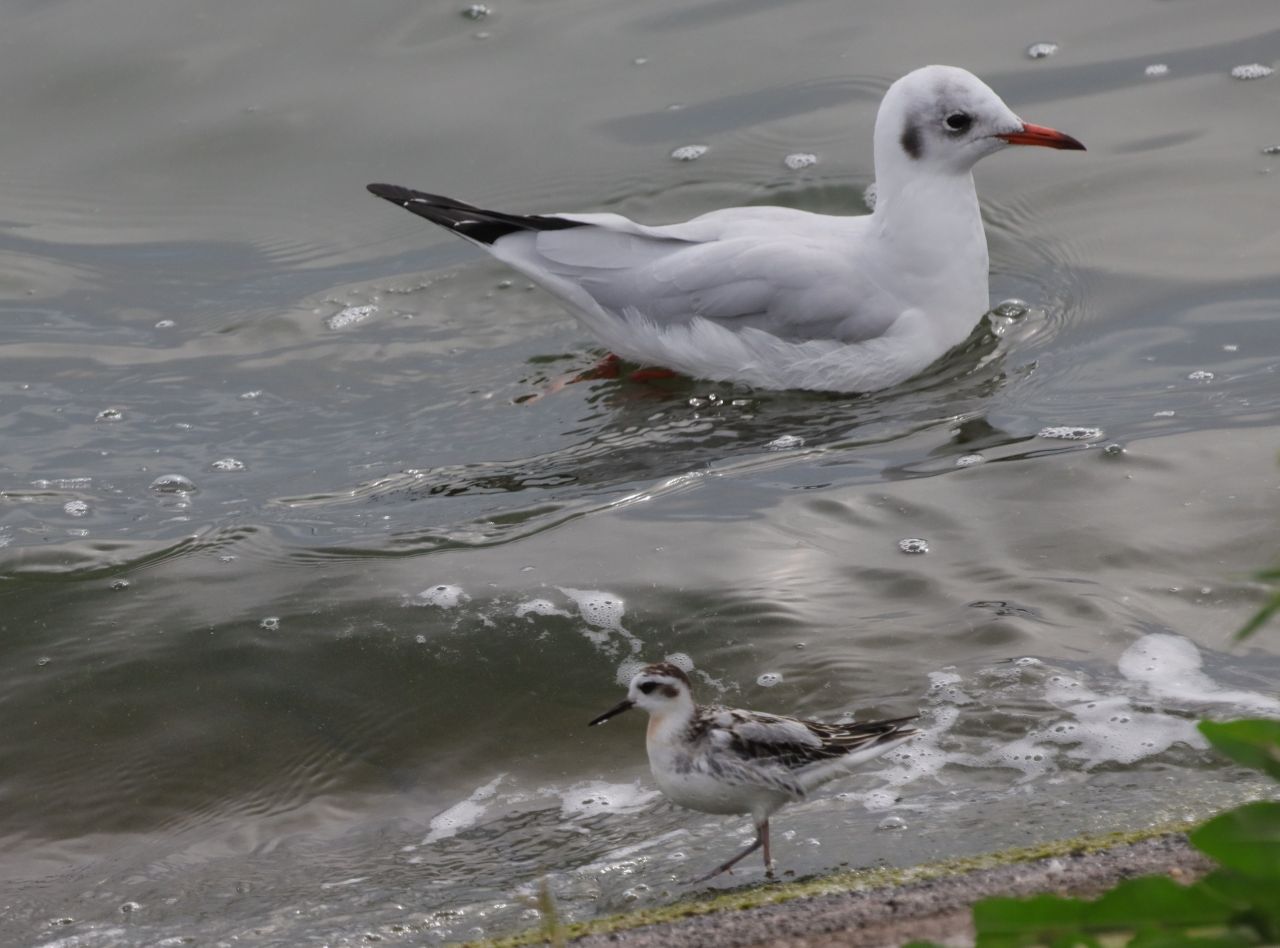
Grey phalarope, with black-headed gull, at Staines Reservoir.
Other photos included one of them stood in front of a black-headed gull giving a good example of size comparison.
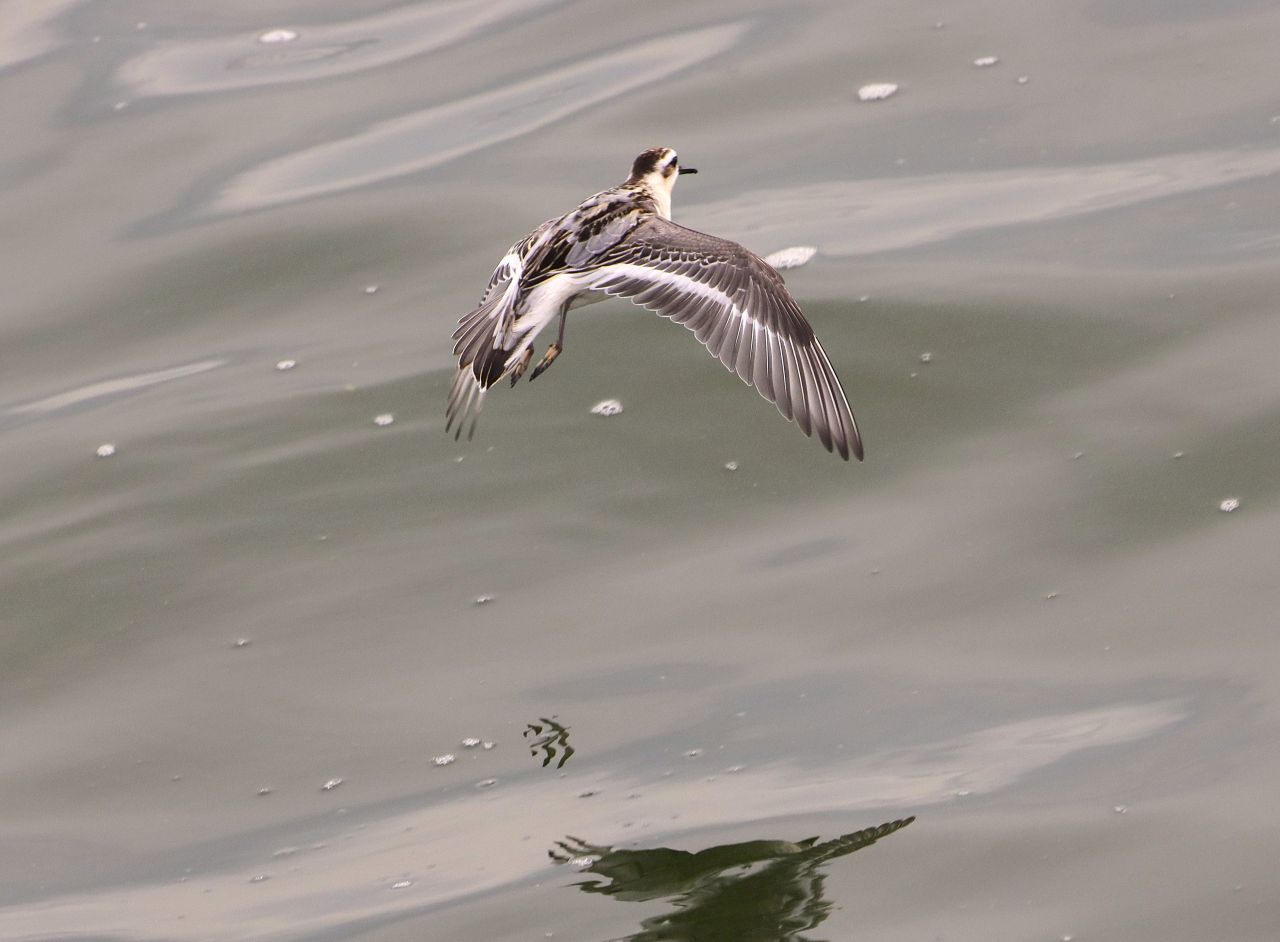
Grey phalarope, Staines Reservoir.
As well as one briefly in flight.
 And another as it walked along the concrete edge of the basin.
Of the three species of phalarope https://en.wikipedia.org/wiki/Phalarope the grey phalarope is a more northerly breeding species than its red-necked phalarope cousin, and occurs in the high Arctic around the North Pole.
Their breeding plumage is rusty red. They are also referred to as the red phalarope in North America, due to the birds’ orangey-red breeding plumage. As with the other species of phalarope, the female is the more colourful and leaves the male to incubate the eggs and bring up the young.
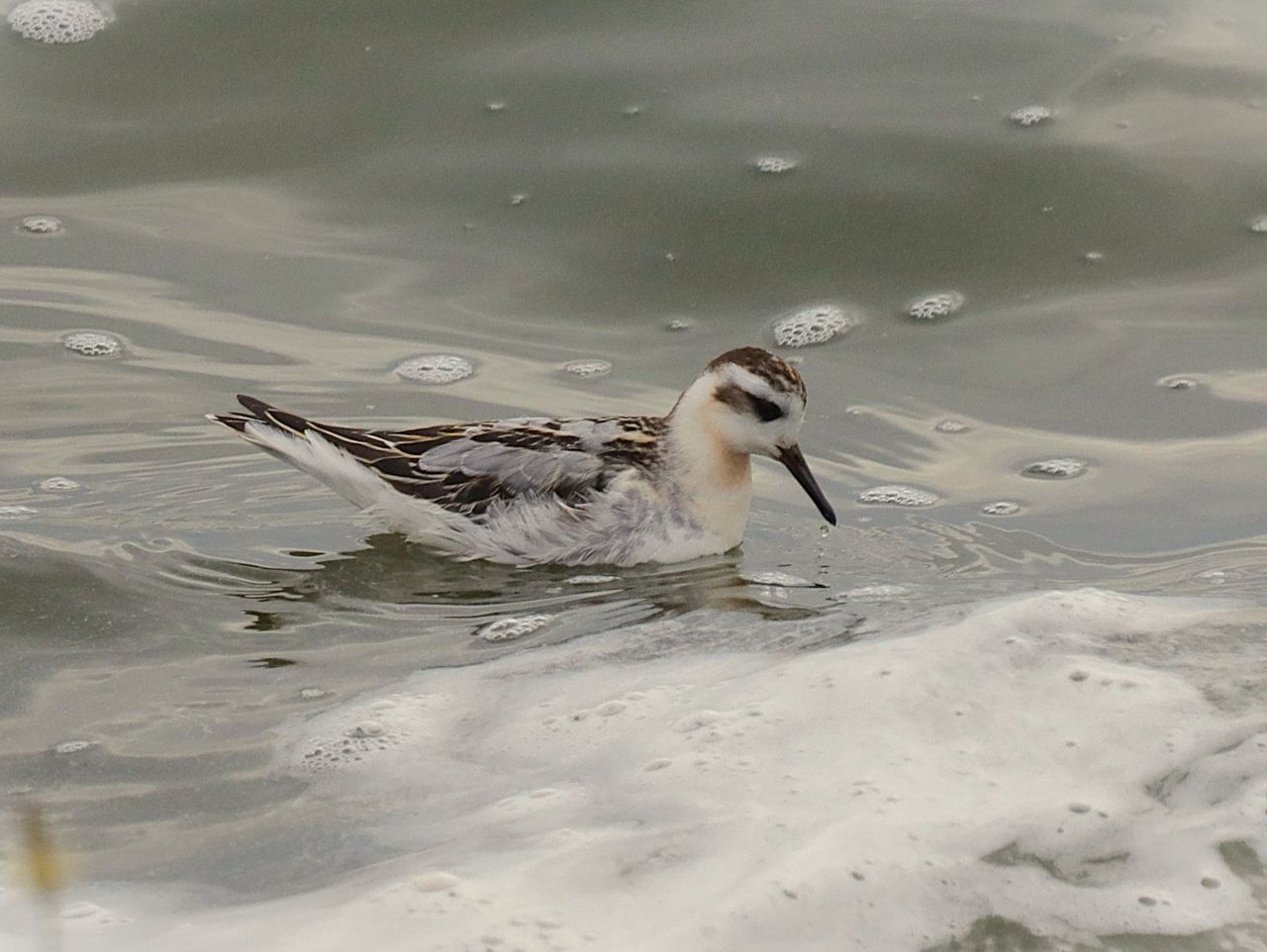
Grey phalarope, Staines Reservoir.
In winter, grey phalaropes like it warm and migrate as far as the Tropics. And although spending most of their time out on the ocean, can occasionally be found on inland waters on their migration.
Elsewhere and closer to home, although I was unable to get to photograph much on a daily basis, but it was, once again, surprising how much I was able to accumulate on my local visits during the fortnight leading up to the end of the month.
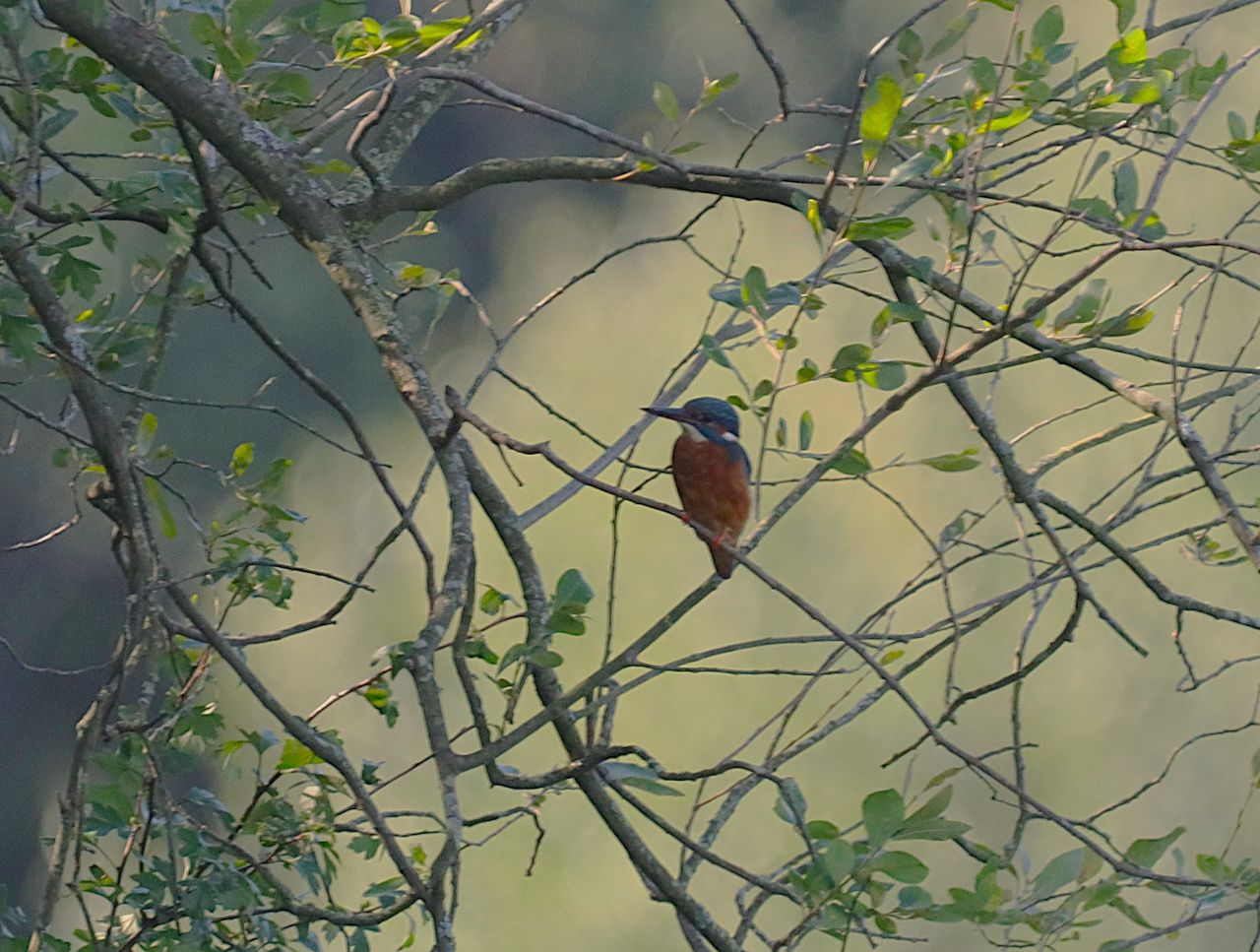
Kingfisher, Britten’s Pond.
At Britten’s Pond a kingfisher made a reappearance on September 19 after what had been a long absence managing a few distant pictures as it perched up by one of the willows on one of the islands.
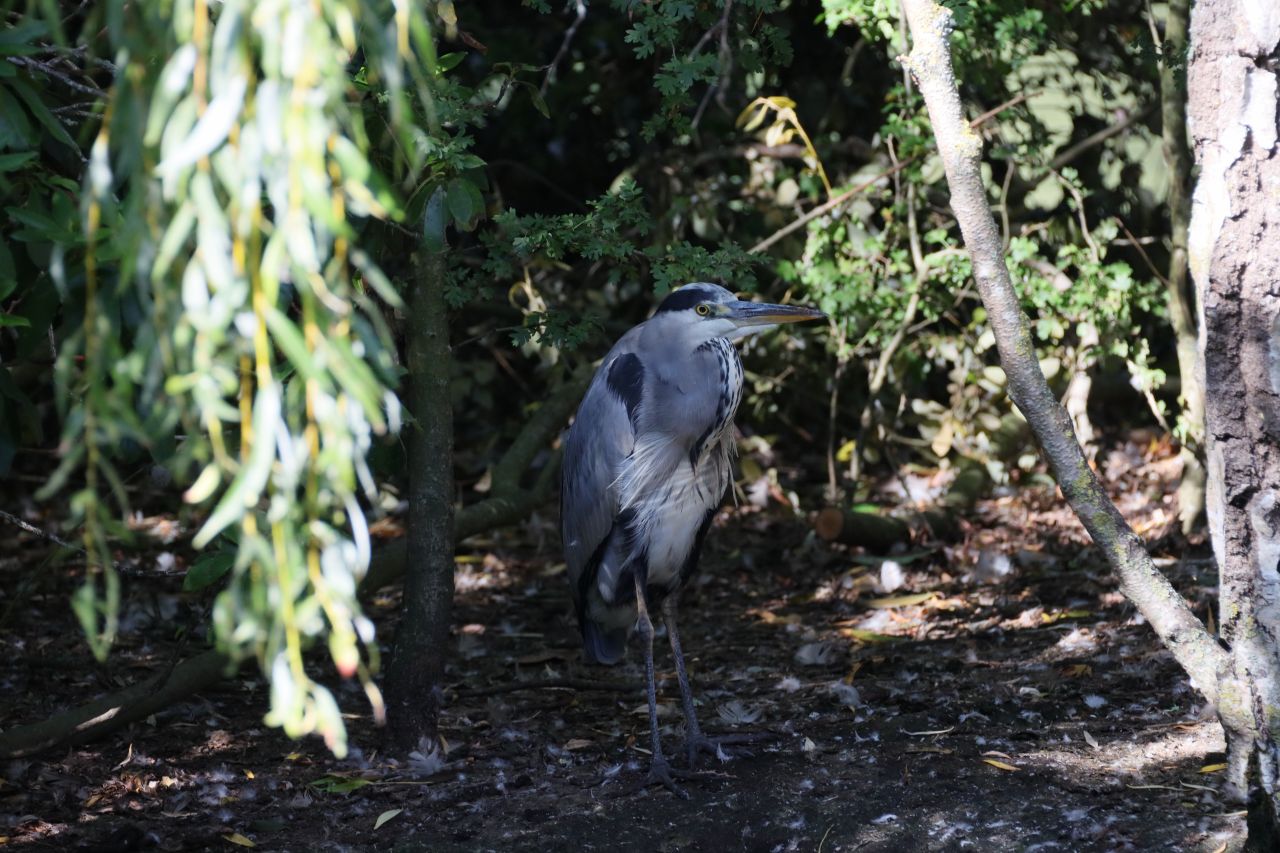
Grey heron, Britten’s Pond.
Also adding a few photos of the resident grey heron about its waters.

Great white egret, Tice’s Meadow.
A visit to Tice’s meadow, near Farnham, added what was surprisingly, for me, my first great white egret of this year.
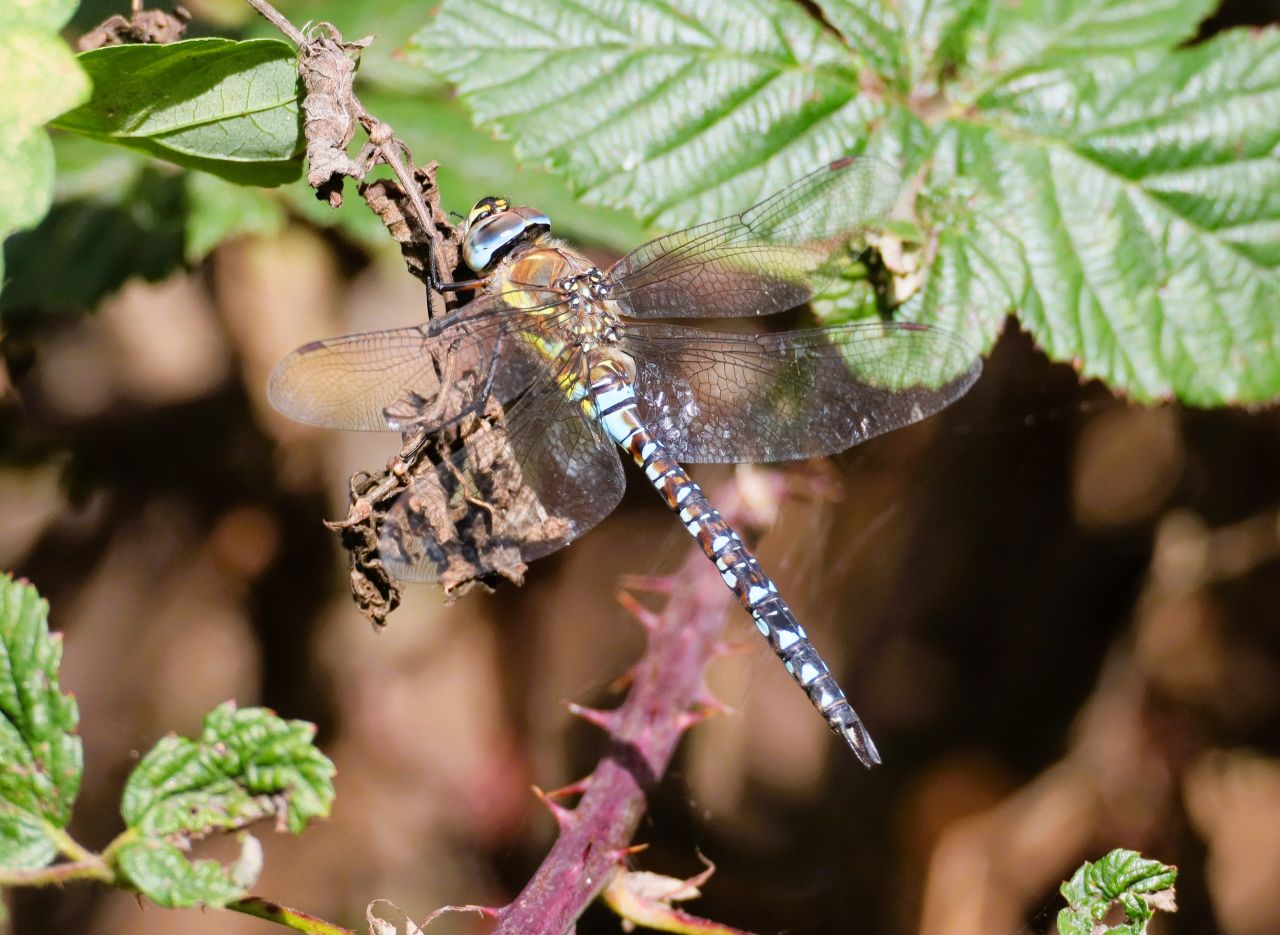
Migrant hawker dragonfly (male), Staines Moor.
At various locations a few dragonflies could be seen on the wing, these including a few migrant hawkers.
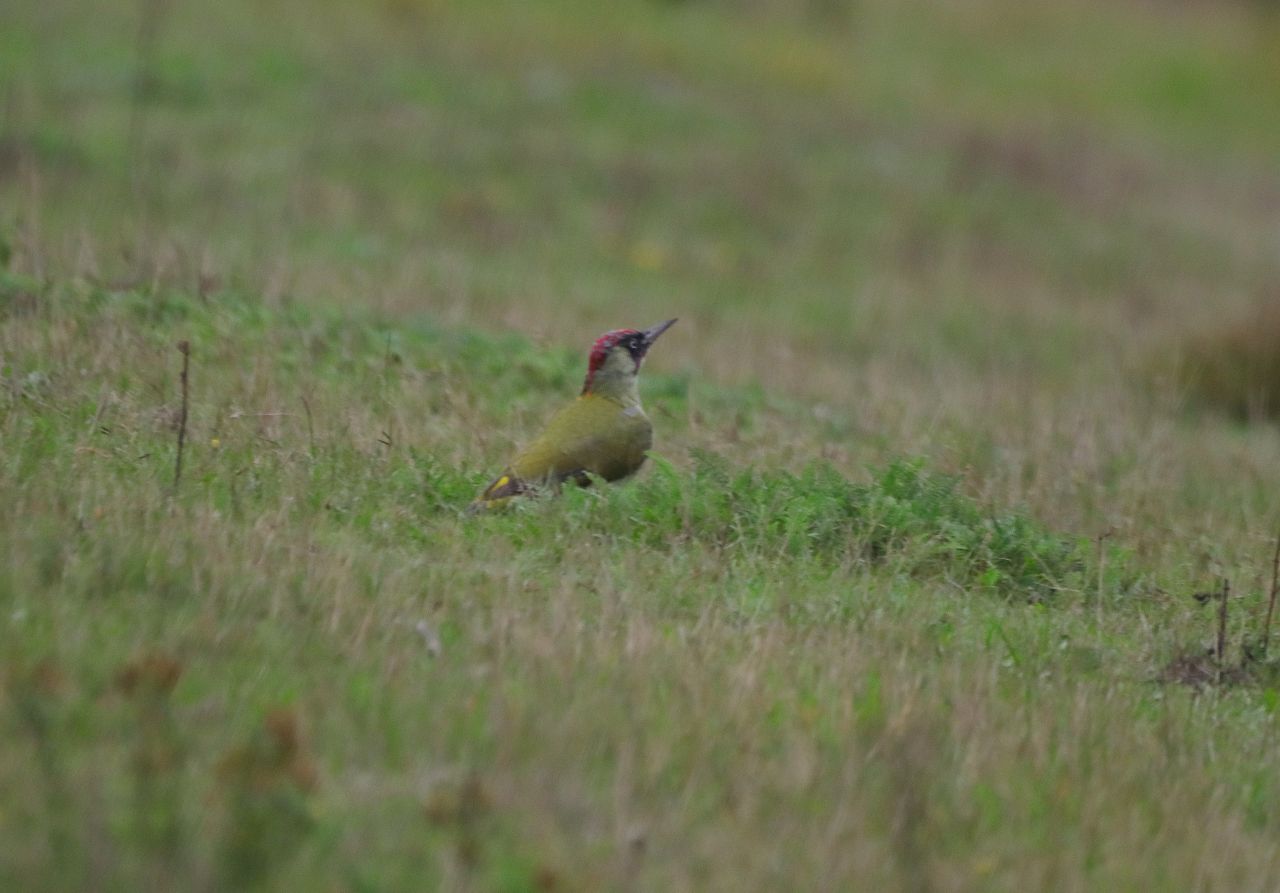
Green woodpecker, Whitmoor Common.
On Whitmoor Common, green woodpeckers continued to be regularly heard, and occasionally viewed feeding around the grassland of the old horse paddock.
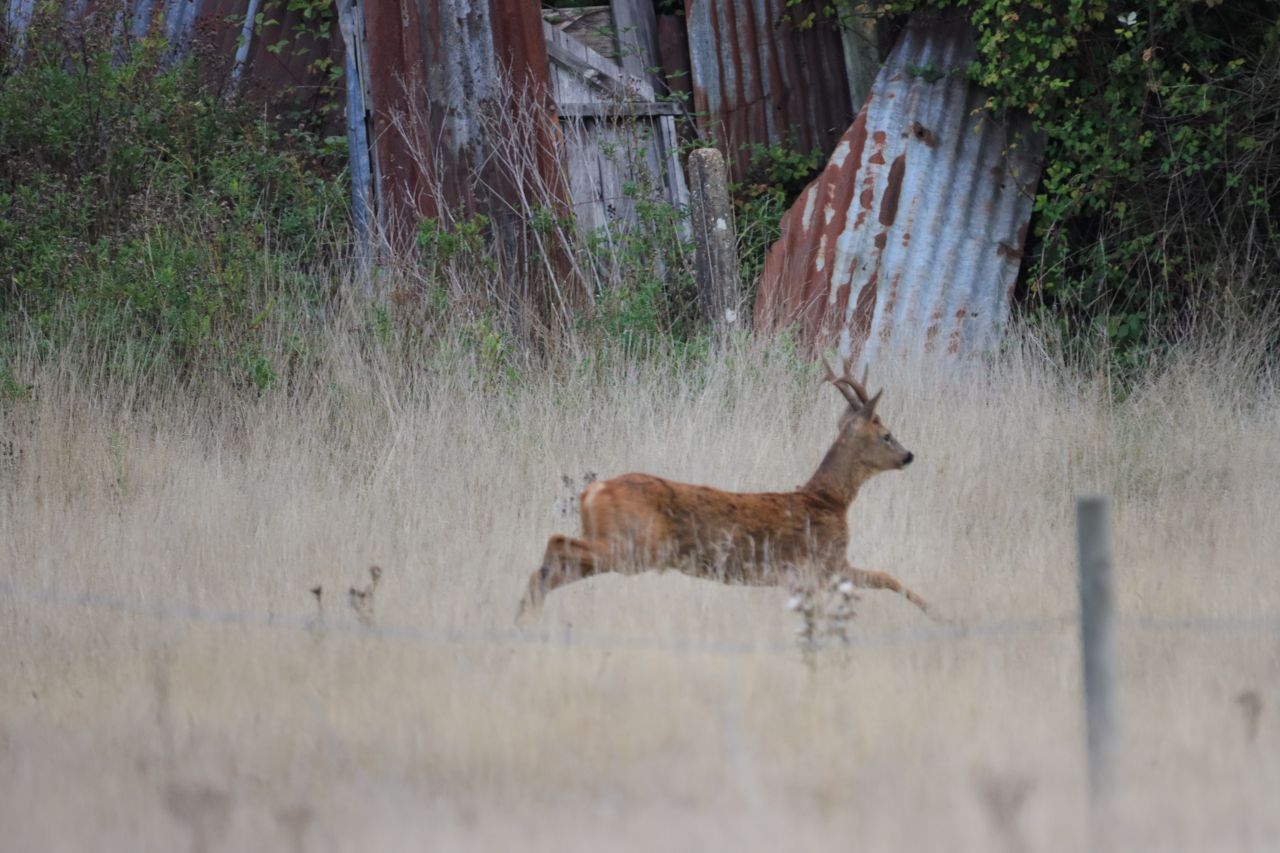
Buck roe deer, Whitmoor Common.
Inadvertently, I disturbed a buck roe deer, but managed to capture a few photos as it scampered off to its sheltered hideaway.
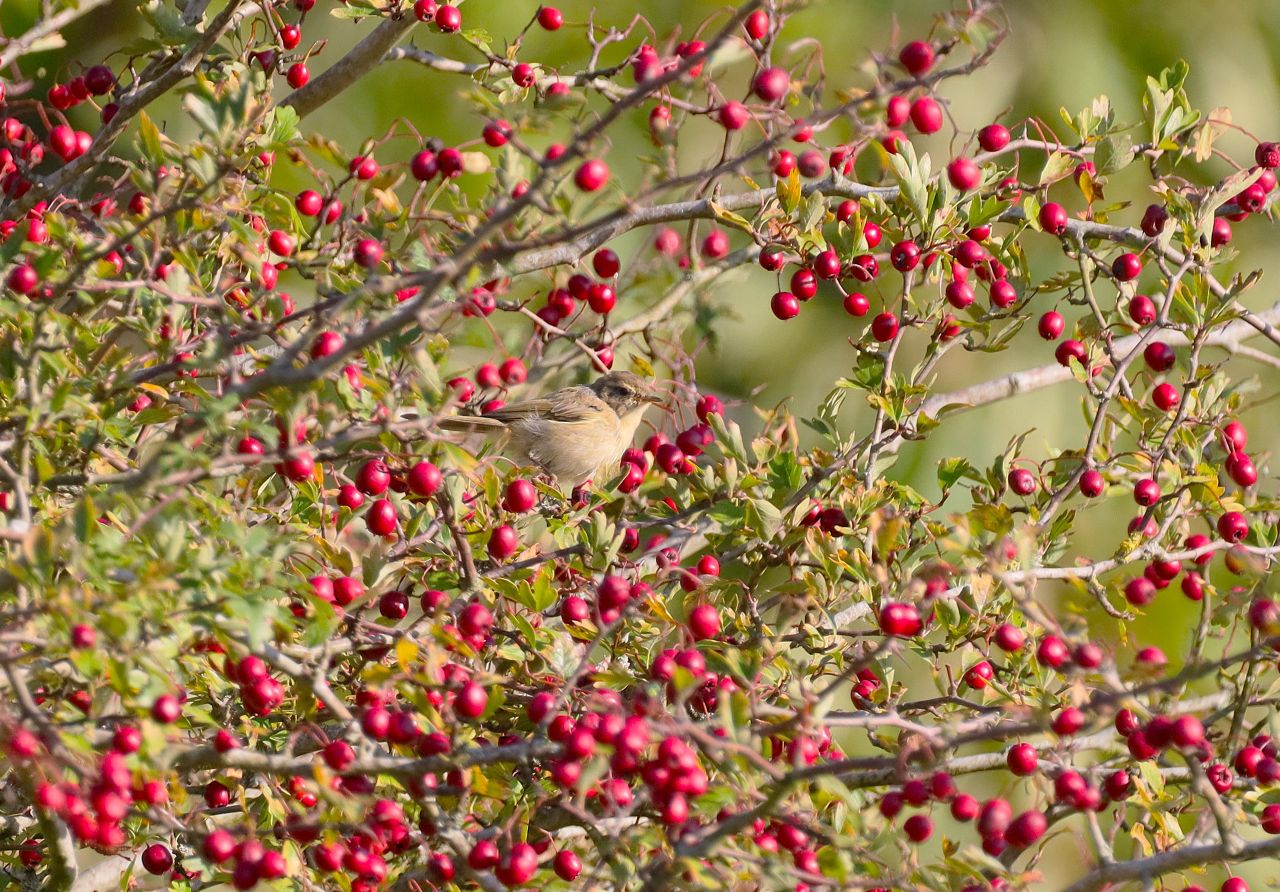
Chiffchaff, Whitmoor Common.
And a chiffchaff in a colourful bush of autumn berries.

Great spotted woodpecker, Whitmoor Common.
Out on the heathland, a few opportunities came my way of great spotted woodpeckers.
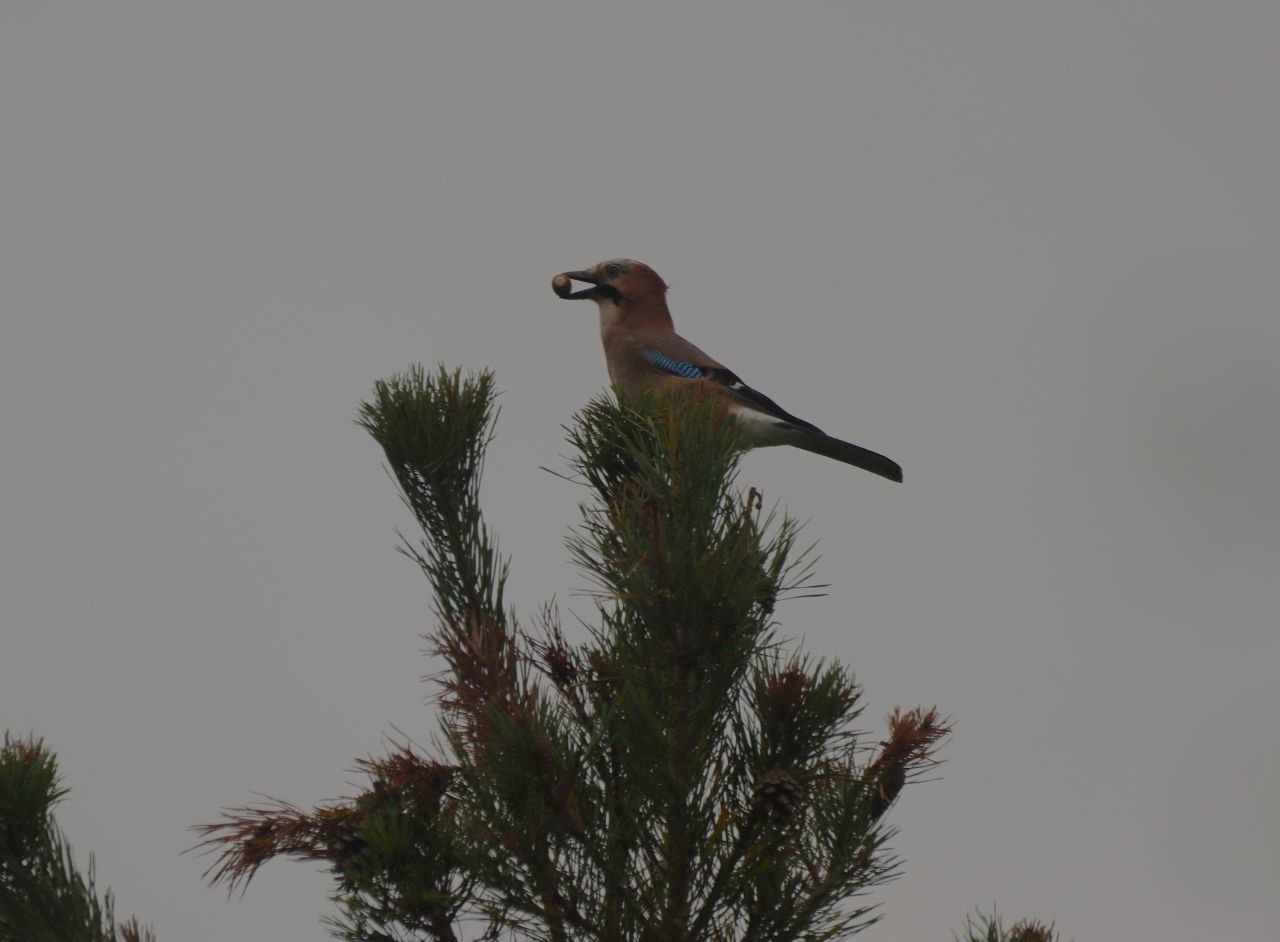
Jay, Whitmoor Common.
A few jays could also be viewed as they began to start foraging for acorns.
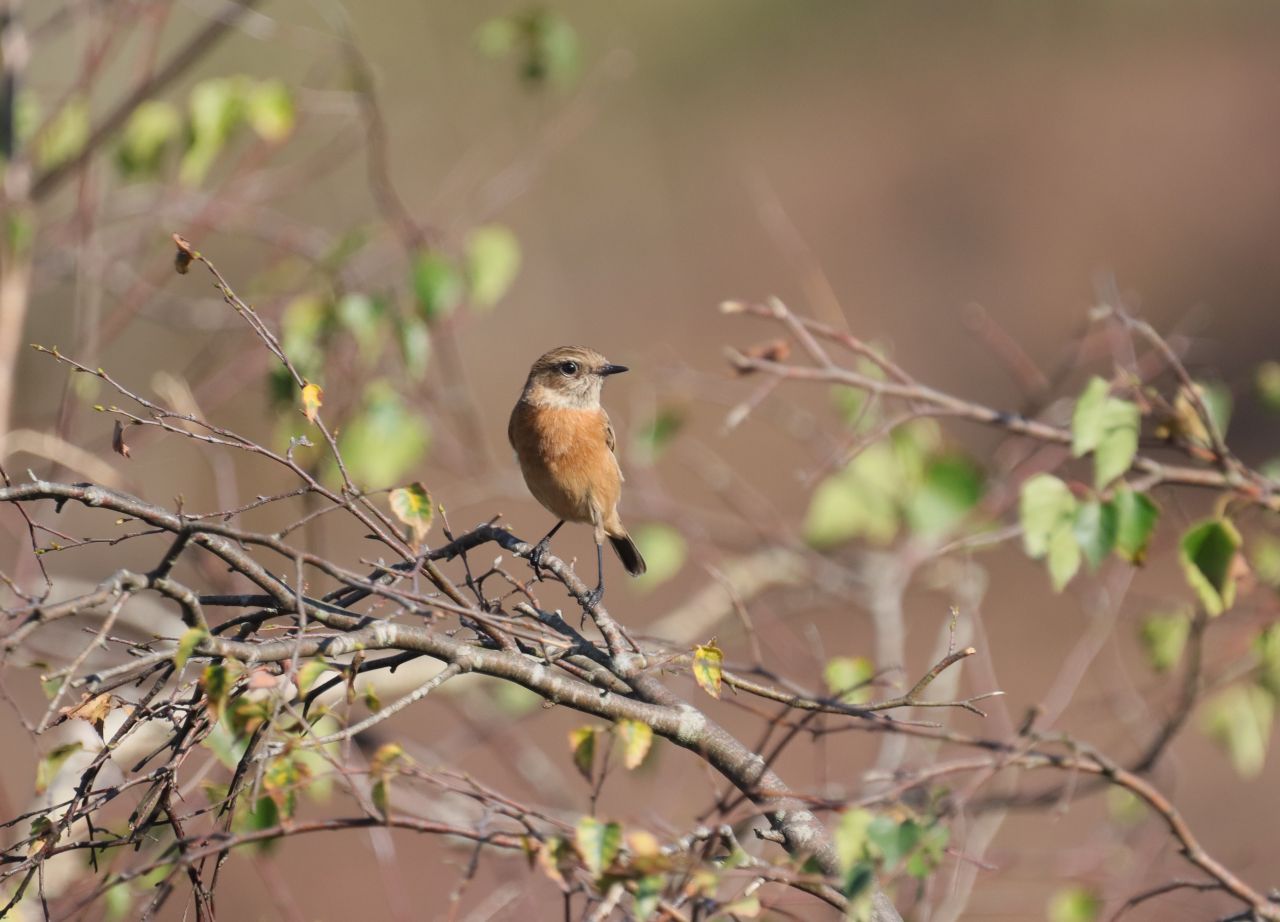
Stonechat, Whitmoor Common.
Several stonechats perched up to pose for me.
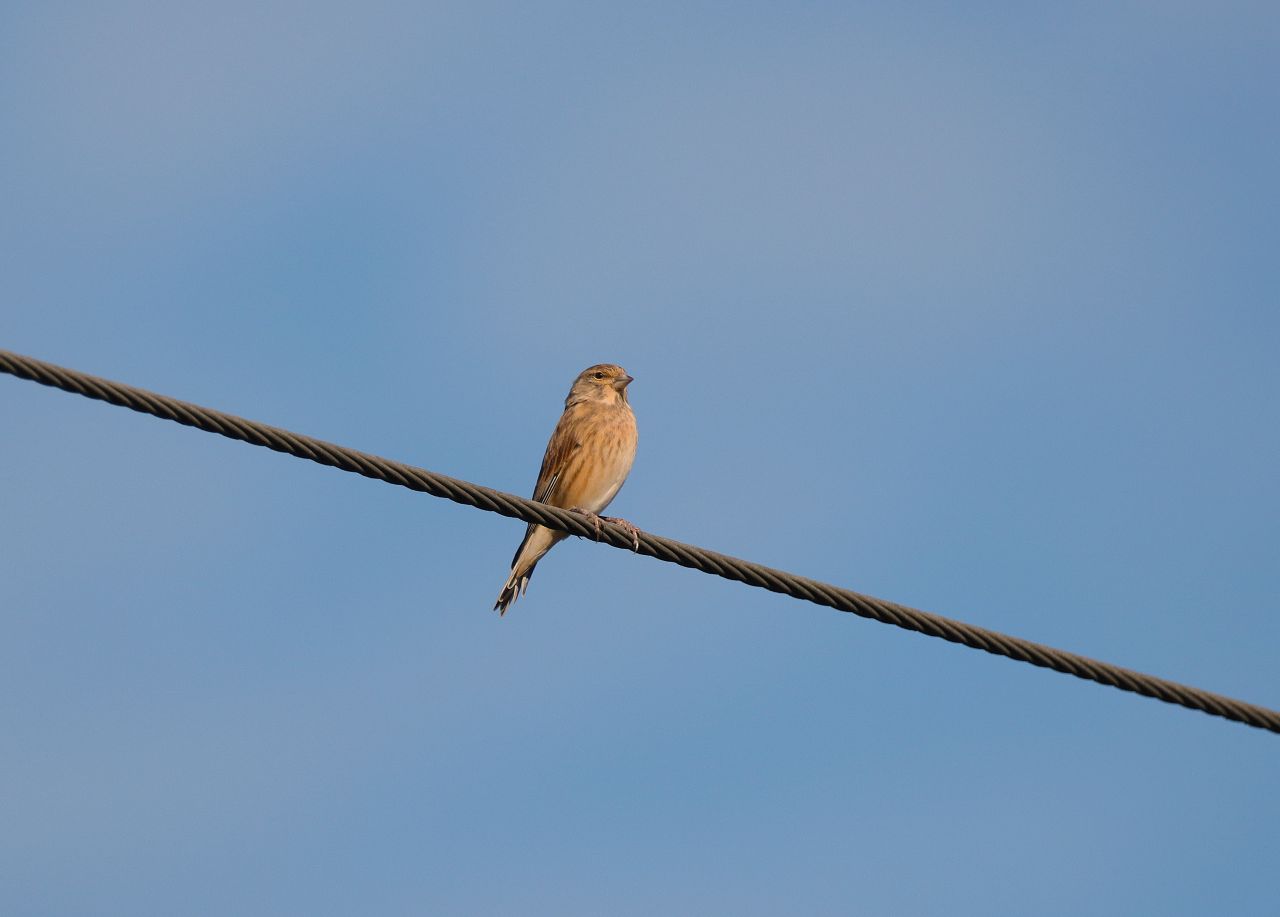
Linnet, Whitmoor Common.
Also adding a few shots of linnets, one seen perched up on the utility wires that run across the heathland.
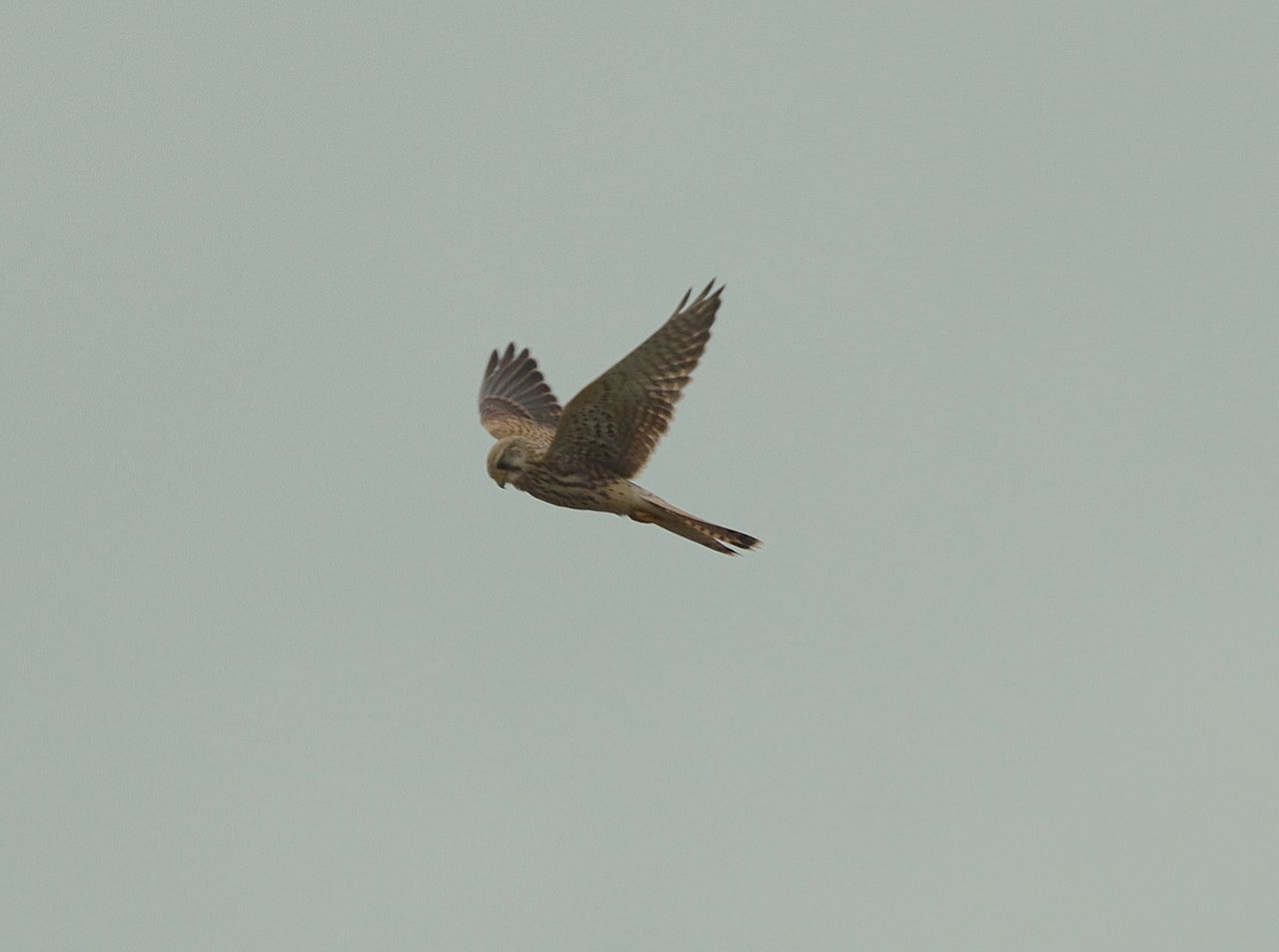
Kestrel.
A kestrel also made an appearance as it hunted.
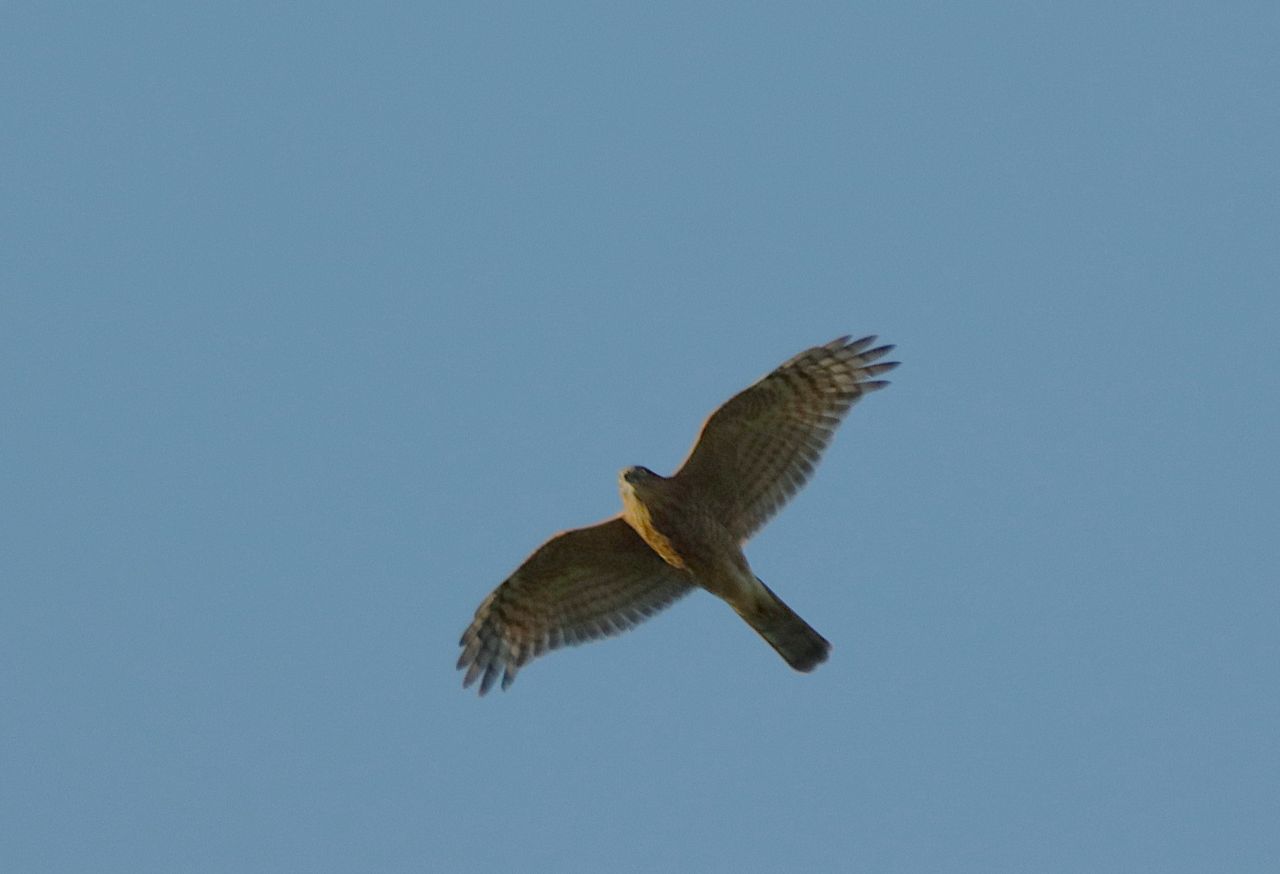
Sparrowhawk, Whitmoor Common.
Also achieving a rather opportunistic shot of a sparrowhawk as it flew overhead.
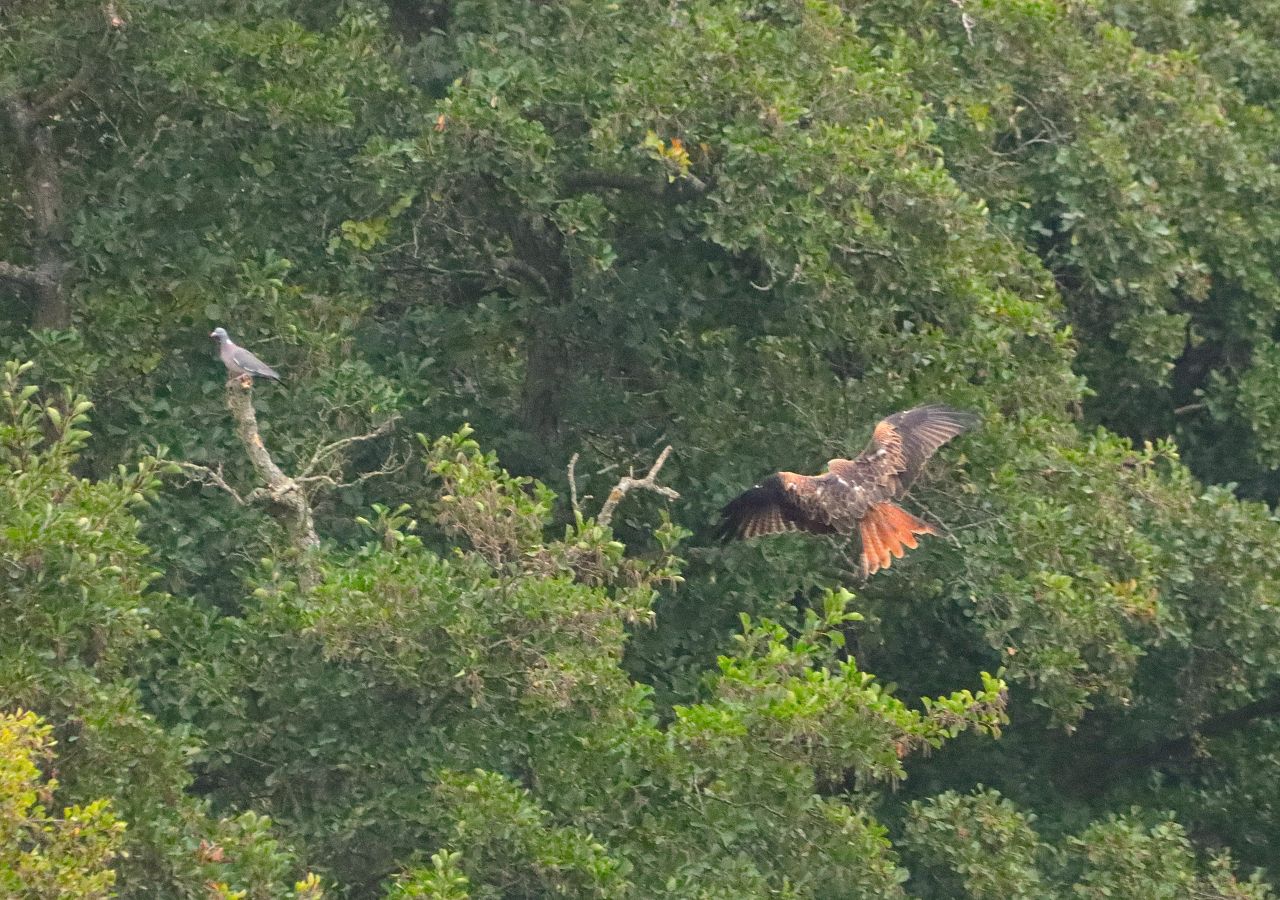
Red kite, Riverside Nature Reserve.
The best I could find to photo on a visit to Riverside Nature Reserve, near Burpham was a red kite that had drifted across the river from the recycling centre, to perch in a tree along the banks of the River Wey.

Foxy lady in Bob’s garden.
My most endearing photos of the fortnight had to be of a fox. This while visiting my friend Bob and his wife Susan in Wood Street Village. It has recently become a regular there.

Foxy lady in Bob’s garden.
Frequently viewed as it strolls nonchalantly through their garden, often taking priority over what Bob had hoped he might be getting for his dinner!
Share This Post



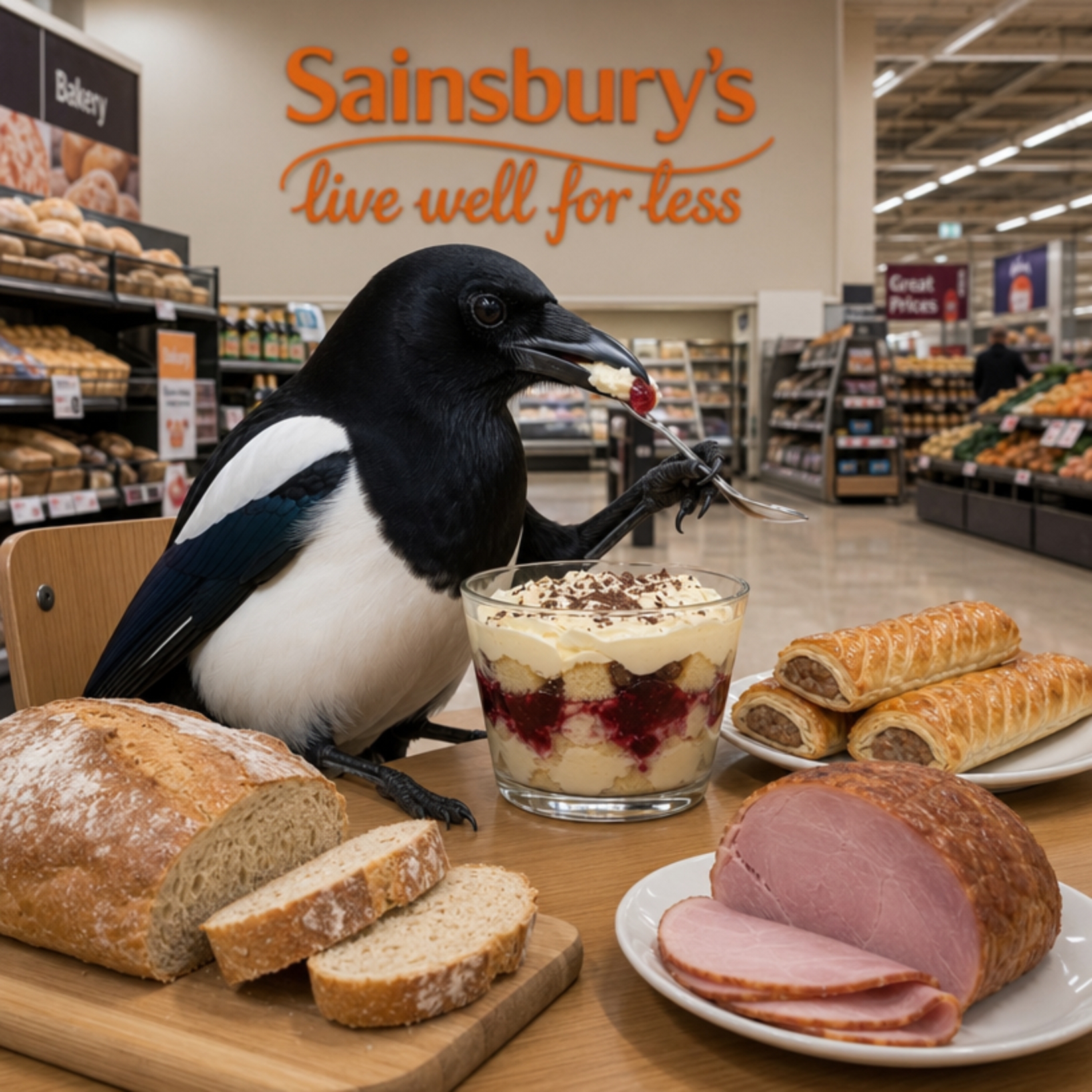
I'm living well for nothing at all! (See: No Trifling Matter: Magpie Trapped in Godalming Sainsbury’s)




Next stop, Debt Chasm! (See: We Should All Be Outraged About the Failure to Deal with Legacy Debt)





Recent Comments