- Stay Connected

Socialize

 Abraham Lincoln
If given the truth, the people can be depended upon to meet any national crisis...
Abraham Lincoln
If given the truth, the people can be depended upon to meet any national crisis...

 Guildford news...
for Guildford people, brought to you by Guildford reporters - Guildford's own news service
Guildford news...
for Guildford people, brought to you by Guildford reporters - Guildford's own news service
Birdwatcher’s Diary No.337
Published on: 17 Oct, 2025
Updated on: 17 Oct, 2025
By Malcolm Fincham
After a brief incursion of an Atlantic westerly in the form of Storm Amy, our first, and so far only named storm of this autumn which mostly effected northern parts of the UK, another high pressure system soon developed bringing another settled spell of weather to the southern counties of the country during the first weeks of October.
This bringing some pleasant days of sunshine during the first week, followed by several days of what is probably best described in German as Dunkelflaute. A German term for a “dark wind lull,” a weather event characterised by extended periods of cloud and low sunlight.

St Mary’s church, Perry Hill, Worplesdon.
A visit to St Mary’s churchyard, Perry Hill Worplesdon in the early days of the month saw little to note in the way of birdlife apart from a few short glimpses of a firecrest as it flitted about feeding in one of the yew trees.
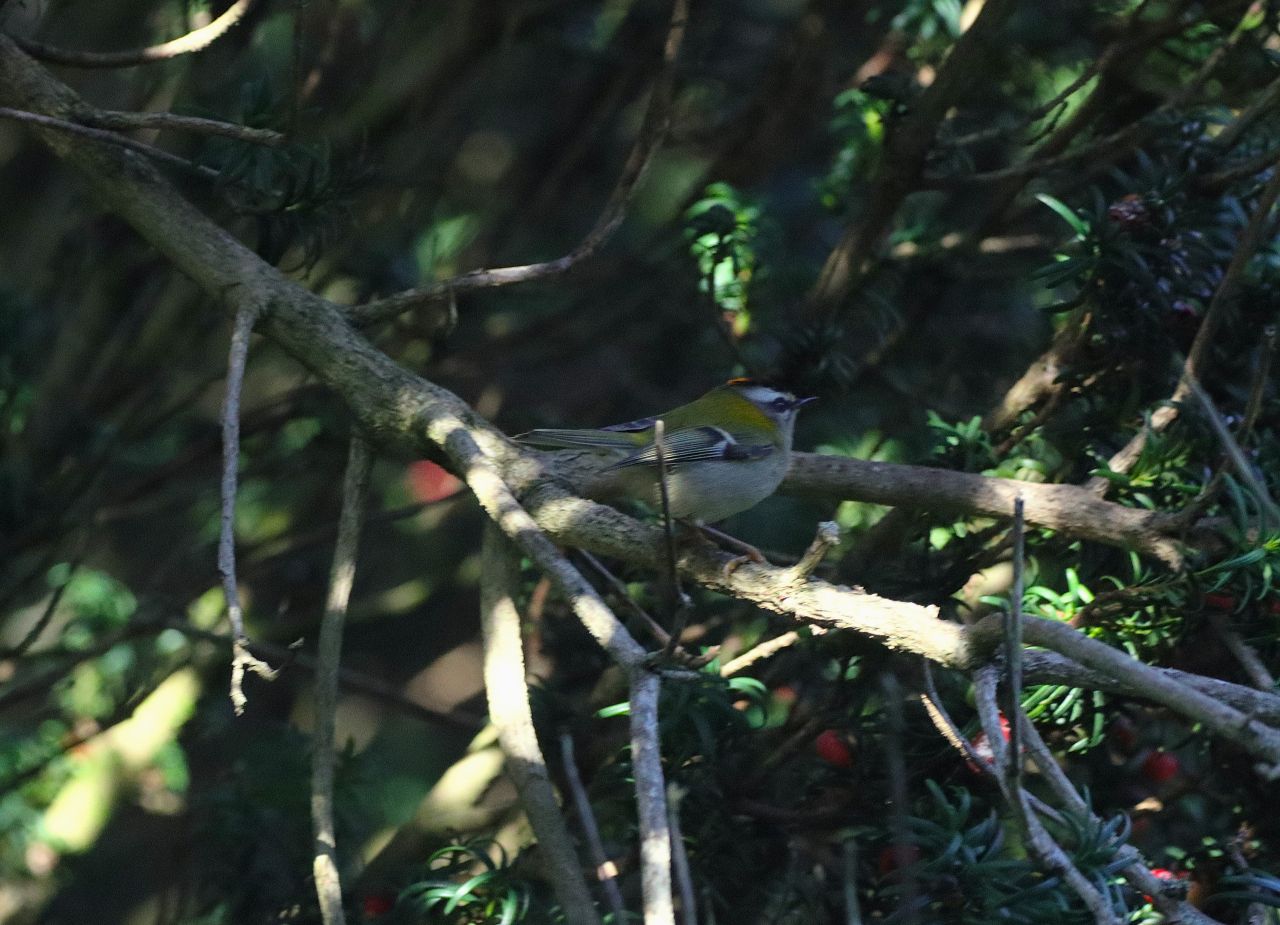
Firecrest, Worplesdon churchyard.
Of more noted interest to me was a large irruption of what appeared to be hundreds of flying insects about the entrance to the church. On closer inspection I soon realised they were all ladybirds many of which could be seen settled in the sunshine on the church walls.
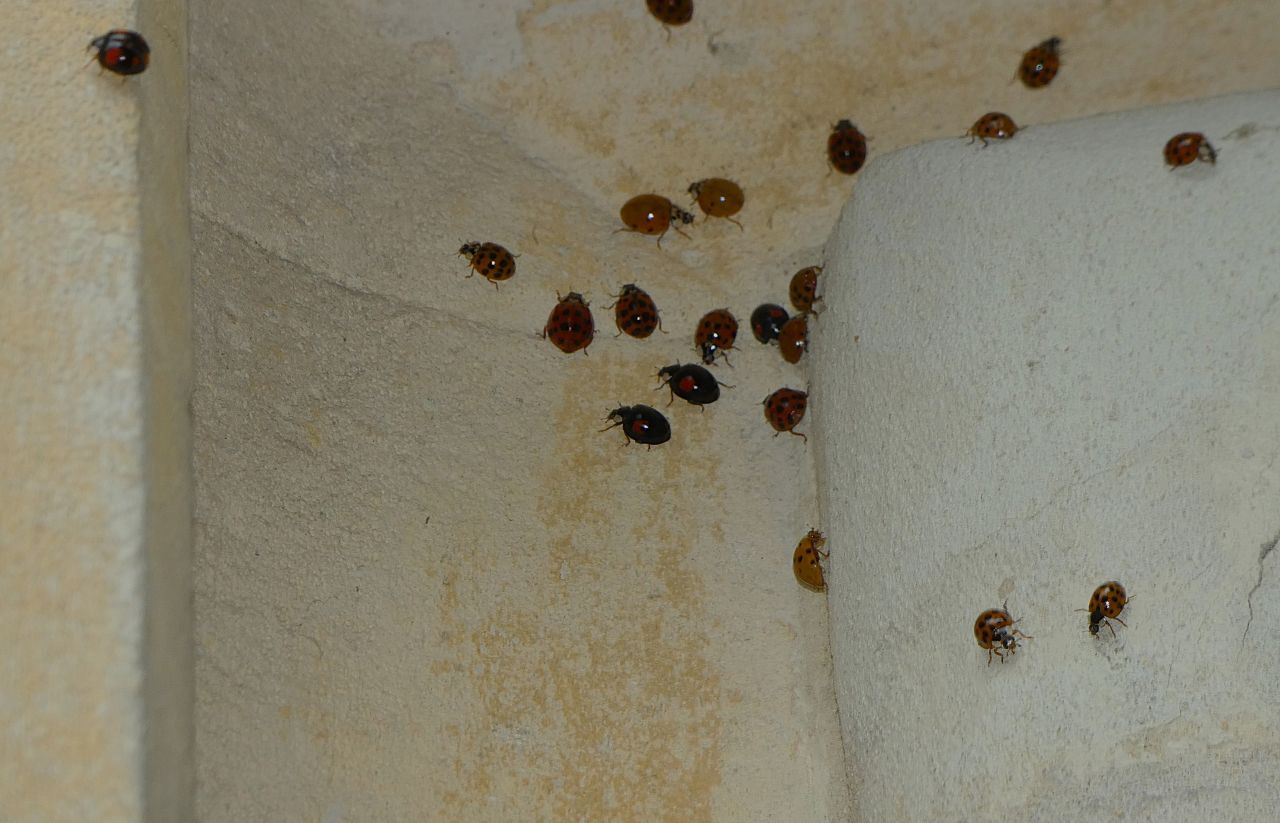
Ladybirds on a wall at St Mary’s church.
While the sudden influxes like this might seem daunting, there’s a simple reason for it.
The warm dry summer had led to a huge increase in the insect population across the UK and aphids, the scourge of gardeners, boomed according to the conditions.
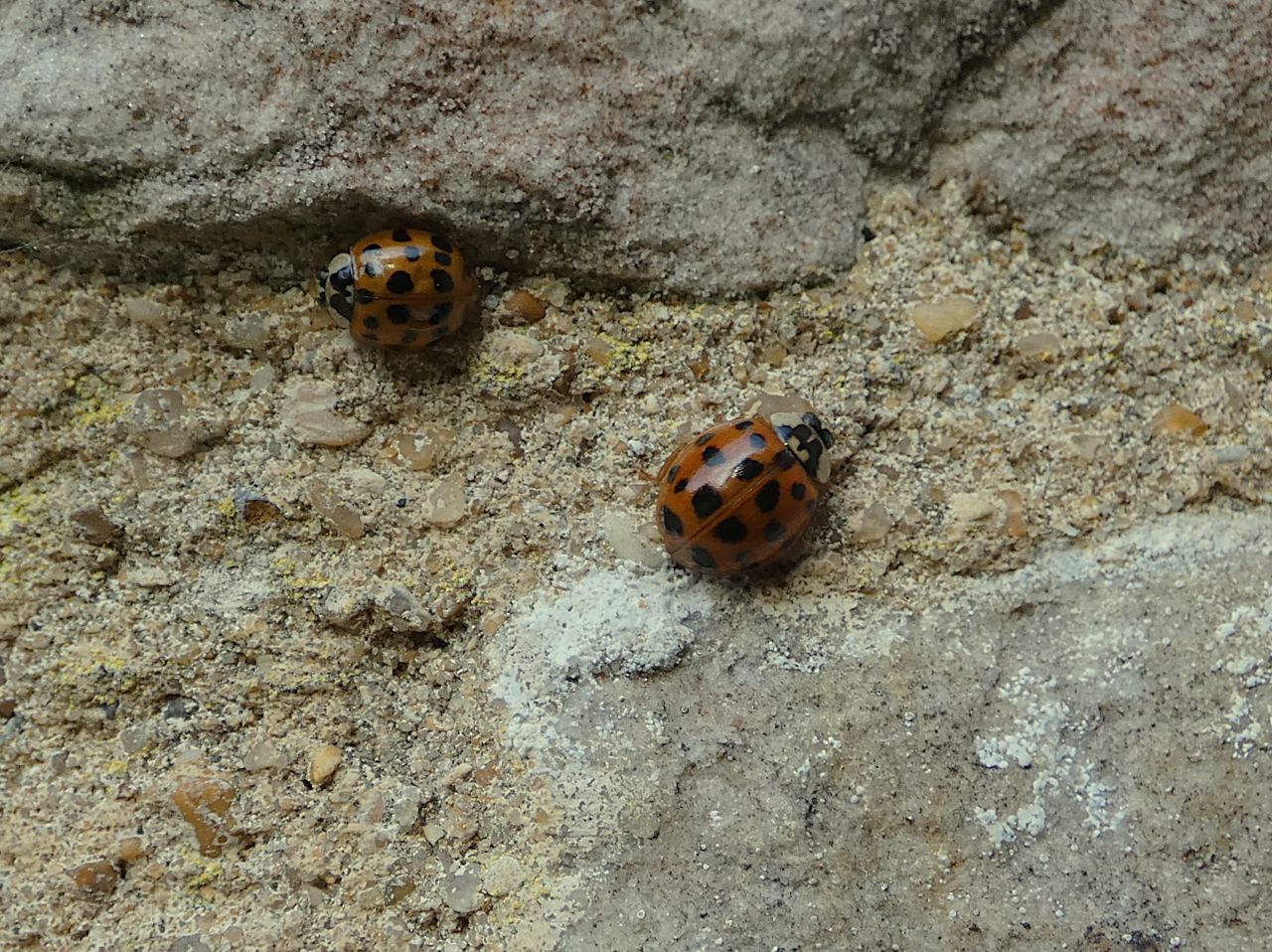
Ladybirds on a wall at St Mary’s church.
Hence the ladybird population also increased dramatically and were now looking for somewhere to lay low and hibernate during the winter months.
The collective noun for ladybirds in the UK is a loveliness.
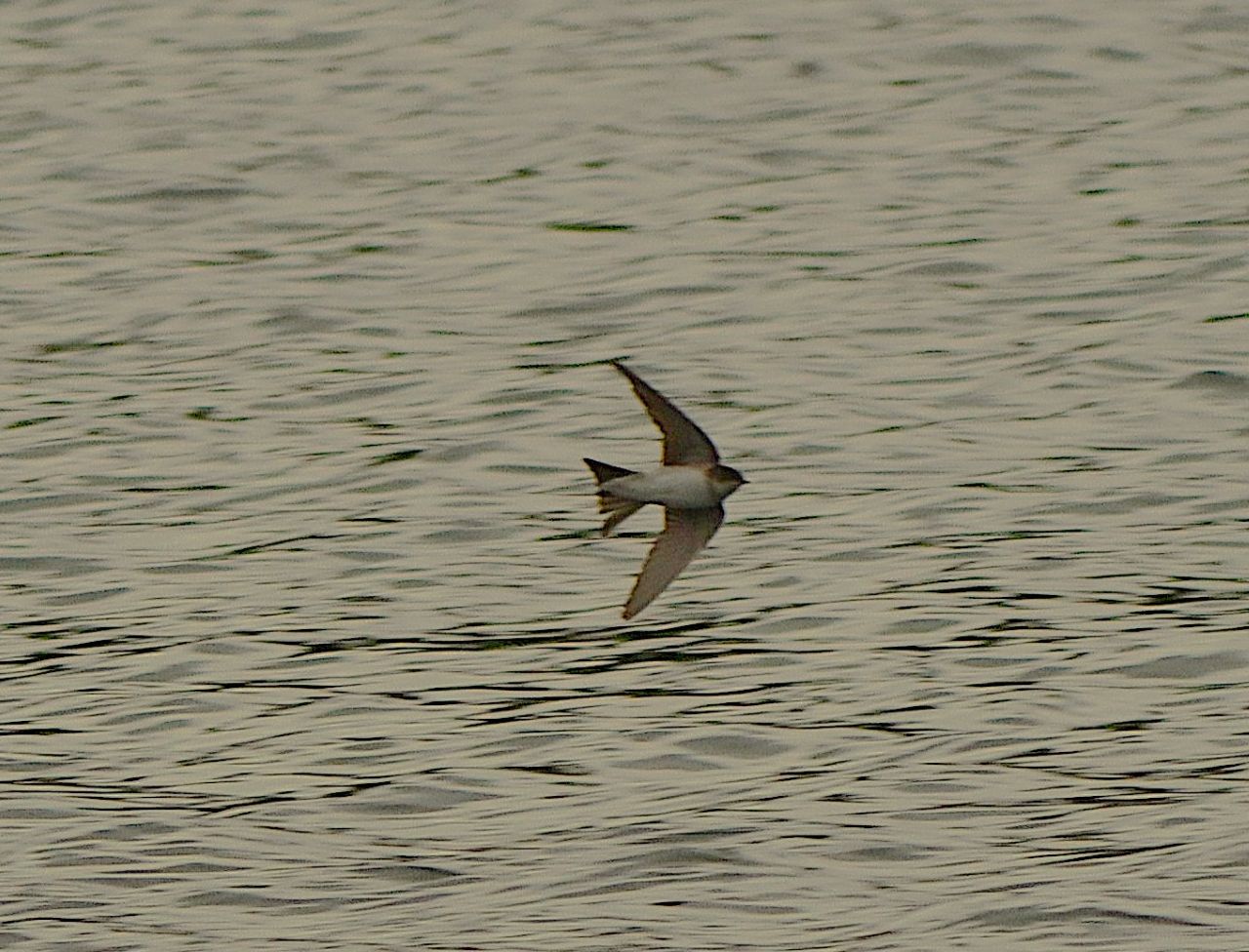
House martin, Stoke Lake.
A visit to Stoke Lake, at the Riverside Nature Reserve, near Burpham on October 4, in the company of Bob and Dougal, saw as many as 40, or more, house martins hawking insect over and about its waters, feeding up on their journey south.
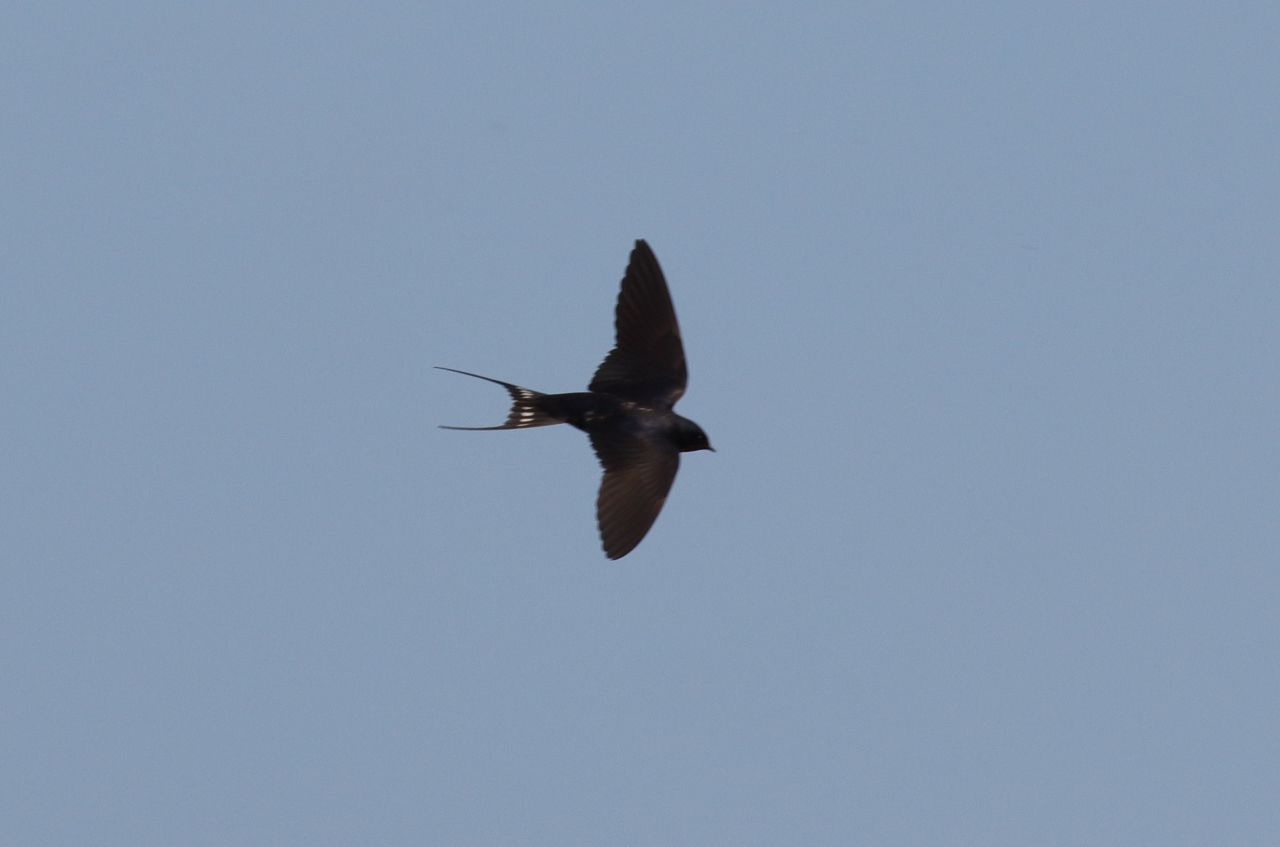
Swallow, Stoke Lake.
While at least two swallows could be picked out within the gathering.
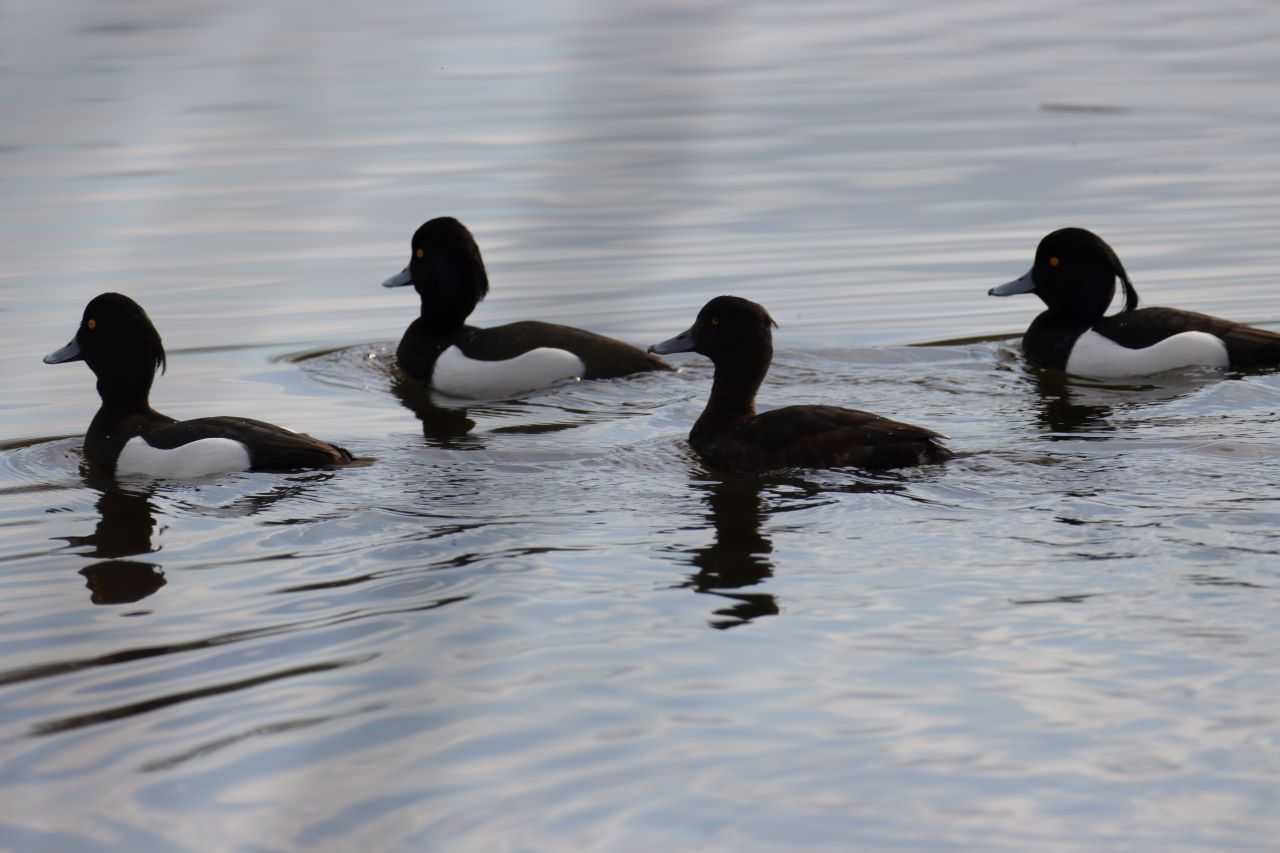
Tufted ducks, Stoke Lake.
Also, out on the lake, counting at least 30 tufted ducks on the water, a count rarely surpassed there, even by mid winter.

Drake intail duck, Stoke Lake.
A return to the lake saw as many ‘tuftys’ still present, but the addition of a drake pintail duck, still in its smart summer plumage.
The following day I visited Tice’s Meadow, near Farnham where water level had now dropped to the lowest that I can recall.

Viewing from the lower hide at Tice’s Meadow.
The lower viewing hide was now easily accessible having been waterlogged during the first six months of the year.
Although weather conditions had become overcast that day, and besides, the birds I’d hope to photo remained too distant for my lens.
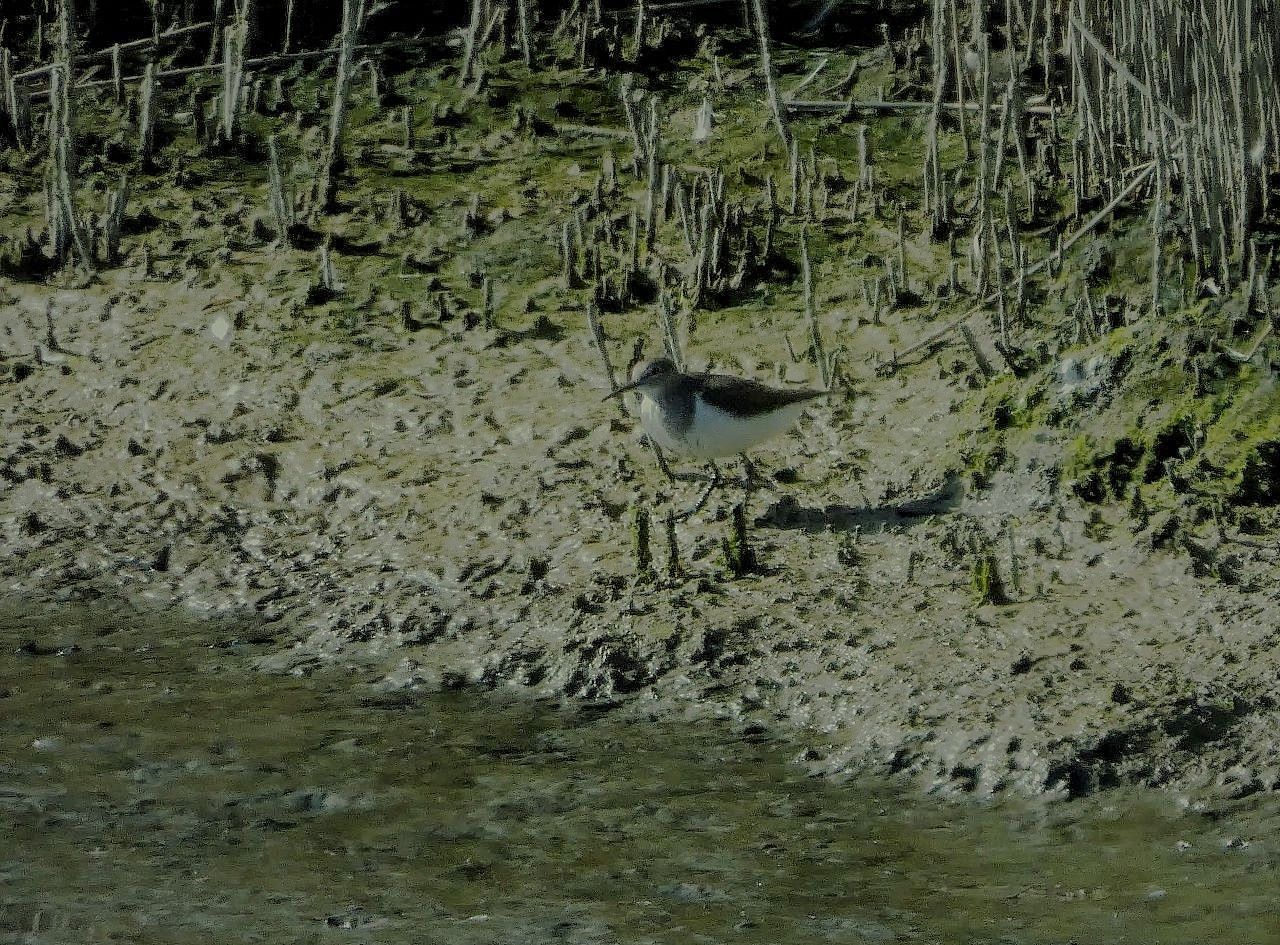
A previous photo of a common sandpiper at Tice’s Meadow.
I was at least able to add a green sandpiper, a common sandpiper and a pintail duck to my day list.
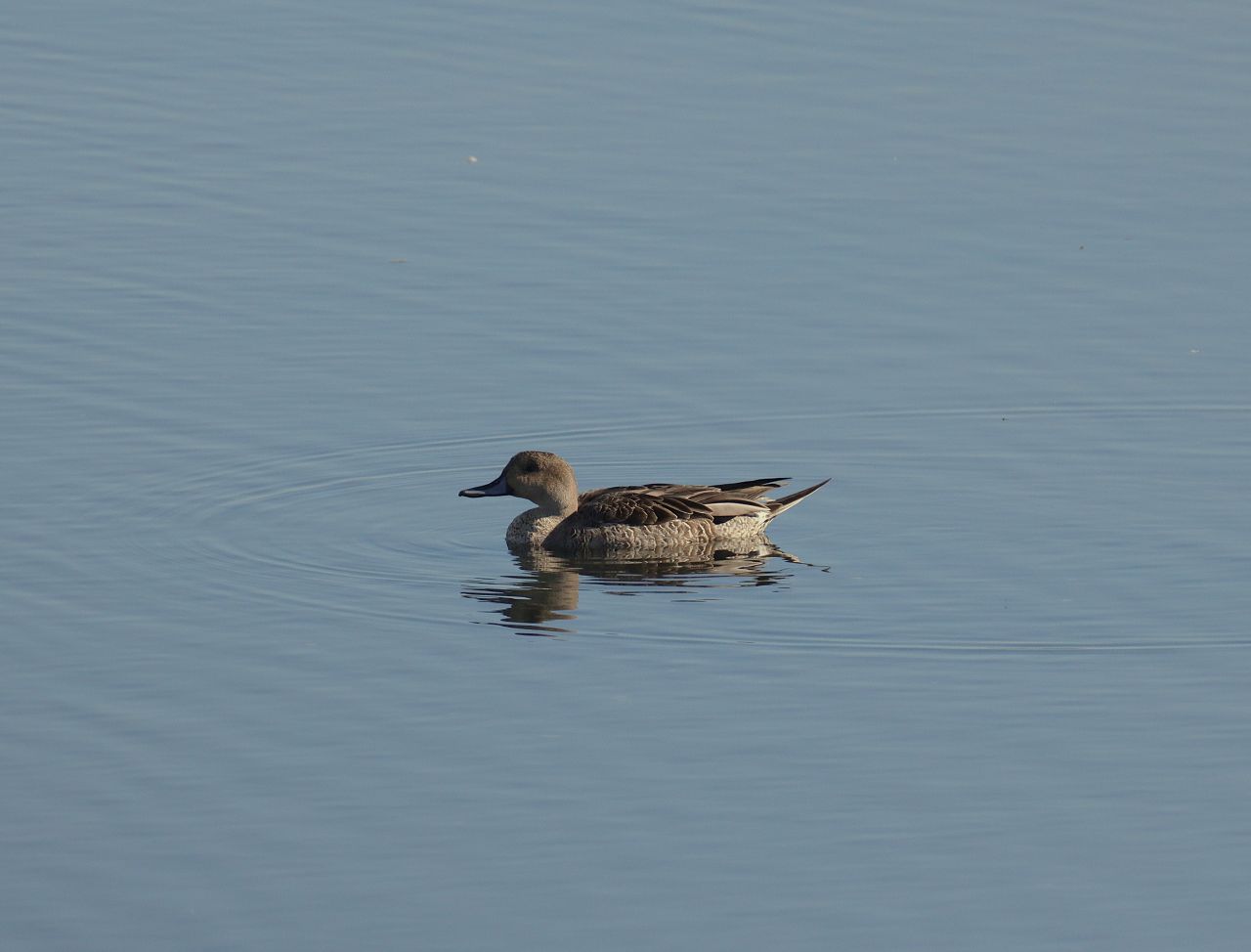
Pintail duck. This one seen at Farlington Marshes.
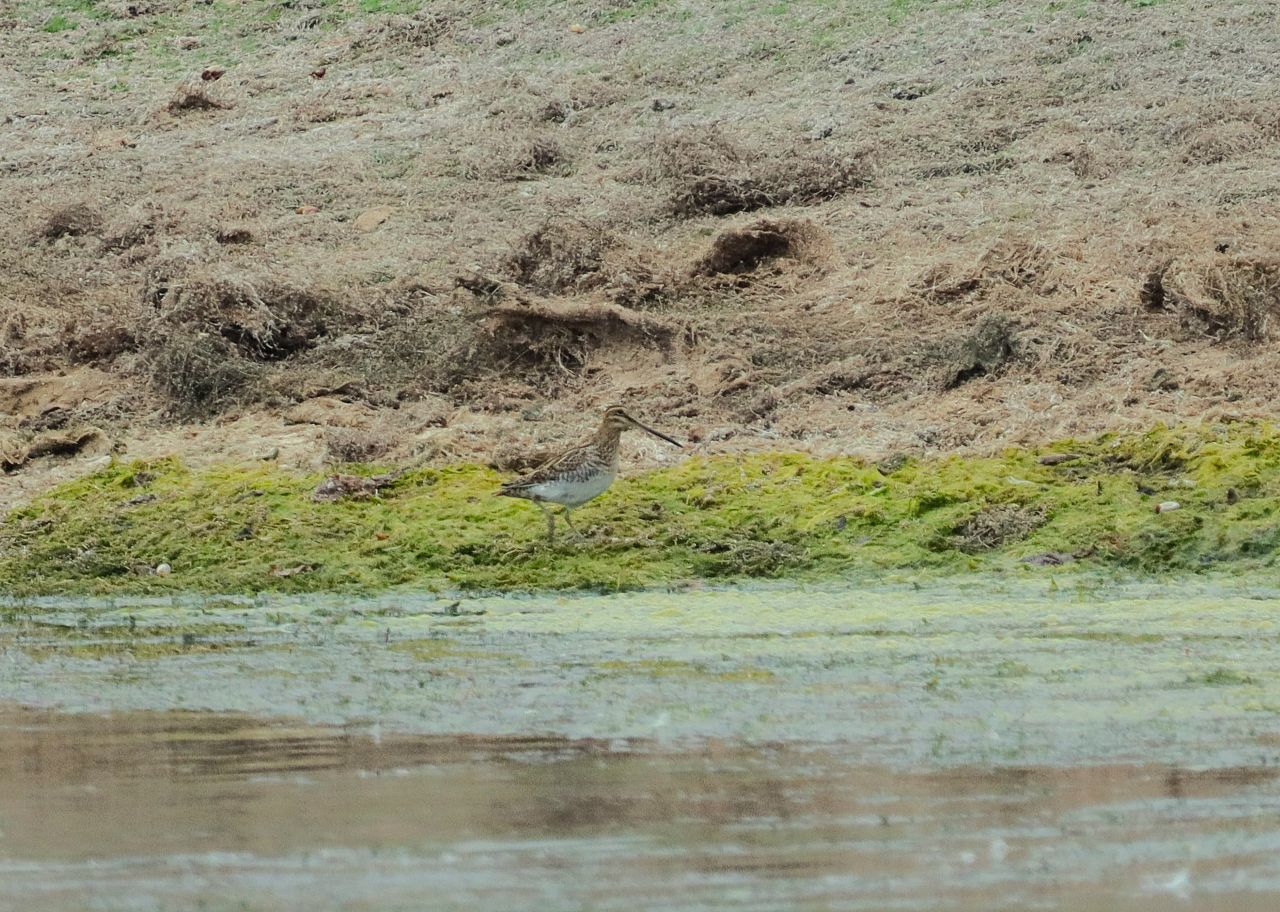
Common snipe, Tice’s Meadow.
However, I was able to photograph a common snipe from the hide.

Tufted ducks, Tice’s Meadow.
As well as a group of tufted ducks.
Also while there, and closer to view, I was able to watch and photo two juvenile great crested grebes still being attended to by their parents.
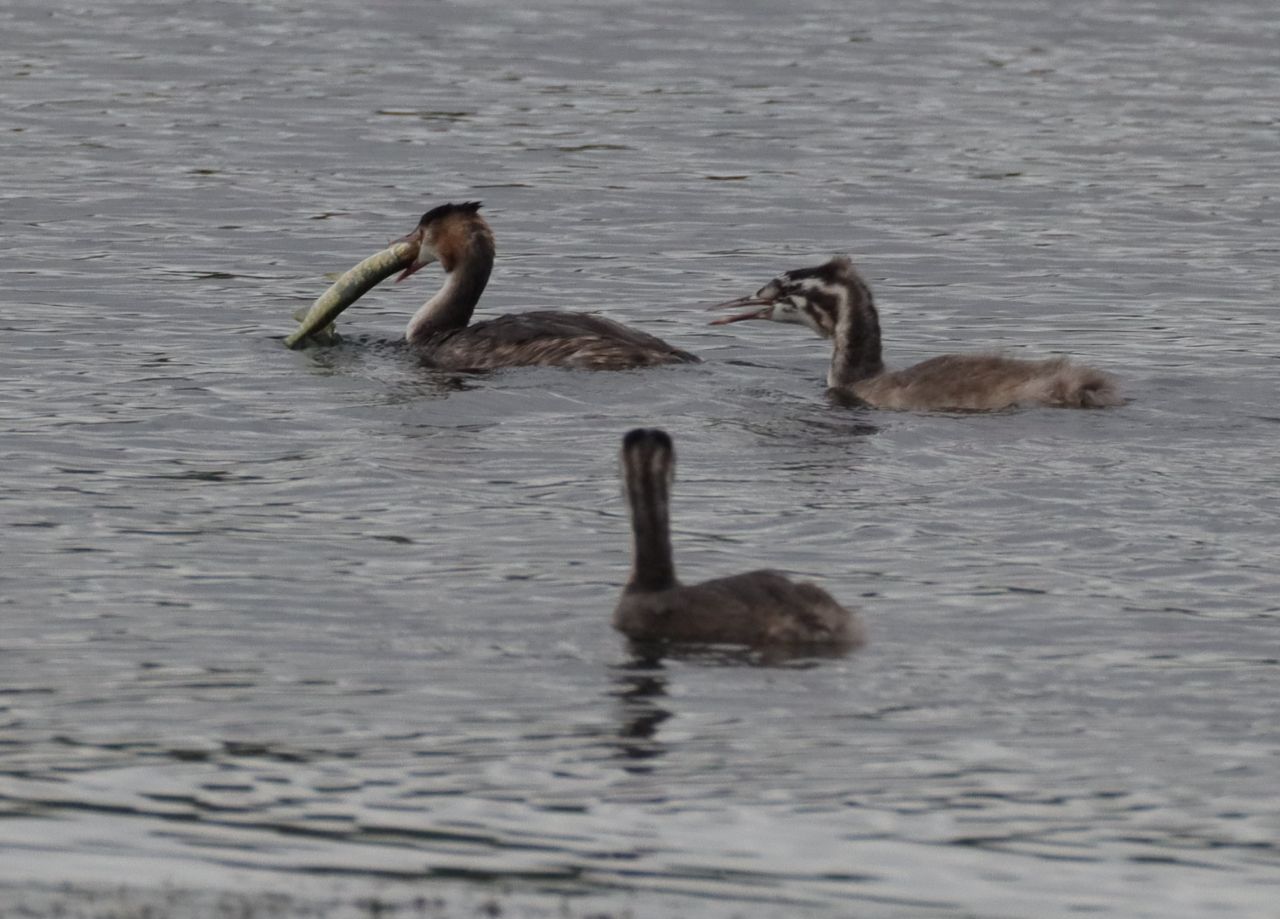
Great crested grebes, Tice’s Meadow. Adult with fish.
One adult catching and dispatching what looked to be quite a sizeable pike then giving it to one of the young to consume.
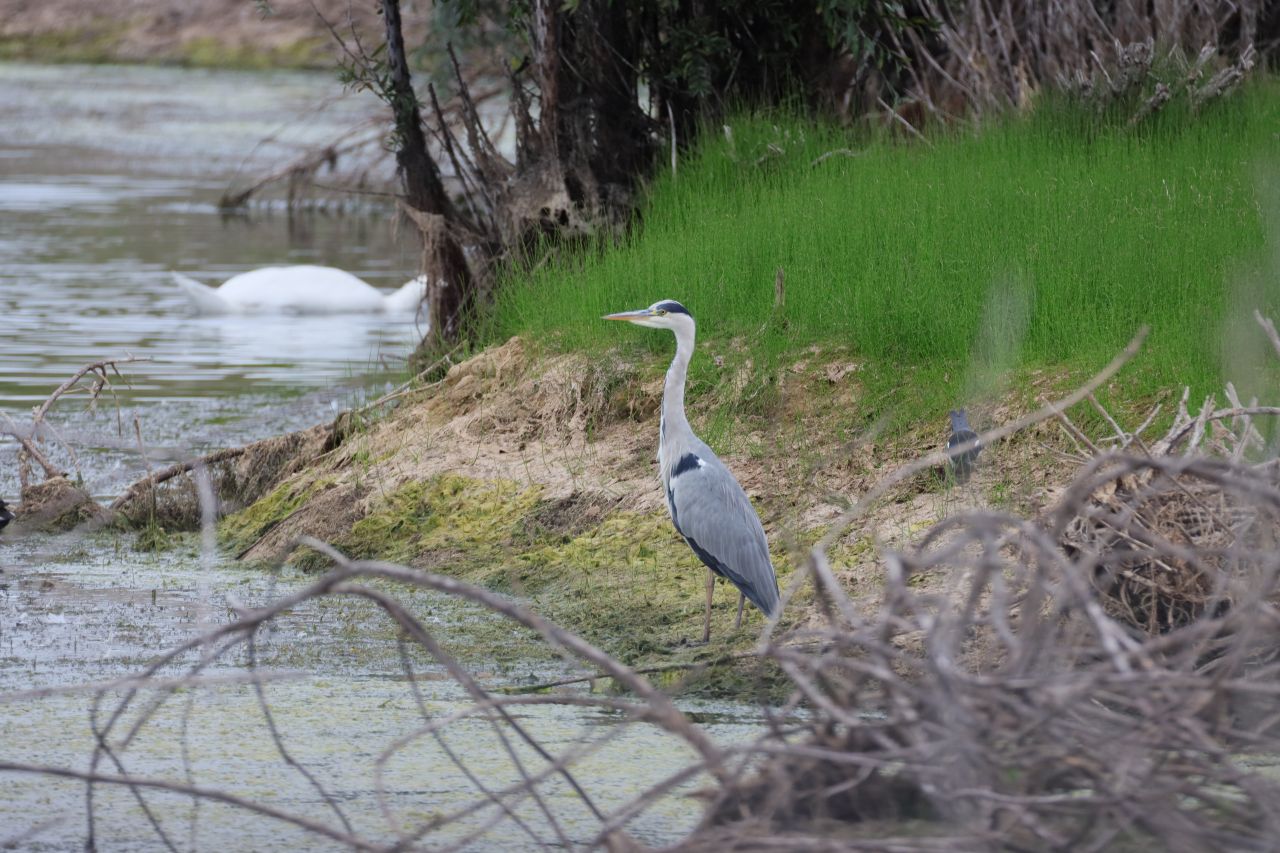
Grey heron, Tice’s Meadow.
And a grey heron.
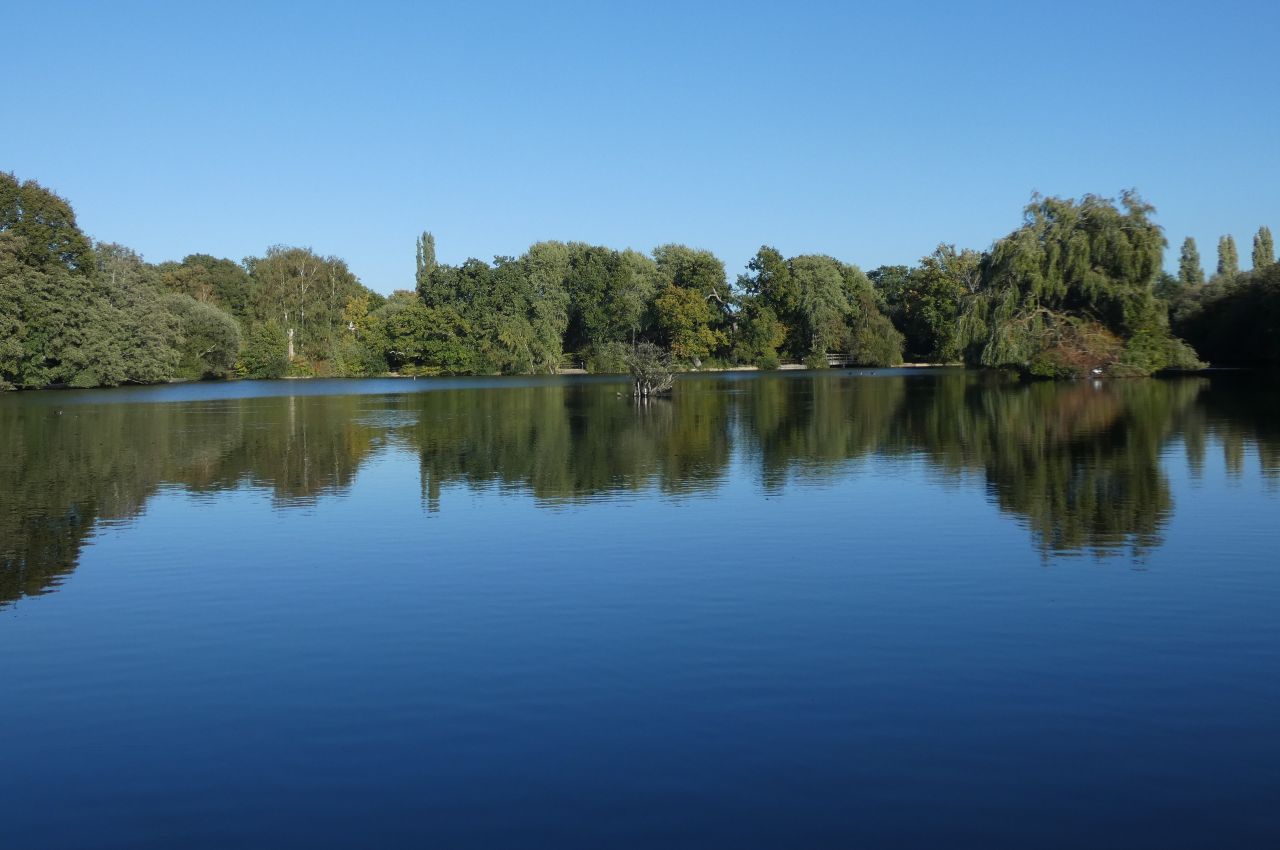
Britten’s Pond.
At Britten’s Pond, previous months of dry weather combined with minimal amounts of rainfall had, however, brought oxygen in the water down to worryingly low levels forcing a close down of the pond to anglers until October 13.
Meanwhile, pumps were moved on to one of the islands and set up to aerate the water.

Great crested grebe, Britten’s Pond.
This eventually causing enough noise and disturbance for a lone great crested grebe that had spent the first few days of the month there to find a more tranquil site elsewhere.
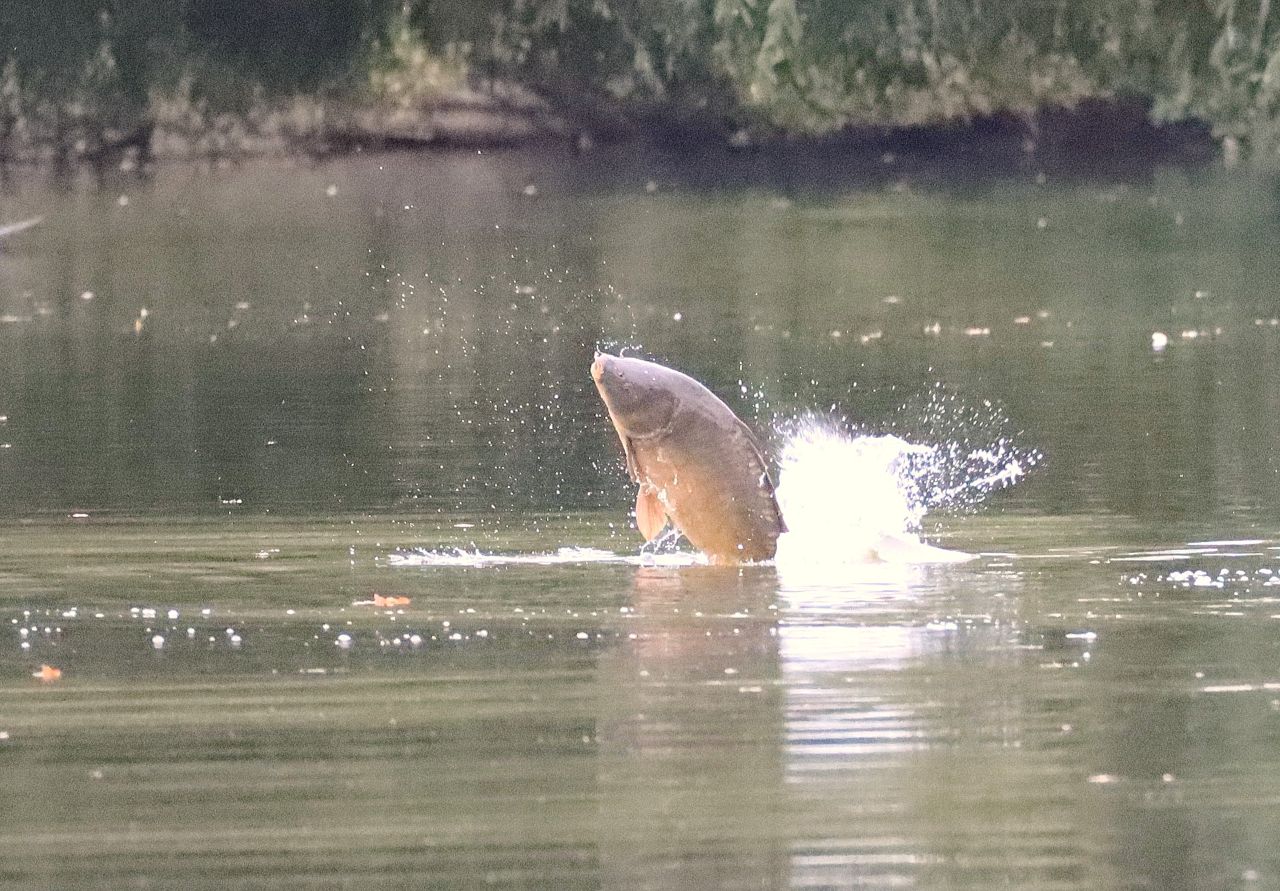
Carp breaching, Britten’s Pond.
With much patience and some luck, one afternoon there I managed to meet my personal challenge of capturing one of the carp breaching the water.
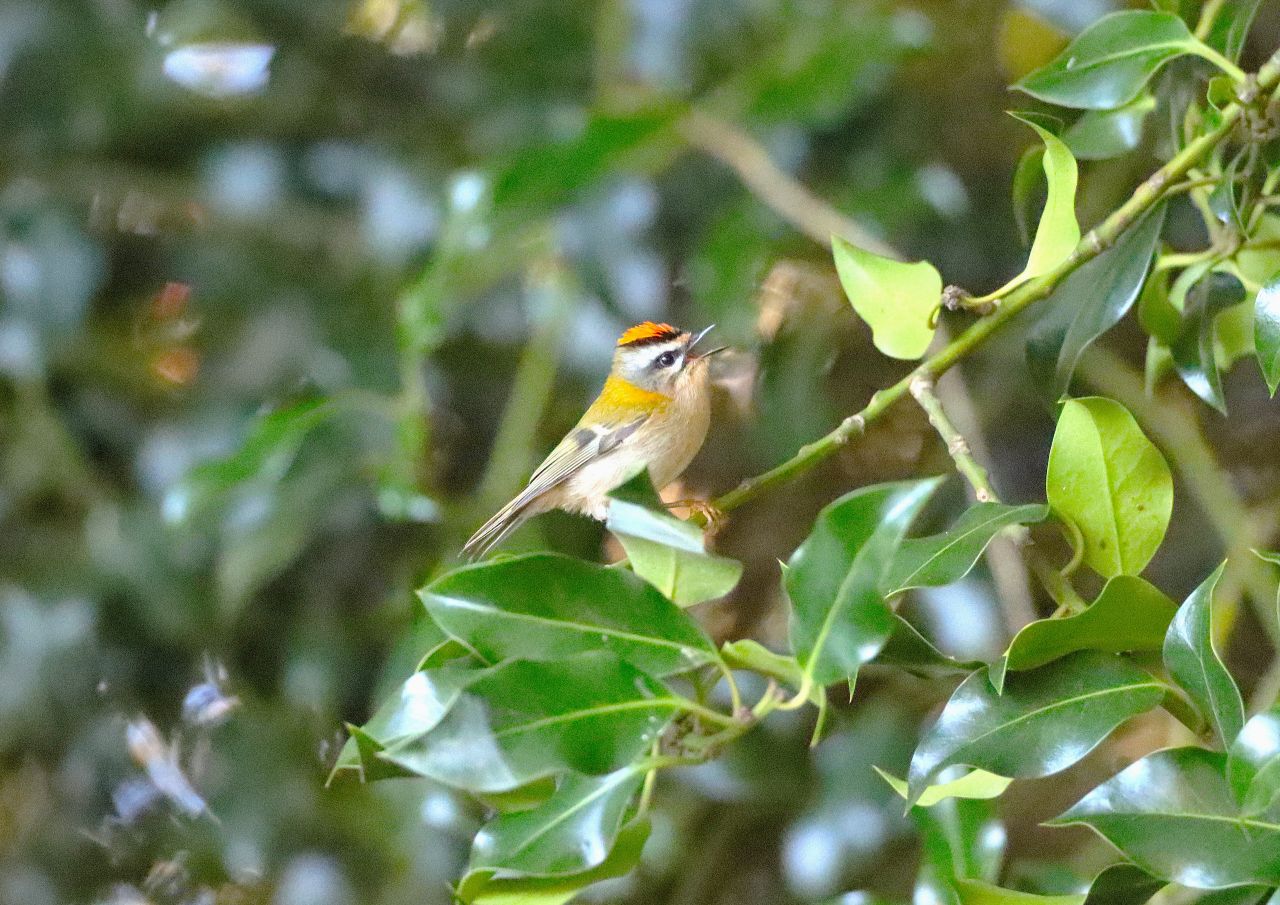
Firecrest, Britten’s Pond.
While in the hollies at the rear of the pond I was pleased to hear the return of a firecrest, even managing a few photos of it as it flitted about the bushes.
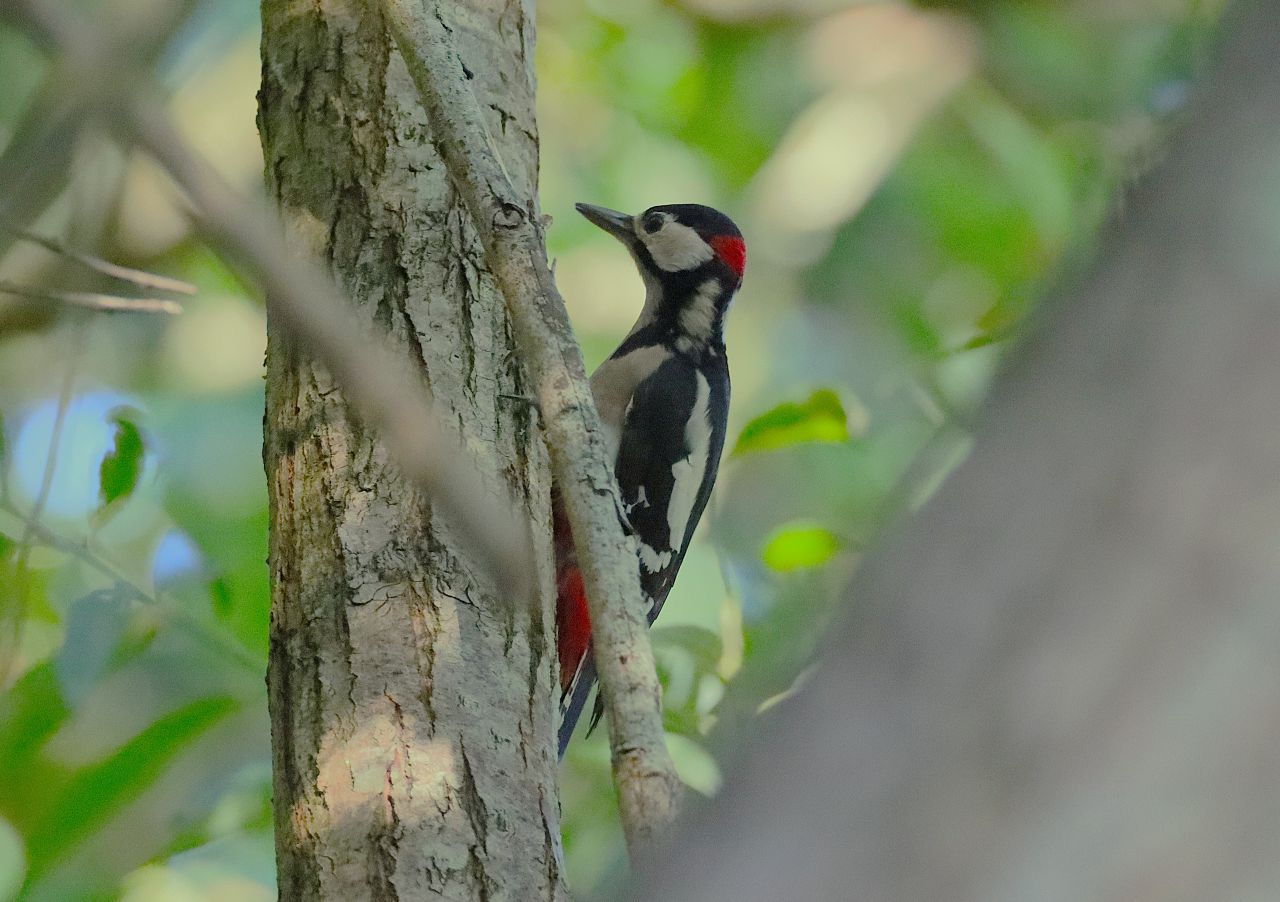
Great spotted woodpecker, (male). Britten’s Pond.
While photographing the firecrest, a great spotted woodpecker made an appearance nearby, and added to my photos as it could be viewed and heard pecking in a tree overhanging the water.
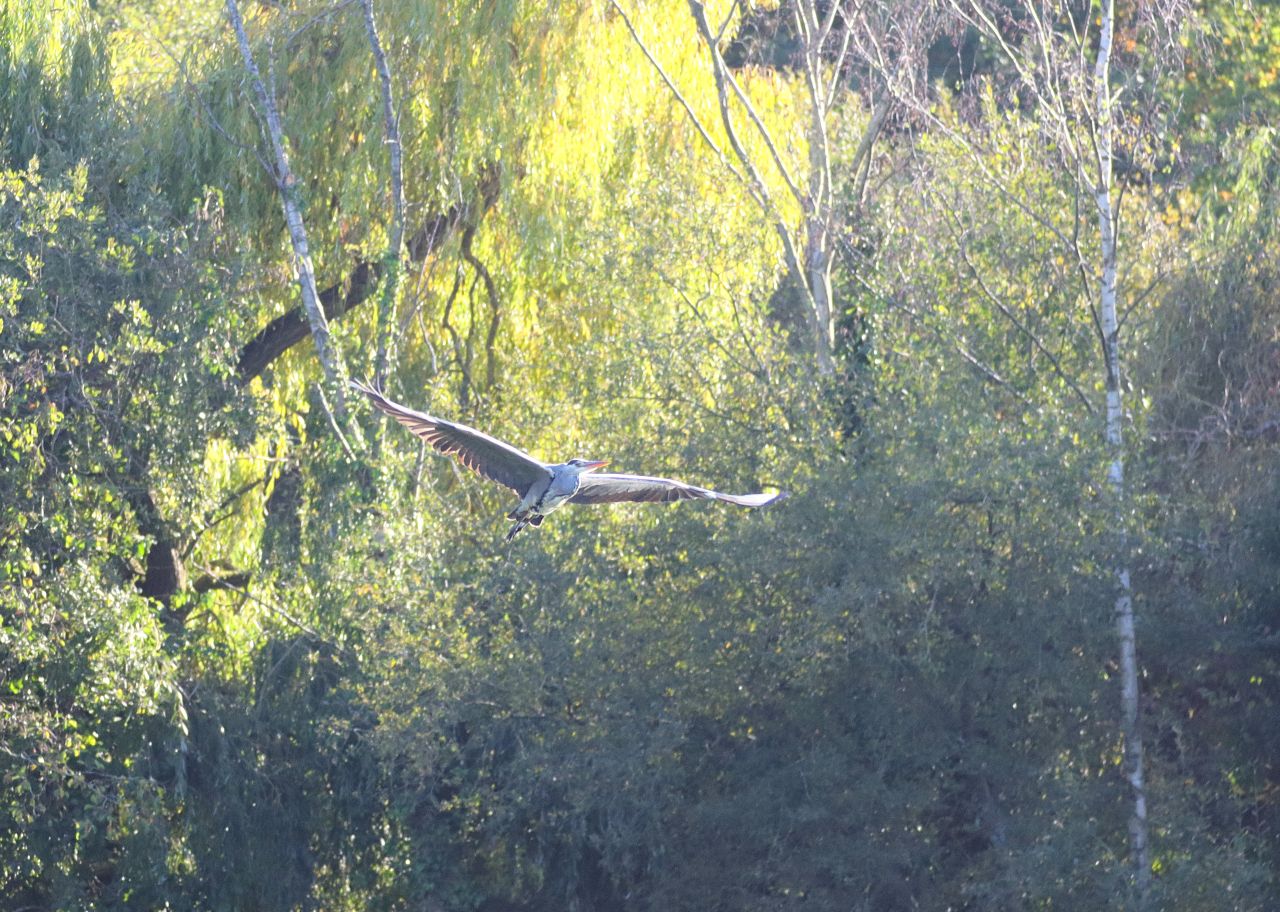
Grey heron, Britten’s Pond.
The resident grey heron continued to make a regular appearance, often seen as it flew from point to point across the water.
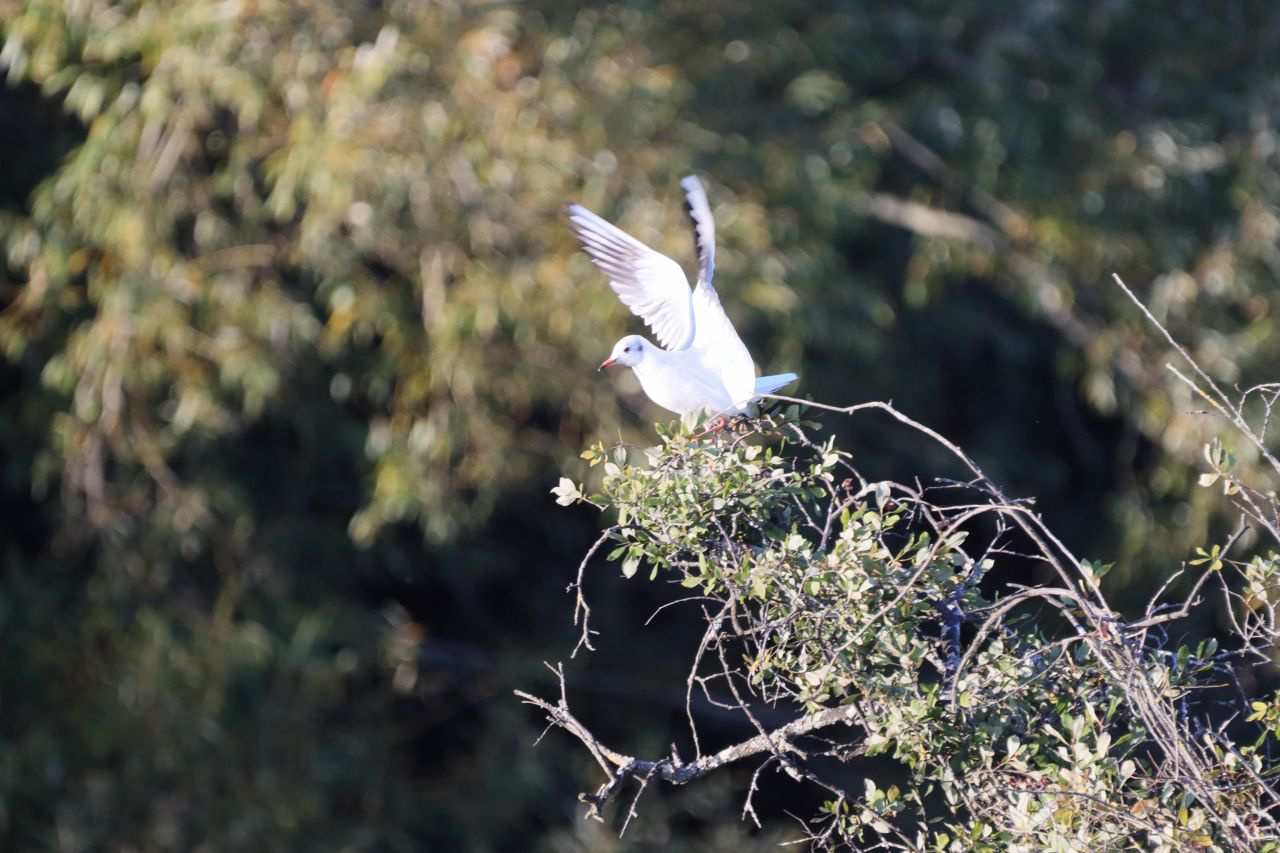
Black-headed gull, Britten’s Pond.
As well a several black-headed gulls that flew around the waters.

Cormorant, Britten’s Pond.
And the occasional visit of a cormorant.
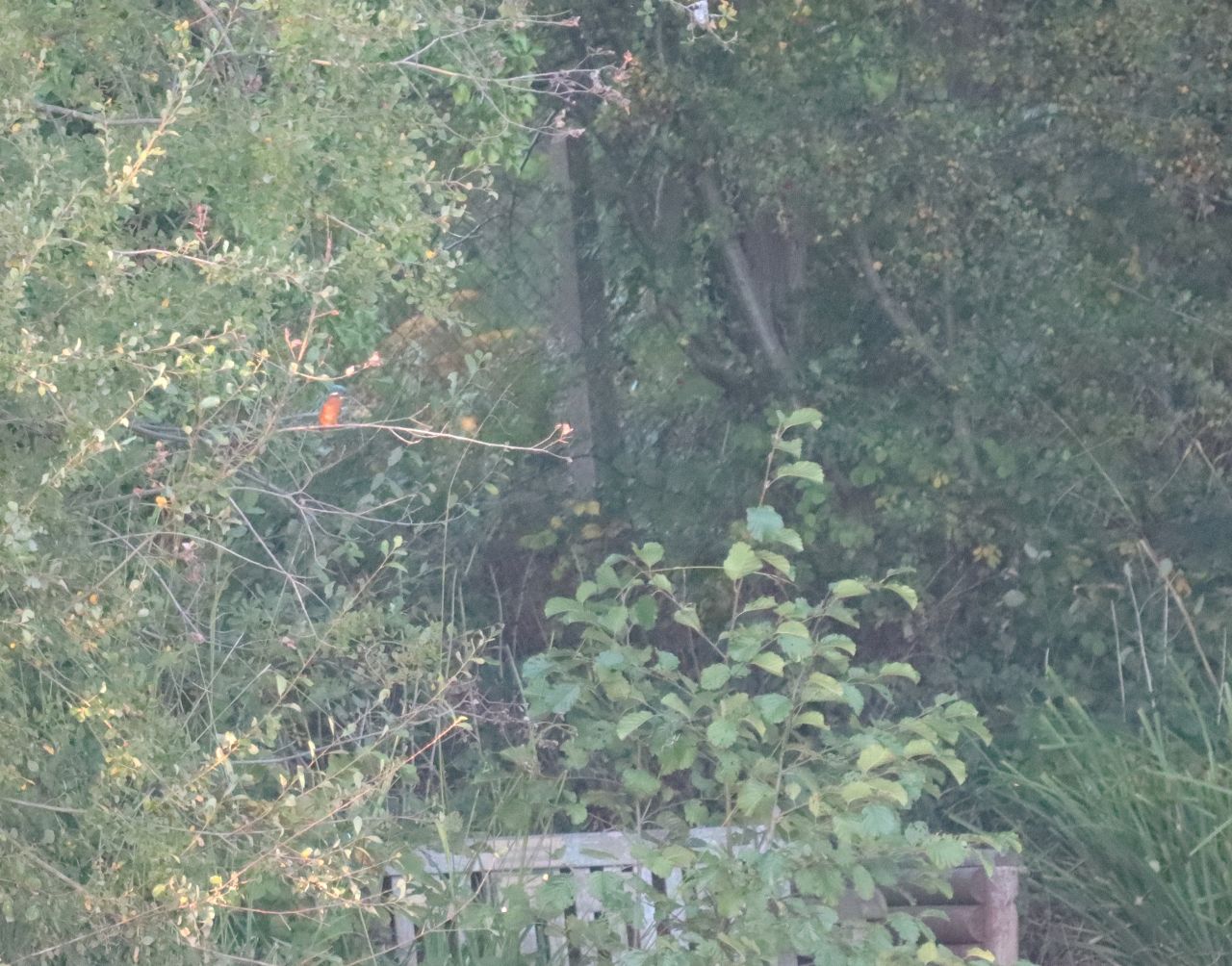
Kingfisher, Britten’s Pond.
More challenging to me, especially while the trees were still in leaf (although now starting to fall), was to achieve photos of the kingfisher that had recently made a return to the pond.
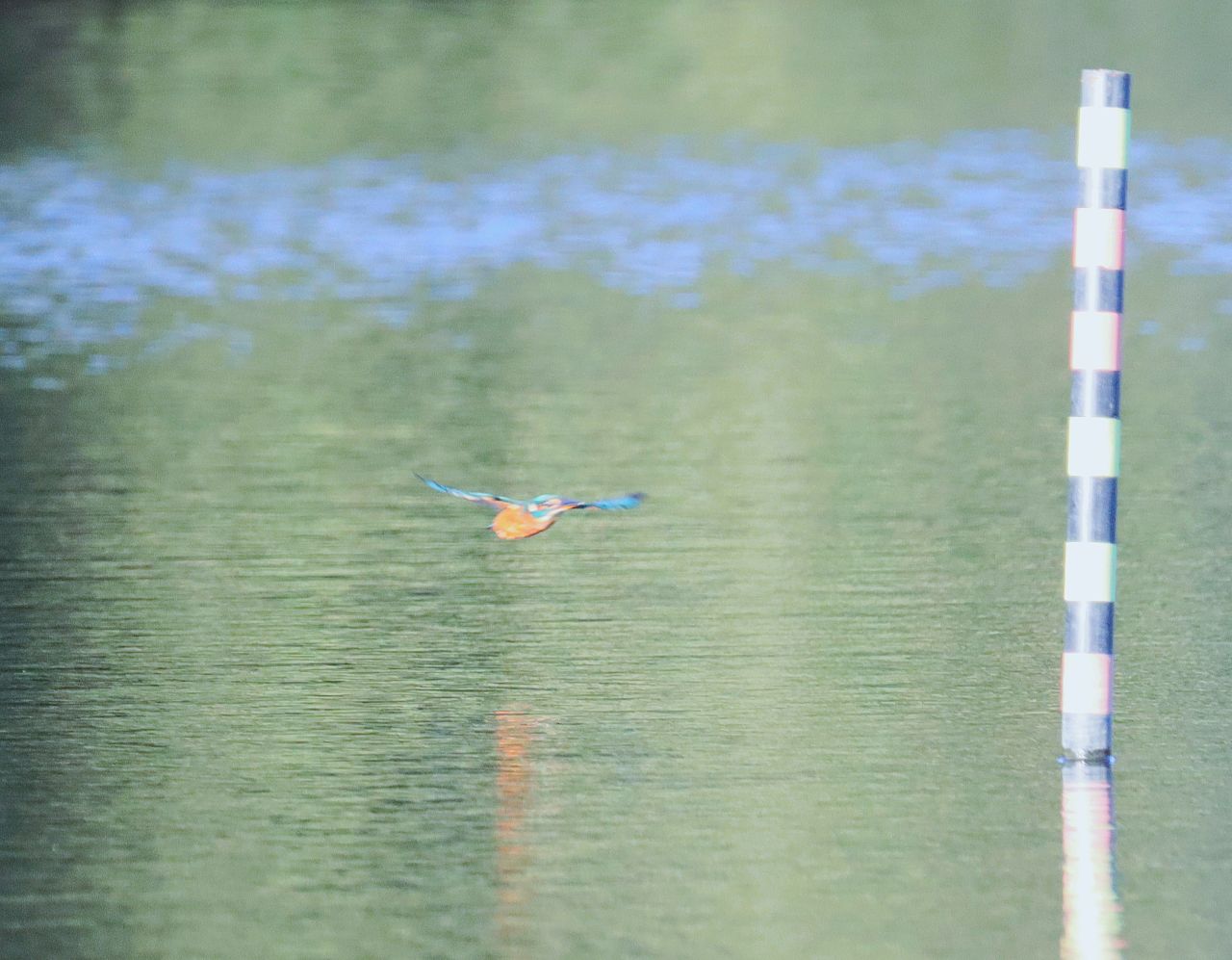
Kingfisher, Britten’s Pond.
Although getting a few views of it as it perched up on the far bank of the pond, the best I managed were in-flight shots across the water.
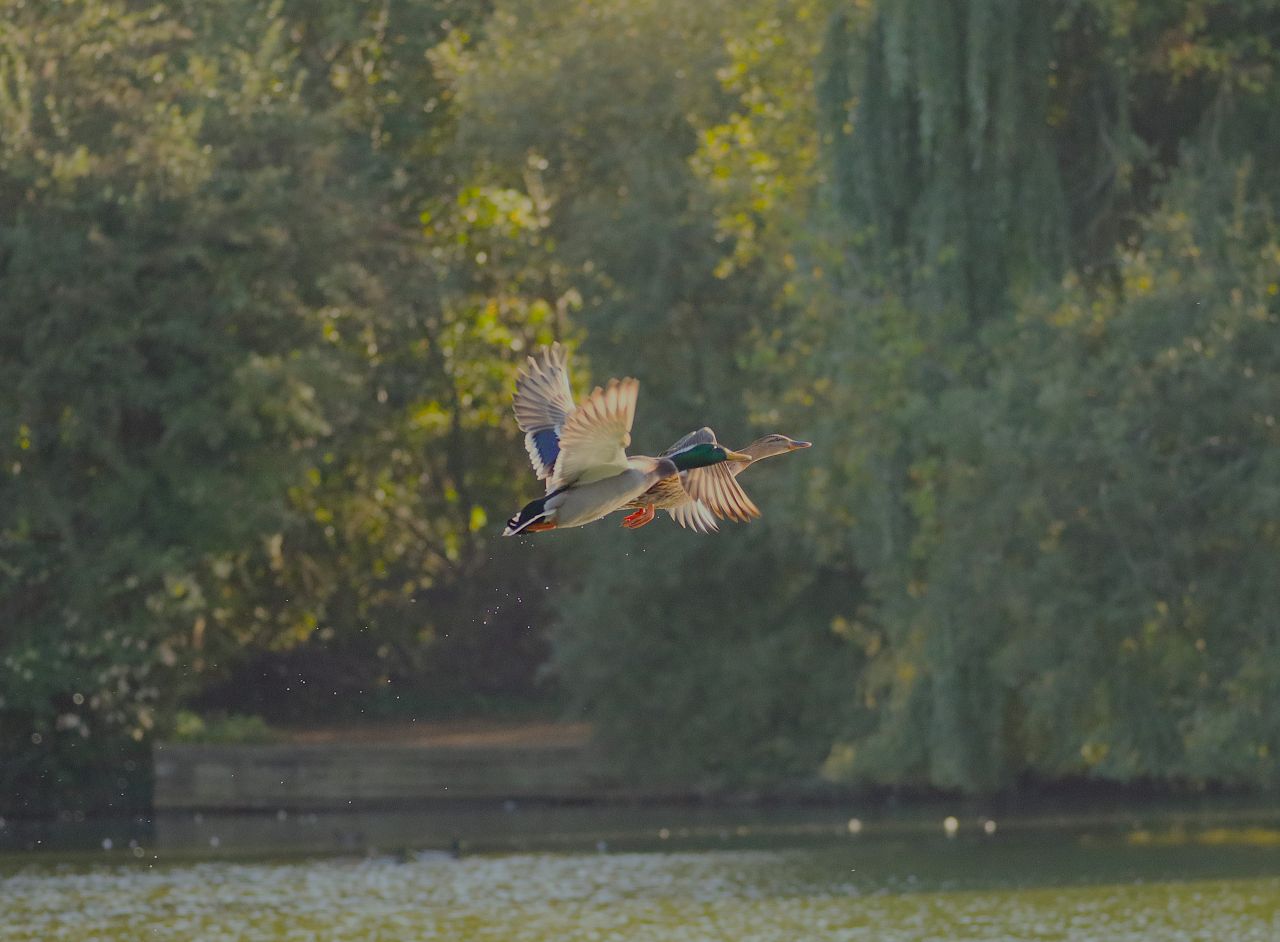
Mallards, Britten’s Pond.
Also capturing an opportunistic shot of a pair of mallards in flight.
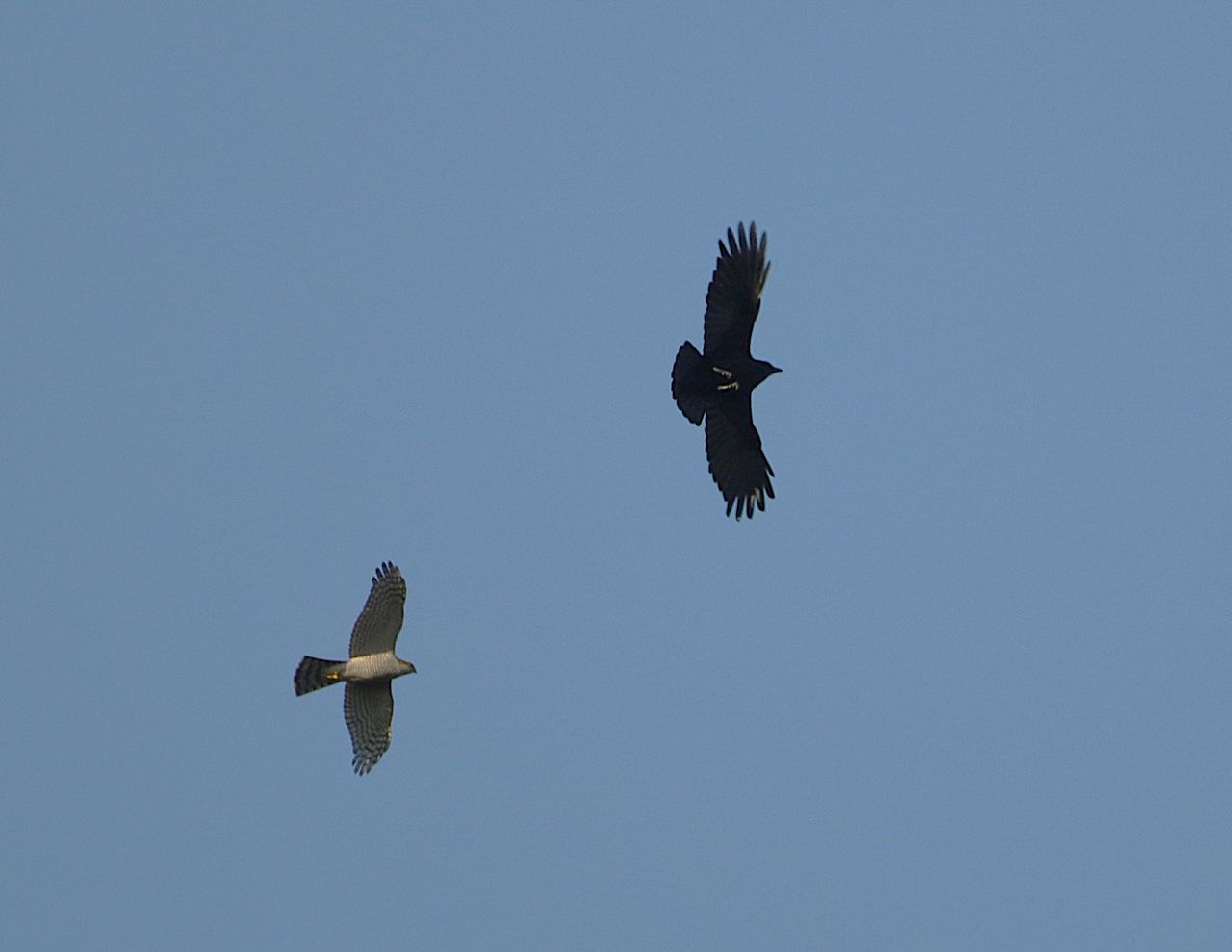
Crow mobbing a sparrowhawk, Britten’s Pond.
During one visit, high up over the pond a sparrowhawk could be viewed being mobbed by a crow.

Long-tailed tit, Britten’s Pond.
While long-tailed tits continued to be seen and heard around the pond.
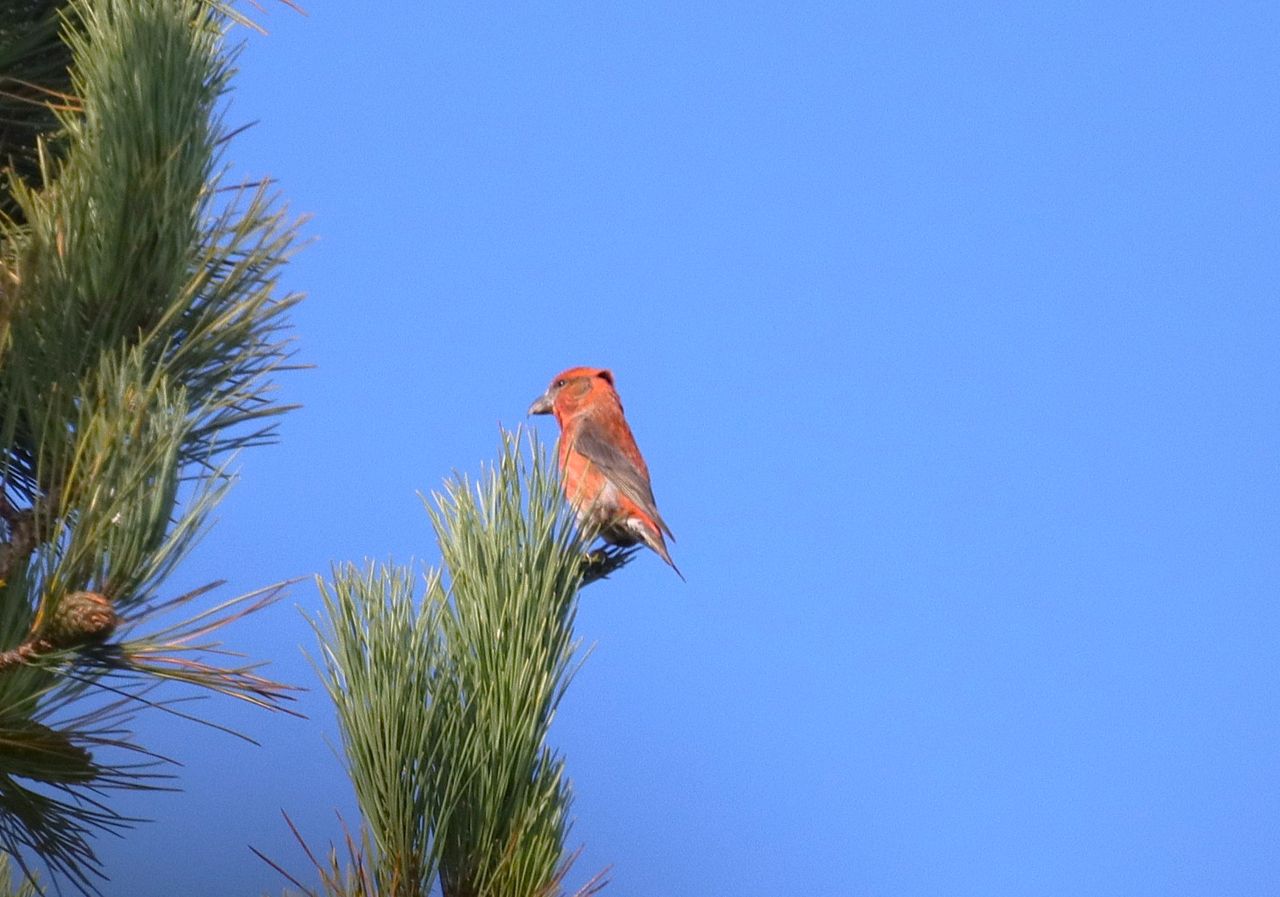
Common crossbill (male).

Common crossbill (female).
On October 12, in the company of Bob, we visited Dick Fock’s Common at Effingham, allowing me my best photos so far this year of a pair of common crossbills.
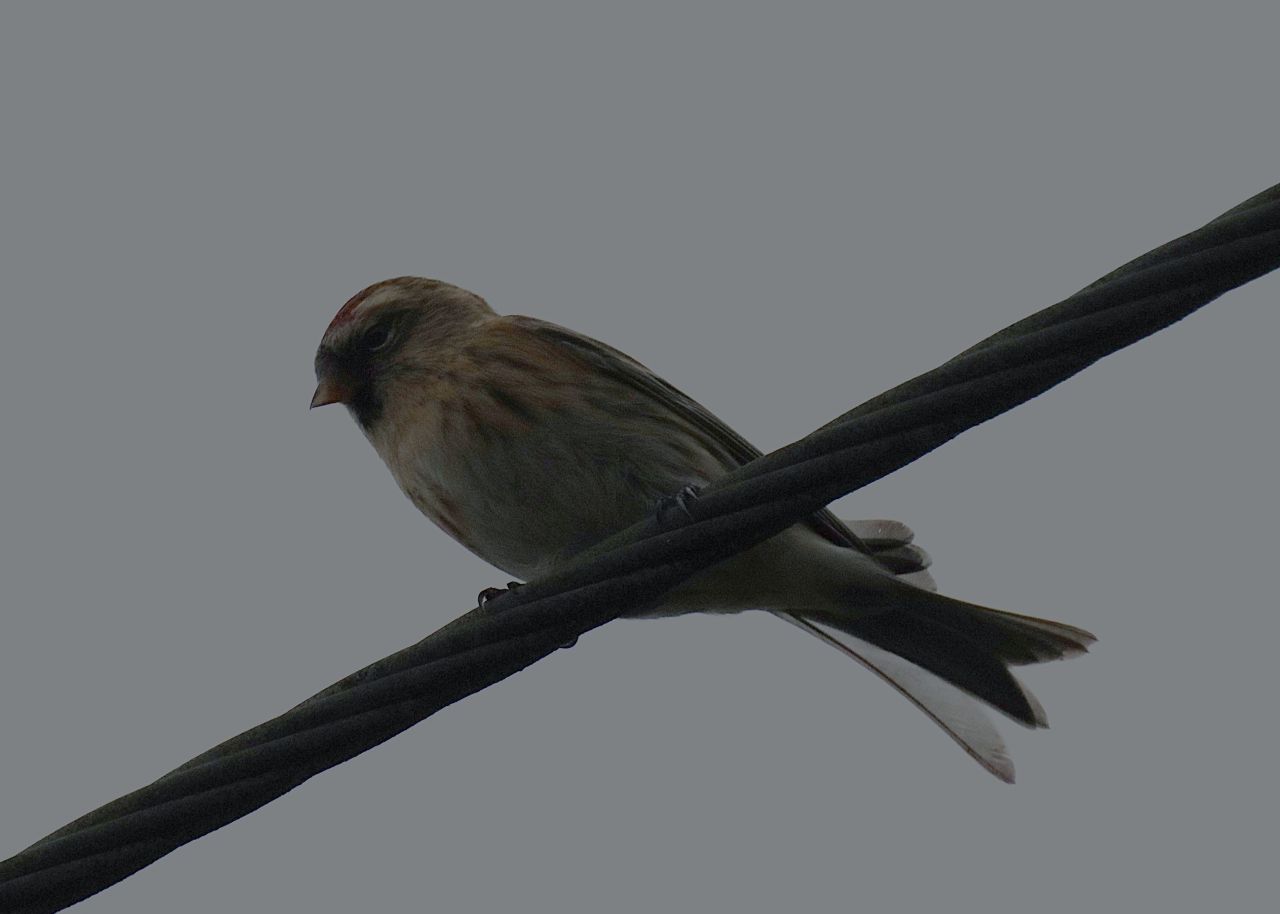
Lesser redpoll, Whitmoor Common.
While October 13 saw my first arrival this autumn of a group of 20 or so lesser redpolls, feeding on seeds cones in the silver birch trees on Whitmoor Common.

Fieldfare and redwing in flight, Shackleford.
And by the middle of the month the first few flocks of redwings and fieldfares had begun to be reported arriving from Scandinavia.

Fly agaric fungi.
Typically at this time of the year fly agaric fungi could be found at numerous sites around the countryside.
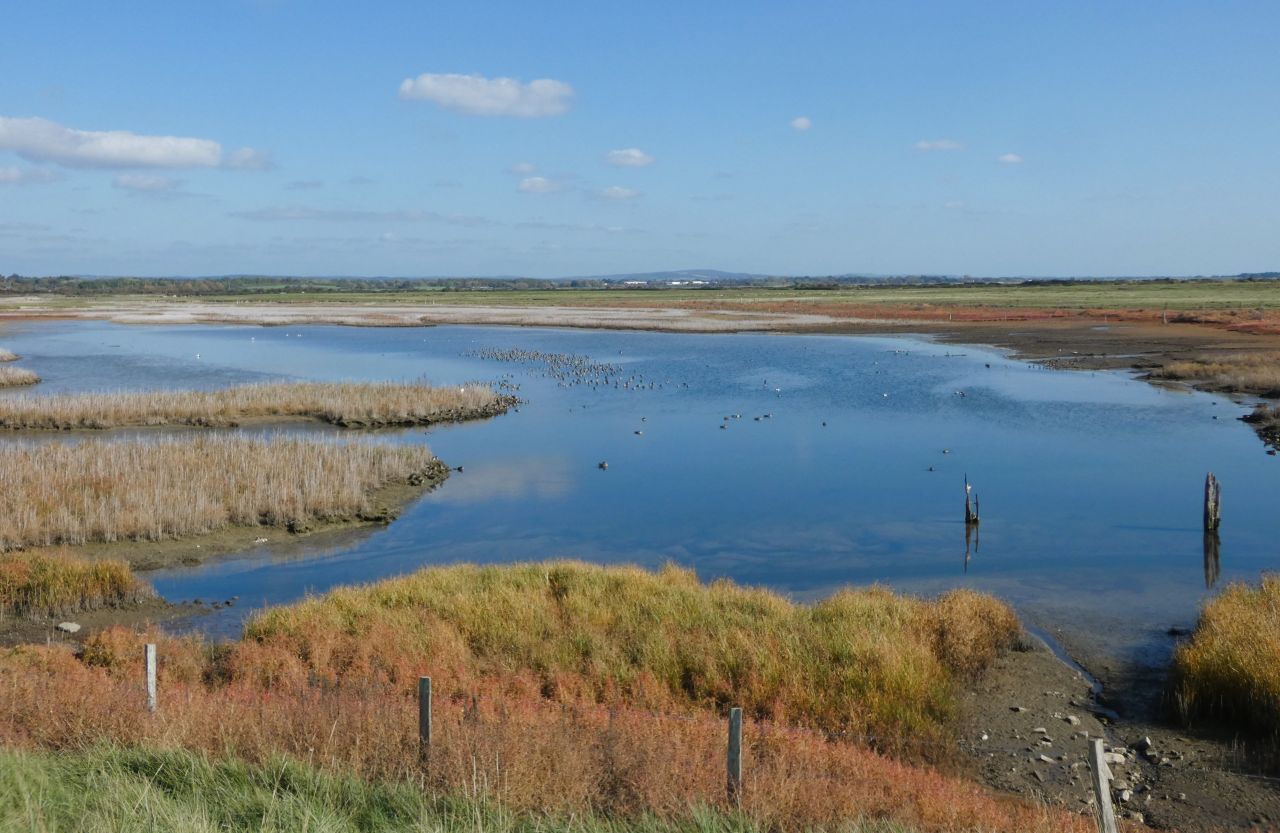
Farlington Marshes.
With thanks to an invite from Bob, the opportunity of a trip beyond the Surrey borders fell my way on October 9, allowing me another visit to Farlington Marshes, near Portsmouth, on what turned out to be a pleasantly warm and sunny afternoon, with temperatures touching 20 Celsius.
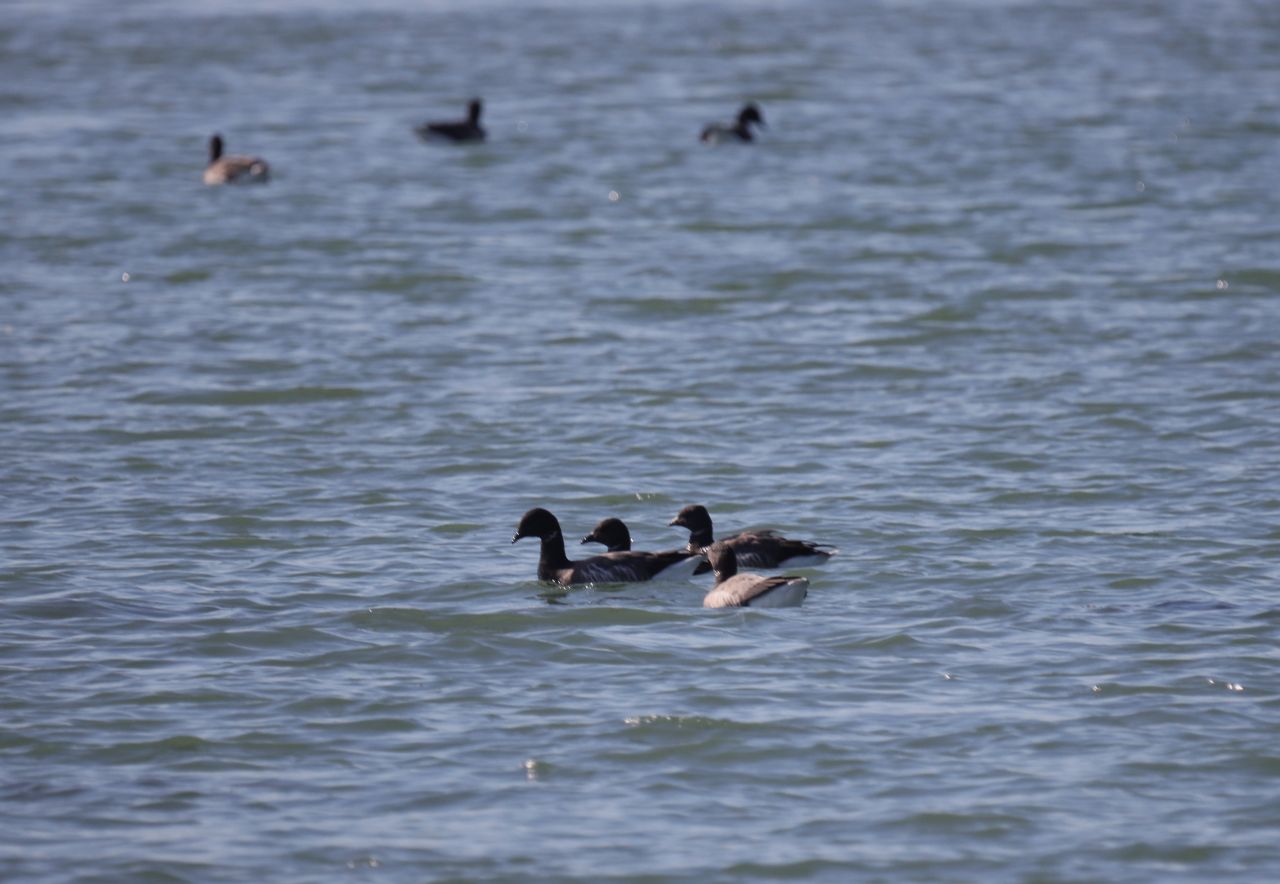
Brent geese, Farlington Marshes.
A few brent geese had notably made their return from their summer breeding grounds in Siberia, with a dozen or so viewed from the seawall in Langstone Harbour.
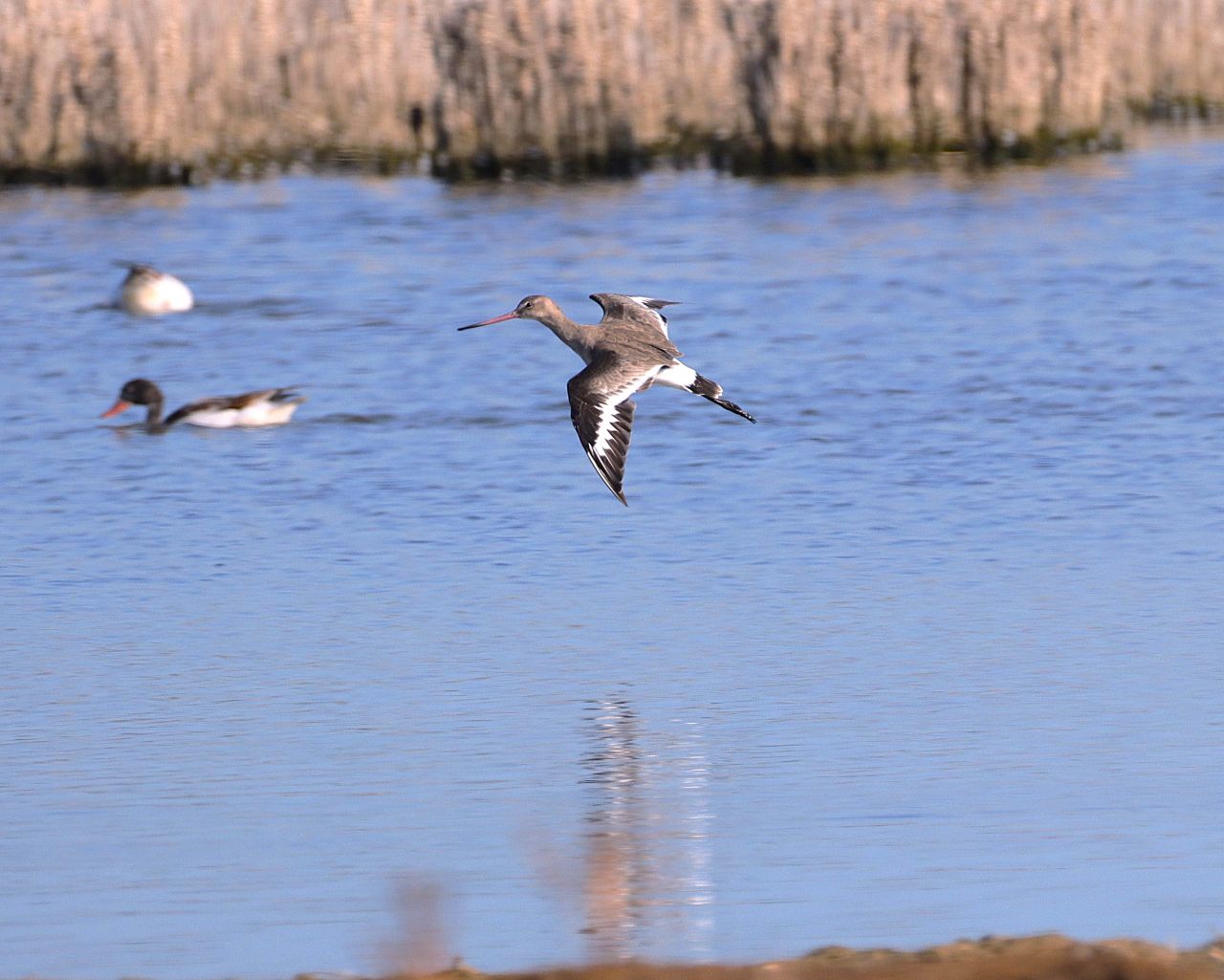
Black-tailed godwit, Farlington Marshes.
Out on the main lake and along the stream black-tailed godwits could be viewed.
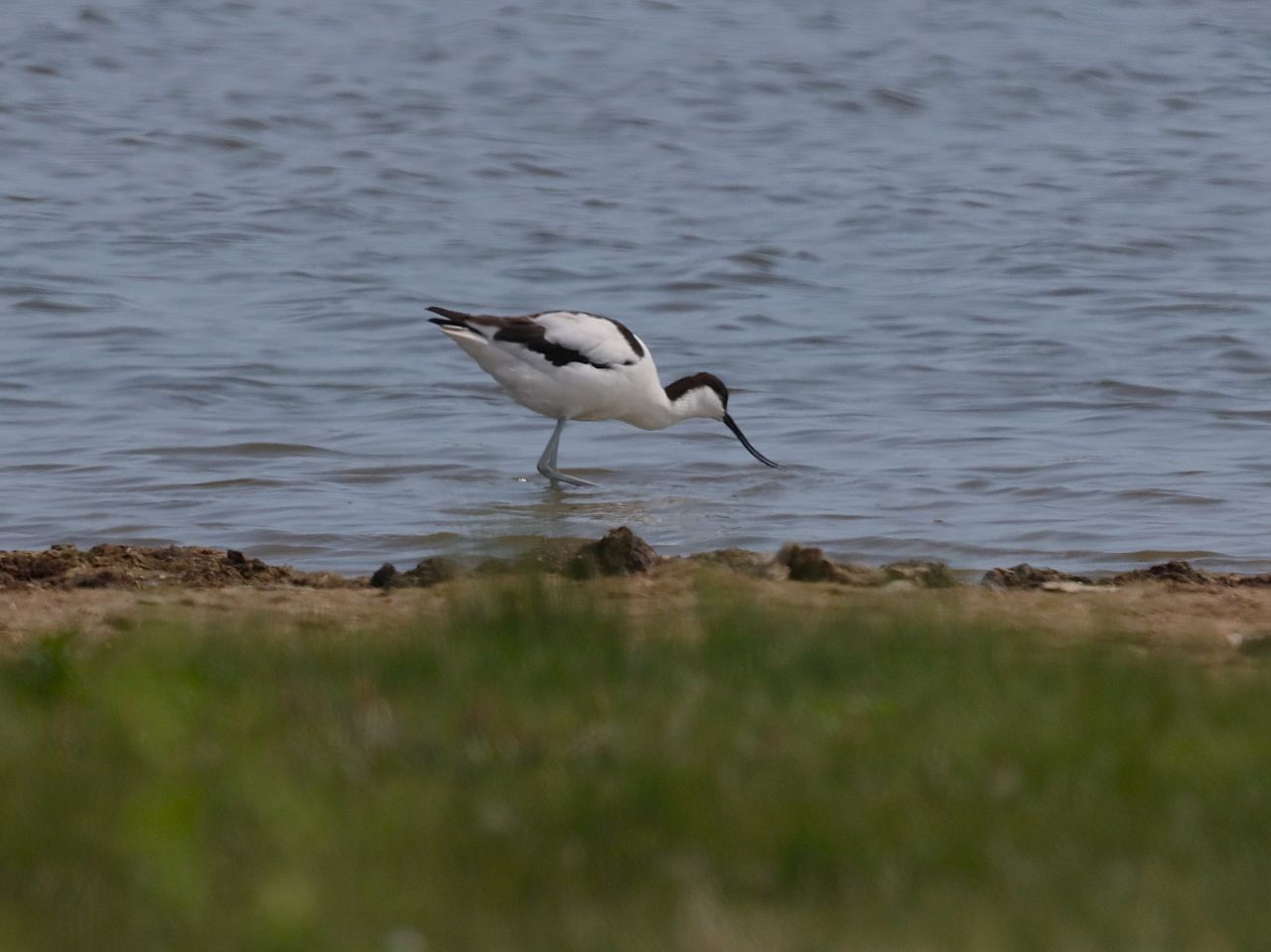
Avocet, Farlington Marshes.
After a brief absence a few avocets could once again be viewed.
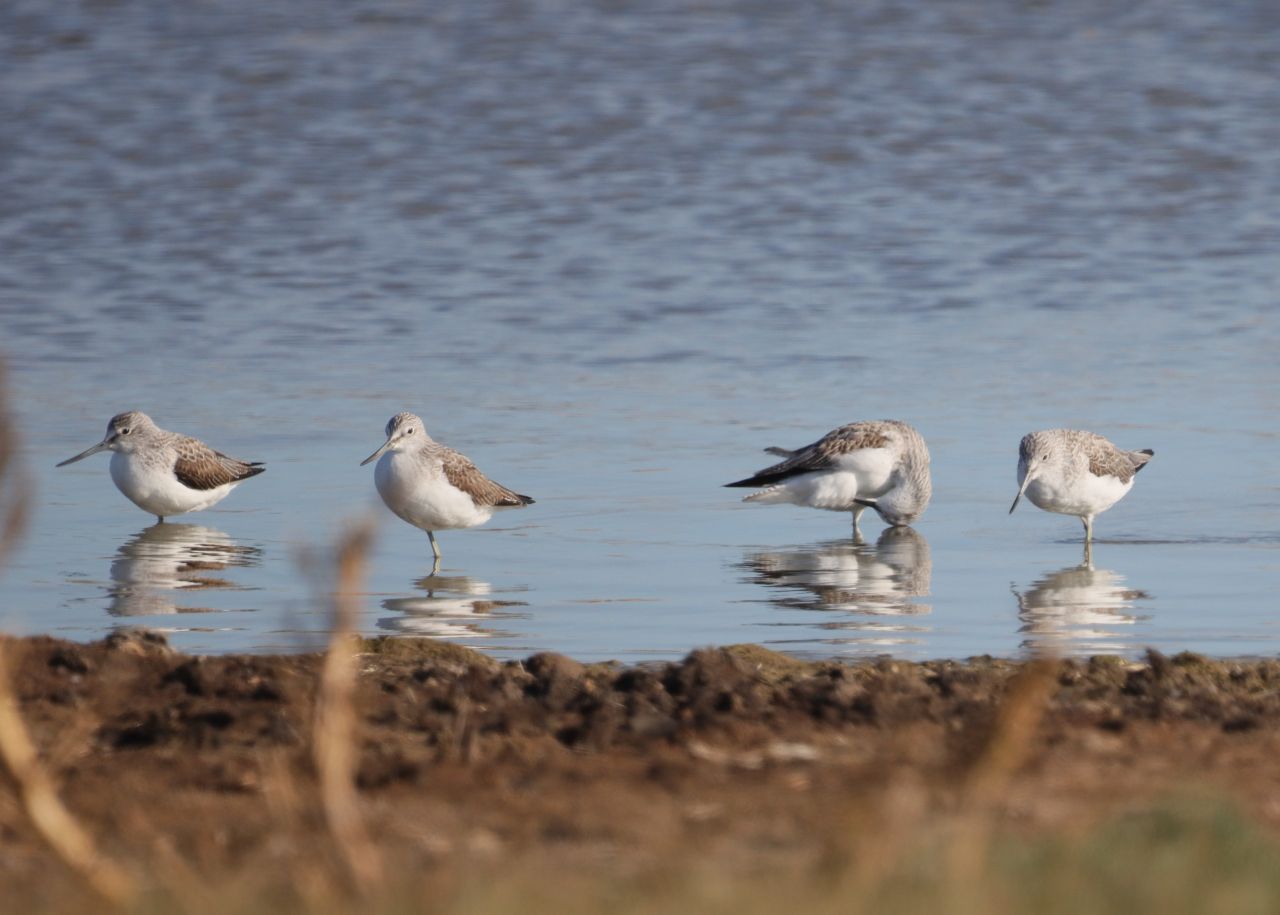
Greenshanks, Farlington Marshes.
Four greenshanks could be seen together.
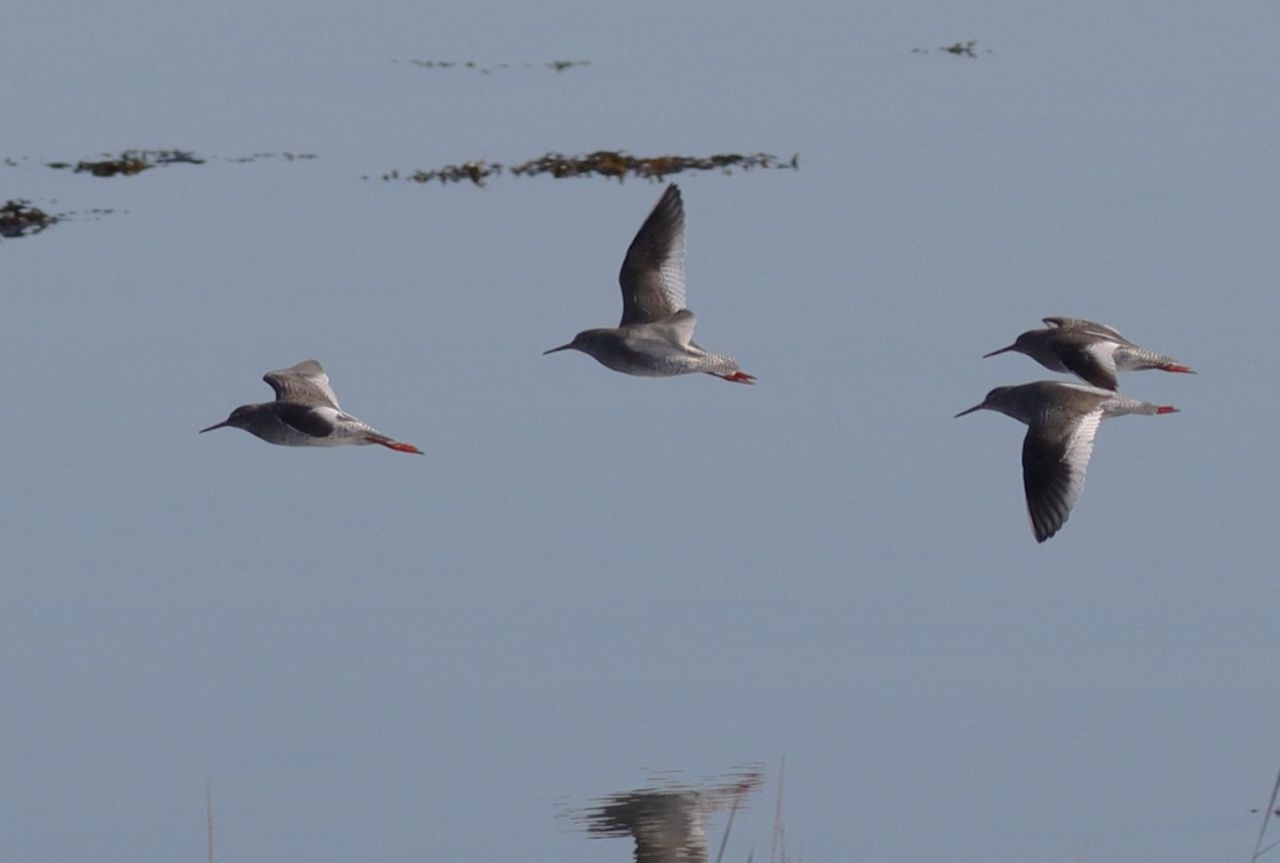
Common redshanks, Farlington Marshes.
Also adding common redshanks.
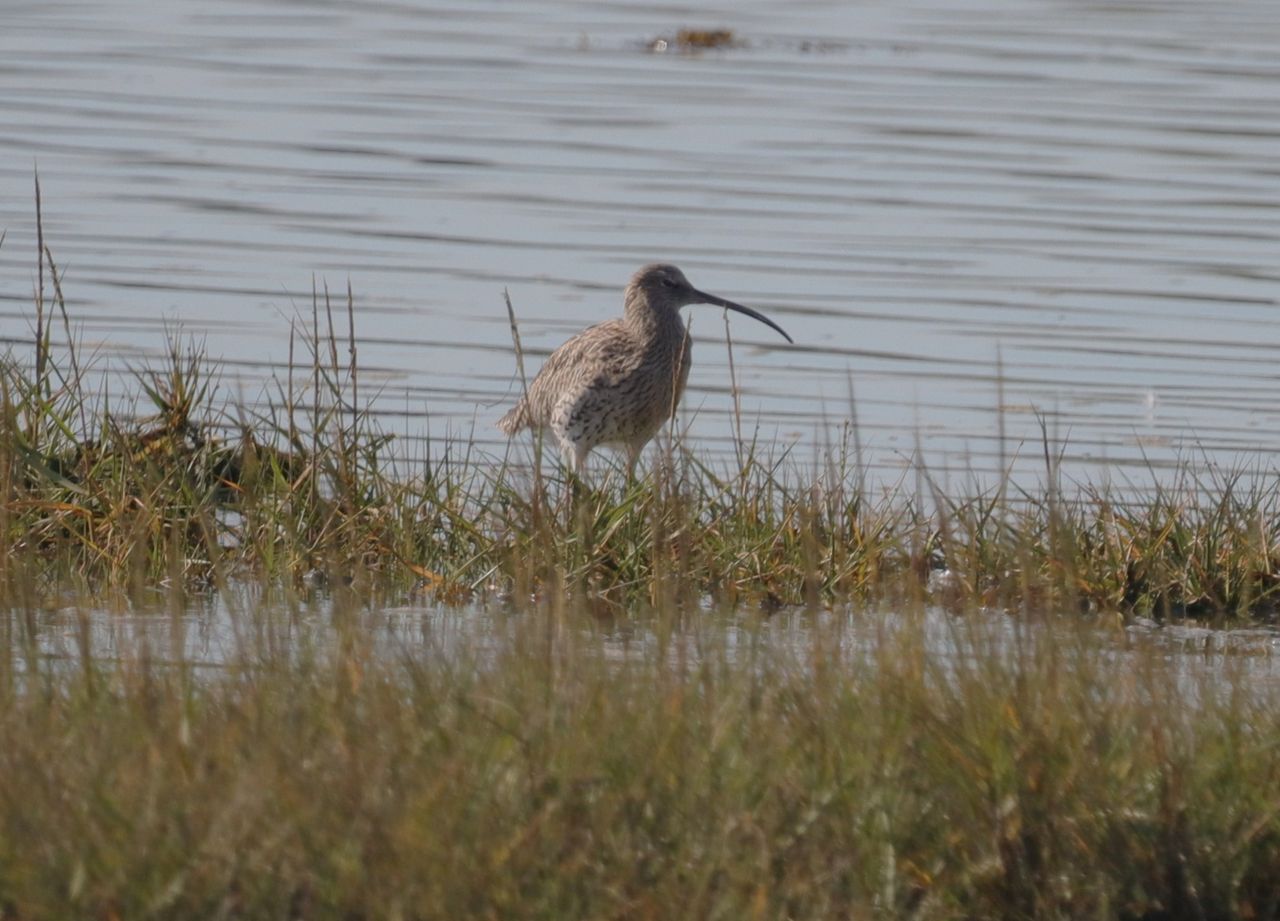
Curlew, Farlington Marshes.
And a curlew to the list of waders.
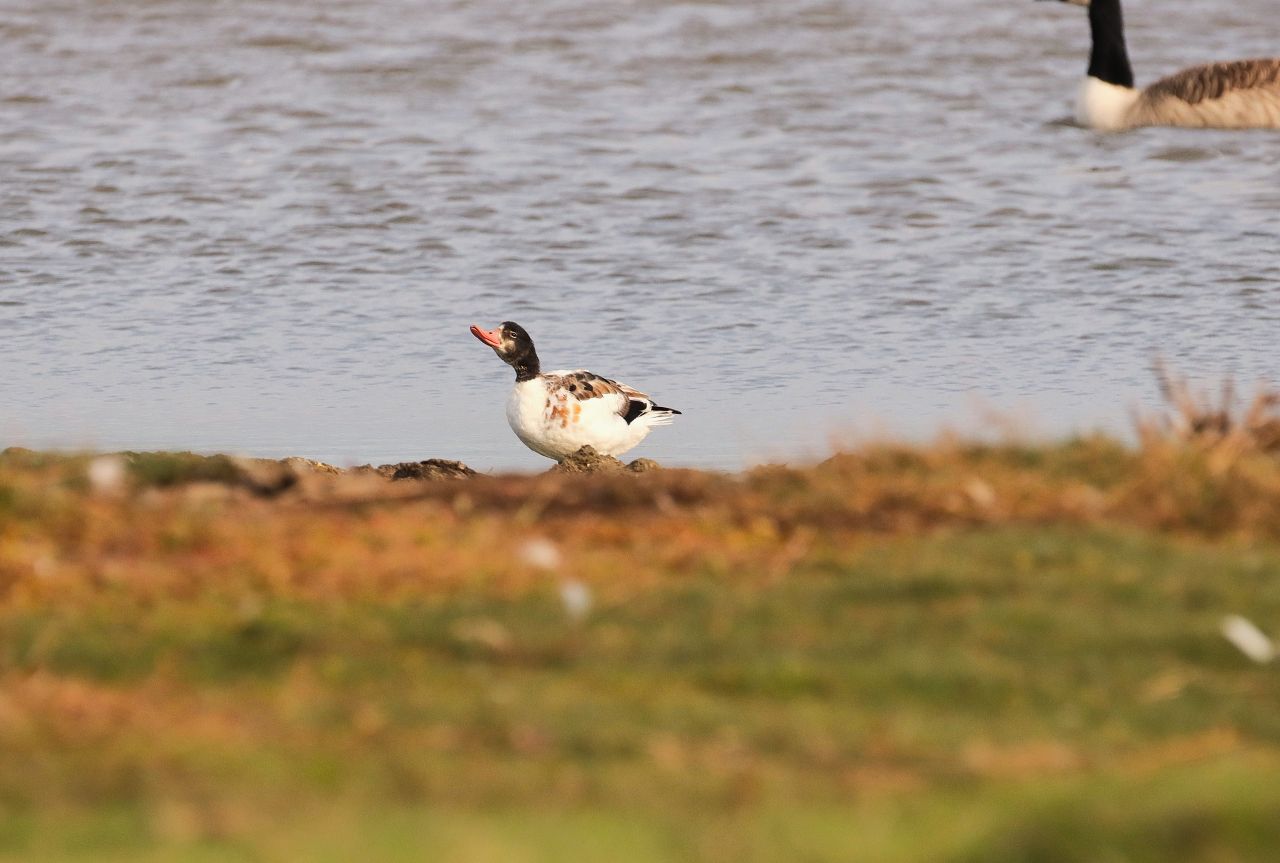
Shelduck, Farlington Marshes.
While shelducks continued to be present.
Wintering wildfowl were now growing in number since my previous visit. These including…
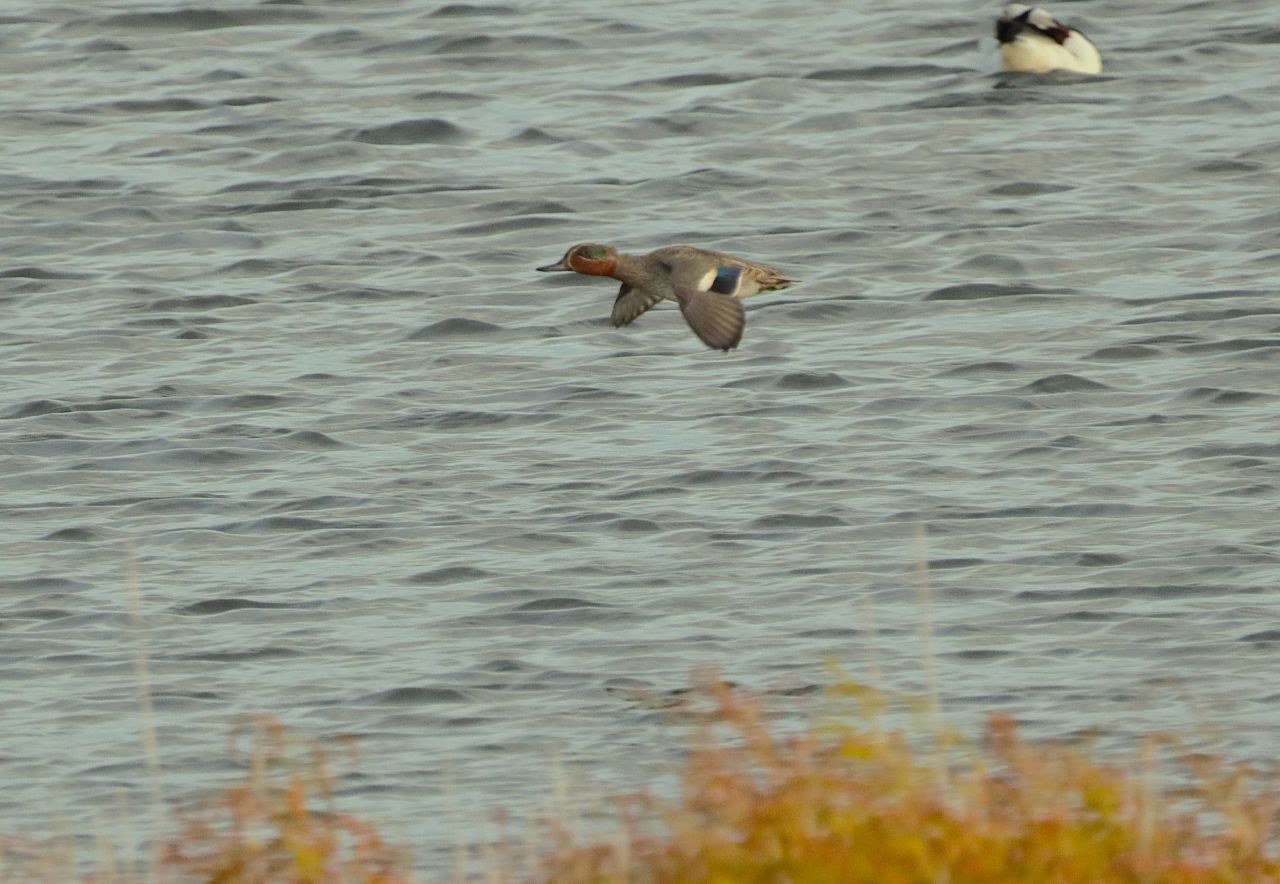
Teal in flight, Farlington Marshes.
Teal.

Wigeon, Farlington Marshes.
Wigeon.
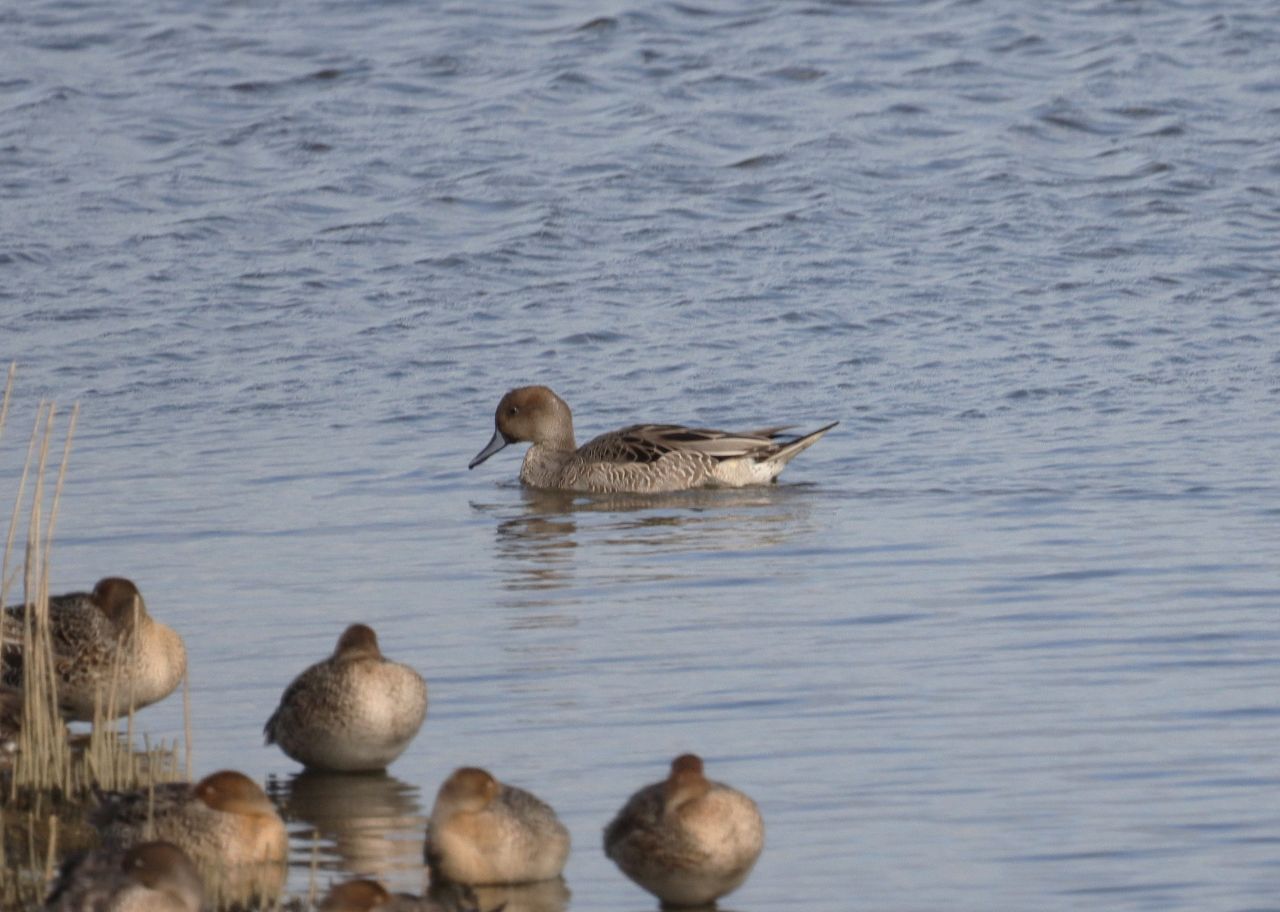
Pintail duck, Farlington Marshes.
And pintail ducks.
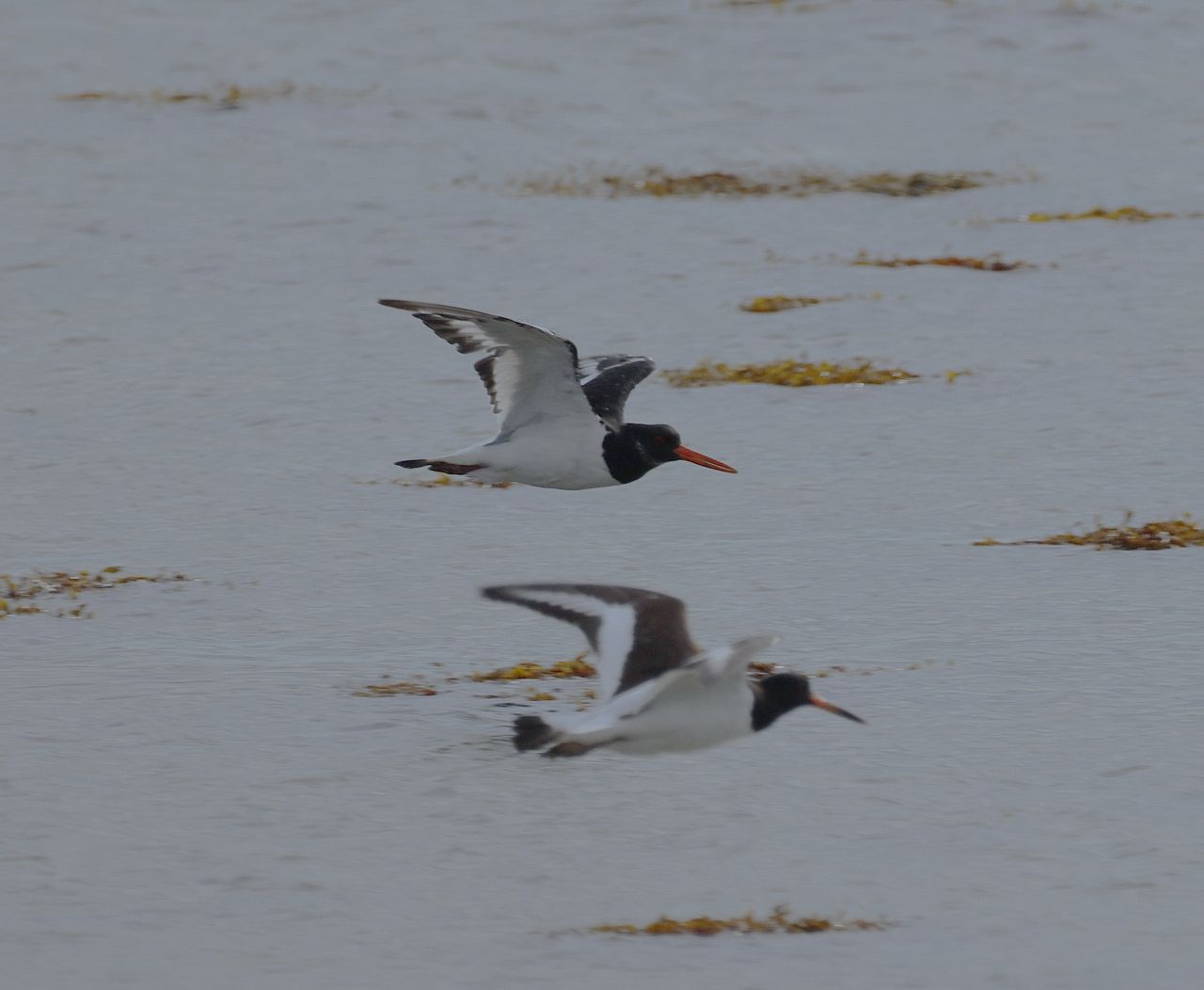
Oystercatchers, Farlington Marshes.
While walking the circuit along the seawall oystercatchers could be viewed in flight, evicted from the islands out in the harbour as the waters rose to high tide.
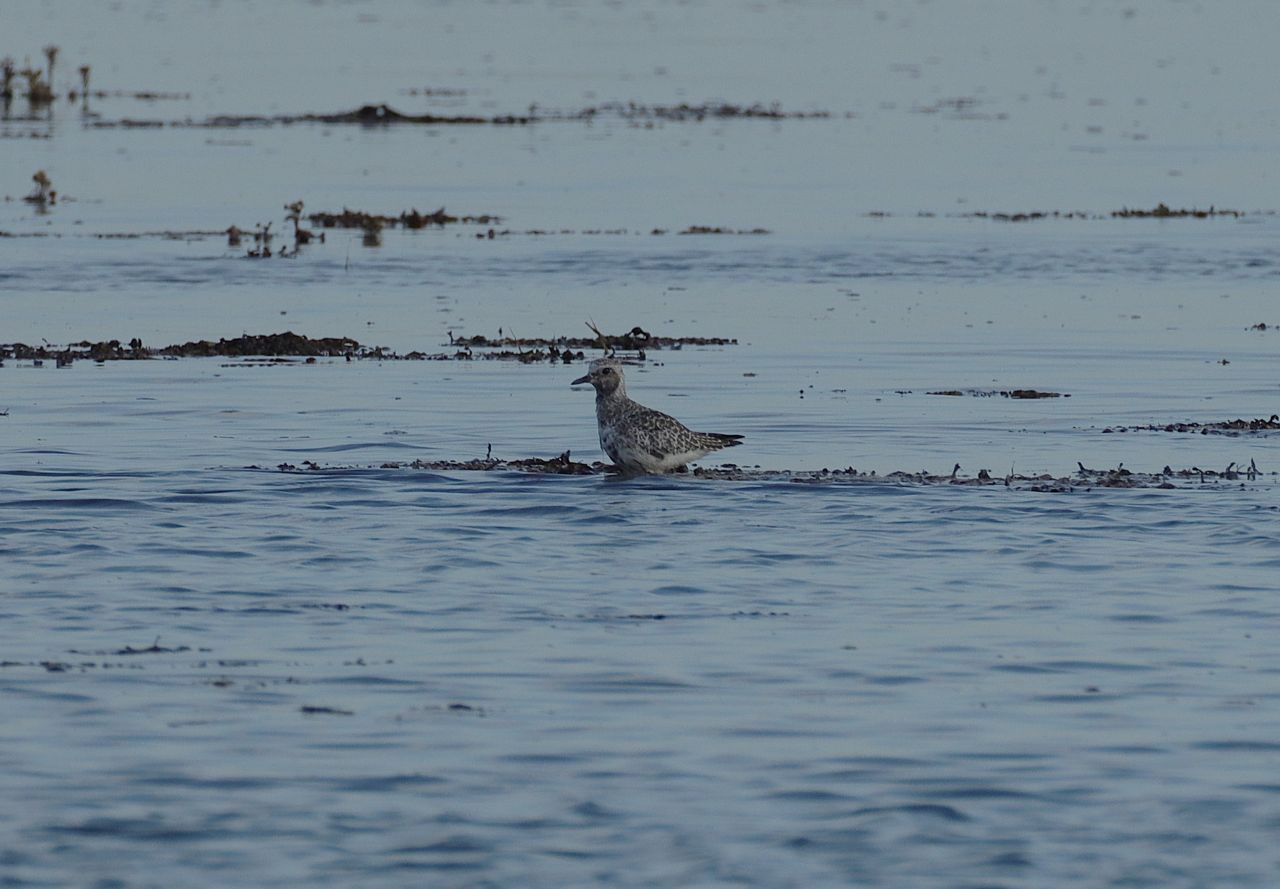
Grey plover, Farlington Marshes.
A few grey plovers hung on until the last possible moment.
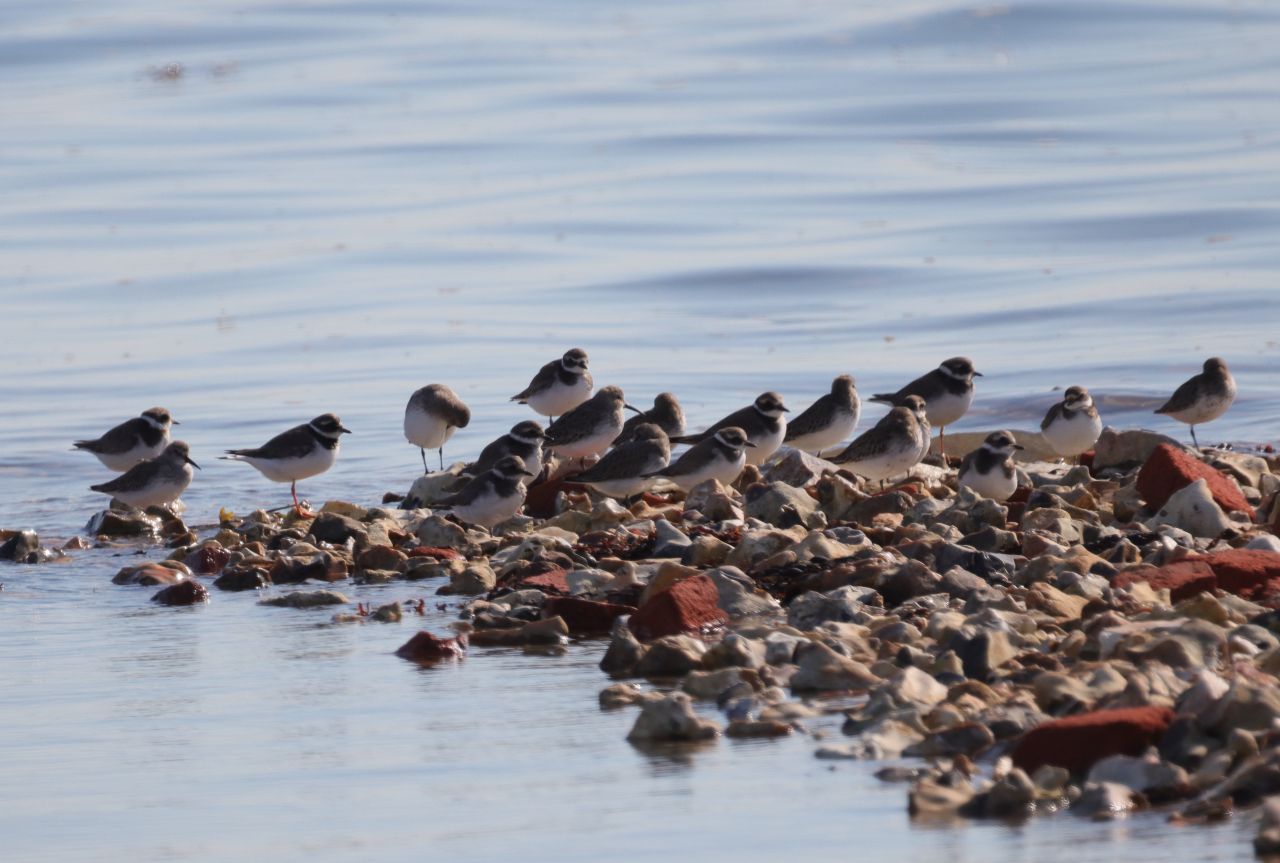
Ringed plovers and dunlins, Farlington Marshes.
While several ringed plovers and dunlins were pushed closer to the shoreline.

Sandwich tern, Farlington Marshes.
A sandwich tern fishing close to the seawall was also a nice addition.
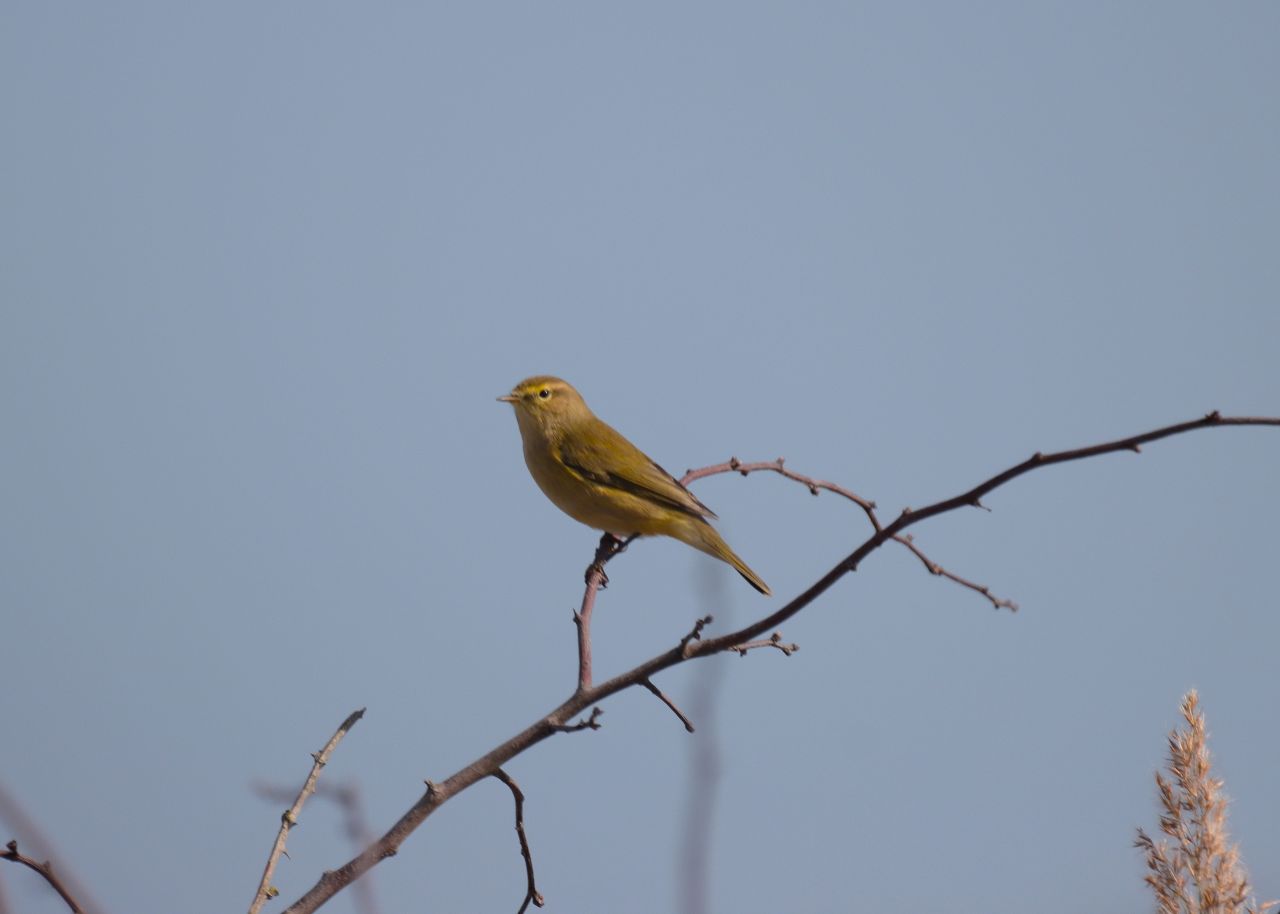
Chiffchaff, Farlington Marshes.
Inland within the brambles, numerous chiffchaffs could be viewed.
While on the inland marshes of the reserve…
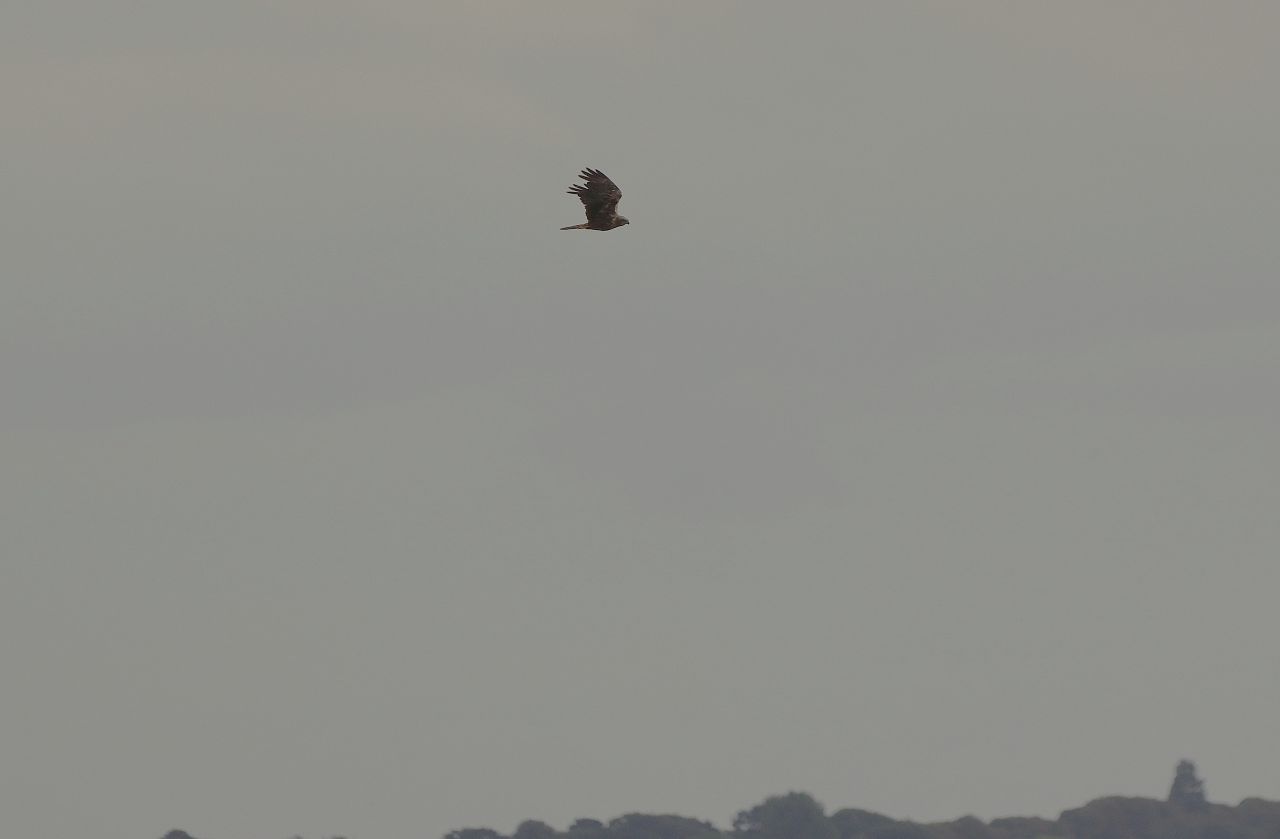
Marsh harrier, Farlington Marshes.
A marsh harrier could briefly be viewed hunting over the reedbeds.

Lapwings in flight, Farlington Marshes.
Spooked by its presence a ‘deceit’ of lapwings took to the air.
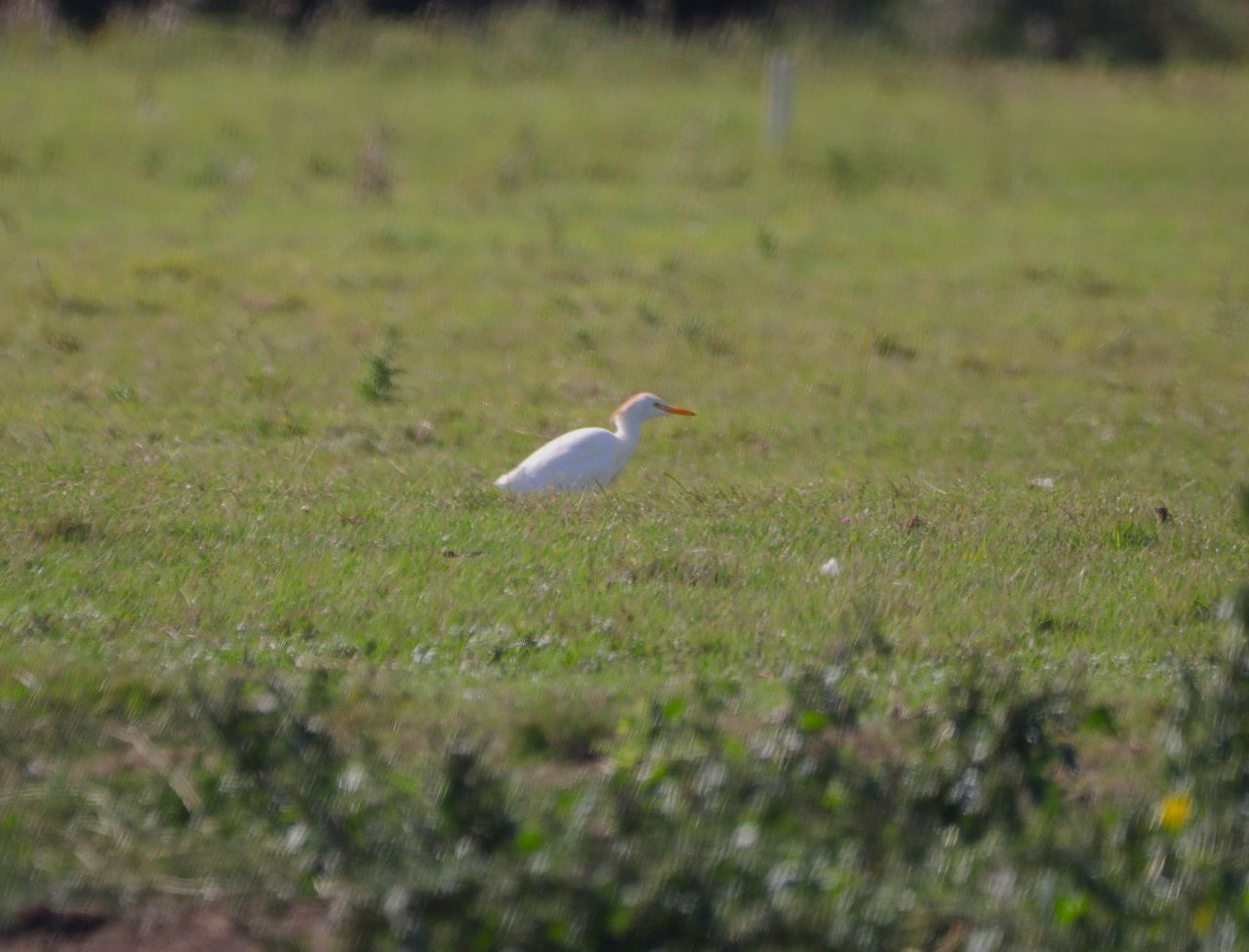
Cattle egret, Farlington Marshes.
About the cattle three cattle egrets could be viewed.
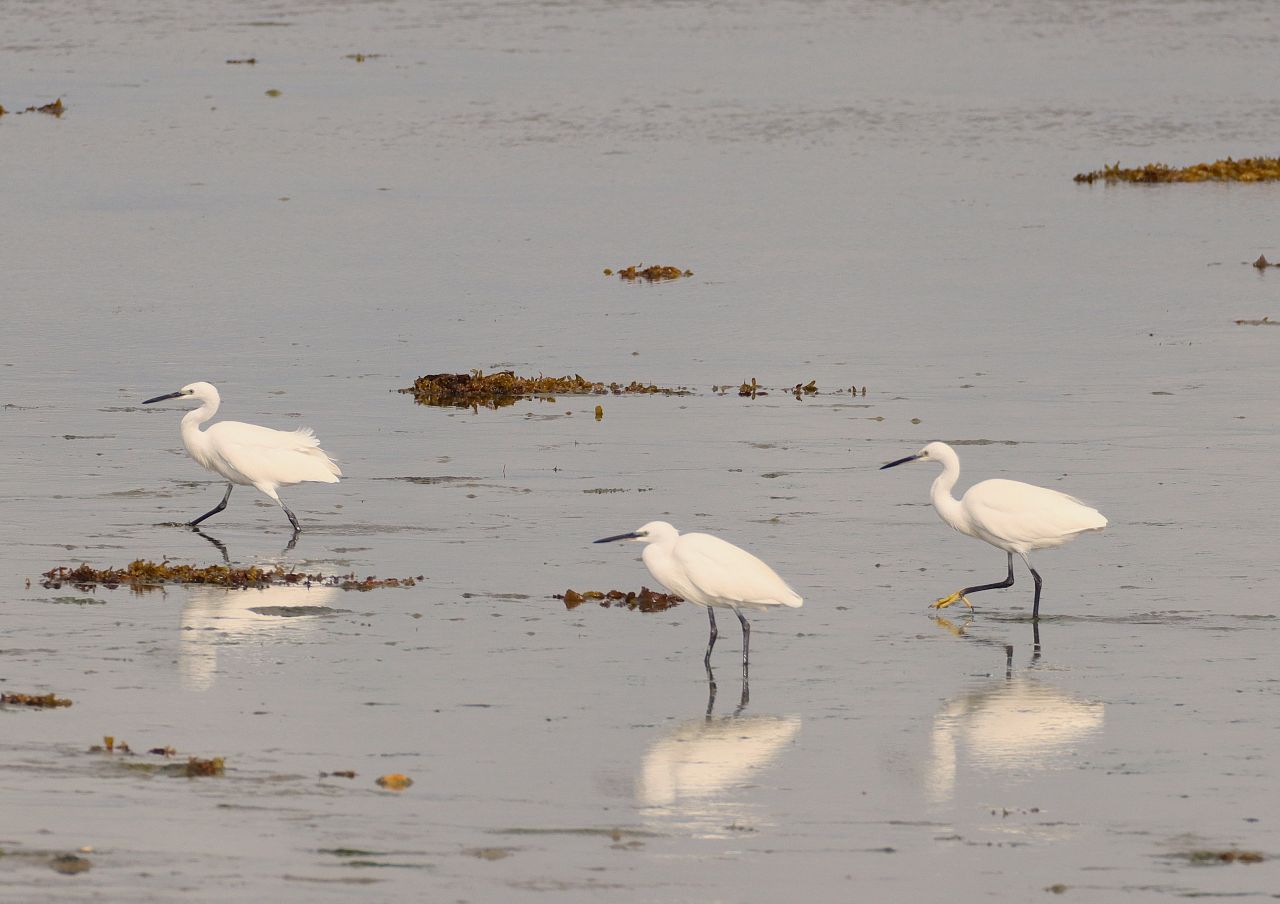
Little egrets, Farlington Marshes.
While about the reserve small congregations of little egrets were also present.
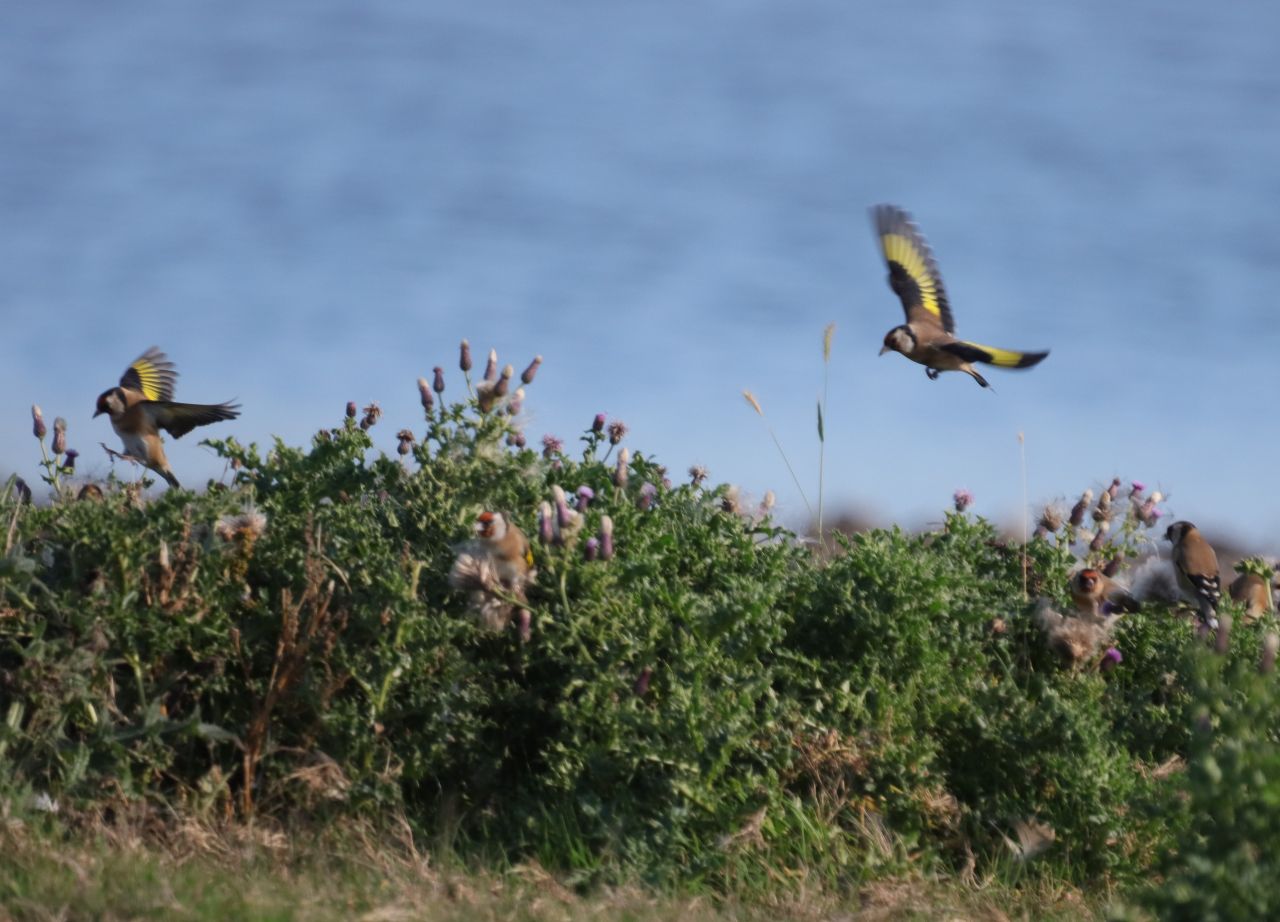
Goldfinches, Farlington Marshes.
Adding to the photos, a small group of goldfinches could be seen feeding on thistle seeds.
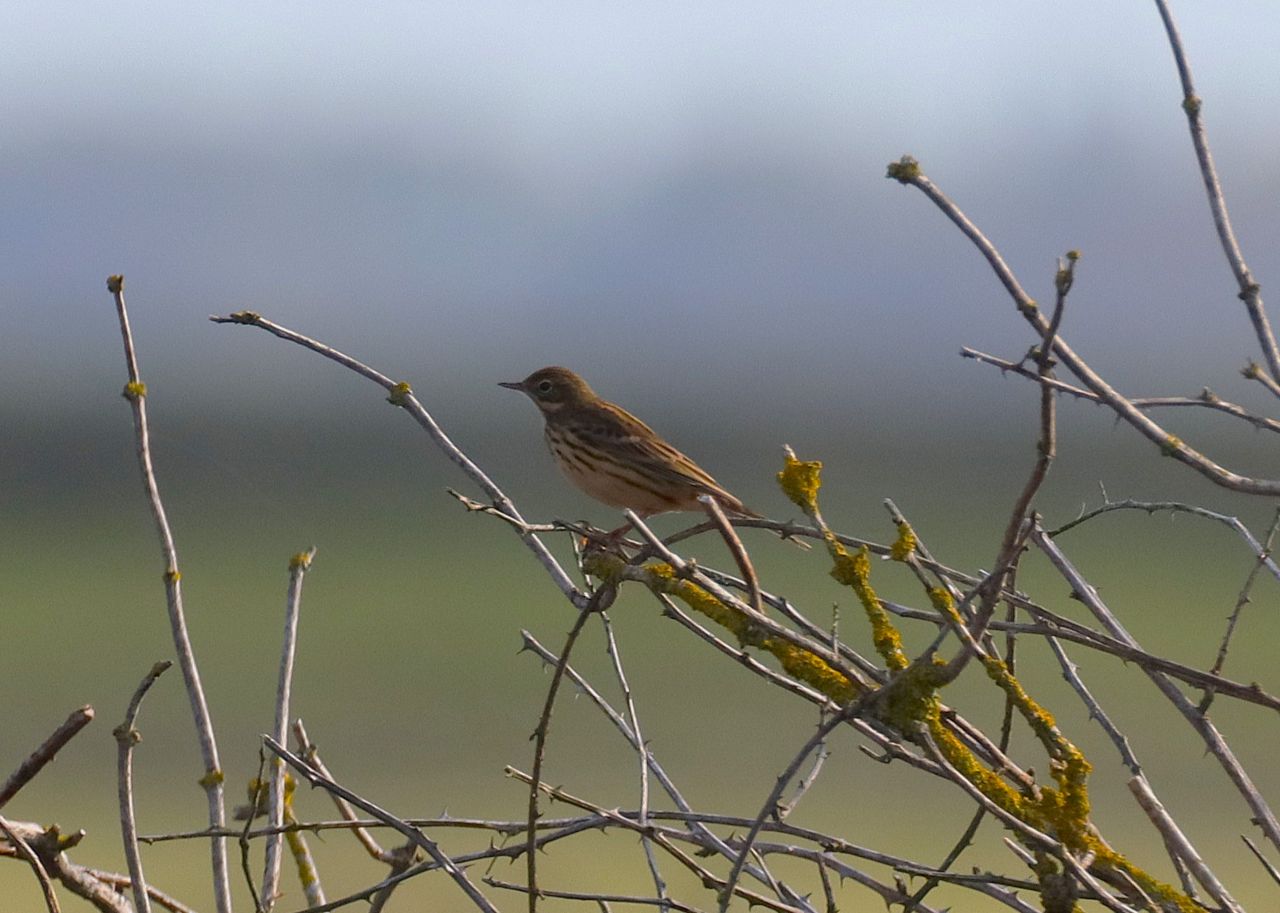
Meadow pipit.
One of several meadow pipits perched up and posed for a picture.
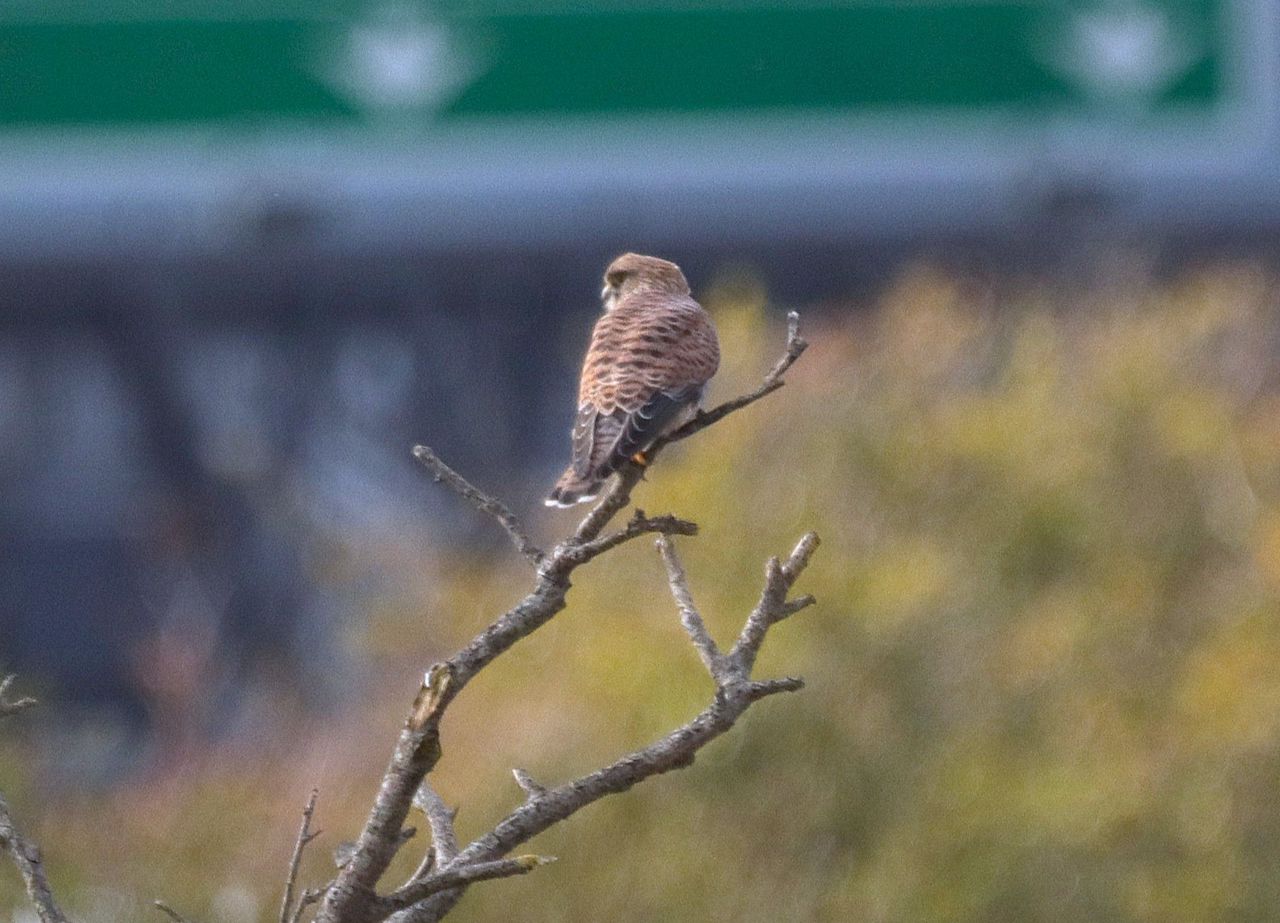
Kestrel, Farlington Marshes.
And one of two kestrels allowed me a photo as we approached the information hut.
Probably most notable for me was counting at least six clouded yellow butterflies, (the most I have ever seen in one outing) by the end of our walk there.
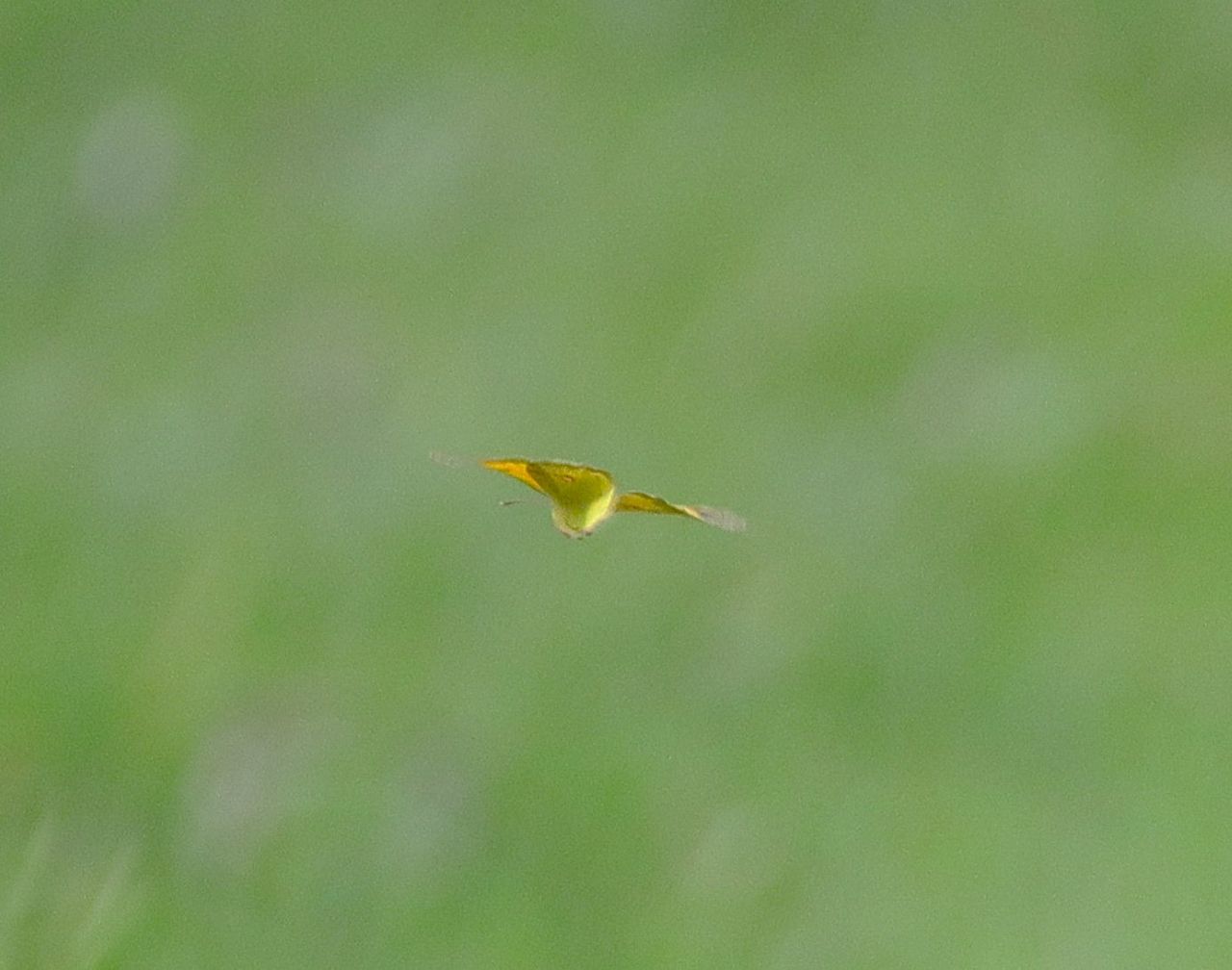
Clouded yellow butterfly in flight, Farlington Marshes.
Unfortunately, although none stopped long enough, and most just passing on the wing, I was eventually rewarded, in part, by catching a poor quality shot of one in flight!
Share This Post


Responses to Birdwatcher’s Diary No.337
Leave a Comment Please see our comments policy. All comments are moderated and may take time to appear. Full names, or at least initial and surname, must be given.

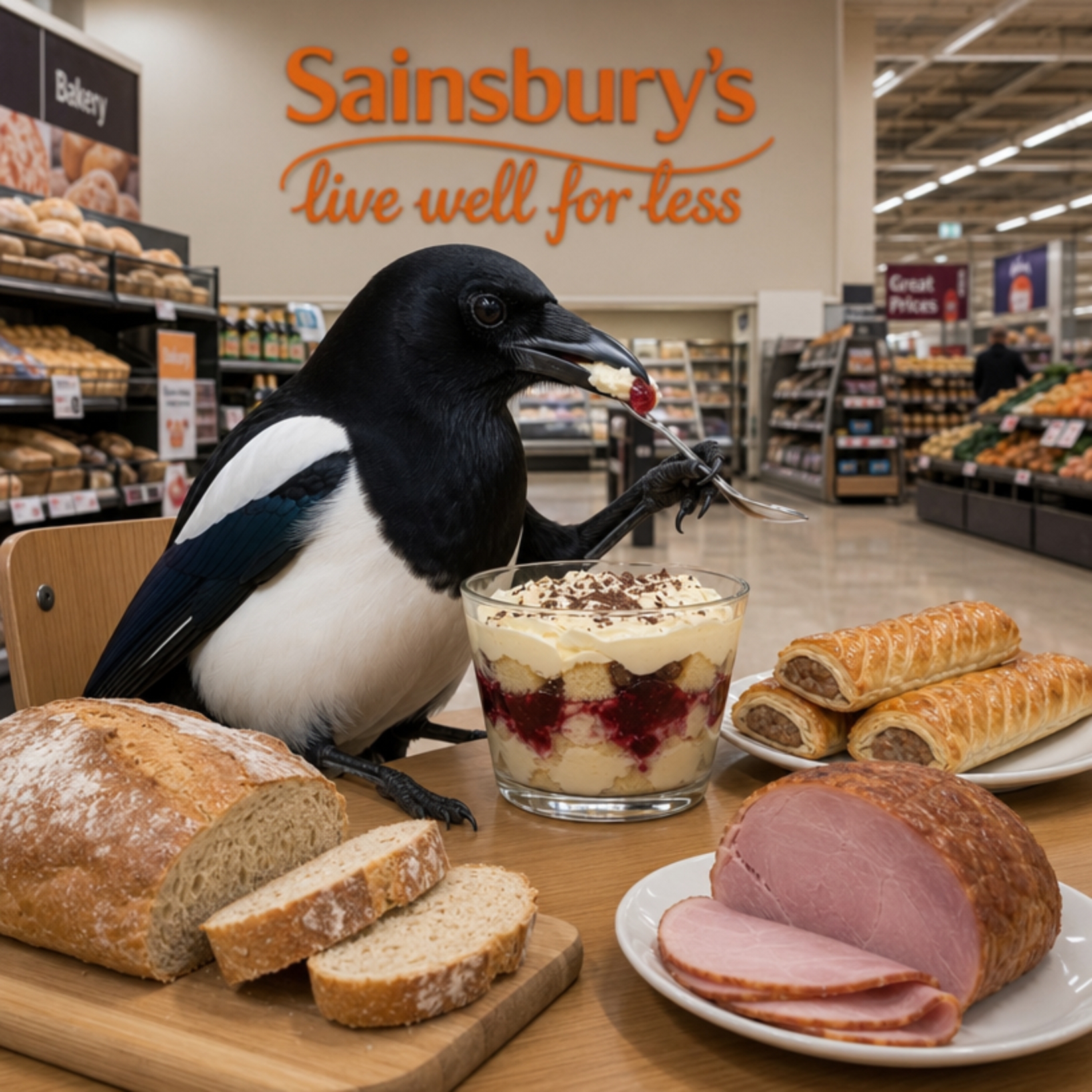
I'm living well for nothing at all! (See: No Trifling Matter: Magpie Trapped in Godalming Sainsbury’s)




Next stop, Debt Chasm! (See: We Should All Be Outraged About the Failure to Deal with Legacy Debt)





Susan Smith
October 19, 2025 at 7:23 pm
Well done Malcolm Fincham. Some great pictures again for us all to enjoy. Great picture of the leaping fish! Well done.