- Stay Connected

Socialize

 Abraham Lincoln
If given the truth, the people can be depended upon to meet any national crisis...
Abraham Lincoln
If given the truth, the people can be depended upon to meet any national crisis...

 Guildford news...
for Guildford people, brought to you by Guildford reporters - Guildford's own news service
Guildford news...
for Guildford people, brought to you by Guildford reporters - Guildford's own news service
Hero’s Welcome for Baden-Powell Returning from the South African War
Published on: 10 Jan, 2026
Updated on: 10 Jan, 2026
By Mark Coxhead with David Rose
Robert Baden-Powell was a household name and Britain’s foremost national hero during the first part of the 20th century.

Lieutenant-General Robert Stephenson Smyth Baden-Powell, 1st Baron Baden-Powell.
Remembered to this day for his 217-day defence of Mafeking in the South African War and the founder of The Boy Scouts Association, Guildford honoured him with the title of freeman of the borough in 1903, probably the only recipient ever who wasn’t local to the town.
Although Baden Road in Stoughton must have been named after him – the first houses being built there at the time of his popularity – we can look to Woking where he stopped off and received a hero’s welcome after returning from South Africa on July 26, 1901.
The Woking News & Mail published a detailed report, that includes…
Major-General Baden-Powell arrived at Southampton on board the Saxon on Friday afternoon. He landed at 4.30pm and departed by train amid great enthusiasm. It was generally supposed that he was heading to London, but it later transpired that Woking was his true destination.

Vintage artist-drawn picture postcard of a London & South Western Railway express train of the type that conveyed Baden-Powell from Southampton to Woking.
Both Woking and Horsell were proud to host the hero of Mafeking on the very first night of his return to England. Rumours began circulating as early as Wednesday that Major-General Baden-Powell might visit Woking soon after his arrival on English shores. Those in the know were urged to keep this information strictly confidential. However, secrets have a way of slipping out, and by Thursday evening the news had leaked, though only to a select few.

Captain Kenneth McLaren, the Woking News & Mail’s report spelled his surname MacLaren. Picture from the website: https://scoutinghistory.wordpress.com/2013/05/10/major-kenneth-mclaren-the-boy-who-was-lost/
It was reported on Thursday night that Captain MacLaren had travelled to Southampton to meet “B.-P.” and, if possible, persuade him to spend the night at their residence, The Grove, just outside Woking [in Horsell]. Those aware of this plan hoped it would succeed.

Horsell, showing the post office, early 1900s.
Friday was filled with speculation and uncertainty. No one could say for certain whether “B.-P.” would come or not. The servants at Captain MacLaren’s house were on tenterhooks all day, yet even they knew nothing definite until late in the afternoon. One notable sign, however, was that the Captain’s pretty little child was seen wearing a red, white, and blue rosette along with a portrait of “B.-P.” The horse and dog were similarly adorned, adding to the sense of anticipation.

Woking Junction from Tin Bridges, south of the station – 1900s-era view.
Early rumours suggested the hero would arrive at 2pm, then 3.40pm, but these proved unfounded. Doubts were finally dispelled when a telegram arrived at the station reading: “Expect Baden-Powell at Woking.” Later, confirmation came that a special train had left Southampton carrying “B.-P.” The news was received with great excitement and spread rapidly throughout the town.
As soon as word spread that a reception was being arranged, preparations began immediately to provide suitable decorations. High Street was quickly adorned with flags, and someone managed to find several smaller flags to add to the display. The station staff contributed by creating a couple of streamers and hanging them from the office frontage.
Had Captain MacLaren and his household been given more notice, the decorations would undoubtedly have been on a much grander scale. Townspeople, eager to honour the returning hero, did what they could with the limited time available.

Woking railway station in the 1900s.
Once the news of Baden-Powell’s arrival circulated, neighbours shared it widely, and by shortly after six o’clock, crowds began to gather outside the station. Despite the rain falling steadily, no one seemed to mind getting wet – they were determined to wait patiently for the chance to see the famous general.
By seven o’clock, the station entrance was densely packed. Around this time, Mr E. J. Waters’ carriage arrived to convey the party to The Grove. Several members of the fire brigade, resplendent in their uniforms, were also present and formed an informal guard of honour at the station.
Excitement mounted as the hour approached. The train was expected at 7.15, and anticipation was high. When it finally drew in from Southampton, cheers erupted. Among those present was Mrs MacLaren and her brother, recently returned from the front after serving with the Yeomanry.
After another round of acknowledgments, Major-General Baden-Powell entered the carriage, the door was closed, and the driver prepared to set off – when the fire brigade stepped forward with an unexpected gesture. Rather than letting the horse pull the carriage, they decided to draw it themselves. Acting swiftly and efficiently, they attached a rope to the carriage and proceeded down Chertsey and Chobham Roads.

1900s view of Chertsey Road, Woking. Part of the Albion Hotel can be seen on the left.
The rain continued to pour, but it did nothing to dampen the enthusiasm of the Woking crowd. A large, cheering throng accompanied the carriage, waving flags from windows along the route. For a good quarter of an hour, the town was alive with excitement.
Upon arriving at The Grove, the brigade drew the carriage up outside Captain MacLaren’s residence. As Baden-Powell stepped out, he was greeted with another round of cheers. Addressing the crowd, he said warmly: “Thank you very much.” Voices responded with shouts of “Glad to see you, sir!”
Turning to the fire brigade, Baden-Powell thanked them kindly for their efforts and handed Captain Sherlock a sum of money, asking that the men drink his health. Captain Sherlock expressed his appreciation, remarking that it had been an honour to pull the hero of Mafeking to his destination.
Baden-Powell then entered the house, and the crowd gradually dispersed. After their duties, the brigade adjourned to the Albion Hotel, where they enthusiastically drank to the health of the Mafeking hero.
Captain MacLaren himself had seen active service during the recent campaign. A member of the 13th Hussars, he fought under General Bundle in the relief of Mafeking. During one engagement, he was severely wounded in the leg and narrowly escaped death on several occasions his life saved by a case containing a photograph of Mrs MacLaren and a keepsake, both of which still bear the marks of gunfire.
Captured by the Boers, Captain MacLaren spent six weeks in a laager. Initially treated kindly under the mistaken belief that he was a freemason, his situation worsened when the truth emerged. Major-General Baden-Powell learned of his condition and corresponded secretly with him, sending messages of encouragement that greatly lifted the wounded officer’s spirits.
Captain MacLaren was regarded as one of the finest polo players in the army, and he and Baden-Powell had often enjoyed friendly matches. It is interesting to note that Baden-Powell is the godfather of Captain MacLaren’s charming little child.

Vintage picture postcard of Charterhouse School, Godalming.
Major-General Baden-Powell’s visit to Woking was brief, as he departed on Saturday afternoon, taking the 2.31pm train to Godalming on his way to his old school, Charterhouse. During his stay, the General remained largely at his host’s residence and was not seen around the town.

Victoria Arch, Woking, in the 1900s.
Baden-Powell travelled to the station in an open carriage, accompanied by his brother and Captain and Mrs MacLaren. News of his departure time spread quickly, and a large crowd gathered outside the Albion Hotel hoping to catch a glimpse of the famous General. However, they were disappointed when the carriage took a different route via Commercial Road and under the Victoria Arch.

Woking railway station in the 1900s.
Undeterred, the crowd rushed through the subway to Platform No. 1. When Baden-Powell entered the station, he was greeted with three rousing cheers, to which he responded by raising his hat. Arriving about ten minutes before the train, he spent the time conversing with friends and others present. Ticket collector Phelps was introduced to him, and they shared a lively exchange, while Mrs Pares also enjoyed a brief conversation with the General.
Two boys rendered a small service by delivering what appeared to be a telegram. They were thrilled when Baden-Powell thanked them warmly, saying, “Thank you; it was awfully nice of you.” It is a moment they are unlikely to forget.
As the train approached, several fog signals were fired, adding to the excitement. Passengers on board wondered at the commotion as the General made his way to a first-class compartment reserved for him, though already occupied by another gentleman. Good-humouredly, Baden-Powell submitted to being thoroughly stared at by the crowd.
One of his last farewells was to Captain MacLaren’s baby, who was held up to the window for him to see. Cheers rang out once more as the train pulled away, and Baden-Powell took his leave of Woking.
Share This Post


Responses to Hero’s Welcome for Baden-Powell Returning from the South African War
Leave a Comment Please see our comments policy. All comments are moderated and may take time to appear. Full names, or at least initial and surname, must be given.

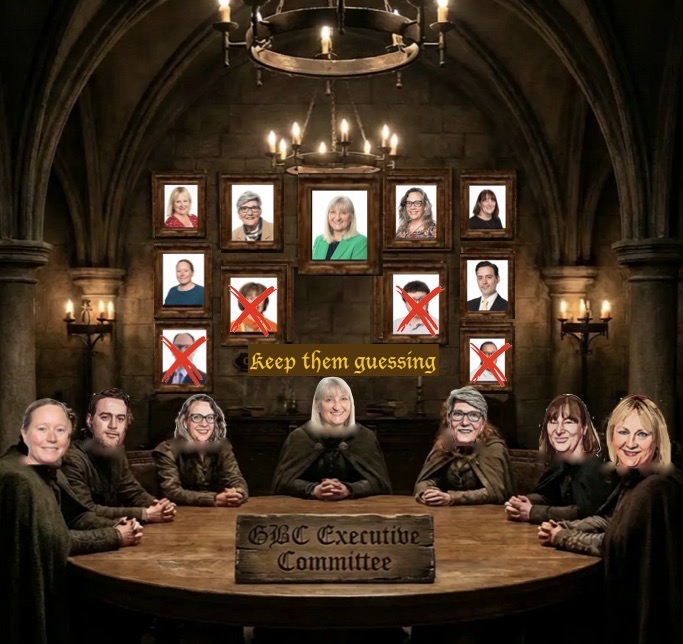
And then there were seven. (See article: "Lib Dems Remain Puzzled By Leader’s Decision to Sack Executive Member")





Jim Allen
January 10, 2026 at 1:13 pm
What is less known is Lord Baden Powell rescued the Norwegian Dr Ferdinan Nasen after his two-year expedition across the Arctic in the Fram. A two volume fascinating story of Arctic exploration in the 1890s.
Jan Messinger
January 10, 2026 at 6:05 pm
Interestingly both Baden Powell and actor Cyril Maude had studied at Charterhouse and also Cyril Maude helped with the start of the boy scout movement for those interested in local history.
Through my research of Sime Gallery Worplesdon theatrical caricatures I read the wonderful story of Cyril Maude well know actors of the Victorian/ Edwardian era of his second marriage in 1927.
The newspaper report of Cyril’s death in 1951 stated that Baden Powell lived up to his famous scout moto to be prepared.
As theatrical caricature Cyril Maude married his second wife Beatrice Mary Trew. He had forgotten the ring. He was saved by his Best man Baden Powell.
I am sure there are lots of fascinating tales of Lord Baden Powell.
John Ferns
January 11, 2026 at 9:21 pm
A delightful piece of historical detective work. The authors deserve real credit for unearthing and presenting this wonderfully evocative account. The richly florid prose perfectly captures the Edwardian habit of hero-making and civic pride.
I can almost hear the cheers in the rain and the smell the steam at Woking station!
It is hard to imagine local news reporters today doing anything like similar justice to an event of this magnitude — or indeed of a lesser one.