- Stay Connected

Socialize


 Abraham Lincoln
If given the truth, the people can be depended upon to meet any national crisis...

 Guildford news...
for Guildford people, brought to you by Guildford reporters - Guildford's own news service
Mathematician Who Helped Break Enigma Honoured With Commemorative Plaque
Published on: 11 Nov, 2026
Updated on: 12 Nov, 2026
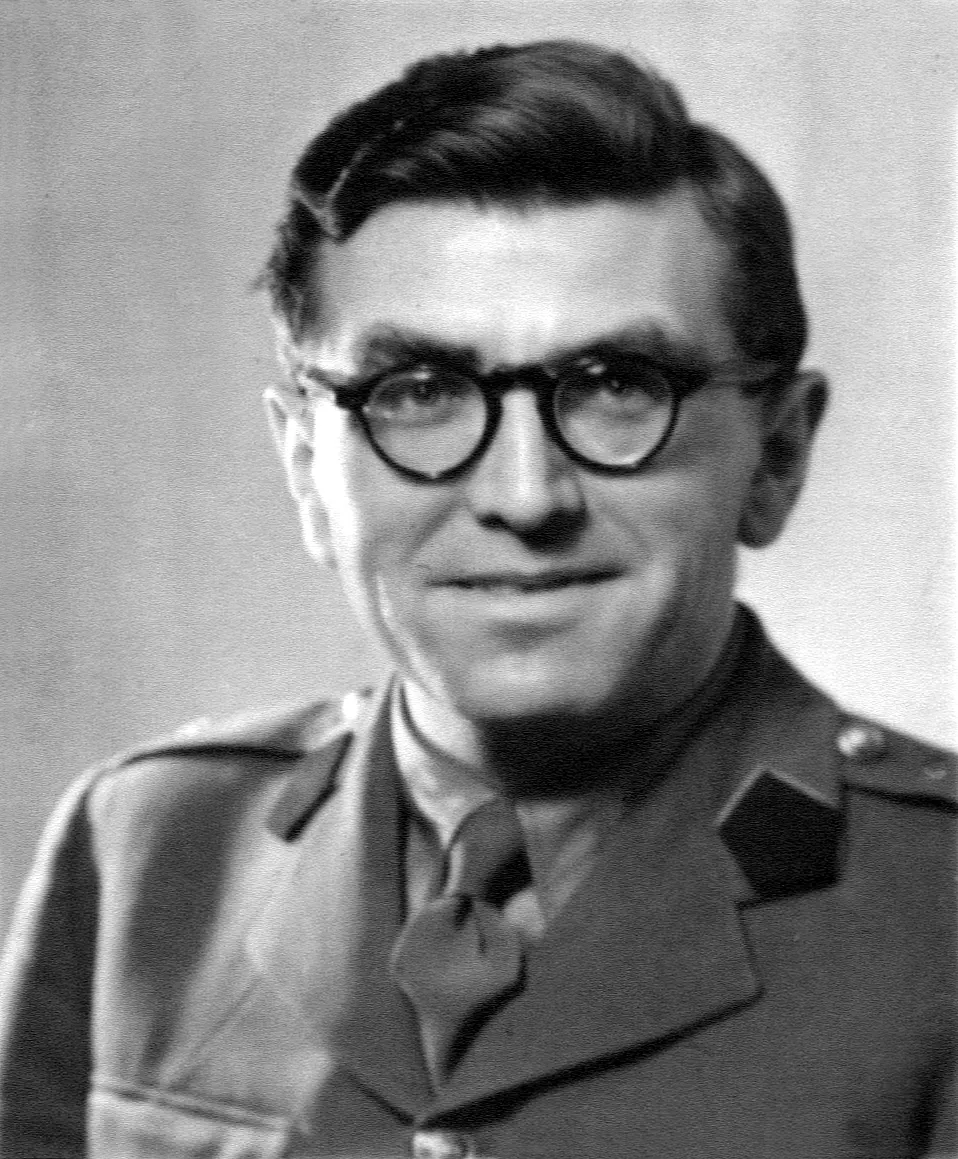
Henryk Zygalski. Copyright: © Anna Zygalska-Cannon
A Polish mathematician who helped break the Enigma cipher before the Second World War, laying the foundations for Alan Turing’s work at Bletchley Park, has been honoured with a commemorative plaque at the University of Surrey.
After the war, Henryk Zygalski (1908–1978) taught mathematics at Battersea Polytechnic and the University of Surrey for 17 years without his colleagues learning what he had done.
Zygalski was a mathematician at the Polish Cipher Bureau, with Marian Rejewski and Jerzy Róycki, who worked out how to read messages sent on Germany’s Enigma machine in the 1930s. In 1938, he devised the Zygalski sheets – large, perforated cards that, when stacked on a light table, showed codebreakers how the machine had been set up.
In 1939, weeks before Germany invaded Poland to start the Second World War, the Polish team shared everything they knew about Enigma with British and French intelligence. Their work laid the foundations for Alan Turing and his colleagues at Bletchley Park.
The plaque was revealed today (Wednesday, November 11), Poland’s National Independence Day, by Professor Stephen Jarvis, President and Vice-Chancellor of the University of Surrey, and Rafa Winiewski, Chargé d’Affaires ad interim at the Embassy of the Republic of Poland in London.
Members of Zygalski’s family, representatives of the Polish community and historians, including from Bletchley Park, attended.
 Professor Stephen Jarvis, President and Vice-Chancellor of the University of Surrey, said: “There is something rather wonderful about knowing that one of the people who helped change the course of the Second World War subsequently spent his days teaching mathematics to students at Surrey, with little indication of the extraordinary life he had led.
“I am delighted that his contribution is now being recognised, and that future generations of students and colleagues walking past the plaque might pause for a moment and wonder about the remarkable life of Henryk Zygalski, mathematics lecturer at the University of Surrey.”
When Poland fell in September 1939, Zygalski escaped through Romania to France, where the Polish codebreakers kept working on Enigma. After Germany occupied the south of France in 1942, he crossed into Spain, where he was arrested, then reached Portugal. A British naval vessel took him to Britain in 1943, where he joined the Polish Signals Battalion.
Unwilling to return to a Poland under Soviet control, he stayed in Britain. He taught mathematics at the Polish University College in London from its founding in 1947. When Battersea Polytechnic took over the college in 1951, he was one of only eight staff offered posts. The polytechnic was the forerunner of the University of Surrey, established in 1966.
Those who worked with him at Battersea and Surrey never knew about his part in the war, according to a biography by J J O’Connor and E F Robertson of the University of St Andrews. His nephew, Dr Jeremy Russell, has said Zygalski “never talked about it spontaneously”.
Share This Post


Responses to Mathematician Who Helped Break Enigma Honoured With Commemorative Plaque
Leave a Comment Please see our comments policy. All comments are moderated and may take time to appear. Full names, or at least initial and surname, must be given.


"But I was sure that at least Guildford, in Surreyland, would make me an Alderman. Such a nice robe." (Click here to see: Proposed List of Honorary Aldermen Rejected - Cartoon AI assisted.)









Nigel Searle
November 11, 2026 at 9:50 pm
“In 1938, he devised the Zygalski sheets – large, perforated cards that, when stacked on a light table, showed codebreakers how the machine had been set up.”
Reading this I couldn’t help but be reminded of the earliest days of programming: that of the Jacquard loom, Babbage’s Analytical engine – a connection here with one time Surrey Resident (at Horsley Towers) Ada Lovelace – and similar mechanical devices which used punch cards.
Also in more recent times (maybe not so recent) in the earliest days of electronic computing from Bletchley Park’s Colossus (Turing – a Guildford connection and the GPO’s Tommy Flowers, etc) onwards, the use of punched cards and tape for programming, input/output and storage.
A simple concept, holes either being present or not present to represent the binary digits of 1 and 0 and readable both mechanically and optically even in the most basic of ways, as with the Zygalski sheets, by eye.
Former secrets of Bletchley Park, once highly classified, have now been revealed and our knowledge of war time de-coding work improved. This has also allowed the important contribution to cracking the Enigma code, by Zylgalski and his Polish colleagues’ work, to be properly appreciated.