- Stay Connected

Socialize

 Abraham Lincoln
If given the truth, the people can be depended upon to meet any national crisis...
Abraham Lincoln
If given the truth, the people can be depended upon to meet any national crisis...

 Guildford news...
for Guildford people, brought to you by Guildford reporters - Guildford's own news service
Guildford news...
for Guildford people, brought to you by Guildford reporters - Guildford's own news service
Councillors ‘Misled Over SANGs’ Claims Alderman
Published on: 17 Aug, 2017
Updated on: 18 Aug, 2017
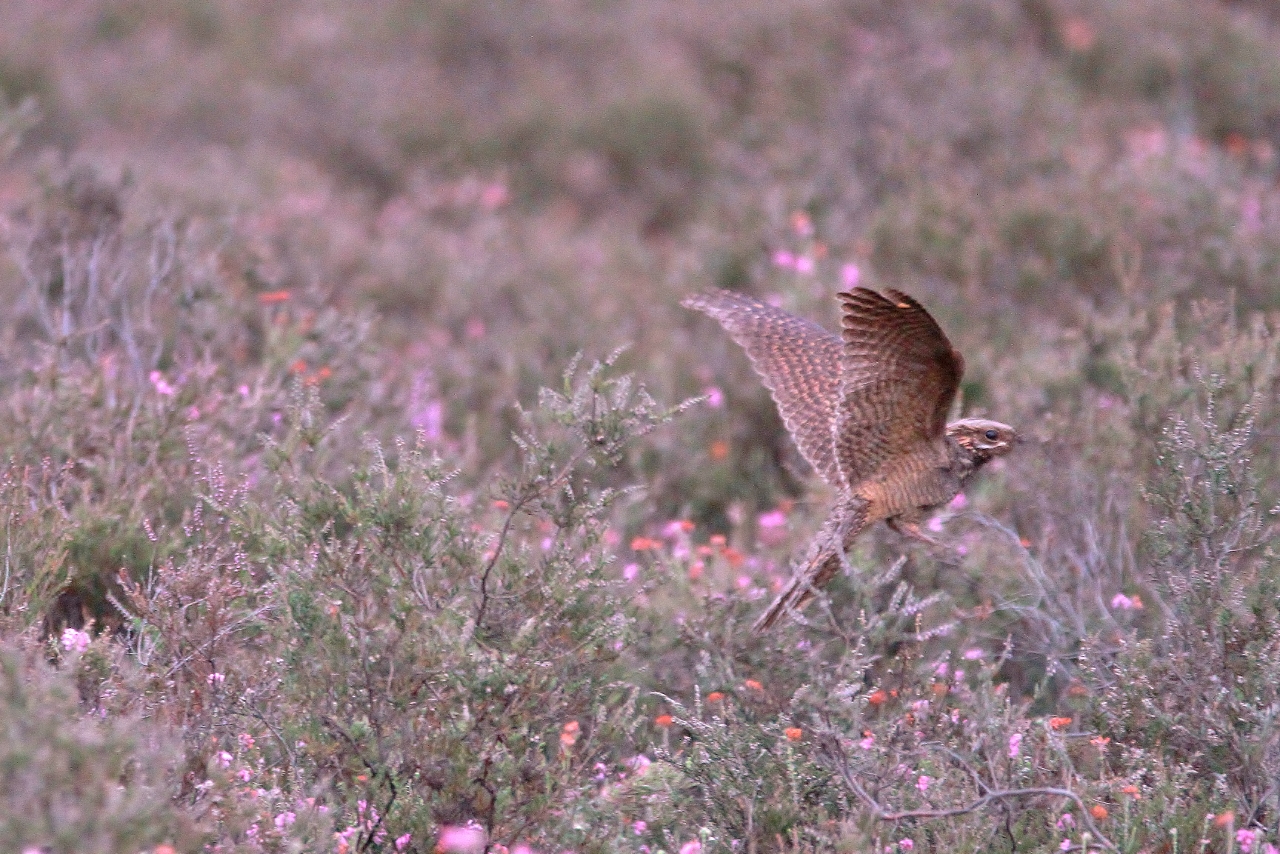
Nightjar on Whitmoor Common in July (2017) – Photo Malcolm Fincham.
Councillors at Guildford Borough Council (GBC) have been misled in council debates on a major environmental policy designed to protect rare birds, according to a Guildford alderman, and their decision could be inadvertently constraining housing developments.
But GBC’s council leader disputes the alderman’s view and says that the council has followed proper legal advice.
Around £6 million has been collected, so far, from a levy imposed by GBC on new housing developments, to fund the delivery and improvement of SANGs (Suitable Alternative Natural Greenspaces) but, it is claimed, the levy may be deterring developers.
The website of the M3 Local Enterprise Partnership (M3LEP), which covers the Guildford area, states: “The delivery of SANGS has been identified as the primary barrier to bringing forward housing…” GBC leader Paul Spooner is a board member of M3LEP.
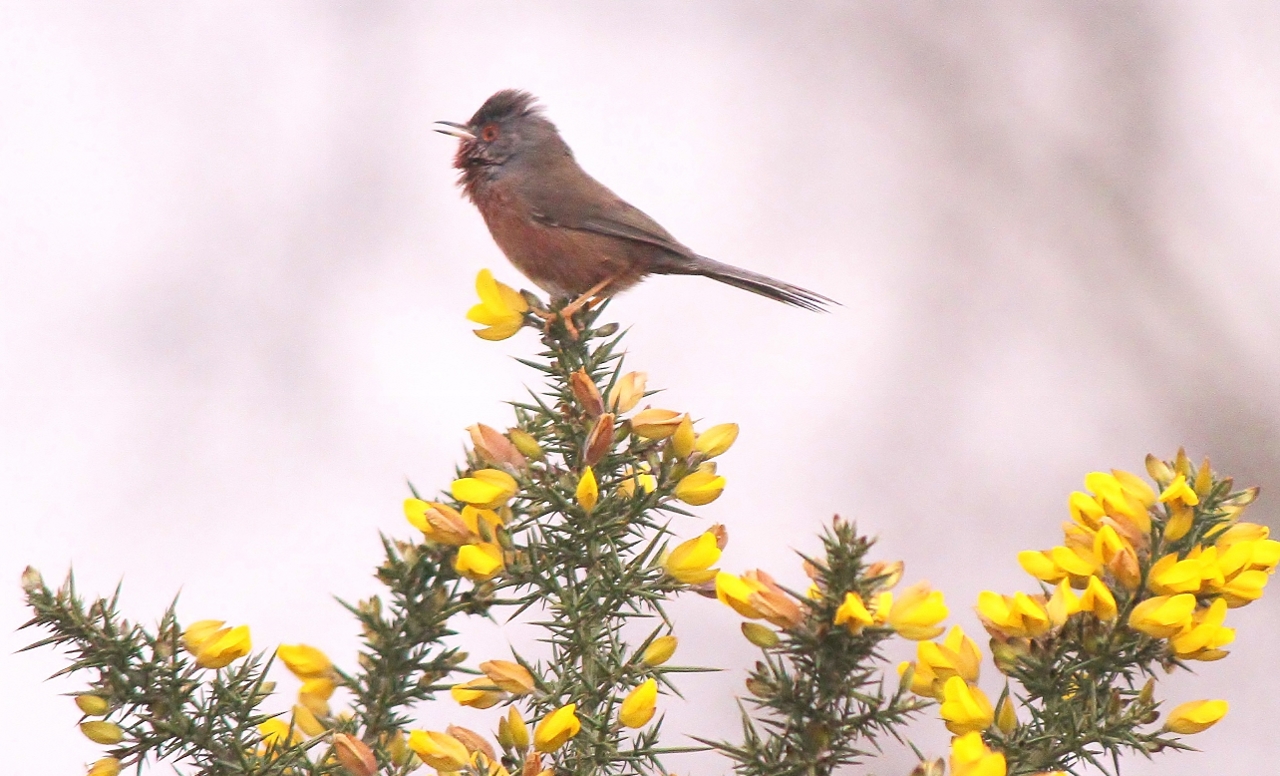
Dartford warbler on Whitmoor Common – Photo Malcolm Fincham.
Guildford is one of 11 local authorities within the Thames Basin Heath Special Protection Area (TBH SPA), that has been set up to protect the heathland habitat of three protected species of birds: the Dartford warbler, the nightjar and the woodlark.
Natural England, the government’s adviser for the natural environment, says that recreational use of the heaths, including several within Guildford borough, arising from housing developments up to five kilometres away, will create disturbance to the rare bird populations.
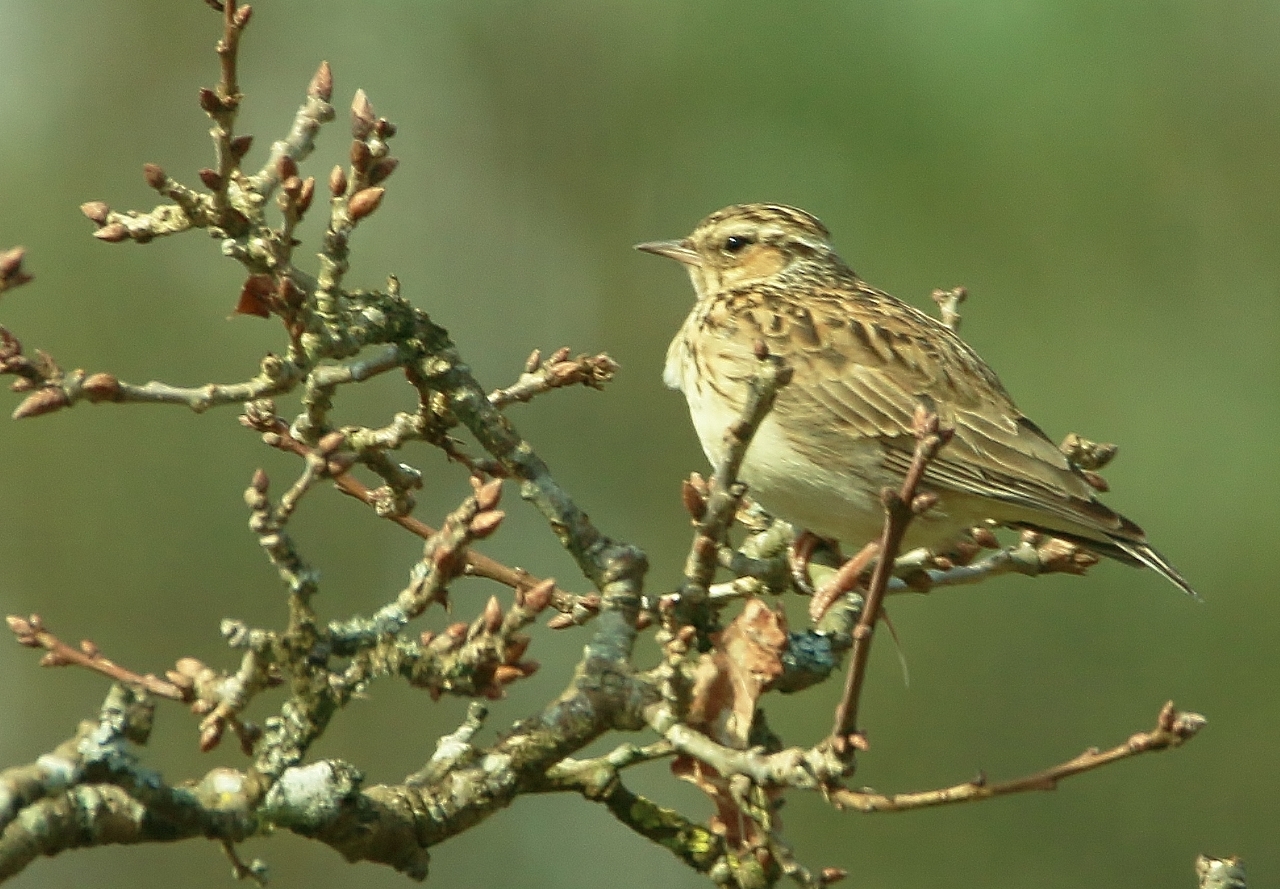
Woodlark at Frensham – Photo Malcolm Fincham.
GBC has developed a strategy which it states: “…enables residential development to take place which would otherwise be prevented by the provisions of European legislation relating to the protection of the SPA.” But Alderman Bridger disputes the imposed provisions are specified in the the legislation, despite legal advice obtained by the council.
Under the policy, all housing development within five kilometres of a SPA is subject to a levy of 6% to 7% per house and to stringent tests and impact assessments. Developments within the five-kilometre radius must provide mitigation against the impact of development upon the designated species.
One form of mitigation is to provide a Suitable Alternative Natural Greenspace, or SANG, as an alternative public recreation area to reduce disturbance to the at risk species on the heathlands and the money collected through the levy can be used to fund these.
On July 18, 2017, the GBC Executive agreed to extend its TBH SPA Avoidance Strategy. It is now intended to be in place for 125 years and includes a proposal to create 12 new SANGs.
There are reports that not all councillors are happy with the Executive decision, nor are some developers who feel that might have been charged the levy unnecessarily. The policy is expected to be referred to GBC’s scrutiny committee.
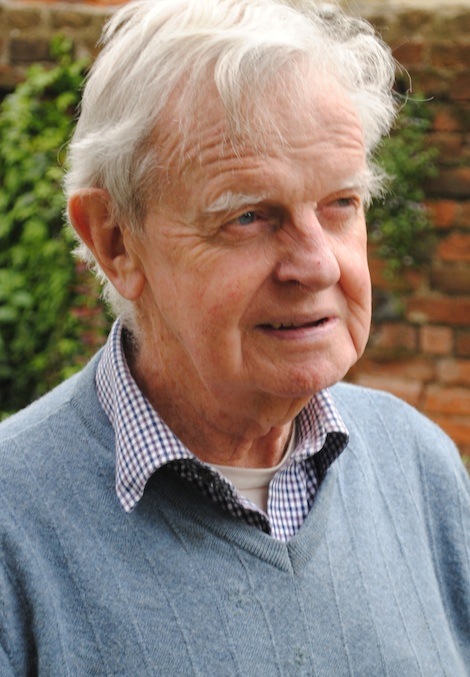
Gordon Bridger.
Alderman Gordon Bridger who spoke at the July council meeting said yesterday (August 16, 2017): “Councillors were incredibly badly briefed on this proposal. They were not told that ‘effectively the birds had been wiped out by weather’, as a recent Natural England evaluation has confirmed. They were not told there was no credible evidence to claim that ‘urbanisation and residents were the problems’.
“Instead, they were told that legally they had to implement the programme but there was no specification of how much they need spend.
“And why are twelve new SANGs needed? They were not told that, according to government guidance, ‘…if the council is satisfied that a planning application has no significant effect on a SPA a planning application can proceed in its usual way’.
“Since, according to Natural England, there are only two Dartford warbler nests, no woodlarks and four nightjars on Whitmoor Common how can they refuse a planning application?
“What a mess. The whole scheme is flawed – only 804 nests on all 13 SPAs and, if Guildford is a guide, well over £40m is likely to be collected from 11 councils.
“And oh yes, it is now admitted that we were misinformed originally that it was an EU scheme.
“Will councillors never learn that advice needs to be challenged? £6 million has been collected by Guildford alone, so far, and at least £64 million allocated in the Development Plan. I am not kidding.
“The only comfort is that I am advised the report will go to the scrutiny committee. Hopefully, that will allow an opportunity to insert some sense into it.”

Cllr Paul Spooner.
Cllr Paul Spooner (Con, Ash South & Tongham), leader of Guildford Borough Council, responded: “The issues surrounding Special Protection Areas (SPA) are complex and wide-ranging, so protection measures are implemented regionally rather than at a local level.
“The council is required to and adheres to the SPA policy that remains in the South East Plan, and information was available to all councillors and the public about the recent update to the Thames Basin Heaths Special Protection Area [SPA] Avoidance Strategy.
“The SPA is protected from the effects of new residential development by policy NRM6 of the South East Plan and the Habitats Regulations. Under the Habitats Regulations, doing anything to damage the habitat of the SPA is an offence.
“The approach to protecting the SPA from the effects of new residential development, [are] set out in policy NRM6… [this was] not withdrawn with the other policies of the South East Plan, and consequently, local planning policy and practice must conform to it. This has been confirmed by the council’s barristers. Therefore, implementing the SANG/SAMM [Strategic Access Management and Monitoring] approach is not discretionary for the council.
“The SANGs are beneficial to all our residents across the borough. They provide a place for everyone to enjoy open space, take their families and walk their dogs, knowing that this will remain in perpetuity and will not be built on.
“At its meeting on 18th July, the Executive was asked to approve an update to the council’s Thames Basin Heaths Special Protection Area Avoidance Strategy.
“The Executive was not asked to consider whether the SANG/SAMM approach should continue as the council does not have discretion over this matter. Irrespective of whether the strategy was updated or not, the council still has to follow policy NRM6.
“The report considered by the Executive contained references to comments raised during the consultation on the new strategy, including Mr Bridger’s comments.
“His comments covered the points raised in his latest letter and were addressed in their entirety in the consultation statement that accompanied the report. The points he raises, and the responses, were available to all Executive members, councillors and the public.”
The advice received from the council’s barristers can be seen on the Late Sheet for the July 18 Executive Meeting, and the consultation statement can be seen in the background papers here.
Gordon Bridger added: “The law does not specify how much has to be spent either on levies or SANGs and had this been made clear and had there been a proper briefing, indicating that weather, not people, was the problem, councillors would have minimised the GBC contribution and asked for review of the scheme.”
Share This Post


Responses to Councillors ‘Misled Over SANGs’ Claims Alderman
Leave a Comment Please see our comments policy. All comments are moderated and may take time to appear. Full names, or at least initial and surname, must be given.

I'm living well for nothing at all! (See: No Trifling Matter: Magpie Trapped in Godalming Sainsbury’s)




Next stop, Debt Chasm! (See: We Should All Be Outraged About the Failure to Deal with Legacy Debt)





Gordon Bridger
August 19, 2017 at 3:54 pm
My interest in this projects arises from being a councillor when it was imposed upon us as an emergency EU Directive of such gravity that all house building within 5 kms of a SPA (including all central Guildford) had to be suspended for six months while the new unconvincing SANG policy was worked out. It was never explained why, if residents and dogs were the urgent problems their control was not the solution, which EU would allow and which Natural England (NE) uses at Thursley Common to protect it.
When I was sent the consultation document last year it confirmed that we councillors, at the time, had been misled. It contained no facts about its impact so I did some research based on council officer and NE data which led to the conclusion that the new scheme had had no effect on the bird population.
While the council had unwisely committed itself to this policy, there was no commitment to a level of expenditure which was not made clear.
I thought I was being helpful by pointing out, at an early stage, the weaknesses of the policy to Cllr Spooner and suggested that a review by the Scrutiny Committee would be prudent. GBC’s commitment to this mistaken policy should not prevent a review. If found wanting steps must be taken to rectify it. It did certainly not justify an increase in funding.
The claim that my comments were fairly dealt with by Cllr Spooner is far from true. Anyone with time to locate them will find them dismissed without stating: what the indicators of success were, other than “the strategy was working”. My claims were refuted by claiming “it was against policy” and more incredibly, “the policy was not intended to lead to an increase in bird numbers”. This was a travesty of what I said. This really annoyed me as I sought persuasion rather than confrontation.
Why officers have not explained the facts to councillors maintaining the claim that the policy has succeeded, is for them to explain and indeed for councillors to request – but clearly, the national policy itself is flawed.
My research revealed how ridiculous the situation is, only 894 nests involved, almost the same number as the 878 in 1998/9. I sought from NE how much money had been raised so far but they had no idea(!) and suggested I ask the 11 councils via an FOI.
Some management!
I have not made an FOI request but if the £6 million raised in Guildford and the £5.2 million in Spelthorne is anything to go by, over £50 million by the 11 councils, may have been raised so far, in total. That is around £60,000 per nest.
A review at local and national level must be conducted. If this is not forthcoming the Ombudsman or the NAO are fallbacks.