- Stay Connected

Socialize


 Abraham Lincoln
If given the truth, the people can be depended upon to meet any national crisis...
Abraham Lincoln
If given the truth, the people can be depended upon to meet any national crisis...

 Guildford news...
for Guildford people, brought to you by Guildford reporters - Guildford's own news service
Guildford news...
for Guildford people, brought to you by Guildford reporters - Guildford's own news service
Insights: The Legacy Debt Should Be Borne By Those Who Created This Sorry Mess
Published on: 23 Apr, 2026
Updated on: 26 Apr, 2026
 By Bernard Quoroll
former local authority CEO
Lottie Harding’s argument that all of us in West Surrey should share the legacy debts of the debtor councils, as expressed in her letter, It Is Less Unfair for Other Parts of Surrey to Pay the Debt, is not convincing.
Council debts arose up and down the country as an indirect result of “austerity” which began in about 2009 and continues today, although it is no longer called that.
Councils everywhere lost roughly and on average, a third of their annual income from central government sources and unsurprisingly, many began to struggle financially.
In fact, local government was the hardest hit of all areas funded from central government sources. As a direct result, local services became and remain tissue thin and some councils get no funding at all from the centre but are still compelled to do its bidding.
 Over the same period, demands on public services have grown rapidly as a result particularly, of an ageing population, health inflation and most recently, defence needs, plus many more calls on the public purse, too numerous to recite here. Add all this together and you have the makings of a perfect financial storm
Some councils tried to invest in commercial assets such as shopping centres not to compete with commercial investors but in a vain attempt to generate additional revenue to balance the books, which they are legally obliged to do annually.
…councils today amount to little more than local administration”
The private sector was in turn only too delighted to offload superannuated retail assets onto naive investors, when the value of such assets was already plummeting as a result of changing shopping habits.
Governments in turn relaxed controls on capital expenditure by local authorities to enable them to do that, having previously abolished the Audit Commission which in earlier times could have been relied upon to blow the whistle on such practices.
They also indulge in a range of other dubious financial practices to paper over cracks, like one-off national pothole grants, making councils bid expensively for modest projects which are not local priorities and so-called devolution deals which come nowhere near addressing local problems. And yes, some councils like Woking went crazy but were allowed to do so because there was inadequate supervision as well as poor leadership.
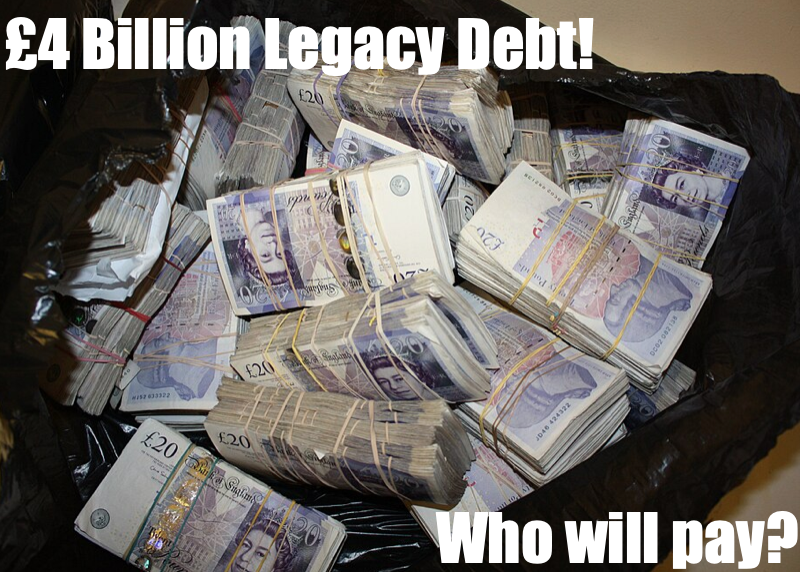
The debt is variously estimated to represent £15,000 to £19,000 for each household in West Surrey.
If councils were masters of their own destinies, Lottie Harding’s comments would have more validity. But councils today amount to little more than local administration.
They have very little control over their own or our destinies in a continuously centralising state. Governments use them as a smokescreen or fall guy for their own failed policies, relying on short public memories and obfuscation to cover up their own failure to think longer term.
…some councils like Woking went crazy…”
Worse, the people of Guildford would not even have been in this position had not this Government decided to restructure councils wholesale and on the back of an envelope, without a proper mandate or prior consultation and without muck likelihood if saving money.
Prior to all these events, councils did not go bankrupt on the scale we are now seeing, or at all. It was a very rare event indeed for a council to declare that it could not pay its bills. Nor did councils collectively indulge in failed attempts to compete with the private sector in playing the markets, which was never their function.
The burden of paying off these debts should now sadly and more equitably be borne at least in part by the pre-reorganisation taxpayers whose leaders lost control of their budgets and by central government, which created this whole sorry mess. If it were down to me, that would be in a ratio more like 10 to 1 in favour of local taxpayers.
See also: The Dragon Says: We Should All Be Outraged About the Failure to Deal with Legacy Debt
Share This Post



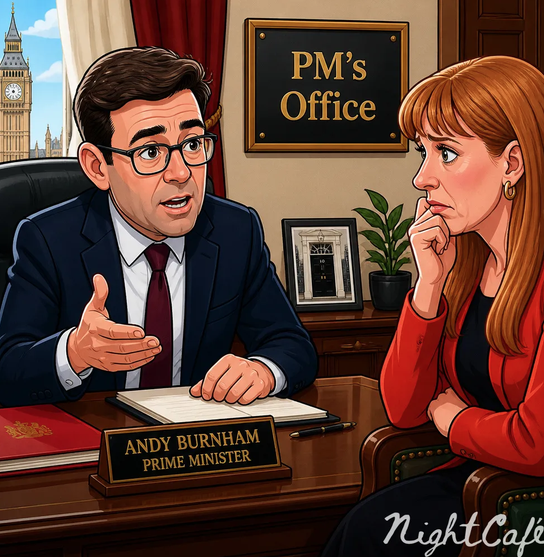
PM You say you're worried about the reaction in Surrey to council reorganisation. How many Labour MPs does Surrey elect? Angela Rayner: None, ever. PM Next item!












Recent Comments