- Stay Connected

Socialize

 Abraham Lincoln
If given the truth, the people can be depended upon to meet any national crisis...
Abraham Lincoln
If given the truth, the people can be depended upon to meet any national crisis...

 Guildford news...
for Guildford people, brought to you by Guildford reporters - Guildford's own news service
Guildford news...
for Guildford people, brought to you by Guildford reporters - Guildford's own news service
Behind The Picture Of Wealth and Prosperity – Surrey Has a Story of Inequality and Poverty
Published on: 6 Oct, 2025
Updated on: 8 Oct, 2025

Lush countryside – the image many people have of Surrey, along with its wealth and prosperity. But another picture of Surrey is highlighted in a new report
By Emily Dalton
local democracy reporting service
Thousands of people in Surrey are struggling with inequality, isolation and poverty – despite the county’s reputation as one of the most prosperous areas of the UK, full of golf clubs and mansions.
A newly-published study shows that people from Bangladeshi, Pakistani, Black African, Roma and Traveller communities are those most likely to live in poverty, overcrowded housing and poor health.
Gypsy and Irish Traveller residents experience the worst health among working age people and people of Bangladeshi origin experience the worst health among over 65s.
The report says there are around 20,000 children in Surrey who are growing up in poverty.
“We’re in a very changing world at the moment,” commented one leading county councillor, Mark Nuti. “There is a lot going on politically in our society and people are feeling quite fragile in places.”
The study found that while unemployment is rising generally, racial minority groups are more than twice as likely to be unemployed compared to white British residents. Even degree-holders from minority backgrounds are still less likely to get into senior jobs or management positions than their white counterparts.
The messages are contained in a report, “Understanding Inequality in Surrey”, published by Surrey County Council.
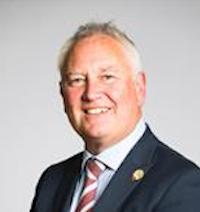
Cllr Mark Nuti
In a call for action, Cllr Nuti, who is Cabinet Member for Health and Wellbeing, said: “When we’re looking at equality, diversity and inclusion, there are people out there who are feeling very alone at the moment.
“We do have people that are living on the poverty line, we do have people from different races [and] different ethnicities that aren’t feeling part of these communities who are feeling alone – as everywhere else in the country.
“The most urgent action we need to do as a council, and as individuals, is to make sure that we identify where those people are and we have wraparound support for people to make sure they aren’t feeling alone or feeling scared in their own home.
“And they do know the majority of us respect and love them, and want them to be part of our community and our county.”
The report comes after a 2023 peer review that praised Surrey County Council for improving its culture but also found it lacked a real understanding of how inequality shows up in local communities, prompting this study.
Cllr Robert Hughes said: “I think the image of Surrey being a county of golf courses, wealthy people and pretty villages are a small part of what Surrey is in reality.”
The county boasts of around 120 golf clubs – many of which are world class – alongside million pound mansions, outstanding private schools and leafy green countryside.
The report exposed how 20,000 children are growing up in poverty, disabled residents are far less likely to find work and young people with additional needs and disabilities are four times as likely to have experienced mental ill health compared to the wider population.
Women are hit harder with the cost of living, as well as the gender pay gap in Surrey reaching a staggering 21 per cent, well above the national average according to the study.
Local groups are already using the data to shape projects
Council officers told a Resources and Performance Select Committee on October 2 that the study will help to alert council departments to how these disadvantages are often linked to an exacerbated socio-economic disadvantage.
A new Equality, Diversity and Inclusion framework aims to bring councils, charities and communities together to make sure support actually reaches the people who need it. It looks at everything from jobs and housing to health, education and digital access.
Local groups have already started using the data to apply for funding and shape projects – a sign, councillors say, that the work is already making a difference.
The data will be used to make services easier to access, tackle inequality in schools and workplaces, and build stronger communities.
Council officers admit the financial squeeze is real, but argue investing now will save money long-term. The idea is that better support means fewer people reaching crisis point, and more residents able to thrive.
The next stage is running focus groups with young people, disabled residents and minority communities to make sure the priorities match lived experience.
Share This Post




I'm living well for nothing at all! (See: No Trifling Matter: Magpie Trapped in Godalming Sainsbury’s)



Next stop, Debt Chasm! (See: We Should All Be Outraged About the Failure to Deal with Legacy Debt)




Recent Comments