- Stay Connected

Socialize


 Abraham Lincoln
If given the truth, the people can be depended upon to meet any national crisis...
Abraham Lincoln
If given the truth, the people can be depended upon to meet any national crisis...

 Guildford news...
for Guildford people, brought to you by Guildford reporters - Guildford's own news service
Guildford news...
for Guildford people, brought to you by Guildford reporters - Guildford's own news service
Birdwatcher’s Diary No.340
Published on: 2 Dec, 2025
Updated on: 1 Dec, 2025
By Malcolm Fincham
A sudden change in the weather had arrived in southern counties as we moved into the second half of November.
A mild southerly flow had abruptly turned to a chilly northerly, with daytime temperatures dropping into low single figures Celsius and bringing our first overnight frosts of the winter.

The River Adur at Beeding Brooks, West Sussex.
On a pleasantly sunny, but chilly November 16, I found myself, once again in the company of Bob and Dougal, this time venturing in the direction of Beeding Brooks, in the Adur valley, West Sussex.
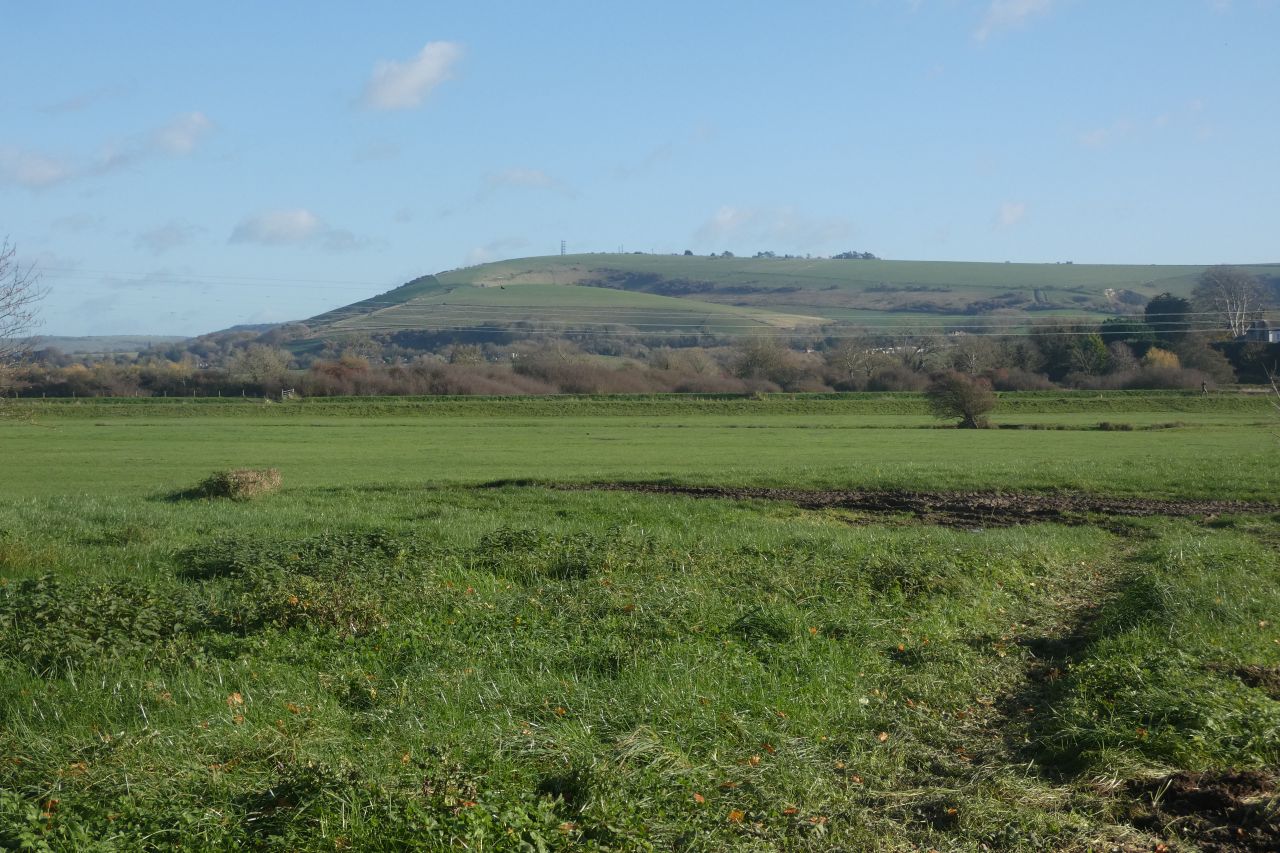
View across the valley at Beeding Brooks.
Our main objective was the hope of viewing a great grey shrike that had recently been reported there.
After a mile or so pleasant walking along northern bank of the River Adur, we eventually came to the bend in the river where the bird had recently been seen regularly appearing in the hawthorns immediately behind one of the distant utility pylons within the inaccessible fields.
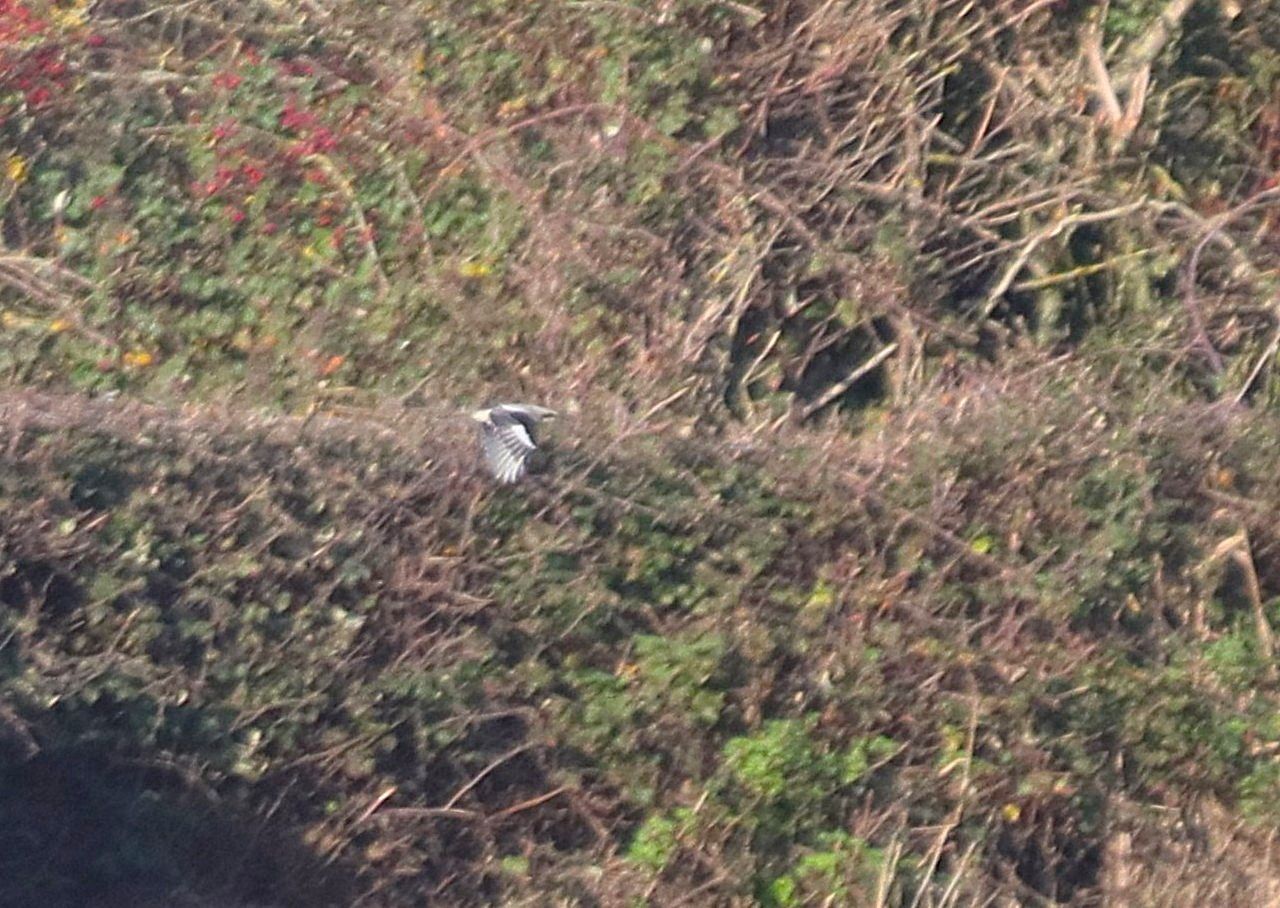
Great grey shrike. Beeding Brooks, West Sussex.
Having scanned across the fields for a good 30 minutes with a small group of other observers, it was our very own Bob, who through his binoculars, first picked it out way across the farmland.
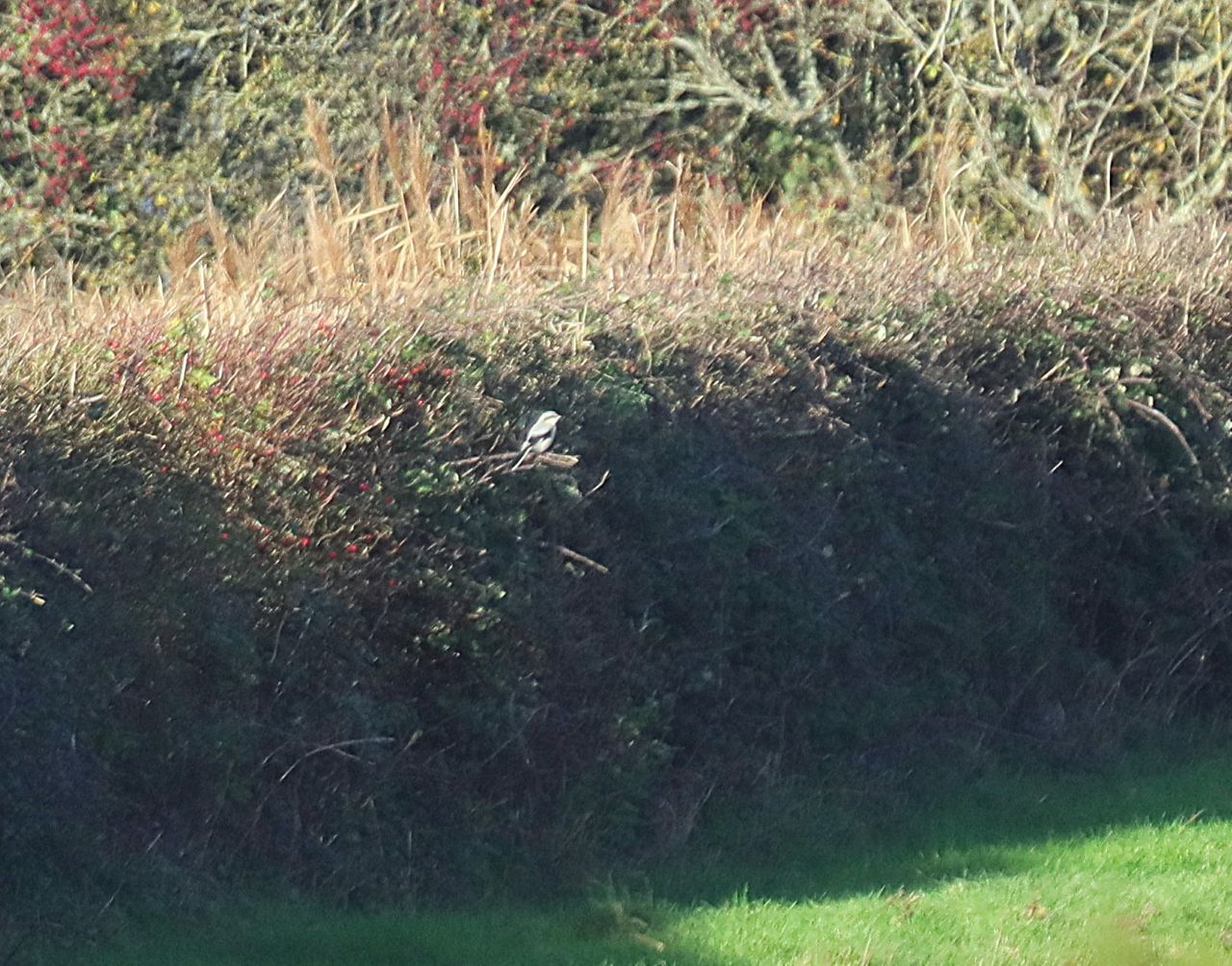
Great grey shrike. Beeding Brooks, West Sussex.
Although having to crop my photos, which originally looked as if they were from the Hubble telescope, views of the shrike were much better through Dougal’s scope.
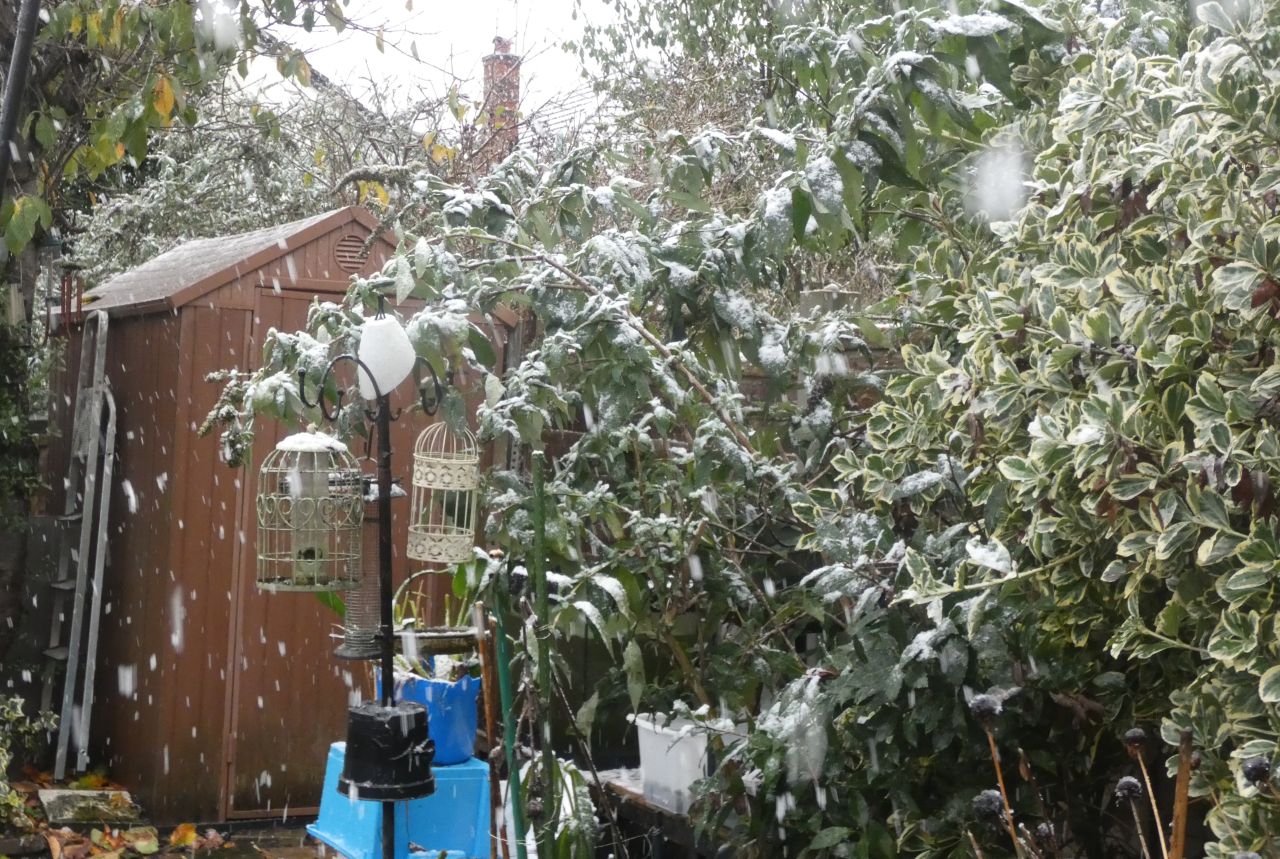
Snowfall in back garden.
On November 19 we had our first snow of winter, although the morning snowfall saw large flakes falling for a brief spell it didn’t settle for long, and only disrupting my hopes to venture out beyond my back garden.
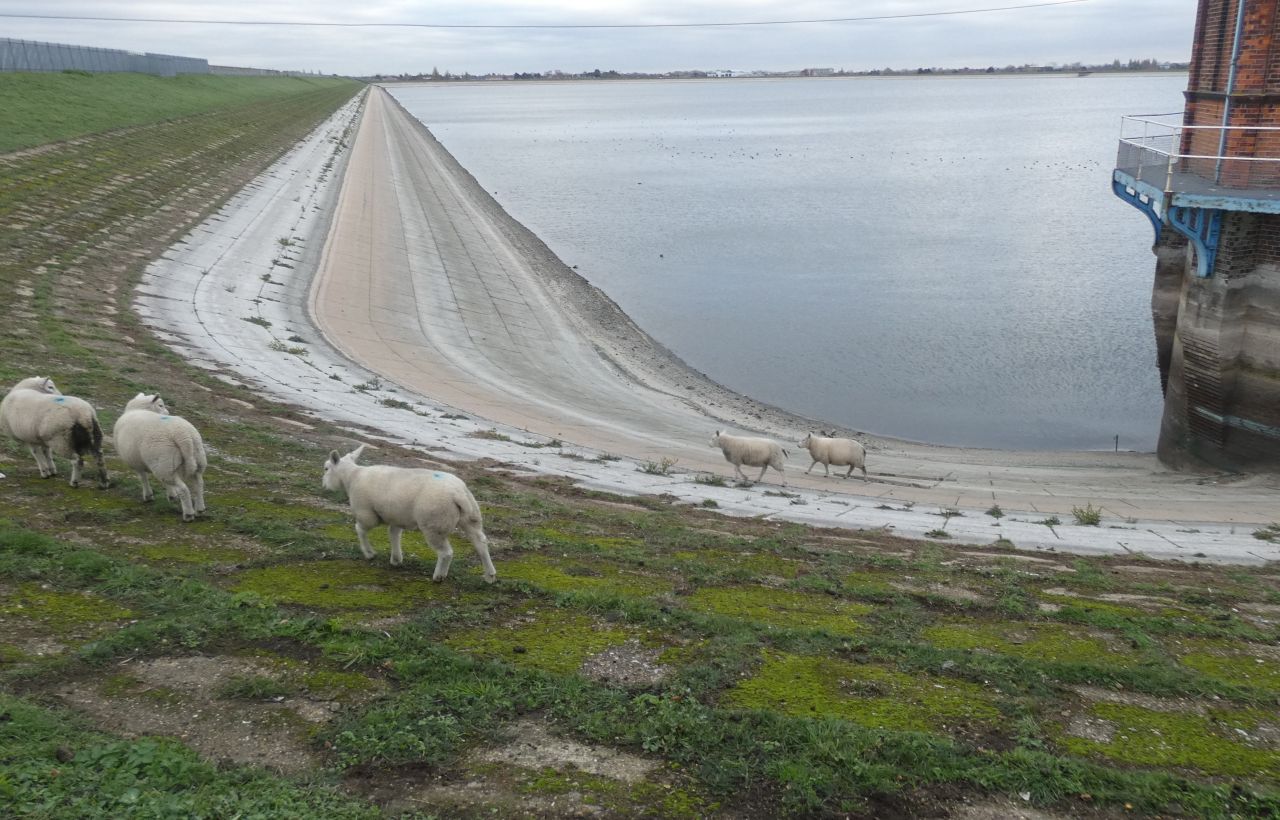
South basin at Staines Reservoir.
November 20 brought a much dryer, but still rather chilly and overcast day, while visiting Staines Reservoir.
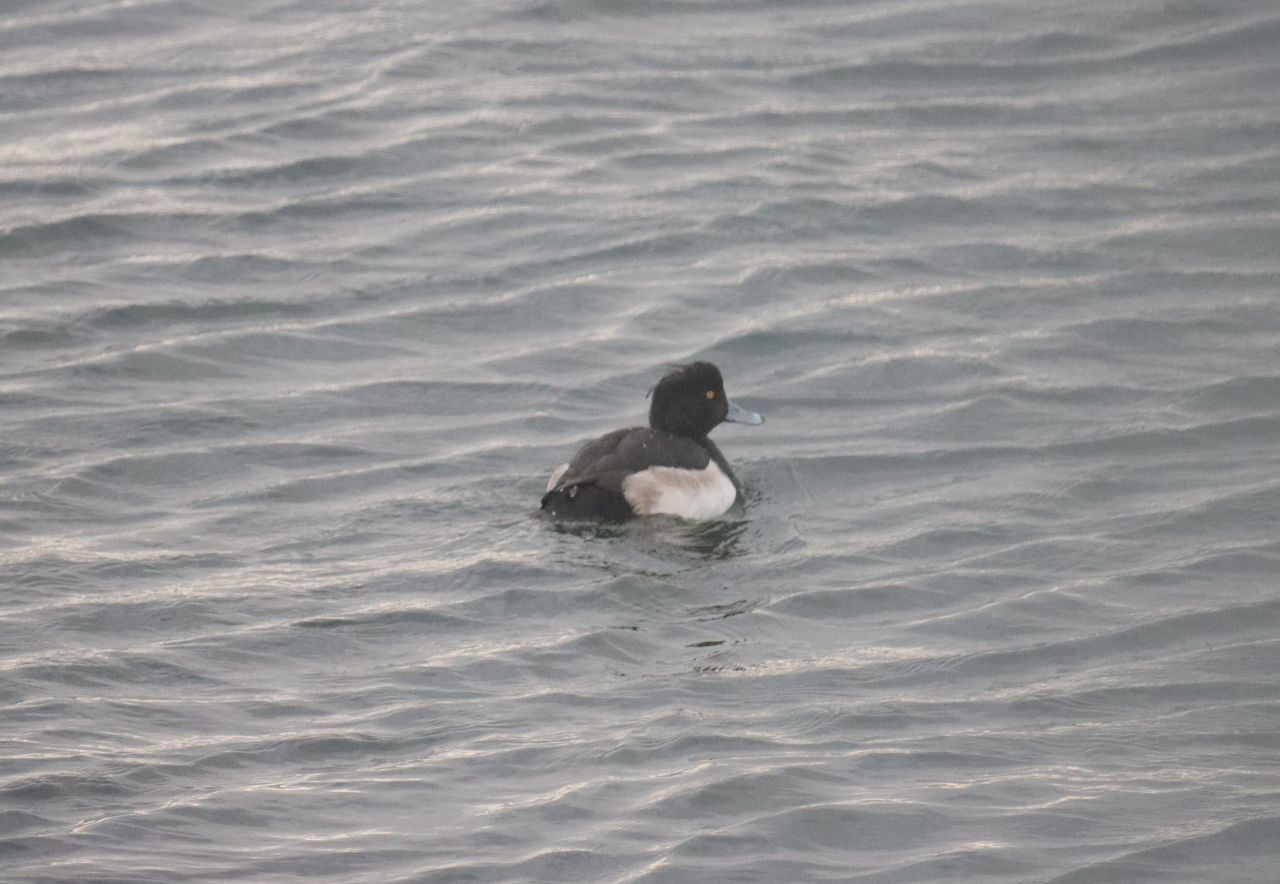
Tufted duck, Staines Reservoir.
Numerous rafts amounting to well in excess of a couple of hundred tufted ducks could be viewed mostly on the south basin.
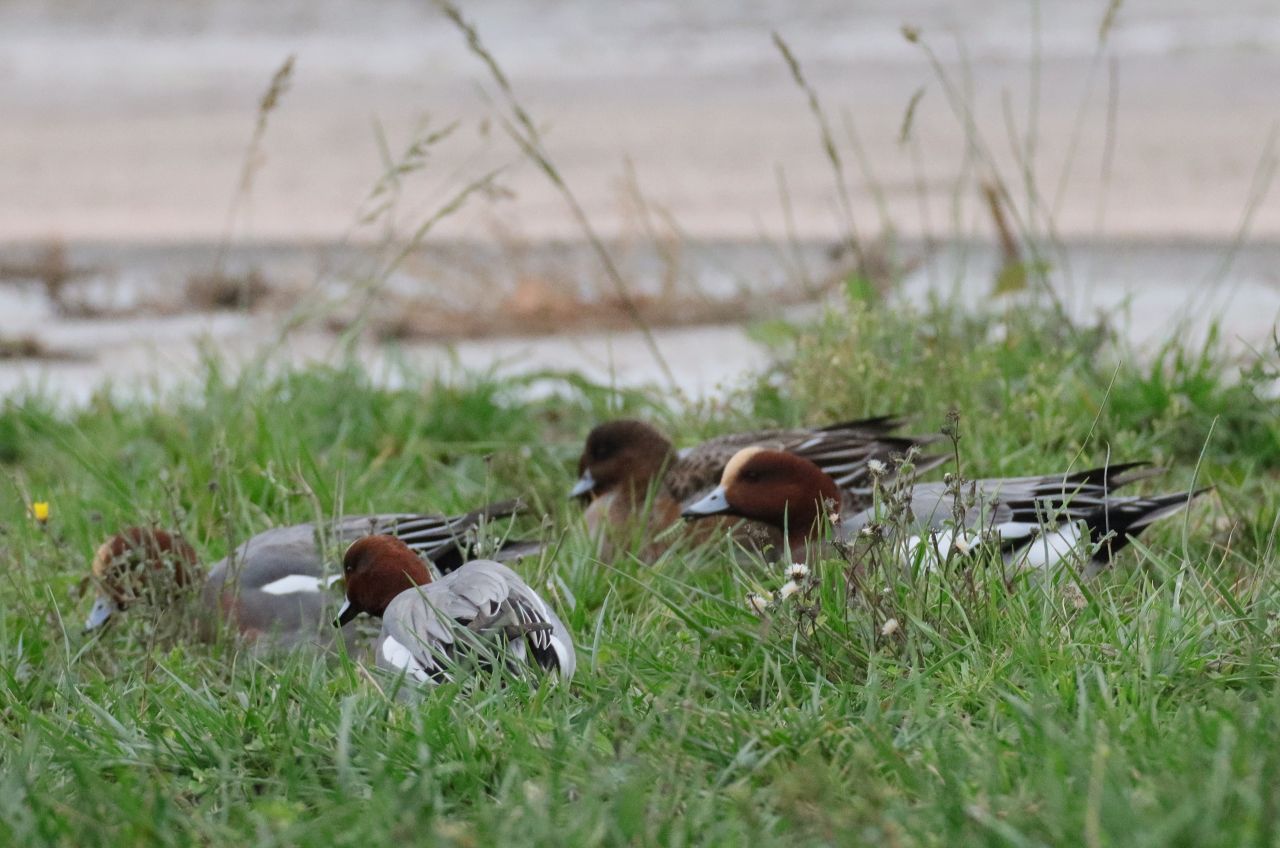
Wigeon, Staines Reservoir.
While a good few dozen wigeon could be observed both out on the water, as well as grazing along the banks.
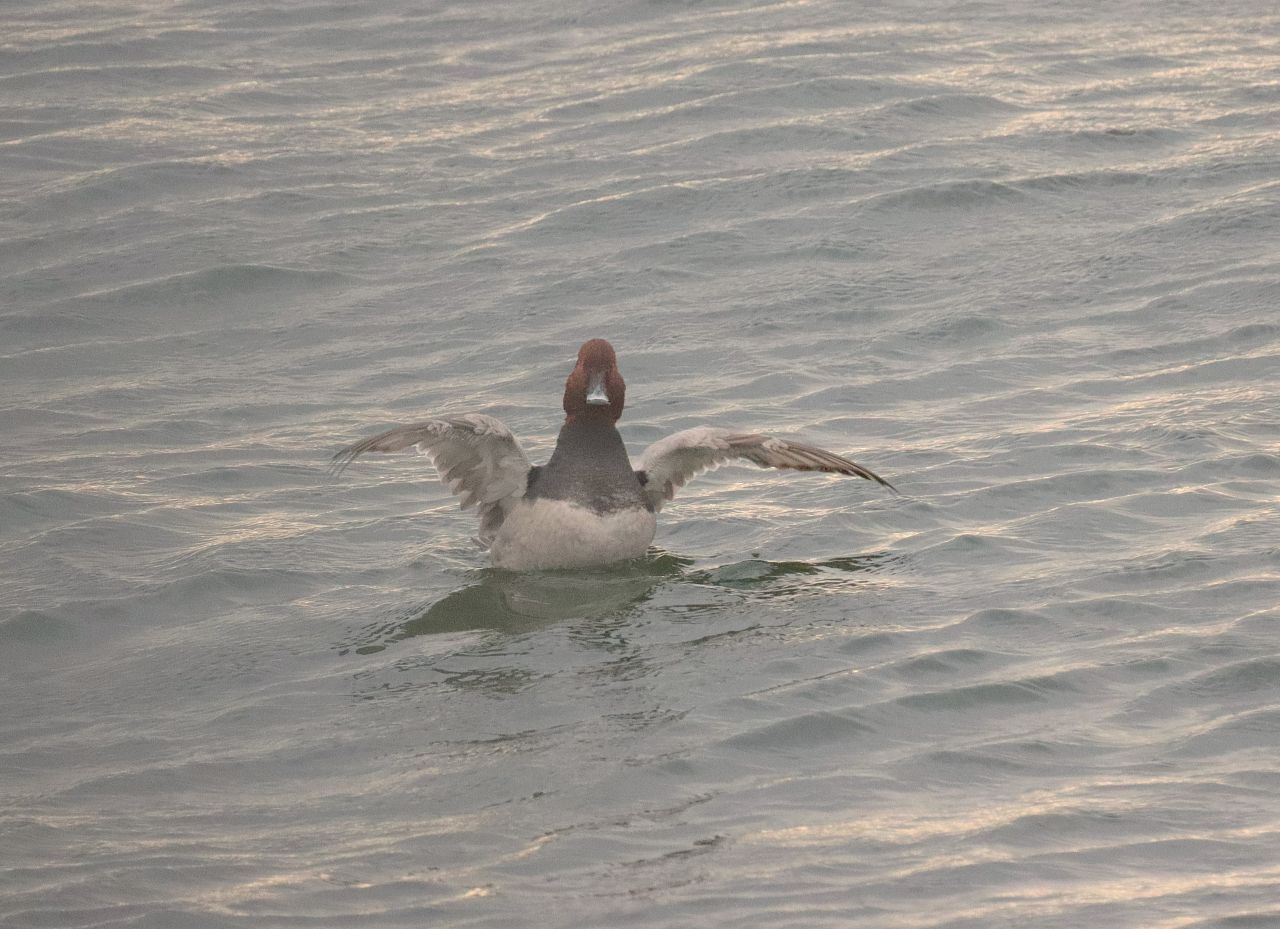
Pochard, Staines Reservoir.
And small groups of pochard were also present.
To our fortune our ‘target’ bird, a lesser scaup, was also present.
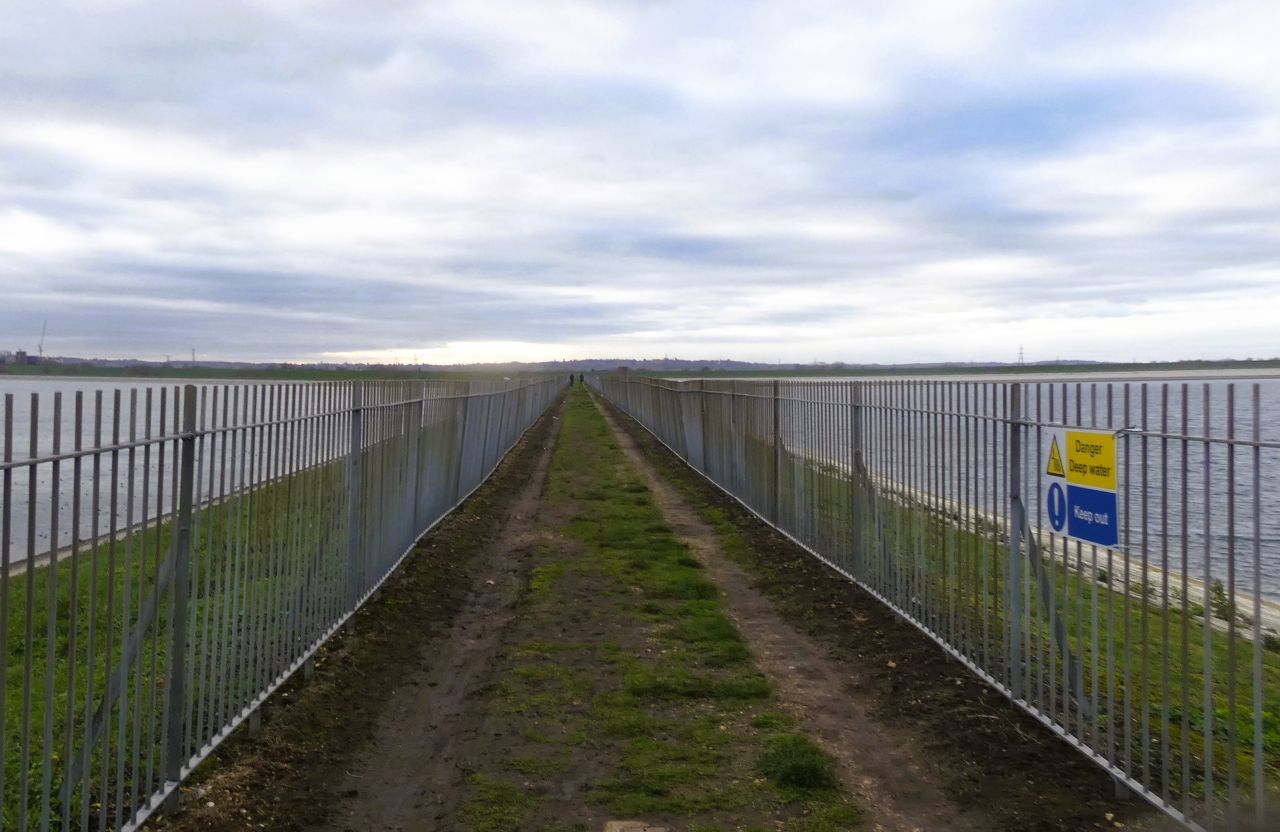
Causeway separating north and south basins at Staines Reservoir.
Although taking a while to pick it out among the vast number of tufted ducks, it was much closer to the causeway than we had expected as we viewed out from the north-east corner of the causeway.
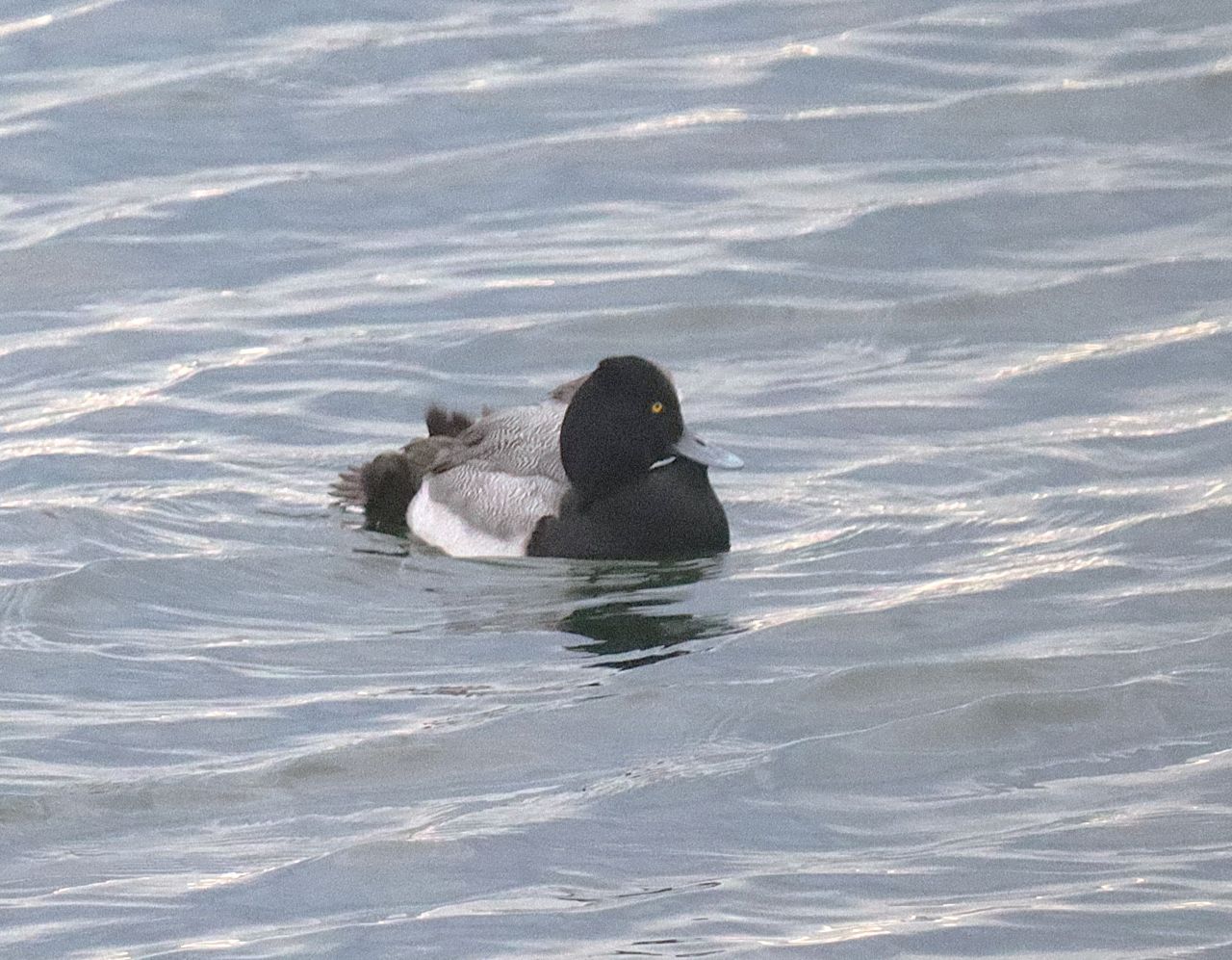
Lesser scaup, (drake) Staines Reservoir.
Although the most abundant diving duck in North America, it is still regarded as a rare vagrant to the UK, which was apparently first recorded here in 1987.

Lesser scaup, Staines Reservoir. Showing its diagnostic wing pattern.
And having seen one on less than a handful of previous occasions, these were by far the best pictures I have, so far, ever achieved.
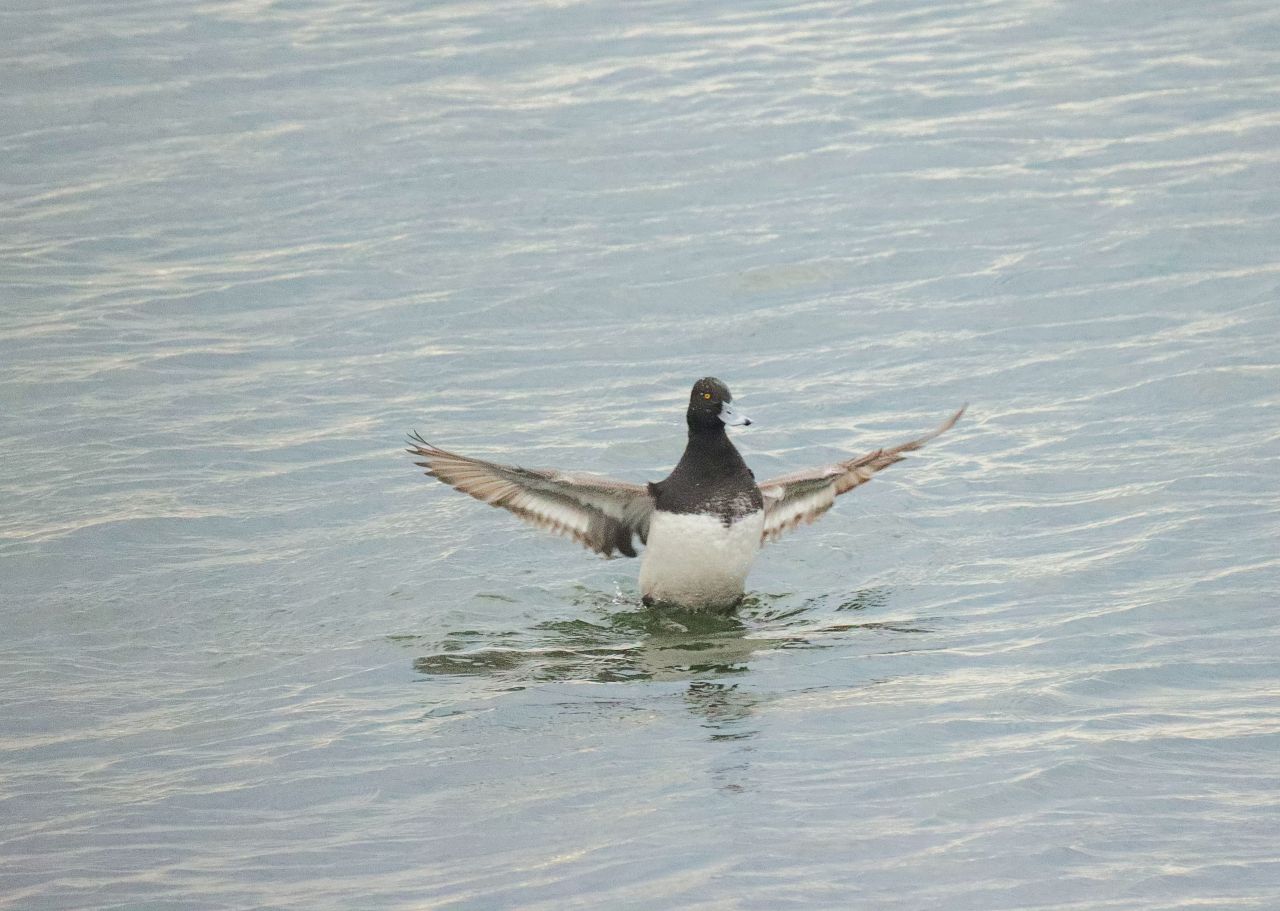
Lesser scaup, Staines Reservoir. Showing its diagnostic wing pattern.
On November 21 I was invited out with David Rose and Simon Vine, two old school-time friends.
In spite of their birdwatching interests having become more ‘relaxed’ than mine since those days, their enthusiasm remains. Therefore, it was a pleasure once again to meet up and catch up on months and years past.
The decision to visit Prews Farm, near Papercourt water meadows in Send, turned out to be quite a productive one.
Although, as yet, not in the vast numbers as seen there last winter, flocks of birds had began to increase since my previous visit.
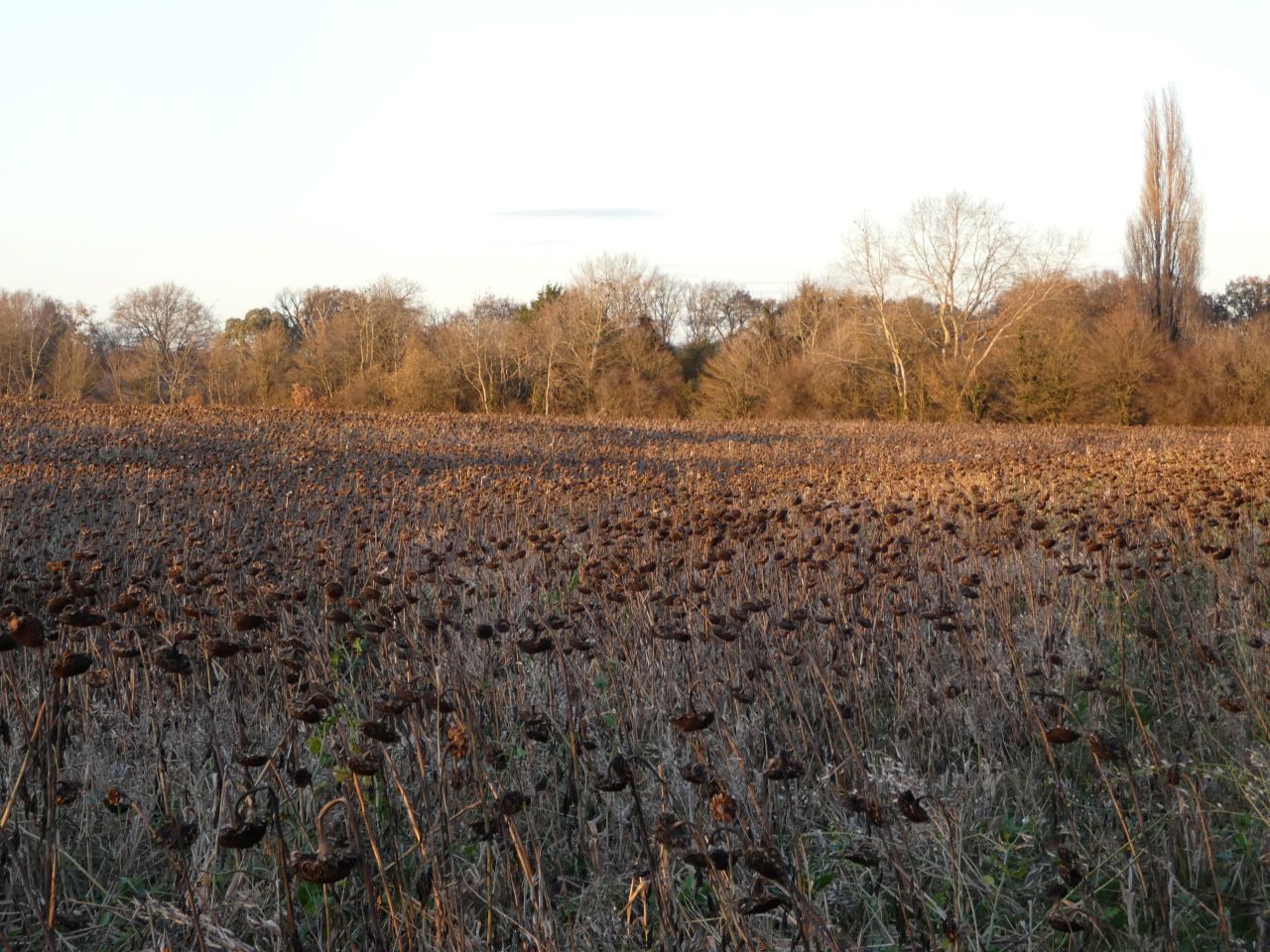
Fields of sunflowers gone to seed at Prews Farm last winter.
And although the fields of sunflowers that were present hadn’t reseeded in the amount I had hoped, there still appeared to be plenty of other seeds for birds to feed upon.
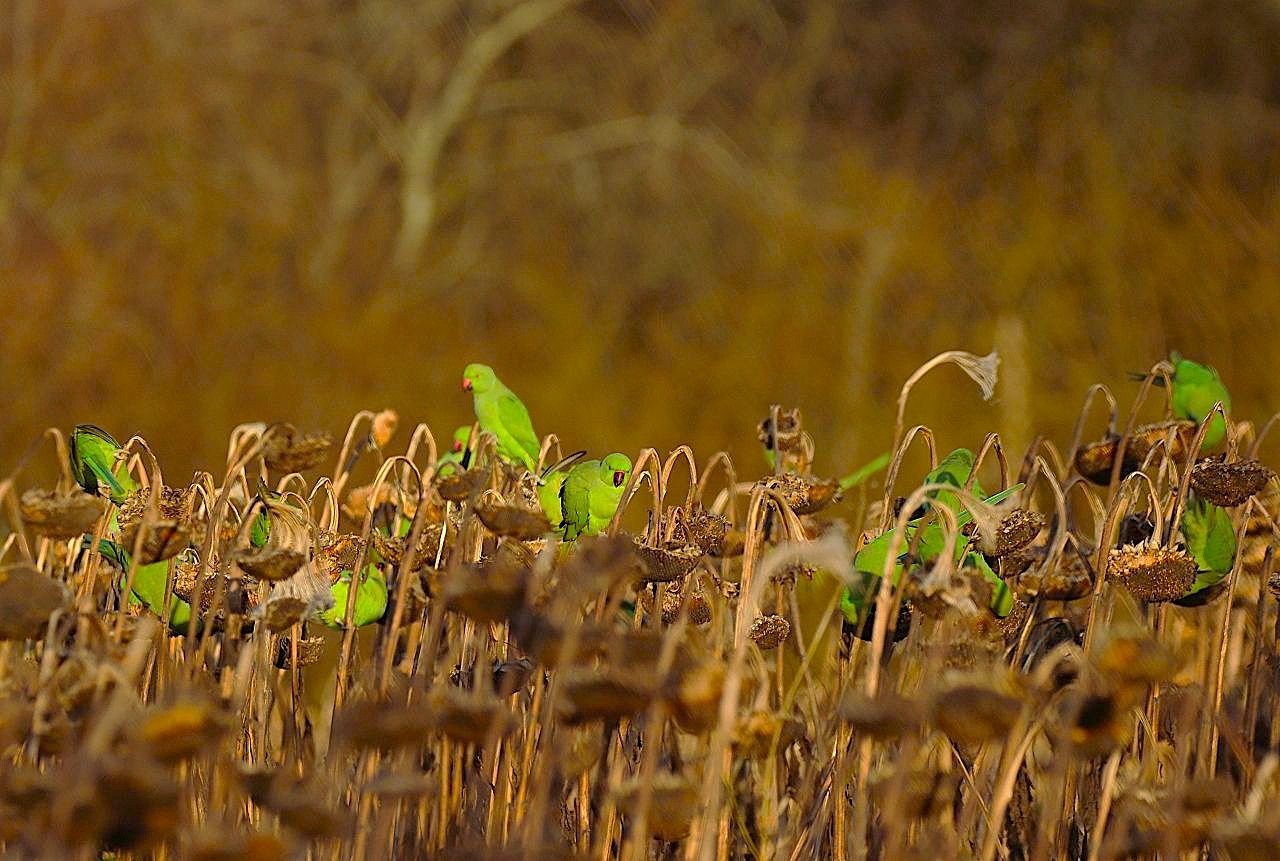
Ring-necked parakeets feeding on sunflower heads at Prews Farm last winter.
Although none of the parakeets that could be seen last year were present on this occasion, there were numerous other species of birds that could be viewed.
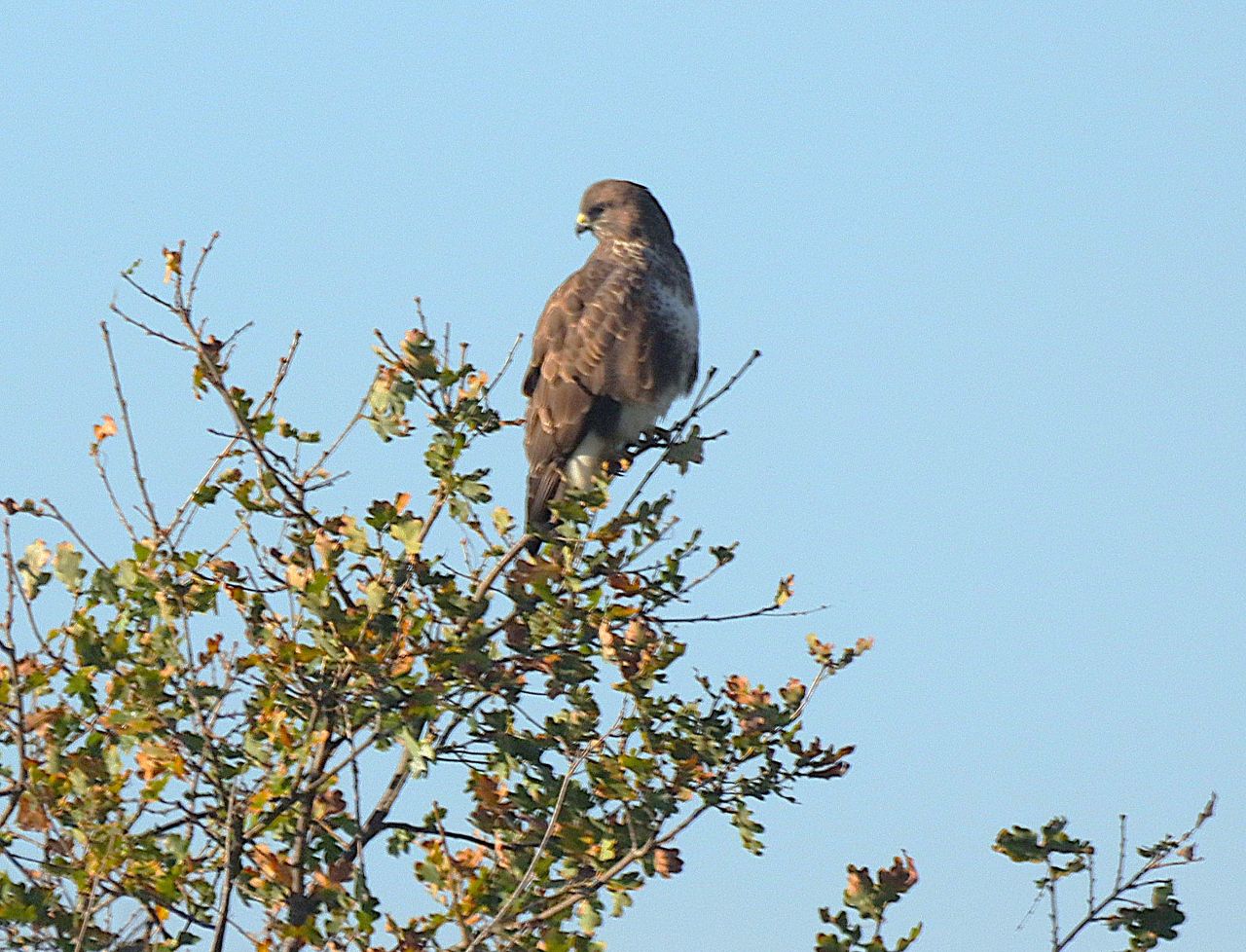
Common buzzard, Prews Farm.
A common buzzard flew in, low across the landscape and perched in one of the series of hedgerows that separated a pair of fields.
Within the hedgerows beside the path we walked varied sounds of passerines could be heard chirping.
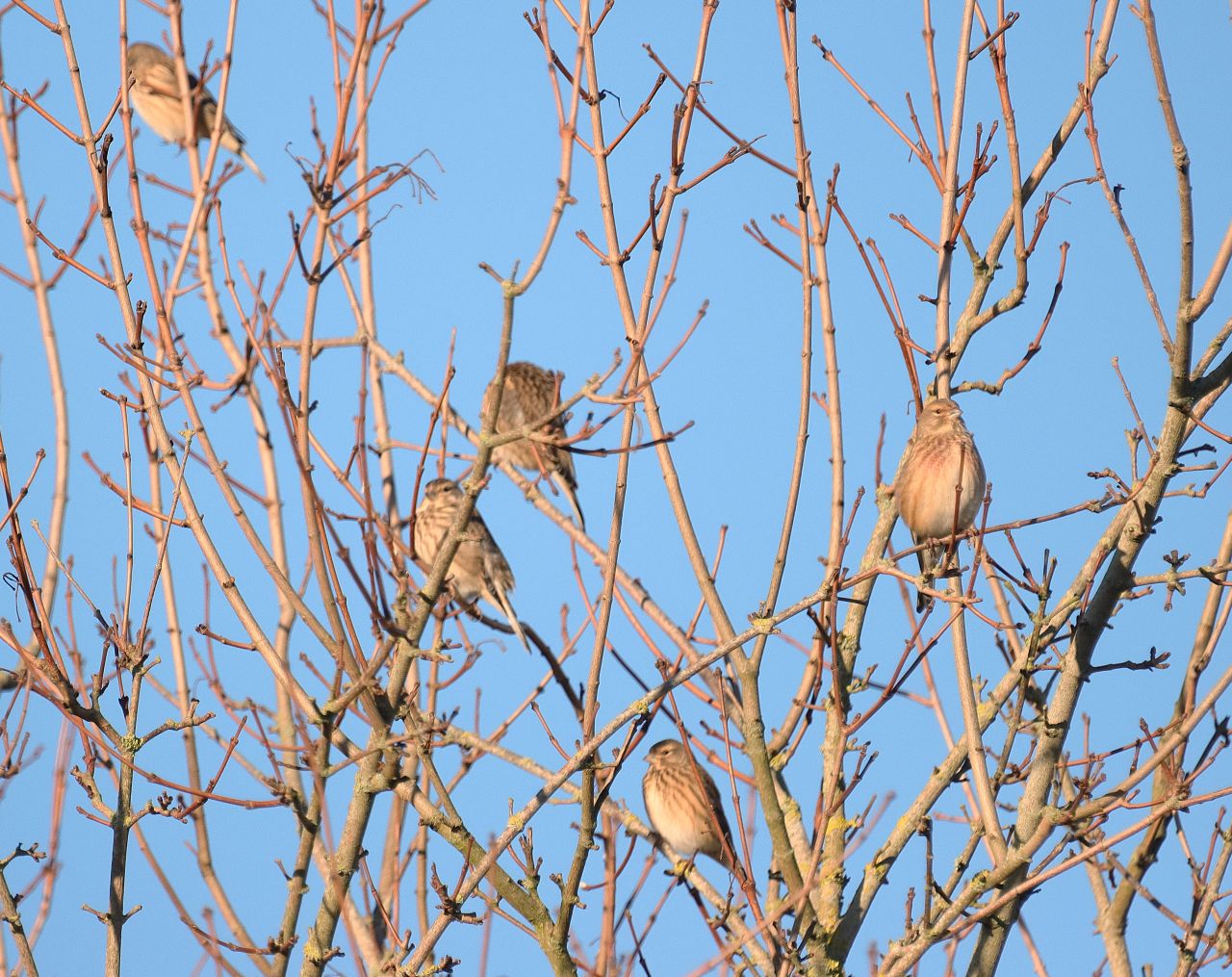
Linnets, Prews Farm.
These were mostly made up of linnets.
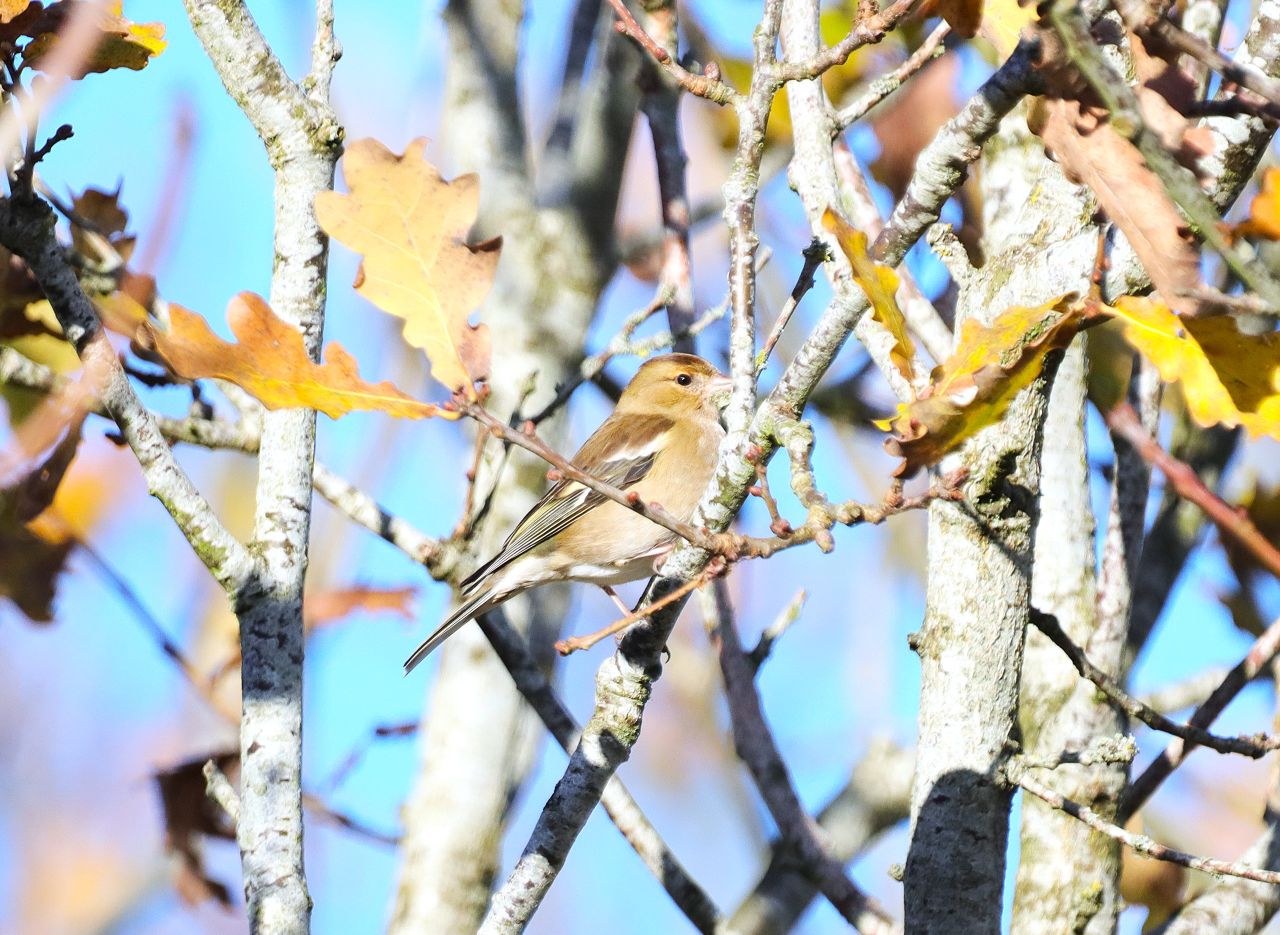
Chaffinch (female), Prews Farm.
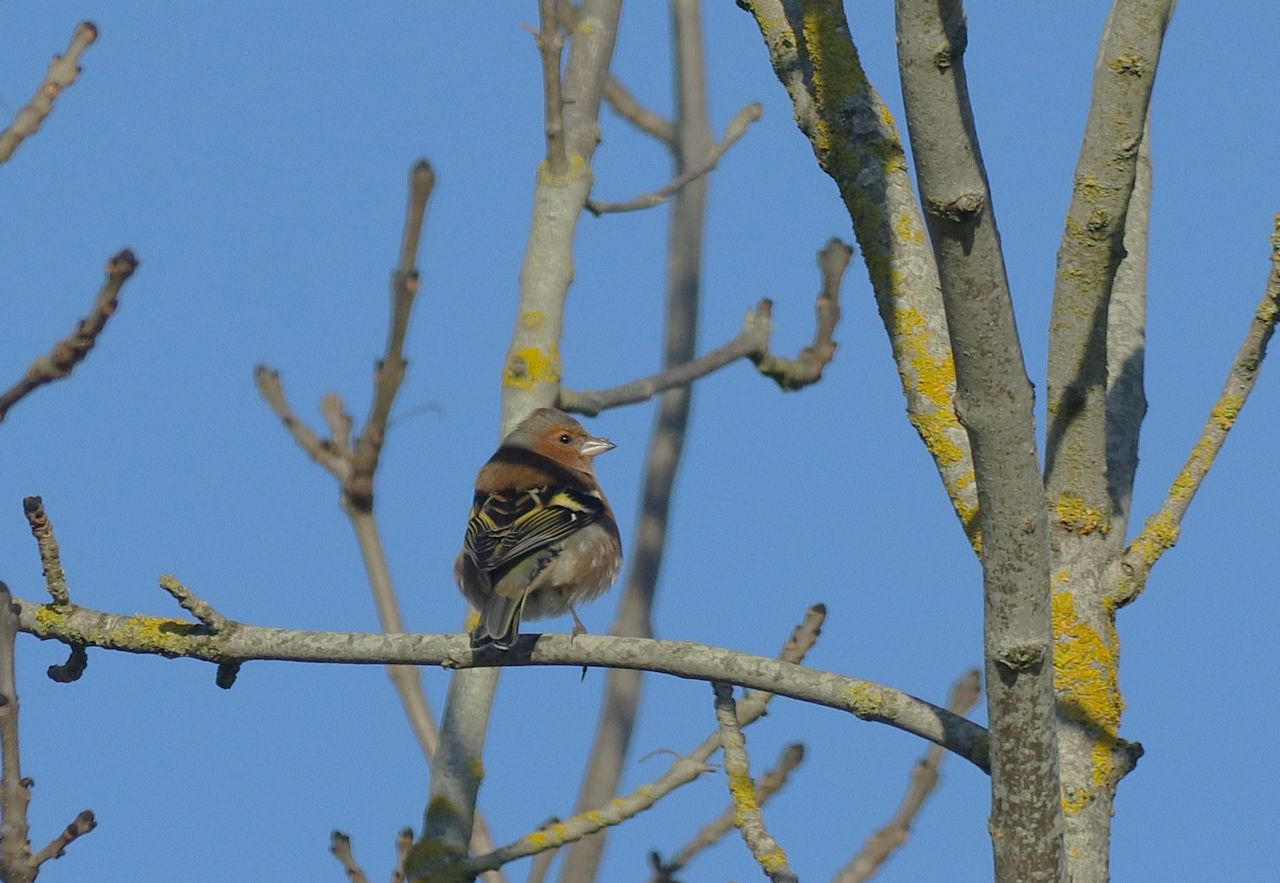
Chaffinch, (male) Prews Farm.
Both male and female chaffinches could be viewed.

Reed bunting, Prews Farm.
A few reed buntings could also be picked out.
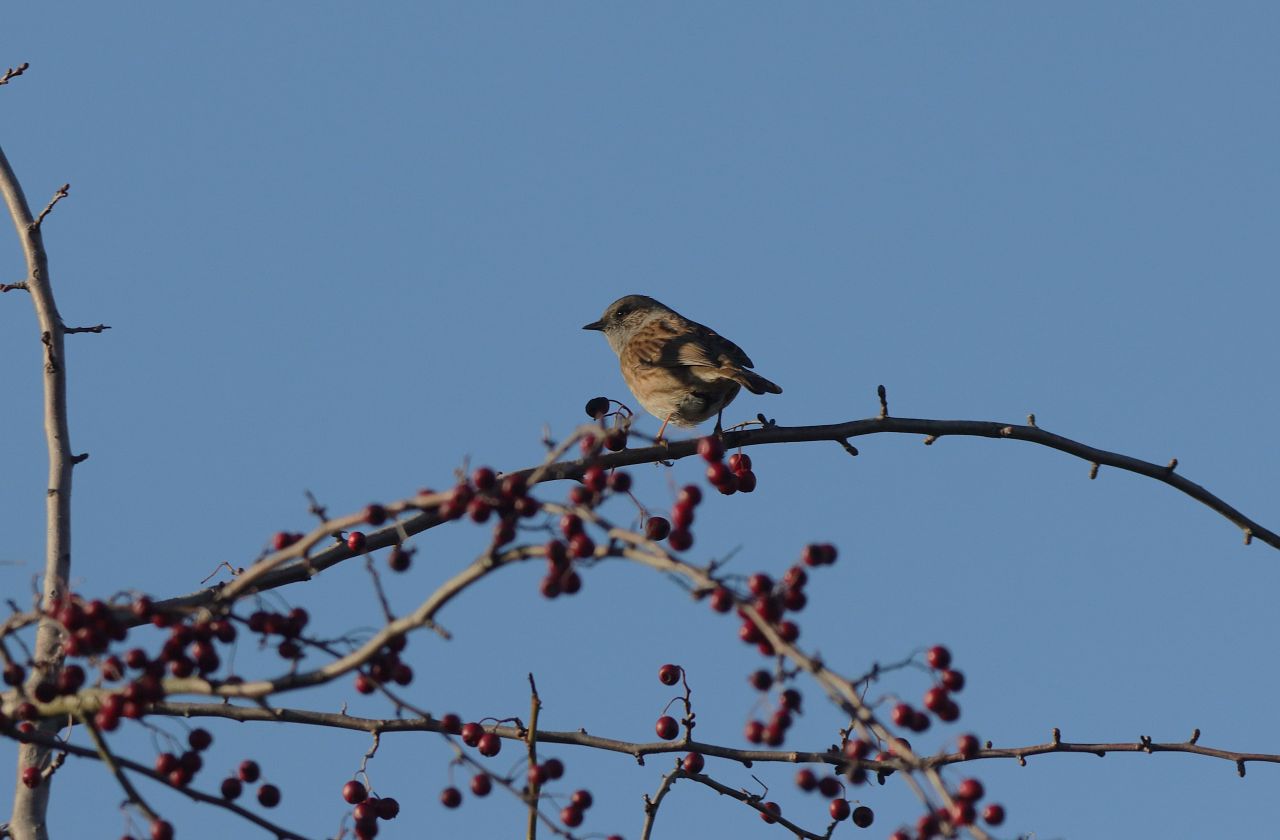
Dunnock, Prews Farm.
And several dunnocks.

Brambling, Prews Farm.
Also spotting and even achieving a few photos of a wintering brambling.
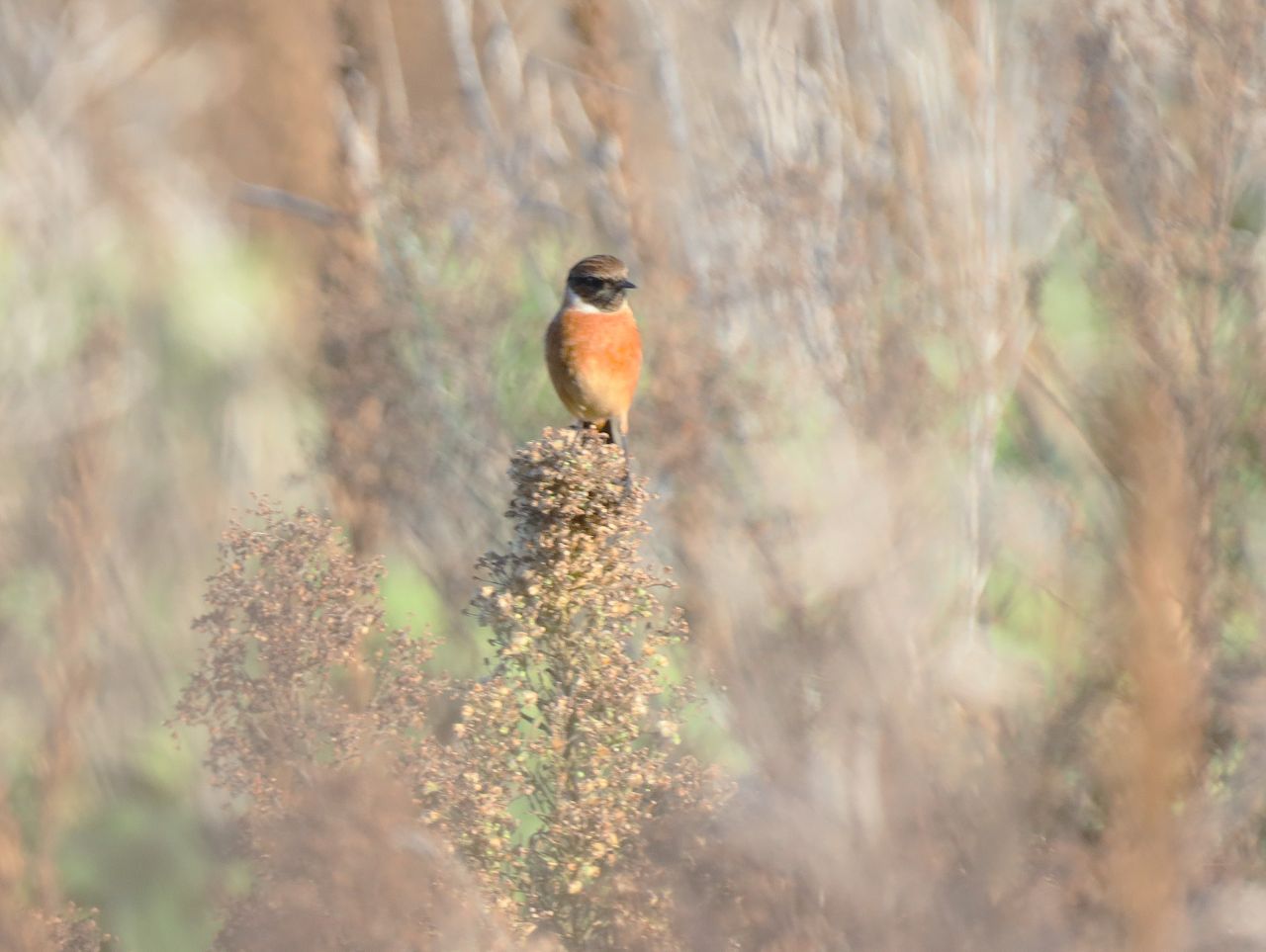
Stonechat (male), Prews Farm.
Added to the sightings were a pair of stonechats that perched up among the crops within the field.
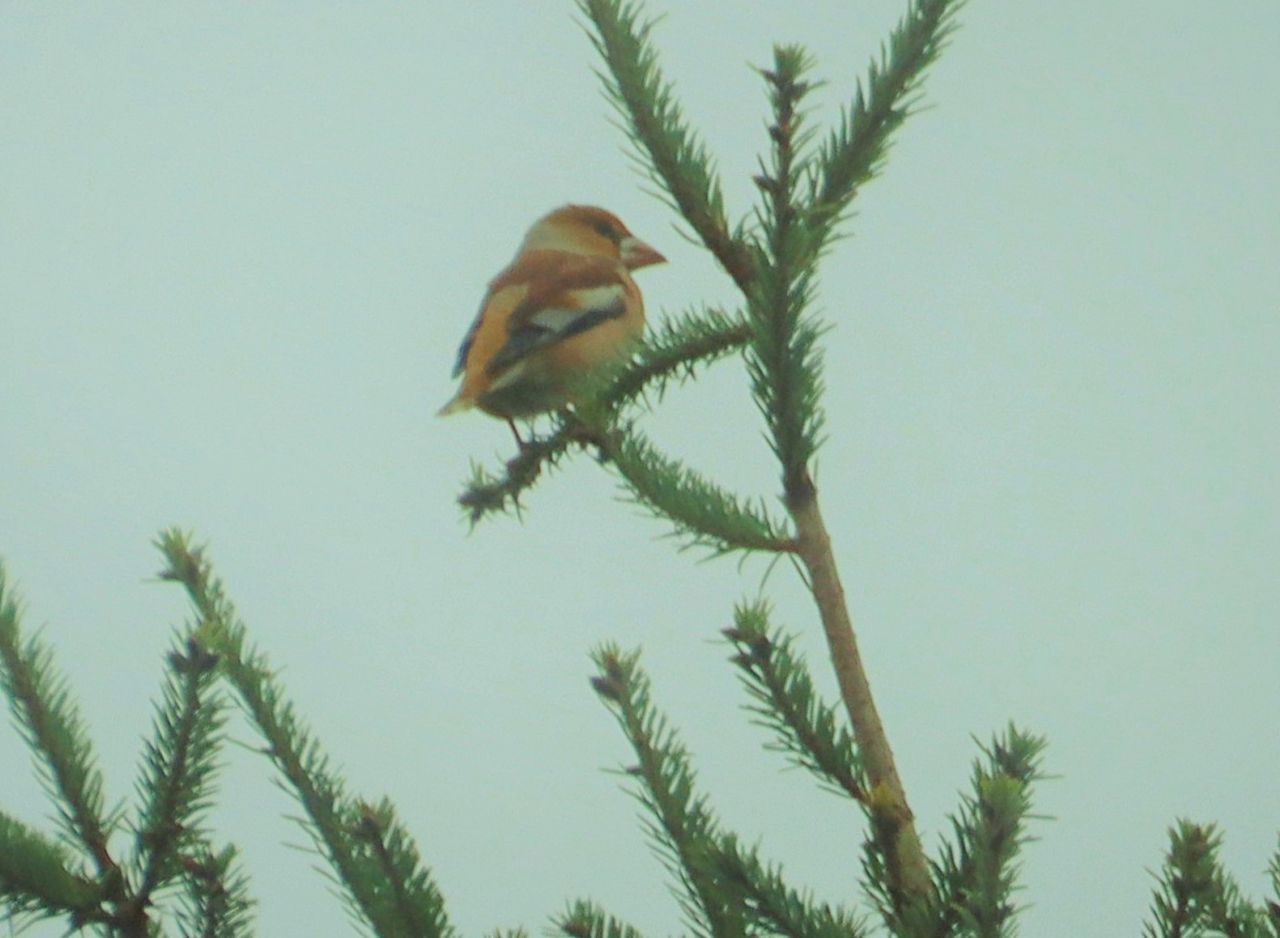
Hawfinch. A previous photo at Effingham Forest.
A visit to Dick Fock’s Common, within Effingham Forest, East Horsley on November 23, back in the company of Bob and Dougal saw distant ‘scope’ views of four hawfinches perched up in pine trees.

Common crossbills, Dick Fock’s Common, Effingham Forest.
Much closer to view and within range of my camera lens, we saw four common crossbills – although only managing photos of three of the birds which comprised of two males and two females, that settled briefly in a tall pine along the track near the viewpoint area.

Redpolls, Dick Fock’s Common, Effingham Forest.
There was also a small flock of eight redpolls.
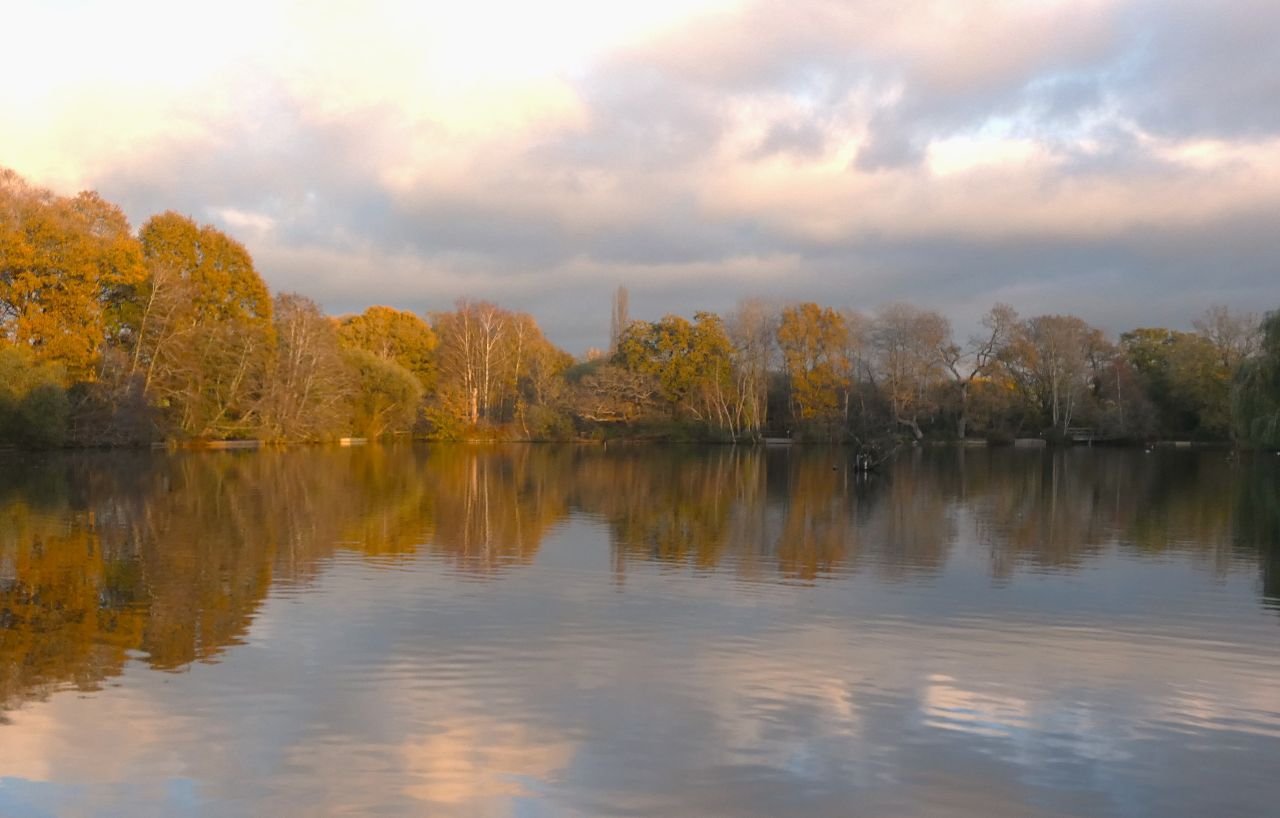
Britten’s Pond.
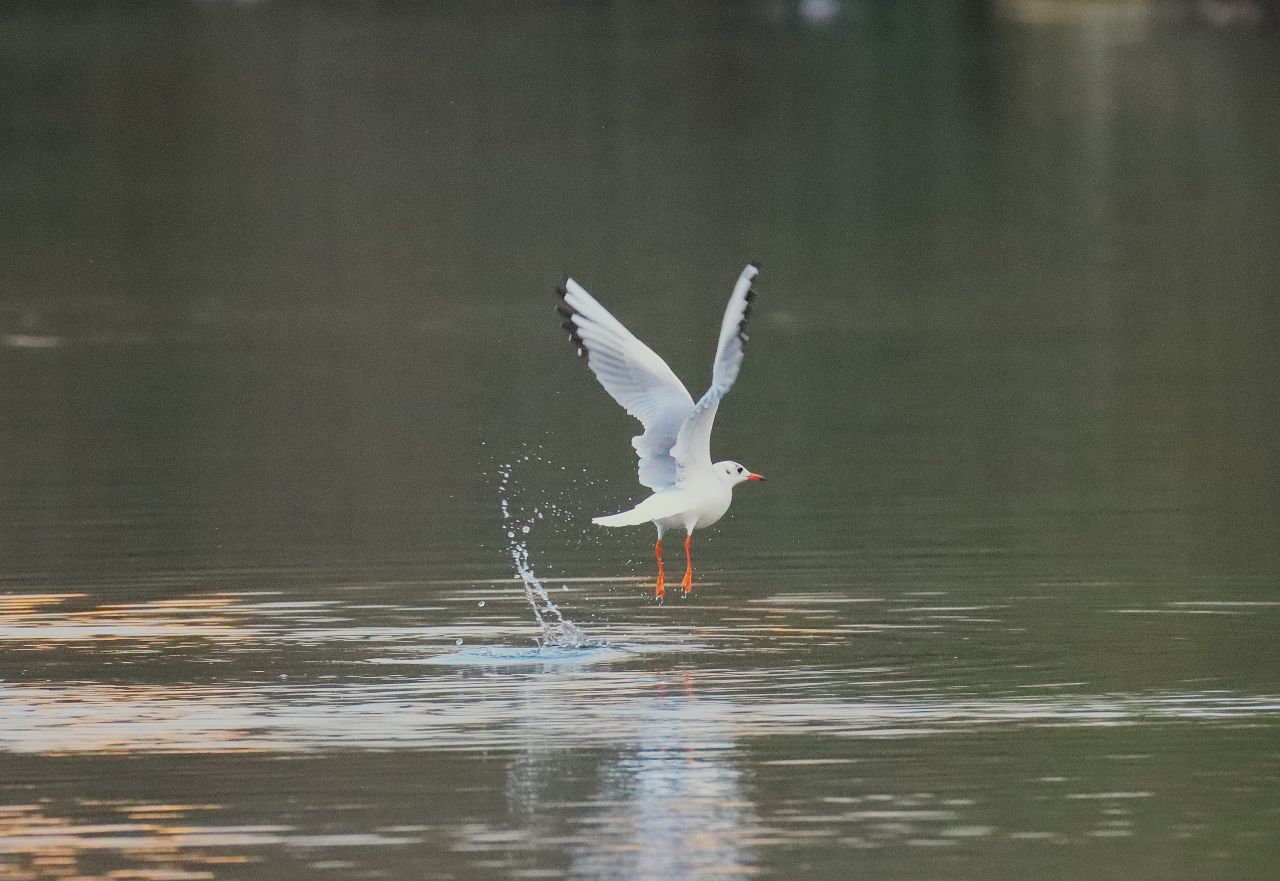
Black-headed gull, Britten’s Pond.
During my several visits to Britten’s Pond during the latter weeks of the month a growing number of up to a dozen winter plumaged black-headed gulls could be viewed, both on and over the pond.

Common gull, Britten’s Pond.
To my surprise, even adding a photo of a common gull.
These are not as common locally as their name suggests, and although seeing them occasionally on Stoke Lake at Riverside Nature Reserve, it was almost certainly the first I can recall having seen at Britten’s.
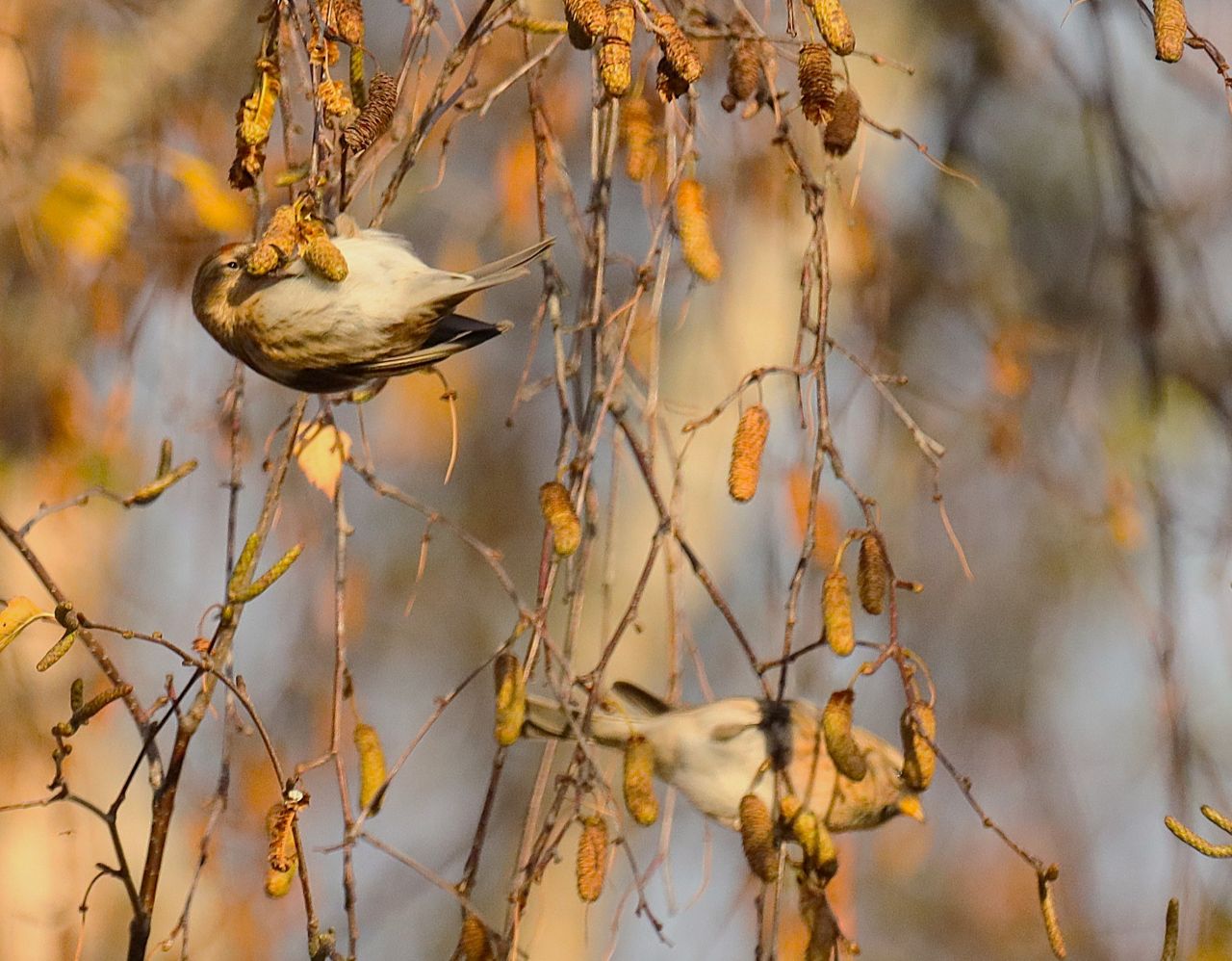
Redpolls, Britten’s Pond.
On another visit, another surprise sighting as I viewed a group of 25 or so redpolls. They were feeding in some tall silver birch trees just beyond one of the outlet streams at the rear of the pond.
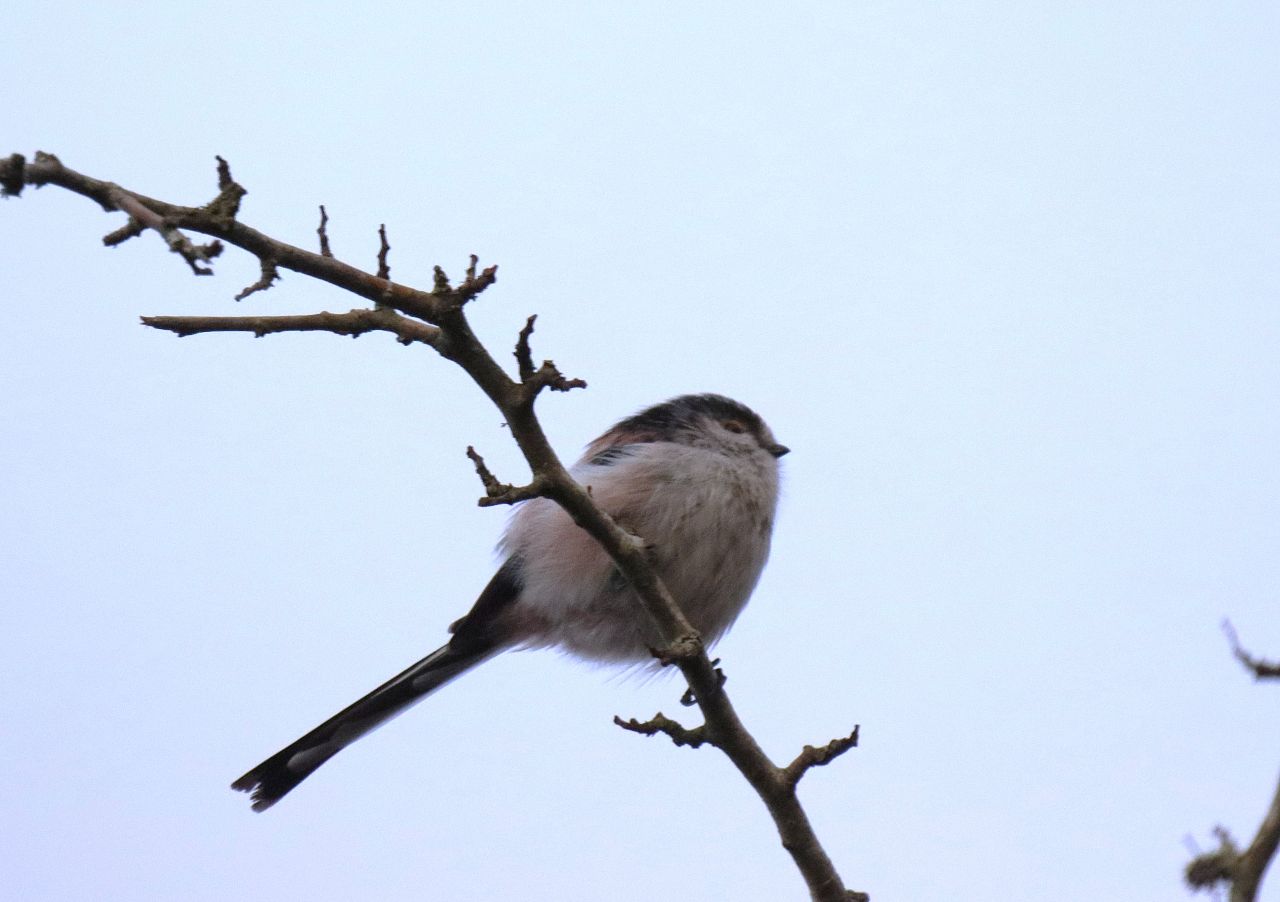
Long-tailed tit, Britten’s Pond.
Around the pond the usual sound of long-tailed tits could be heard and viewed.

Firecrest, Britten’s Pond.
And a firecrest once again continued to winter within the line of holly bushes at the rear of the pond.

Goldcrest, Britten’s Pond.
While a goldcrest could also be found close by.
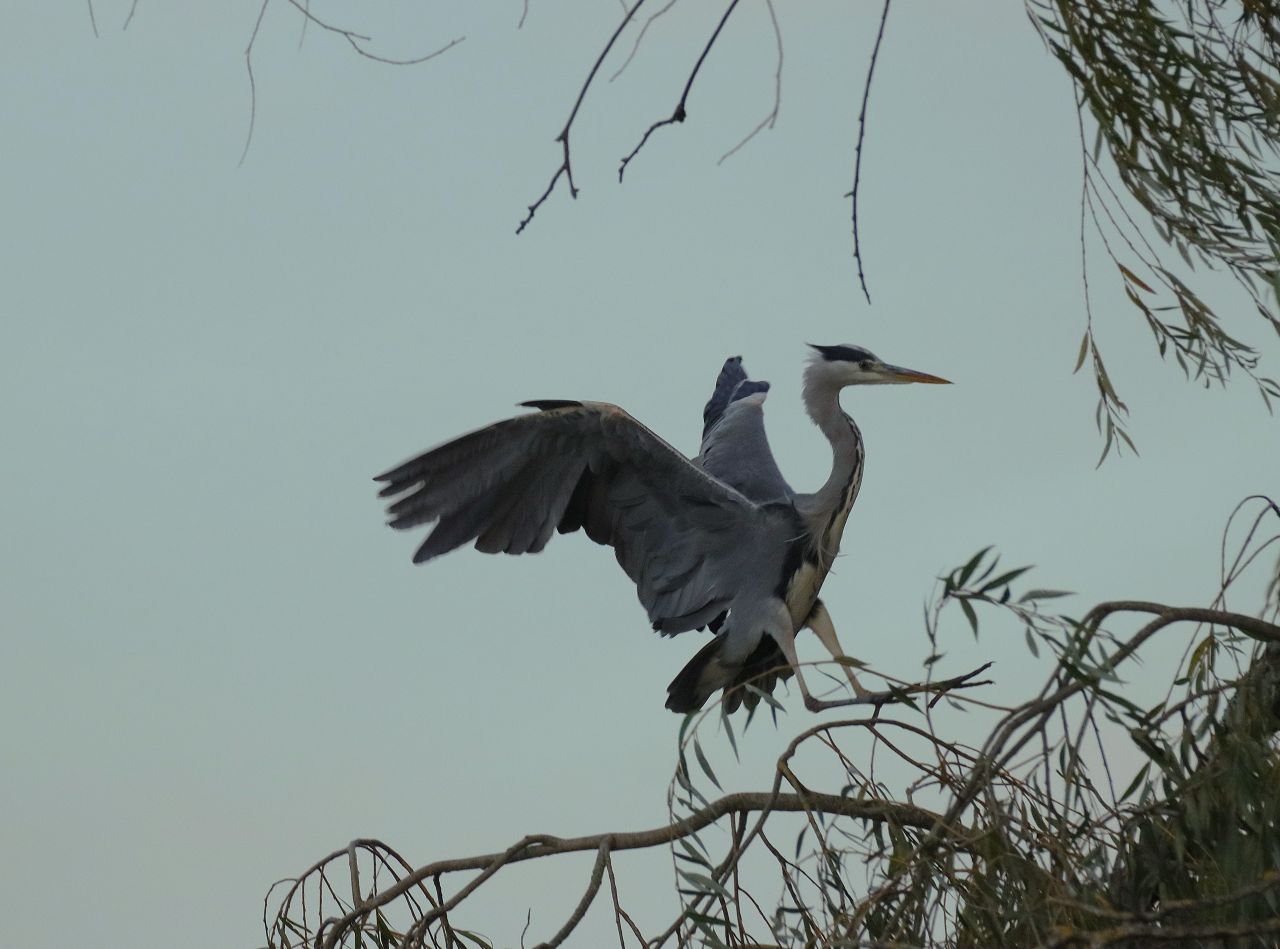
Grey heron, Britten’s Pond.
The resident grey heron continued to mostly tuck itself away on one of the islands, occasionally taking flight around the pond to take up a new vantage point.
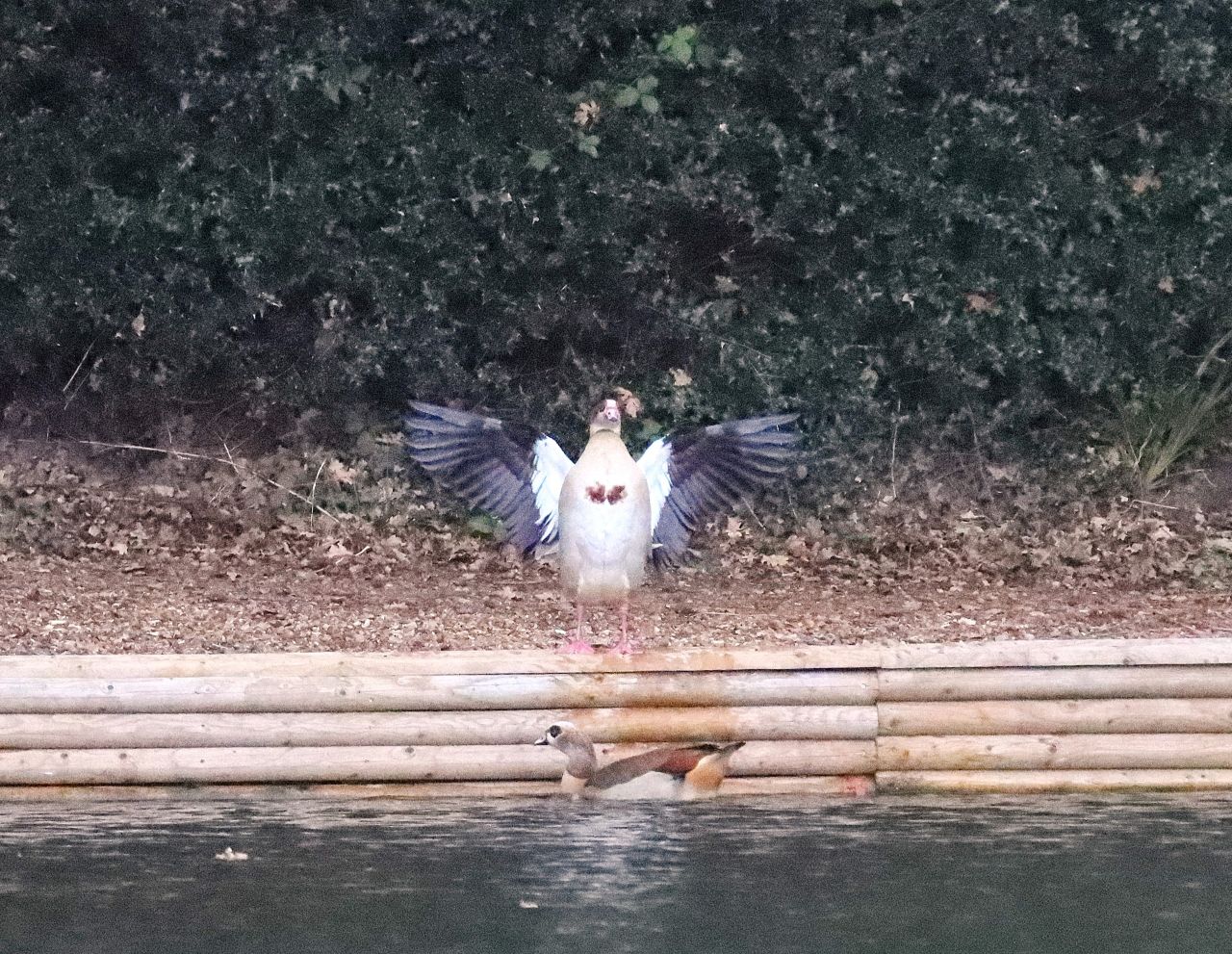
Egyptian geese, Britten’s Pond.
The pair of resident Egyptian geese continued to winter there.
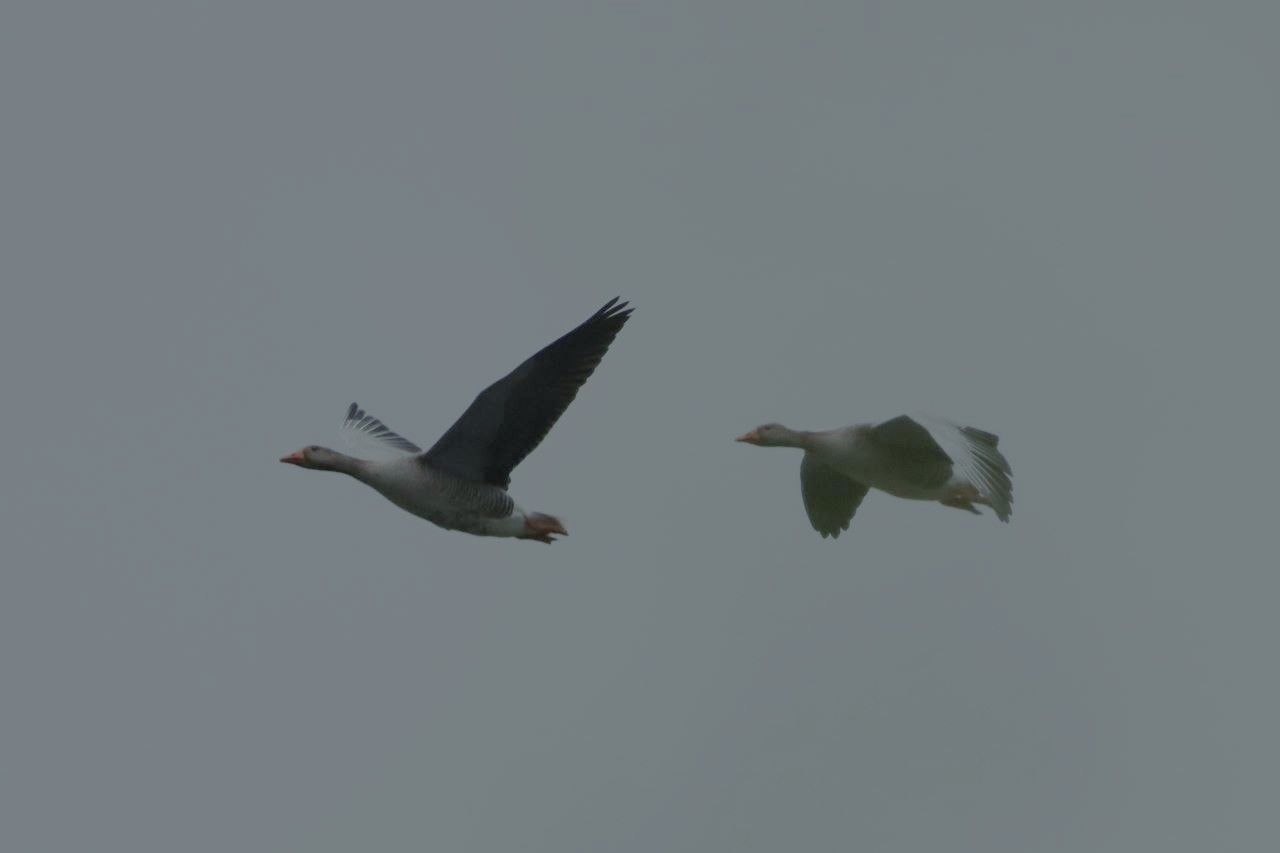
Greylag geese, Britten’s Pond.
Along with the usual pair of greylag geese.
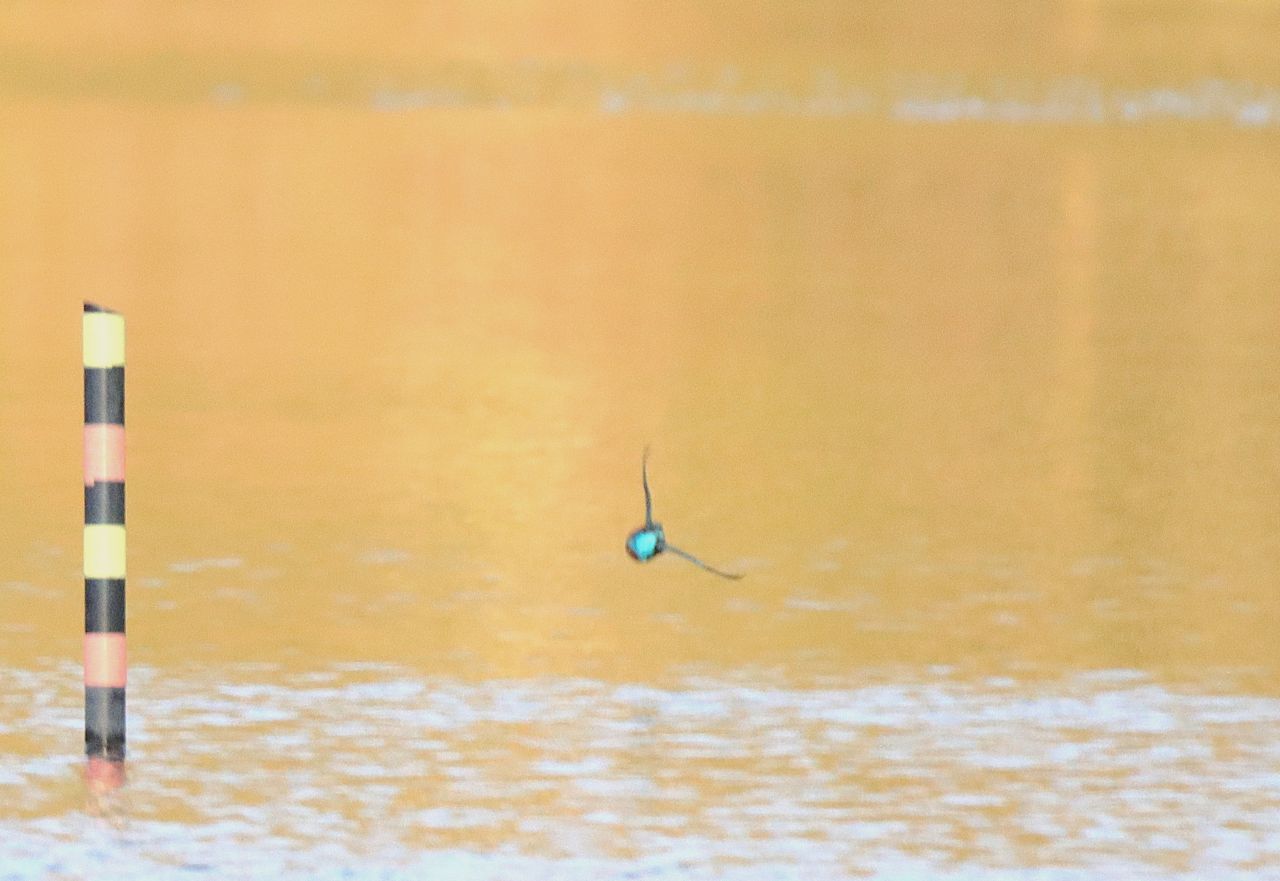
Kingfisher, Britten’s Pond.
A kingfisher continued to be regularly be seen, although recently mostly only observed as a flash of blue flying low across the water.

Red kite, Britten’s Pond.
Also adding a red kite over the pond.

Sparrowhawk over Britten’s Pond.
As well as a sparrowhawk.
So far this winter it has been a poor one locally for visiting Scandinavian redwings.
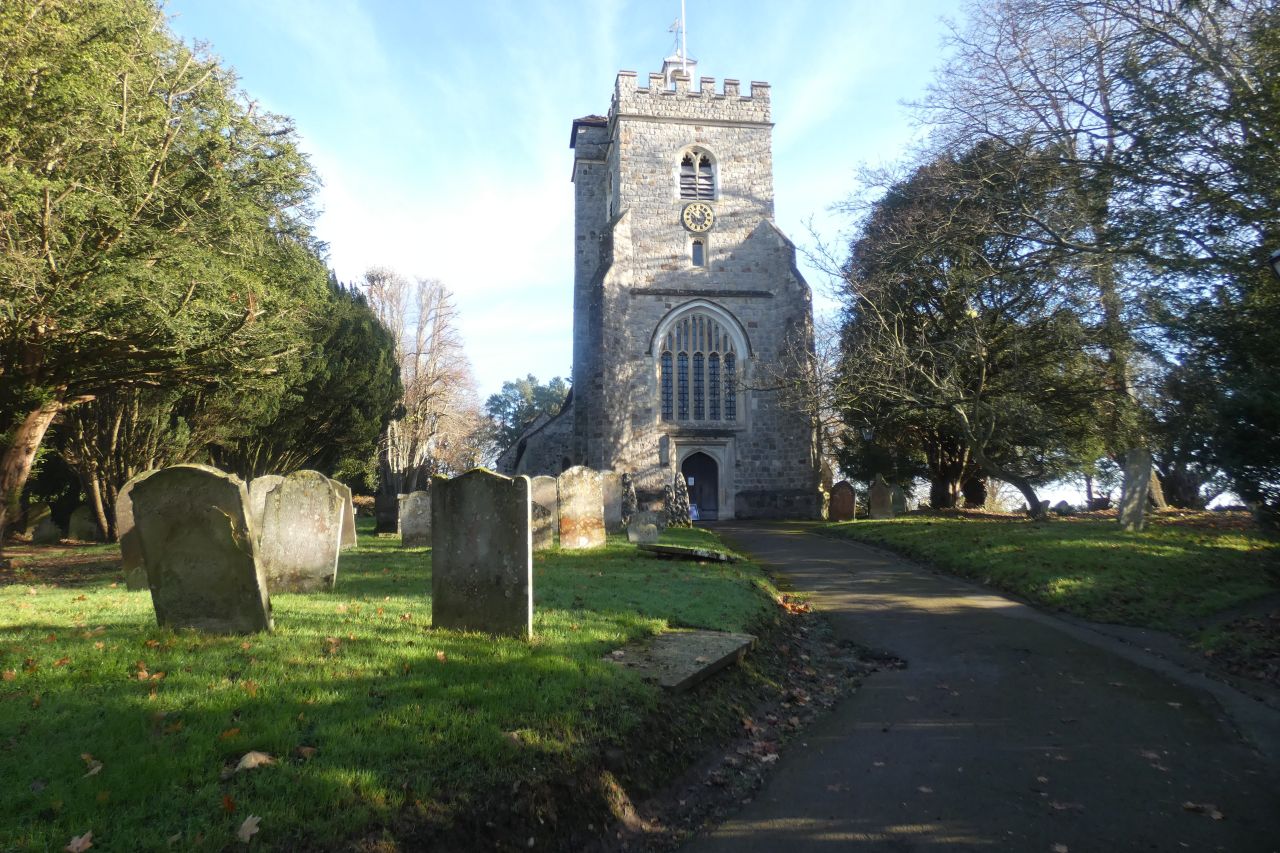
St Mary’s churchyard, Perry Hill, Worplesdon.
In recent years a good number would have by now striped yew trees in St Mary’s churchyard, Perry Hill, Worplesdon, of their berries.
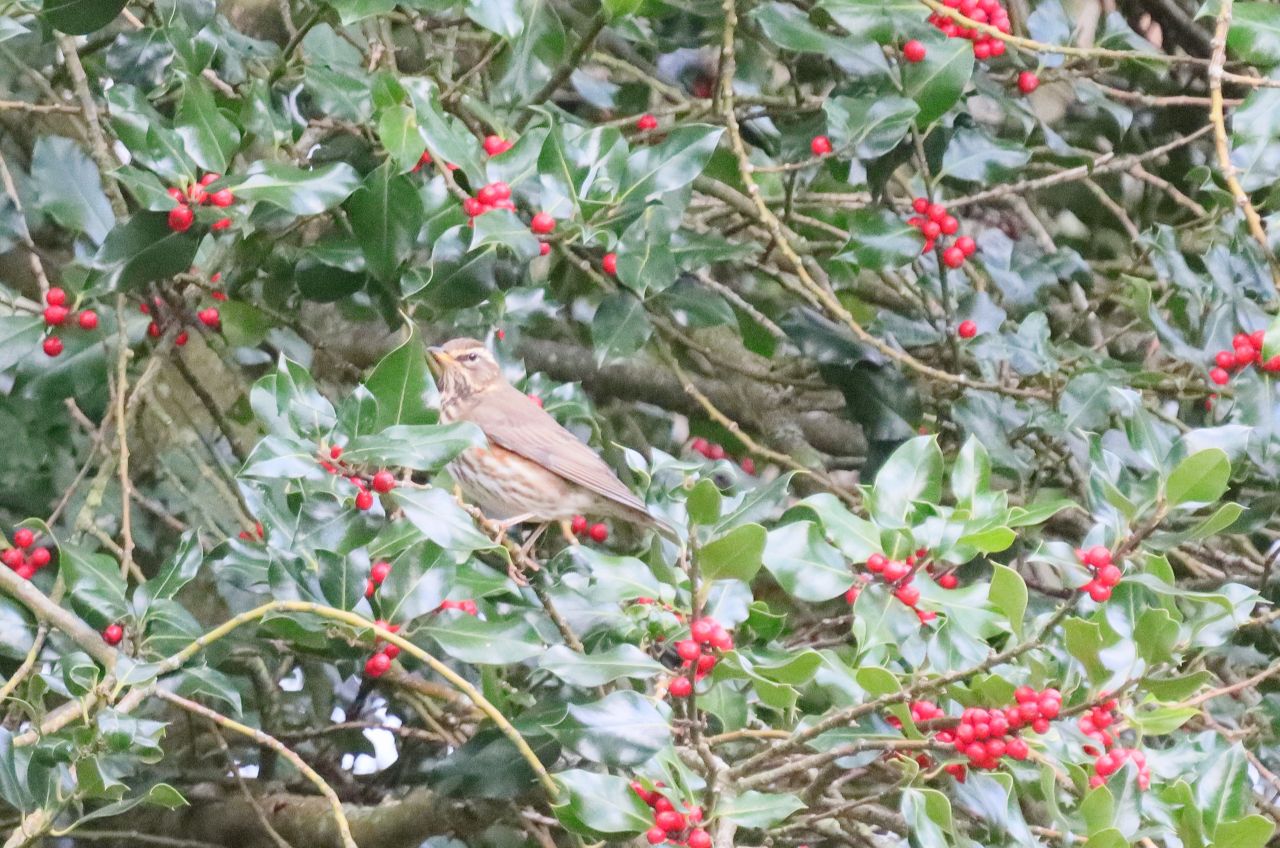
Redwing, St Mary’s churchyard.
My first redwing seen there this year wasn’t until November 25, and this one was feeding on holly berries.
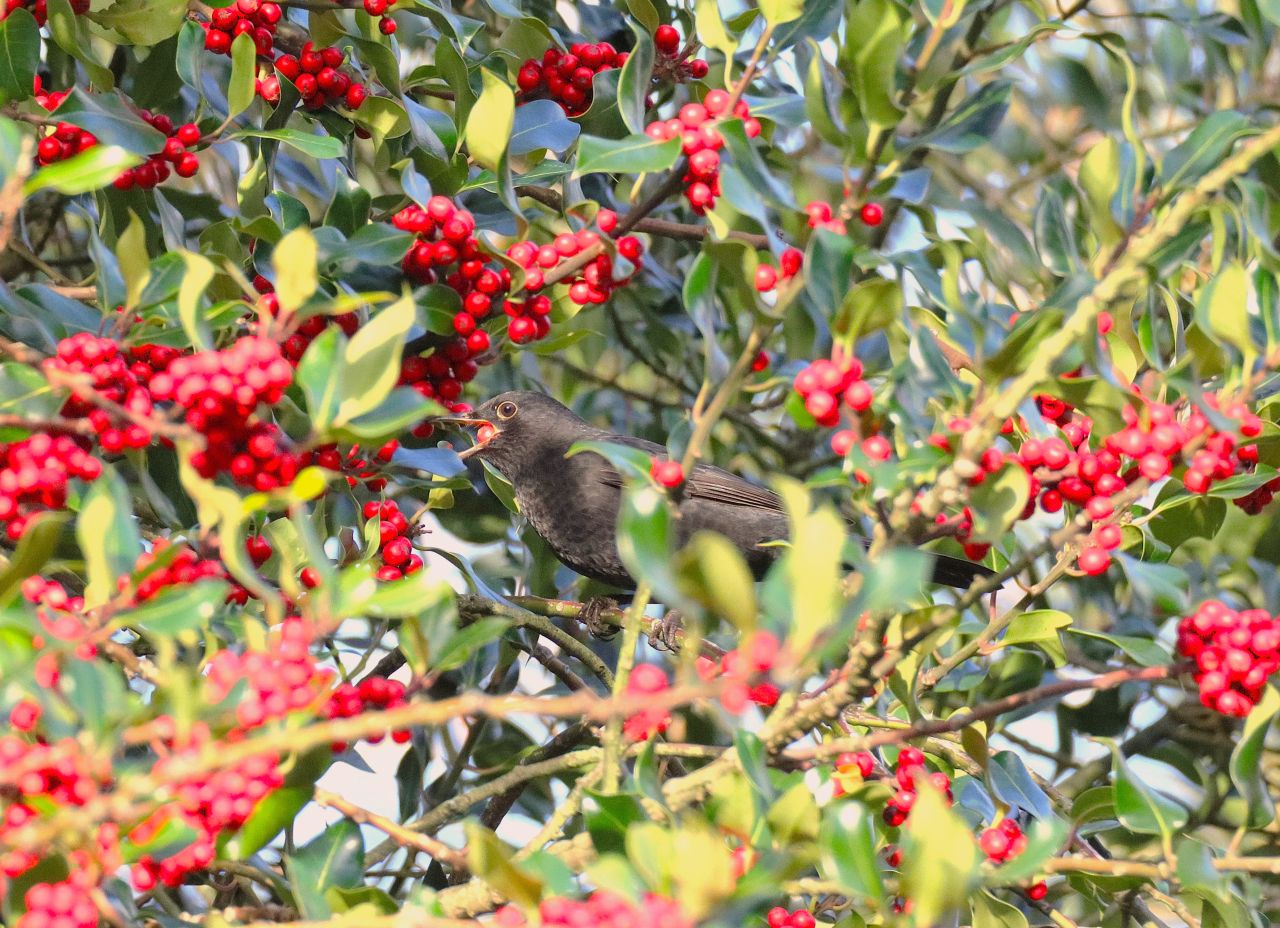
Blackbird, feeding on holly berries, St Mary’s churchyard.
Along with several blackbirds seen feeding there.
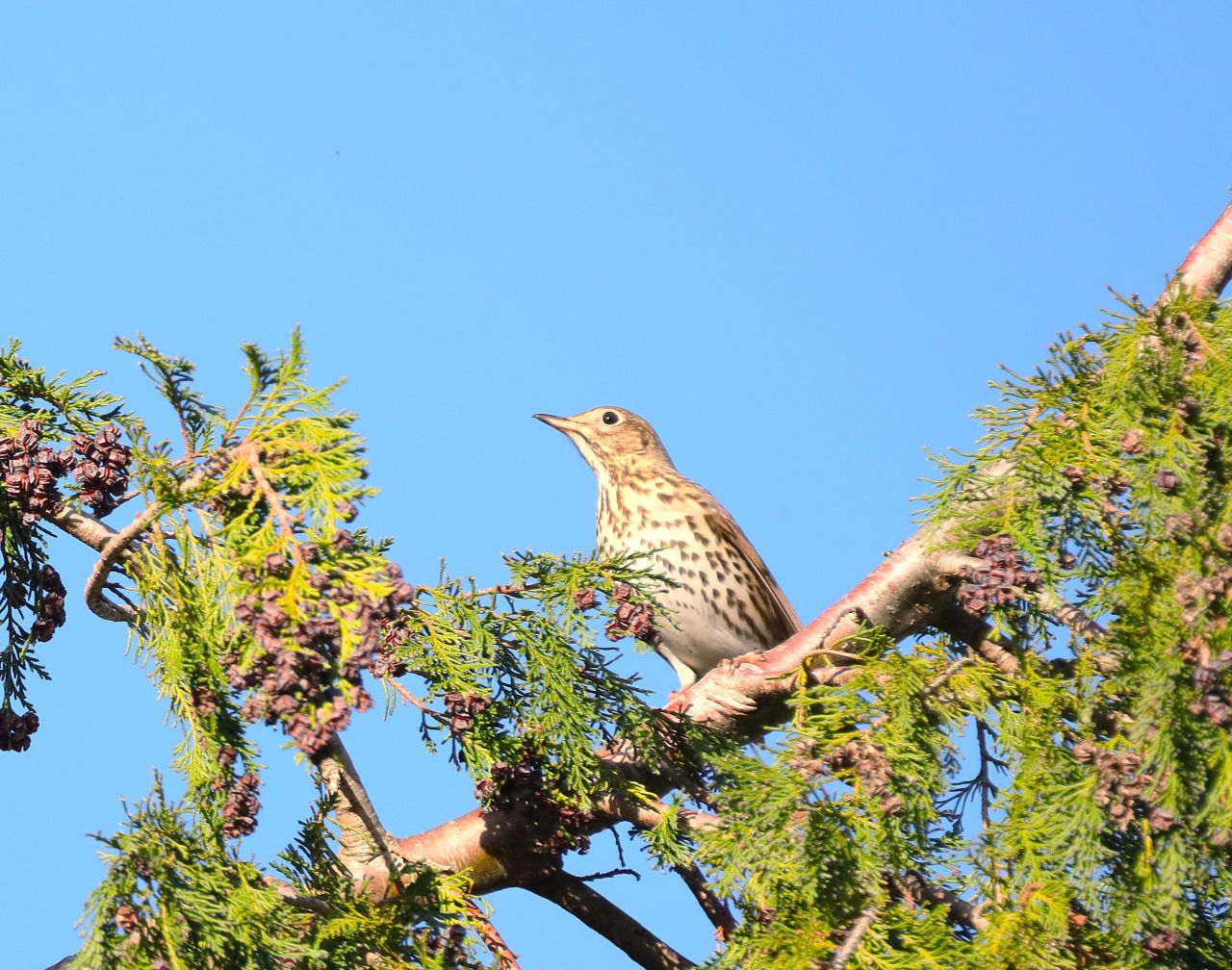
Song thrush, St Mary’s churchyard.
A song thrush could be heard in song, with others glimpsed feeding on yew berries.
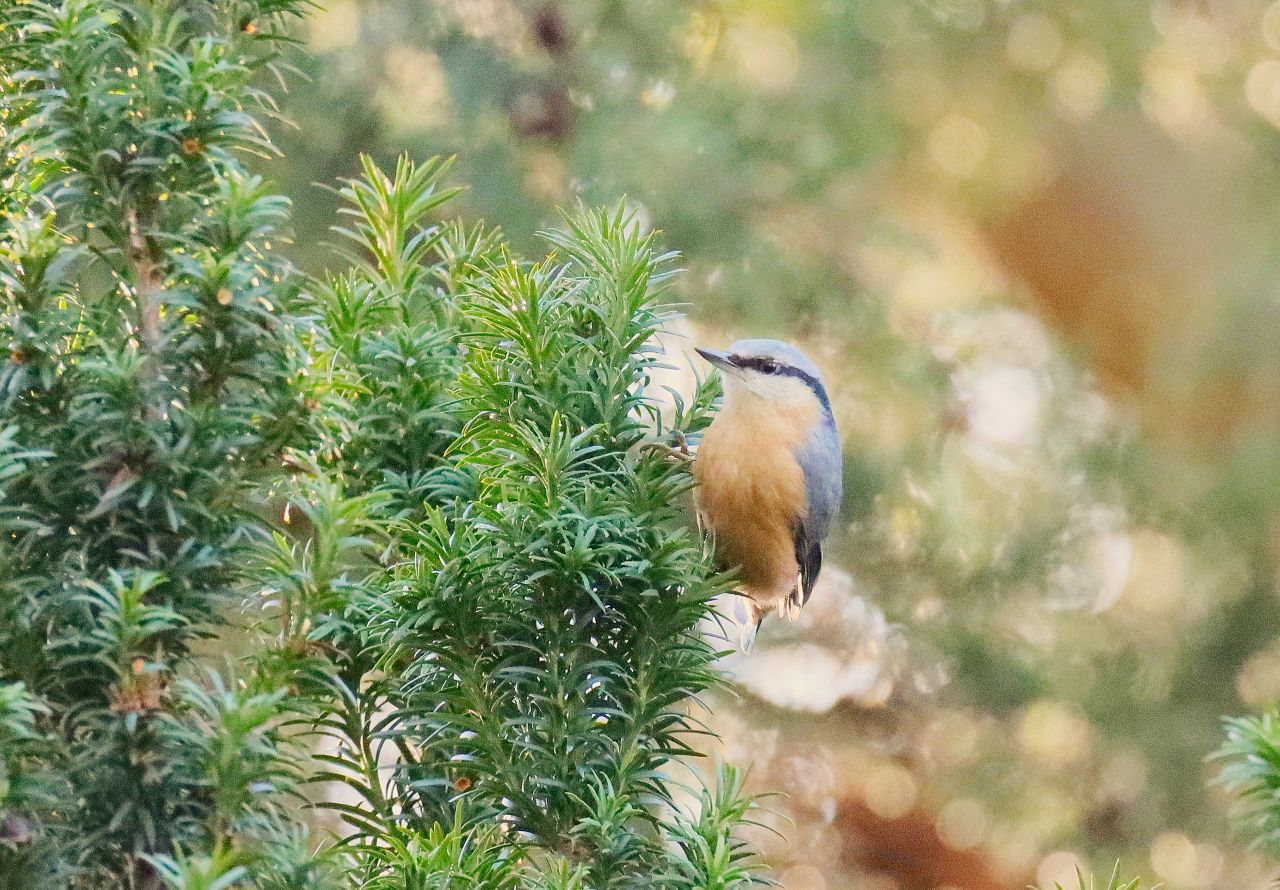
Nuthatch, St Mary’s churchyard.
Several nuthatches could also be picked, out as well as heard, about the yew trees.
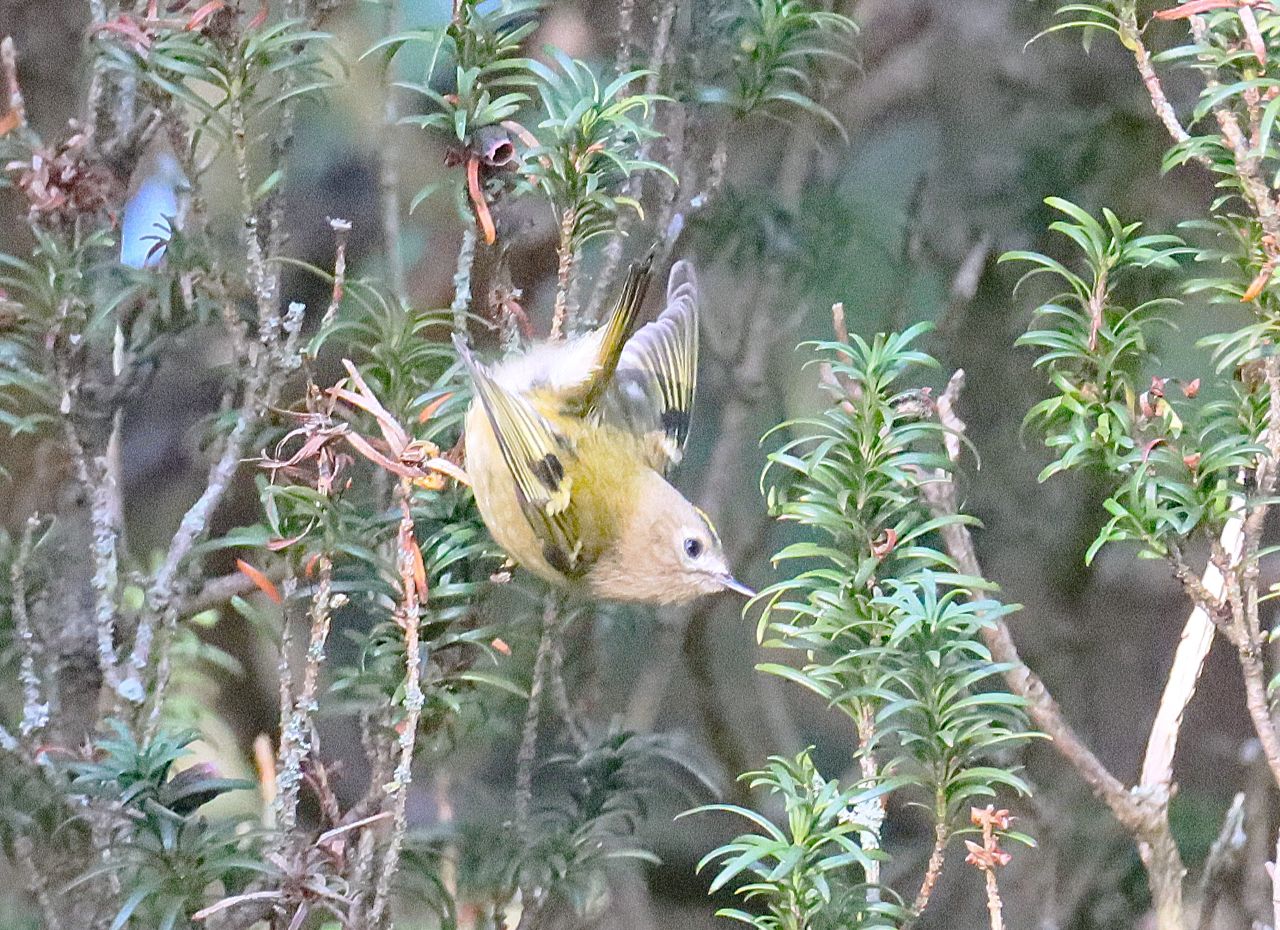
Goldcrest, St Mary’s churchyard.
Also adding goldcrests to my sightings and photos while there.
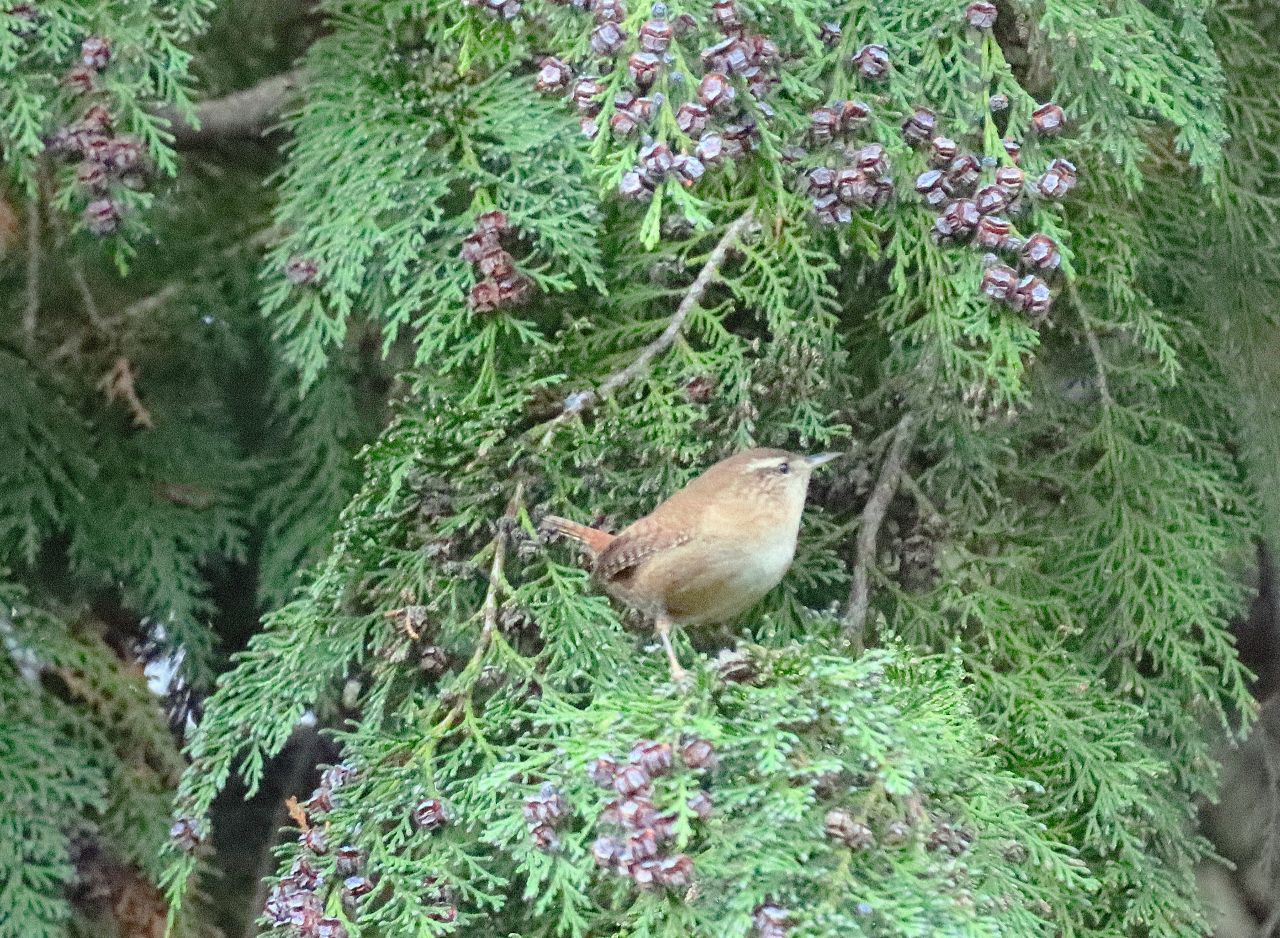
Wren, St Mary’s churchyard.
As well as a ‘Jenny’ wren.
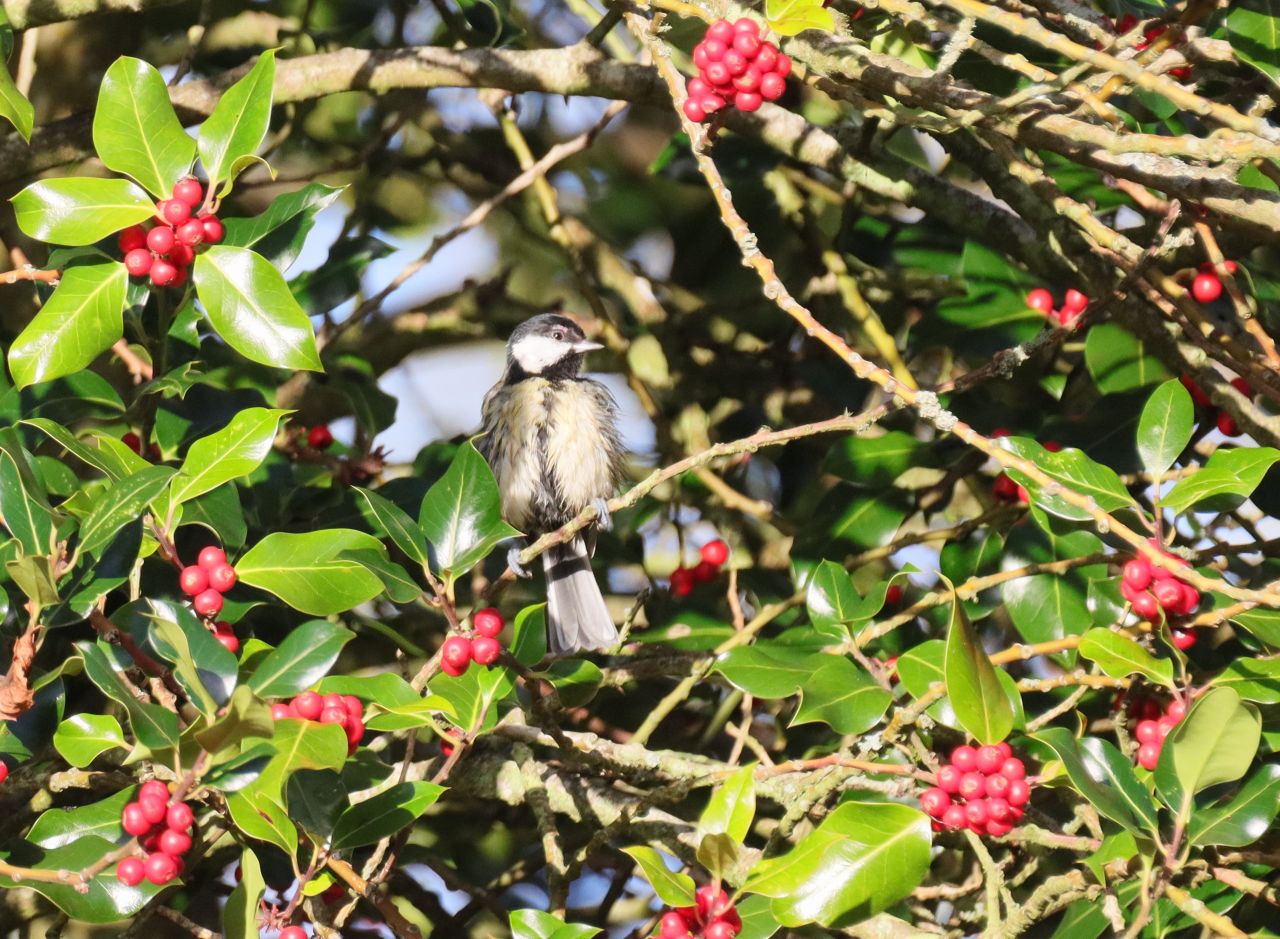
Great tit, St Mary’s churchyard.
And a great tit in a holly bush, presently still full of berries.
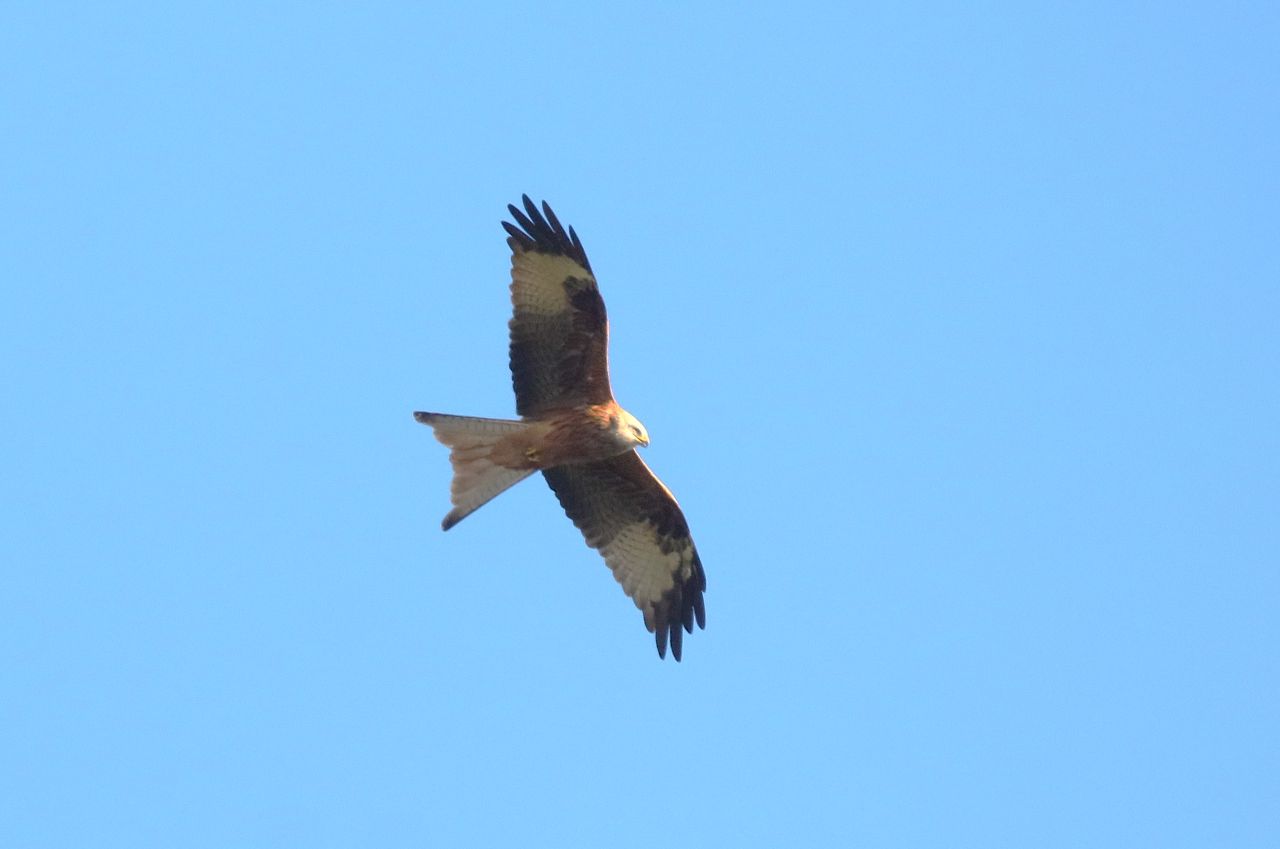
Red kite over St Mary’s churchyard.
A red kite regularly circling over the churchyard could also be observed.
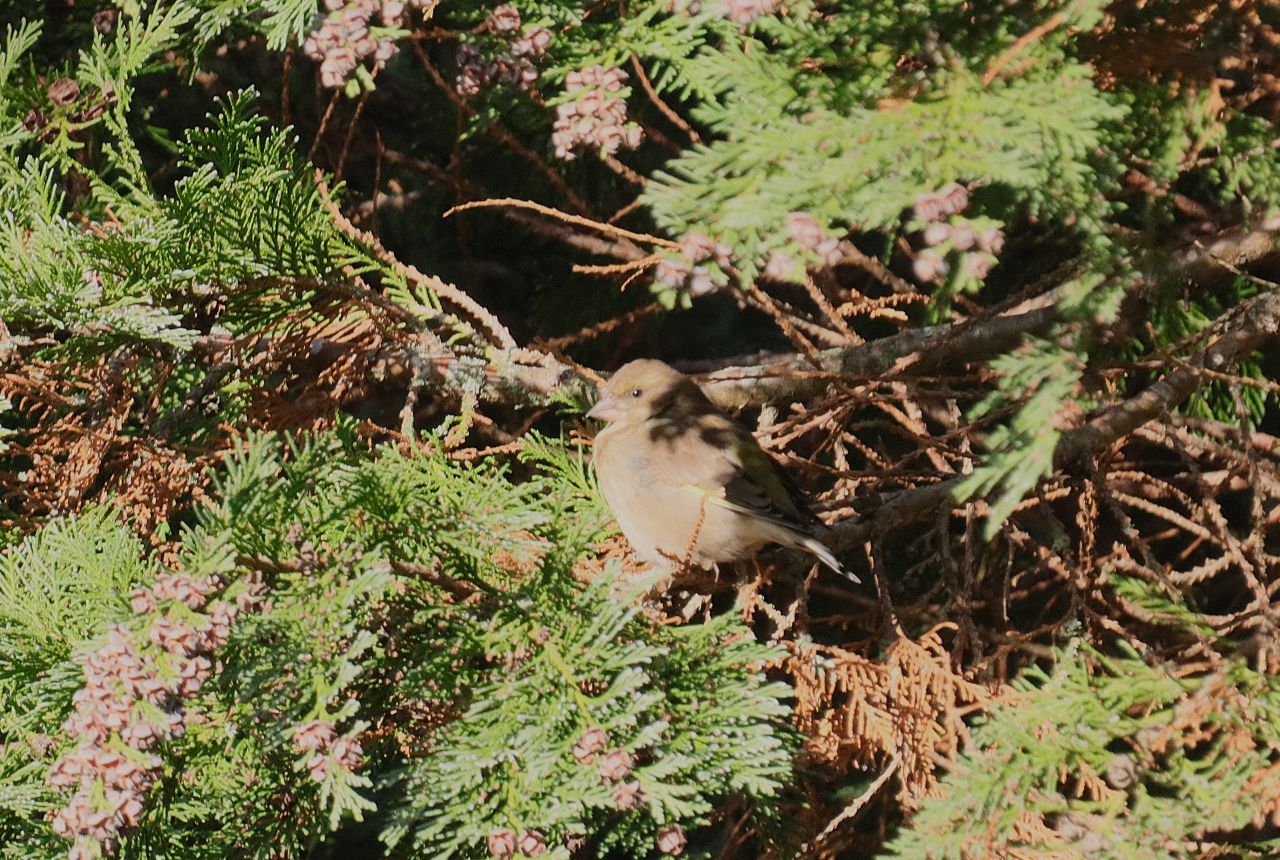
Greenfinch, St Mary’s churchyard.
Good to see, since their decline in recent decades nationally, was a family group of greenfinches, regularly present.
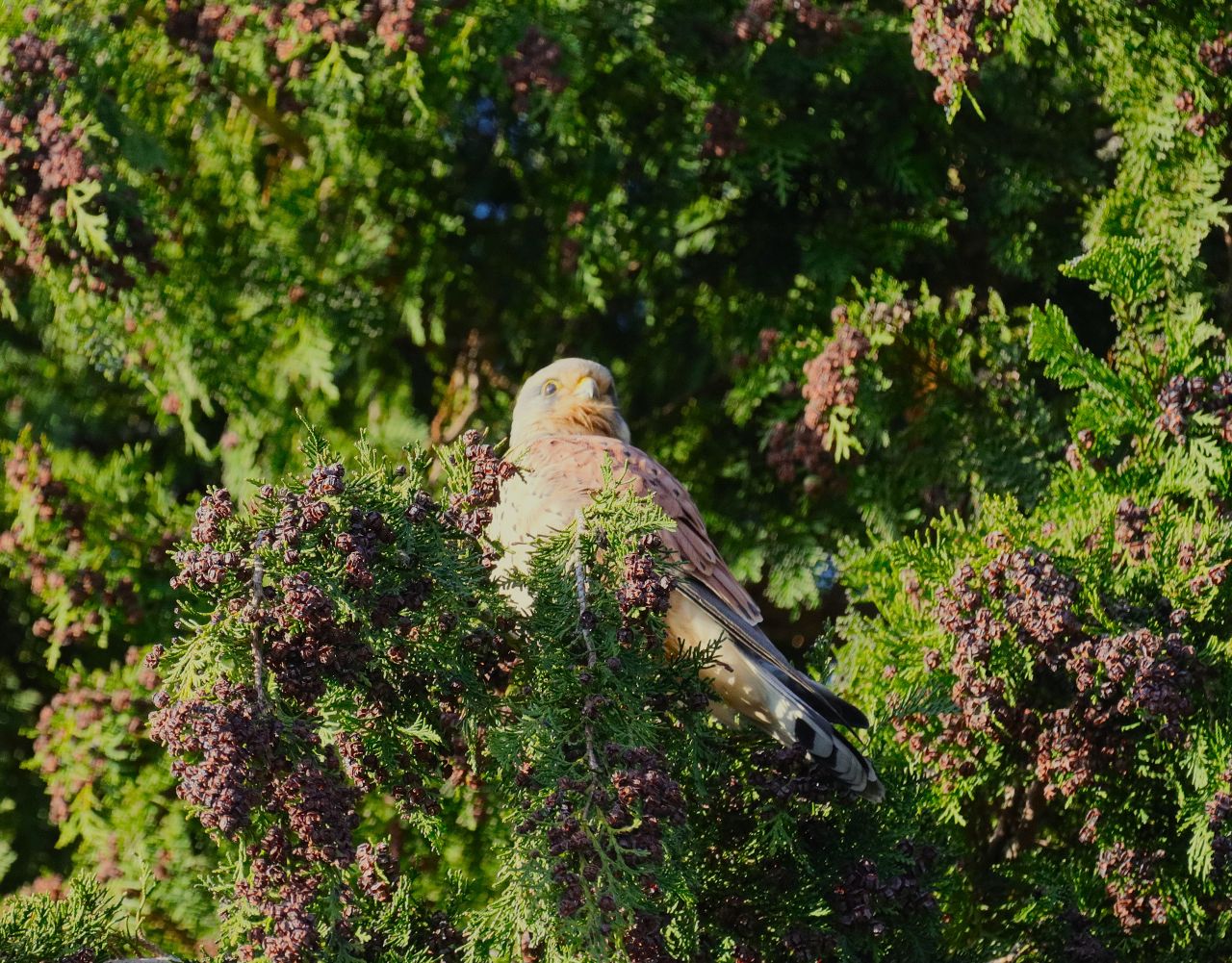
Kestrel, St Mary’s churchyard.
Also adding a kestrel that perched up in a conifer for a brief spell on one of my visits.
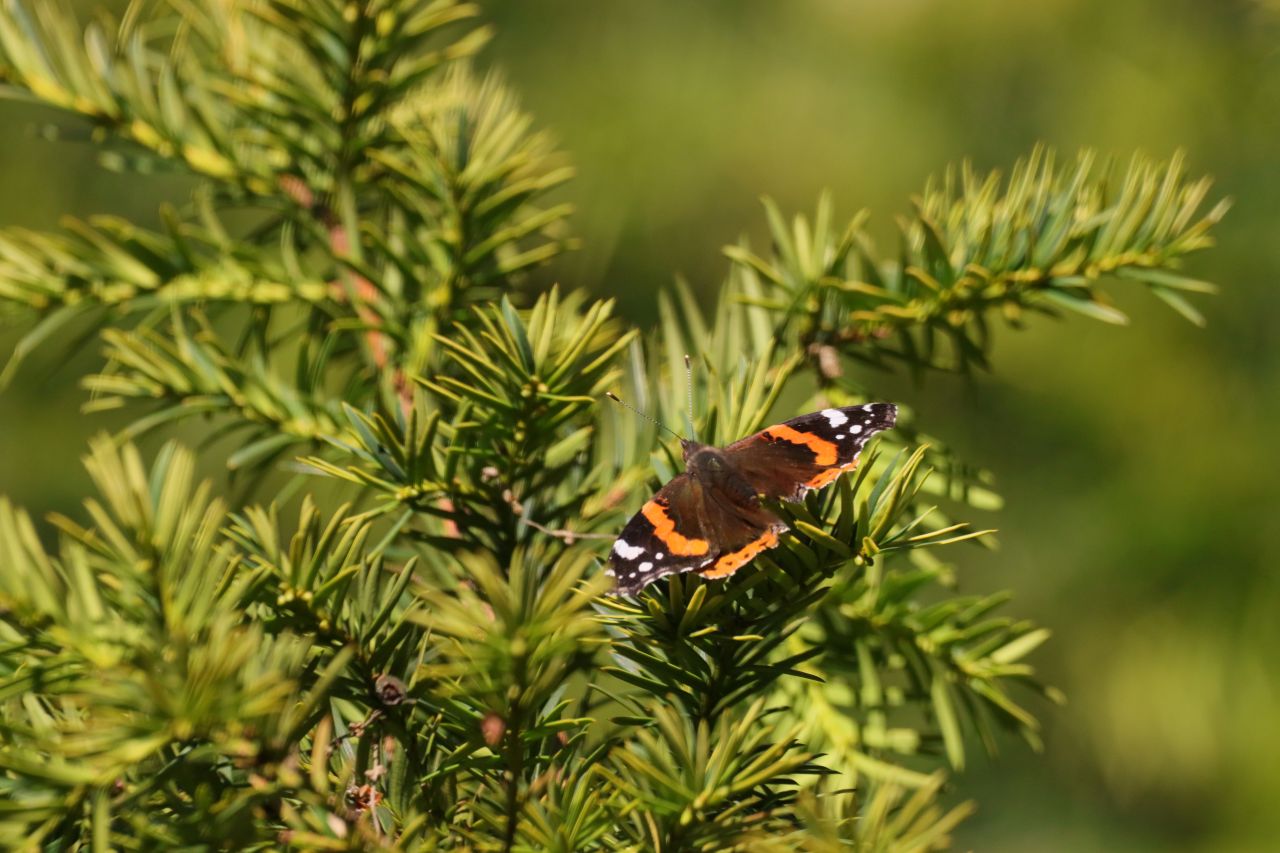
Red admiral butterfly, St Mary’s churchyard.
On one occasion, in spite of recent overnight frosts, a red admiral butterfly could be viewed out of hibernation and perched on a conifer taking in the warmth of the day’s sunshine.
By the last days of the month, the brief colder spell of weather dissipated, as Atlantic westerlies took dominance once again, bringing stormy low pressure systems on an invigorated jet stream.
A brief respite in the weather on the last day of the month, however, allowed a window of opportunity for a return to Prews Farm, this time with Bob.

Redwing, Prews Farm.
Although fewer birds could be observed since my previous recent visit, I was at least able to view and photograph a flock of a dozen or so redwings (the most I had seen, so far this winter) feeding on holly berries by the car park.
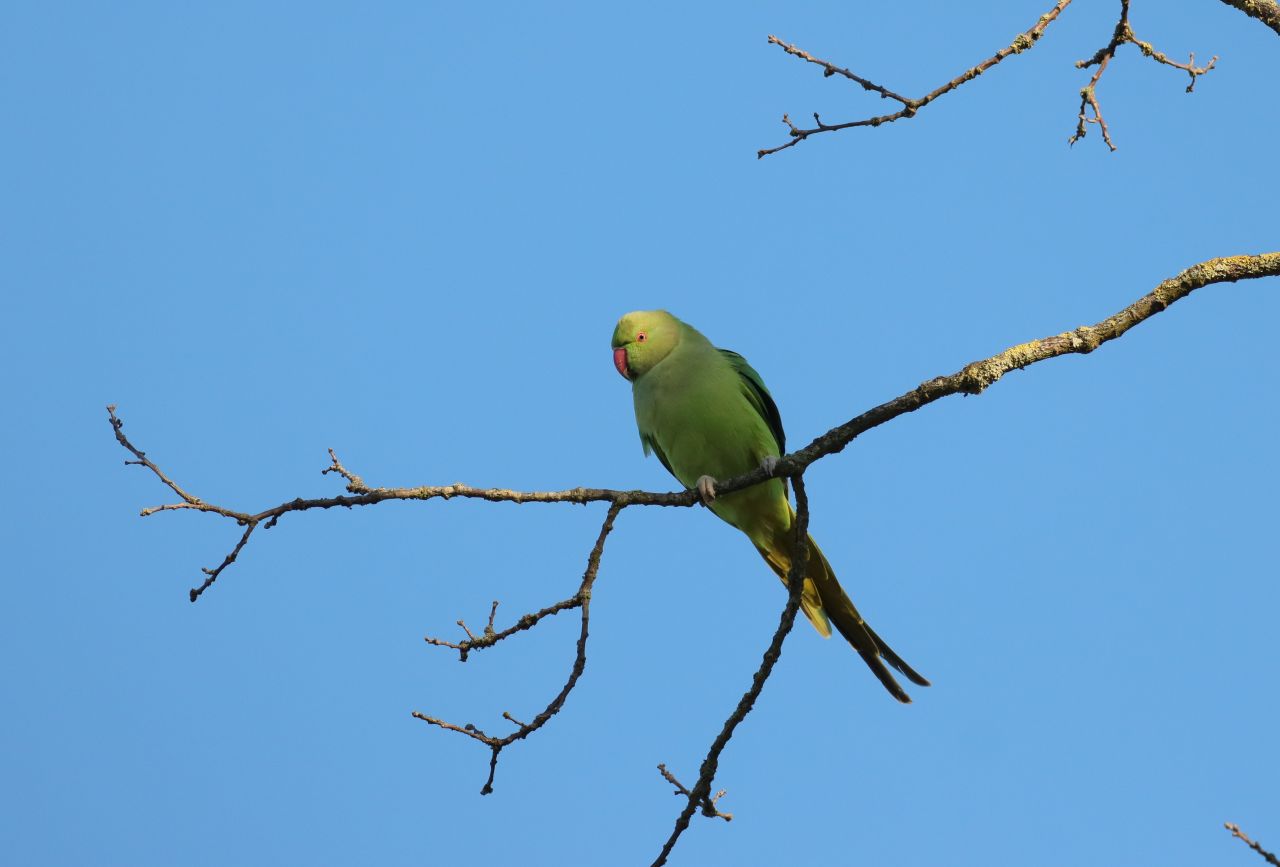
Ring-necked parakeet, Prews Farm.
As well as taking a photograph of just one of the usually abundant ring-necked parakeets.
Share This Post















Recent Comments