- Stay Connected

Socialize


 Abraham Lincoln
If given the truth, the people can be depended upon to meet any national crisis...
Abraham Lincoln
If given the truth, the people can be depended upon to meet any national crisis...

 Guildford news...
for Guildford people, brought to you by Guildford reporters - Guildford's own news service
Guildford news...
for Guildford people, brought to you by Guildford reporters - Guildford's own news service
Birdwatcher’s Diary No.346
Published on: 5 Apr, 2026
Updated on: 5 Apr, 2026
By Malcolm Fincham
Weather conditions began to settle for the most part as we moved into mid-March.
High pressure held back rain-bearing westerlies from southern counties of the UK.
On the whole, temperatures began to rise for a while as daylight hours lengthened, although several nighttime frosts were still recorded.
With daytime temperatures peaking into their mid to high teens Celsius, the warmth of the sun was enough to encourage a few more overwintering species of butterflies out to add to this year’s sightings.

Red admiral, Dick Fock’s Common.
Having already seen brimstone and peacock in recent weeks, I was now able to add several red admirals to this year’s list.
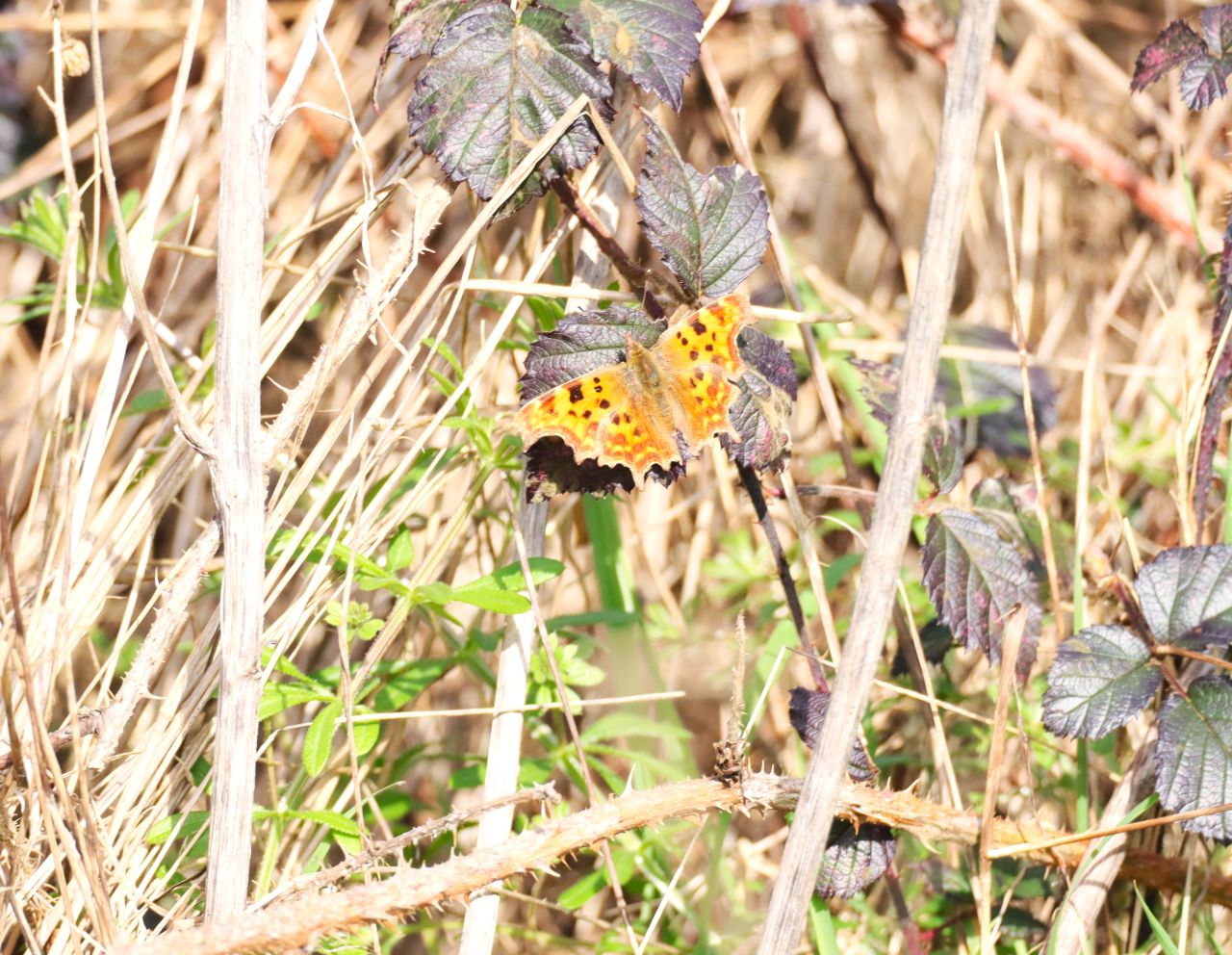
Comma butterfly.
Also adding a comma butterfly.
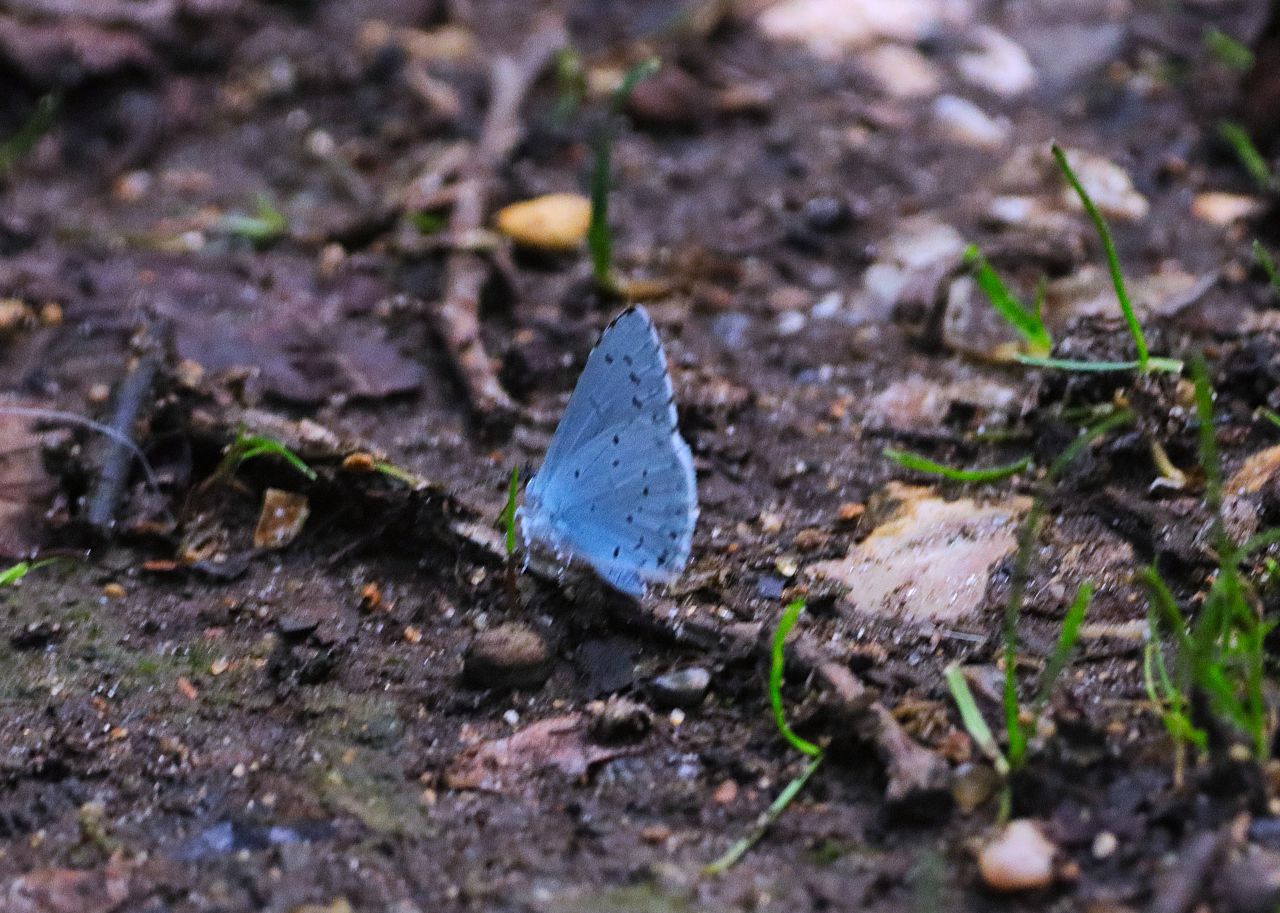
Holly blue butterfly.
And even an early holly blue on March 19, at the Riverside Nature Reserve, near Burpham.
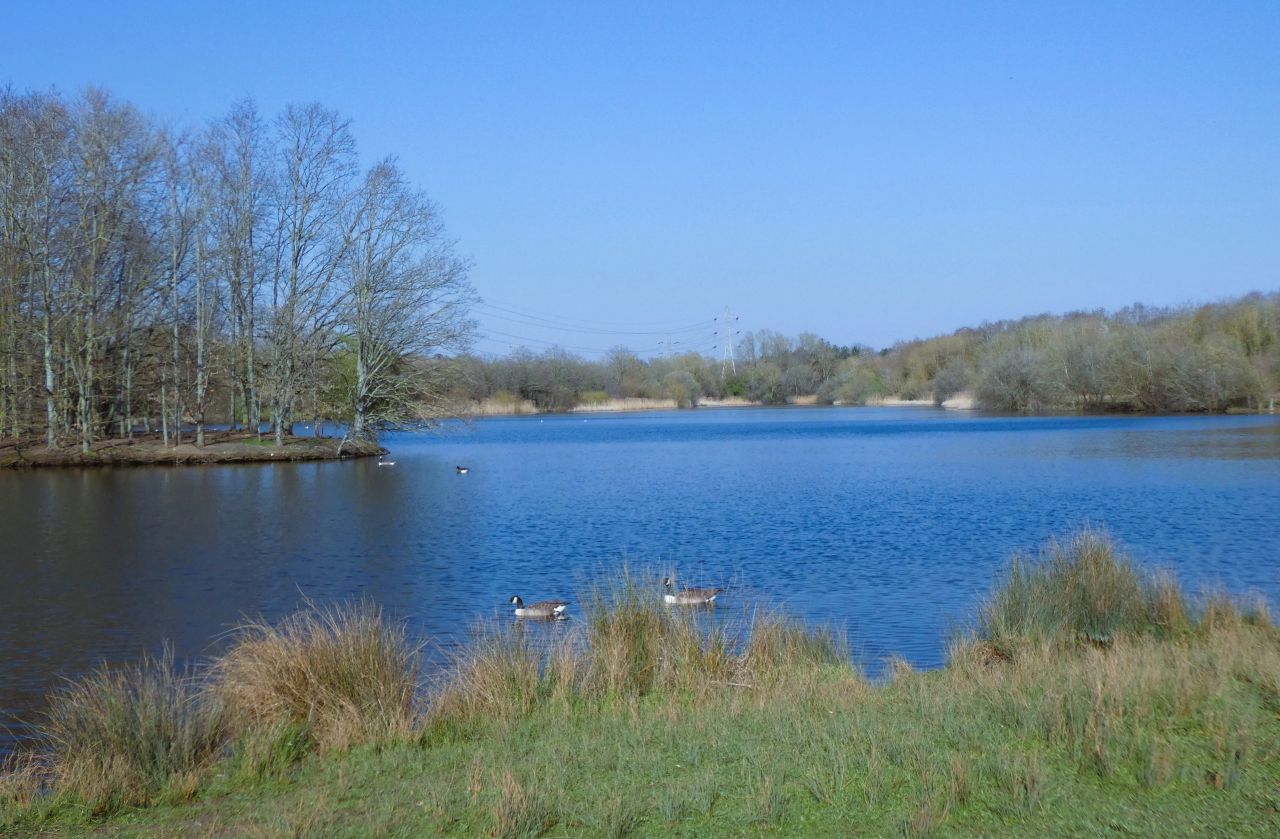
Stoke Lake at the Riverside Nature Reserve.
A pleasant day of blue sky and sunshine also made it an ideal day for my photography while visiting the reserve.
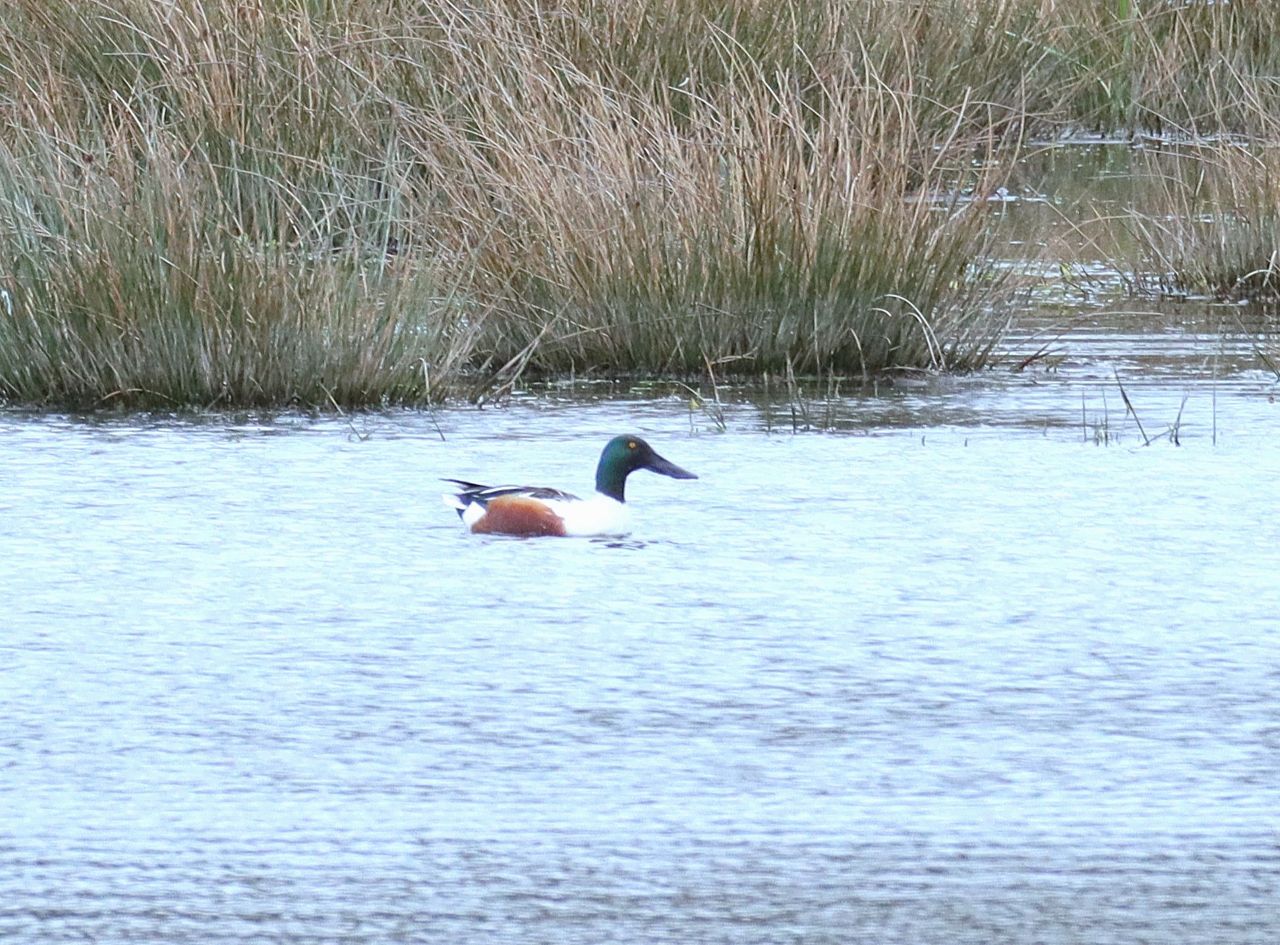
Shoveler on the scrape, near Stoke Lock.
Looking out across the flooded scrape from near Stoke Lock, a few wintering shoveler ducks could still be viewed.
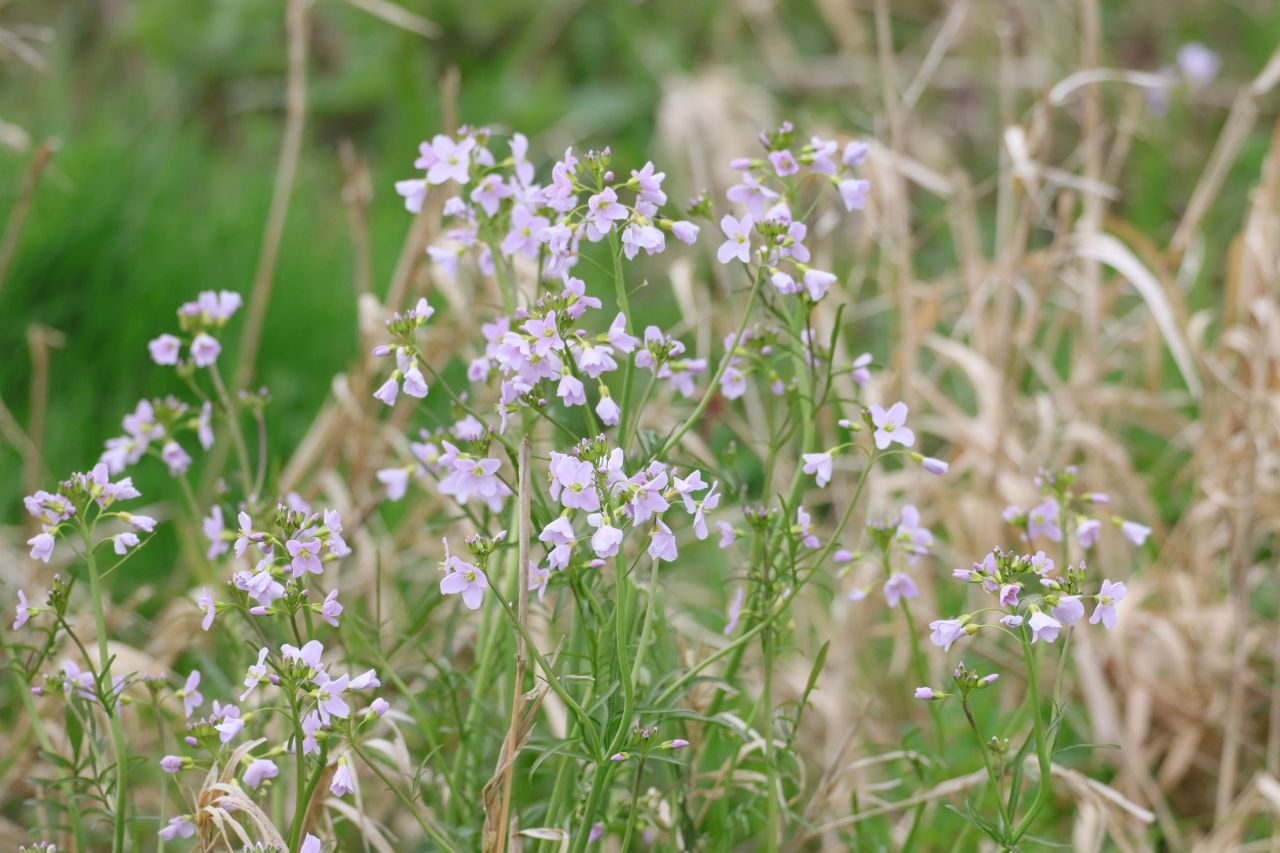
Lady’s smock (cuckoo flower), Riverside Nature Reserve.
Along the boardwalk I noticed the first lady’s smock (cuckoo flower) were now starting to come into blossom.
Looking skyward, a bird of prey came in to view. First, I guessed it to be a sparrowhawk, regularly sighted there.
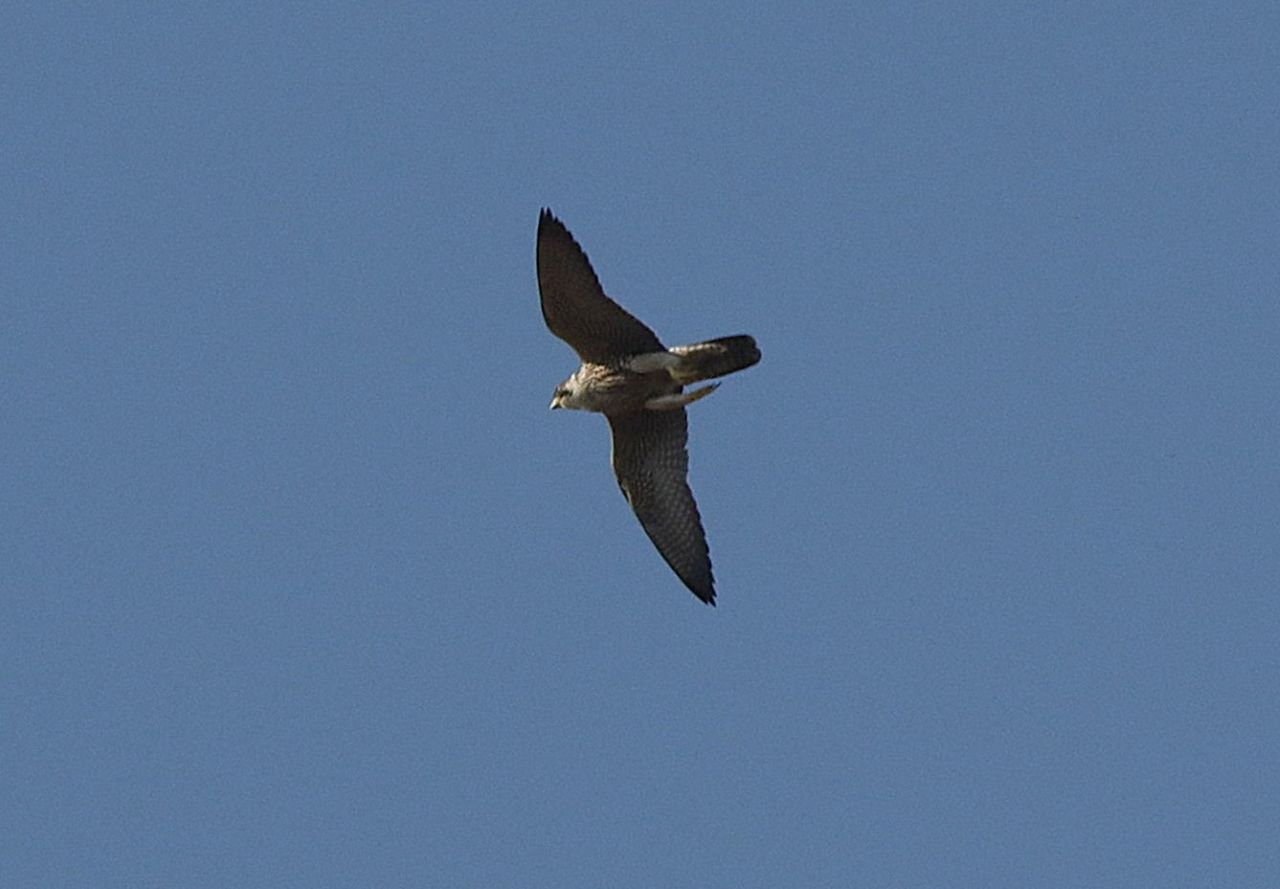
Peregrine falcon, Riverside Nature Reserve.
However, on a closer inspection I soon realised it to be a peregrine falcon, a recent regular visitor to the reserve.
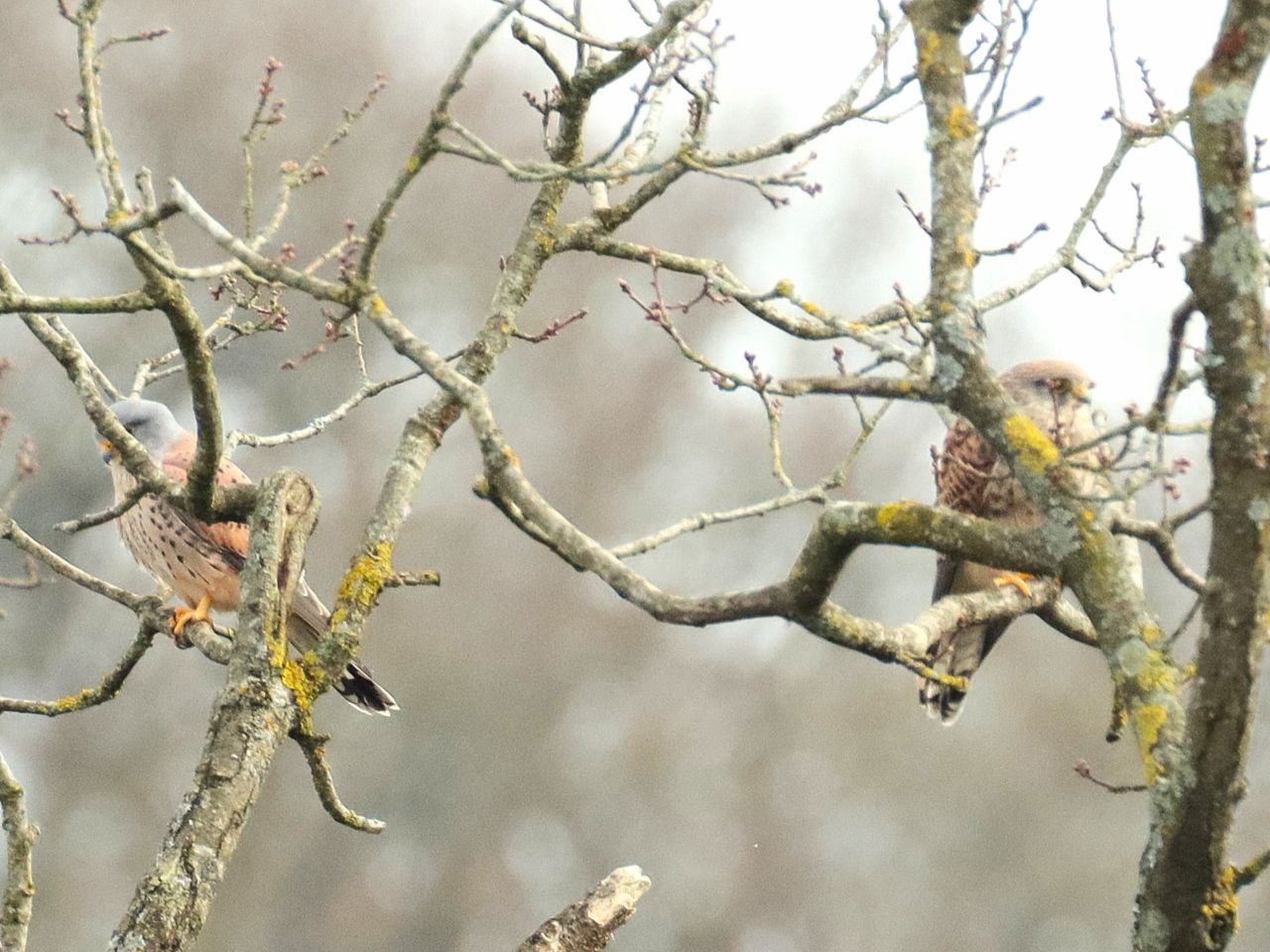
Kestrels, (male and female) Riverside Nature Reserve.
Other regularly sighted birds of prey included a pair of kestrels.
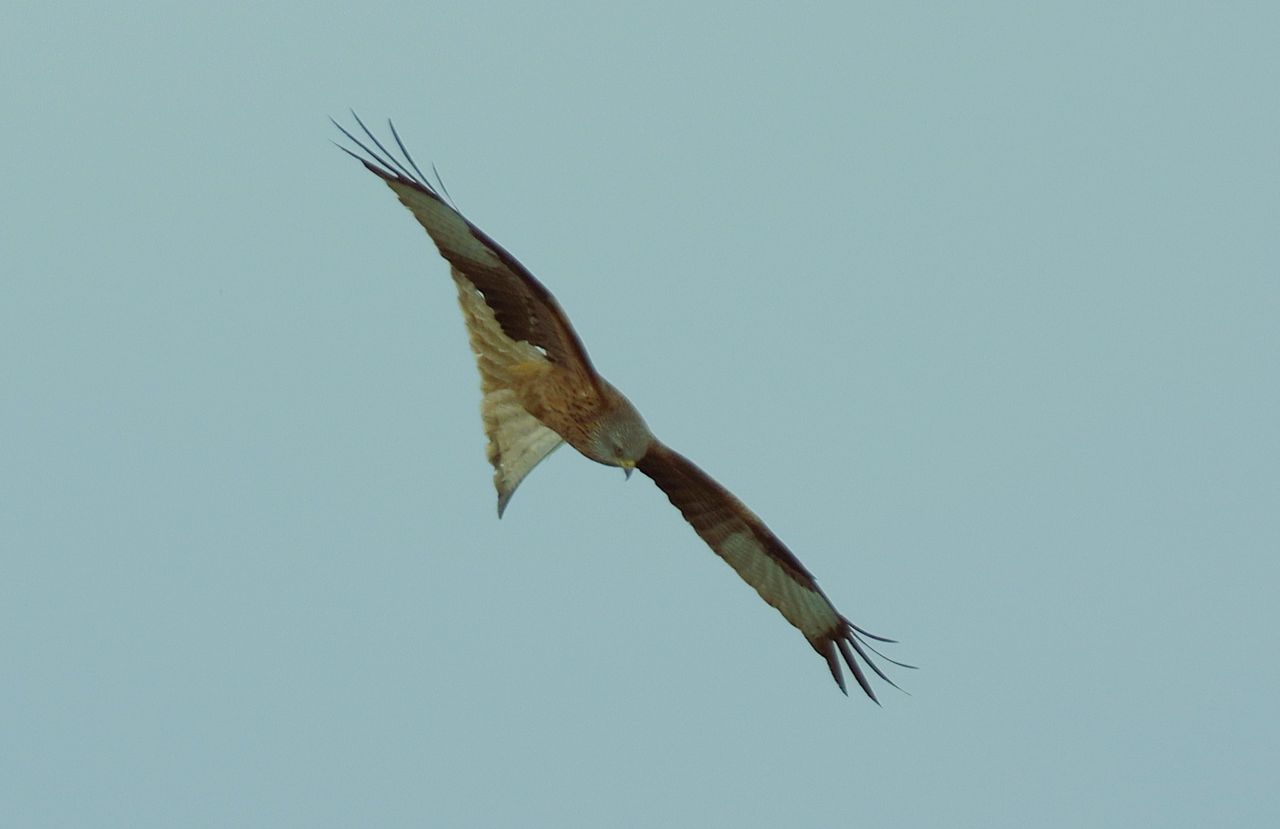
Red kite, Riverside Nature Reserve.
Red kites.
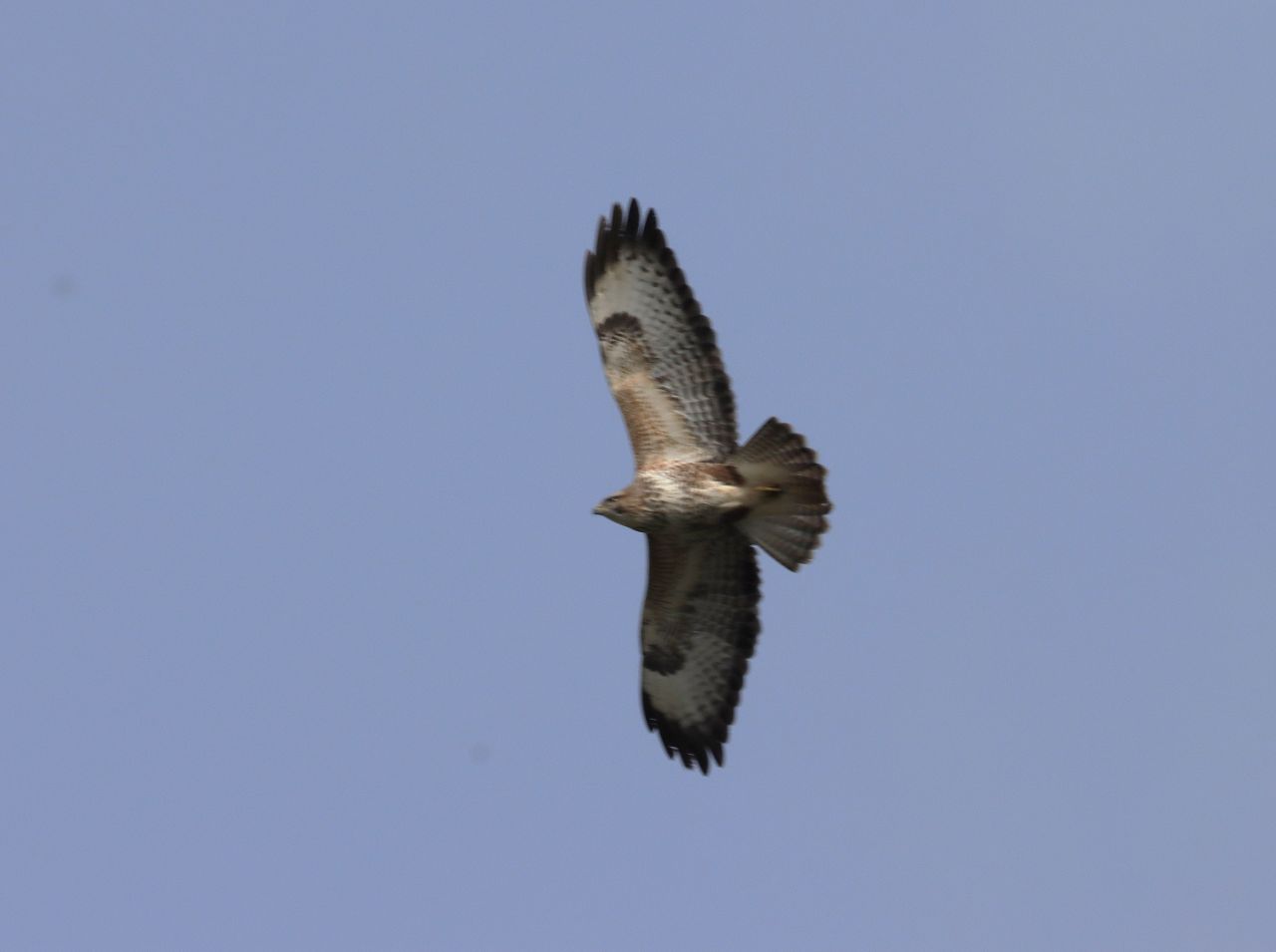
Common buzzard, Riverside Nature Reserve.
Common buzzards.
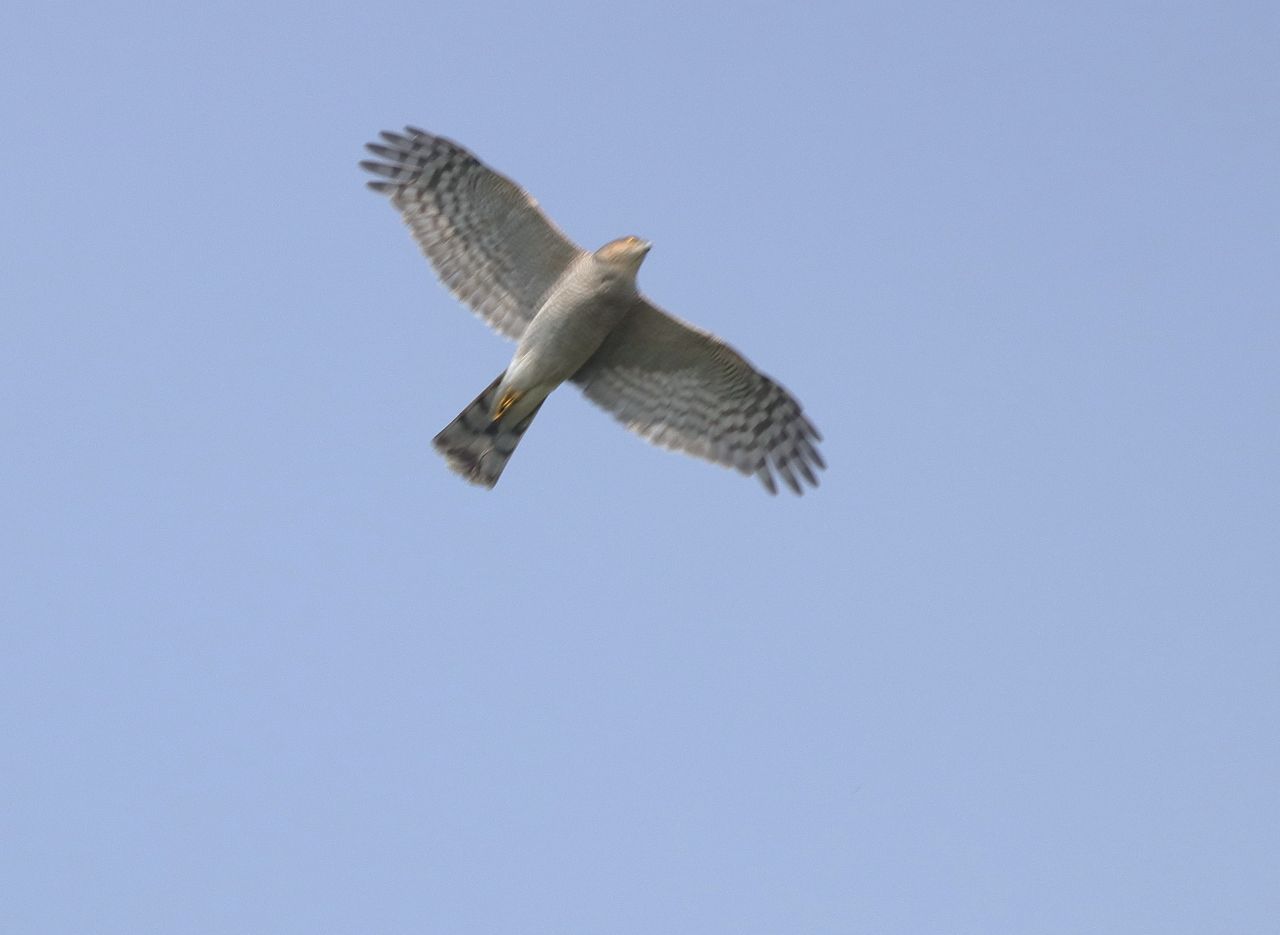
Sparrowhawk.
And of course the previously mentioned sparrowhawk.
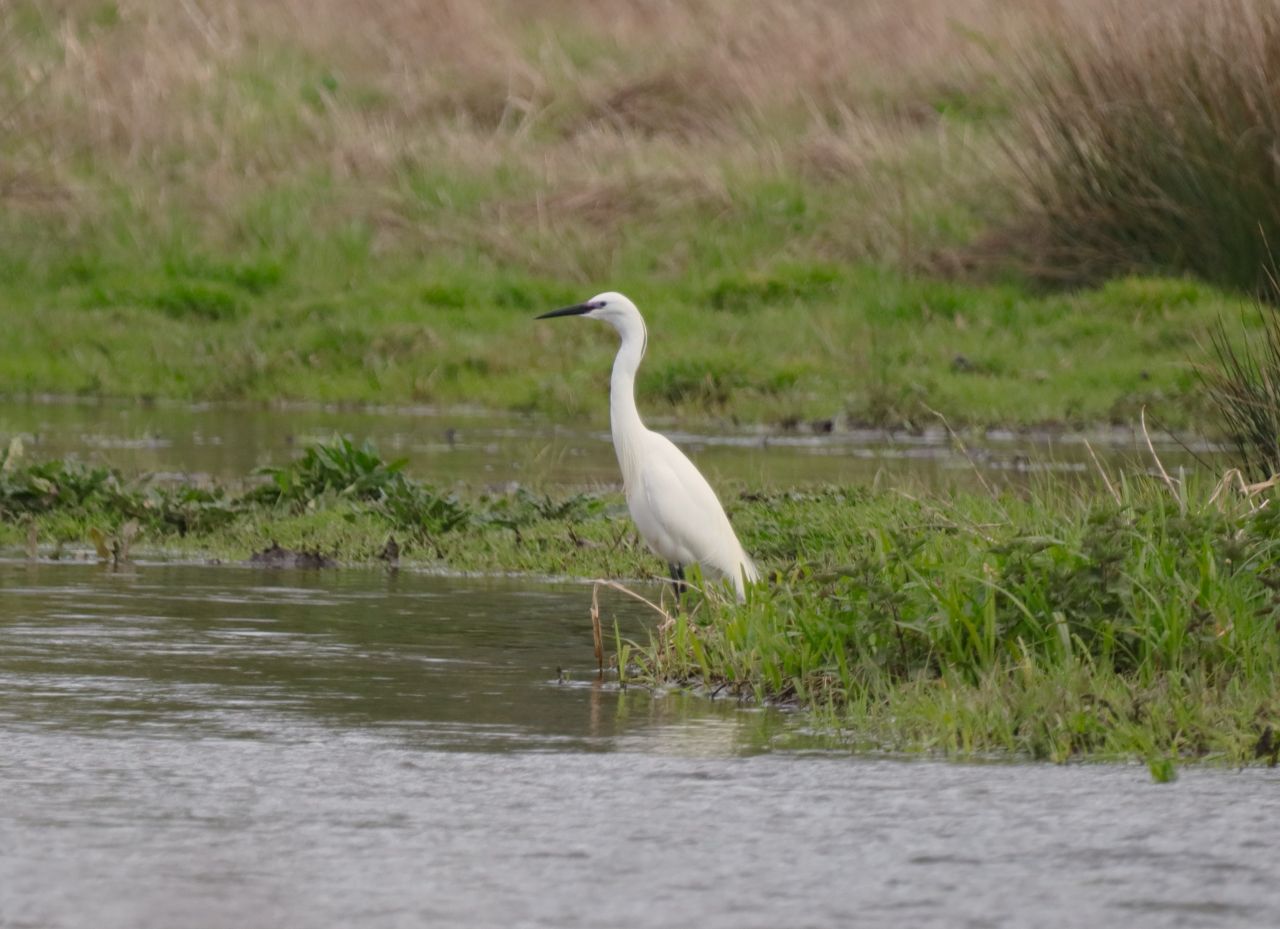
Little egret. Riverside Nature Reserve.
Across the river from the towpath, looking in the direction of Burpham Court Farm where there is soon to be opened another nature reserve, a little egret could be viewed.
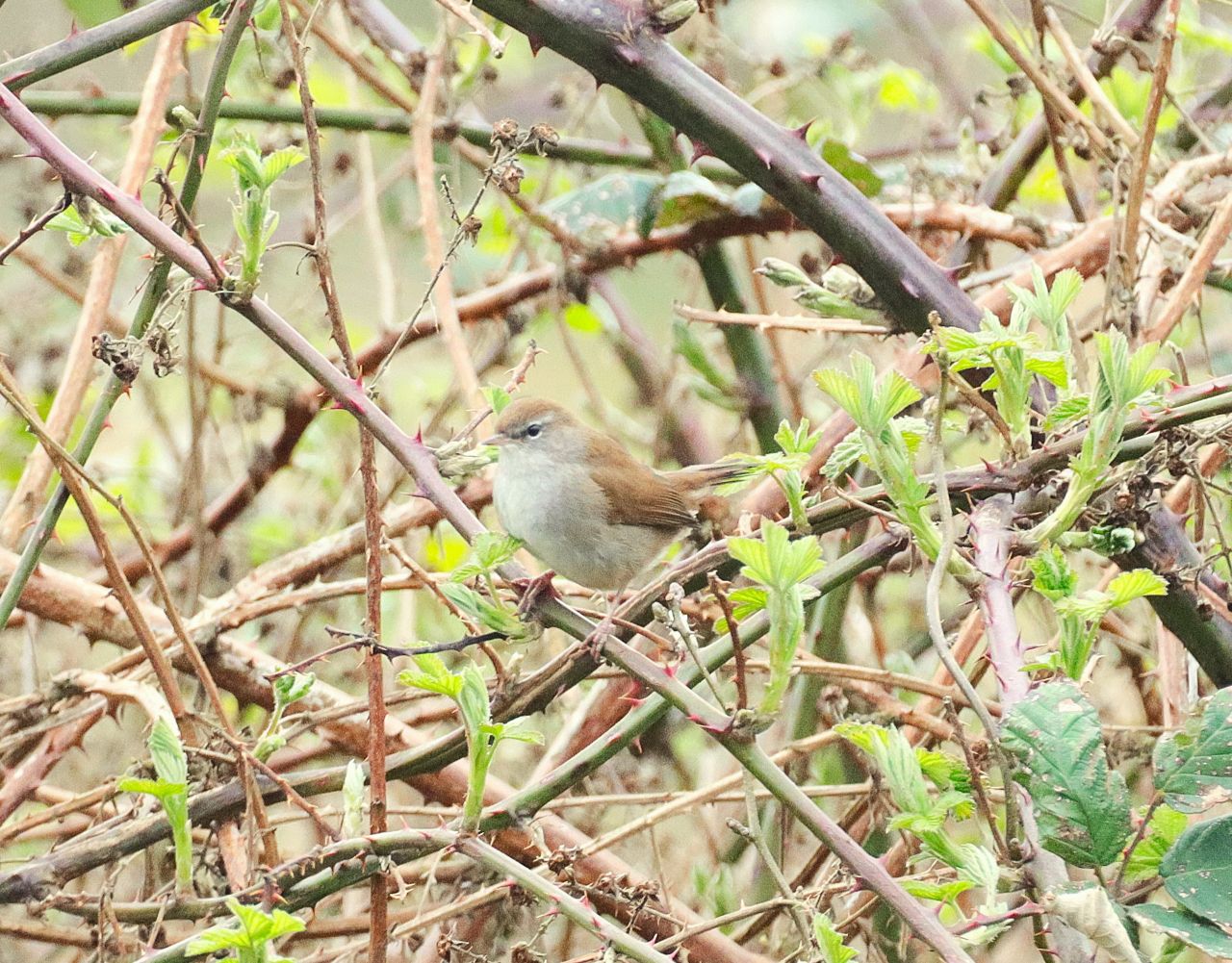
Cetti’s warbler, Riverside Nature Reserve.
Several Cetti’s warblers could be heard calling from both sides of the river. One could be viewed briefly across the water, singing for a few seconds before skulking back into the brambles.
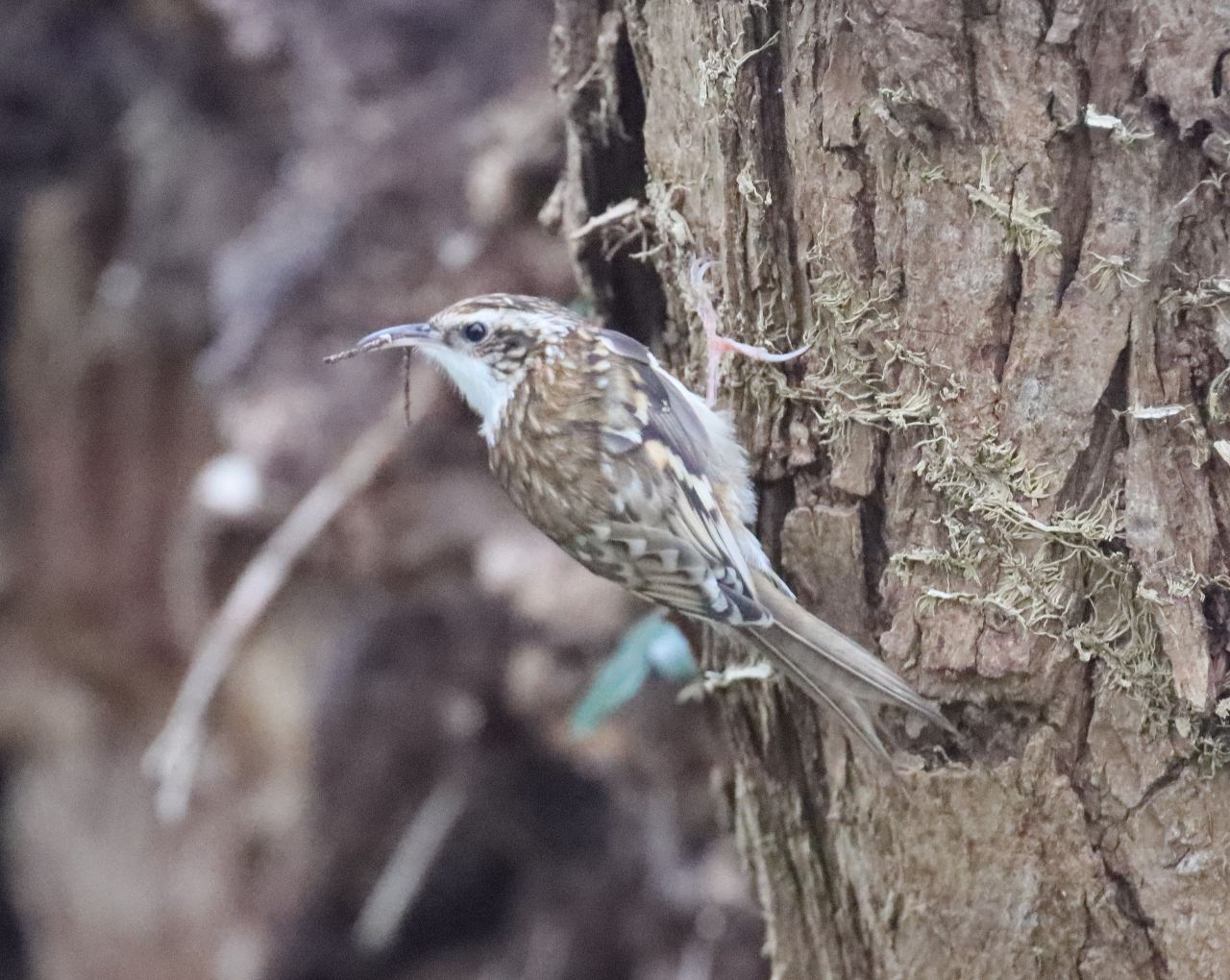
Treecreeper nest building, Riverside Nature Reserve.
In the wooded area beside the towpath several treecreepers could be heard, with one seen already nest building.
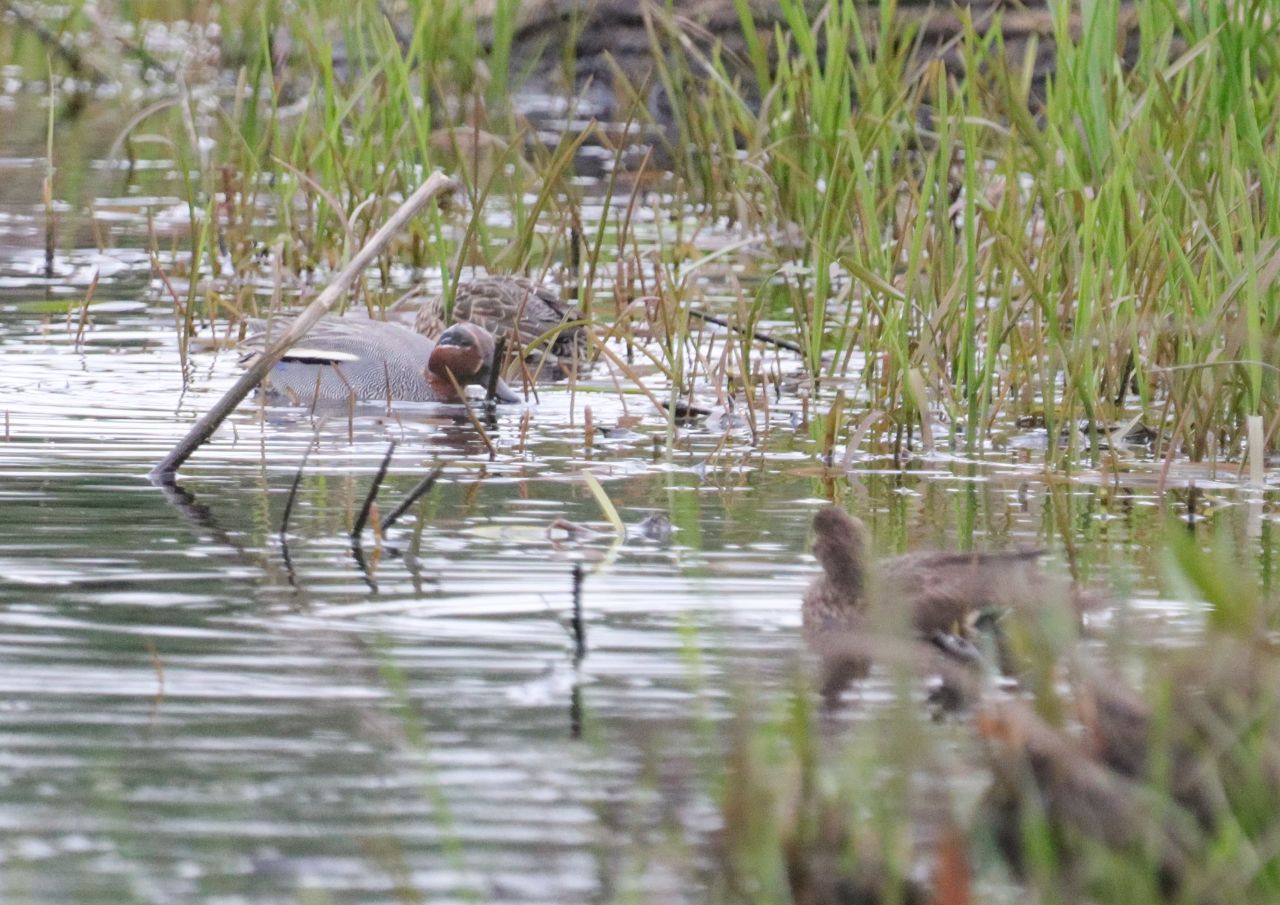
Teal, Riverside Nature Reserve.
Beneath the sallows in the flooded areas between the river and the boardwalk, a few wintering teal could still be observed.
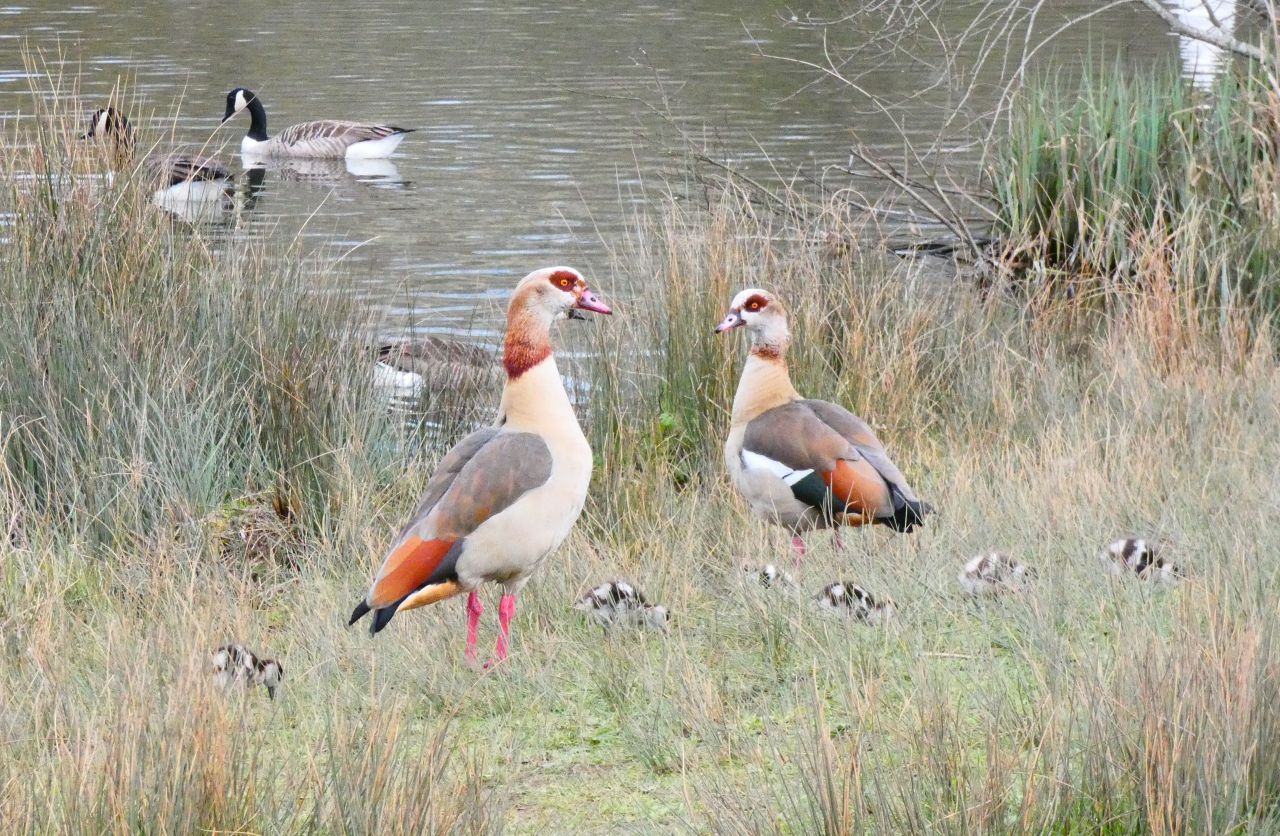
Egyptian geese with goslings at Stoke Lake.
At Stoke Lake I was first greeted by the sight of a pair of Egyptian geese with six goslings.
Having spent the most part of the winter together, the two great crested grebes had now paired up. It appeared that I had arrived the at the right moment too!
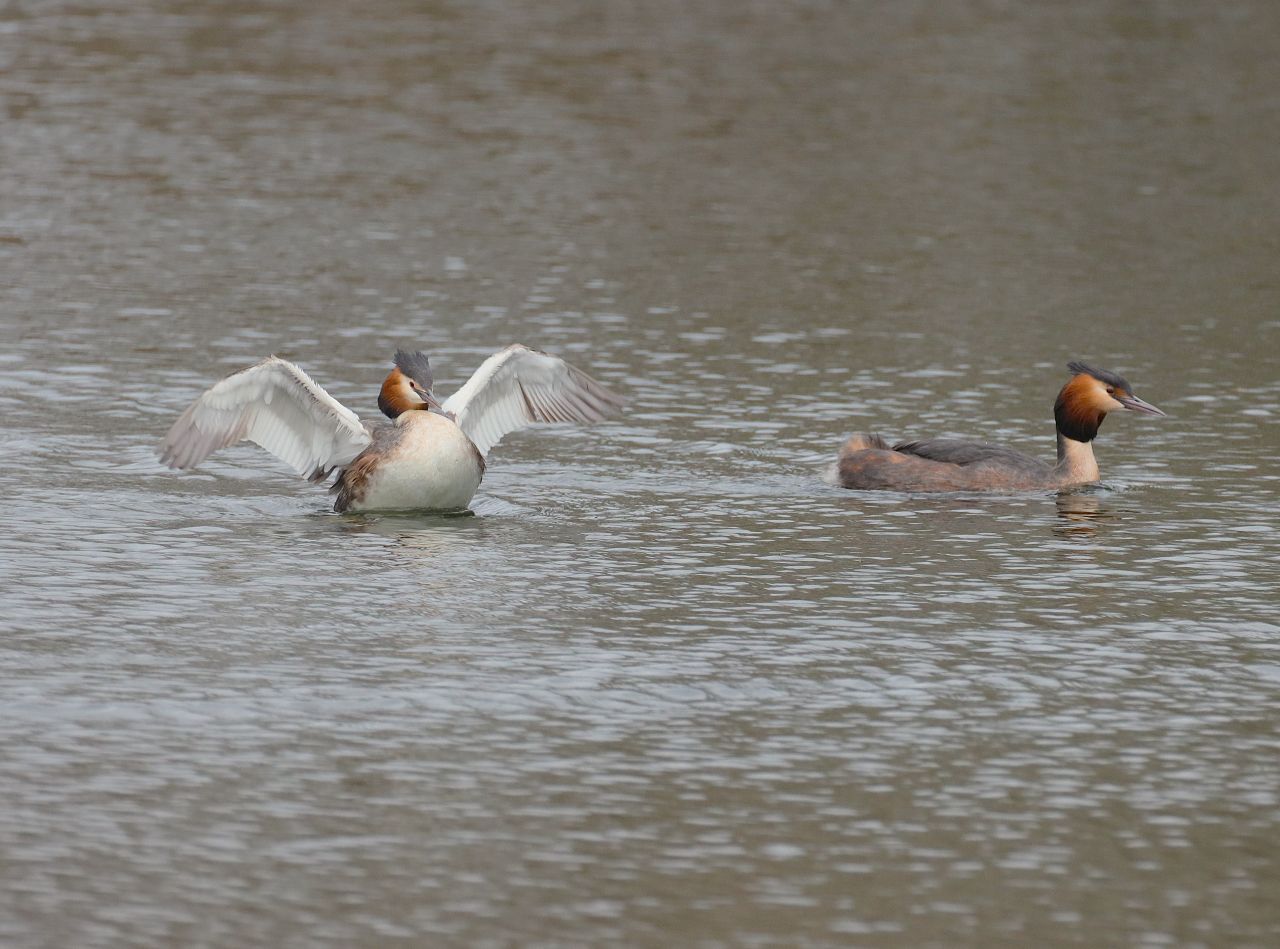
Great crested grebes, Stoke Lake.
As I watched, they had just begun their ritualistic dance together.
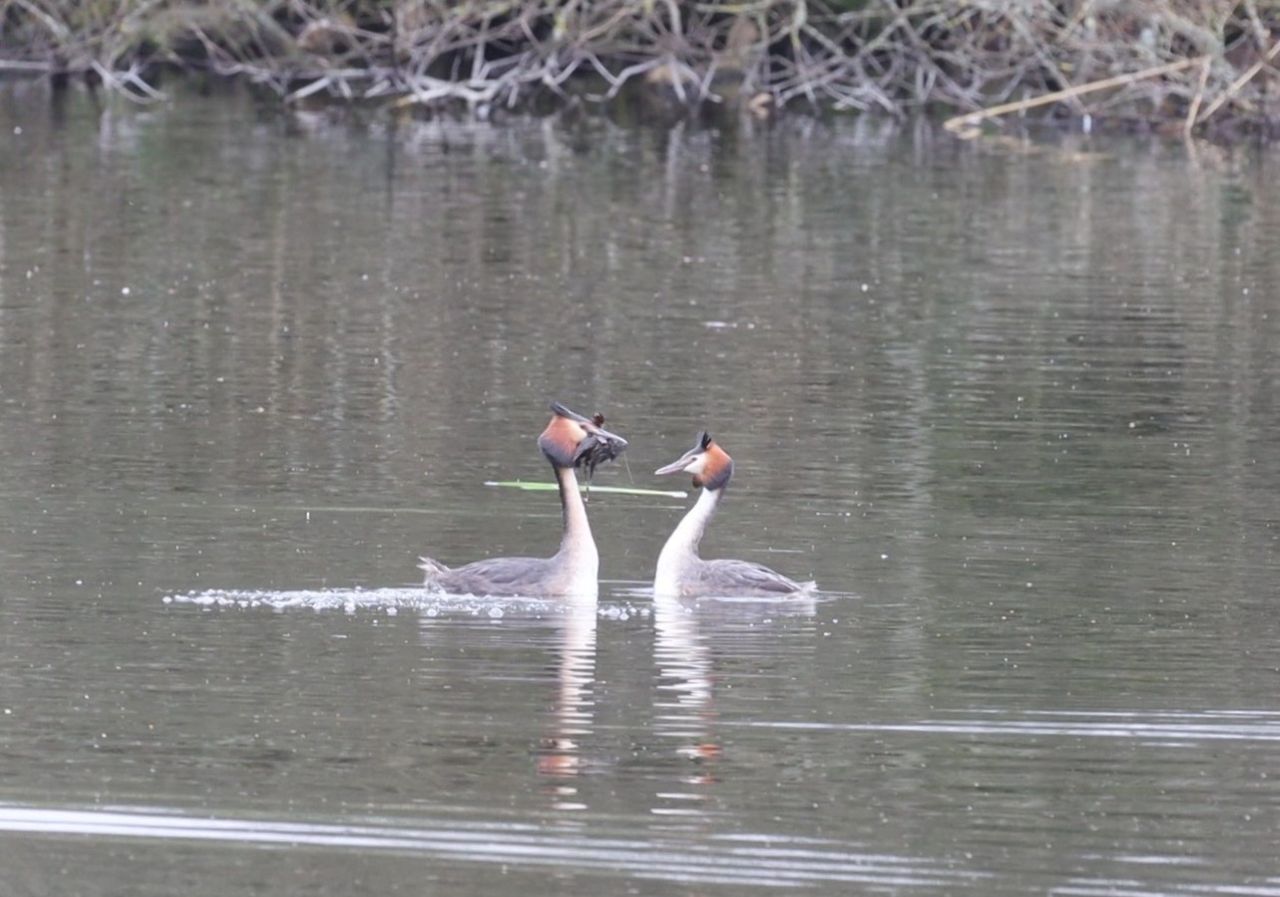
Great crested grebes, Stoke Lake.
Facing each other, the two birds began synchronously were shaking their heads and extravagant head plumes from side to side.
A behaviour known as the ‘ghostly penguin display’ was triggered by one of the pair approaching the other from beneath the water.
Then both rising from the water with their chests pressed together with their webbed feet treading the surface.
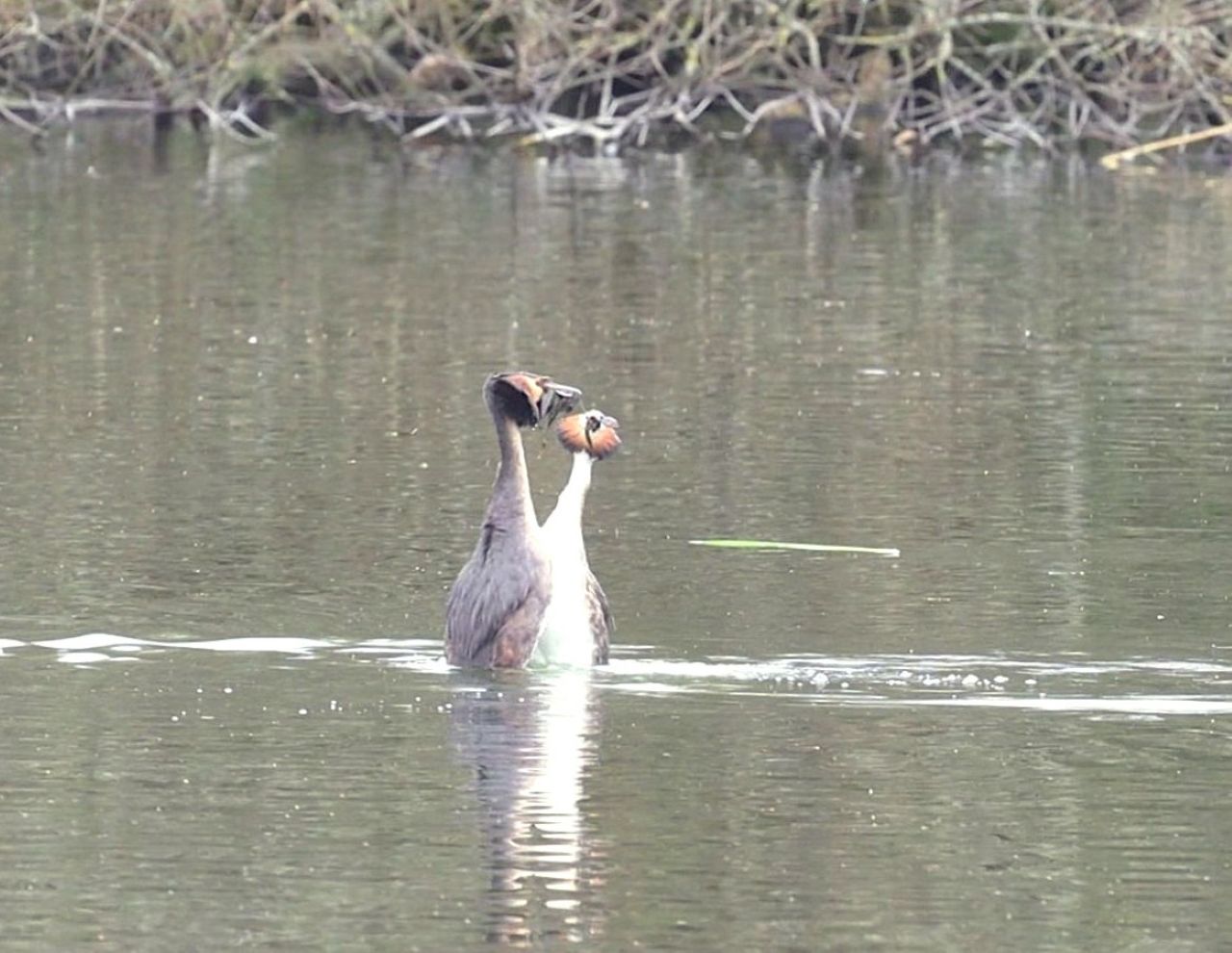
Great crested grebes, Stoke Lake.
Furthering their ritual, they ended with their weed ceremony – diving below the water collecting vegetation then elegantly swishing from side to side in their respective bills.
Click here for more details that includes a video clip of a similar display.

Great crested grebe with fish, at Stoke Lake.
At the other end of the lake, keeping a respectful distance from the displaying pair, another grebe could be viewed. This lone individual in the process of consuming a sizeable fish.

Tufted ducks, on Stoke Lake.
A dozen or so mostly male wintering tufted ducks could still be counted on the lake.
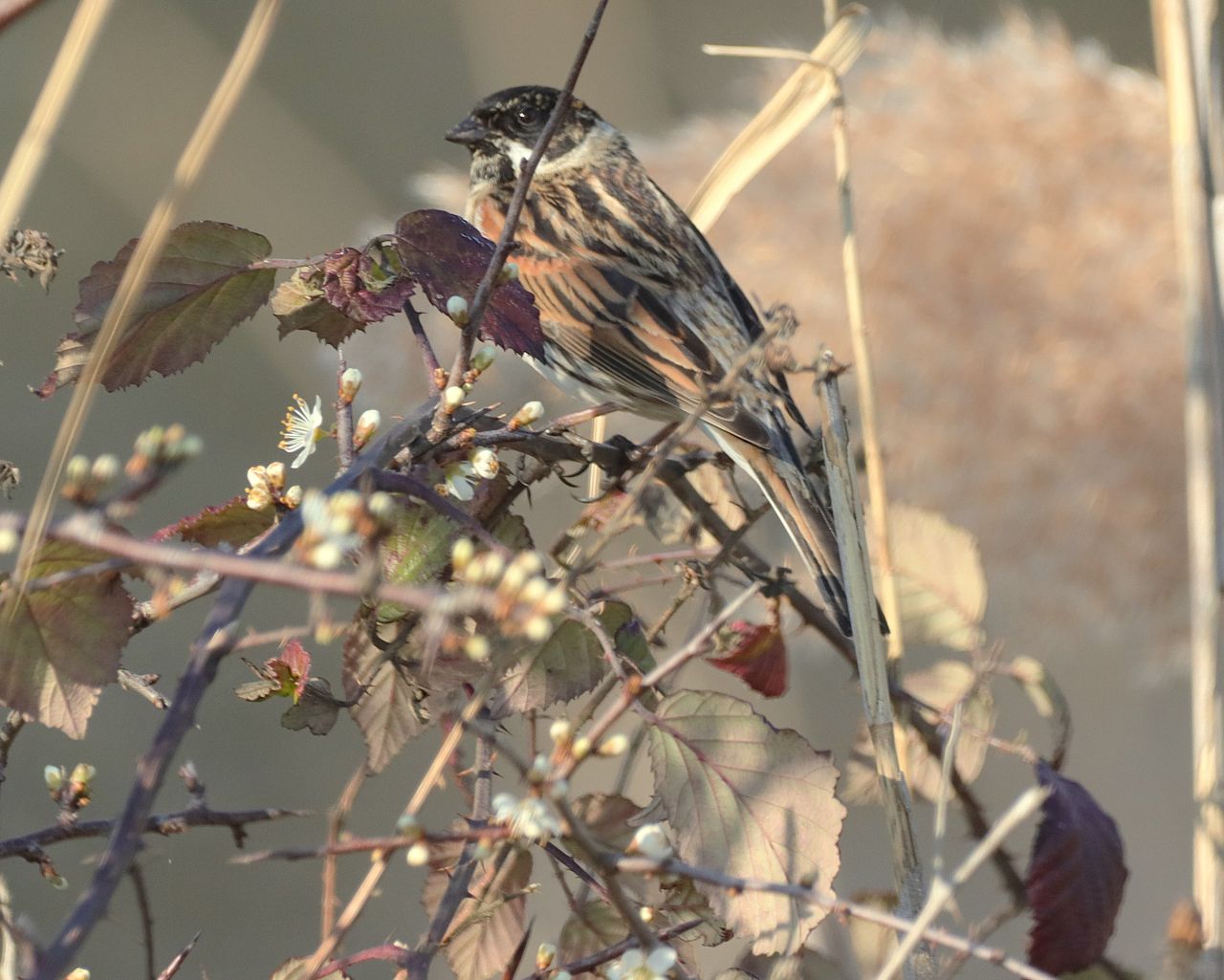
Reed bunting by Stoke Lake.
Also adding to the day’s list a male reed bunting that had made an appearance by the lakeside.
Out on our Surrey heathlands and pine forests, the highly irruptive common crossbill, after being largely absent from our local areas, have, from last year, made a return in good numbers.
This allowing me more than my fair share of seeing and photographing them during the later weeks of March.
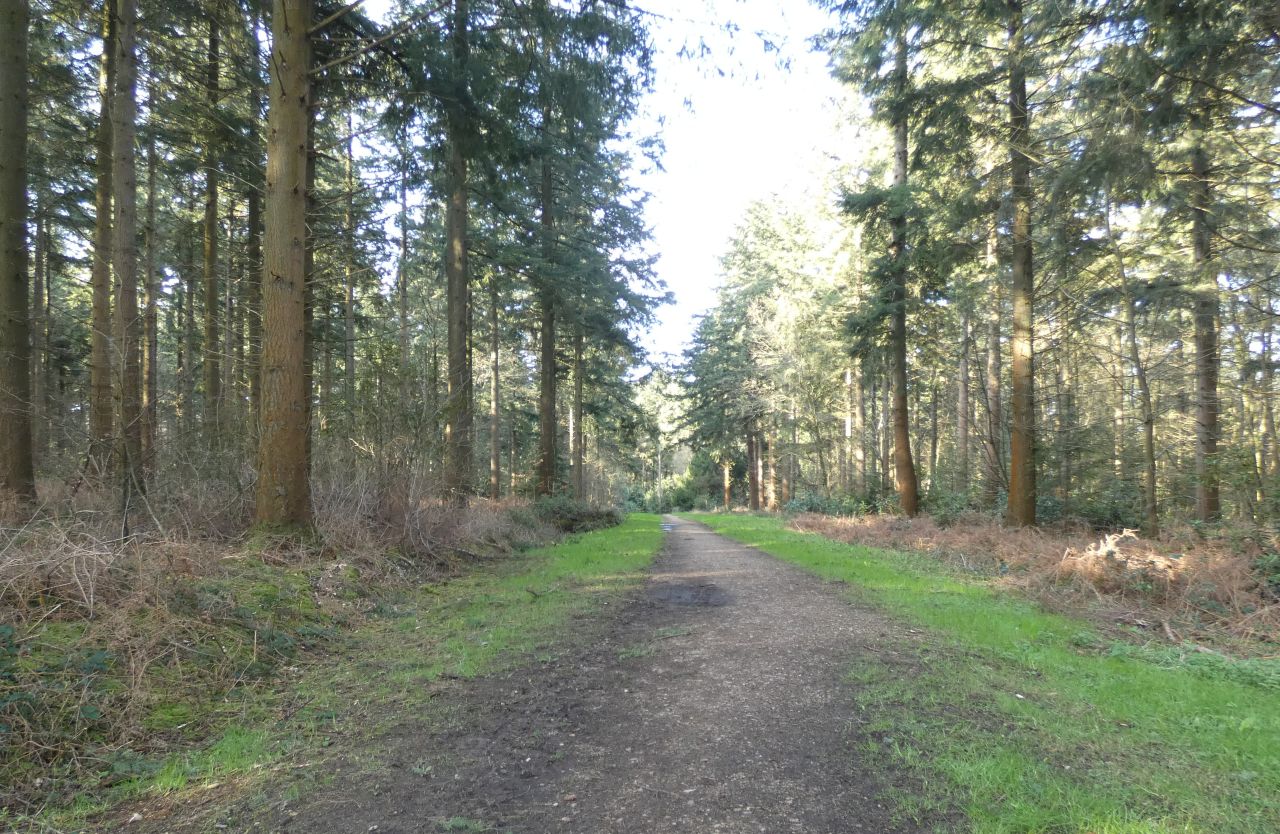
Dick Fock’s Common, Effingham Forest.
At Dick Fock’s Common, Effingham, and back in the company of fellow birdwatchers Bob and Dougal, a good number of crossbills could be observed from the viewpoint, as well as a pair fairly close to view along the track.
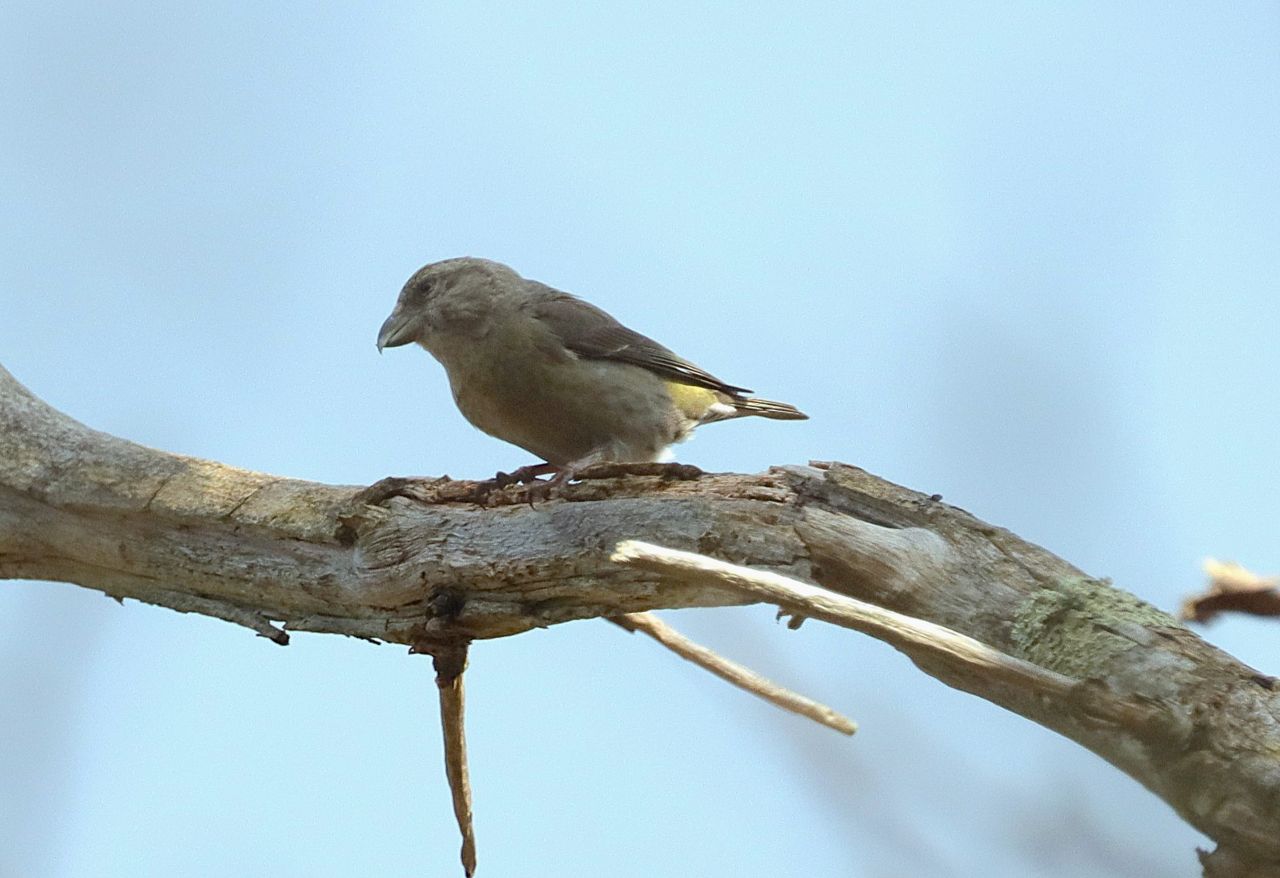
Common crossbill (female), Dick Fock’s Common, Effingham.
The female appeared to be peeling bark from a dead tree.
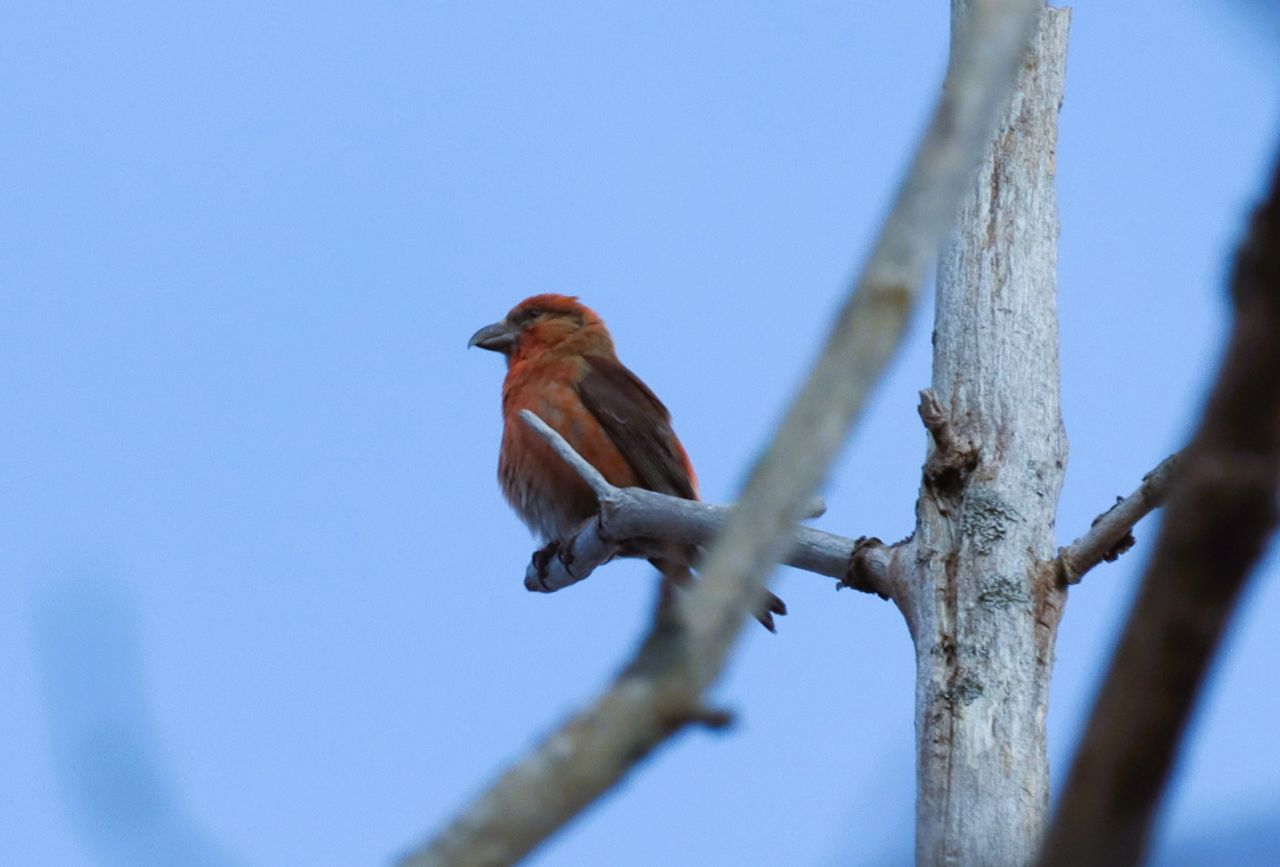
Common crossbill (male), Dick Fock’s Common, Effingham.
While the male was perched much higher and appeared to be supervising?
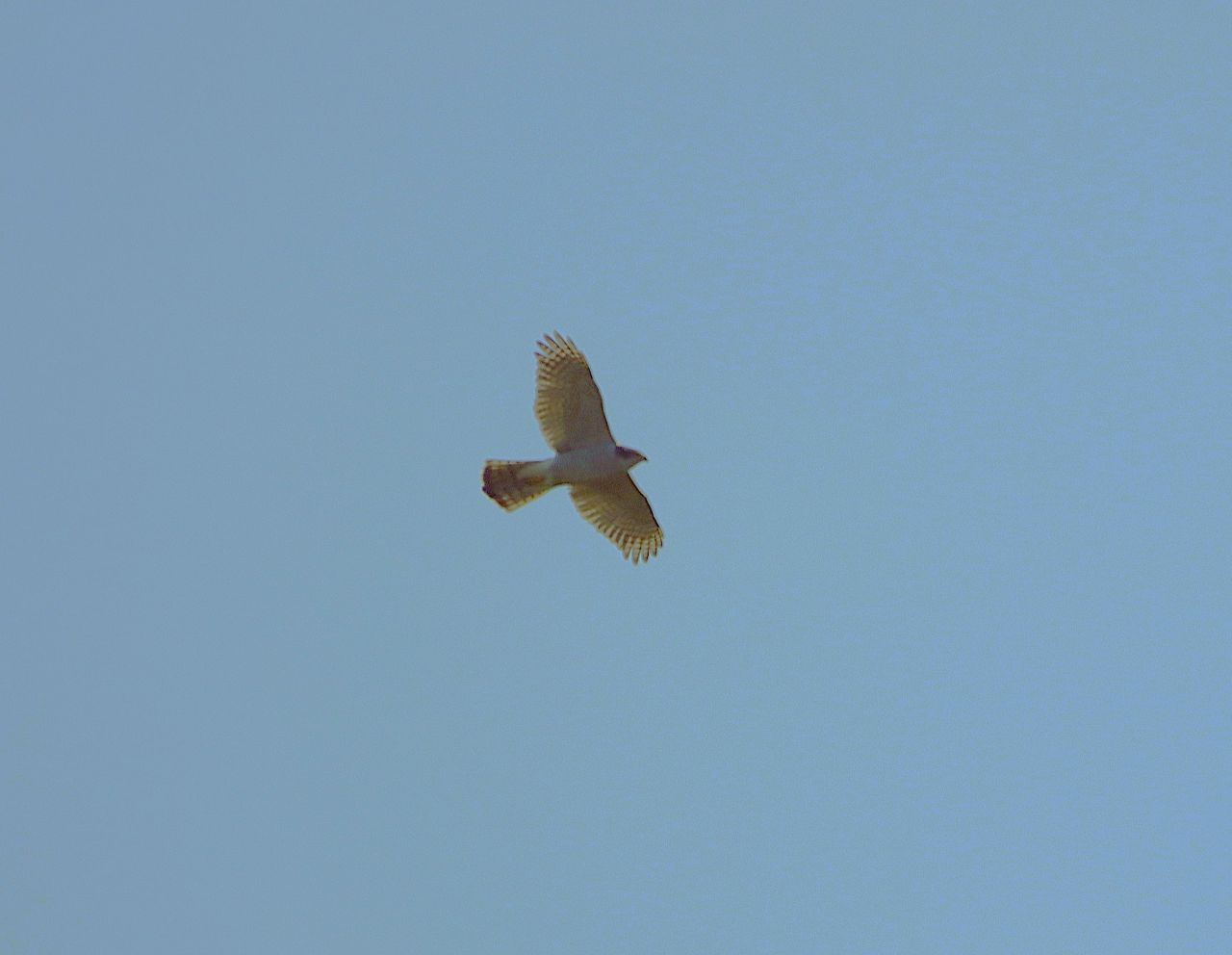
Goshawk, Dick Fock’s Common.
From the viewpoint we were also able to photograph (although distant) one of two goshawks seen that day.
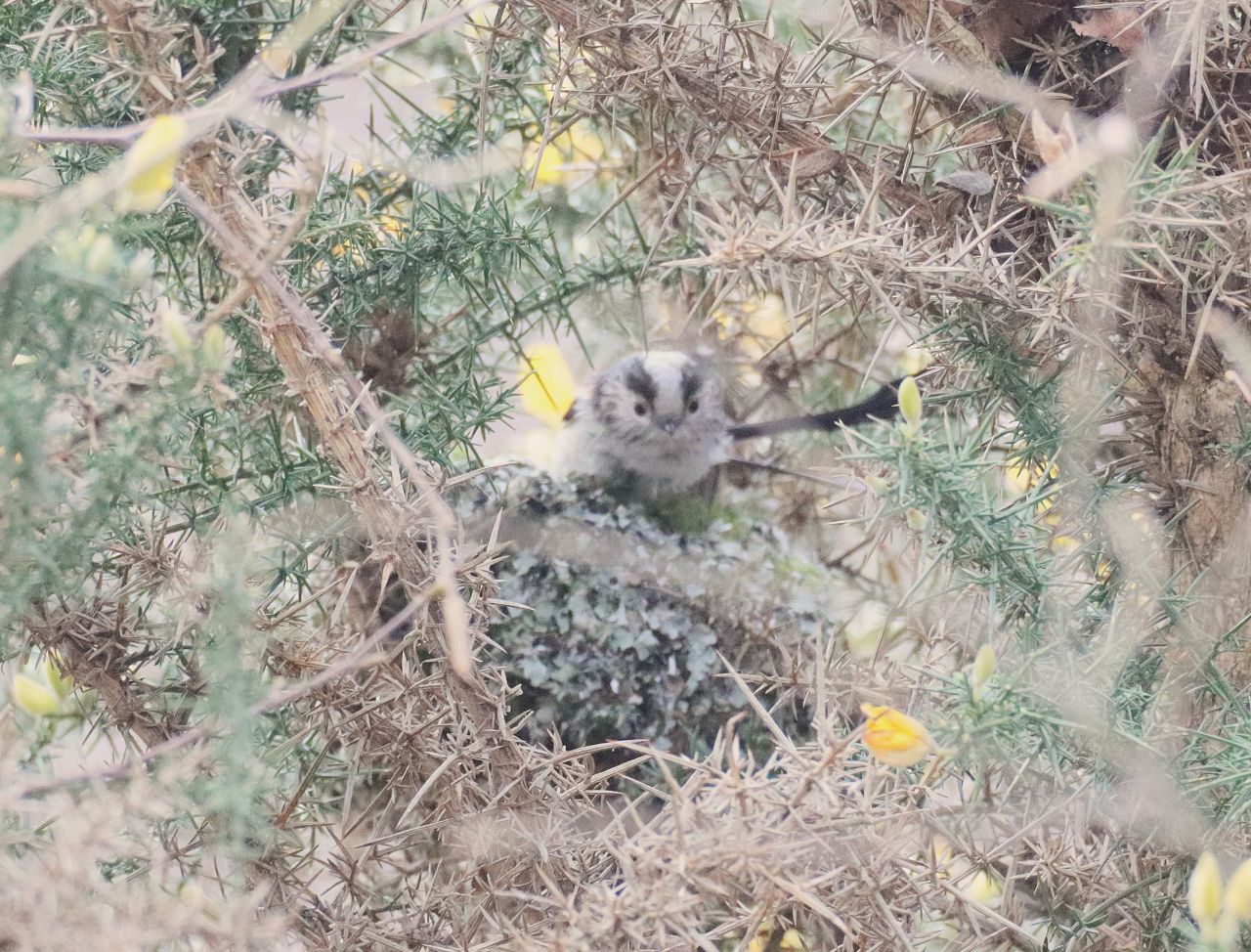
Long-tailed tits, nest building.
As well as a pair of long-tailed tits now building their nests, among many others seen during my travels about Surrey.
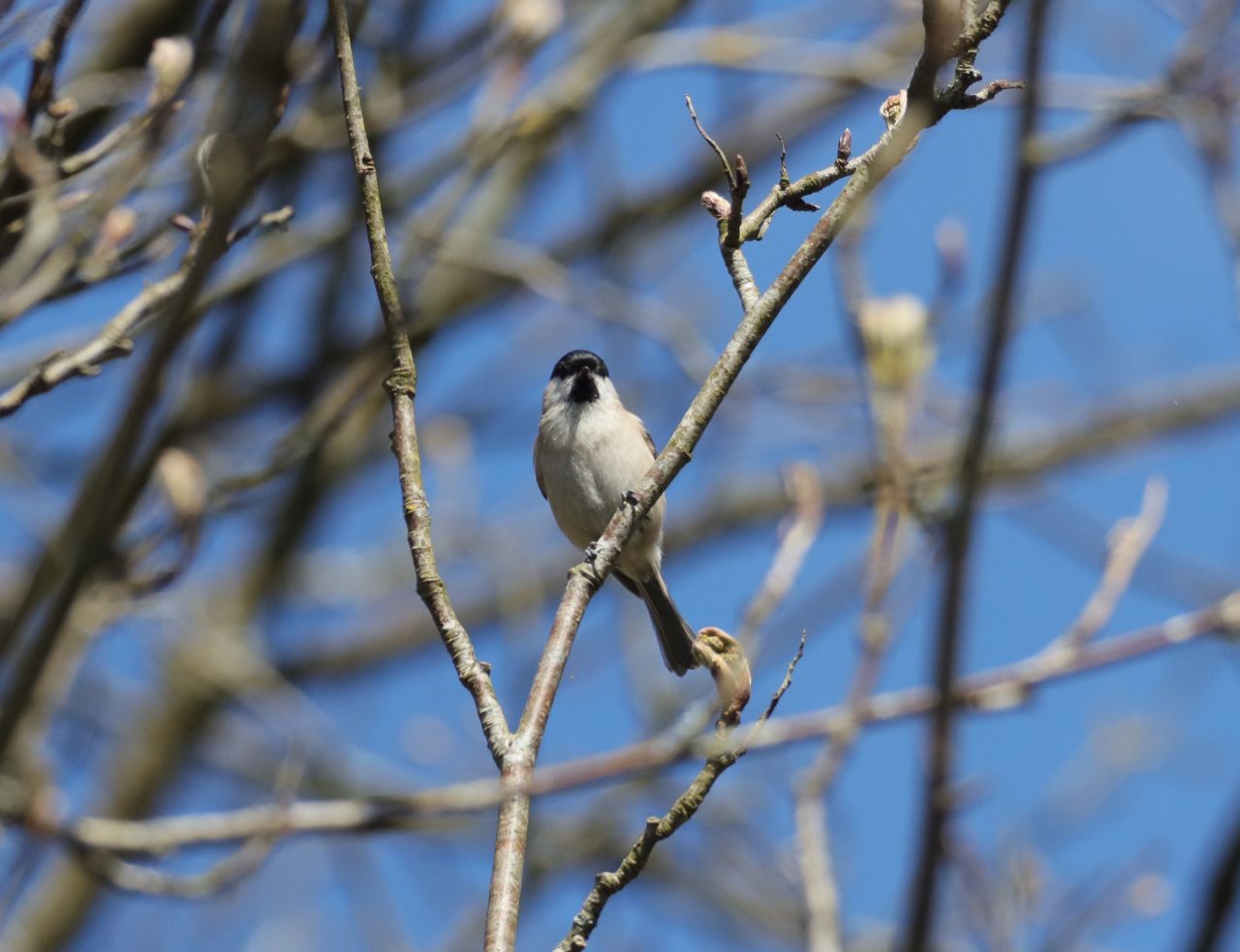
Marsh tit, Dick Fock’s Common.
Marsh tits could be heard calling, one showing well overhead in the bright sunshine.
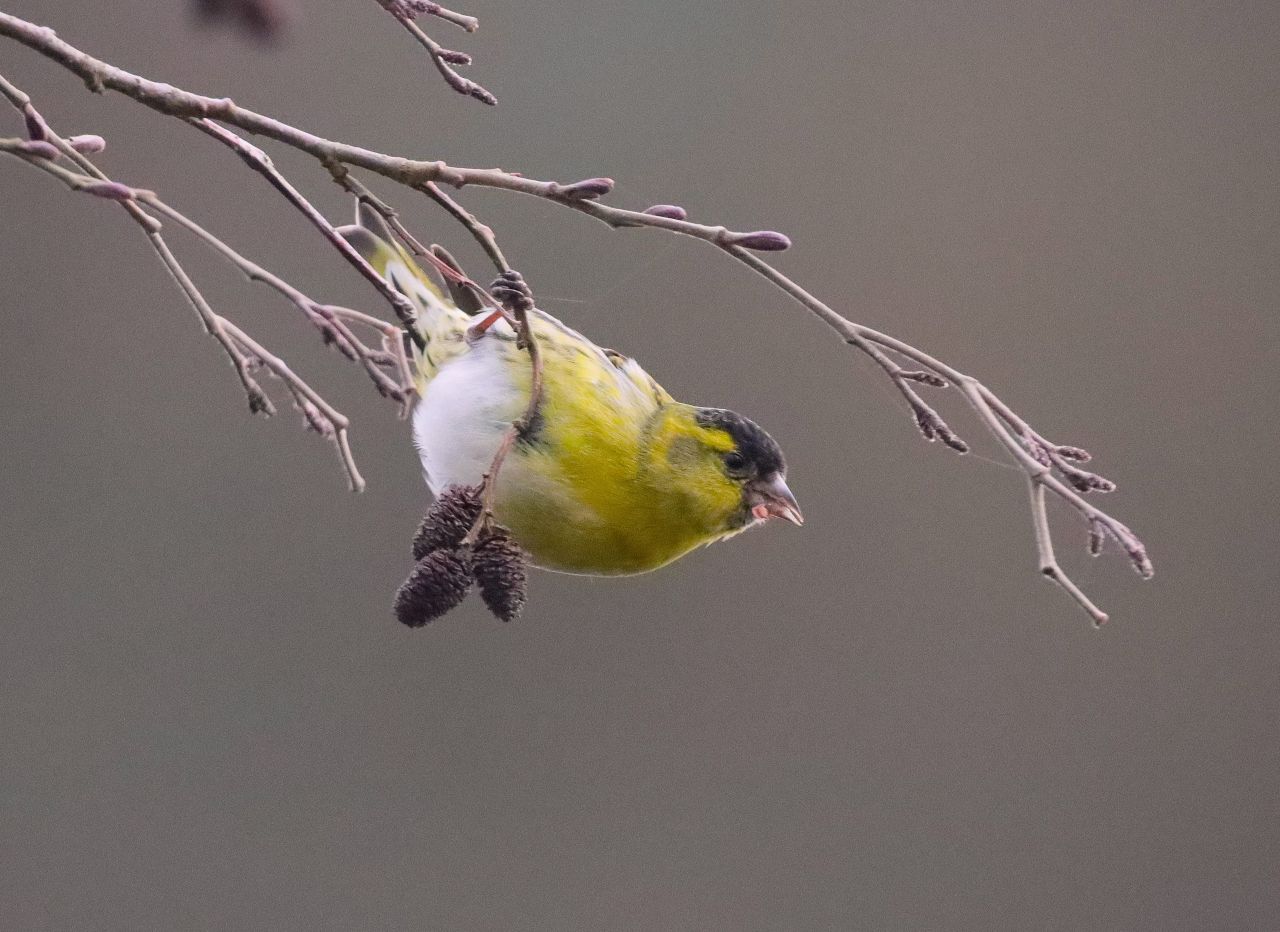
Siskin.
While flocks of siskins could be noted there.
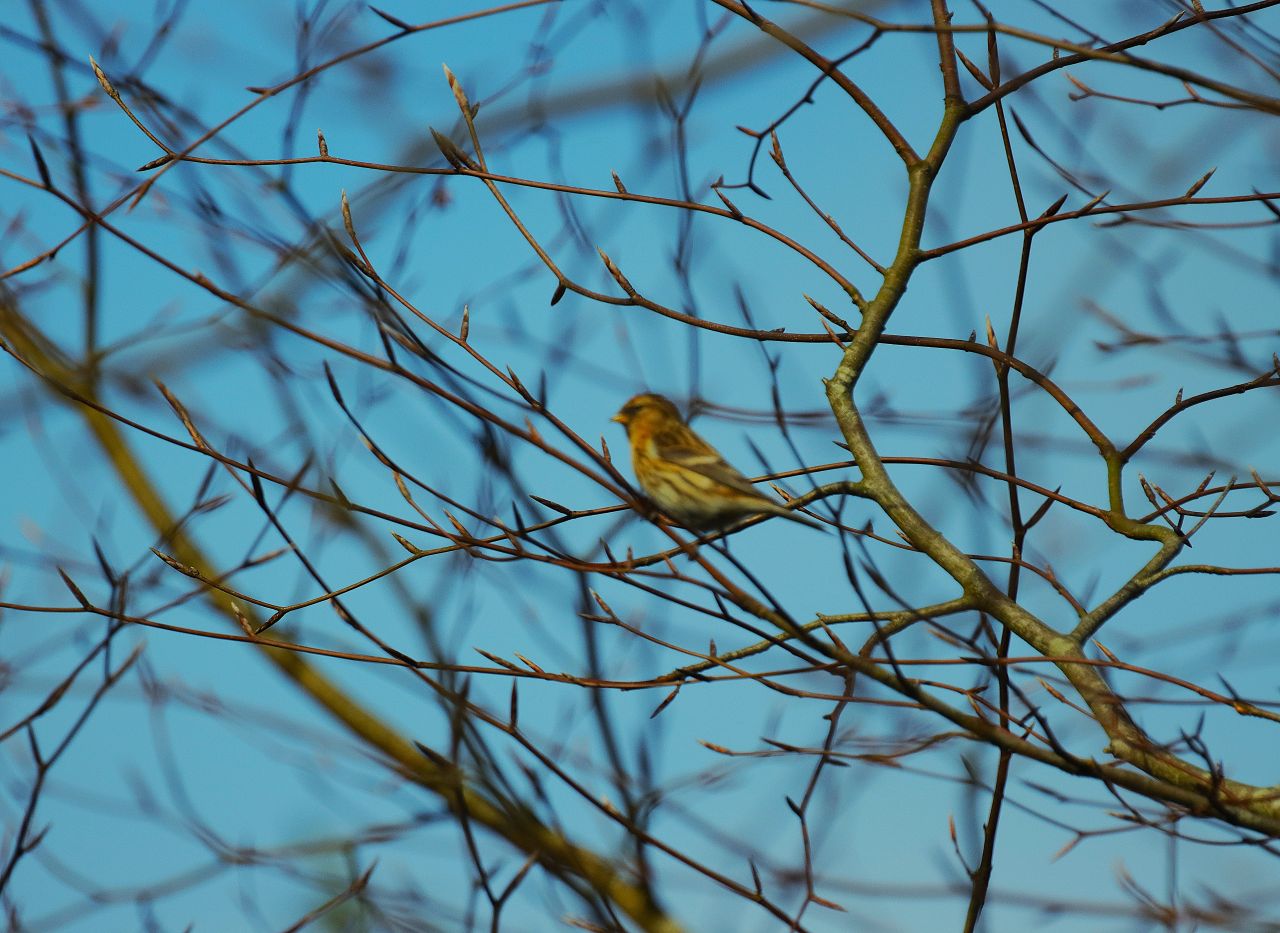
Redpoll, Dick Fock’s Common.
And groups of redpolls regularly seen and heard.
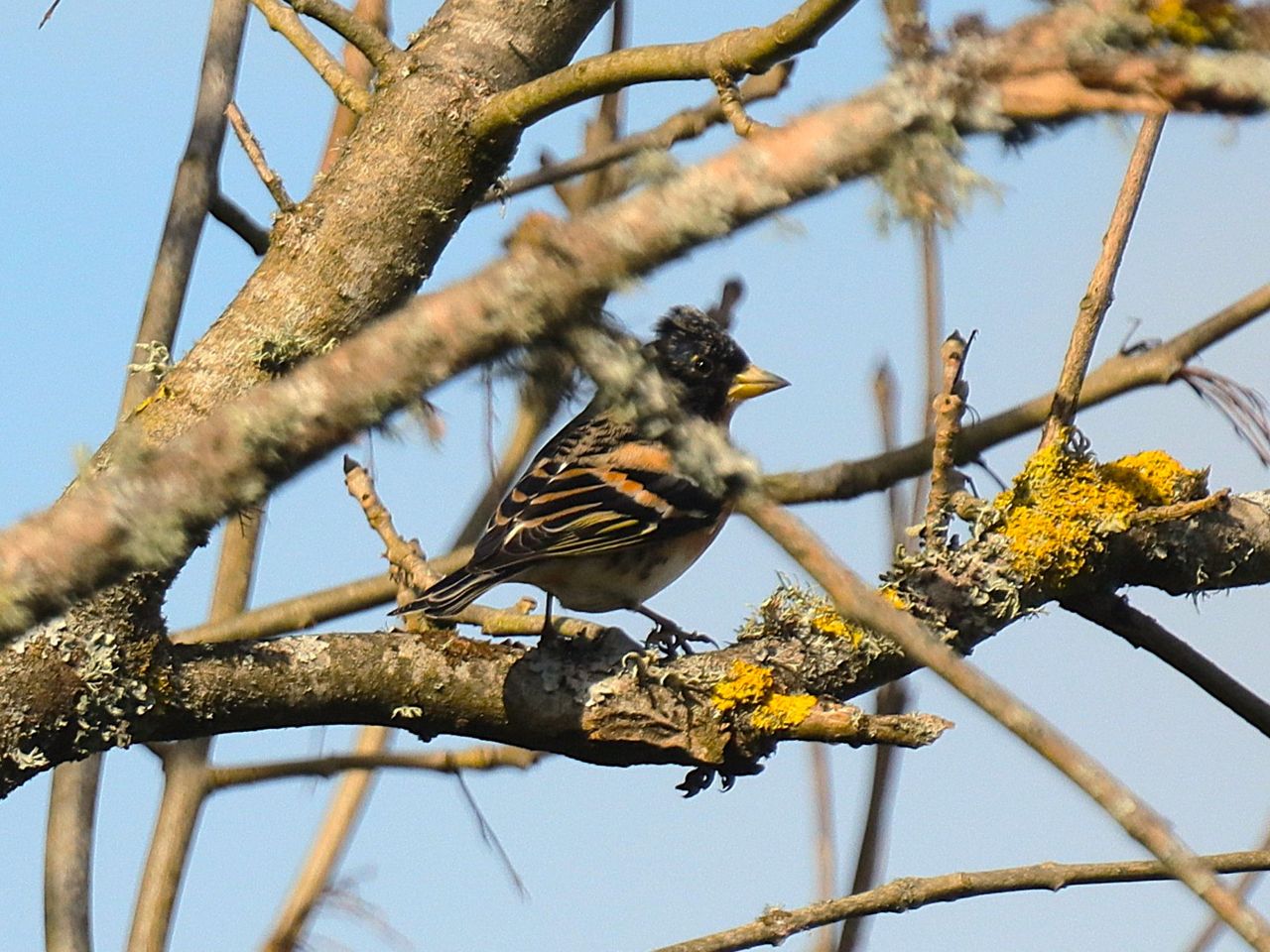
Brambling, Dick Fock’s Common.
Among the mixed flocks of birds, several wintering male bramblings could also be picked out with my camera.
They were now developing their smart looking summer plumage, soon to make a return to their summer breeding grounds in Scandinavia.
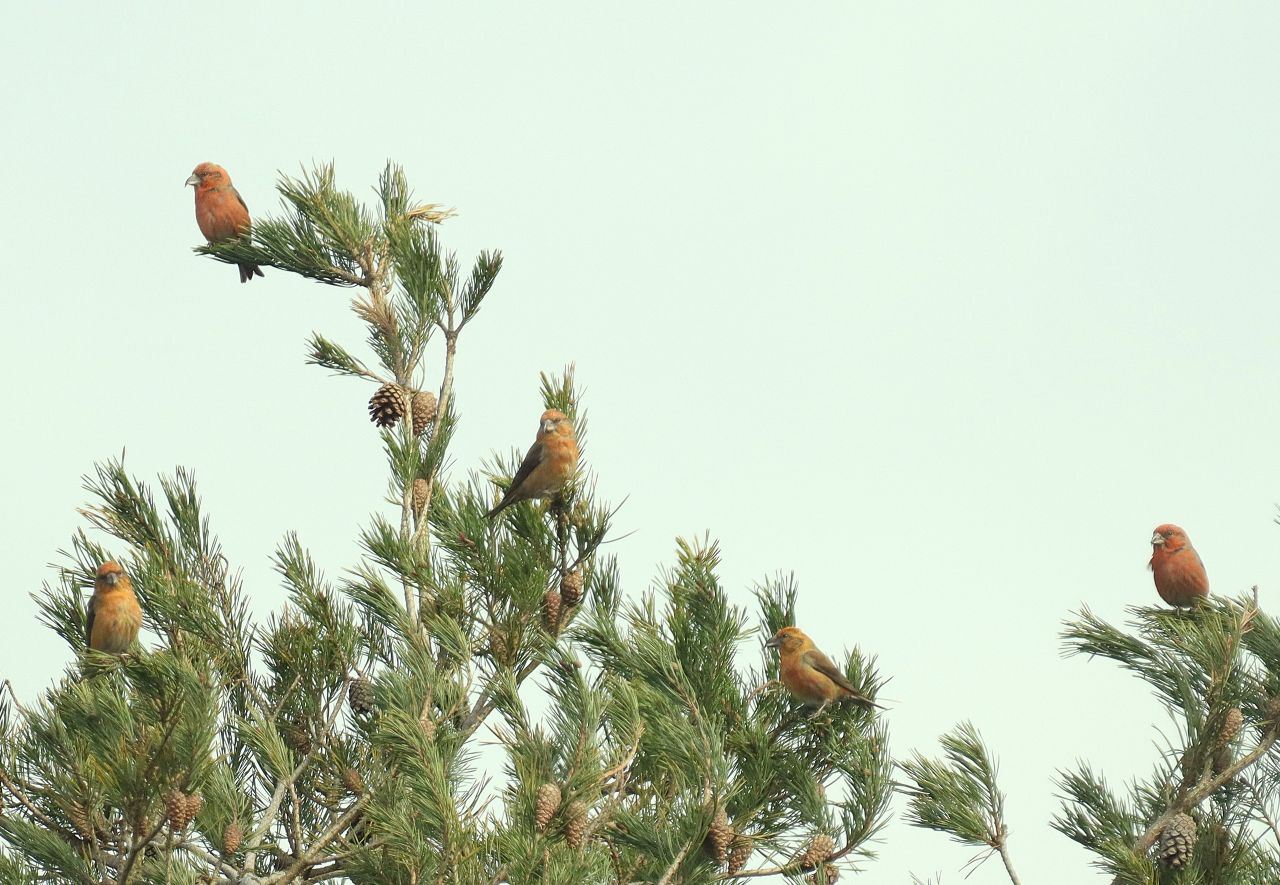
Common crossbills (all males), Crooksbury Common.
At Crooksbury Common, I was again able to add to my photos of crossbills. Counting six or more and even photographing five males perched together atop of a pine tree.
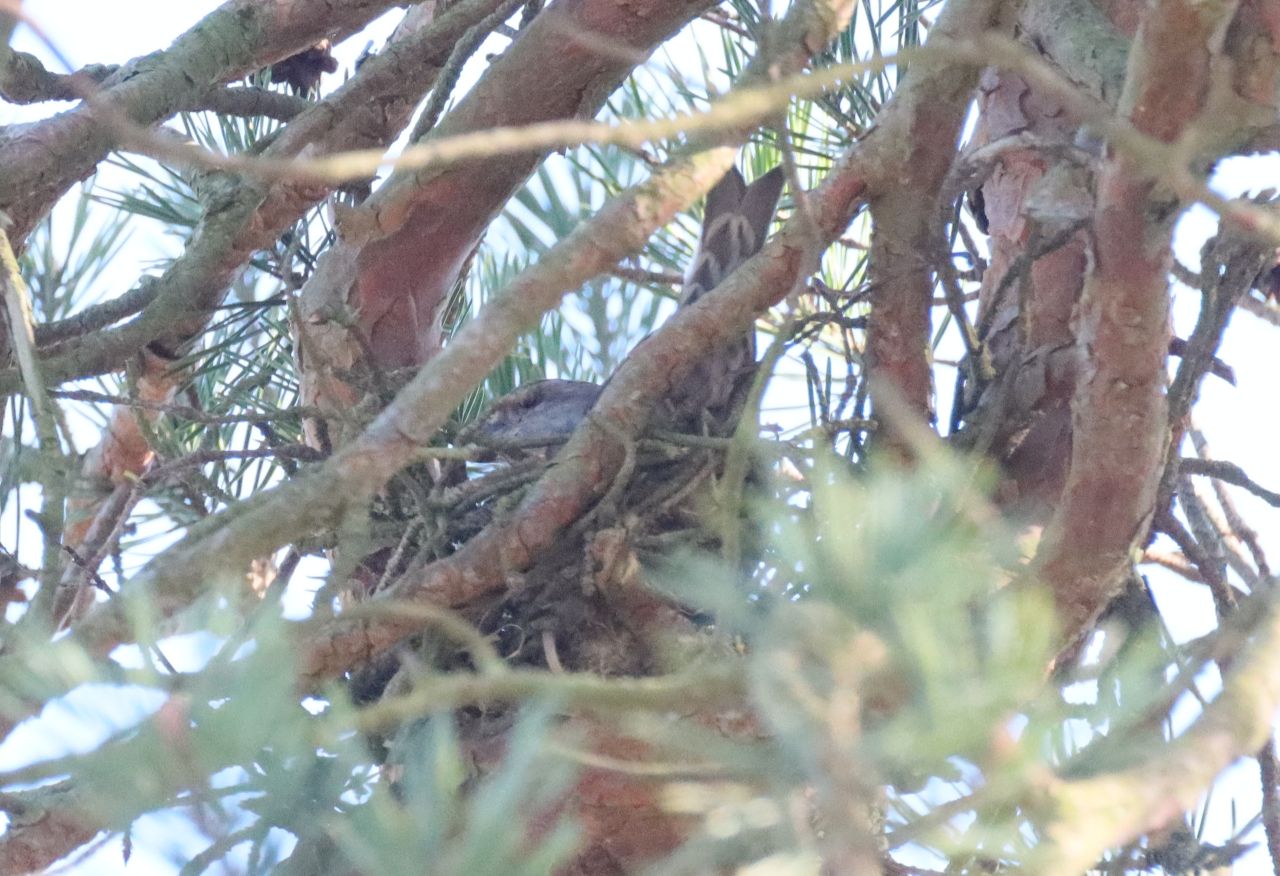
Common crossbill, (female) on what looked to be a nest), Thursley Common.
And on Thursley Common I was able to find by chance a female crossbill possibly sitting on her nest?
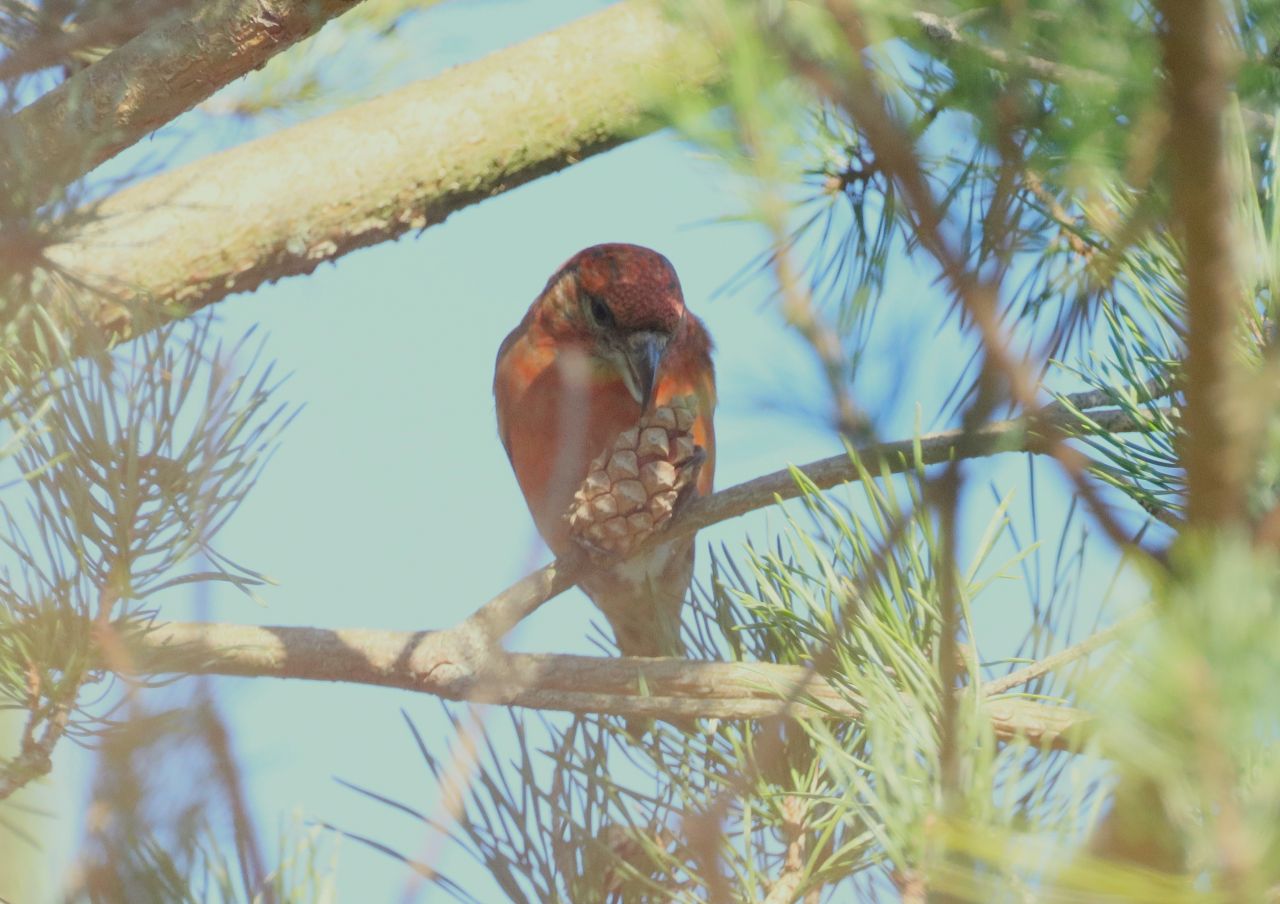
Common crossbill (male), Thursley Common.
This, as a male perched nearby occasionally feeding her with cone seeds he had collected.

Stonechat, Thursley Common.
Around the heath, stonechats had noticeably begun to look for territories to nest.
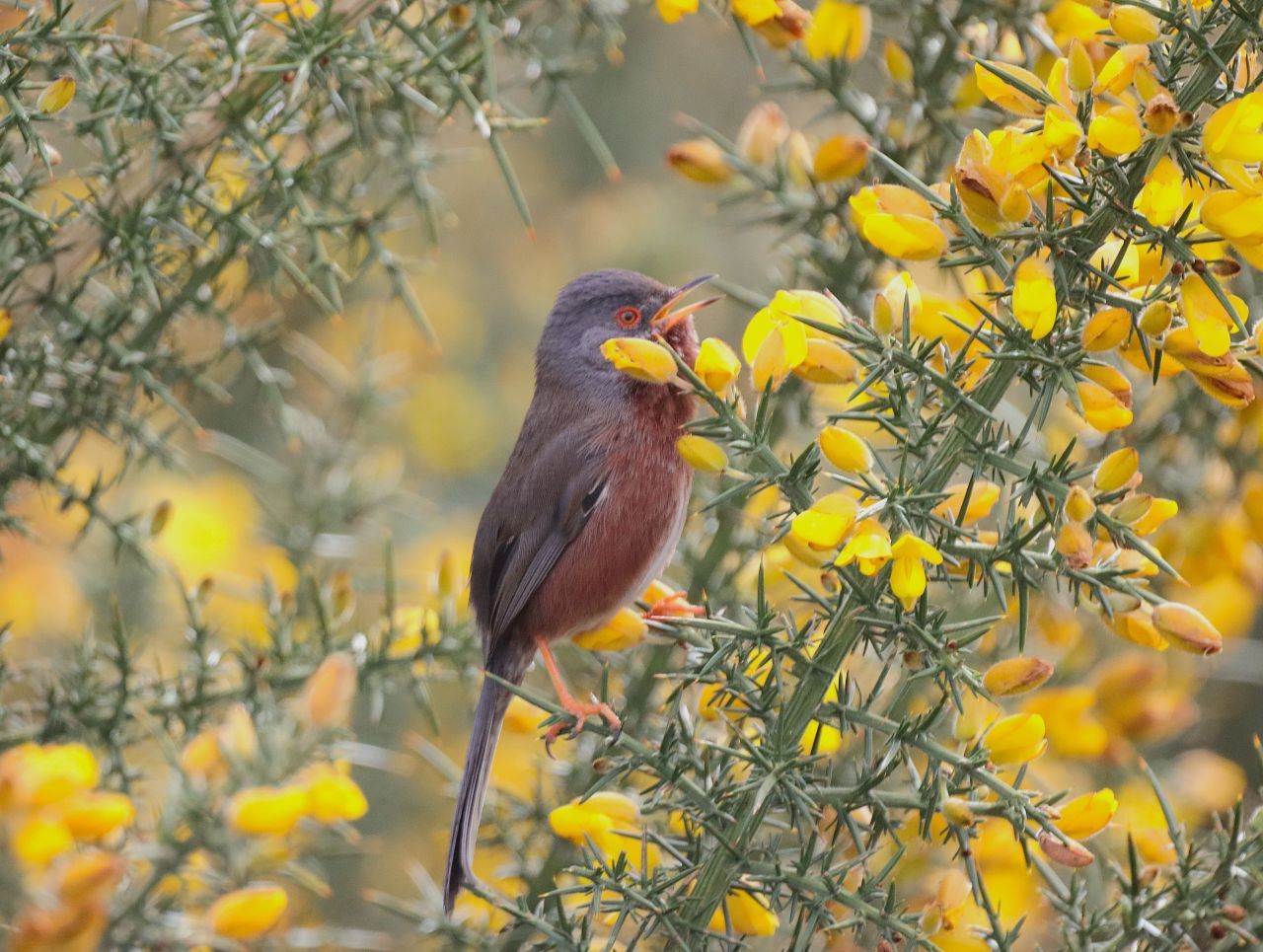
Dartford warbler.
And Dartford warblers could now be seen moving around in pairs.
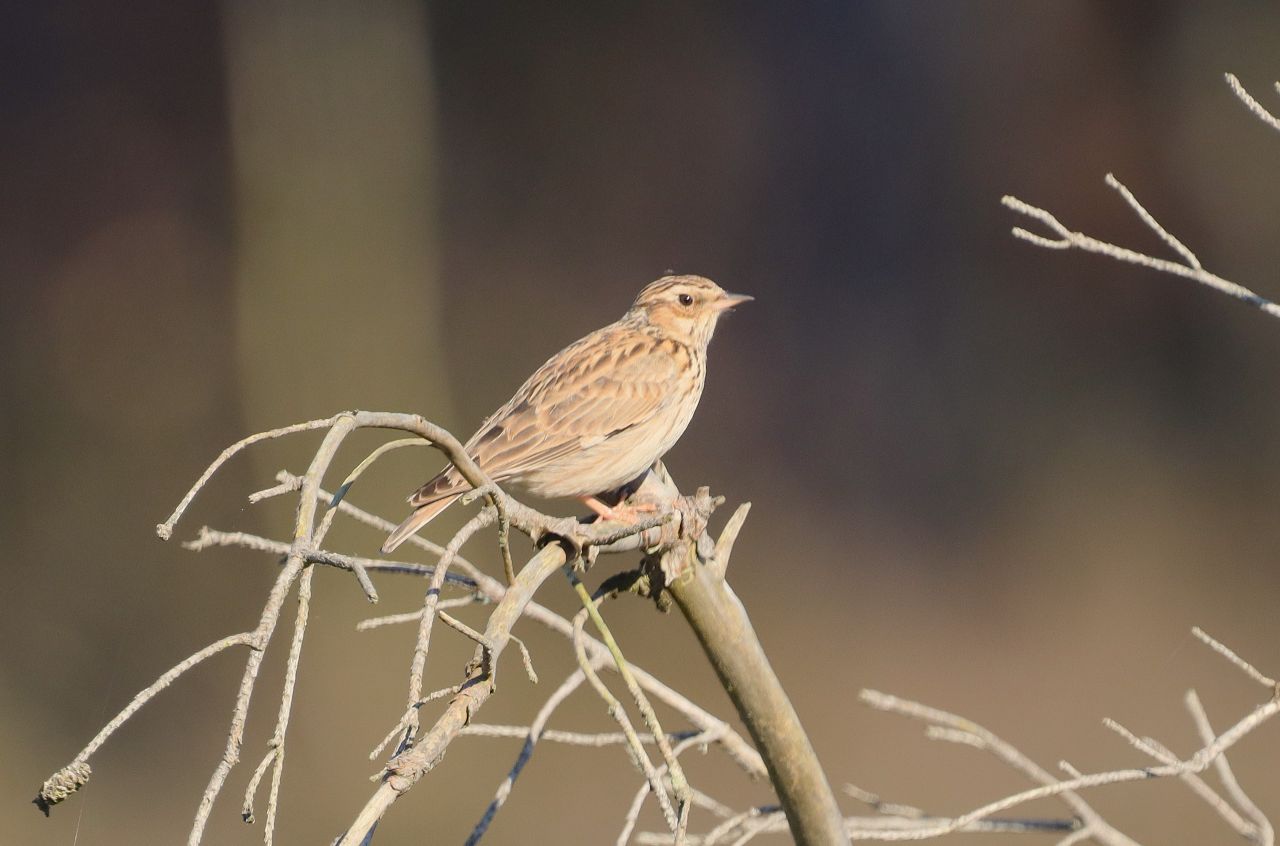
Woodlark, Thursley Common.
A few woodlarks could still be heard singing, although most had fallen silent having now paired up.
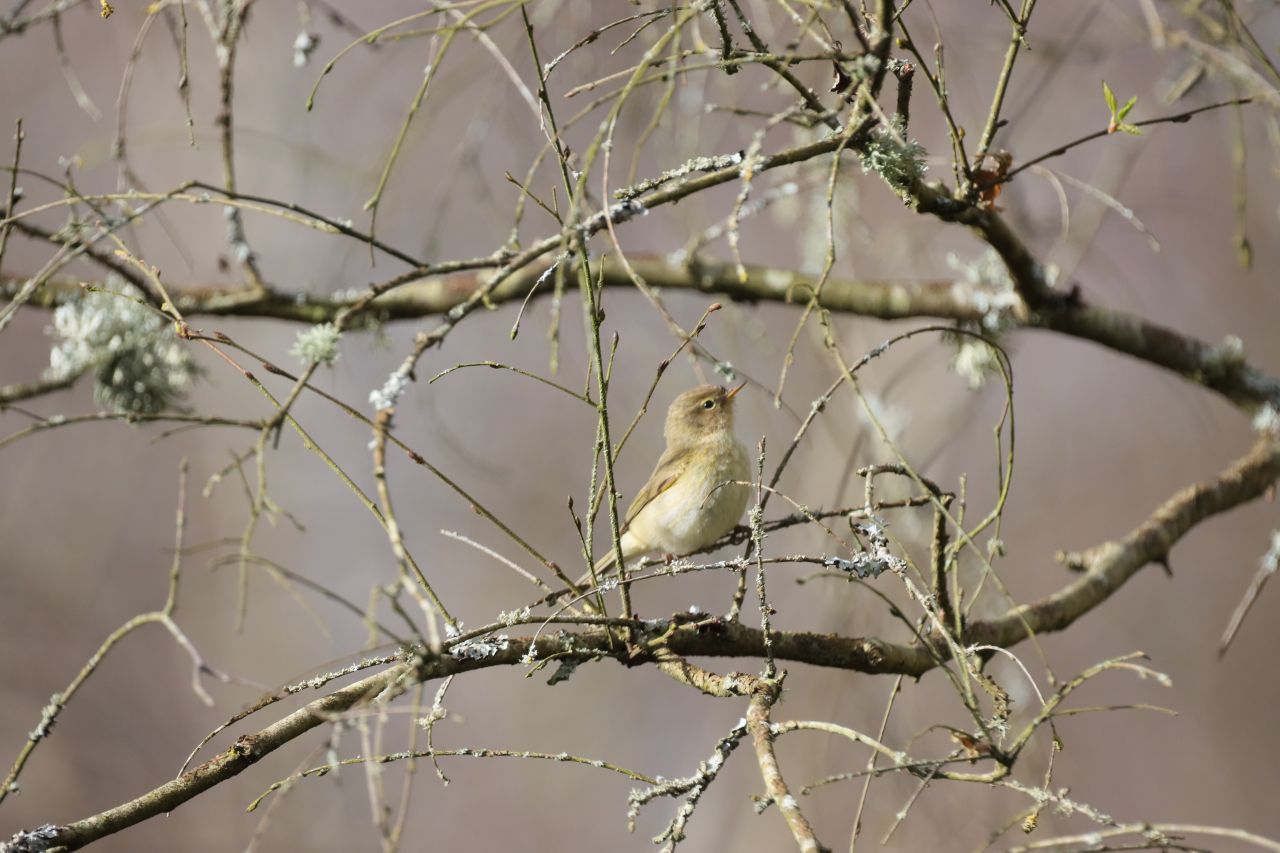
Chiffchaff, Whitmoor Common.
While, as at all the venues visited, chiffchaffs could be regularly heard in song.

Curlews, Thursley Common.
A pair of curlews had once again made a return to the heathland.
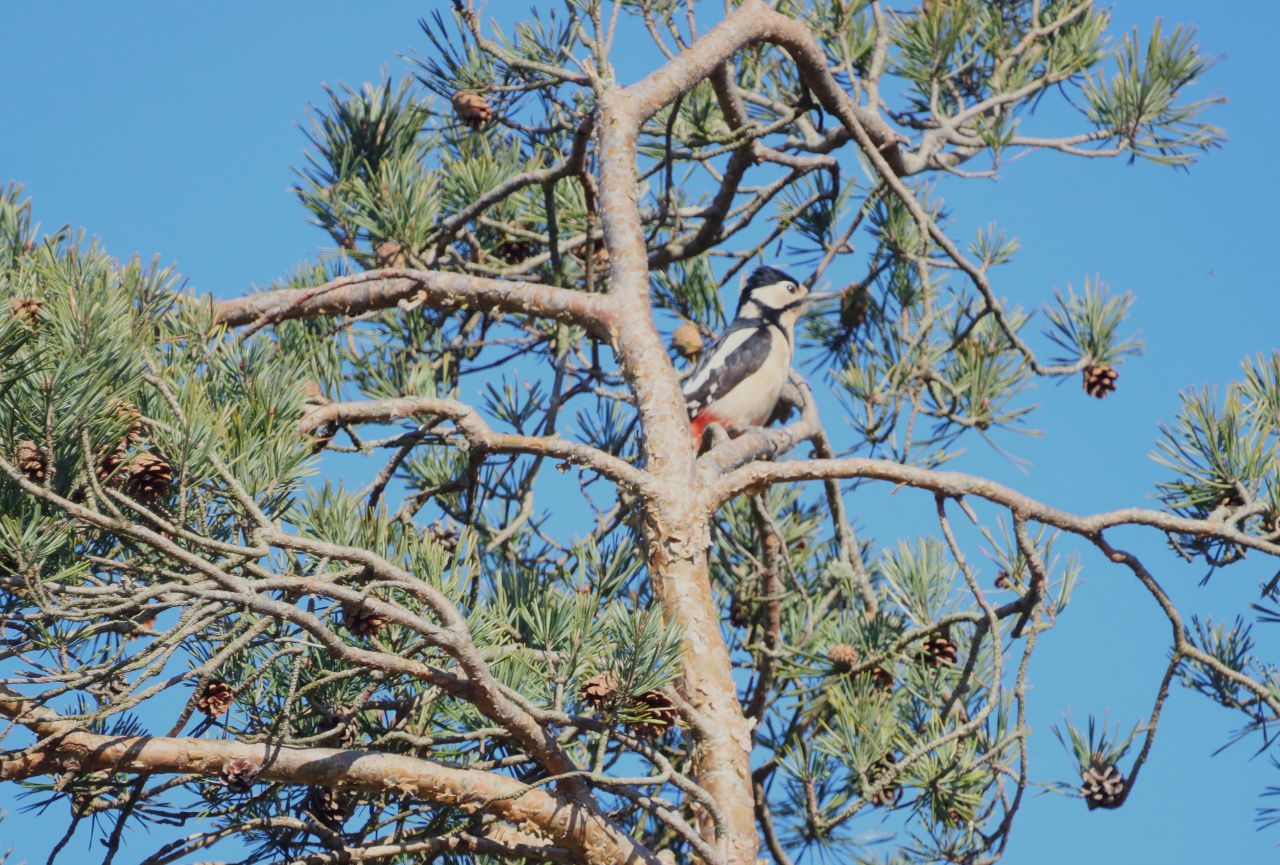 And a great spotted woodpecker added to the day’s photos.
A missed opportunity for me was a pair of ravens. First heard distantly, but eventually flying overhead.
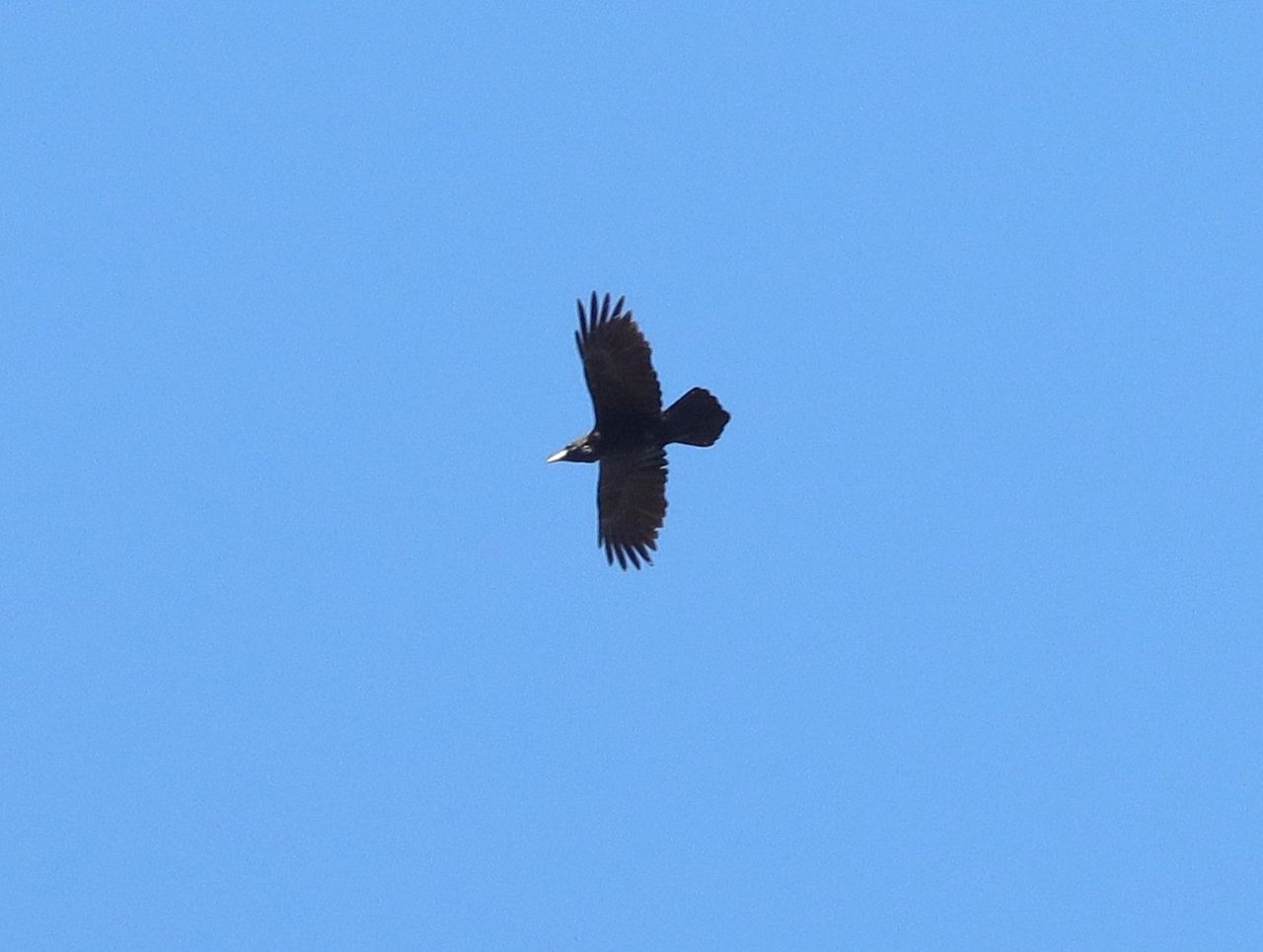
Raven, Thursley Common.
The showy one of the pair I watched in awe as it pretended to tumble from the sky above me.
This before regaining its balance and height. Making me wonder was it done to to show off to me? Or was it just showing off to its partner?
Alas, the latter more probable and leaving me to miss the opportunity to photograph it as it did so.
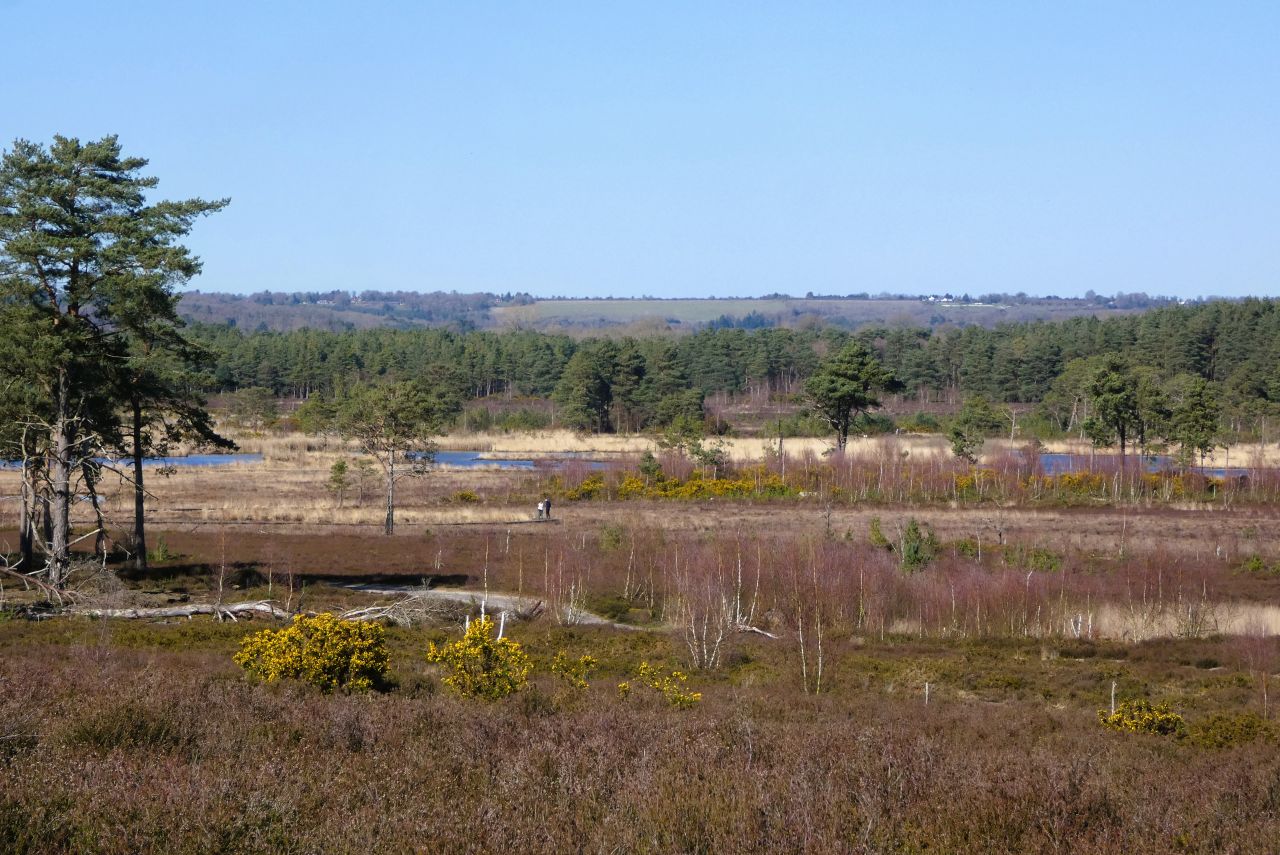
Thursley Common, viewed from ‘shrike hill’.
Moving into the last week of the month things turned much cooler as northerly winds pushed through bringing cold showers in its wake and daytime temperatures at times, fell below double figures Celsius.
By March 25, although there were sunny spells, the wind had turned to a cold northerly with occasional heavy showers of sleet and hail.
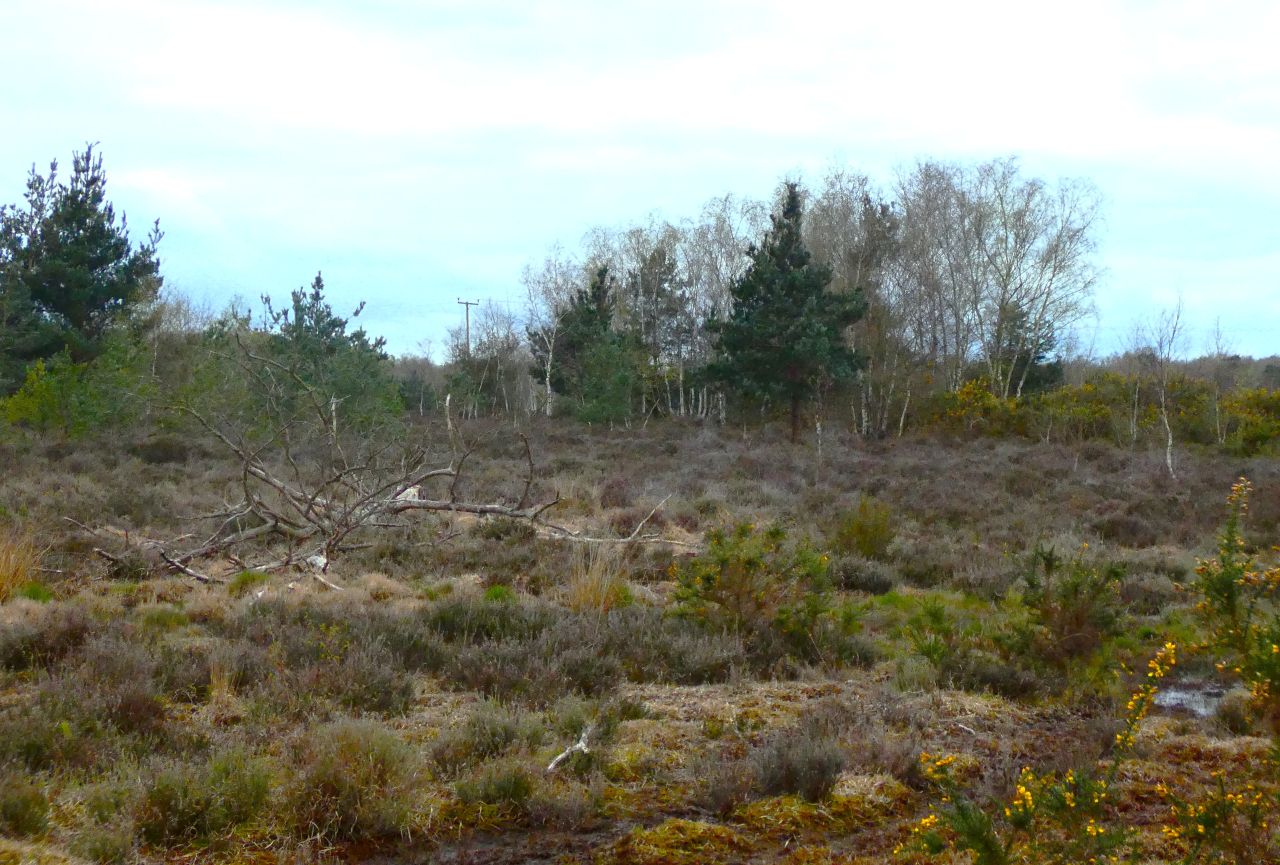
Spring, on Whitmoor Common.
Whitmoor Common, on March 25, continued to be a productive one for me.
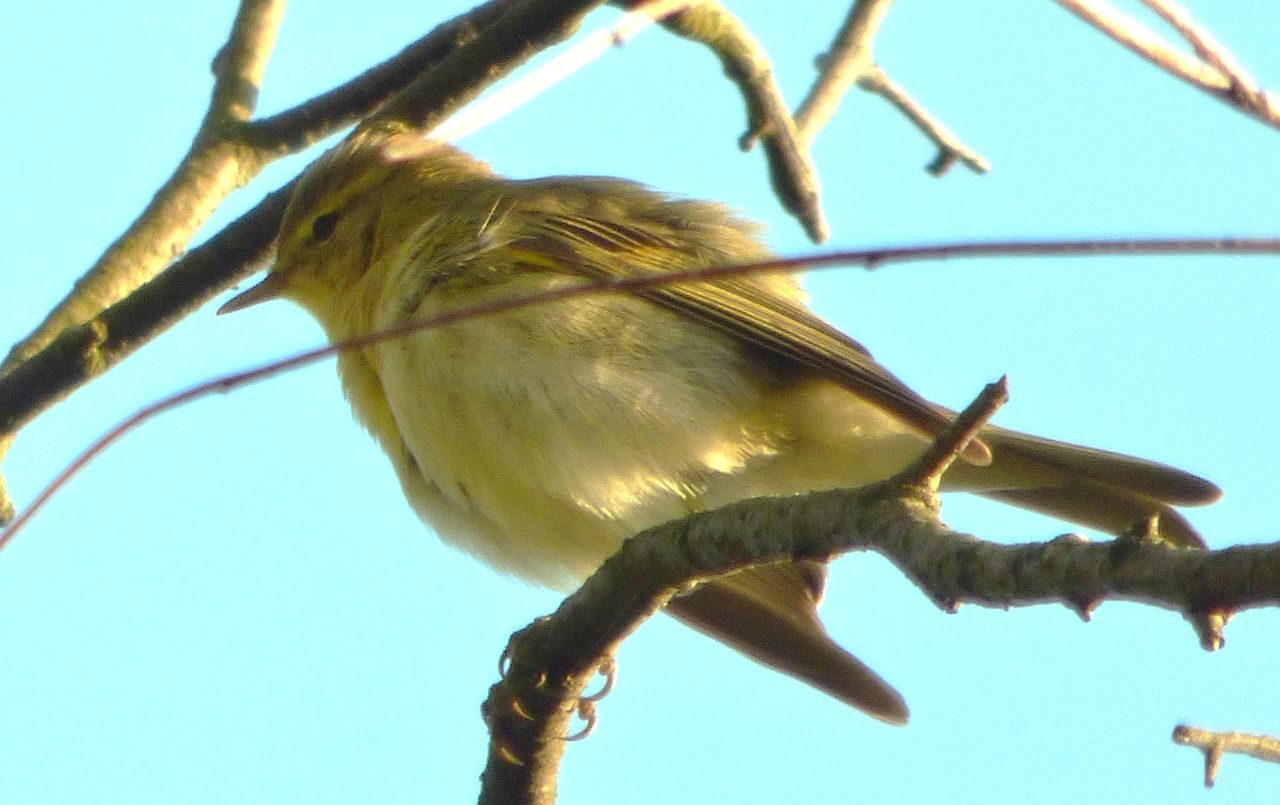
Willow warbler, Whitmoor Common.
Not far from the car park my first sounds were of a newly arrived willow warbler in song, having just arrived back from its winter home in Africa.
An early record for me, and being my first summer migrant sighting of this year!
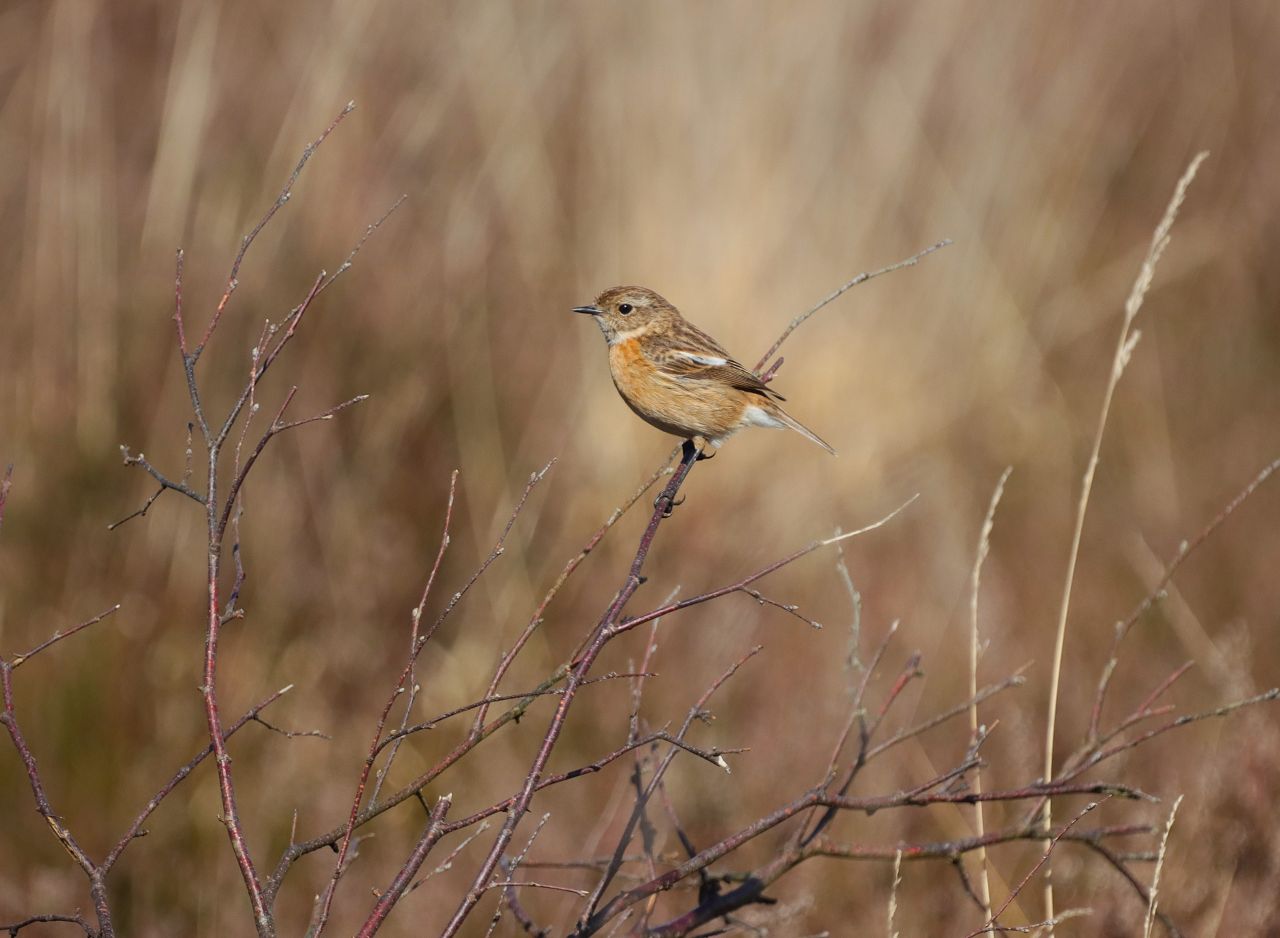
Stonechat, Whitmoor Common.
Out on the heathland resident stonechats could be observed. They continued to be one of my easiest birds to photograph as they perched up seemingly begging for a picture.
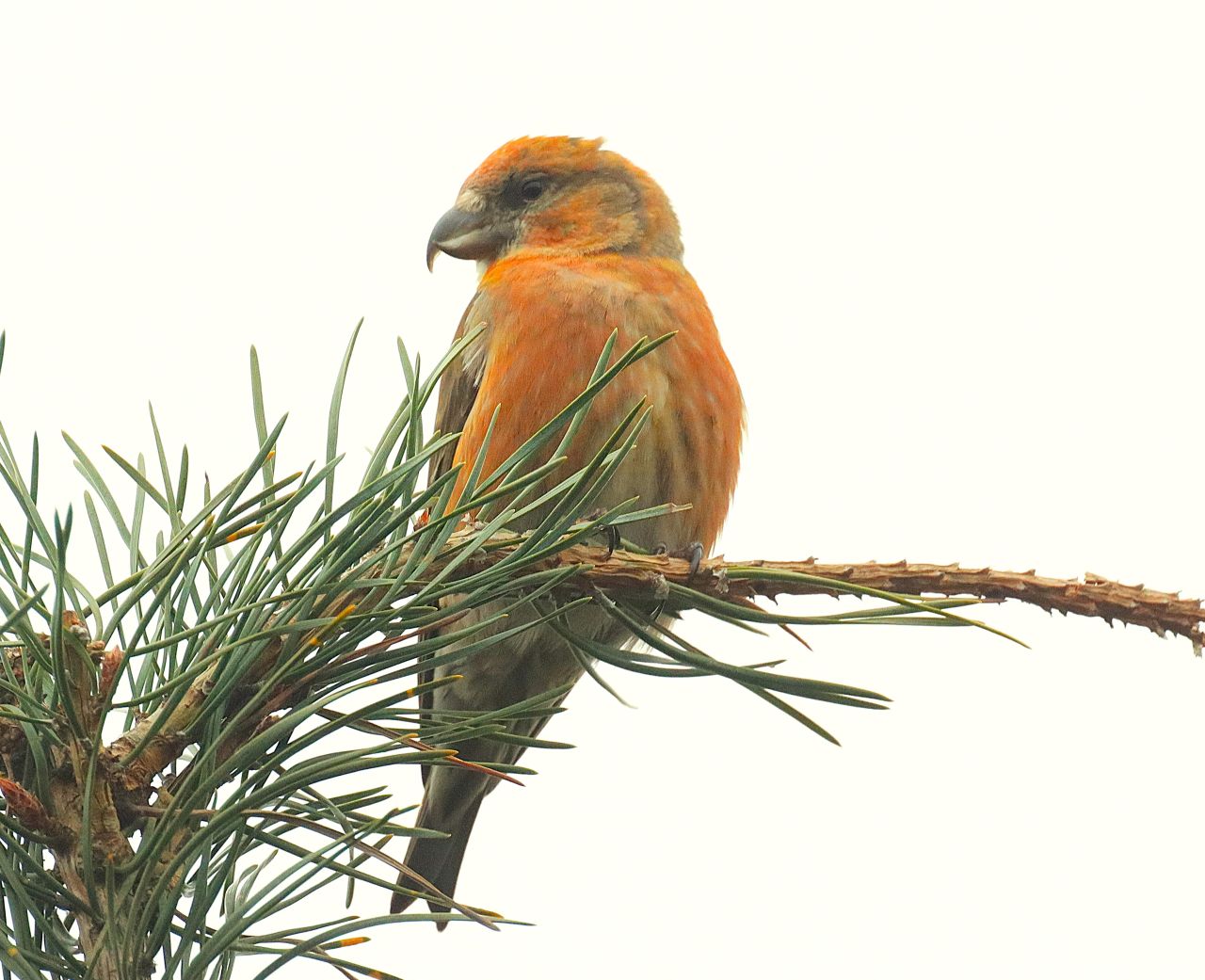
Common crossbill (male), Whitmoor Common.
As on my previous day’s visit, I managed to relocate a male crossbill, this time with a female also present.
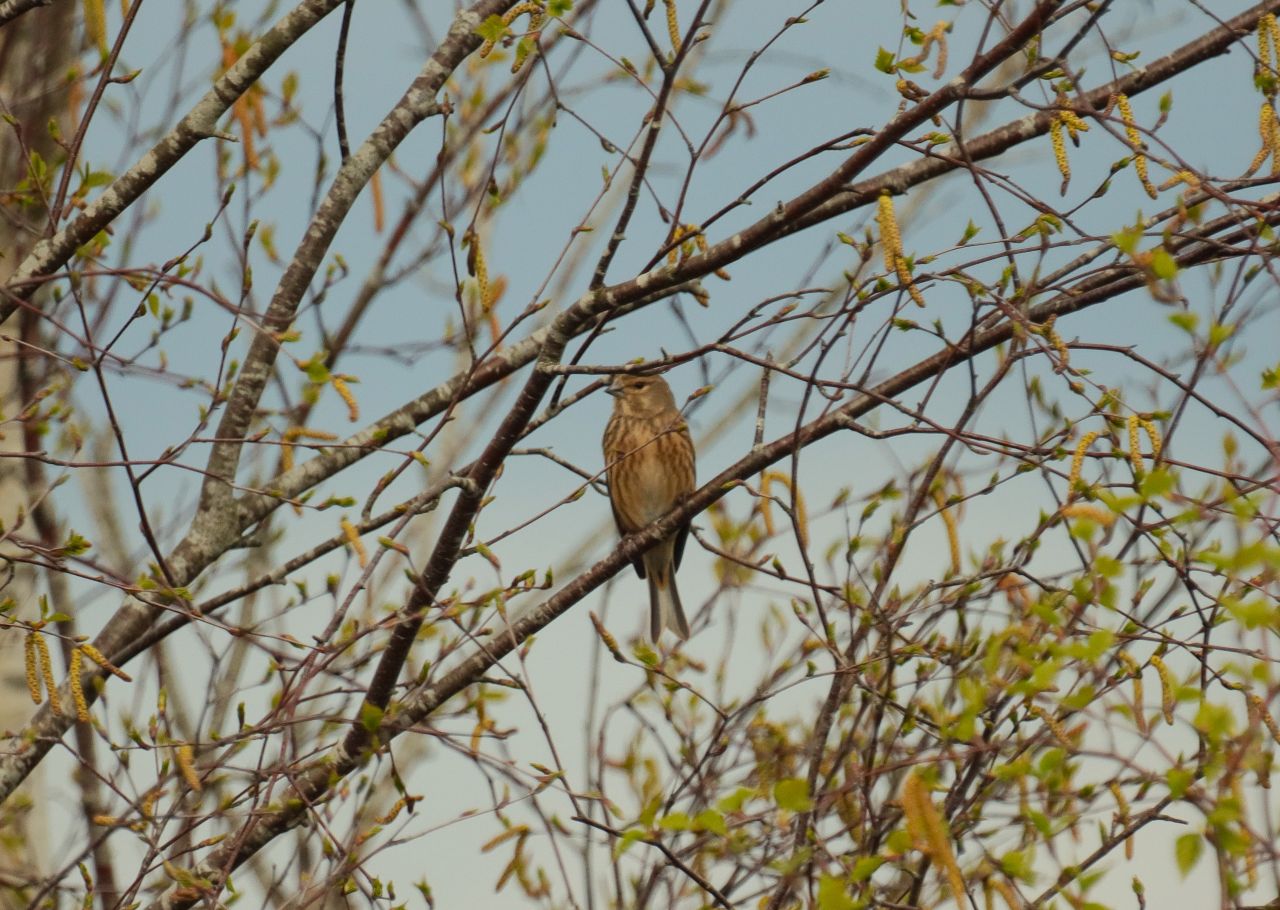
Linnet, Whitmoor Common.
Small groups of linnets continued to resident there.
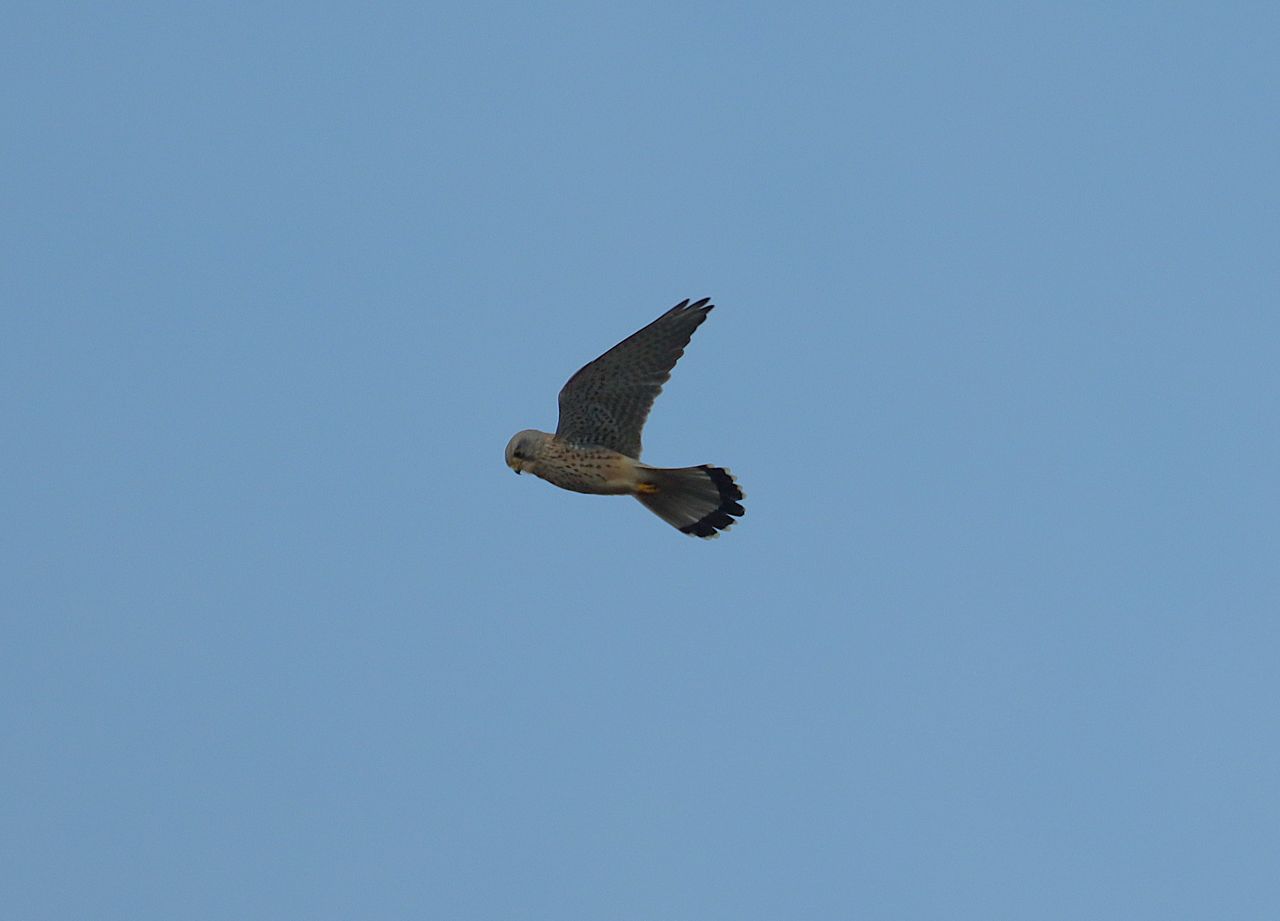
Kestrel, Whitmoor Common.
As well as a kestrel still being present over the heathland.
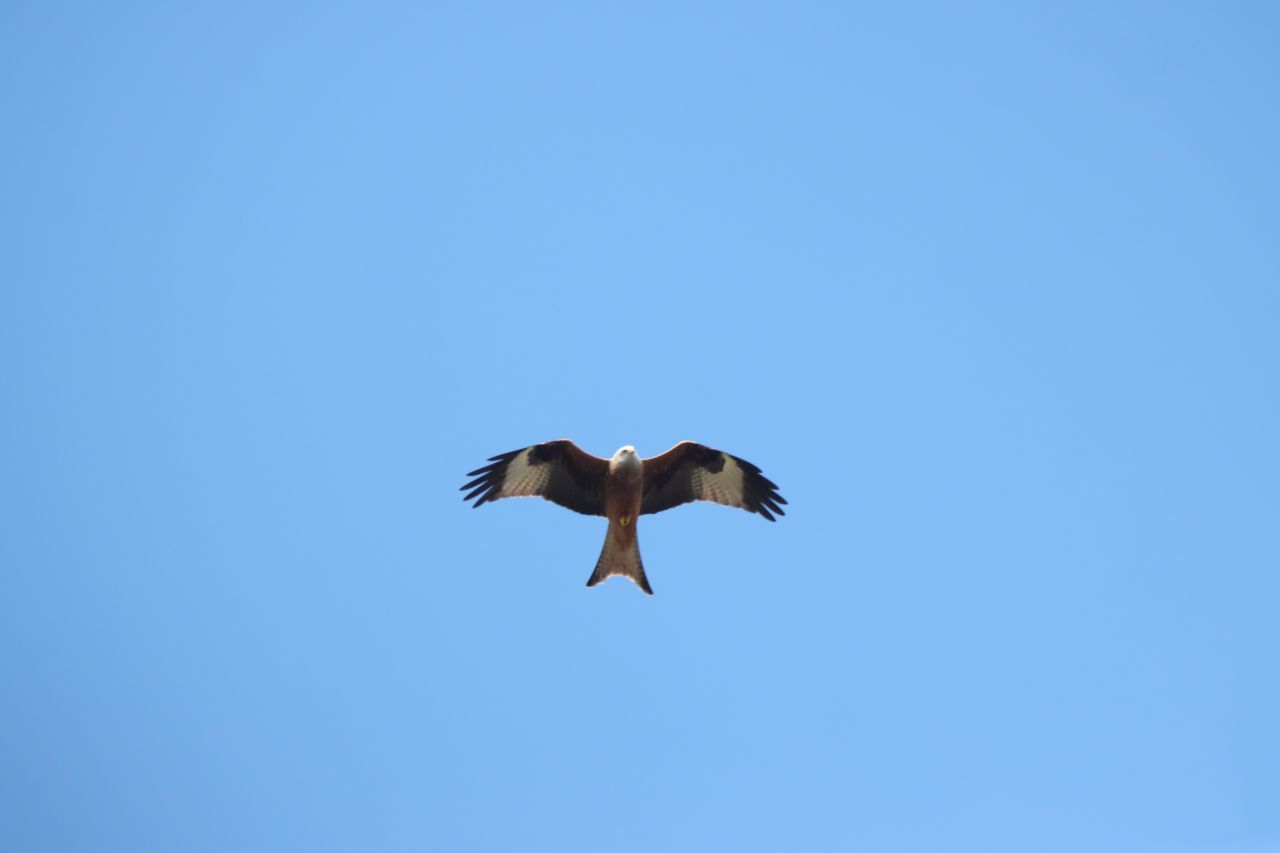
Red kite, Whitmoor Common.
Slowly, a red kite also glided overhead.
My best sighting and photos of the day (and possibly the year so far) had to be while walking through the old horse paddocks.
Looking out across the railway line toward the area of Britten’s Pond, a large bird could be viewed, not fitting the description of the lesser black-backed gulls distantly circling.
For me, it was once again right place, right time!
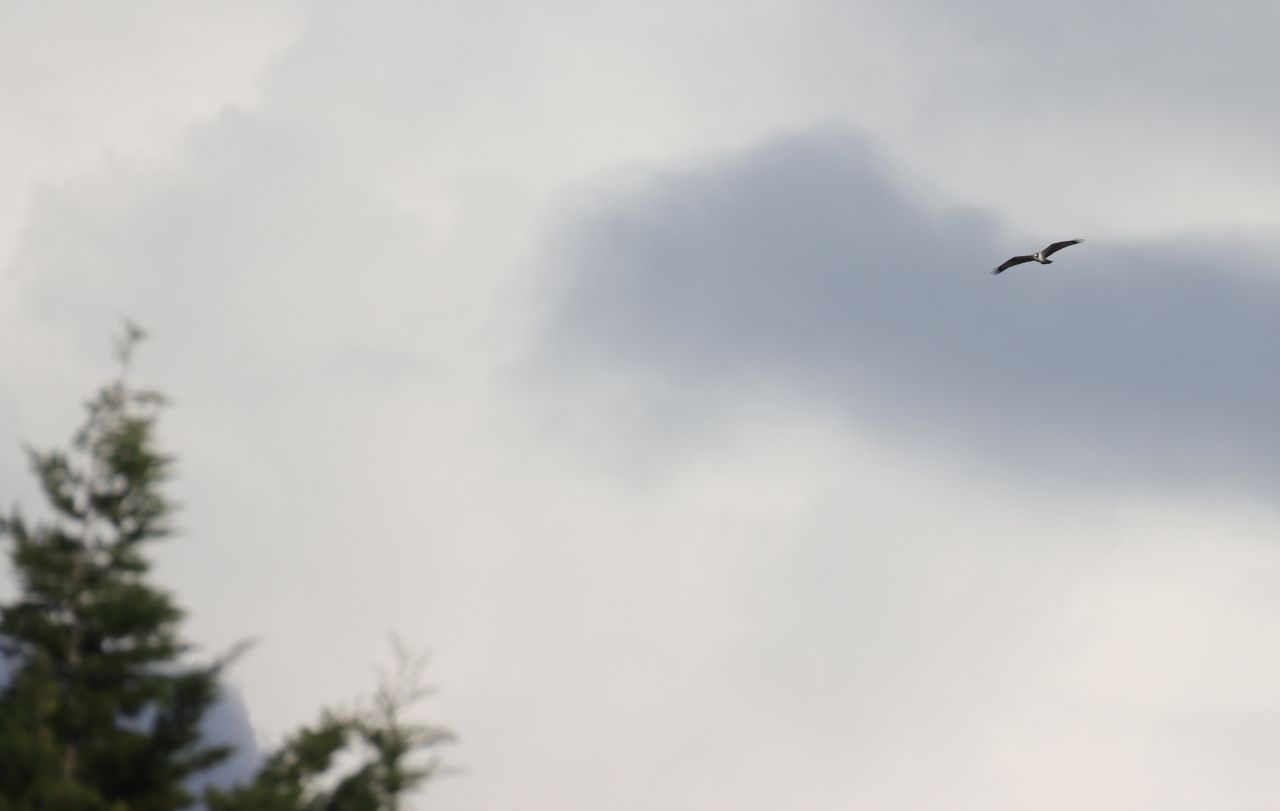
Osprey over Britten’s Pond.
Setting up my long lens camera and focusing in on the bird, I soon realised it to be an osprey.

Osprey over Britten’s Pond.
This being the first I’ve ever seen locally, and only the second I recall having seen and photographed in Surrey!
Although on my visit to Britten’s Pond later that afternoon, I was, as I guessed, unable to relocate the bird. However, most of the usual suspects were still on display.
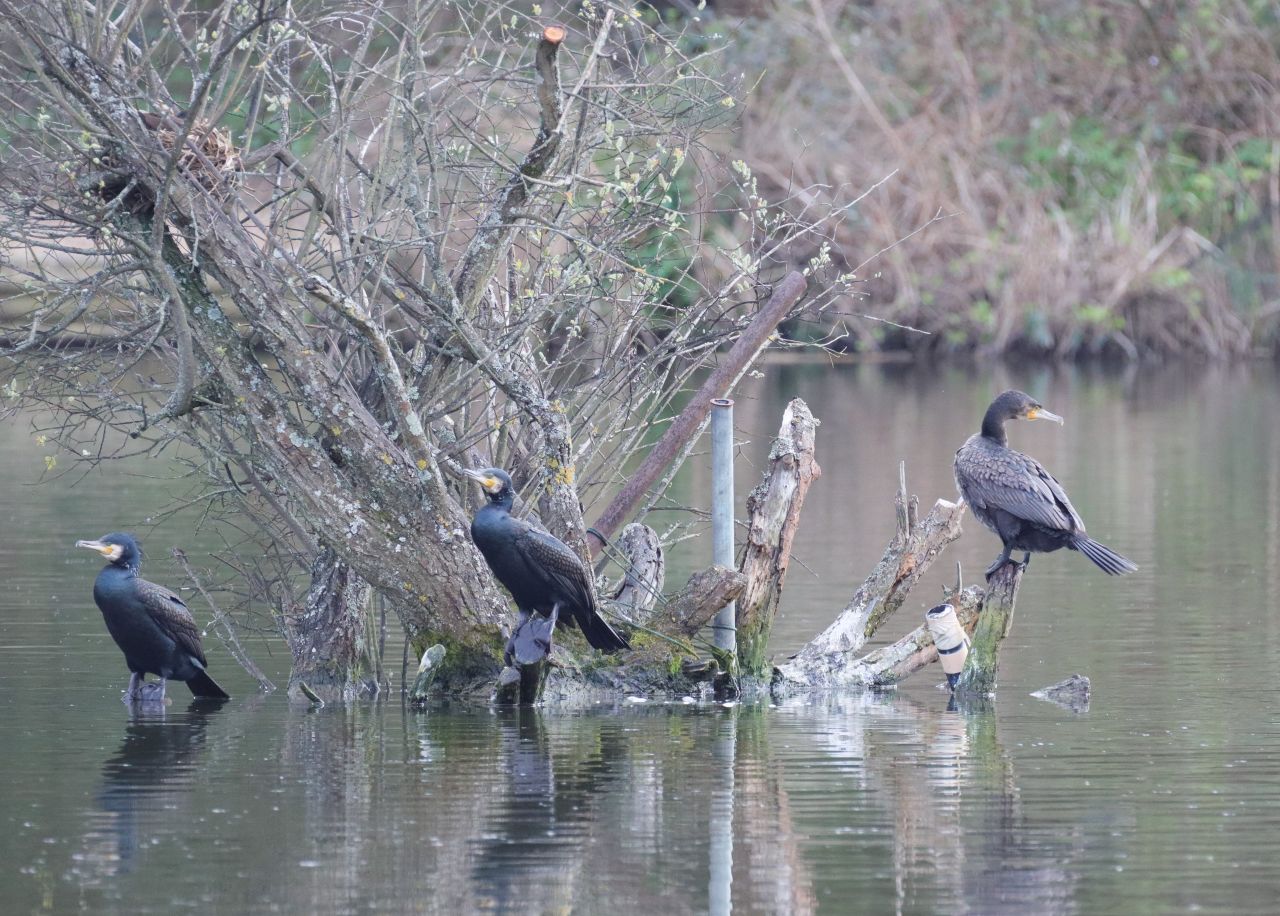
Cormorants, Britten’s Pond.
Three cormorants were on the small island that barely allowed enough room to support them.
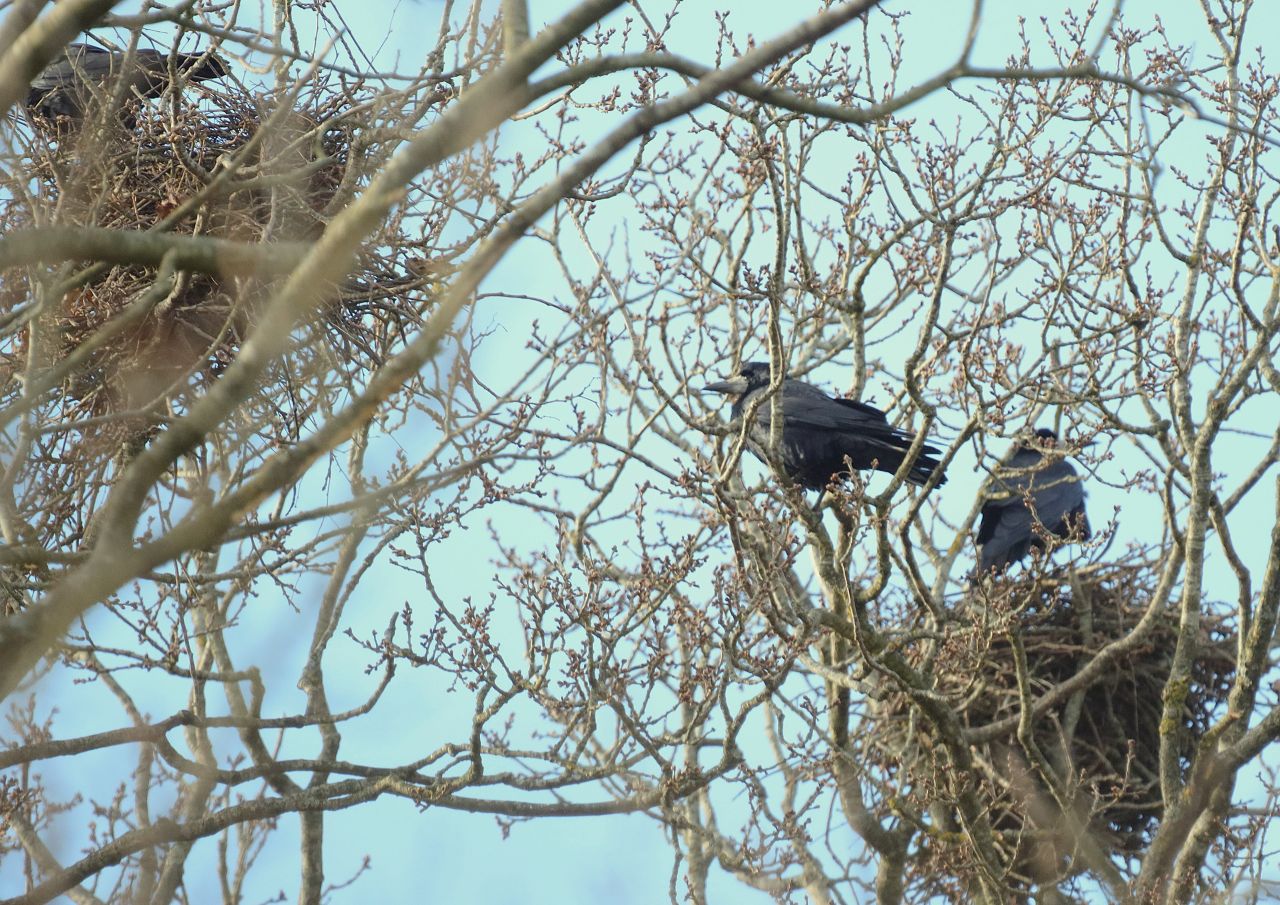
Rooks, Britten’s Pond.
In the tall trees to the rear of the pond the rooks continued to be actively raising their young.
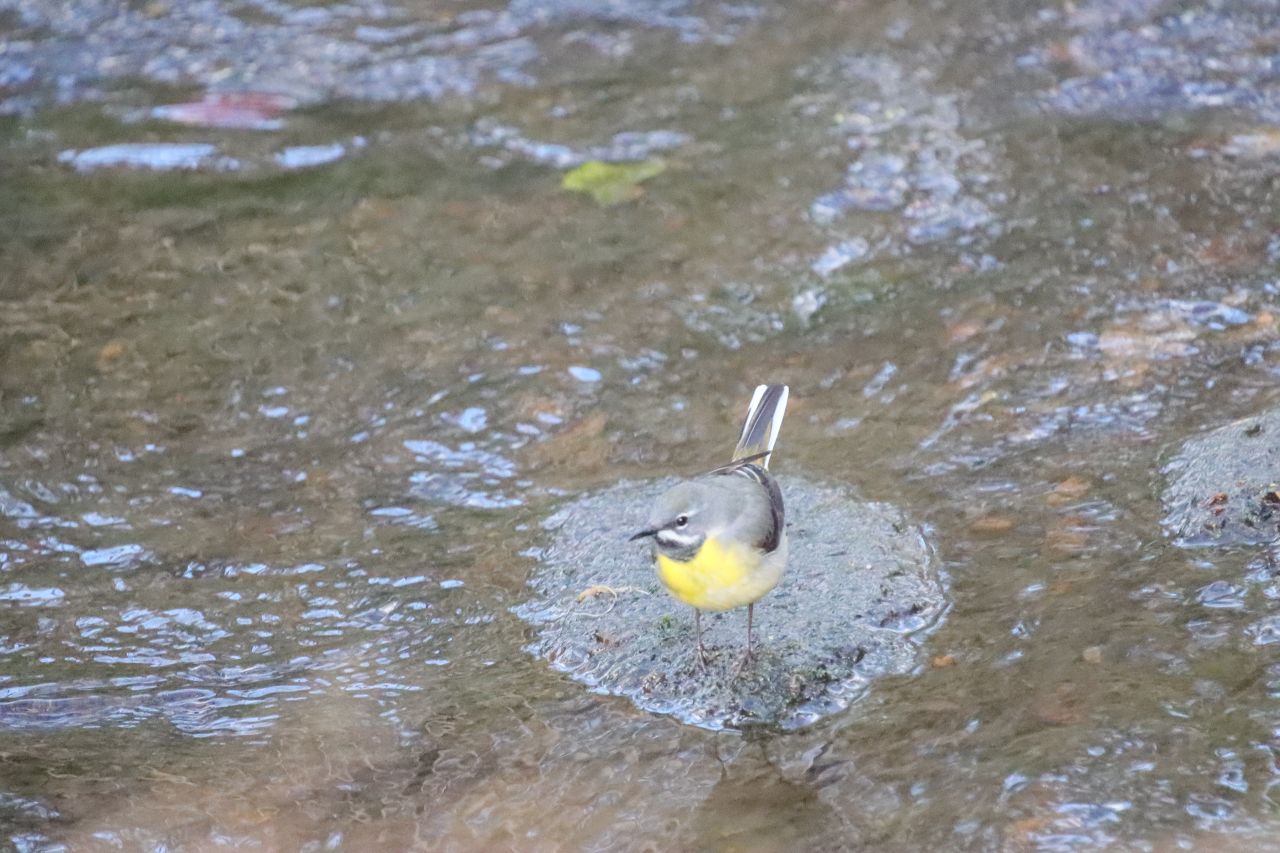
Grey wagtail (male), Britten’s Pond.
A pair of grey wagtails danced back and forth across the water in their undulating flight. The male notably recognised by its black bib.

Nuthatch, Britten’s Pond.
Nuthatches continued to call and sing around the pond.
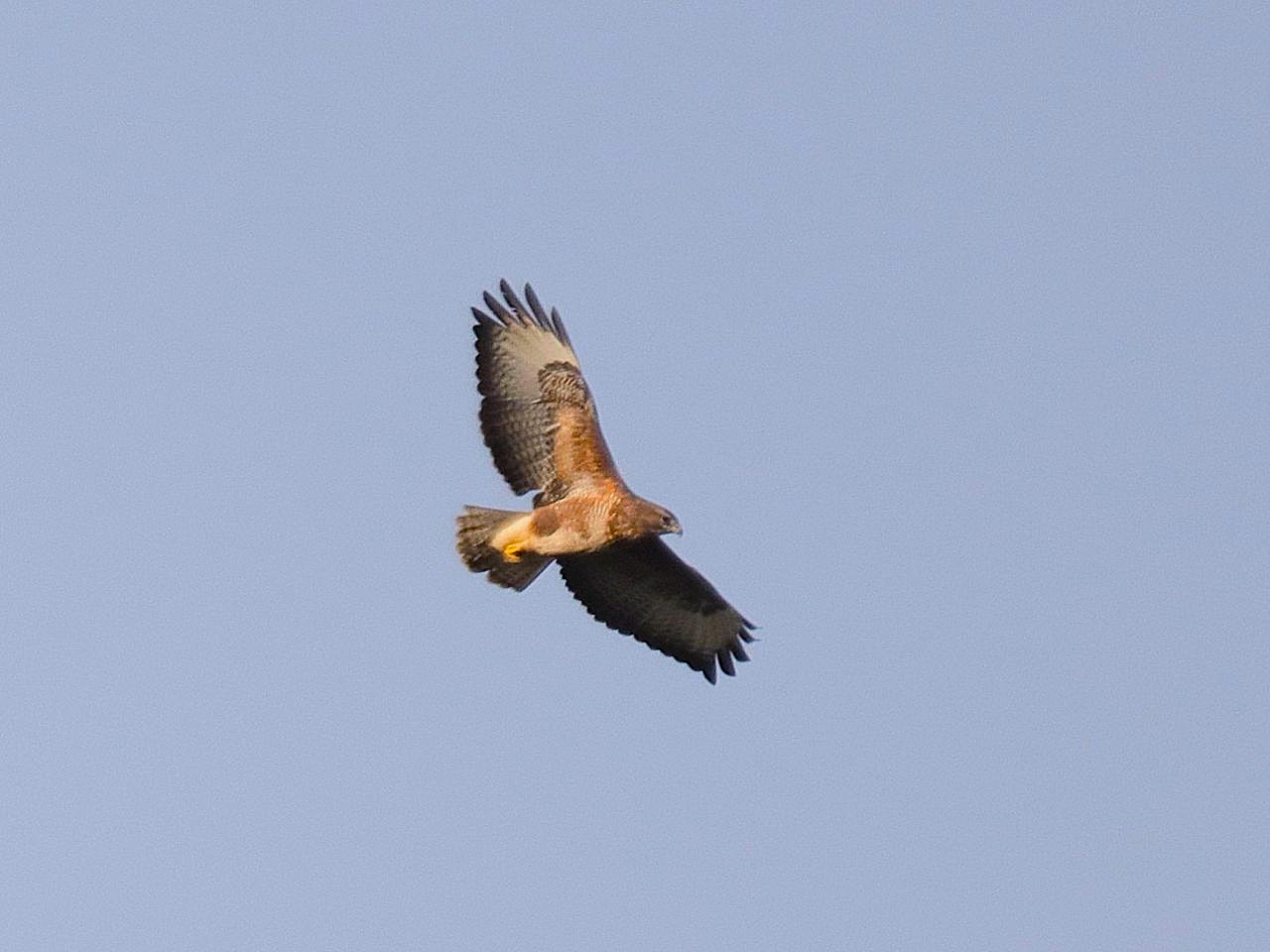
Common buzzard, Britten’s Pond.
And a common buzzard flew over the water.
Again back in the company of Bob and Dougal, on March 26 our visit to Pewley Down allowed us our first sightings of the arrival of two wheatears.
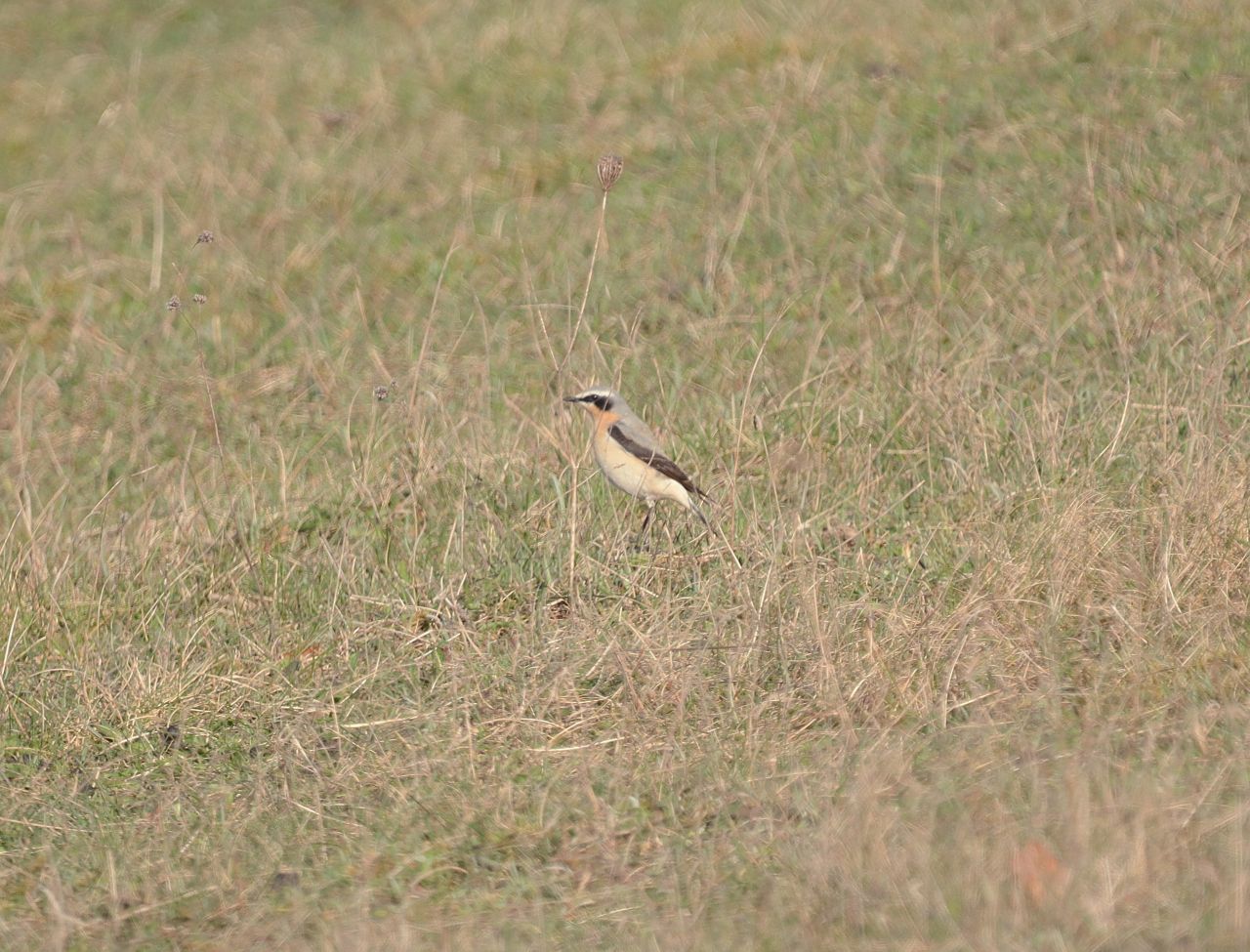
Wheatear, Pewley Down.
They had had been reported on the north-facing meadows earlier that day.

Swallow, Unstead Wetland Nature Reserve.
While a few days later, on March 28, we also added our first three swallows of this year at Unstead Sewage Farm, now renamed Unstead Wetland Nature Reserve.
On March 29, we stepped into British Summertime as the clocks move forward an hour.
A chilly north-westerly breeze continued to push though. And into the last day’s of the month temperatures were down to low double-digits Celsius.
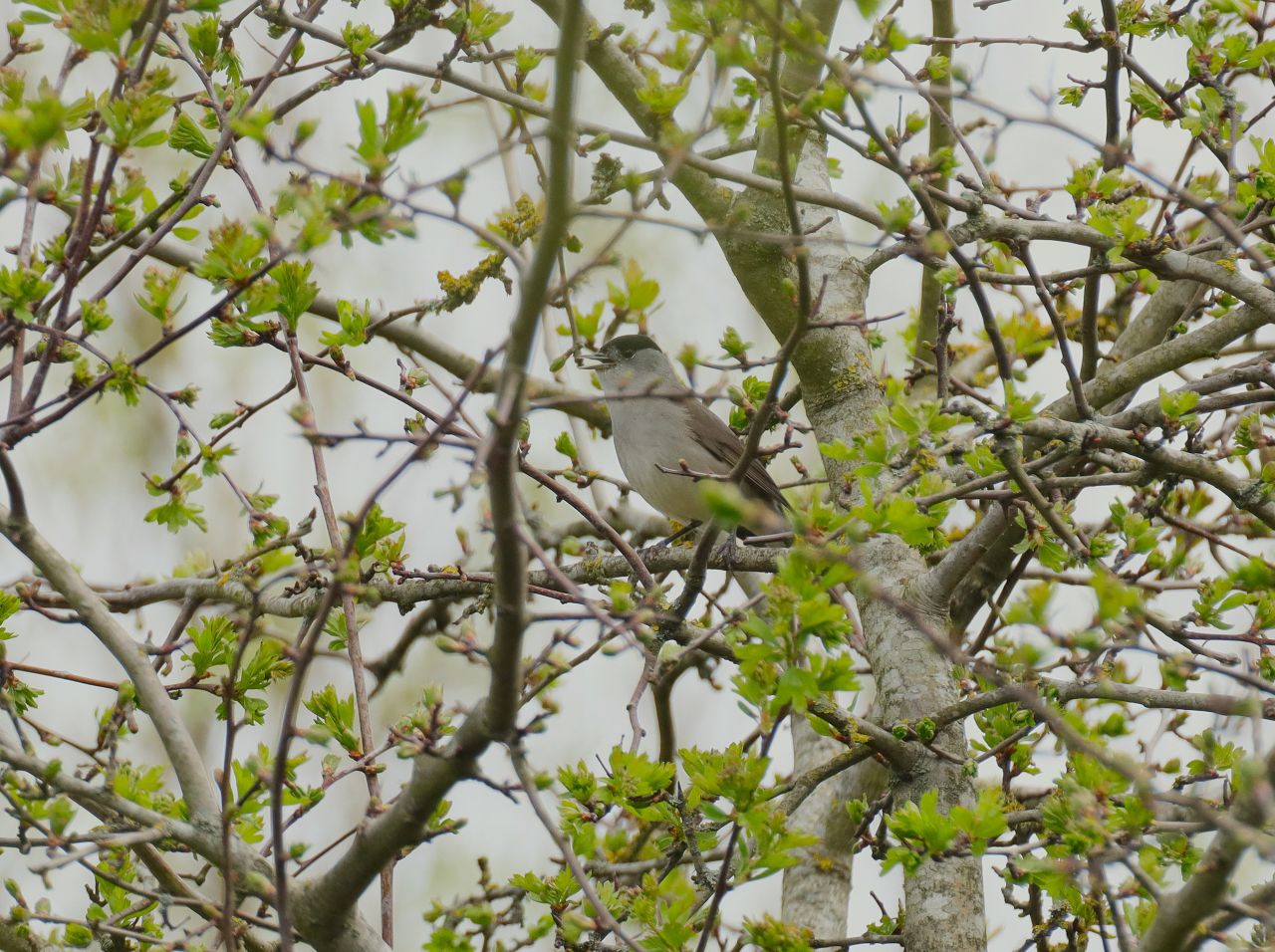
Blackcap in song at the Riverside Nature Reserve.
In spite of this I saw my first three blackcaps of the year, and in song, on my return to the Riverside Nature Reserve.
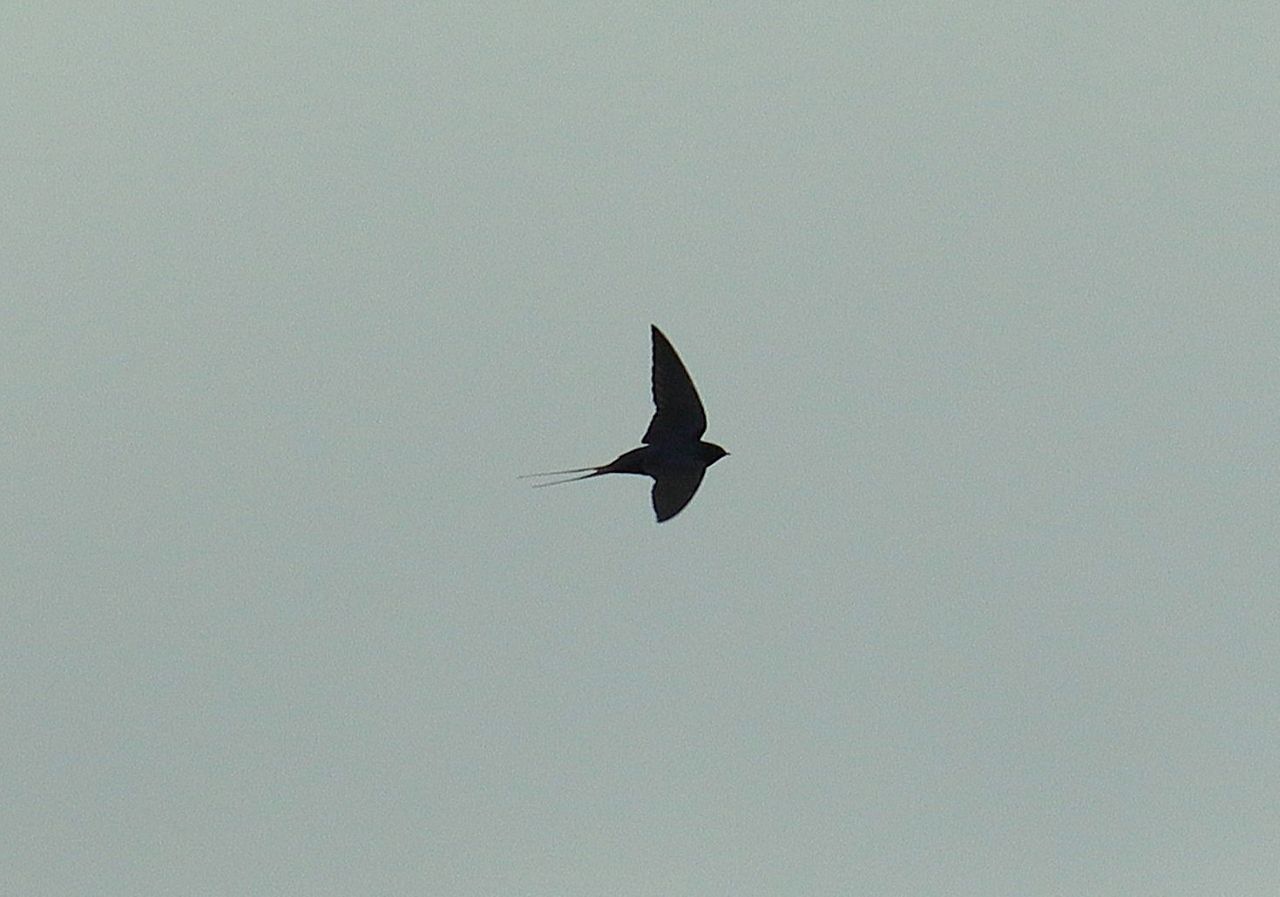
Swallow over Stoke Lake.
Also adding a further six swallows to the previous day’s sightings, over Stoke Lake.
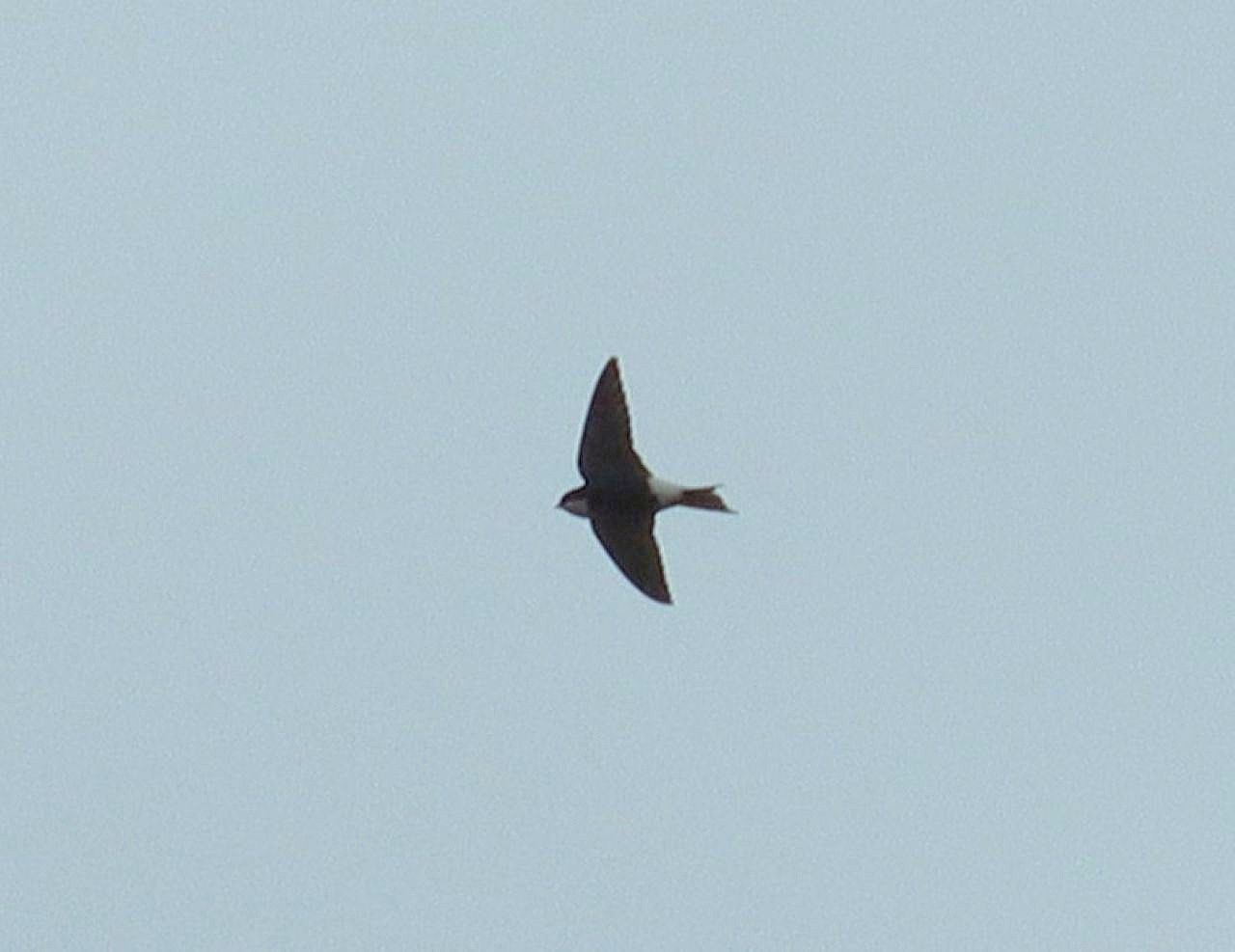
House martin over Stoke Lake.
As well as a house martin within the group, and adding another three swallows over the Slyfield sewage works.
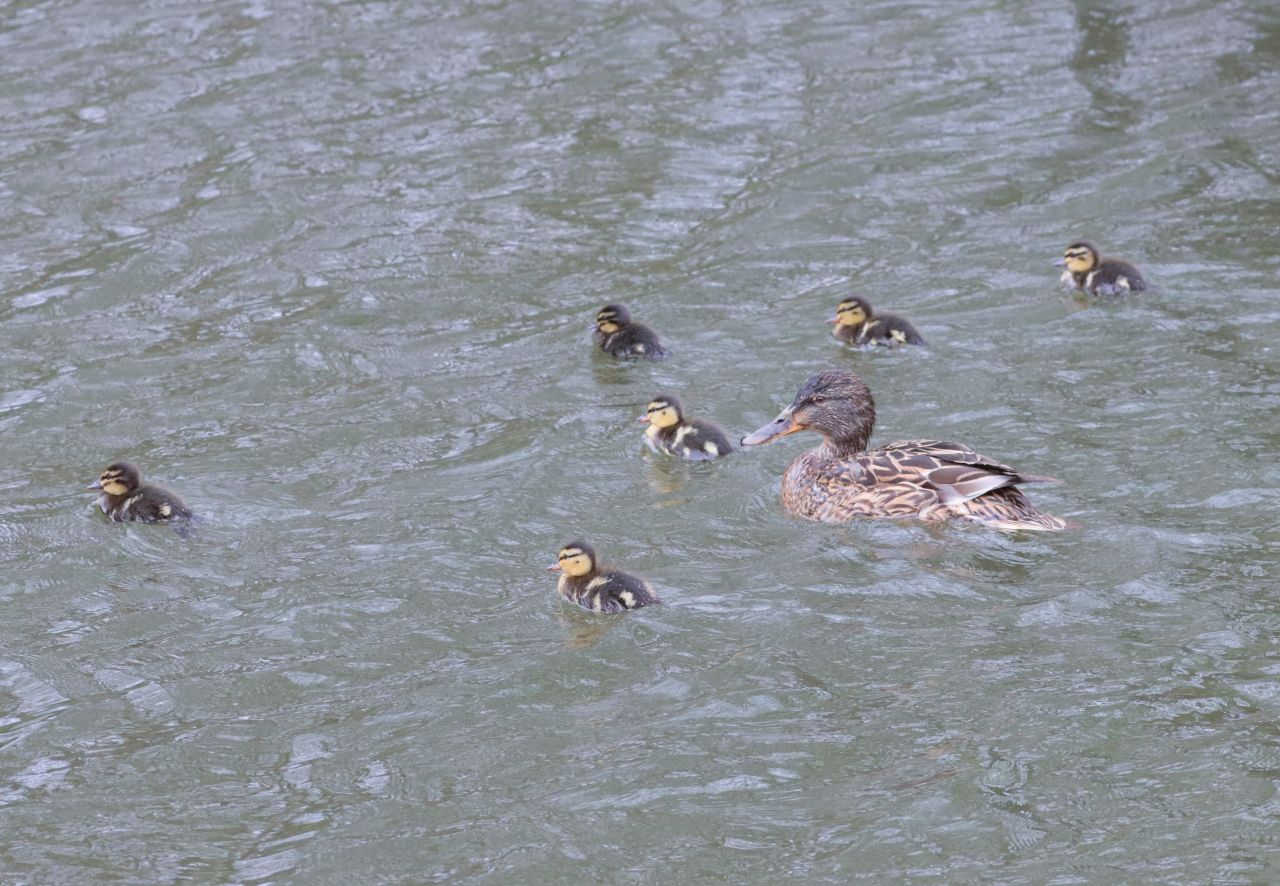
Adult mallard with six ducklings on the River Wey by the Riverside Nature Reserve.
Along the River Wey, I added my first sighting this year of an adult mallard parading its young chicks.
By March 31, temperatures had increased to 18 degrees Celsius, with occasional sunny intervals locally as a high pressure briefly pushed up from the south.
The warmth being enough for the first sightings this year of as many as a dozen orange-tip butterflies, all males,
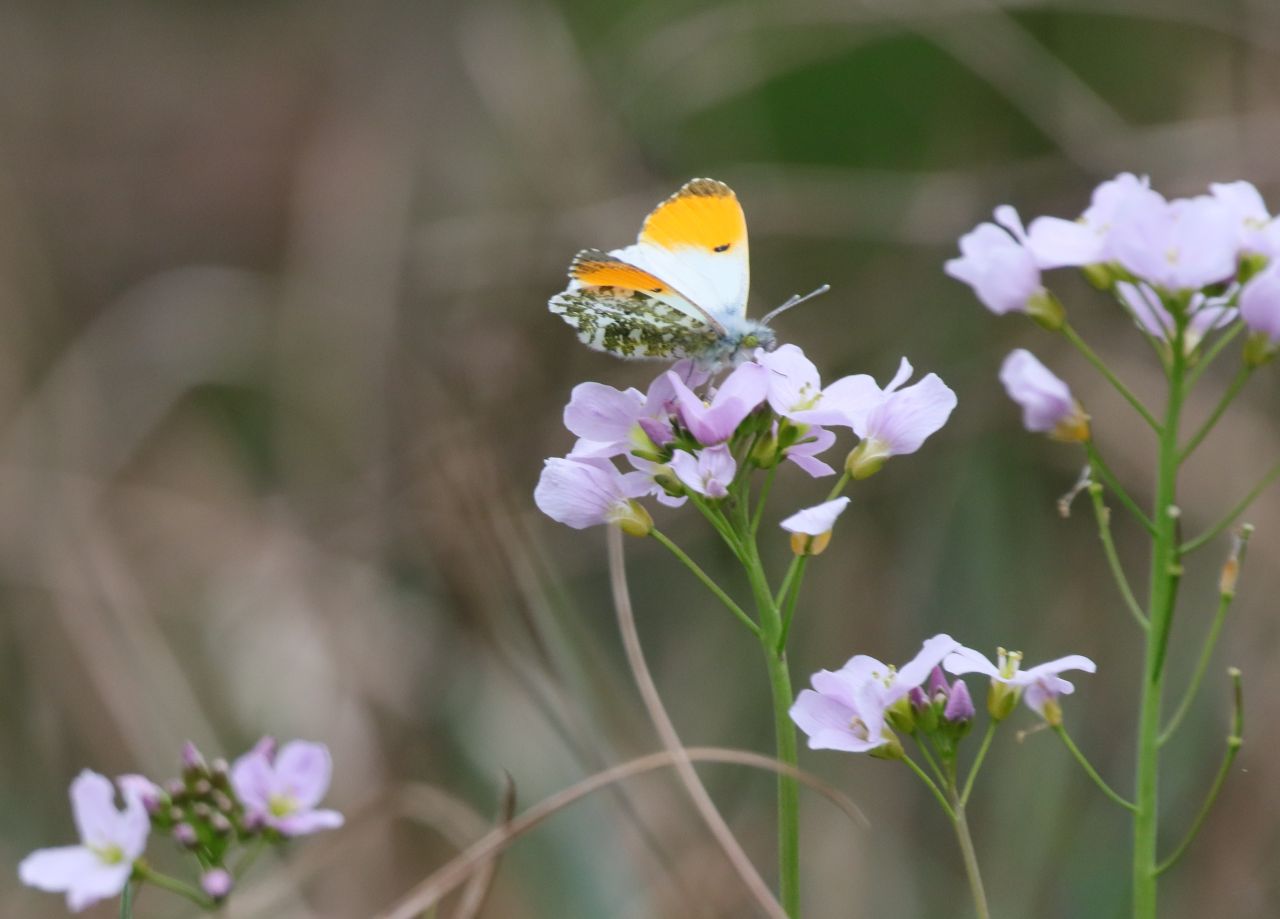
Orange-tip butterfly (male), on lady’s smock, one of it’s favoured food plants, at the Riverside Nature Reserve.
I got my first photos of them this year as they occasionally settled on their favoured food plants – the aforementioned lady’s smock blossom.
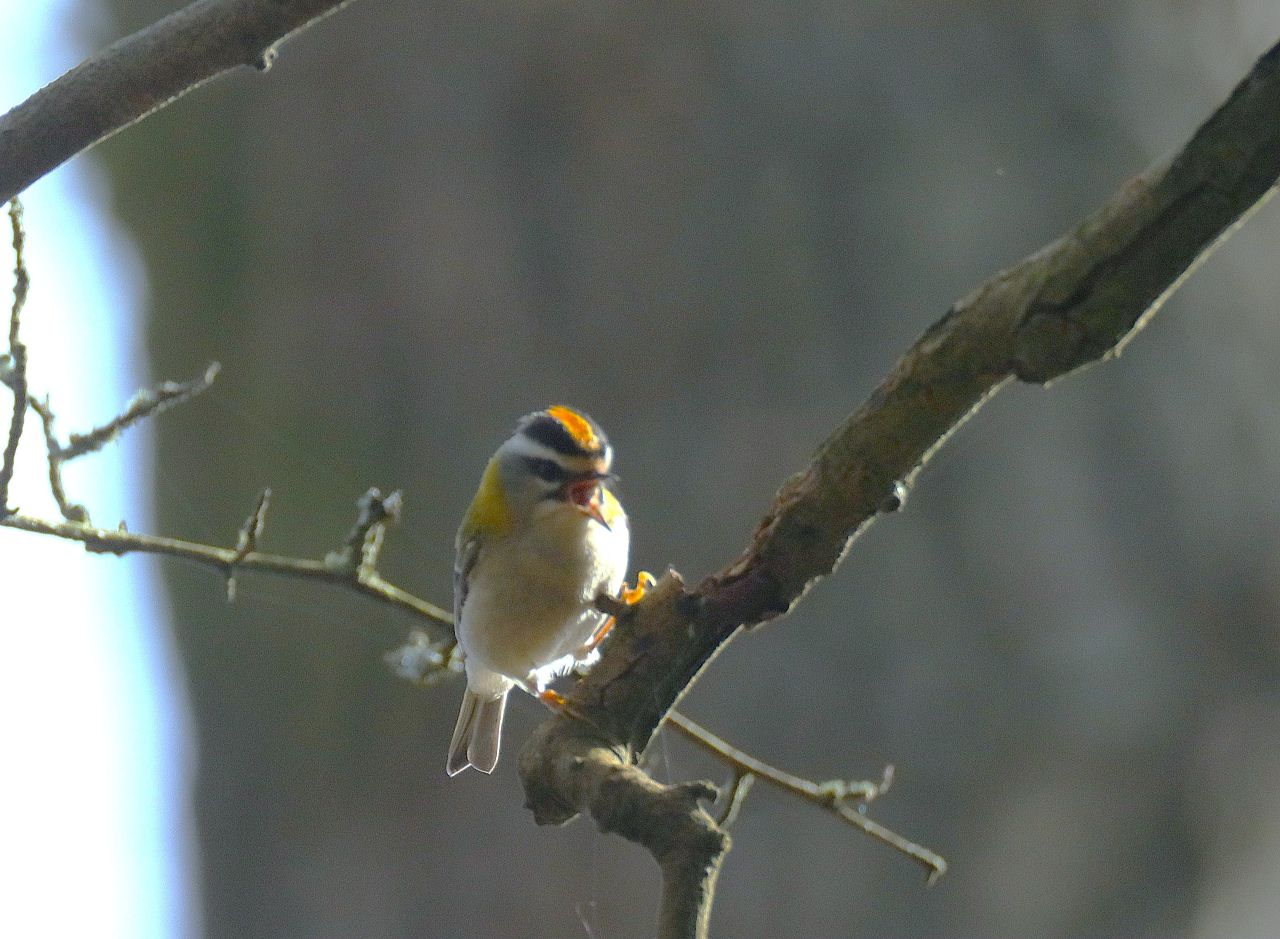
Firecrest in song, Cutt Mill Pond.
Elsewhere on my local travels I also added a firecrest, when I visited Cutt Mill Ponds at Puttenham.
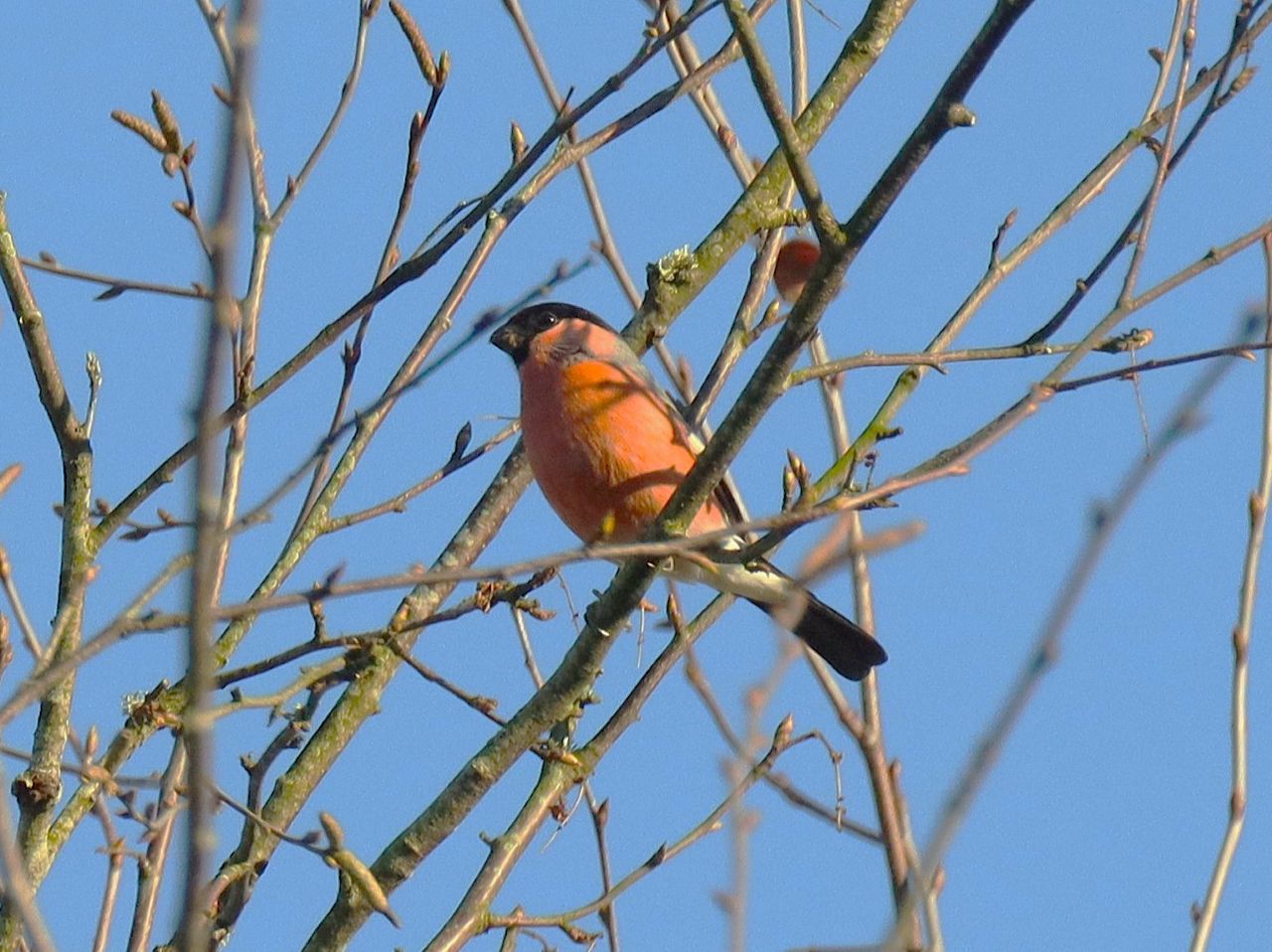
Bullfinch, Thundry Meadows.
Also getting my first photo this year of a male bullfinch. One of a pair seen at Thundry Meadows nature reserve at Elstead.
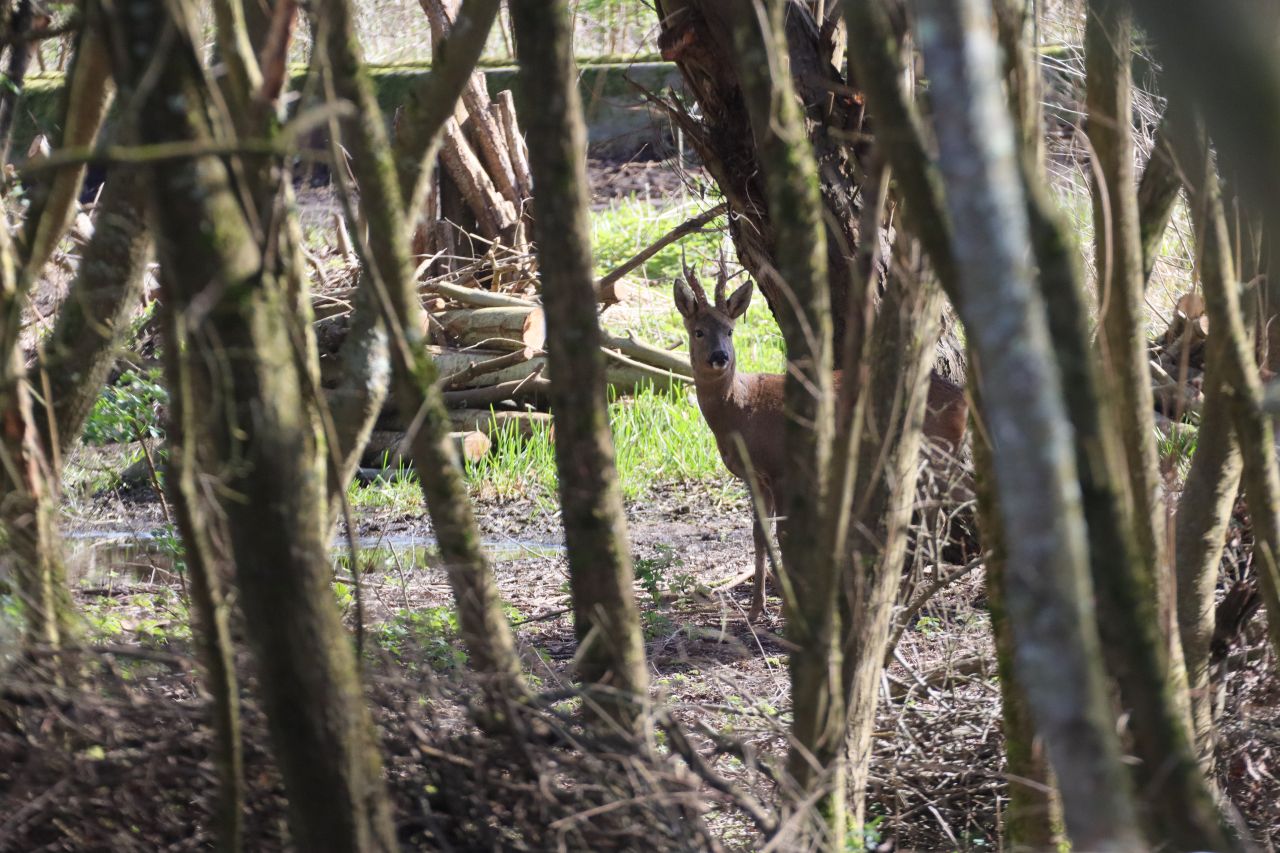
Buck roe deer at Unstead.
And a buck roe deer at the Unstead Wetland Nature Reserve.
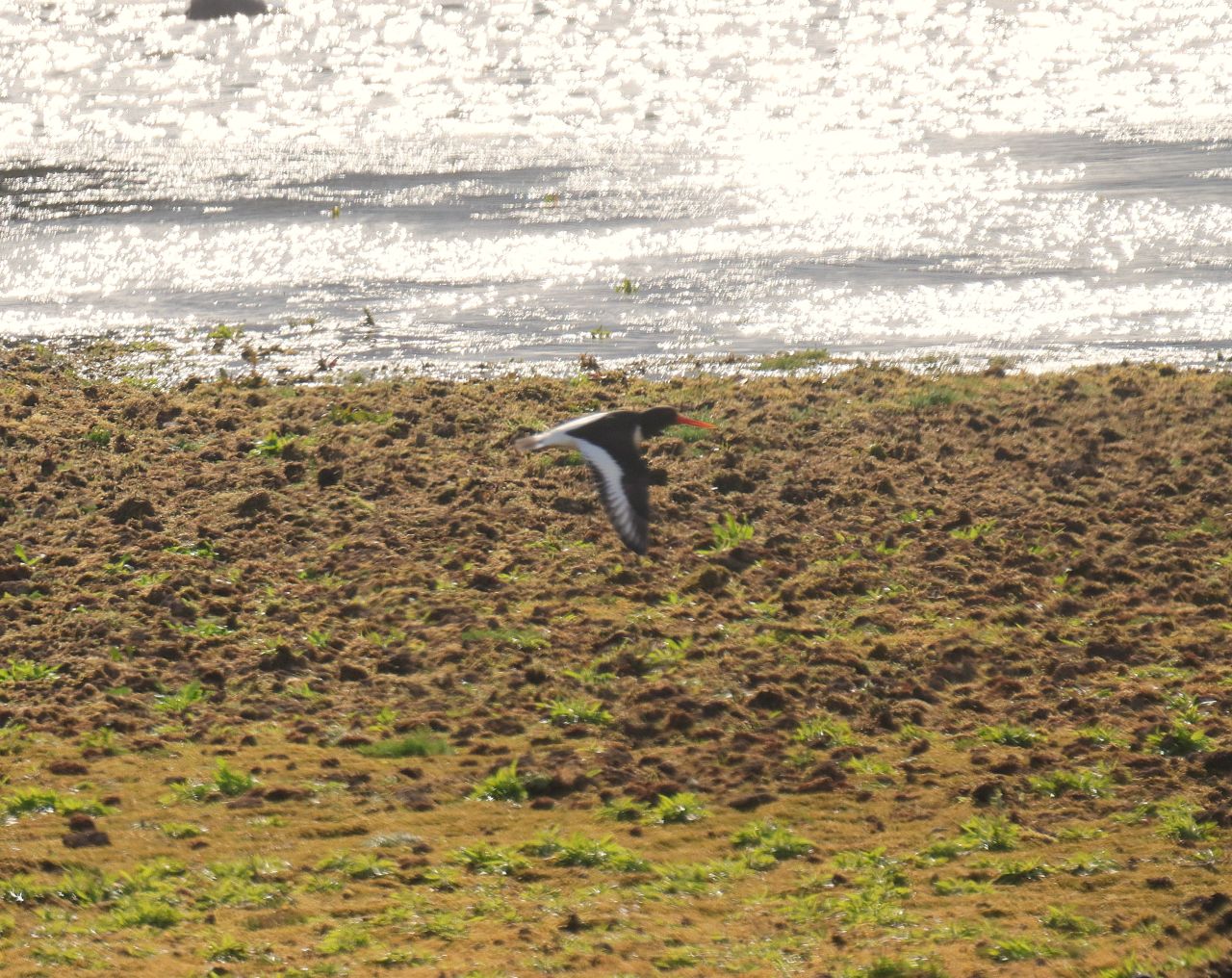
Oystercatcher, Tice’s Meadow.
As well as one of three oystercatchers at Tice’s Meadow, near Farnham.
Share This Post


Responses to Birdwatcher’s Diary No.346
Leave a Comment Please see our comments policy. All comments are moderated and may take time to appear. Full names, or at least initial and surname, must be given.











Roland Dunster
April 8, 2026 at 9:37 pm
I always read and love Malcolm Fincham’s Birdwatcher’s Diary but this edition was particularity special.
In addition to all the other wonderful local sites and wildlife detailed, the peregrine falcon being a recent regular visitor to the Riverside Nature Reserve, the little egret at the soon to open Burpham Court Farm Nature Reserve and an osprey over Britten’s Pond, were truly uplifting. Thank you, Malcolm.
Editor’s note: According to the online Oxford Dictionary of English, the falcon’s name is a translation of the modern Latin taxonomic name, literally “pilgrim falcon”, because falconers’ birds were caught fully grown on migration, not taken from the nest.