- Stay Connected

Socialize


 Abraham Lincoln
If given the truth, the people can be depended upon to meet any national crisis...
Abraham Lincoln
If given the truth, the people can be depended upon to meet any national crisis...

 Guildford news...
for Guildford people, brought to you by Guildford reporters - Guildford's own news service
Guildford news...
for Guildford people, brought to you by Guildford reporters - Guildford's own news service
Birdwatcher’s Diary No.348
Published on: 5 May, 2026
Updated on: 7 May, 2026
By Malcolm Fincham
The weather continued to remain settled in late April as a high pressure system continued to build over the UK.
Its cyclonic flow continued to bring a cool easterly breeze, and by the last week of the month temperatures began to rise reaching the low to mid 20s Celsius, remaining dry at times.
Opportunities of adding to this year’s sightings with photos were so abundant I found myself having to relent to a synopsis here of the many birds I encountered.
Foolishly believing I had possibly caught up with most of my local sightings, I decided to take up several invites by a few long-time birdwatching pals on trips beyond the Surrey borders in the hope of seeing and photographing a few species rarely seen locally.
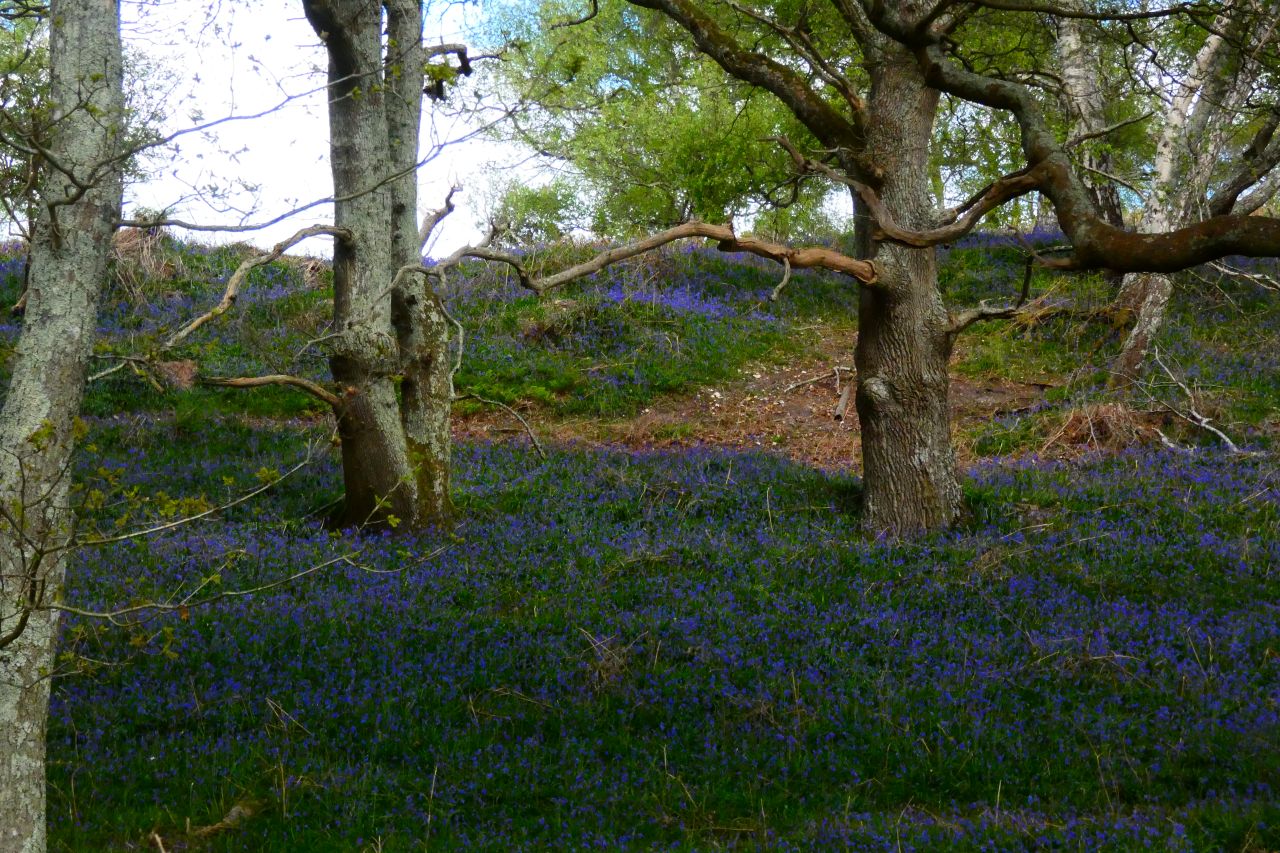
Bluebells in flower in the woodland at Pulborough Brooks.
In the company of Bob and Dougal on April 18 we decided to visit Pulborough Brooks in West Sssex. In the woodlands bluebells were still in flower.
On our walk from the visitor centre down to the hides we heard a cacophony of various birds now in song.
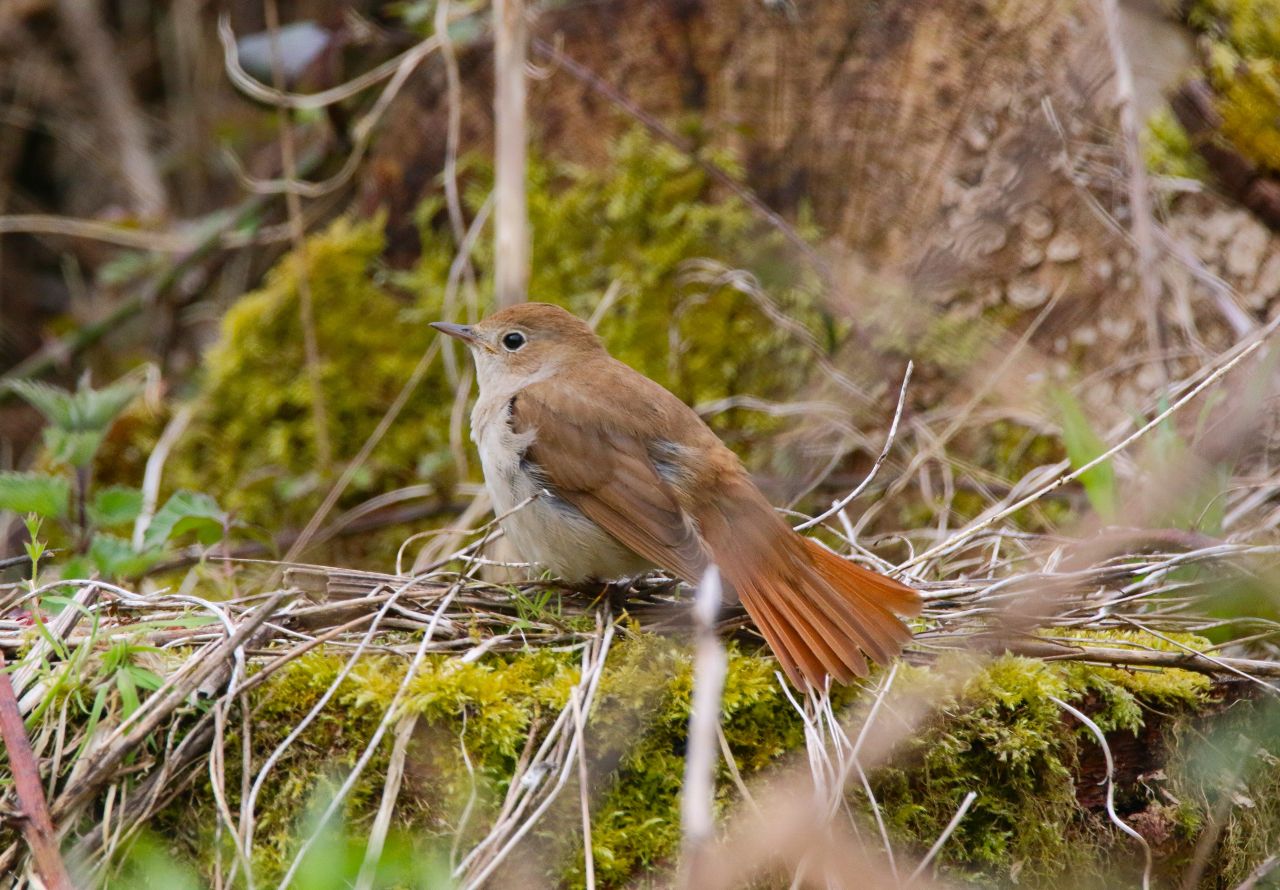
Nightingale showing off its rusty-brown tail feathers at Pulborough Brooks.
Most prominent was the recent arrival of the ‘iconic’ nightingale, an annual visitor there. Counting as many as eight in song while on our circular walk.
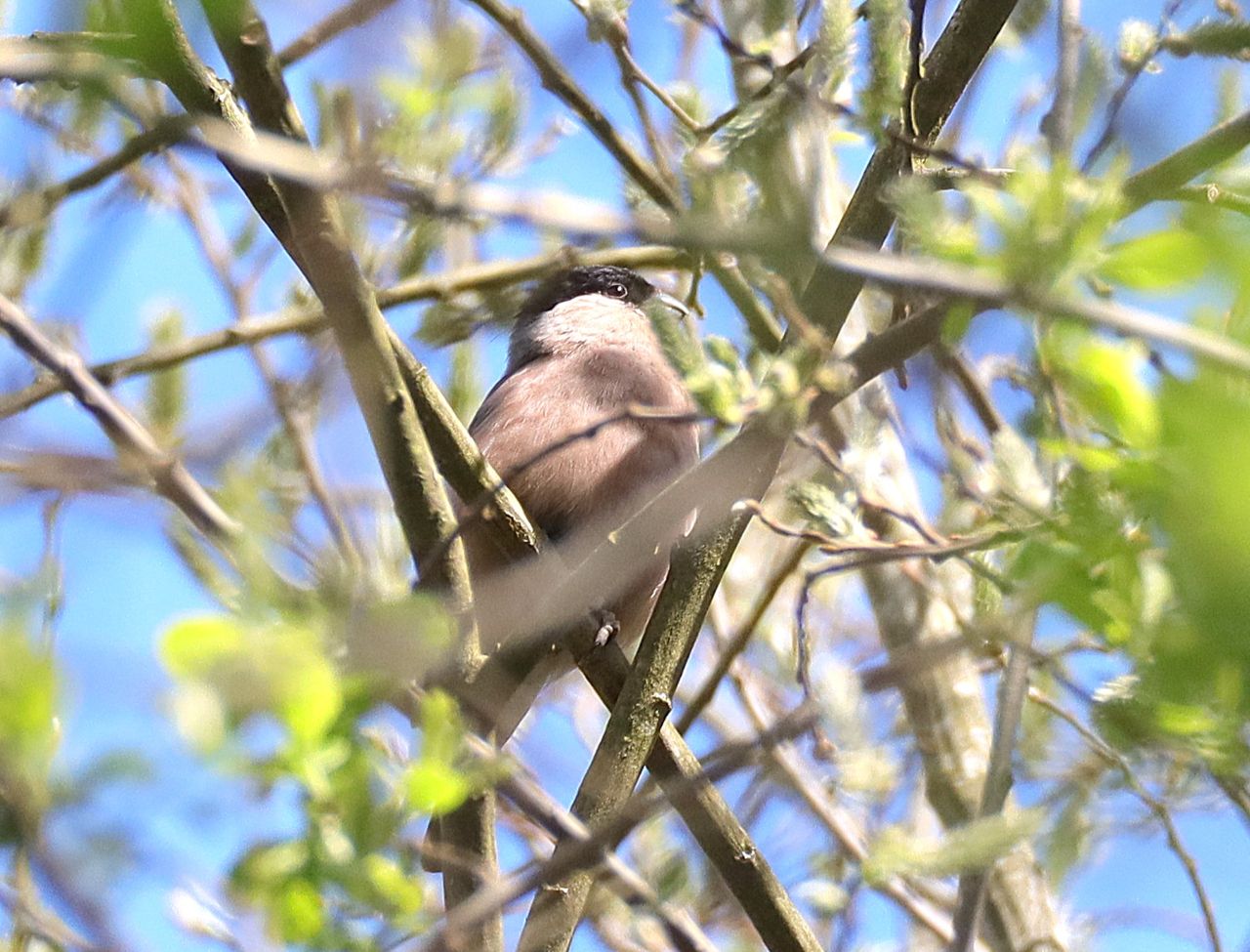
Bullfinch, Pulborough Brooks.
Also adding one of just a few sightings and photos of a bullfinch this year, this time a female.
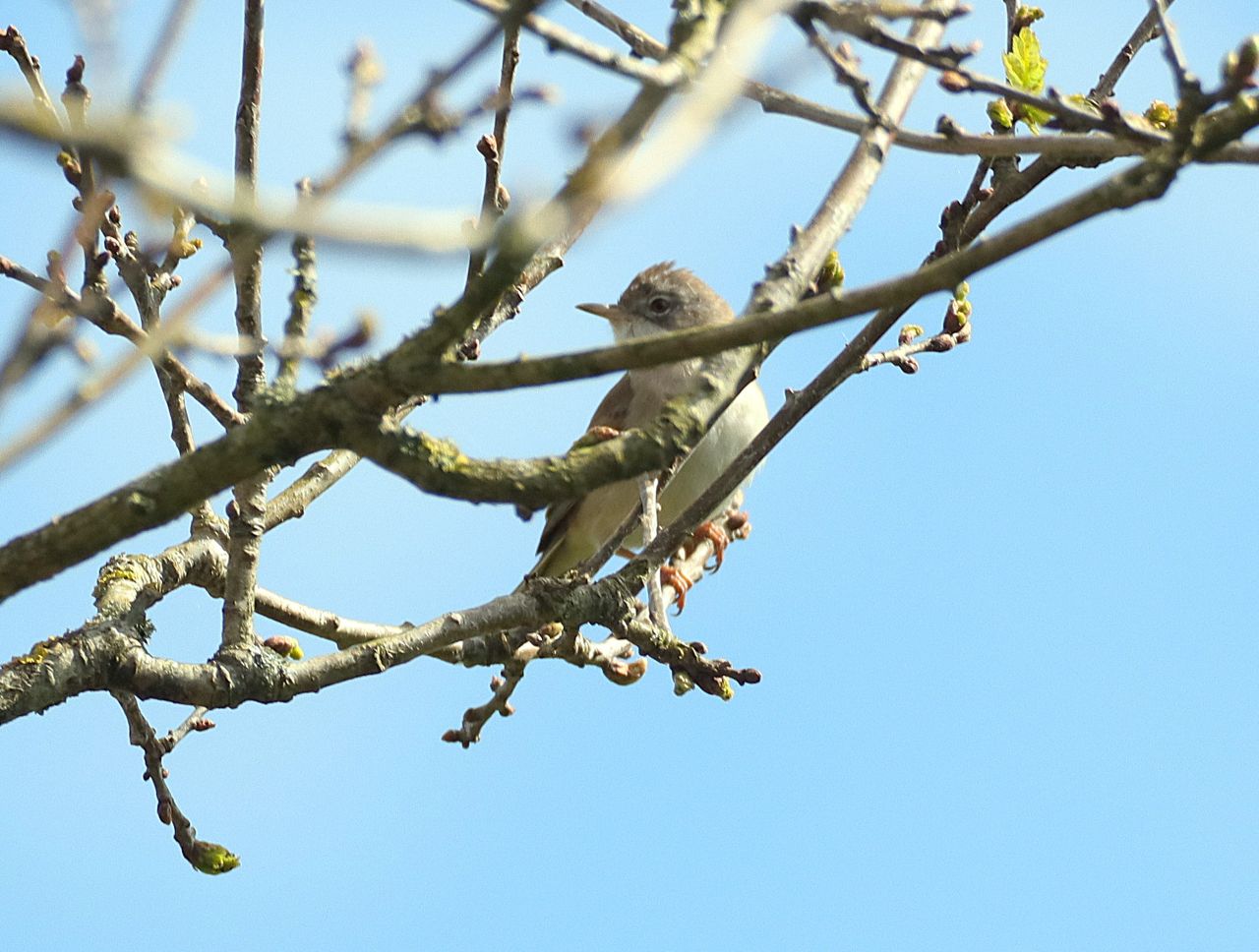
Lesser whitethroat, Pulborough Brooks.
A lesser whitethroat was also in song.
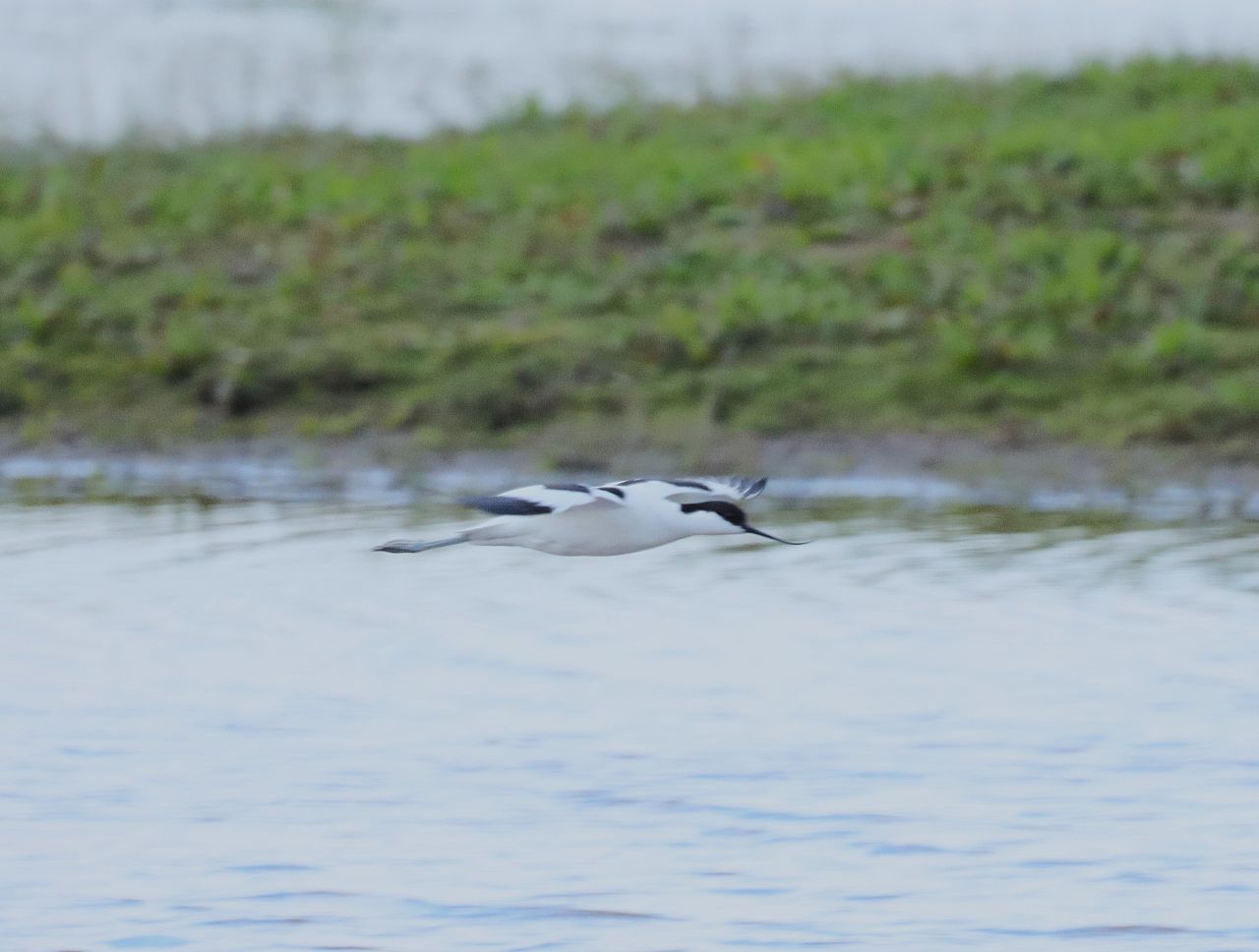
Avocet, Pulborough Brooks.
Looking out across the brooks several avocets could be viewed, some showing signs of breeding behaviour.
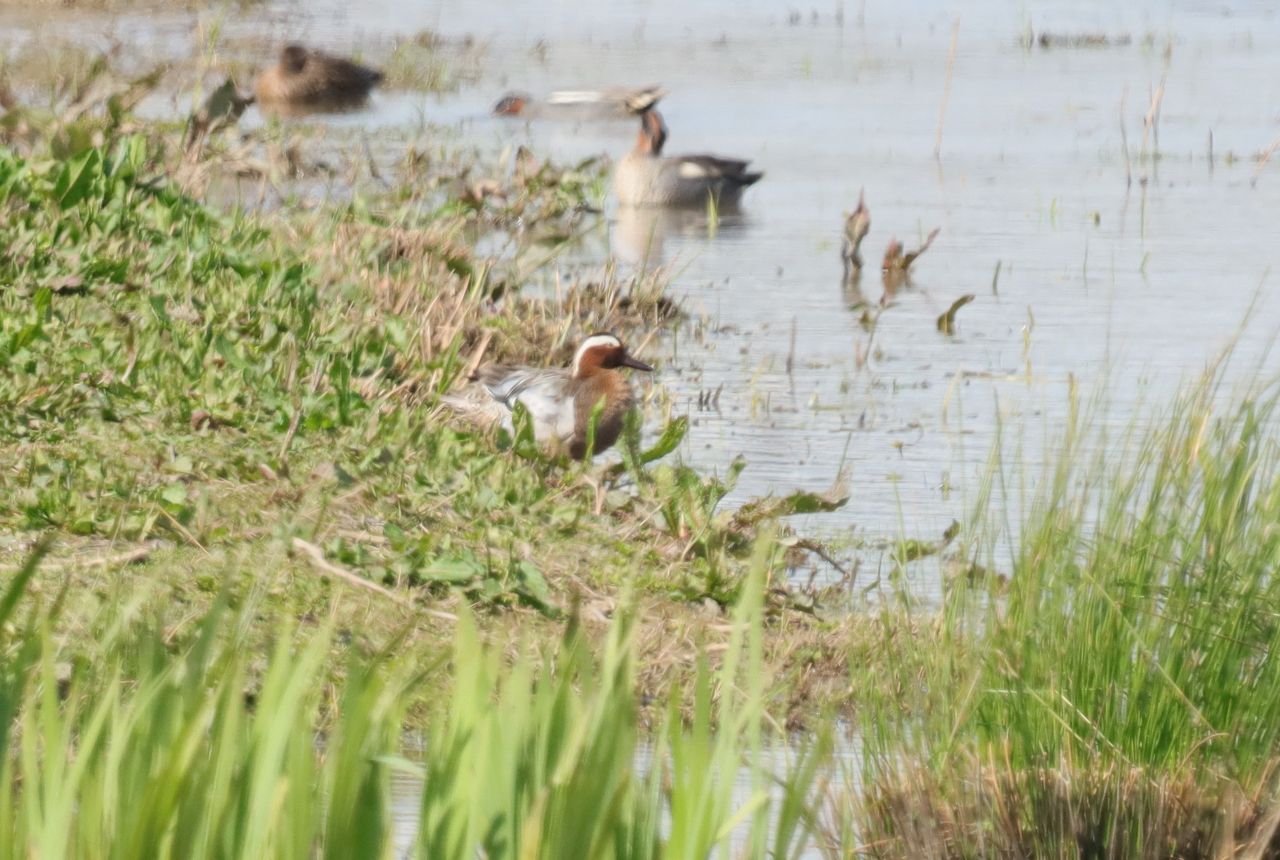
Garganey, Pulborough Brooks.
Among the wildfowl a distant male garganey could be observed.
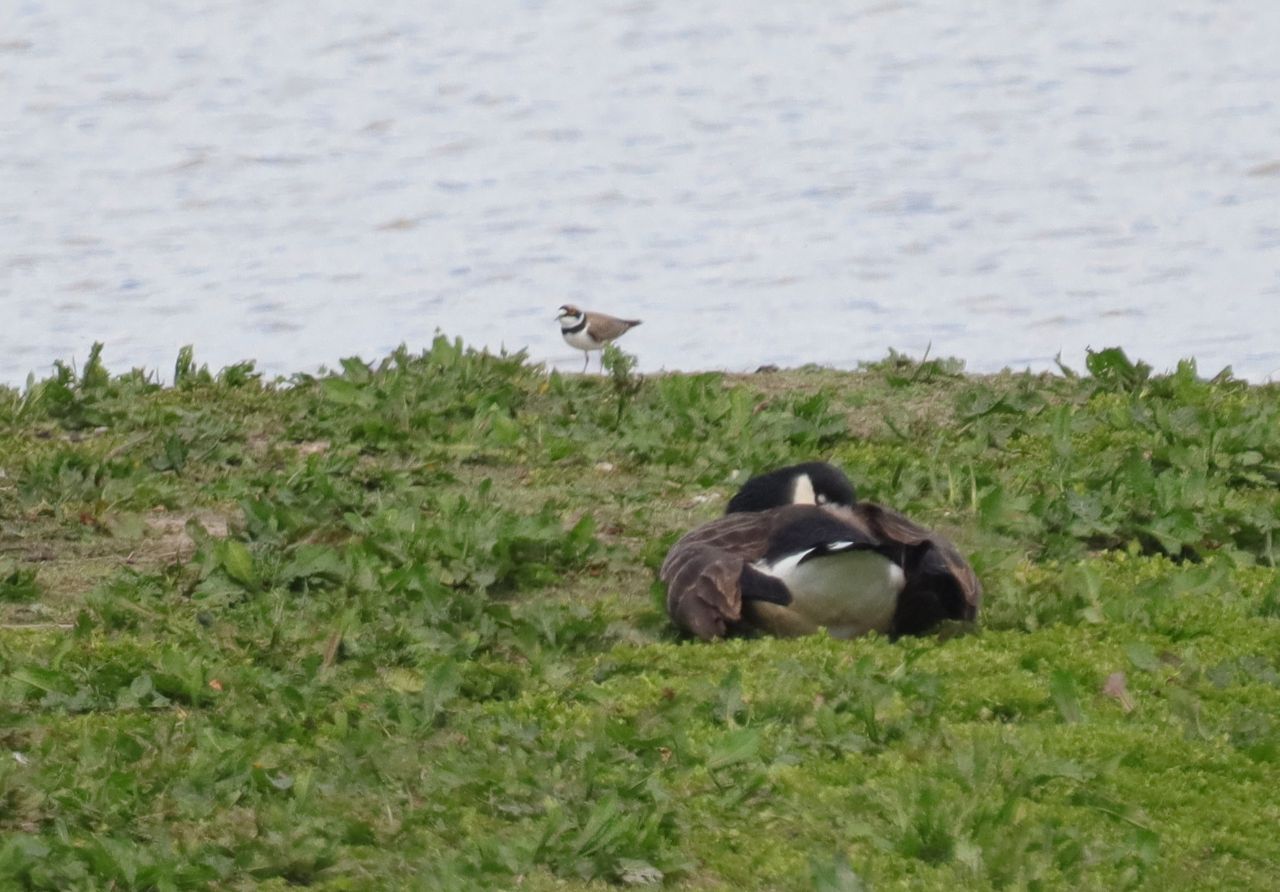
Little ringed plover, Pulborough Brooks. Pictured in front is a Canada goose.
Also picking out at least four little ringed plovers.
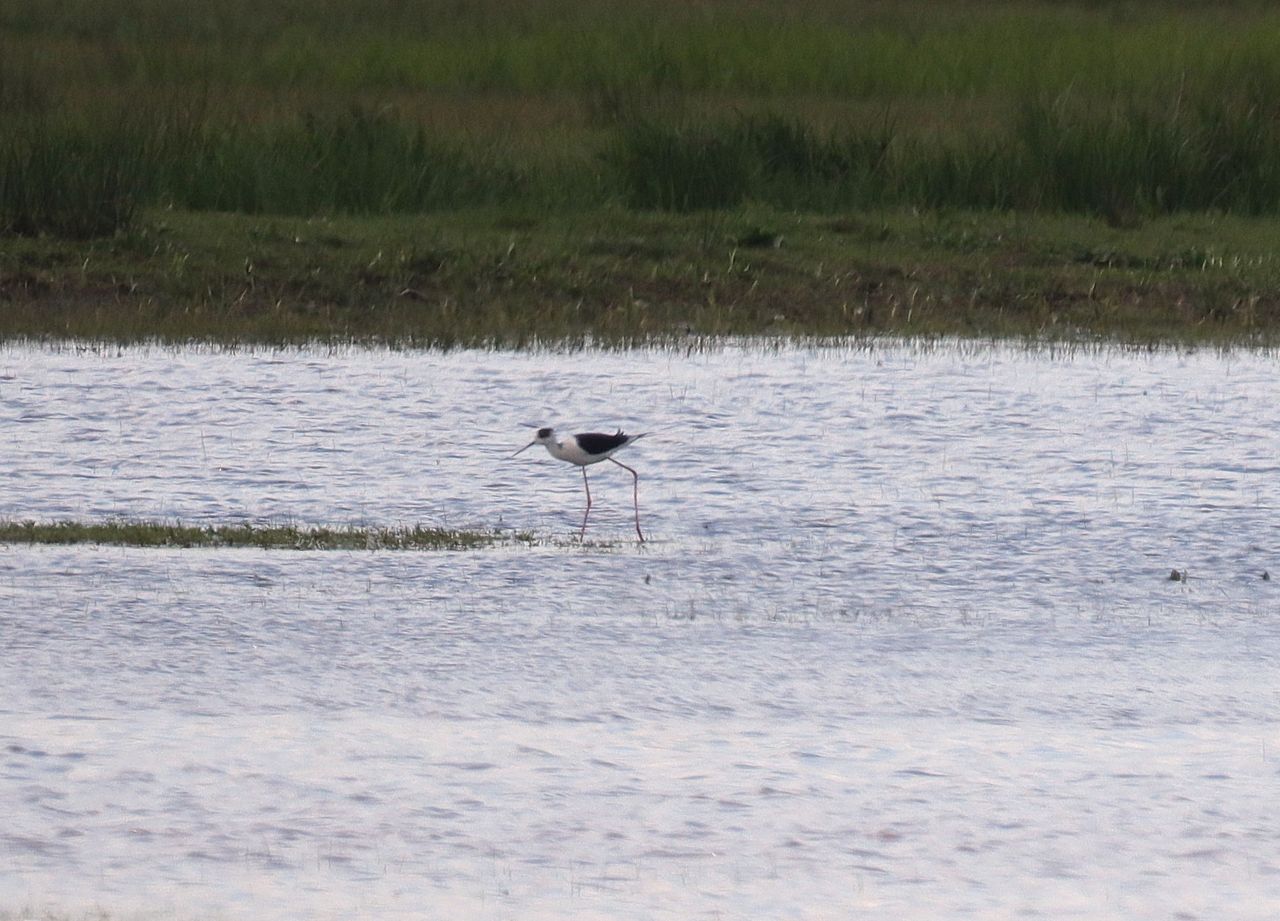
Black-winged stilt, Pulborough Brooks.
A real bonus to our year’s sightings, although also distant to view, were a newly arrived pair of black-winged stilts.
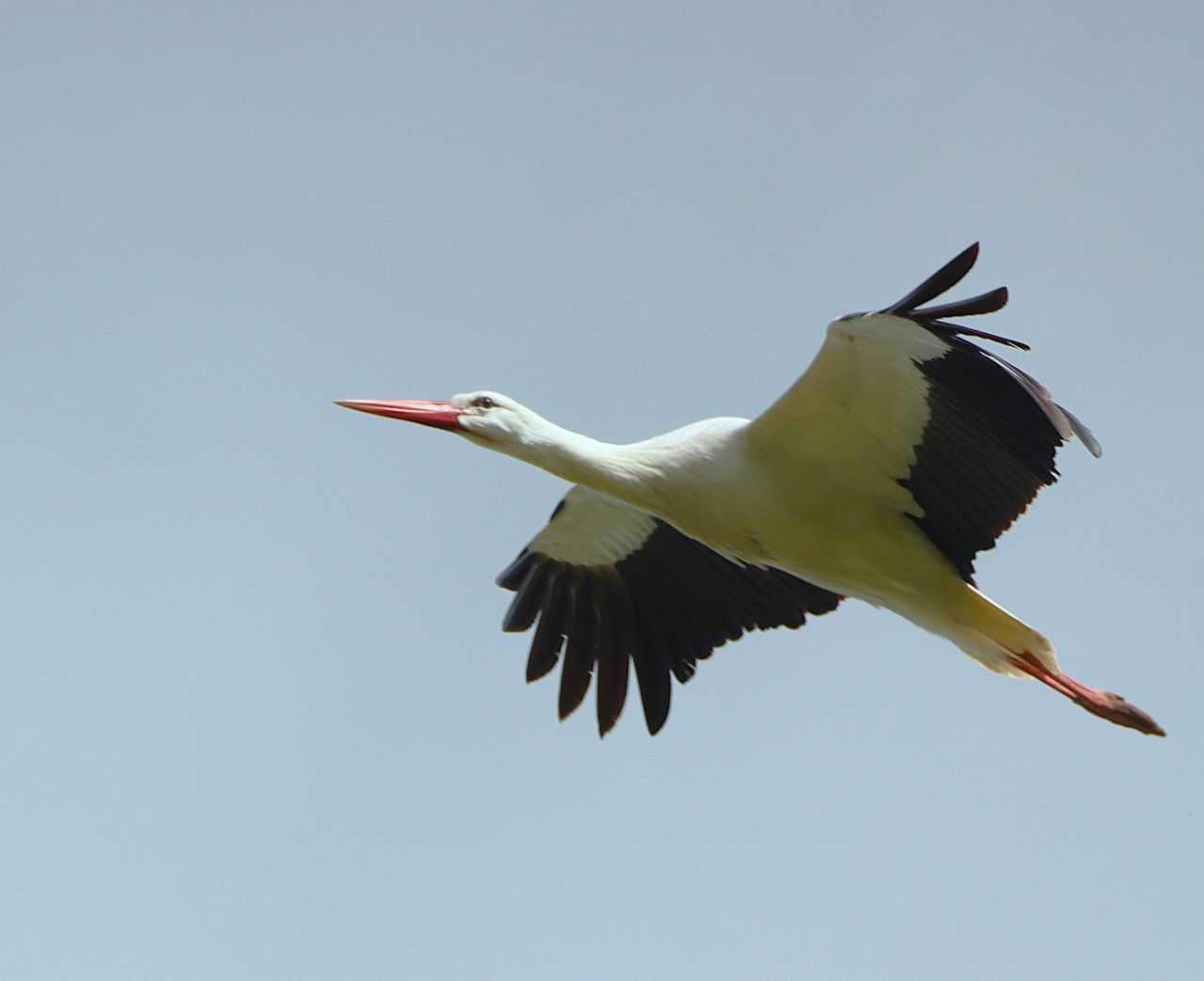
White stork, Pulborough Brooks.
Fortune also came our way during our walk back to the visitor centre. Looking skyward a white stork came into view.
Although not to appearing to be bearing leg-rings it was almost certainly one from the ongoing Knepp rewilding project.
Also click here for Knepp’s latest projects.
On April 23 I was invited on what has become an annual visit to RSPB Otmoor in Oxfordshire.
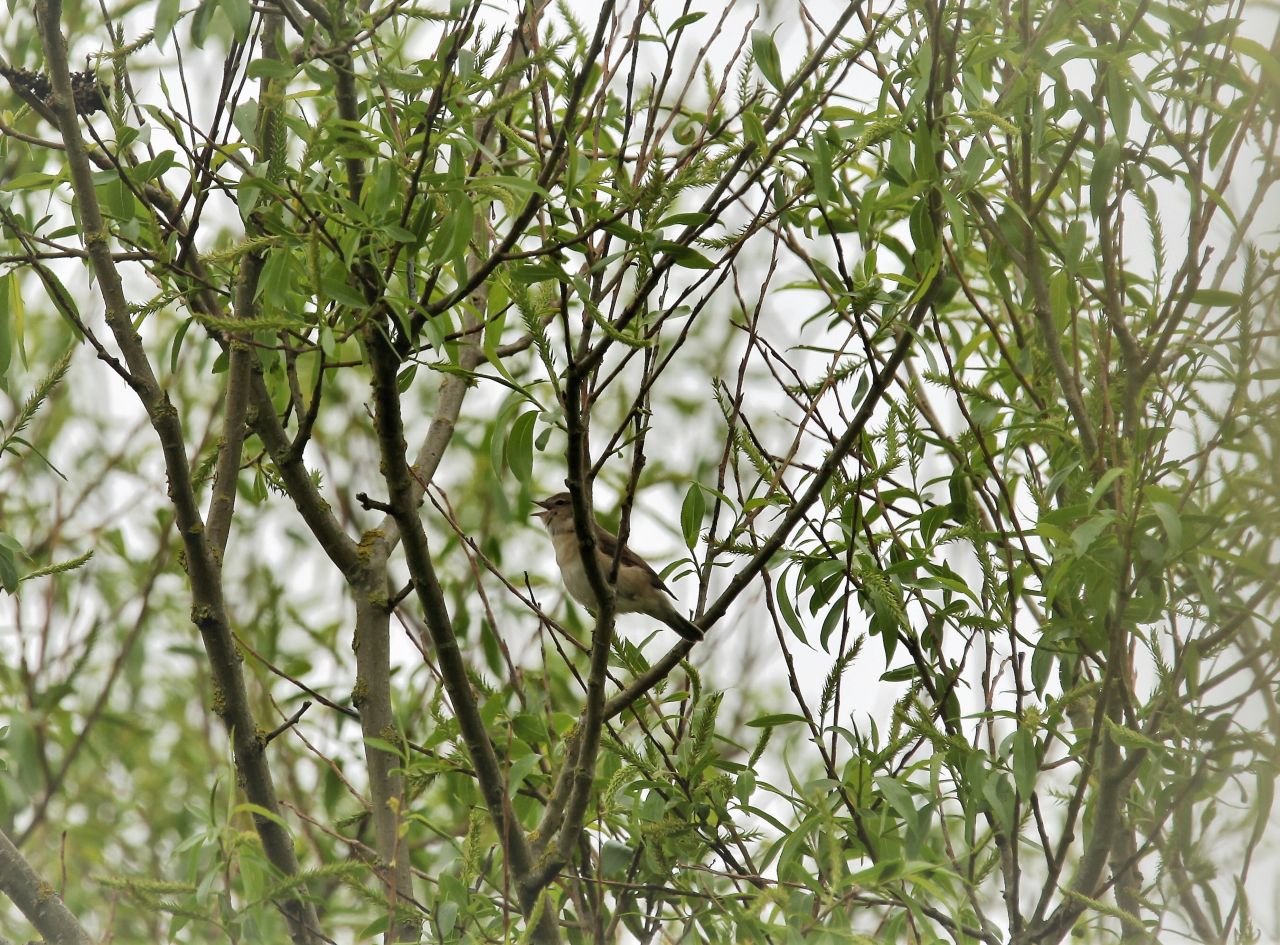
Garden warbler singing at Otmoor.
Our first addition was as soon as we got out of the car. At least two garden warblers could be heard in song.
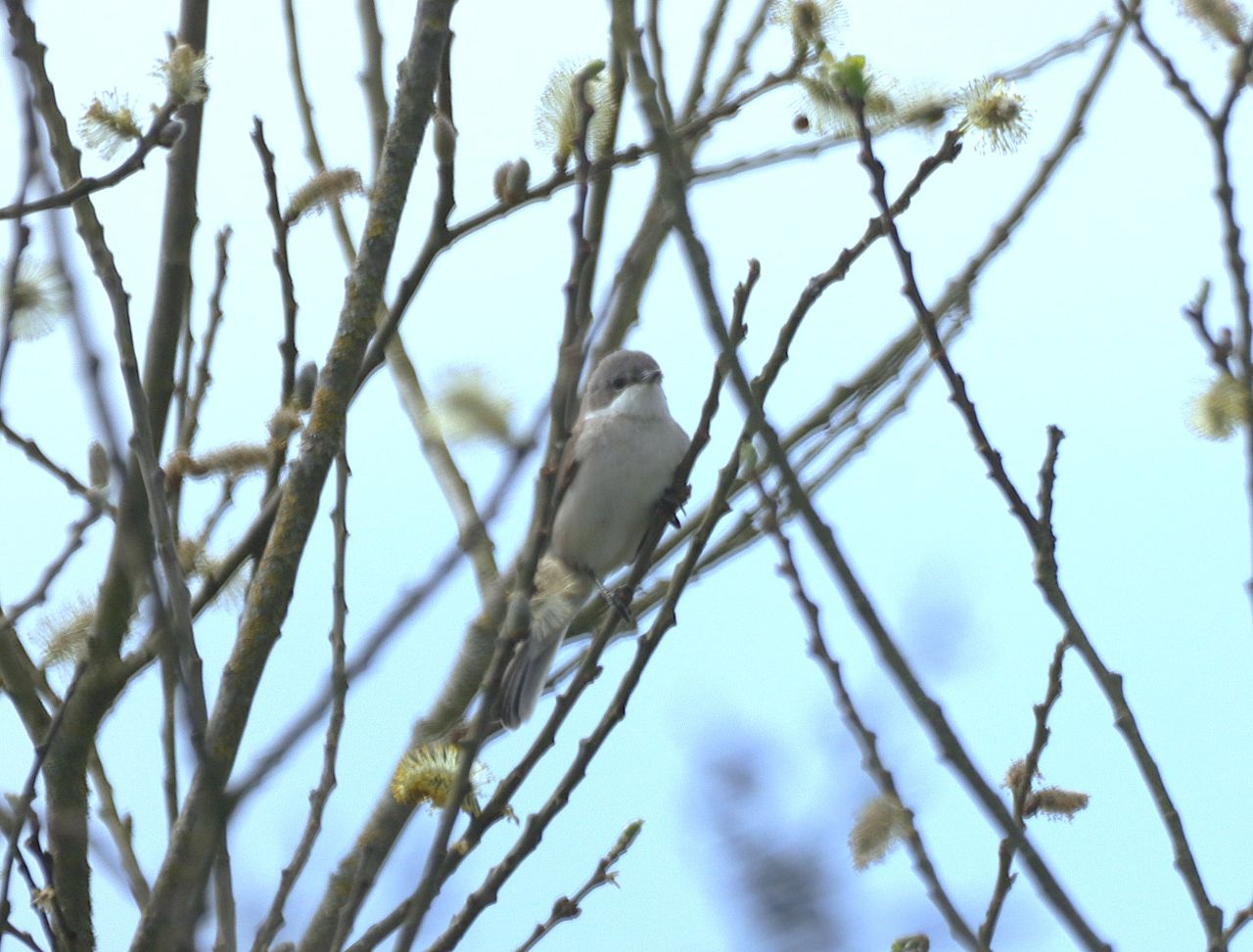
Lesser whitethroat, Otmoor.
Among the many other birds in song, as at Pulborough, several lesser whitethroats could be heard singing their rattling sounds.
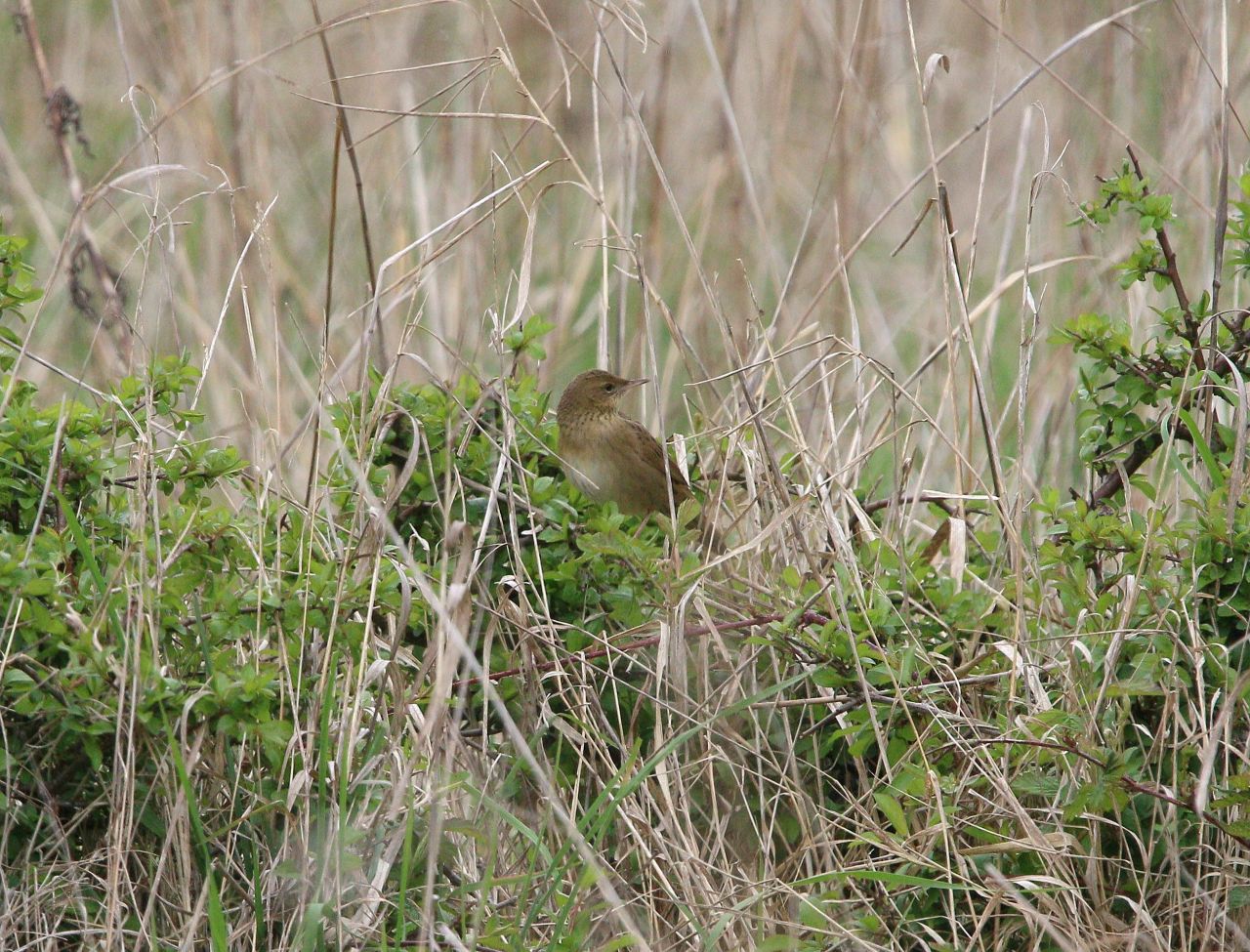
Grasshopper warbler, ‘reeling’ at Otmoor.
The reeling sound of a grasshopper warbler was also present. Alas, only getting a few brief glimpses as it mostly skulked in its usual manner among a clump of brambles.

Previous photo of a cuckoo in flight.
At least three cuckoos could be heard calling, but mostly too distant to photograph.

Brown hare at Otmoor.
Adding to my mammal list for the year was a rather confiding brown hare.
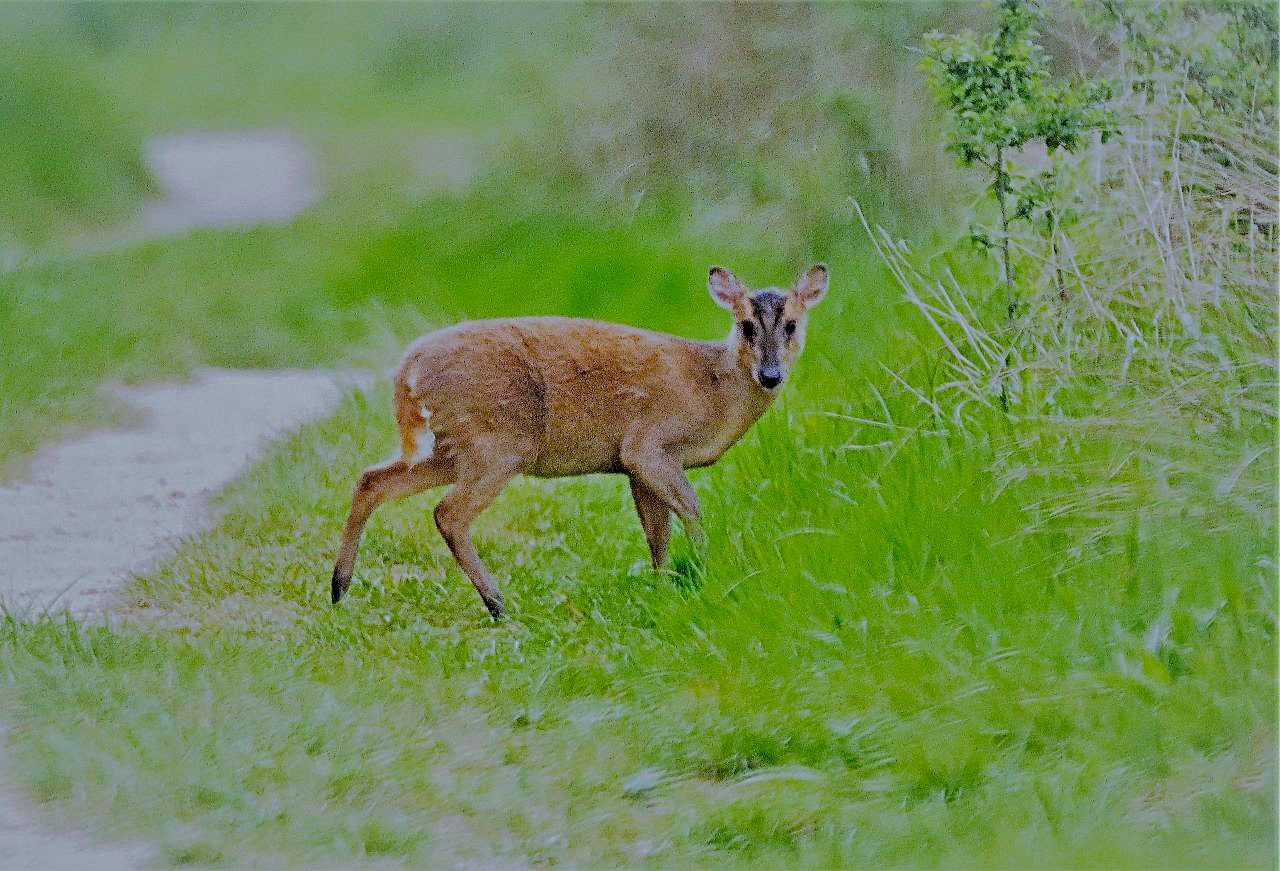
Muntjac deer, Otmoor.
As well as a few brief encounters with muntjacs.
These were privately introduced in Bedfordshire in the last century and have now become widespread in the Home Counties.
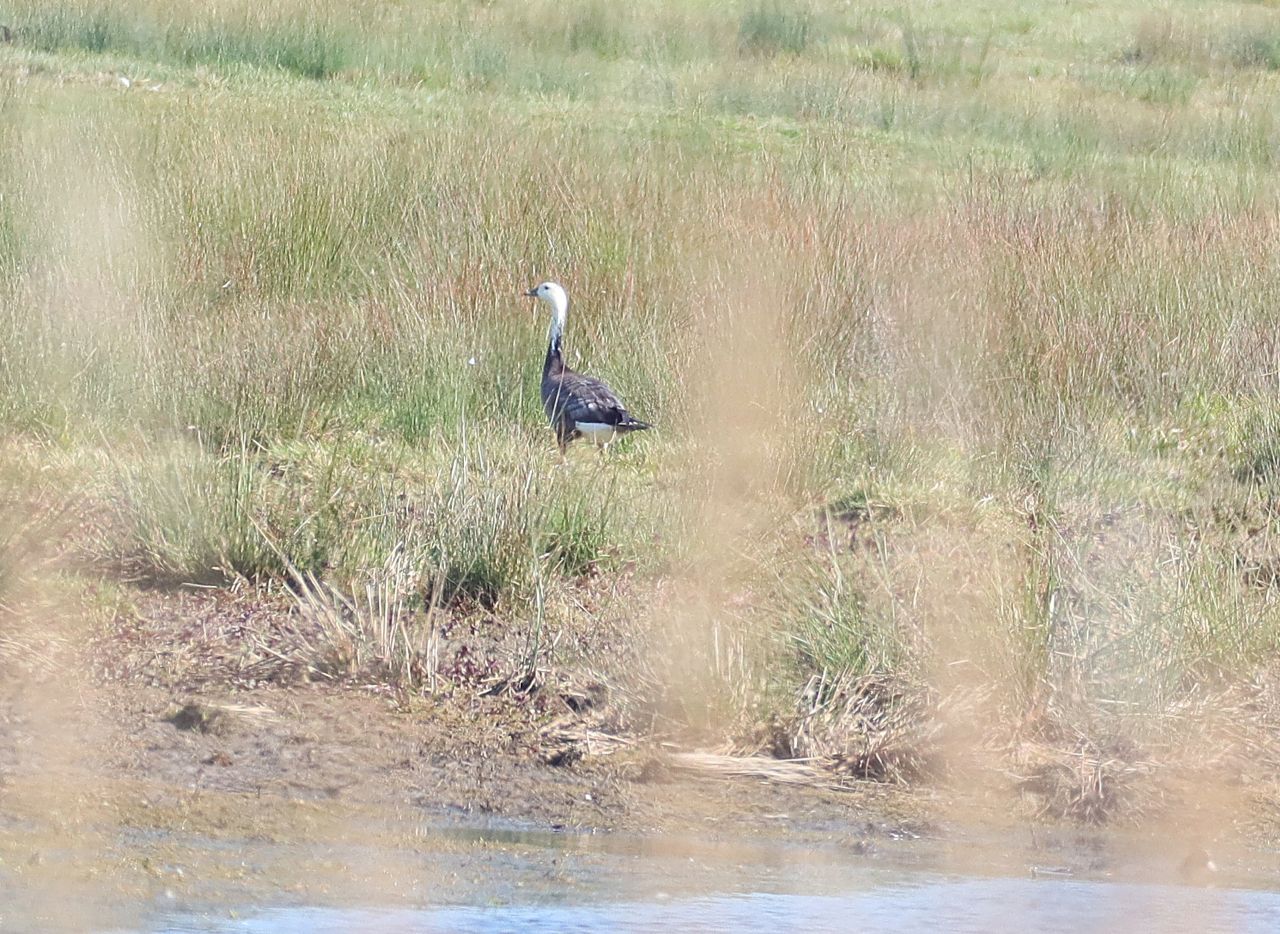
Snow goose at Otmoor.
A less problematic feral species found there is a small population of snow geese, mostly from a larger flock seen at the Farmoor Reservoir in Oxfordshire.
This one being of a small proportion of a mix of dark-bluish grey and white plumage (blue morph) of the white birds.
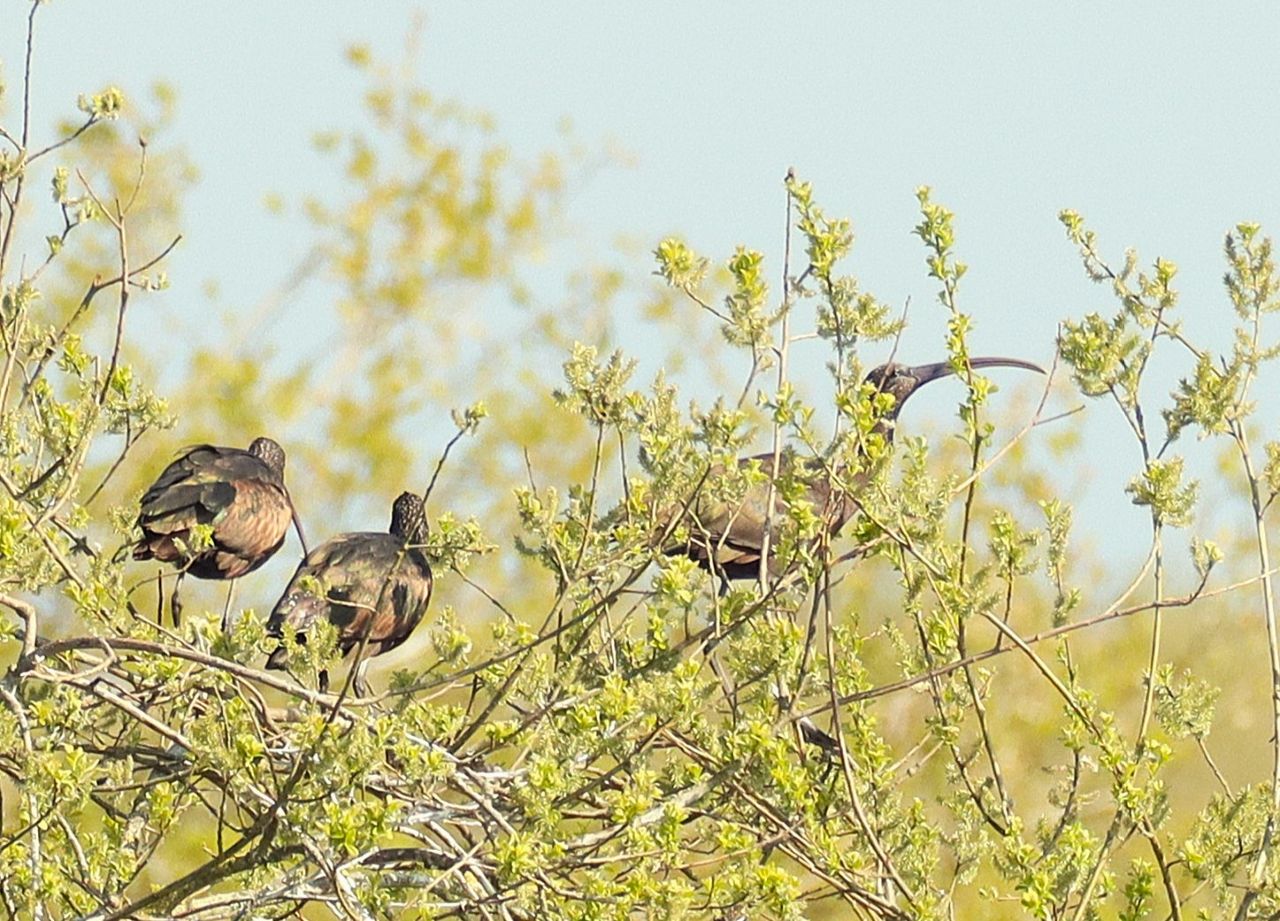
Glossy Ibises at Otmoor.
The highlight of the visit for me were the glossy Ibises, four in total. They could be seen still roosting among a clump of trees out on an island.
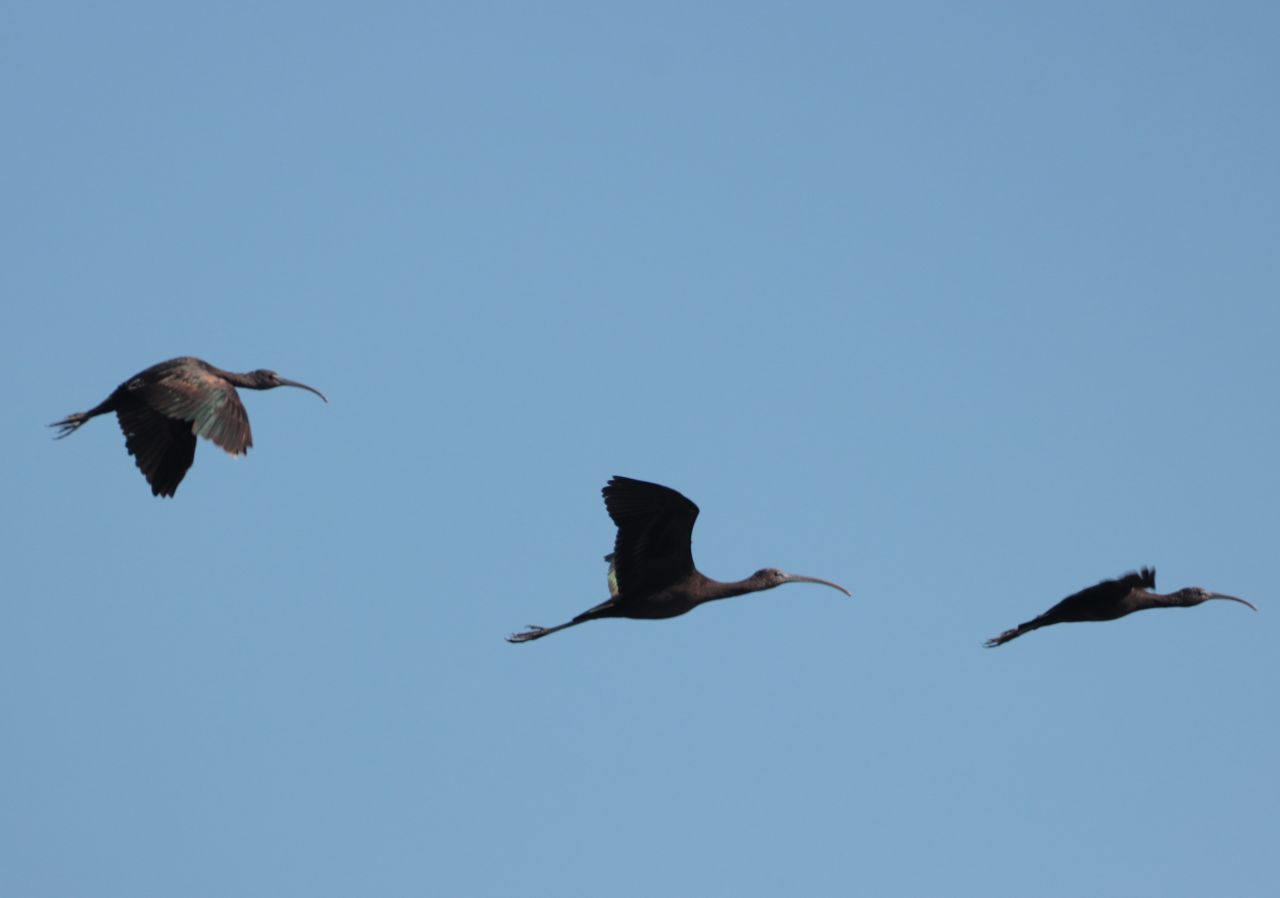
Glossy Ibises at Otmoor.
Soon after arrival they took flight, circled around the reed beds, then disappeared from view, off to feed in the marshlands beyond.
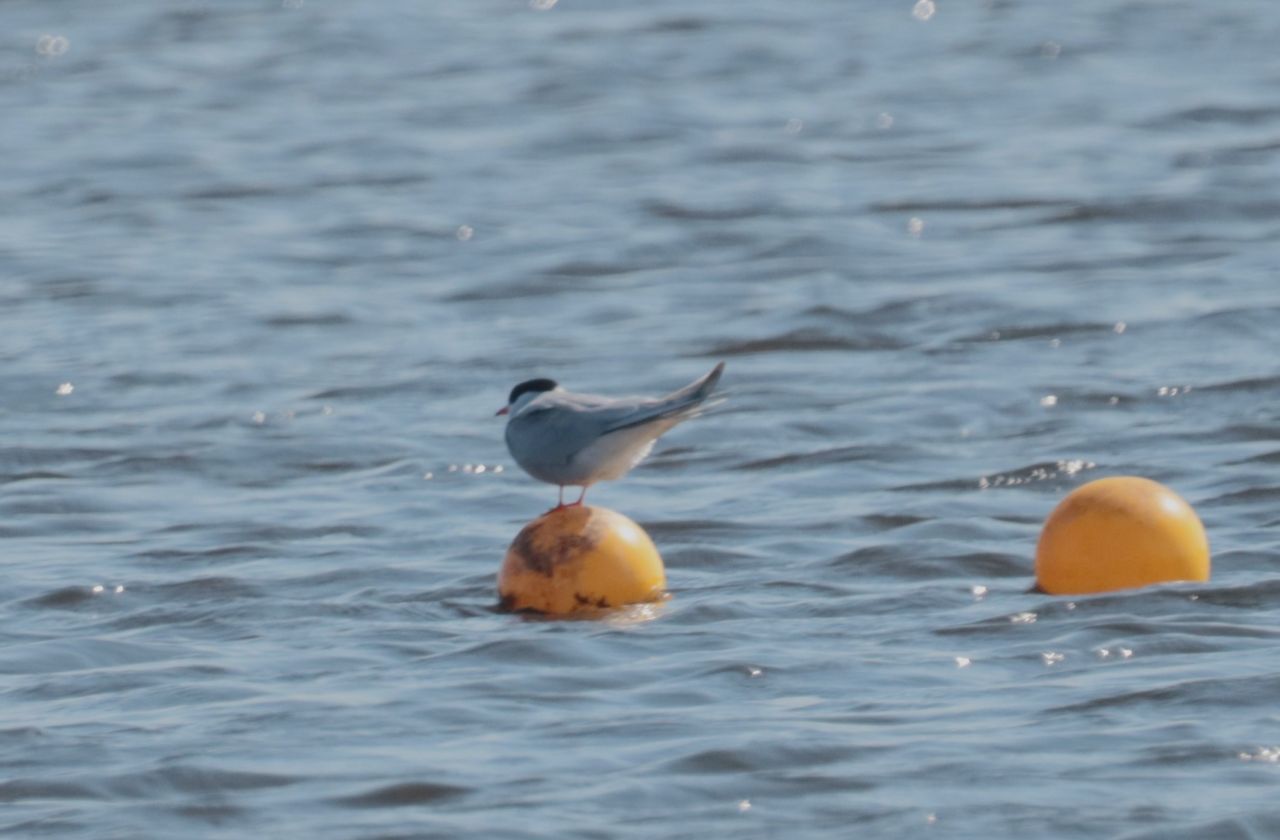
Common tern at Otmoor.
On one of the buoys out on the water, a common tern was added to this year’s sightings.
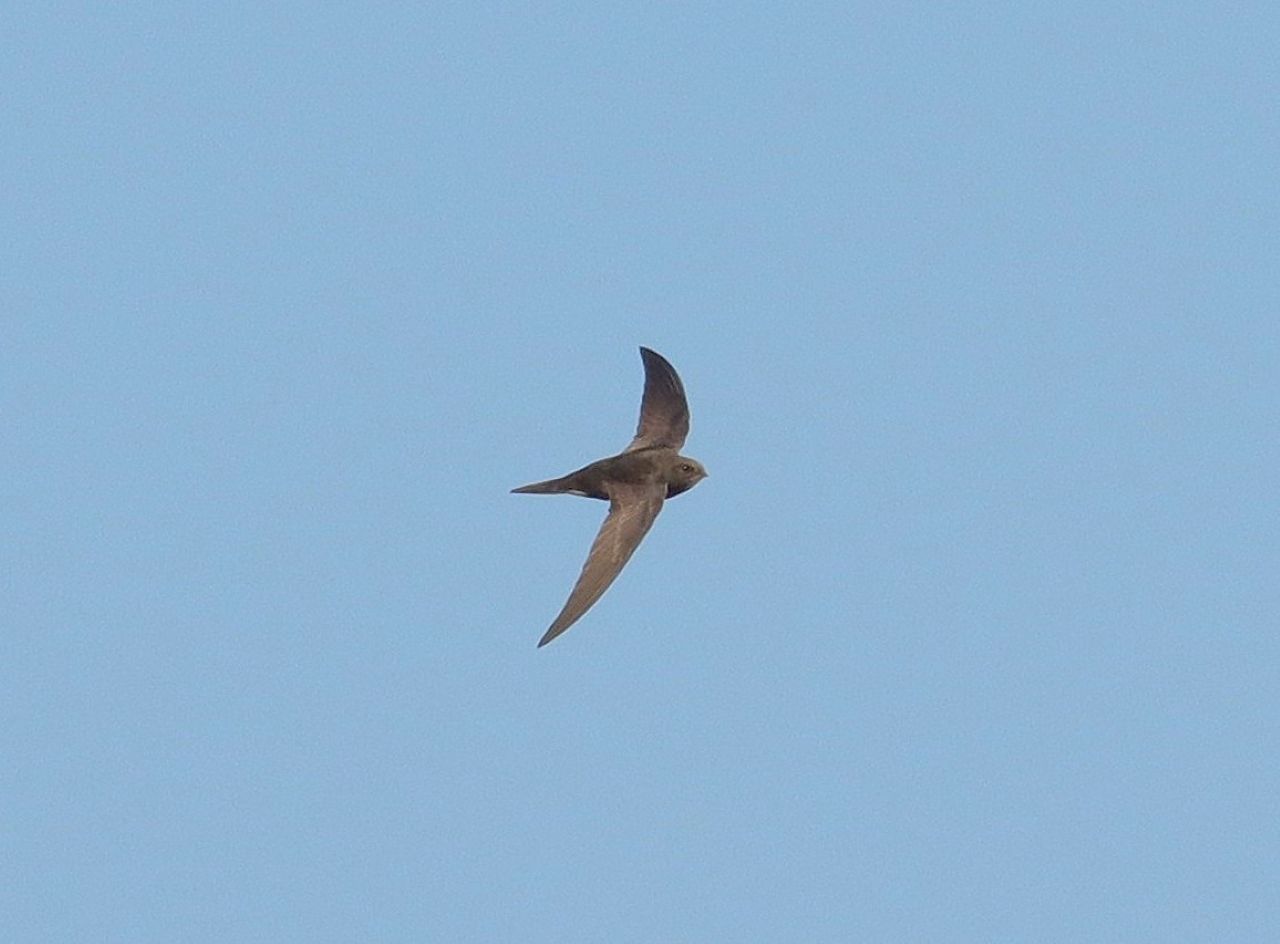
Swift at Otmoor.
While the early arrival of several swifts were photographed hawking insects over the water.
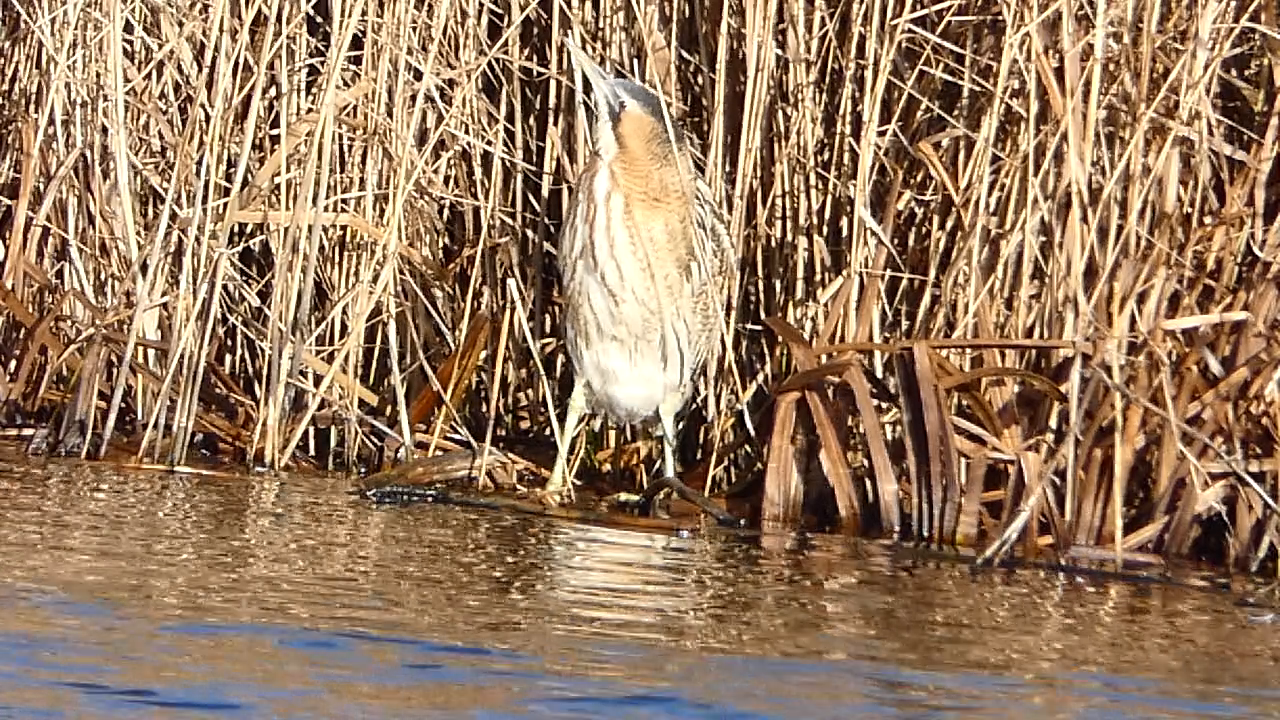
Bittern, previously photographed at the London Wetland Centre.
And a booming bittern could be heard from deep within the reed beds.
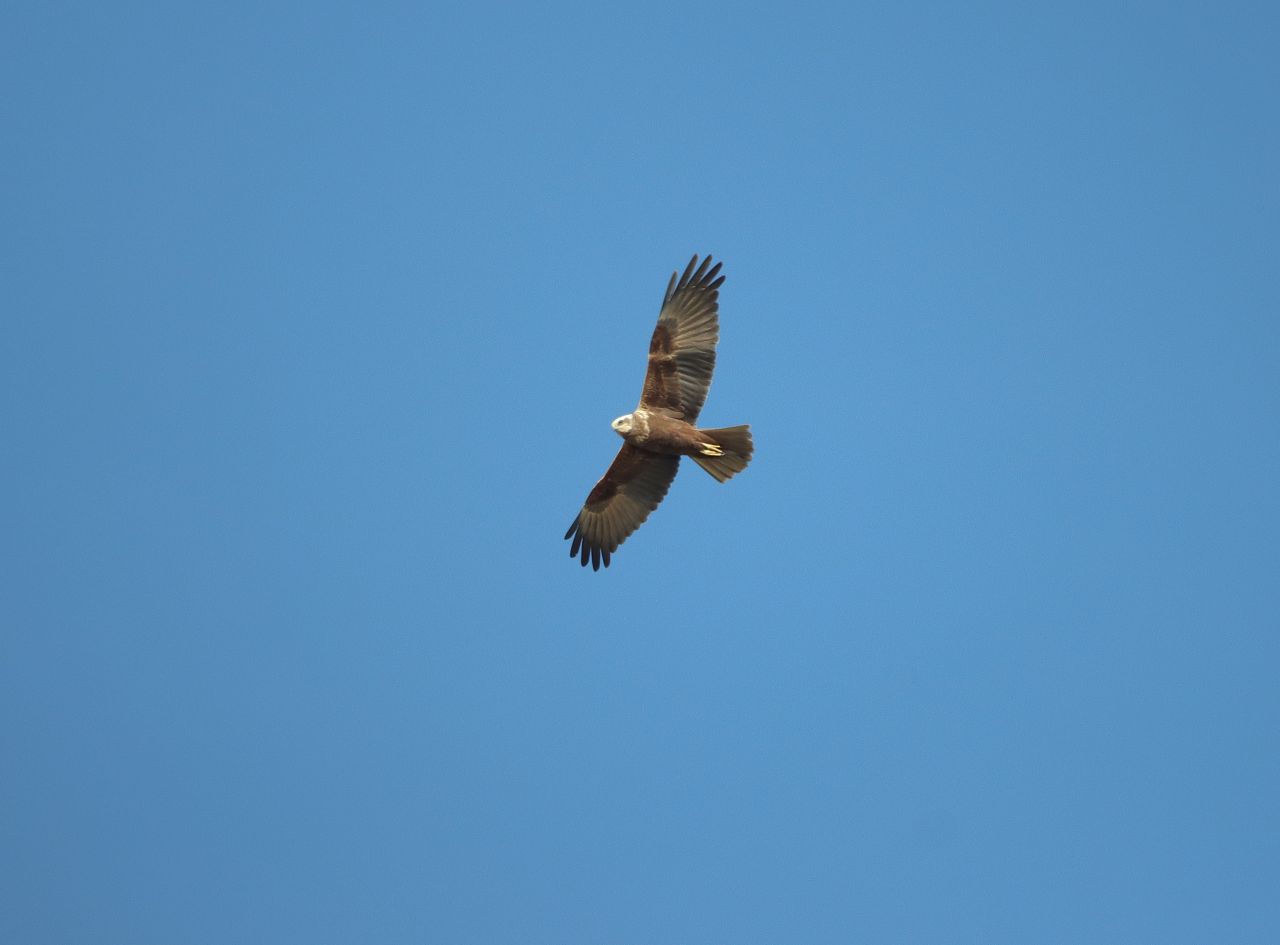
Marsh harrier.
A pair of marsh harriers added to the day’s entertainment.

Yellowhammer at Otmoor.
And a yellowhammer added to this year’s sightings.

Sedge warbler at Otmoor.
While singing sedge warblers were plentiful.
The following day I was invited on another trip to Pagham in West Sussex. This time in the company of Chris Burchell and David Rose.
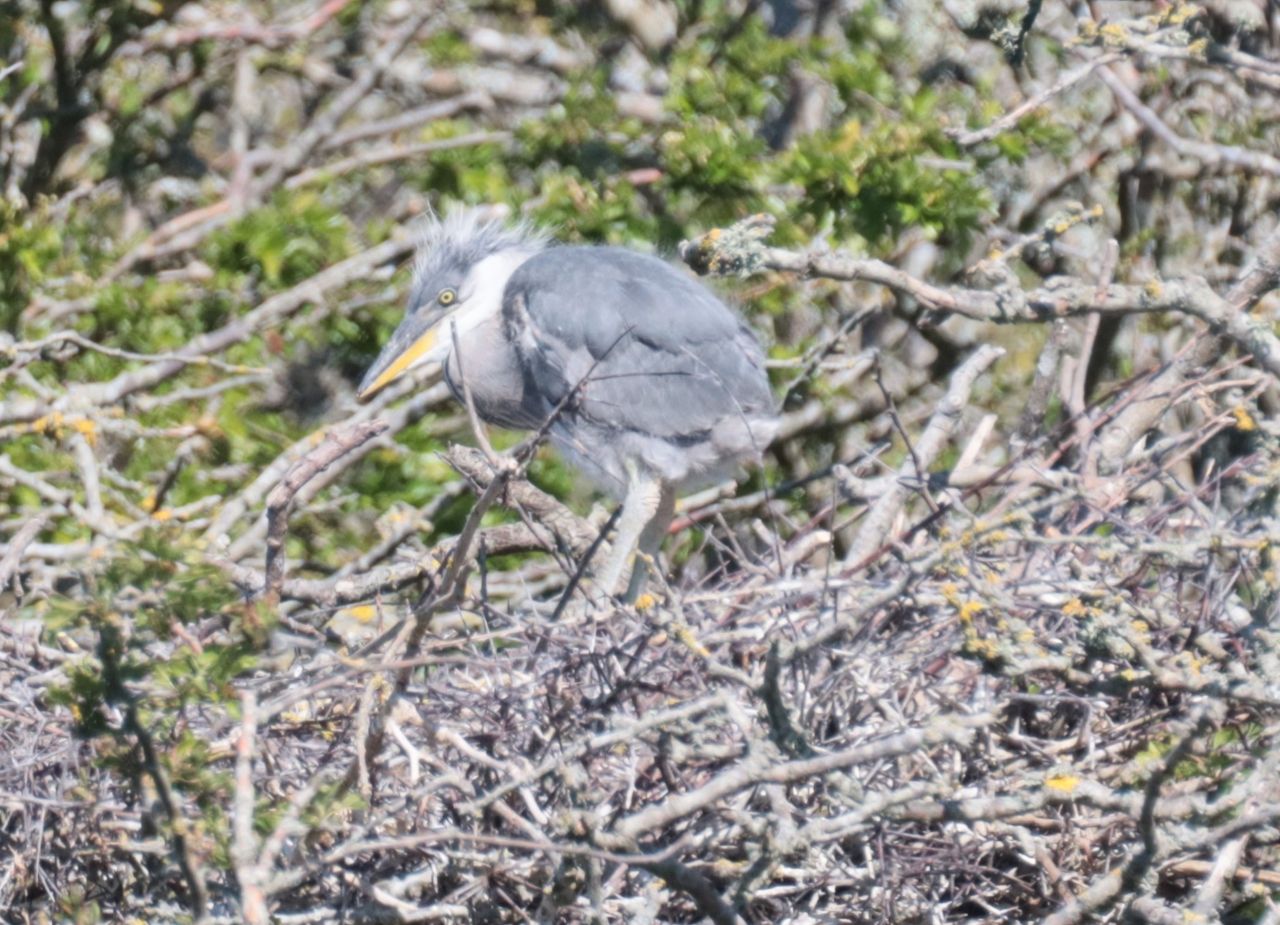
Grey heron chick on nest, North wall, Pagham.
Our visit to the North Wall saw a young grey heron perched up in its nest in the “owl copse”.

Cattle egret, North wall, Pagham.
Several cattle egrets had already begun to join in on their nest building.
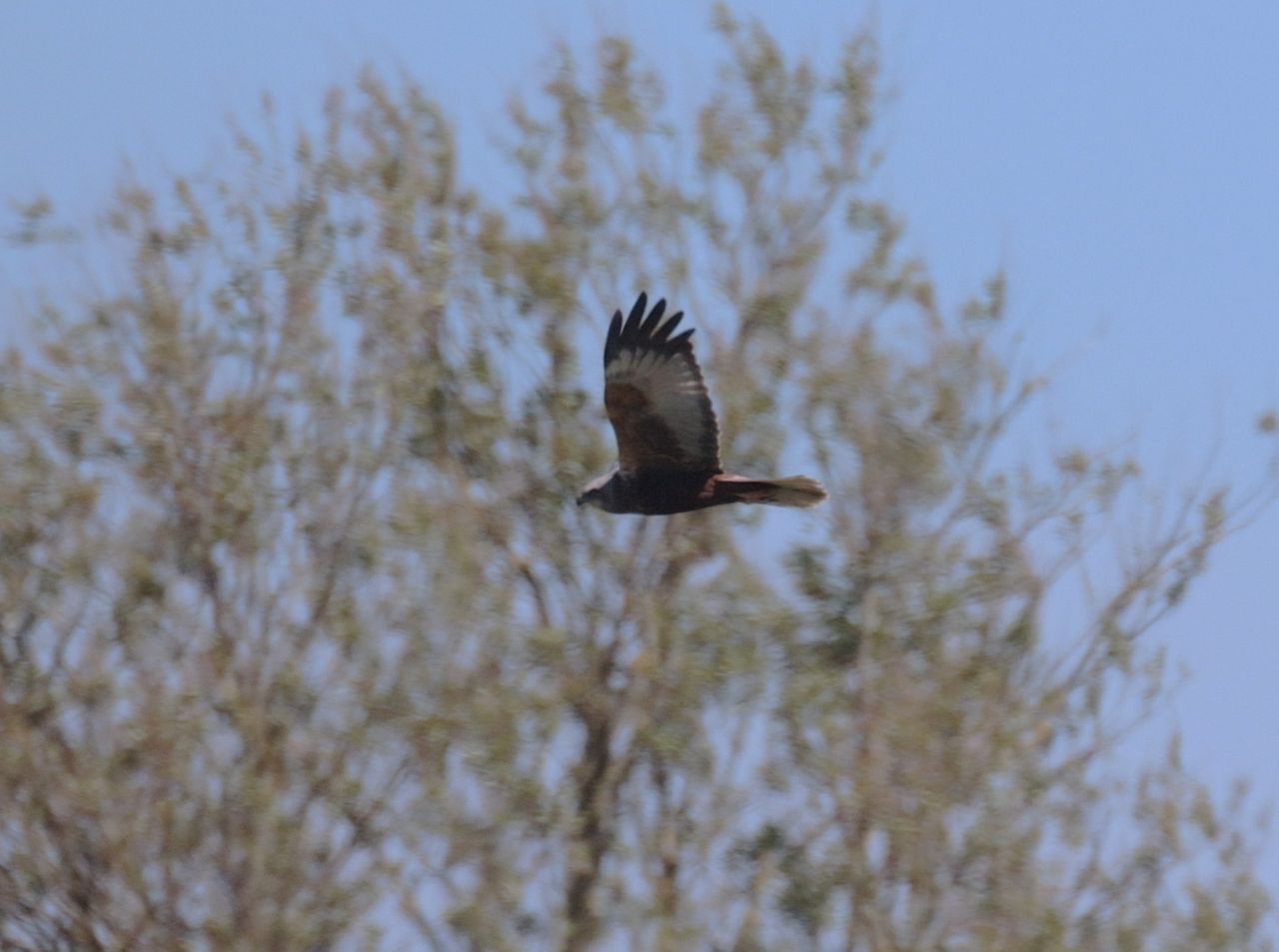
Marsh harrier, North wall, Pagham.
Across the reedbeds a pair of marsh harriers could be viewed.

Sedge warbler, North wall, Pagham.
While close to view a sedge warbler in song showed well.
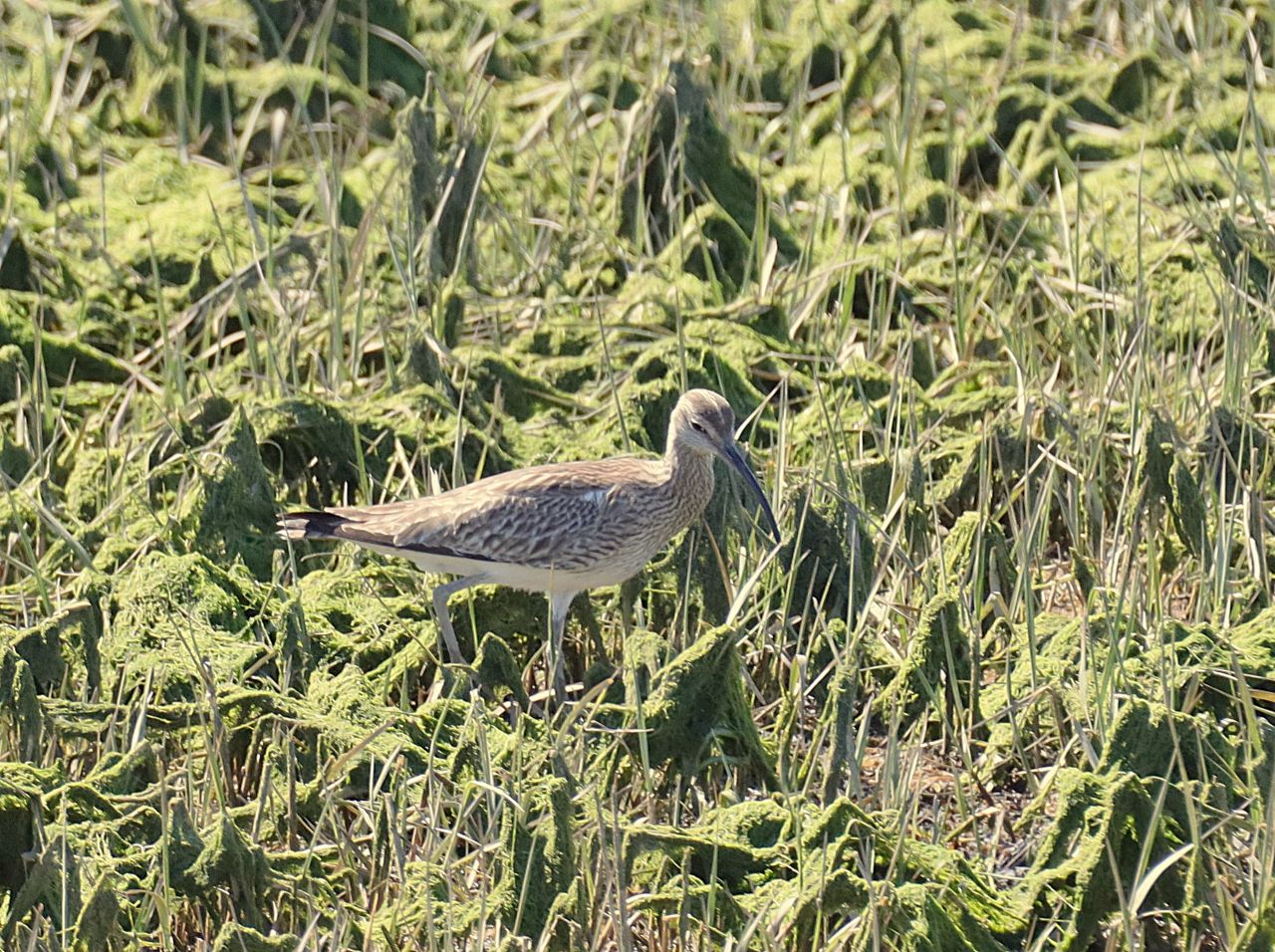
Whimbrel, North wall, Pagham.
At low tide a whimbrel could be viewed feeding near White’s Creek.
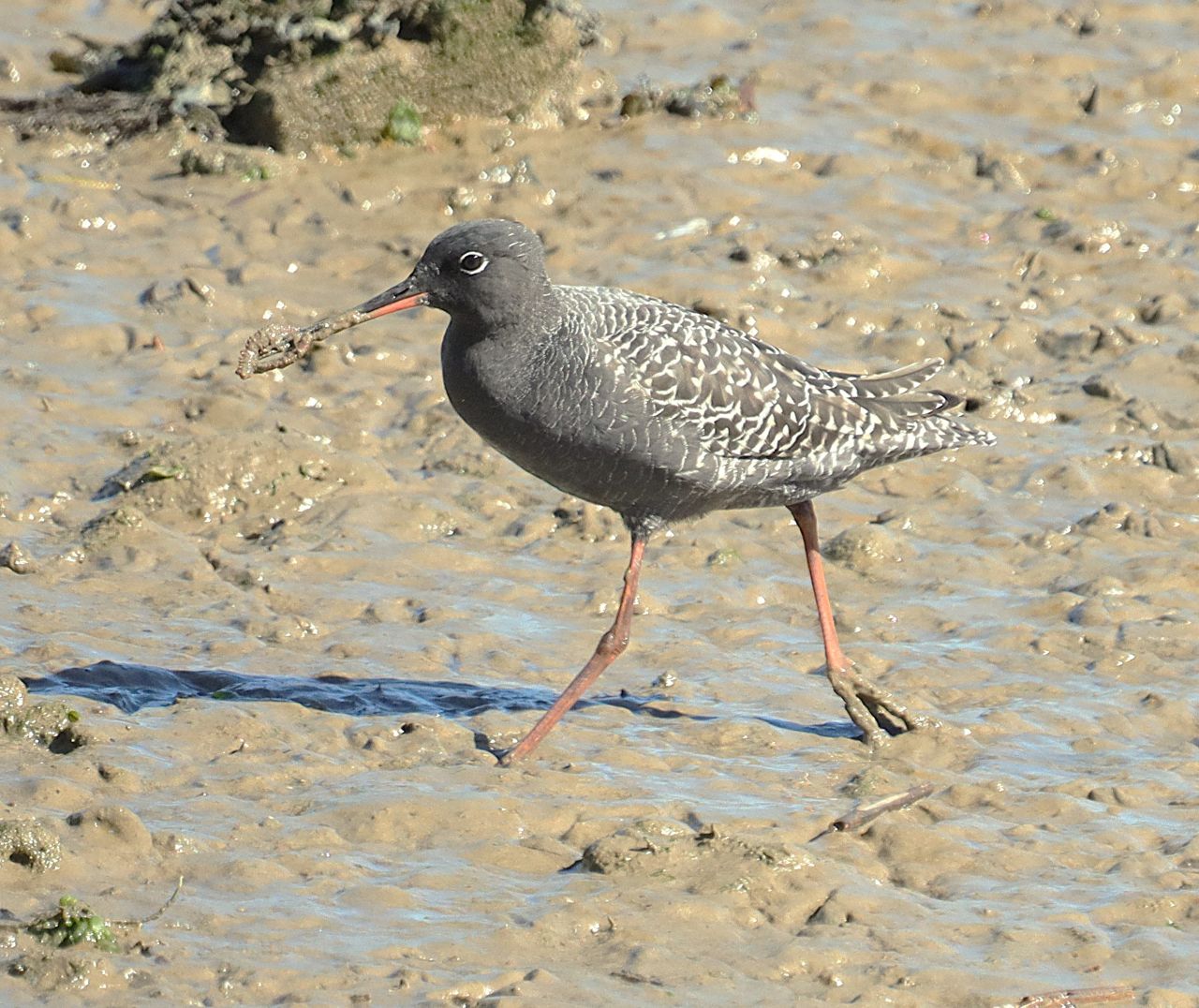
Spotted redshank, Ferry Channel, Sidlesham.
At Sidlesham Ferry Channel good views and photos were achieved of a spotted redshank, now in summer plumage.

Greenshank, Ferry Channel, Sidlesham.
Also adding close views of a greenshank.
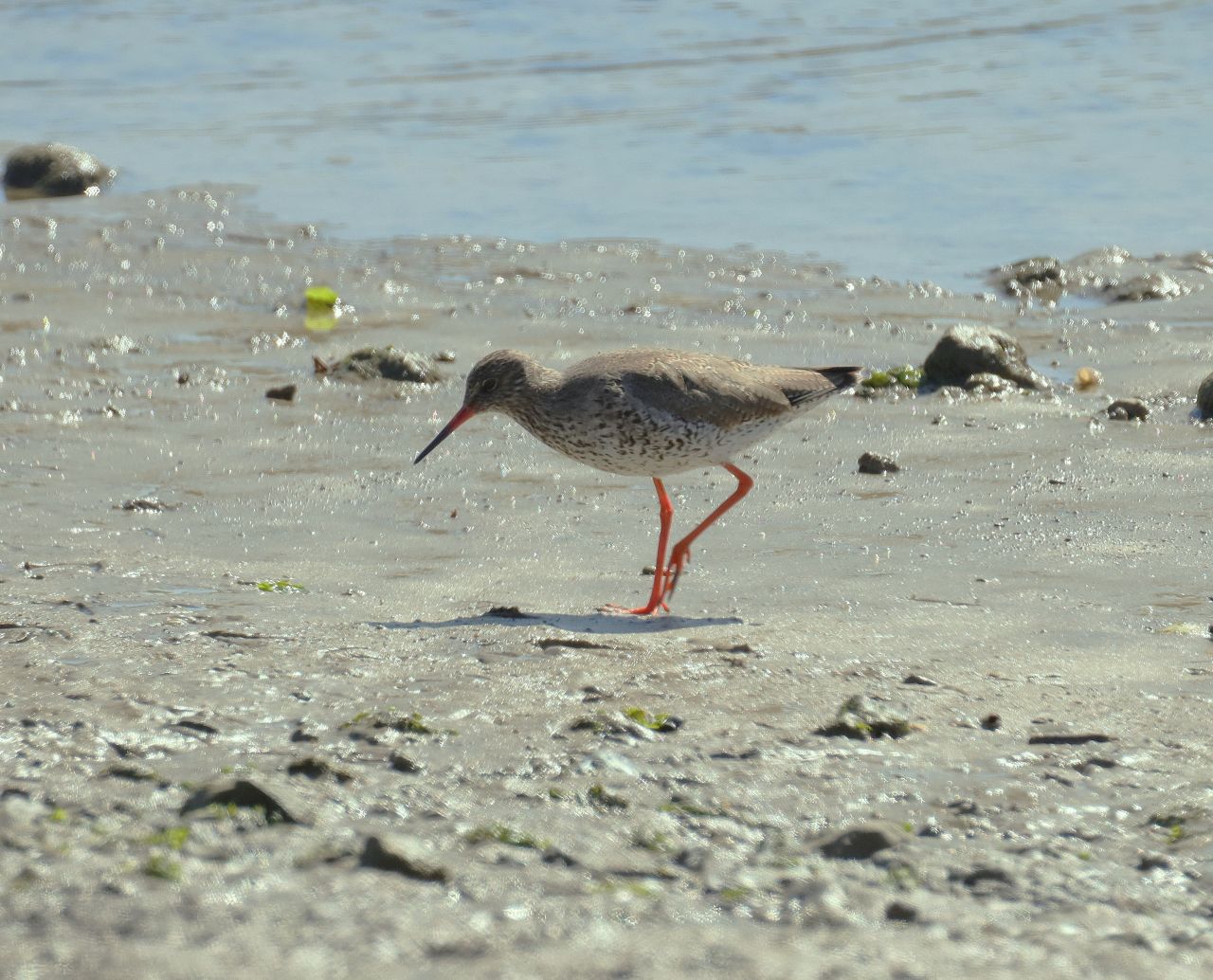
Common redshank, Ferry Channel, Sidlesham.
As well as a common redshank.
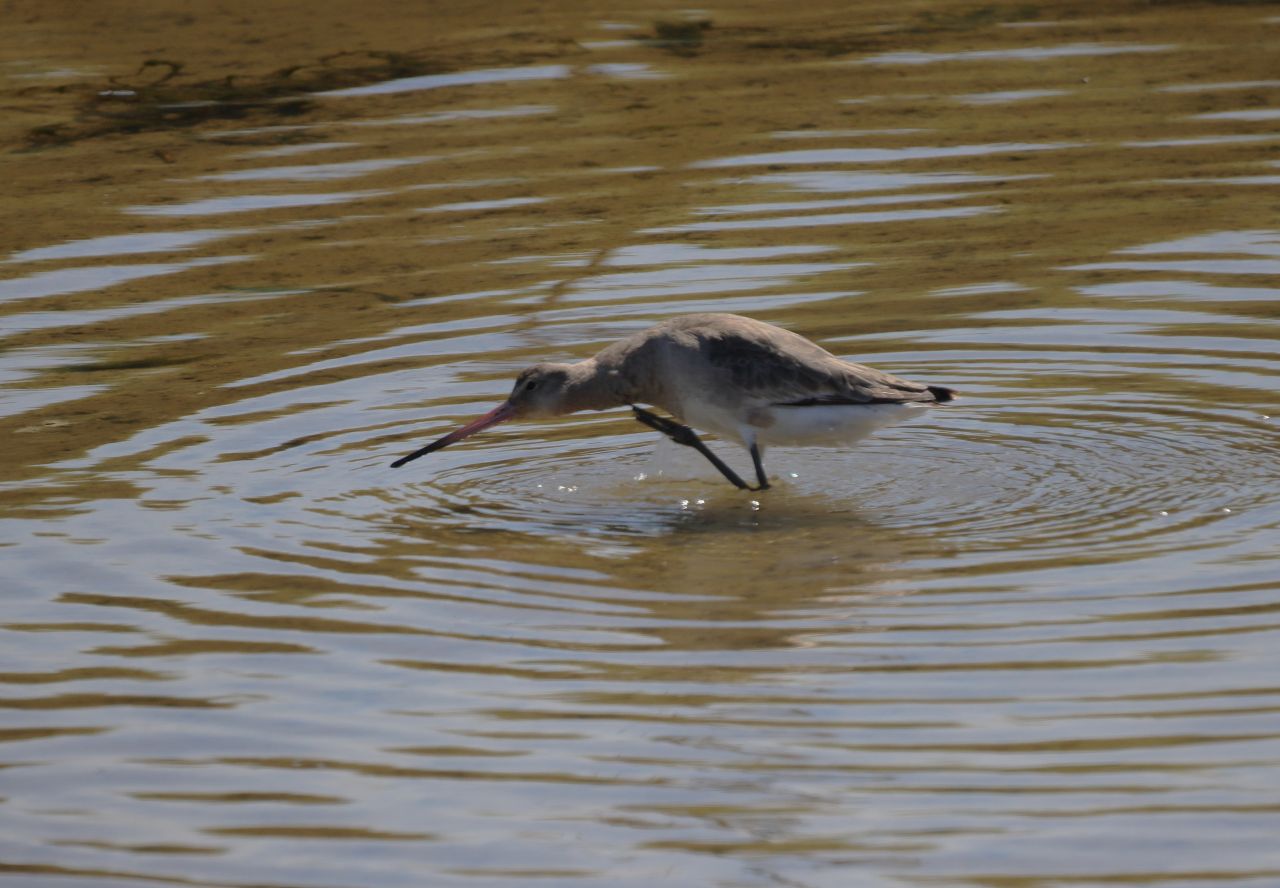
Black-tailed godwit, Ferry Channel, Sidlesham.
And a black-tailed godwit.
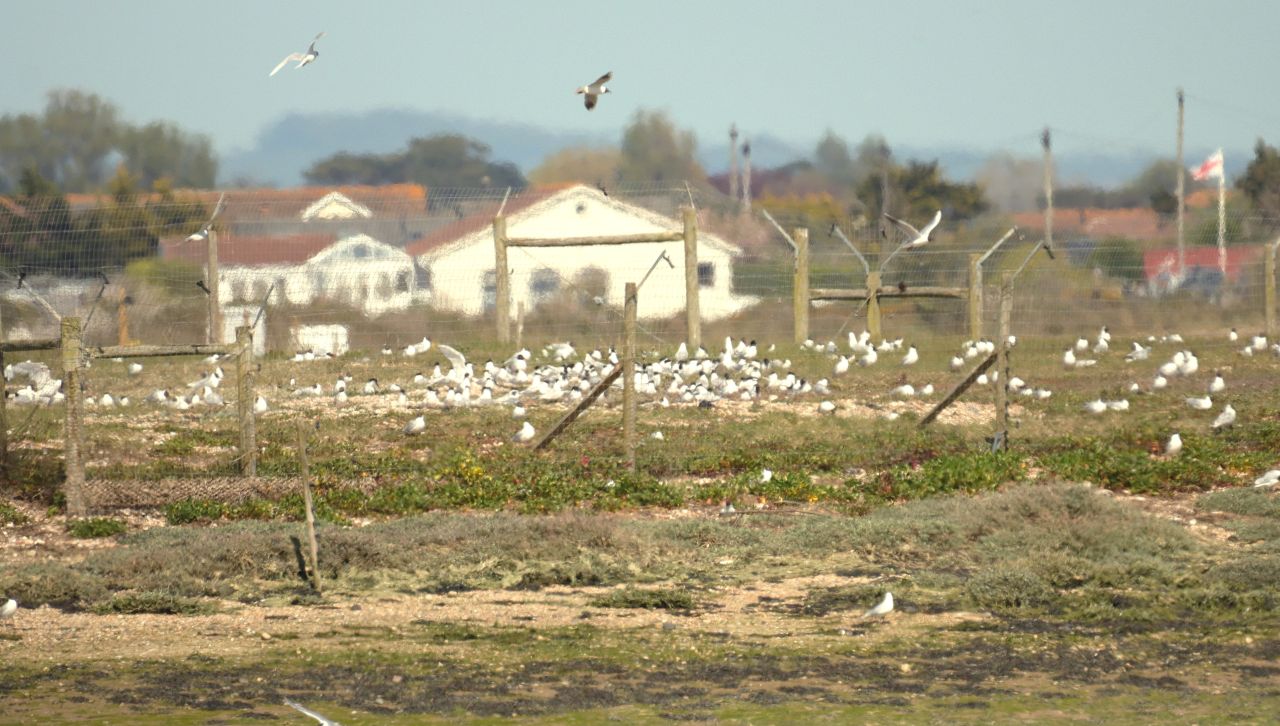
Tern Island viewed from Church Norton.
While moving on to Church Norton, large numbers of terns had returned to the distant island just across the water.
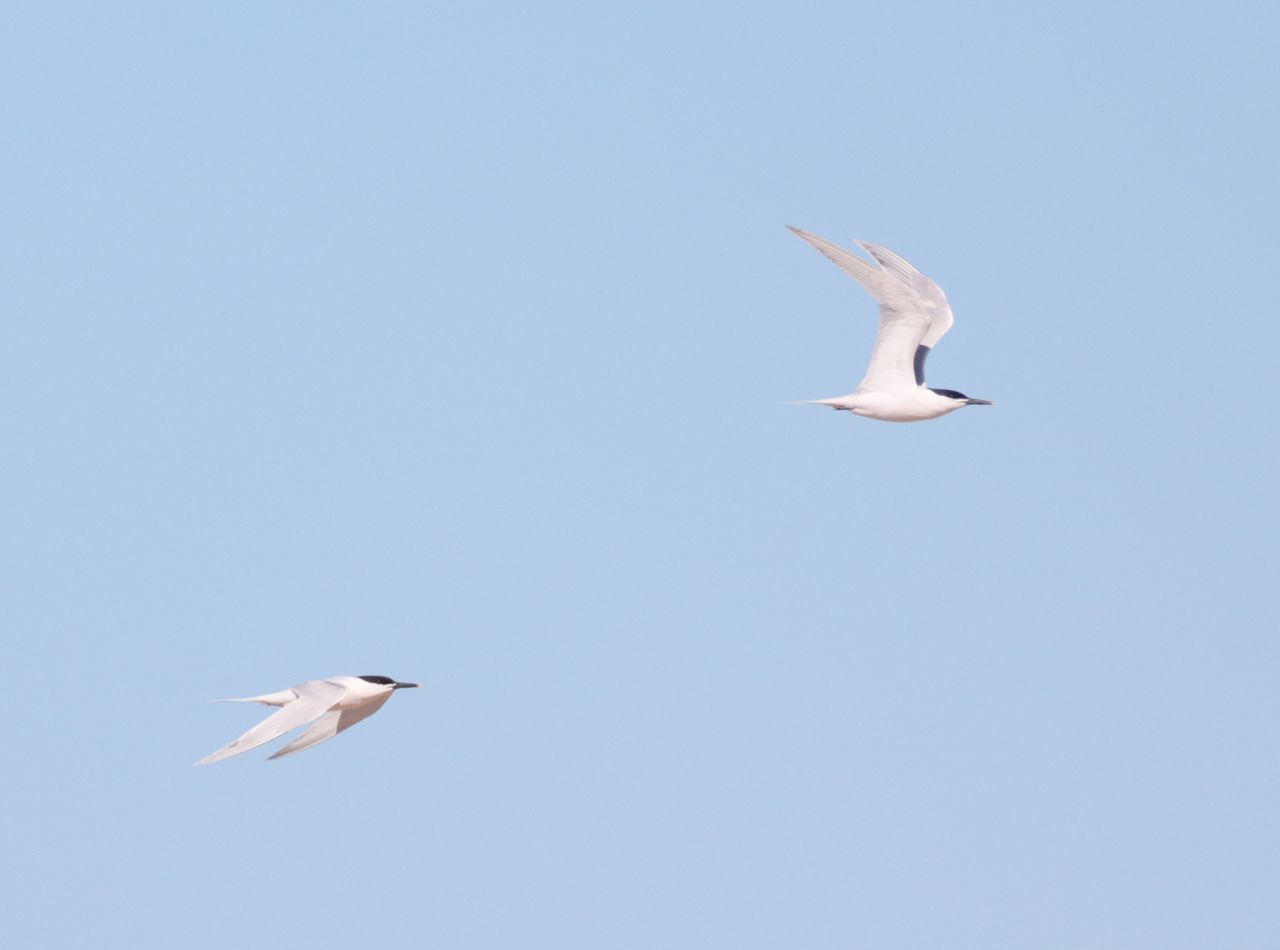
Sandwich terns, Church Norton.
These could be viewed, sometimes in groups, flying back and forth as they fished out at sea.
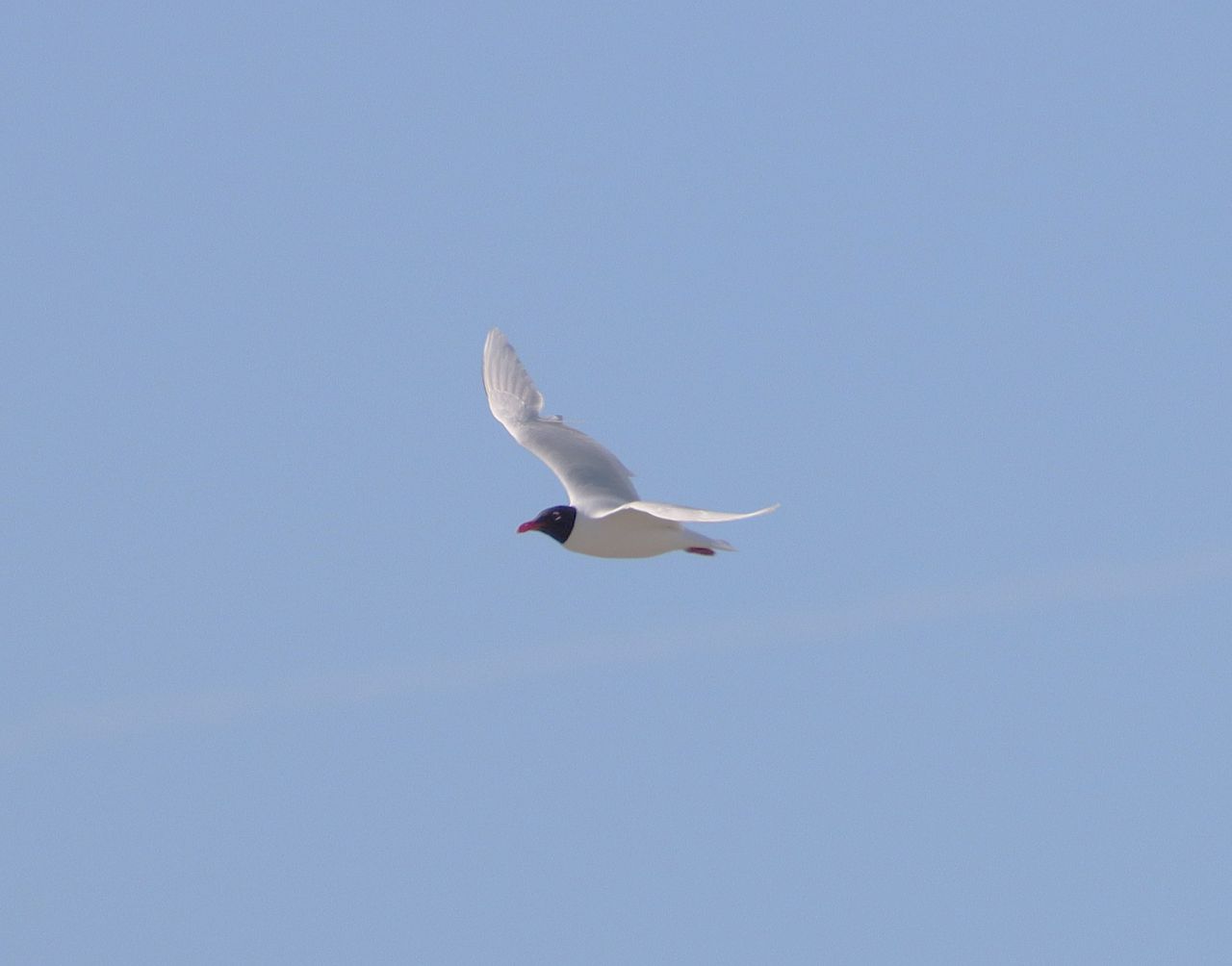
Med gull, Church Norton.
Numerous adult Mediterranean gulls were also present, distinguised from black-headed gulls by their pure black heads, bright red bills and pure white wings.
Back on my local haunts during the last weeks of the month and on my visits to Whitmoor Common I continued to view….
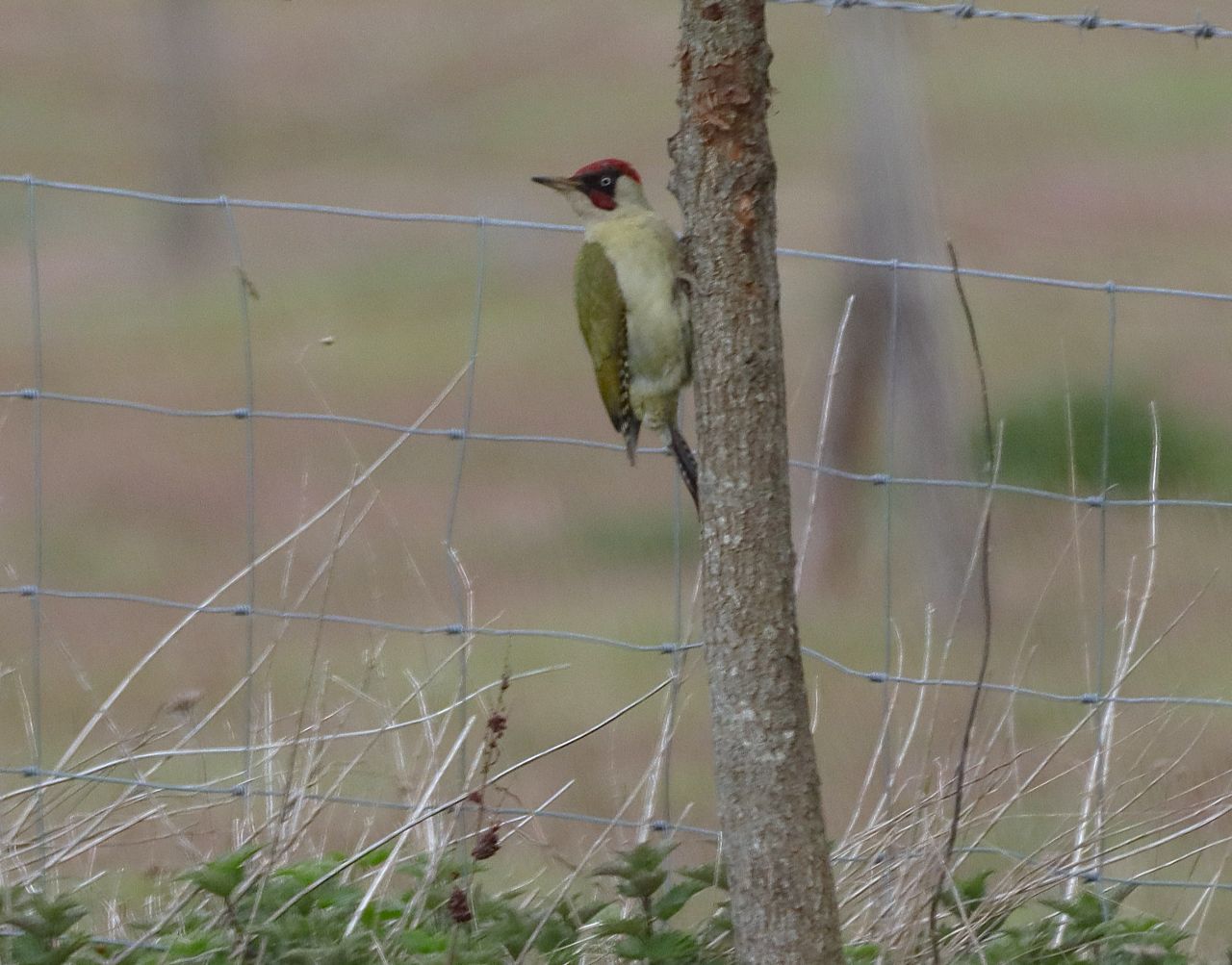
Green woodpecker, Whitmoor Common.
Green woodpeckers feeding in the old horse paddocks.
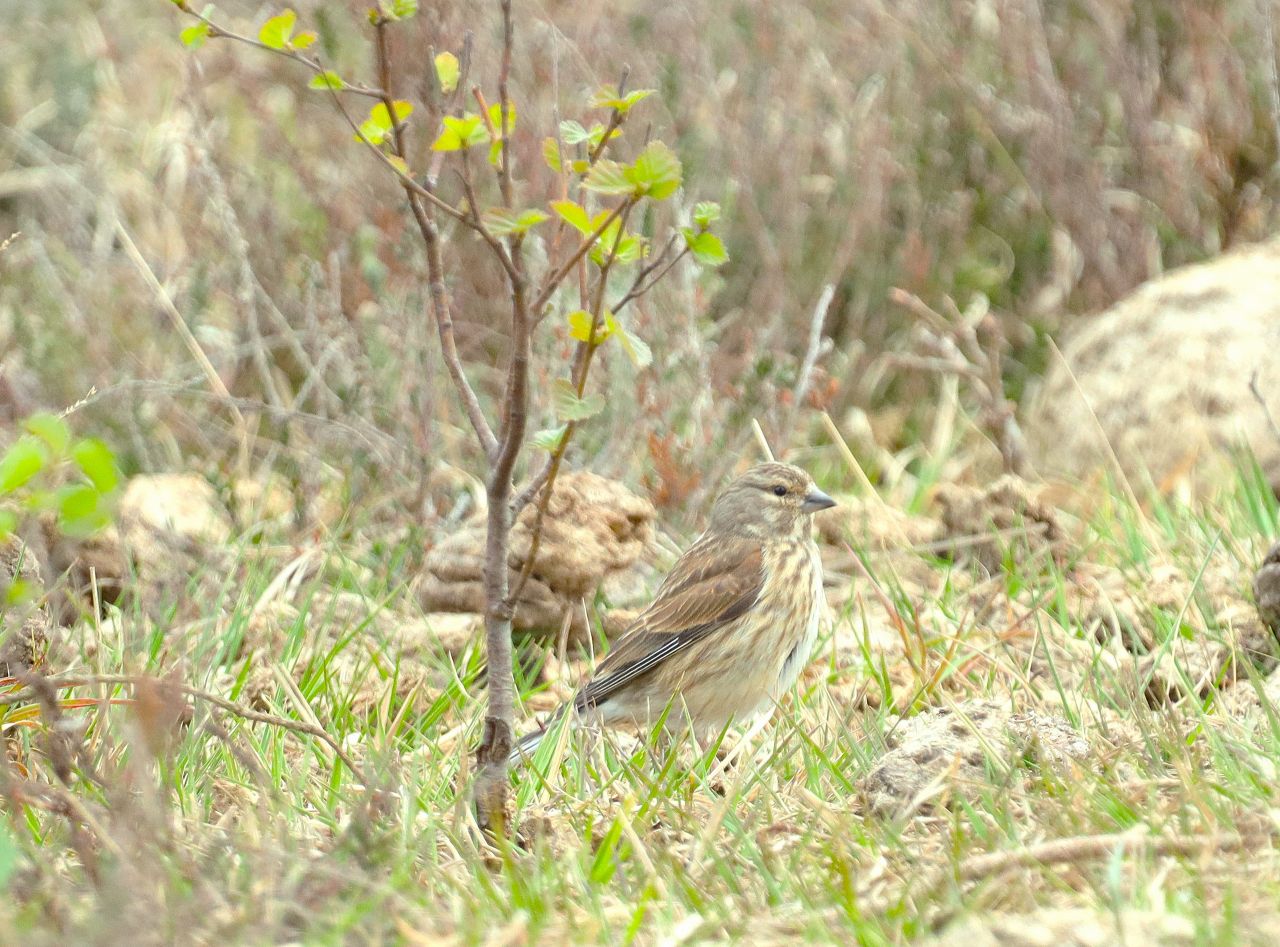
Linnet, Whitmoor Common.
Out on the heathland linnets were seen and heard.
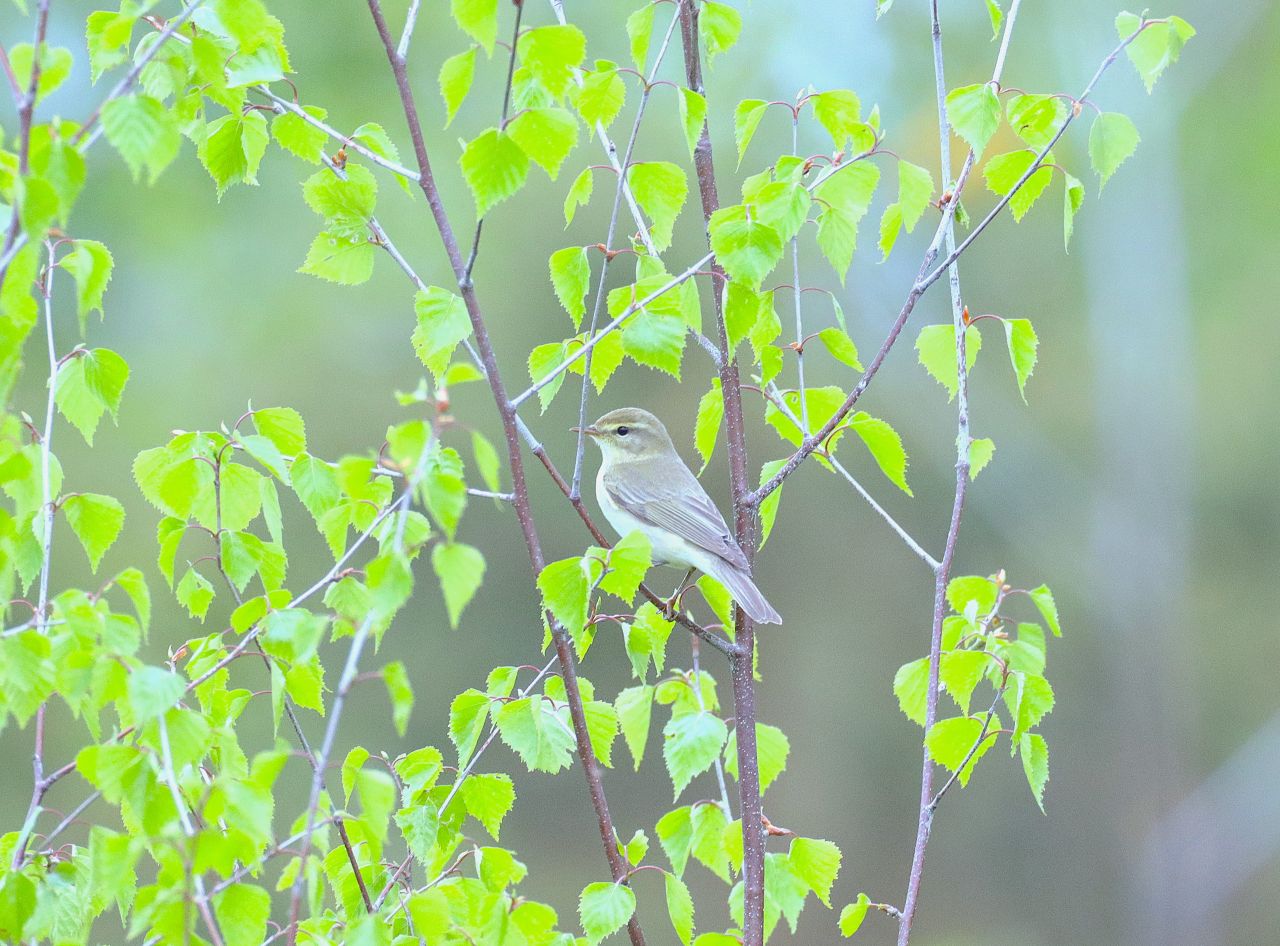
Willow warbler, Whitmoor Common.
A willow warbler heard singing in the silver birch shrubs.
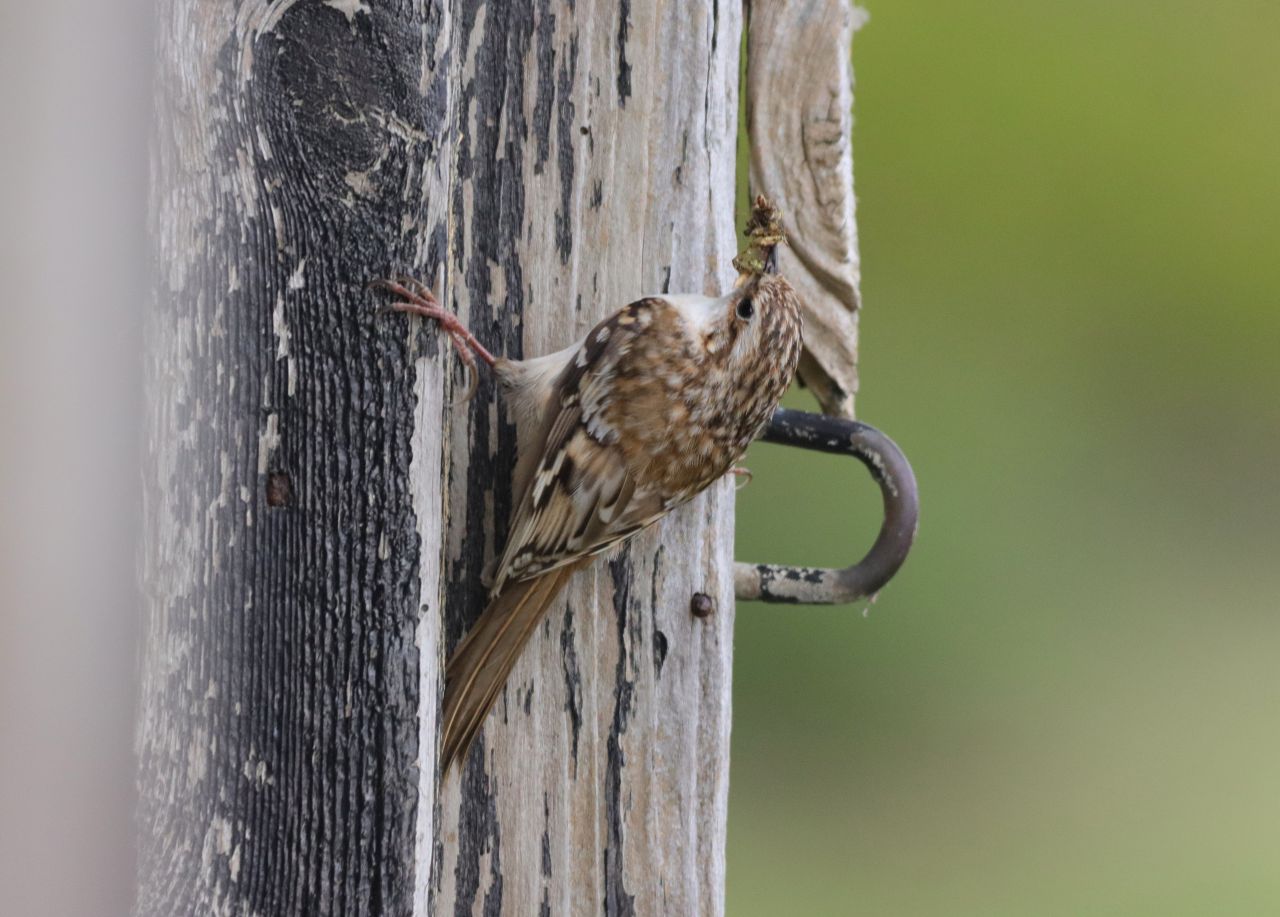
Treecreeper, Whitmoor Common.
The pair of treecreepers, mentioned in the previous report, continued their nest building.

Stonechat (male), Whitmoor Common.
And stonechats were regularly sighted.
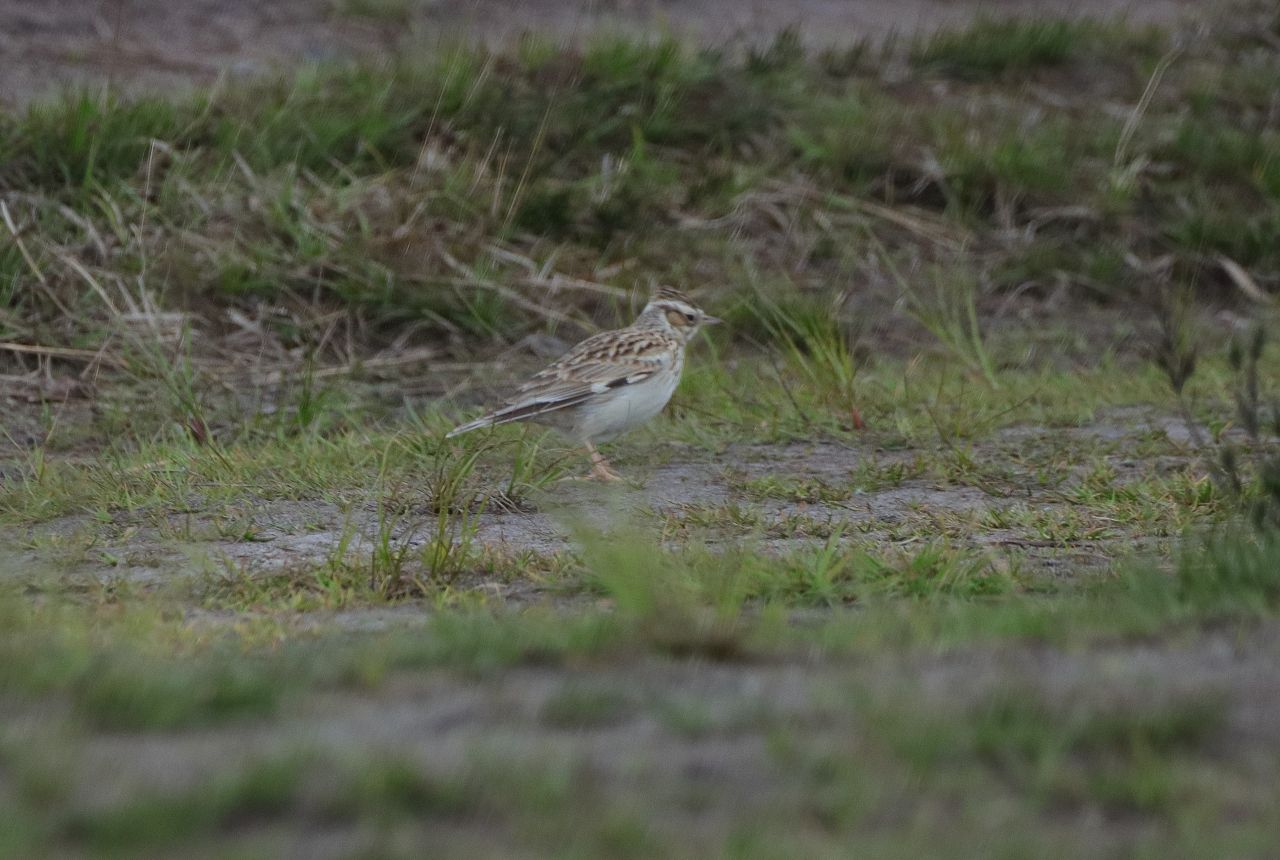
Woodlark, Whitmoor Common.
I also added a surprise first sighting on Whitmoor Common this year of a woodlark.
By April 25 temperatures continued to warm and a visit to Pewley Down saw the first of the late spring butterflies starting to emerge.
The conditions seem to have brought them out earlier than recent previous years, and included….
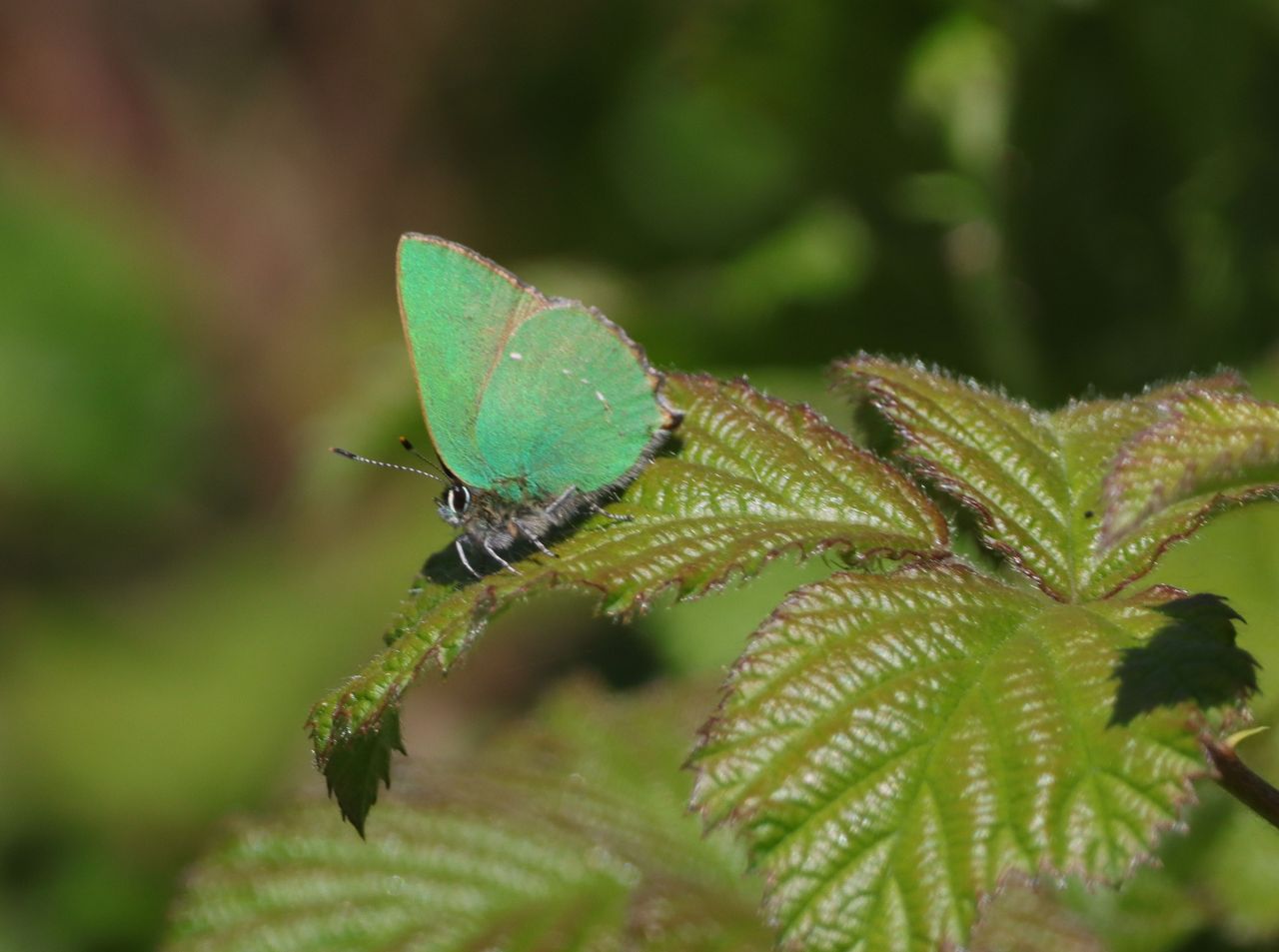
Green hairstreak butterfly, Pewley Down.
A good handful of green hairstreak butterflies.

Dingy skipper butterfly, Pewley Down.
A few dingy skipper butterflies.
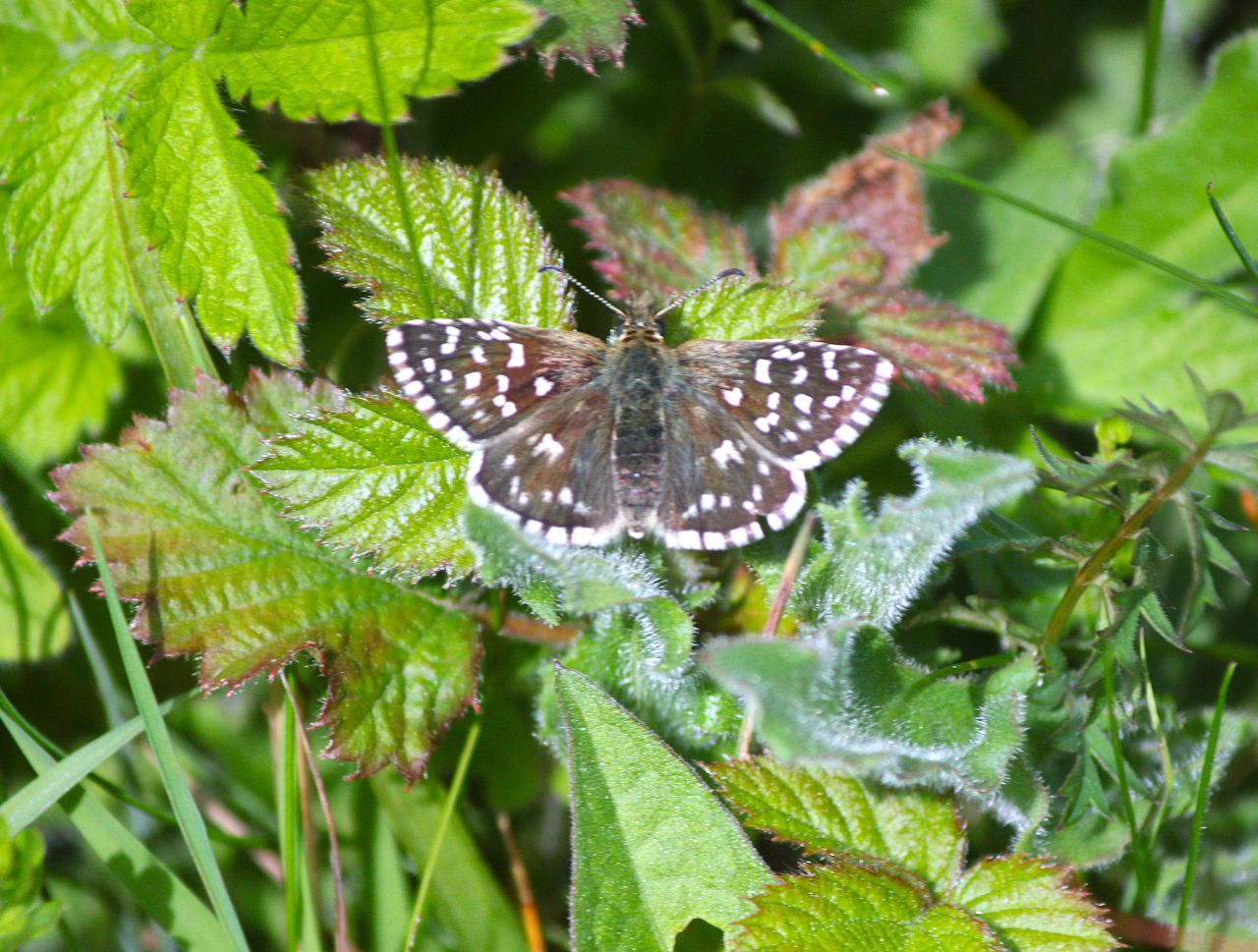
Grizzled skipper butterfly, Pewley Down.
Some grizzled skipper butterflies.
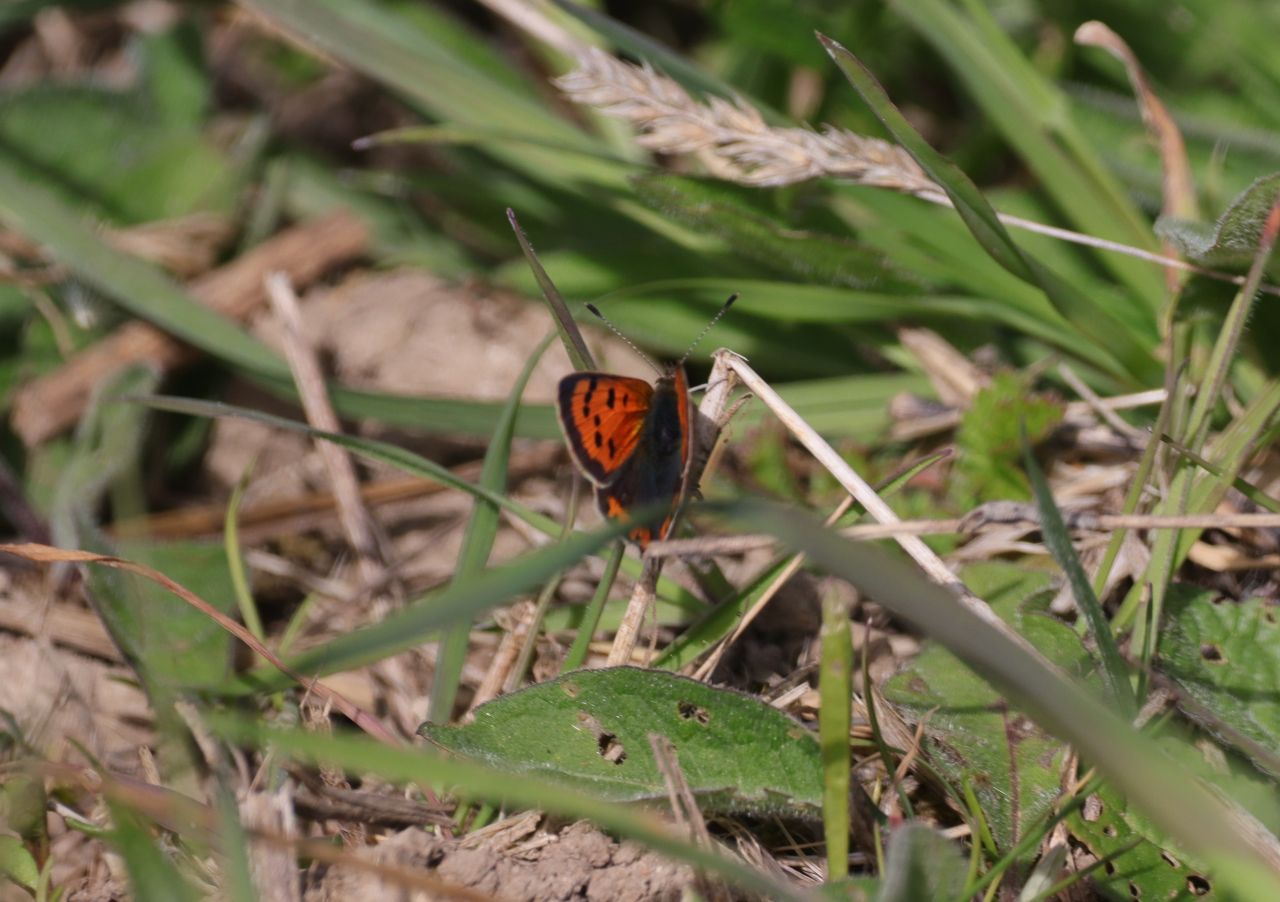
Small copper butterfly, Pewley Down.
A small copper butterfly.

Small heath butterfly, Pewley Down.
And a few small heath butterflies already on the wing.
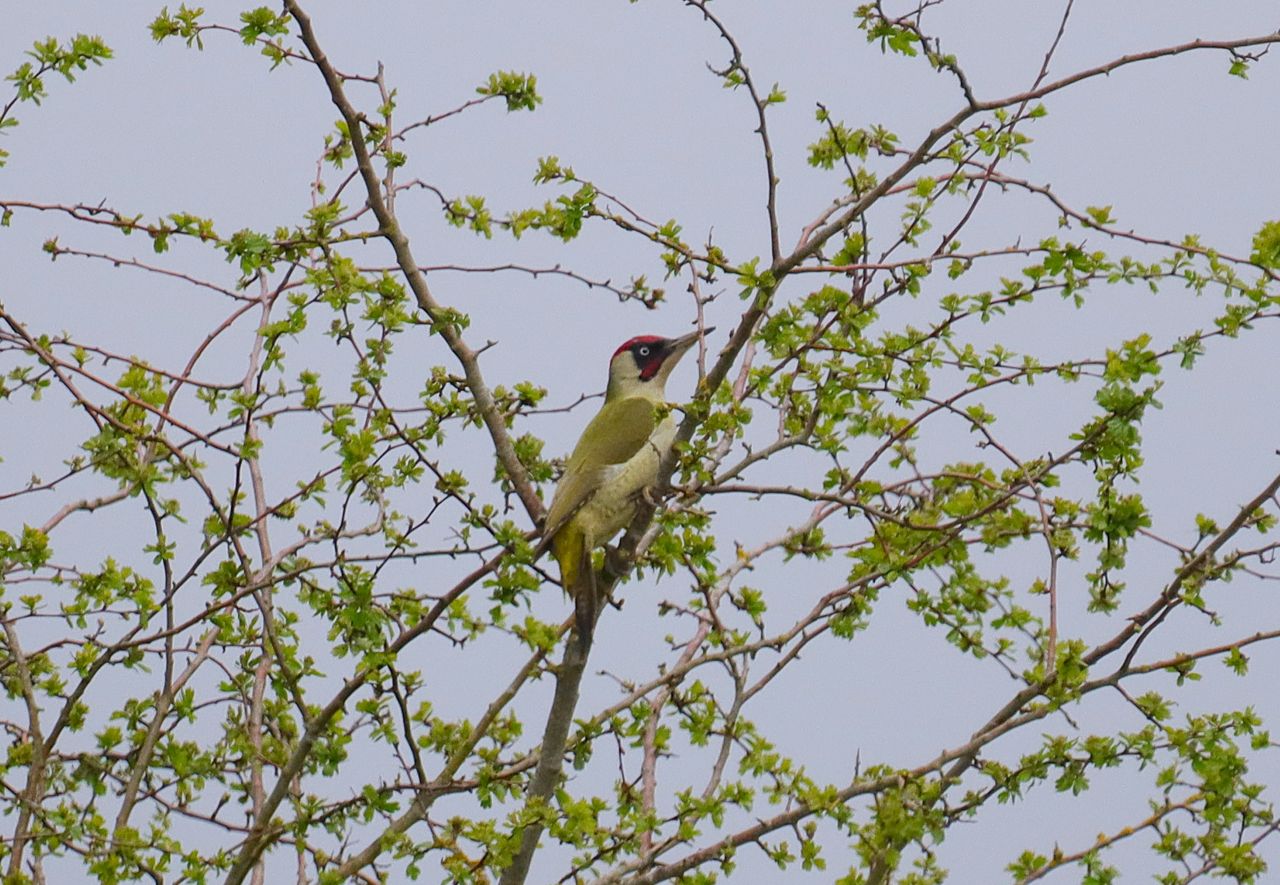
Green woodpecker, Pewley Down.
Bird sighting there included green woodpeckers.
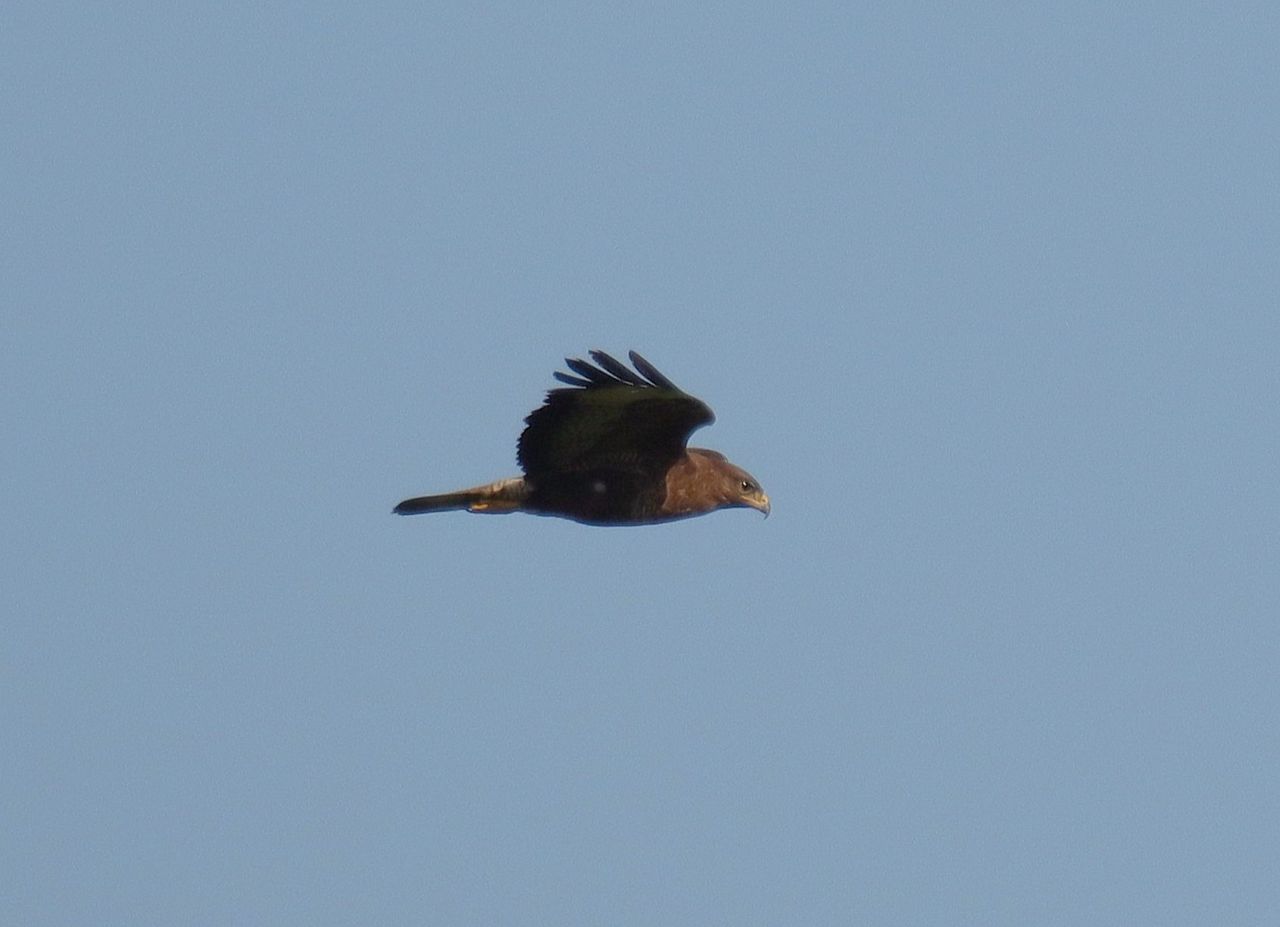
Common buzzard.
A common buzzard.
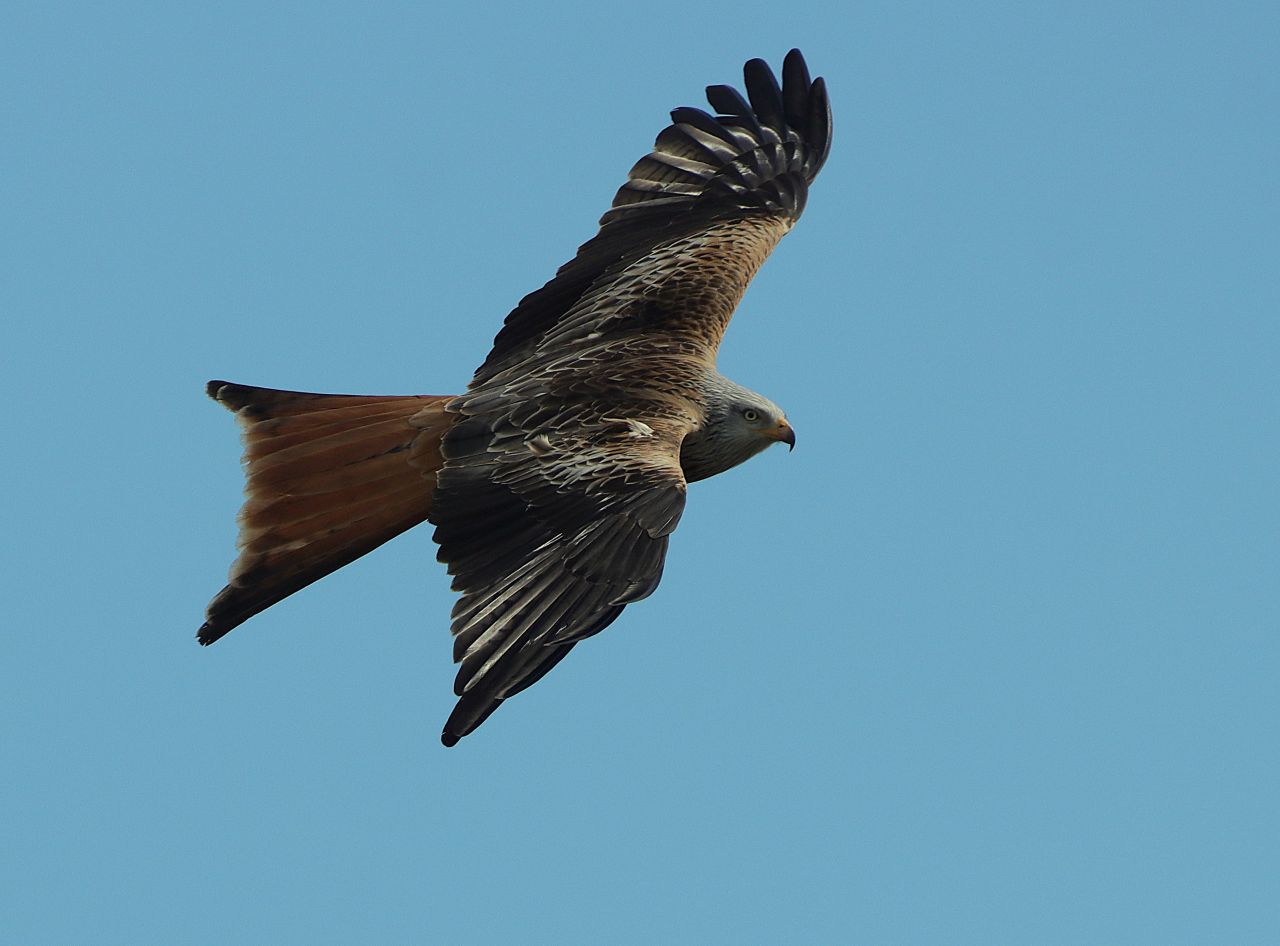
Red kite.
And several red kites hunting over the downlands.

Red-legged partridge, Pewley Down.
Several red-legged partridges could also be noted.
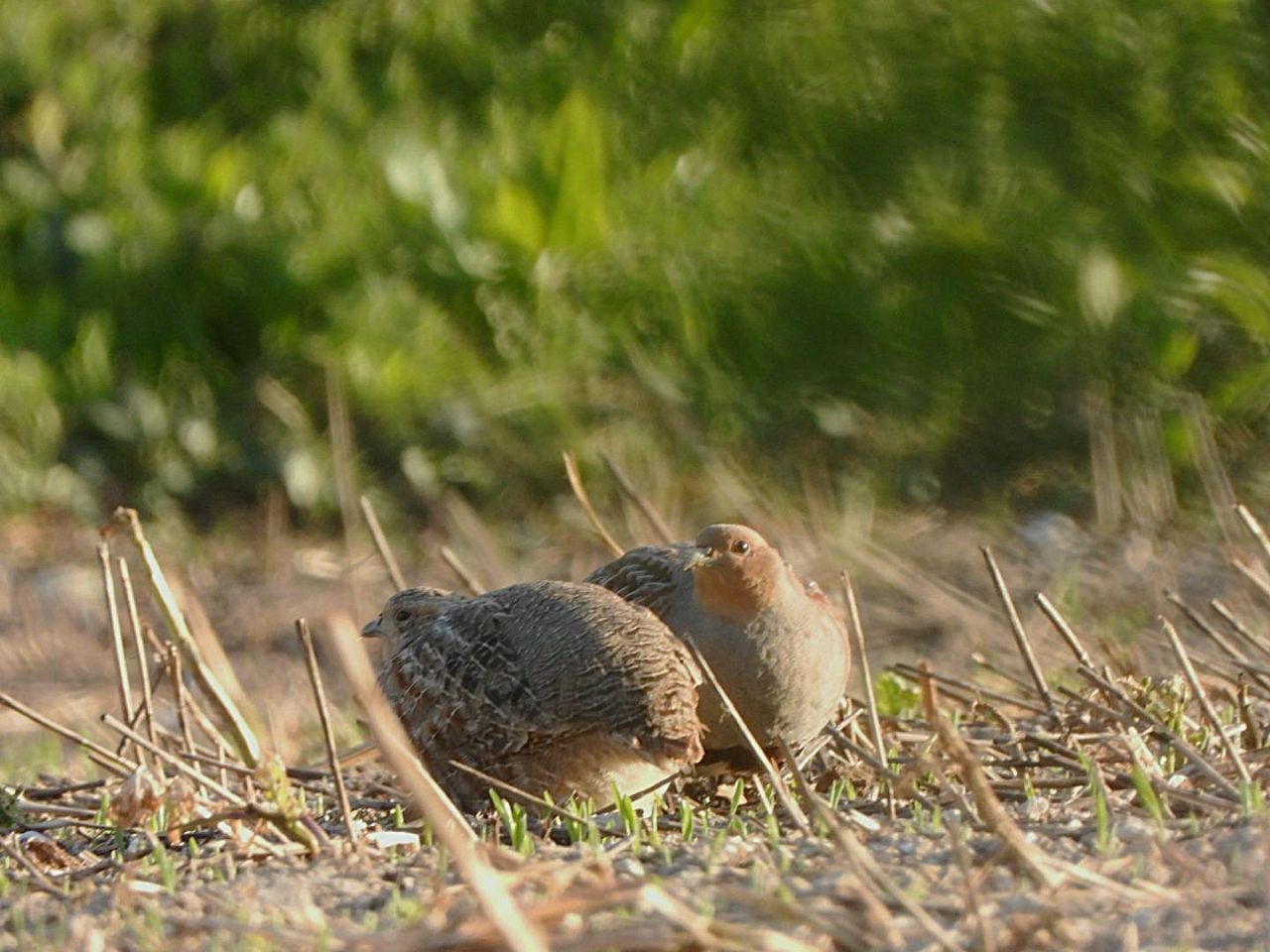
Grey partridges, Pewley Down. Photographed by Alan Lobb.
Alas, my attempts on viewing the grey partridges that had been reported there recently once again fell on stony grounds. Or at least the chalky downland of Pewley Down!
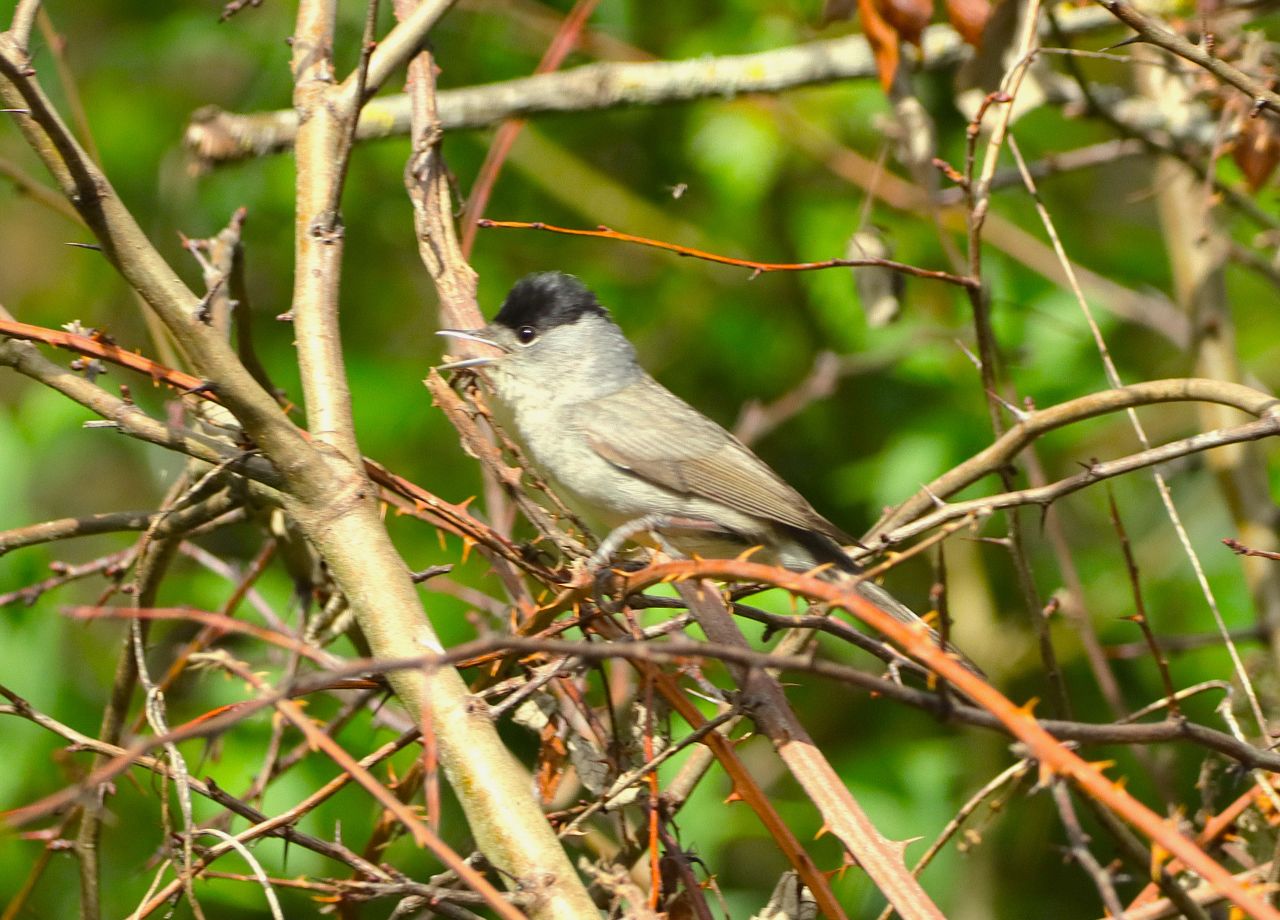
Blackcap (male), Riverside Nature Reserve.
Meanwhile, at the Riverside Nature Reserve near Burpham male blackcaps continued to sing.
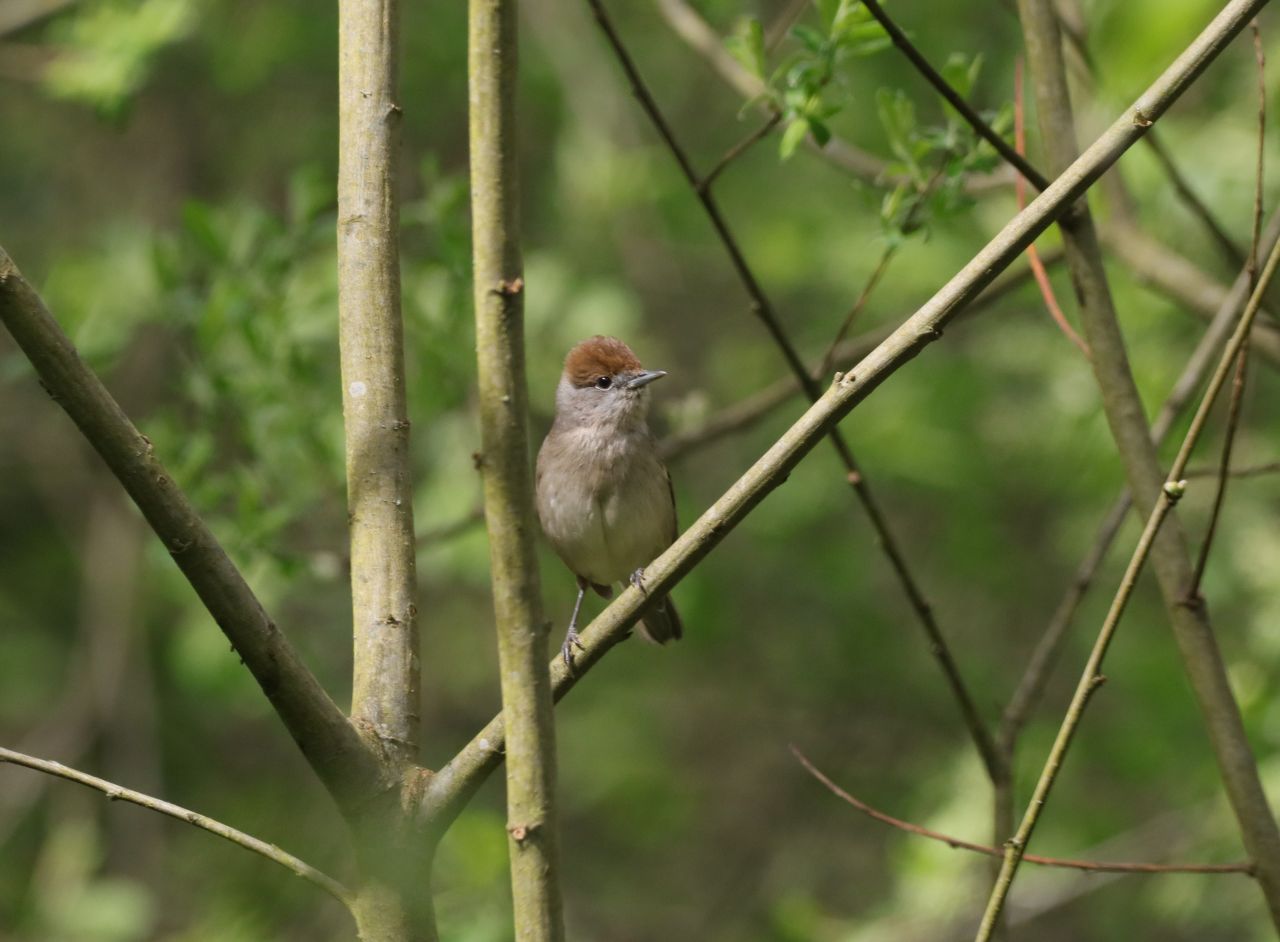
Blackcap (female), Riverside Nature Reserve.
While the non-singing brown-capped female blackcaps, as always, remained more difficult to pick out. This one only by recognising its contact calls to a nearby male.
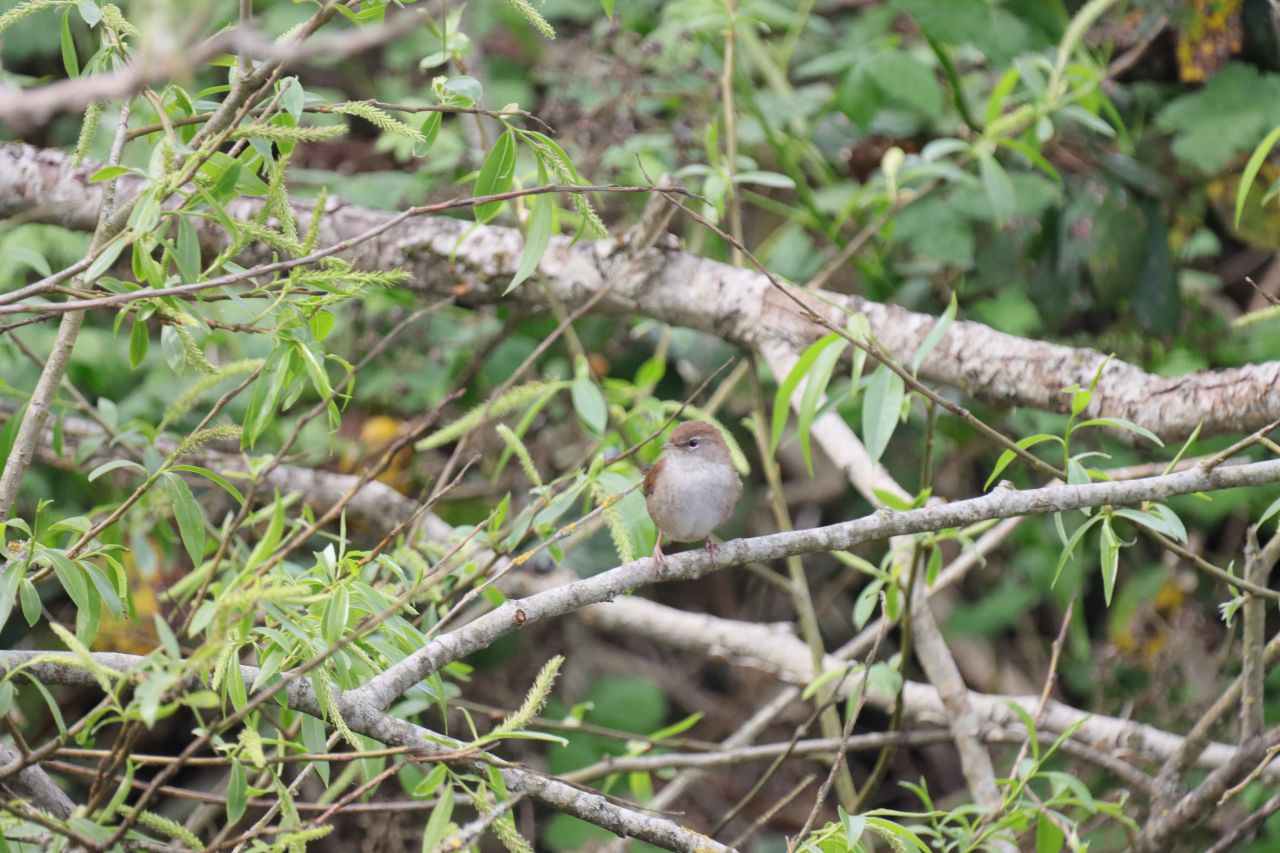
Cetti’s warbler, Riverside Nature Reserve.
Continuing to be vocal were the Cetti’s warblers skulking in the brambles across the river.
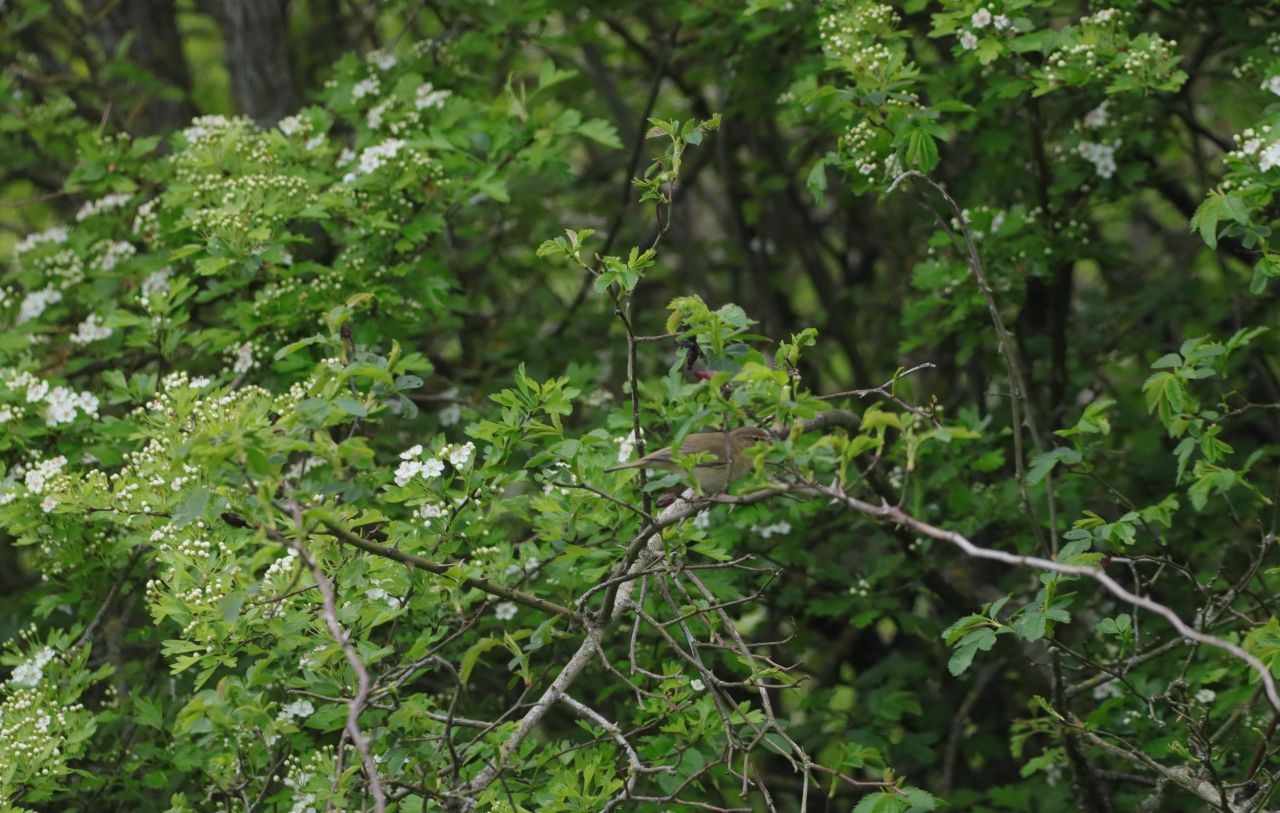
Chiffchaff among the hawthorn (Mayflower), now starting to blossom at the Riverside Nature Reserve.
Chiffchaffs could still be heard making their repetitive calls.
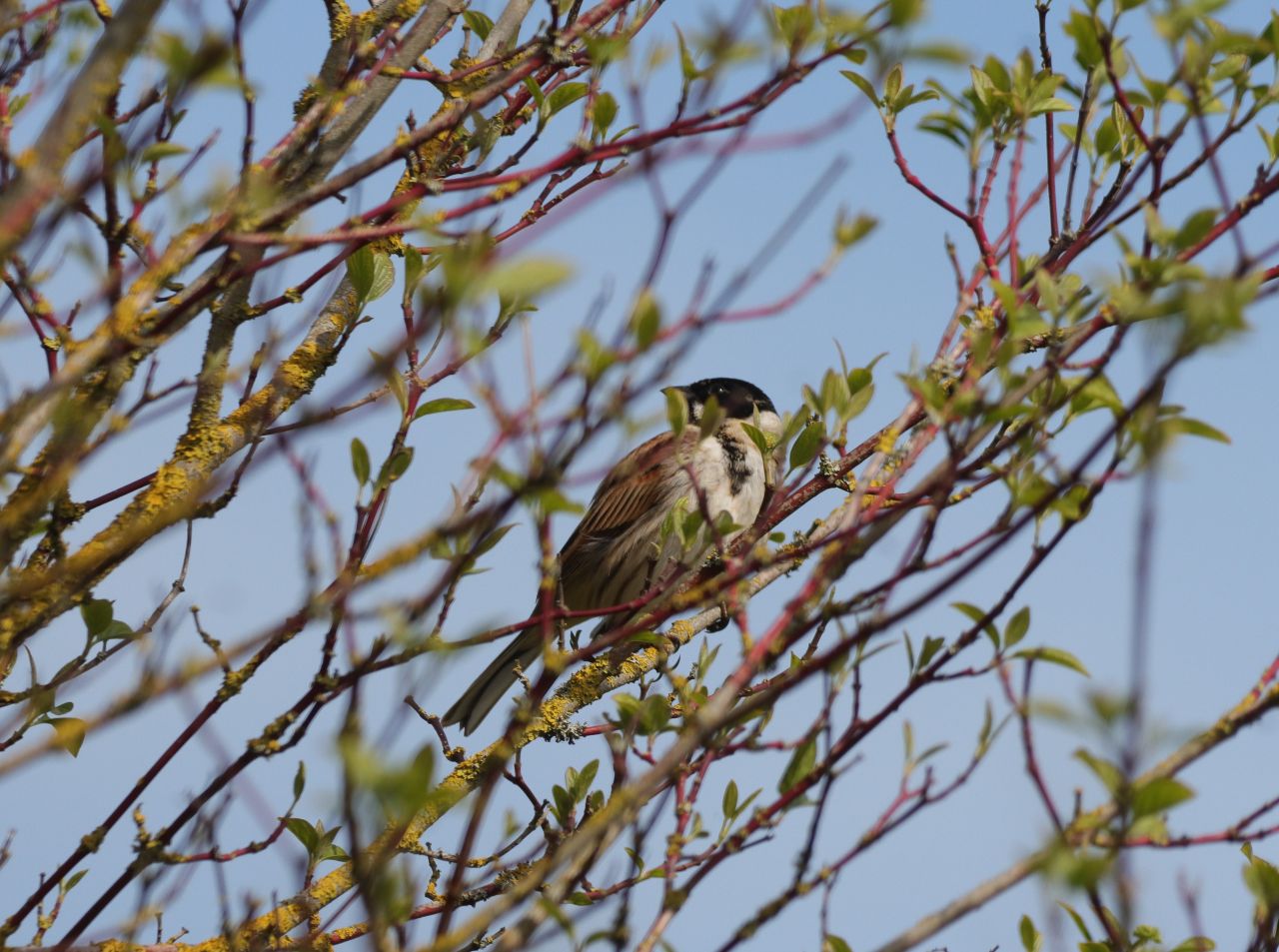
Reed bunting at Stoke Lake.
And a male reed bunting was in song beside the boardwalk.
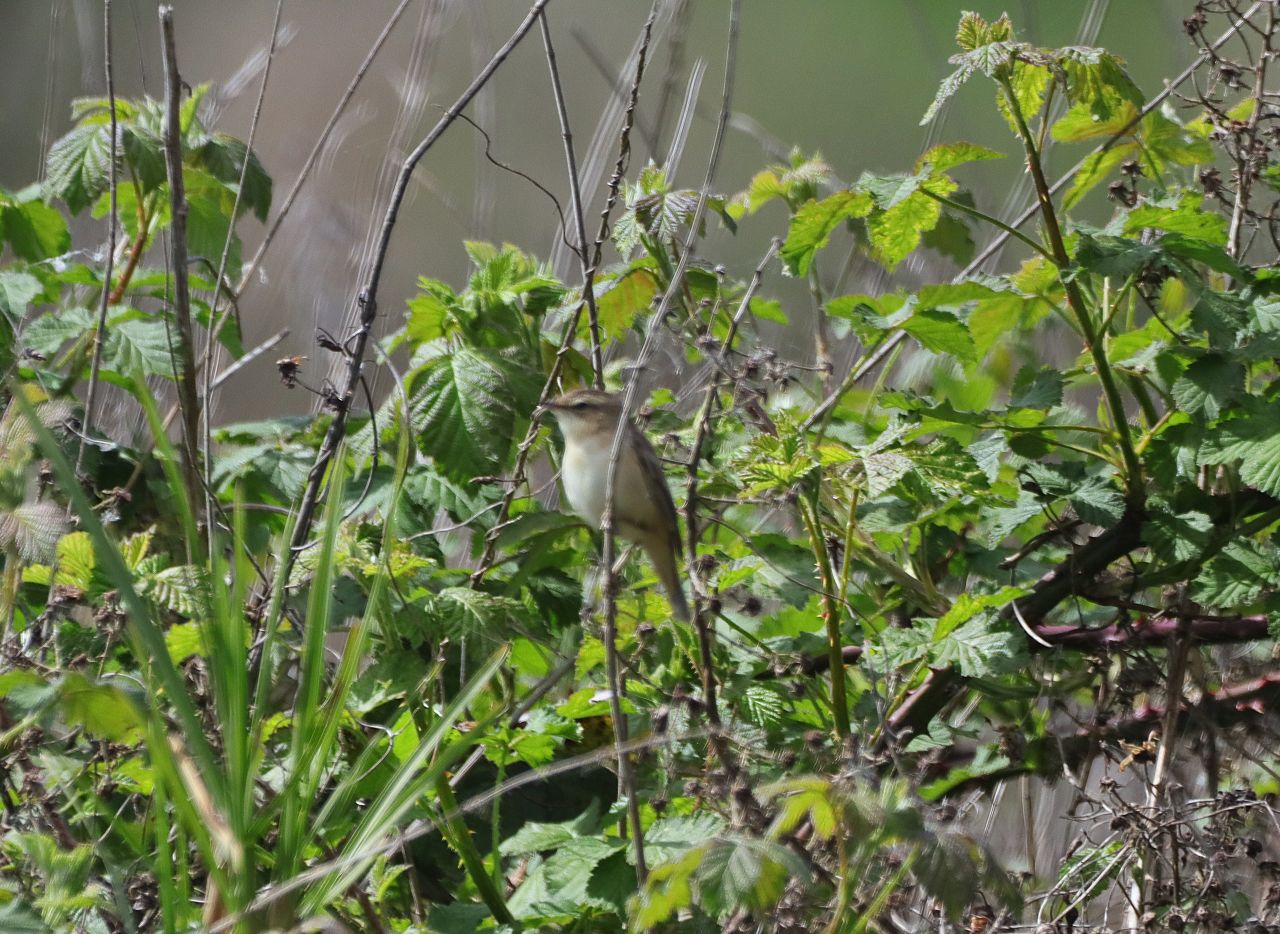
Sedge warbler, Riverside Nature Reserve.
Having heard my first sedge warbler in song there a few day’s previously, it was not until April 19 that I was able to get my first photograph of one this year.

Common sandpiper with a mallard duck at the Riverside Nature Reserve.
Also adding our first common sandpiper of the year, just across the river from the towpath at the newly constructed ‘fish-pass’.

Reed warbler at Stoke Lake.
The first couple of reed warblers had also arrived and could be heard briefly in song, as they skulked within the reed beds by Stoke Lake.

Mallards with 12 chicks on the River Wey, at the Riverside Nature Reserve.
On the River Wey a pair of mallards had produced and were proudly showing off their 12 young chicks.
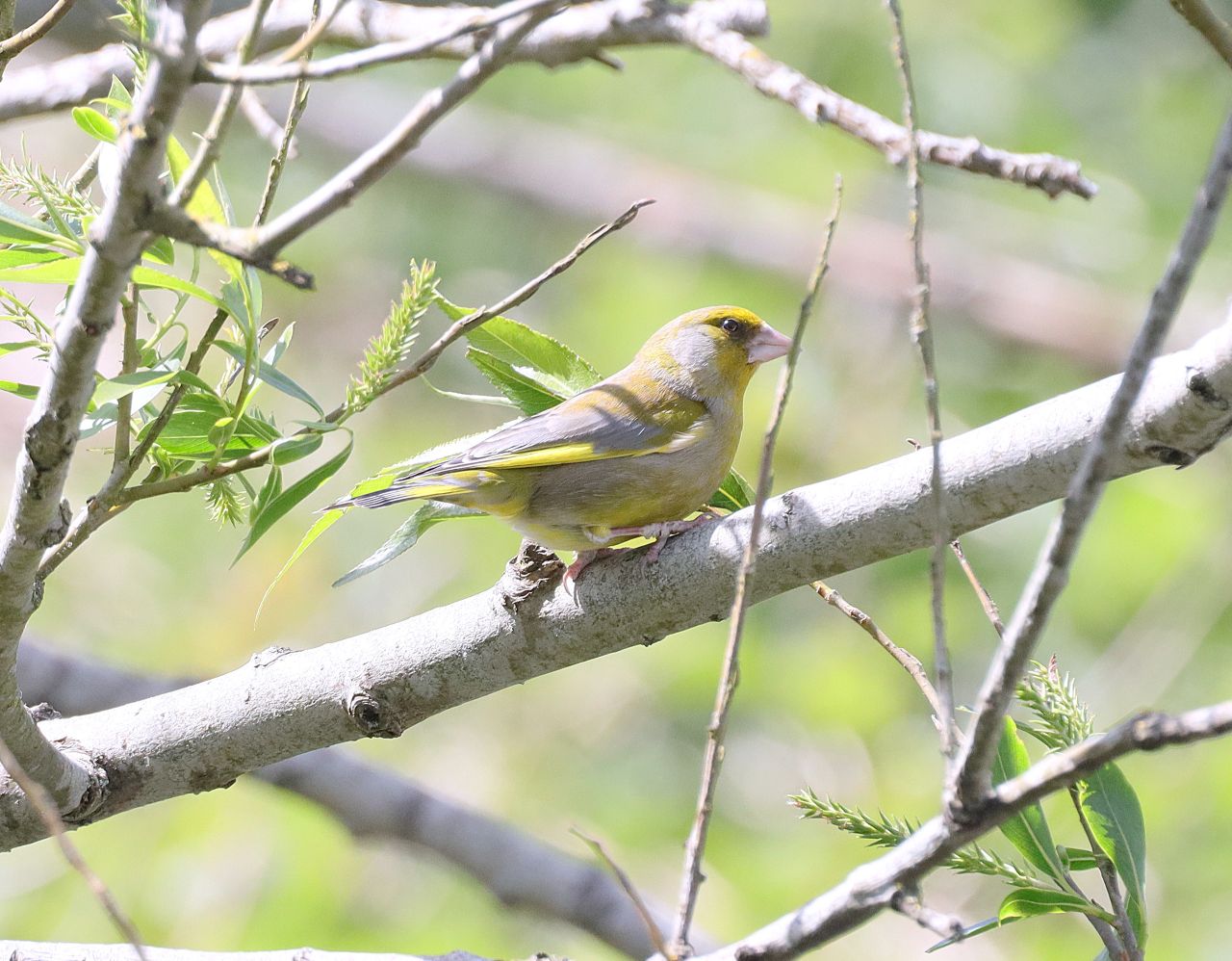
Greenfinch, Riverside Nature Reserve.
And a pair of greenfinches could be viewed along the towpath.
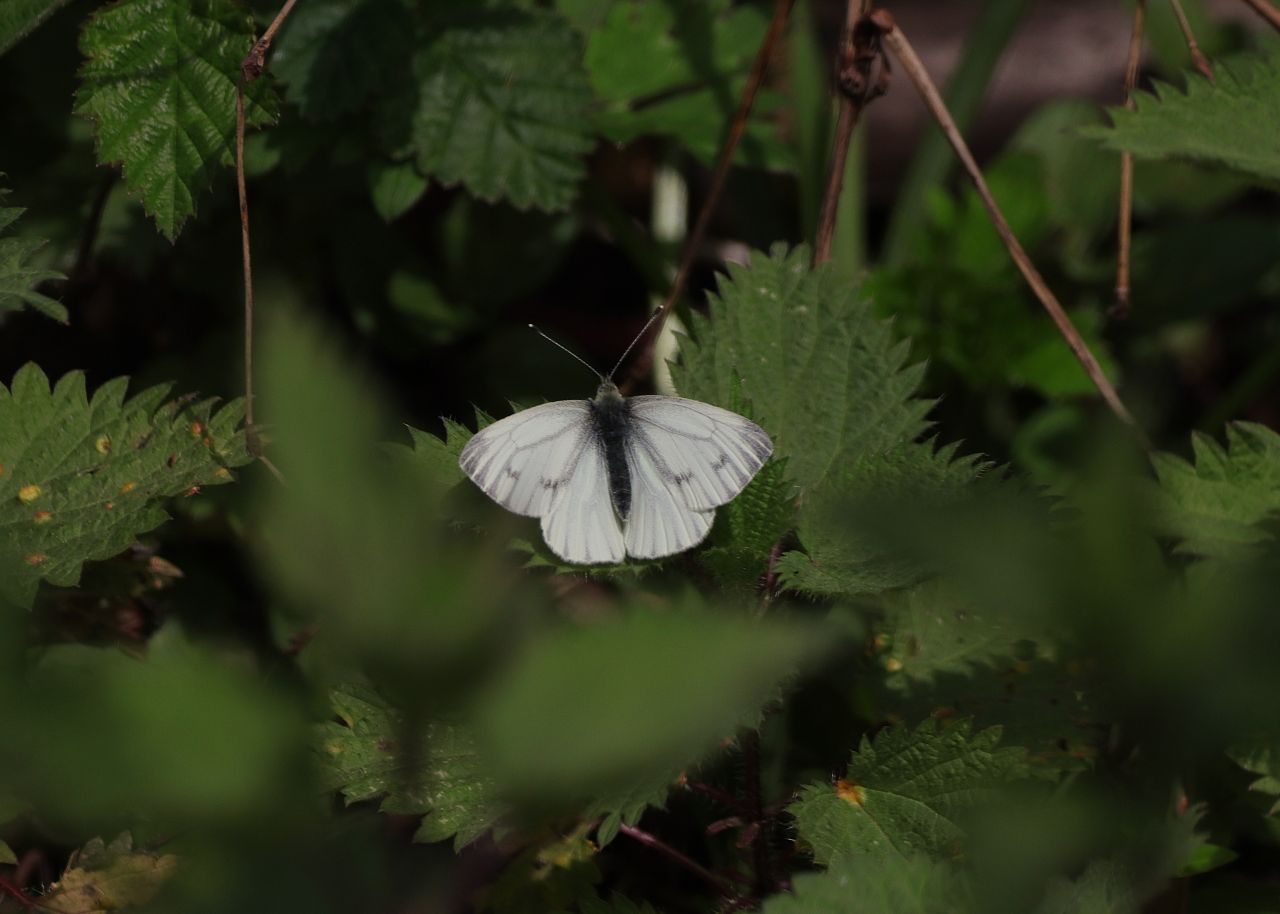
Green-veined white butterfly, Riverside Nature Reserve.
Another addition to our sightings was our first green-veined white butterflies of the year.
On April 29, a white stork, that had been reported just a few days previously, reappeared on the scrape viewed from Stoke Lock.
On my arrival there late morning there was no sign of it at first.
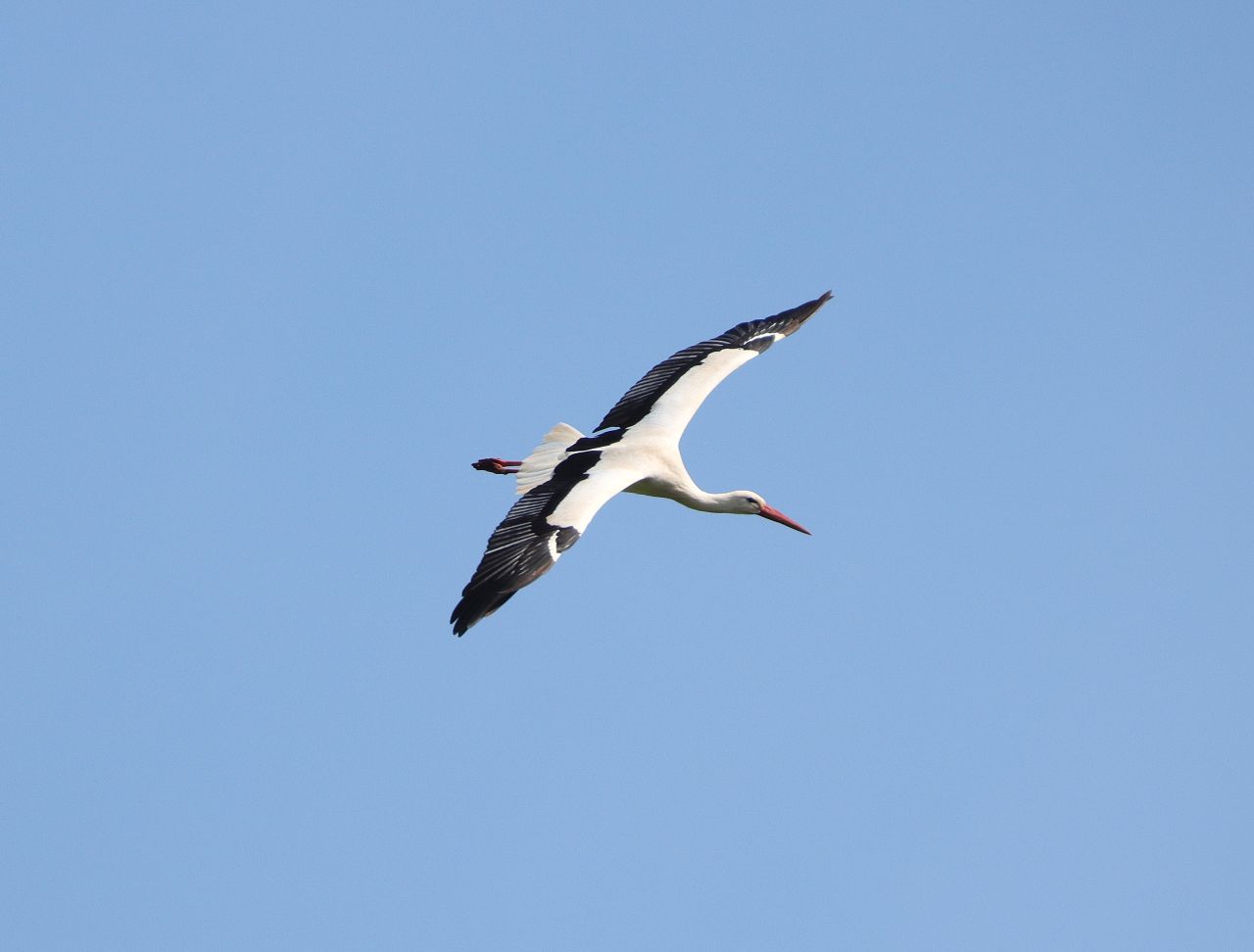
White stork flies over the scrape viewed from Stoke Lock, adjacent to the Riverside Nature Reserve.
While watching across the flooded scrape, a large bird that I instantly recognised as as a stork descended from the sky above the utility wires that run across the reserve and landed in the marsh.
Returning from my walk around the reserve and viewing again across the area of the flooded scrape, I couldn’t believe what I was seeing!
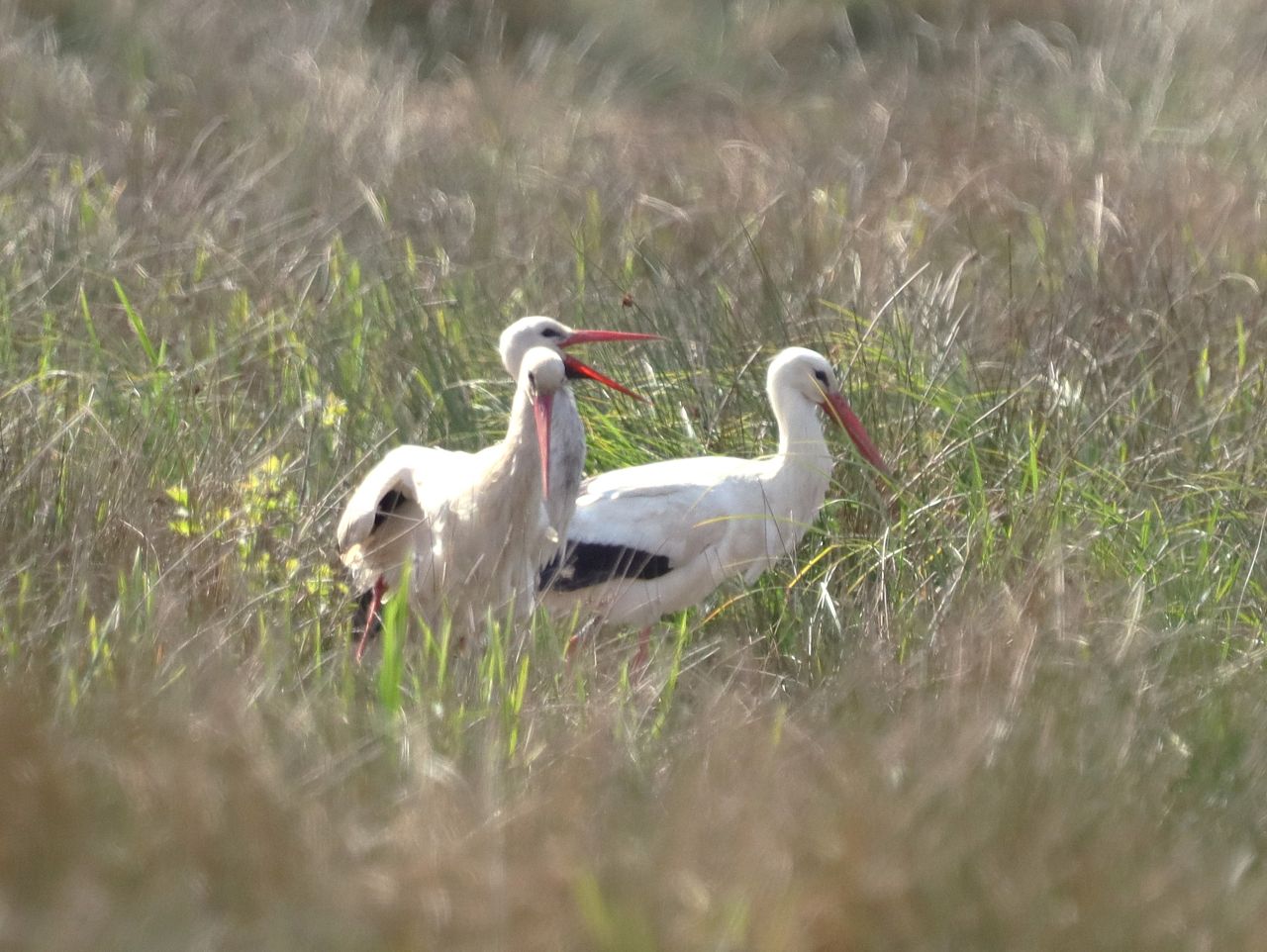
White storks, on scrape by Stoke Lock.
Where there had been one white stork, now there were three!
One of the birds had coloured rings on its legs, almost certainly suggesting it was from Knepp.
However, the other two, when later seen in flight, appeared to bear no rings, suggesting they had possibly joined up with the ringed bird while they were on their migration north.
Share This Post


Responses to Birdwatcher’s Diary No.348
Leave a Comment Please see our comments policy. All comments are moderated and may take time to appear. Full names, or at least initial and surname, must be given.











Simon Vine
May 7, 2026 at 4:52 pm
Fantastic range of sightings. Well done Malcolm 😊