- Stay Connected

Socialize


 Abraham Lincoln
If given the truth, the people can be depended upon to meet any national crisis...
Abraham Lincoln
If given the truth, the people can be depended upon to meet any national crisis...

 Guildford news...
for Guildford people, brought to you by Guildford reporters - Guildford's own news service
Guildford news...
for Guildford people, brought to you by Guildford reporters - Guildford's own news service
Councillors Hear How the Weyside Urban Village Project Became a Multi-million Risk
Published on: 9 Jul, 2025
Updated on: 9 Jul, 2025

Illustrative view of new homes in Weyside Urban Village project. Guildford Borough Council
By Emily Dalton
local democracy reporter
How did an ambitious 1,650 home development become the “biggest financial risk” to a Surrey council?
The Weyside Urban Village (WUV) scheme, led by Guildford Borough Council, could see hundreds of new homes, community buildings, employment space and improved infrastructure built. Working on the project since 2003, why has the council found itself with a more than £50 million deficit?

Cllr George Potter
Putting it succinctly, Cllr George Potter (Lib Dem, Burpham) said the core of the issue is that the WUV project inherently has a significant lead time before the council could actually get to the point of borrowing and spending money, and in that time economic conditions have shifted massively.
When the program was first signed off by Guildford council in 2021, it had a budget of around £453 million which would end in the scheme being cost neutral. Now in 2025, Weyside Urban Village is staring down more than £50 million budget deficit with ten years still to go on the project.

CGI view of another part of the planned Weyside project. Guildford Borough Council
Deputy GBC Leader Tom Hunt (Lib Dem, St Nicolas), the lead councillor for Regeneration, explained since the scheme’s approval there have been “a number of global economic and geopolitical factors completely outside the council’s control”.

Cllr Tom Hunt
He listed the invasion of Ukraine, global instability in the Middle East and not least the disastrous Liz Truss budget of 2022, which played havoc with interest rates.
Together, the political and economic factors have caused rising interest rates, rising inflation and suppressed land prices – altogether creating a perfect storm for the project.
“Councils cannot borrow money in advance of needing it,” explained Cllr Hunt at an overview and scrutiny committee on July 8. Guildford was not legally allowed to take advantage of the low interest rates in 2020 but had to do it later down the line after increasing economic discomfort and uncertainty.
But why does the council have to pay for the budget overruns?
Even though Guildford is buying the development contract, some residual risk remains with the local authority. This outstanding risk could be the condition of the land changing or unforeseen circumstances or events causing delivery difficulties.
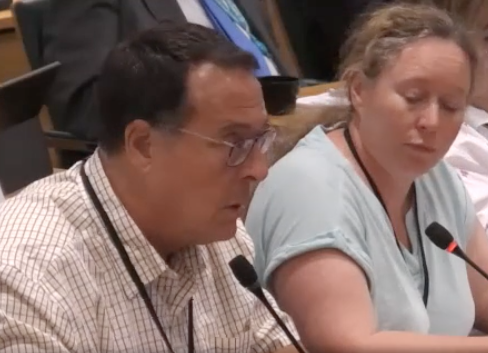
Cllr Richard Lucas
Cllr Richard Lucas (Lib Dem, Ash Vale), lead councillor for finance, said: “If you have build-cost inflation, it’s increasing the cost of building and decreasing the end-point land value.”
“This is not the end game,” said the deputy leader. Cllr Hunt explained the over £50m deficit is the current forecast for the conclusion of the programme but this will change over time rather than being a static target.
“The risks are being mitigated and over time they will reduce,” he said. Officers have now outlined various options to plug the funding black hole for the council to consider, including: selling unused assets, reworking management contracts and Housing Revenue Accounts funding. A decision on the options is due soon, at the end of July.
See also: GBC Working Hard To Mitigate Looming Weyside Urban Village Deficit
Share This Post




PM You say you're worried about the reaction in Surrey to council reorganisation. How many Labour MPs does Surrey elect? Angela Rayner: None, ever. PM Next item!












Recent Comments