- Stay Connected
Socialize

 Abraham Lincoln
If given the truth, the people can be depended upon to meet any national crisis...
Abraham Lincoln
If given the truth, the people can be depended upon to meet any national crisis...

 Guildford news...
for Guildford people, brought to you by Guildford reporters - Guildford's own news service
Guildford news...
for Guildford people, brought to you by Guildford reporters - Guildford's own news service
‘Does He Take Sugar?’ How Adults Can Unwittingly Patronise People With Disabilities
Published on: 25 Jan, 2026
Updated on: 26 Jan, 2026
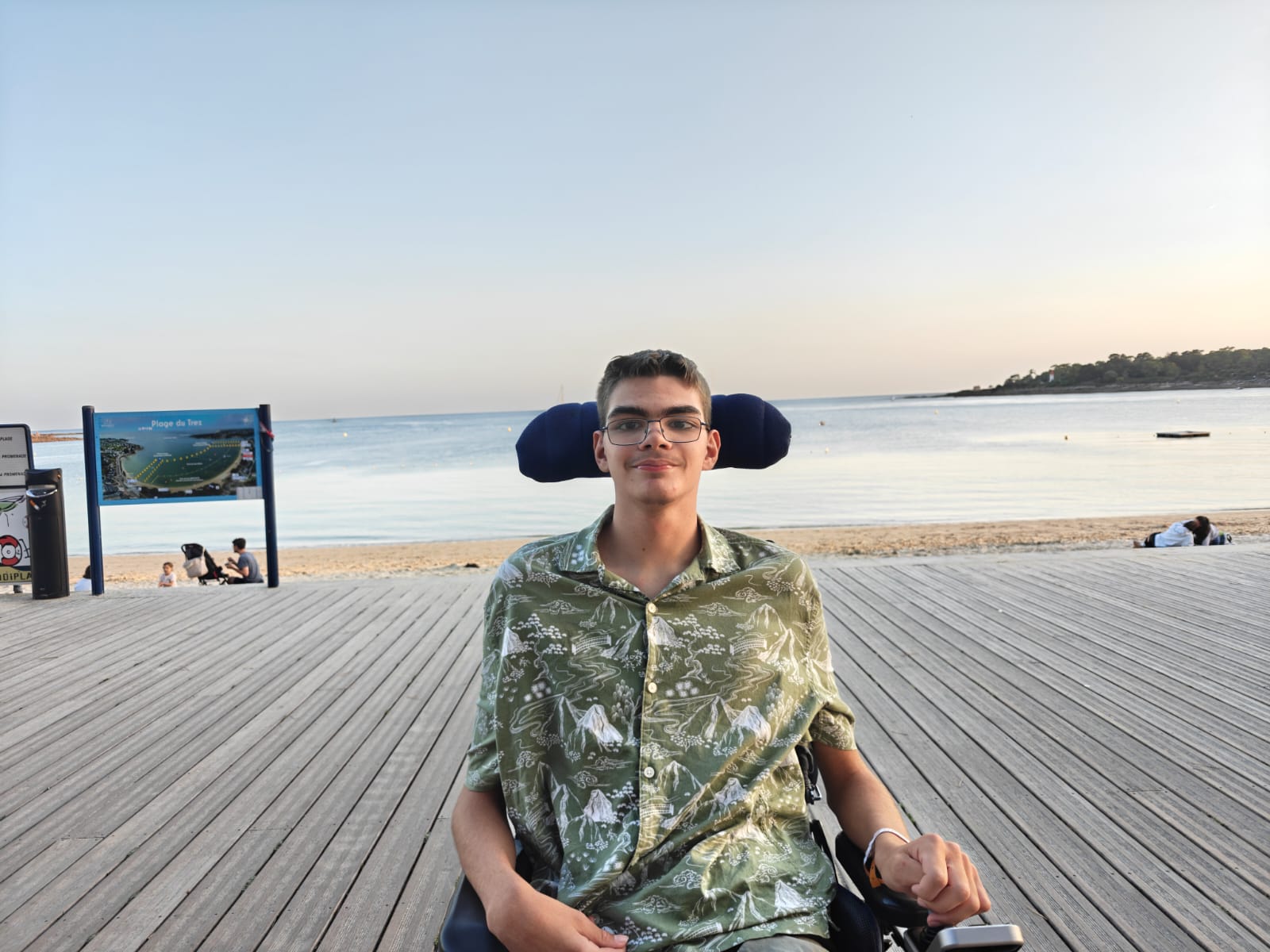
Logan enjoying leisure time by the sea.
“They bend over the chair like they are peering into a pram, and sometimes they reach out to pat me on the head.” Those are the words of Logan, who is 19, and has cerebral palsy. He is talking about the way many adults converse with him, as if they are speaking to a toddler. In this article, Logan explains how this makes him feel.
Like all great thoughts, this article sprung to mind through a seemingly unrelated discussion. For our A-level English Language, we do a module on Child Language Acquisition, and this week touched on how adults adapt their own speech patterns when talking to young children. The main characteristics relate to simplification of language alongside exaggerated expression. They say things in short phrases like “Wow! Well done!” with a big face and obvious tone which suggests praise.
Instantly, I cast my mind back to when I have been talked to (or actually talked at) in this way. Not only as a child, but through all walks of life. They bend over the chair like they are peering into a pram, and sometimes they reach out to pat me on the head. Even worse, they quickly turn to the person accompanying me to use as a go-between for questions. The assumption is that I couldn’t possibly process a whole statement or link together an exchange and answer cohesively and coherently. Or even say yes or no. They haven’t read my work.
Another aspect that plays a part in this is how I speak. For those of you who don’t know, I have cerebral palsy with dysarthria (slurred speech). I personally feel that my speech degrades my intelligence, and I would never think that about anybody else, but I have a level of insecurity with this. To clarify, I don’t mean intelligence in a grandiose way — I don’t think I’m a cut above — but I’m referring to whether I understand the world around me. I’m very much aware!
Moreover, if I was a betting man, I would put money on me occupying the intellectual high ground in most of these situations. What bothers me most is people who gawp at me and just nod along with no idea what I said. You could say anything and they would be none the wiser.
My main advice to caregivers is this: “Prompt new people to communicate in ways that engage me and treat me on equal terms. When they do slip into being patronising or obviously not involved in the discussion, say, ‘Did you catch that or shall I help?’ Explain to them about how I get on academically.”
That’s the best way to navigate this. Caregivers are not the greatest at pointing out these things. They need to be more forceful.
Does he take sugar? No, he doesn’t take sugar. He doesn’t want tea. Now go pour me a beer!
- Logan lives in Camberley and attends Treloar’s, the Alton-based charity that supports and educates around 170 children and young people, including many from Surrey. Writing – especially short stories – is his passion and he has recently branched into travel writing.
Share This Post




I'm living well for nothing at all! (See: No Trifling Matter: Magpie Trapped in Godalming Sainsbury’s)




Next stop, Debt Chasm! (See: We Should All Be Outraged About the Failure to Deal with Legacy Debt)



Recent Comments