- Stay Connected

Socialize


 Abraham Lincoln
If given the truth, the people can be depended upon to meet any national crisis...
Abraham Lincoln
If given the truth, the people can be depended upon to meet any national crisis...

 Guildford news...
for Guildford people, brought to you by Guildford reporters - Guildford's own news service
Guildford news...
for Guildford people, brought to you by Guildford reporters - Guildford's own news service
Opinion: Never Have We Needed the Benefits of the Natural World More
Published on: 13 Jul, 2025
Updated on: 13 Jul, 2025

View south from the Greensand ridge in Guildford
By Catherine Masterman
 Interwoven with the human scale infrastructure that dominates and regulates our lives – the roads, the trains, the telegraph wires, the pavements, the houses, shops, schools and offices – is the world of wildlife that we can completely overlook and pass by.
The Wildlife Trusts not only work to protect this world but also make them accessible and tangible, revealing the ways in which they interlock with the places we live, work and travel between.

View towards Guildford from the south-west.
Fields that acted as moving wallpaper for my train commute are revealed as hunting grounds for kestrels and buzzards; the Commons offering a tree to climb on a Sunday walk can be unlocked as a patchwork of different heathers unique to the county.
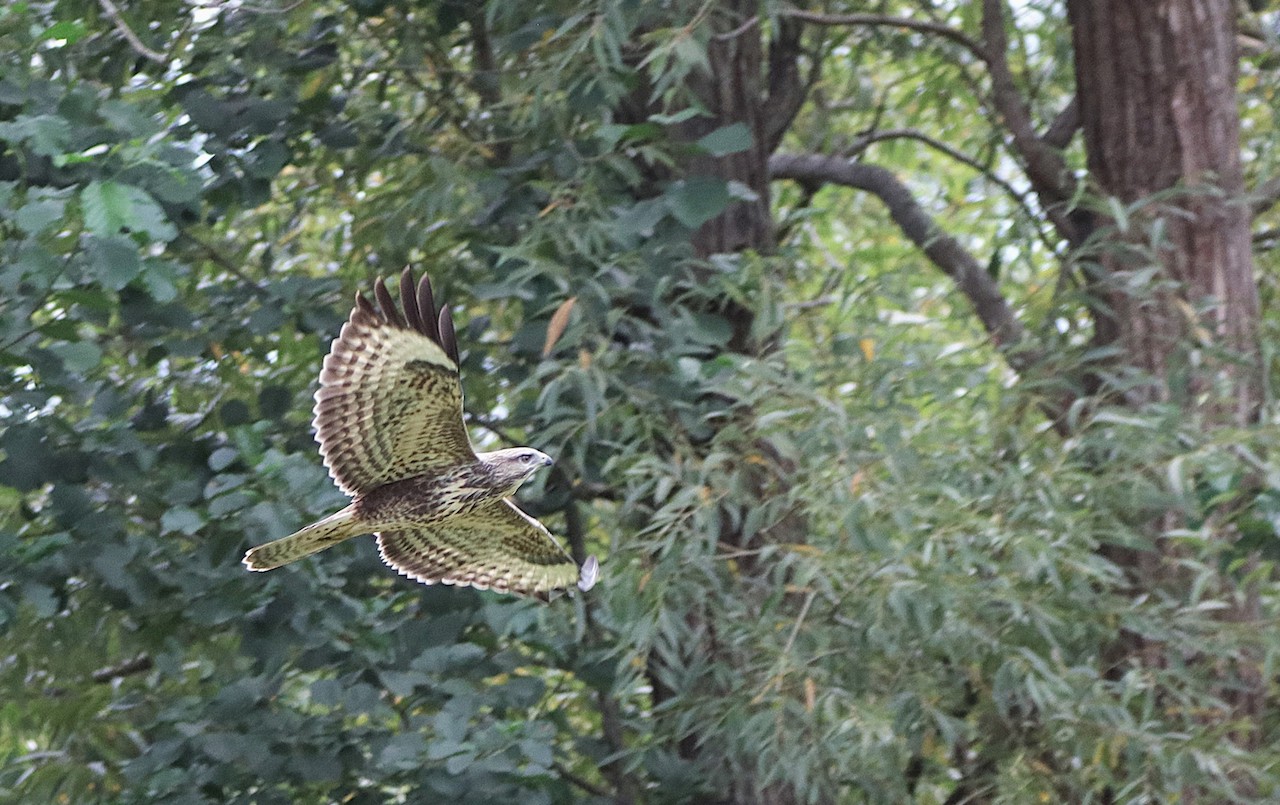
Juvenile common buzzard, Whitmoor Common.
I lived in Surrey for 15 years before being aware of how special are its heathland and chalk based woodland – home to an incredible range of species. I visited Lyme Regis, in Dorset, for two decades before discovering it was regularly frequented by a small number of seals – known by name and monitored by the Dorset Wildlife Trust (explained in its excellent centre at Kimmeridge).

Albury Heath. Geograph
As a child, I wondered why when we visited the zoos that all the animals came from far-flung places and yet I understood so little about the ones in the UK.
The magazines, walks, talks and activities offered by the Trusts can turn that on its head and give a lasting sense of connection to what might be happening immediately around us. I should also mention the British Wildlife Centre at Lingfield which is a brilliant antidote to thinking interesting animals only live in exotic places.
 The hidden, natural worlds operate on completely different parameters to ours. During lockdown we had the privilege of watching a pair of starlings build a nest on our neighbours’ roof. Even if we hadn’t seen the process of nest building we couldn’t escape the raucous chirping that welcomed each parental homecoming.
Over the following few weeks it was apparent that the boundaries between our gardens had no meaning for them. Whilst they nested on one property, their regular sources of food and water spanned at least three others. It gave a whole new meaning to the phrase ‘as the crow flies’.
It is the Wildlife Trusts that are at the forefront of the plea for fence holes for hedgehogs, and the wider need for wildlife corridors that secure the infrastructure for the little worlds within our big world.

Hedgehogs need access. Wikipedia
This is not just about their survival. As has been widely documented following the lockdown, our health and well-being is closely tied to our ability to experience and enjoy the nature on our doorstep, currently facing such huge challenges.
In facing those challenges, the Wildlife Trusts have a key role to play. Whilst acting as independent organisations, built on local membership, the 46 Trusts across the UK join together in the campaigning and advocacy to have a voice at the national level, making the connections from the micro to the macro, offering the strength of their local support to add weight to their argument.
I don’t have as much time as I would like to give to the Trust, to learn to lay a hedge, or just listen to a talk. But even without that I am grateful for the different perspective that our family membership has brought.

The busy main road through Compton. Google
Our village, Compton, is stretched out along a busy road. It’s easy to view the dwellings and fields as adjuncts to the road – things you pass by on your way to “somewhere more important”. Through starting to appreciate the world of wildlife, I can learn to view the road as a noisy, (albeit convenient) line through the countryside, which contains many other smaller transport networks and is home to so many more species than I currently understand.
I look forward to when I have time to discover more. For now, I am grateful to feel at least better connected to the wildlife in our countryside and to support the network of people working so hard to help it flourish.
Never have we needed this more.
Share This Post




PM You say you're worried about the reaction in Surrey to council reorganisation. How many Labour MPs does Surrey elect? Angela Rayner: None, ever. PM Next item!










Recent Comments