- Stay Connected

Socialize


 Abraham Lincoln
If given the truth, the people can be depended upon to meet any national crisis...
Abraham Lincoln
If given the truth, the people can be depended upon to meet any national crisis...

 Guildford news...
for Guildford people, brought to you by Guildford reporters - Guildford's own news service
Guildford news...
for Guildford people, brought to you by Guildford reporters - Guildford's own news service
Opinion: Setting the Record Straight on the Green Belt Assessment
Published on: 8 Sep, 2026
Updated on: 8 Sep, 2026

Guildford’s “grey belt” according to the GBC commissioned AECOM Study.
By George Potter
Lib Dem borough, county and West Surrey Shadow councillor
Much has been made, rightly so, of the recently published independent Green Belt Assessment (GBA) by Aecom, which was commissioned by Guildford Borough Council, and which shows that the vast majority of Guildford’s green belt is now to be considered “grey belt” under the Government’s new planning rules.

Cllr George Potter
However, contrary to what many commenters on The Dragon seem to think, the grey belt rules are entirely outside of GBC’s control, and the Assessment is not a plan by the council for what to do to the green belt under the new Local Plan, but is rather something that has already been done by the Government at the stroke of a pen.
The new grey belt rules are in the National Planning Policy Framework, which councils must obey, and make it so that large-scale development is now permissible on all green belt land meeting the new grey belt definition, subject to the development complying with three “golden rules”:
- Building 50 per cent affordable housing
- Increasing the amount of publicly accessible green space
- Being in a sustainable location (which can mean as little as having a regular bus service, or being a short driving distance from schools and shops)
 As long as those golden rules are satisfied then “grey belt” land can be built upon.
As vice-chair of the Planning Committee at GBC I have already seen multiple planning applications where the developers have been using the national grey belt rules to seek permission to build on green belt land. This is because grey belt is not a loss of green belt status, but rather a subset of green belt, and the definition of “grey belt” is so loose that almost all green belt falls under it.
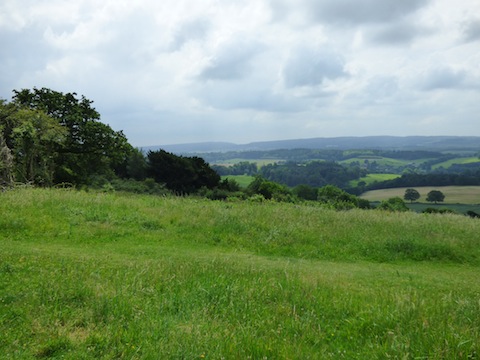
The view from Newlands Corner. Is it green or really grey?
However, the definition of grey belt is also complicated, which is why GBC has needed to commission an independent assessment of what the new rules mean for green belt within the borough. Essentially, green belt is now grey belt unless it makes a strong contribution to one of multiple categories, but also with new exceptions to what constitutes a strong contribution.
Anyone can read the GBA online (https://www.guildford.gov.uk/localplan/greenbeltassessment), and I would encourage people to do so, as it is a very thorough document and transparently explains what the national planning rules say and how each parcel of green belt land has been assessed against those rules.
But the biggest, and most damaging aspect of the grey belt rules is that preventing the merger of villages or small towns is no longer a reason to refuse development.
The findings of this report are obviously very concerning because they are so incredibly stark.
That we need to build more housing is something I strongly believe (and it’s something I vote for wherever appropriate on the planning committee), but the new Government planning rules effectively mean that it’s open season for the vast majority of the countryside. And one of the many problems with a developer free-for-all is that it results in piecemeal developments being built without sufficient infrastructure.
On the Planning Committee councillors have already been forced to grant approval in many places (such as recently in Alderton’s Farm in Send), because the grey belt rules tie our hands.
Any planning refusals of large sites under grey belt rules are automatically subject to being called in by central government so they can overturn our decisions, and even if they don’t call in the application, the developers can always appeal the decision, resulting in a huge legal bill for the council and the taxpayer if we haven’t dutifully followed the grey belt rules.
The only thing we can do to avoid this free-for-all is if the council adopts a new Local Plan with enough development sites to meet our government-set housing targets.
We used to have a Local Plan which met the housing targets, but then the Government doubled the housing target on us last year, and being unable to meet your housing target is what causes the grey belt rules to kick in.
The Lib Dem administration at GBC is already working on producing a new Local Plan, but this will take time, including time for proper public consultation, and will have to be finished by the new West Surrey Council after it takes over next year.
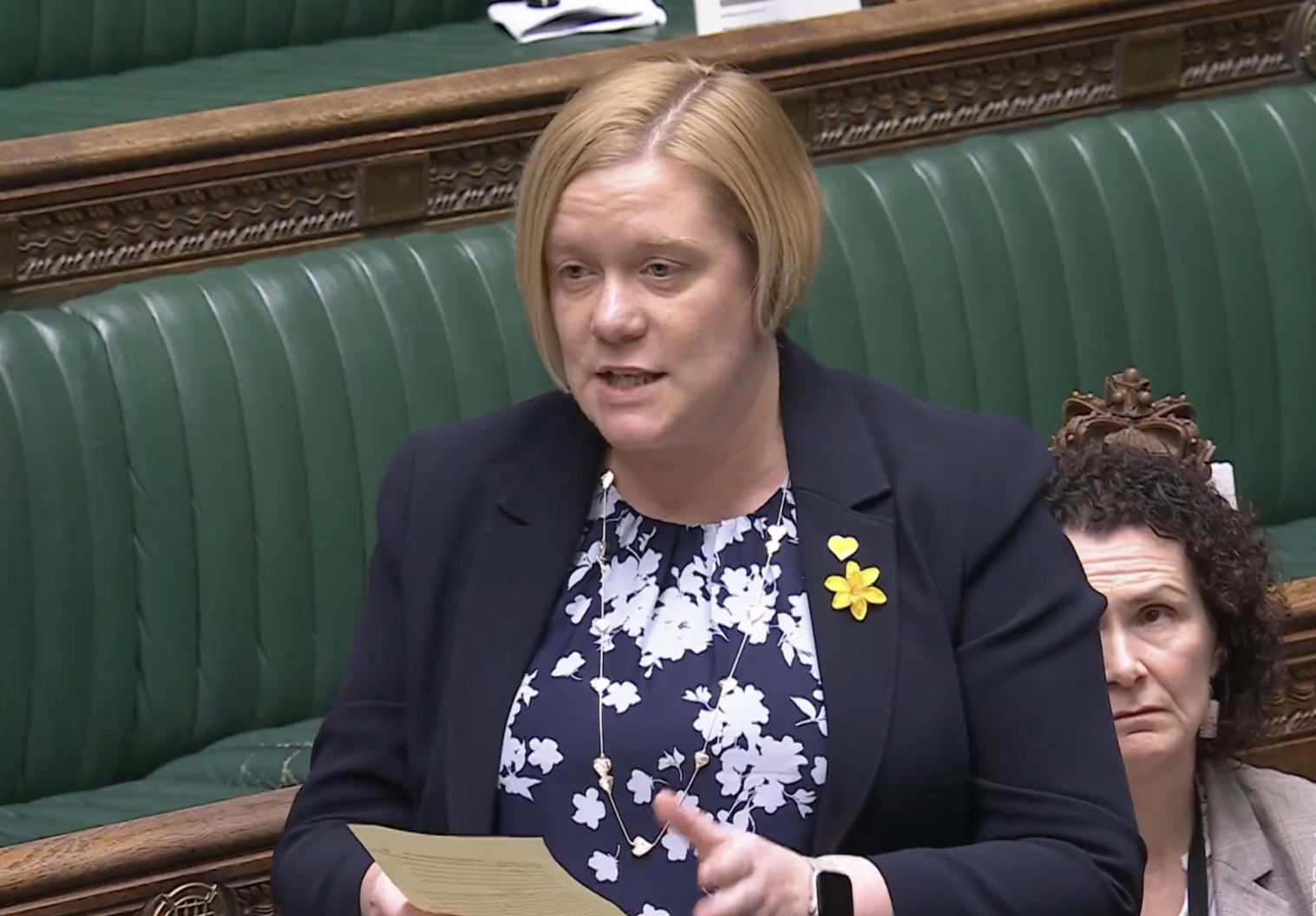
Guildford’s MP, Zöe Franklin
Our local Lib Dem MP, Zöe Franklin, has also led the opposition in Parliament to the ill-considered consequences of these changes to planning rules.
In the meantime, we can expect to see a lot more large housing developments gaining planning permission in our countryside, simply because the grey belt rules have tied the council’s hands.
The only good thing about this will be a significant increase in “affordable” housing, but the downsides will be that it will come without investment in local roads or public transport or shops or doctors or employment sites, all of which are needed to build truly sustainable communities.
That being said, it’s also important to remember that land being grey on the map doesn’t automatically mean it will be built on. Some of it has other protections (like being common land) and some of it might, in practice, be impossible to come up with a rules-compliant development for.
Even under the new rules you still can’t get permission to build a skyscraper in the middle of a rural field, and you can’t get permission for a development without access to transport or school places.
For example, GBC has already been able to refuse one scheme on the edge of Ash because the developers were trying to build something far too big and out of character for the area . And, of course, there simply aren’t enough builders or construction materials to build on more than a fraction of grey belt anyway.
So what we will not be seeing is the complete concreting over of Guildford’s countryside, but we are at severe risk of the merger of villages and urban sprawl unless and until we have a new Local Plan in place, which will enable development to once again be contained.
Those who are leading the work on this, such as Cllr Fiona White, and the council’s planning officers, should be commended for their efforts to protect Guildford as much as possible from the new national planning changes, rather than being castigated for having to be the bearers of bad news.
Share This Post


Responses to Opinion: Setting the Record Straight on the Green Belt Assessment
Leave a Comment Please see our comments policy. All comments are moderated and may take time to appear. Full names, or at least initial and surname, must be given.

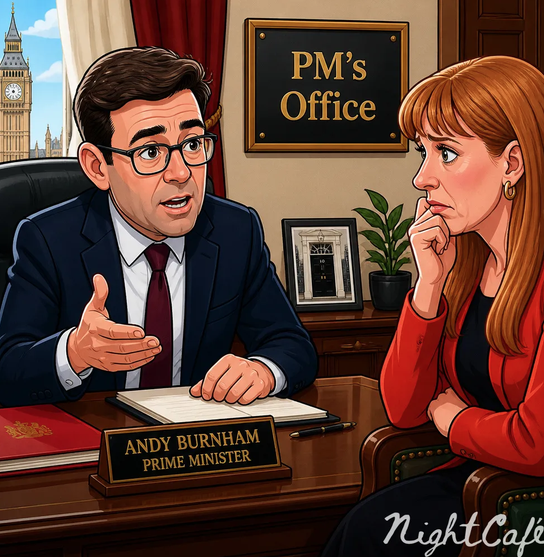
PM You say you're worried about the reaction in Surrey to council reorganisation. How many Labour MPs does Surrey elect? Angela Rayner: None, ever. PM Next item!












Paul Hart
September 8, 2026 at 6:07 pm
Cllr Potter rightly says that the greatest risk of “free for all” green belt development is between now and the point at which the new Local Plan is sufficiently advanced to have significant weight in individual planning decisions. This period of weakened protection may be two or three years long.
Whilst (his words) “we can expect to see a lot more large housing developments gaining planning permission in our countryside, simply because the grey belt rules have tied the council’s hands”, can he explain how GBC and West Surrey Council will use the remaining green belt, sustainable location and infrastructure improvement protections in the National Planning Policy Framework to retain some control over where appropriate development can take place?
We can’t have three years of local democratic deficit, where local representatives have no say on where required new homes can be built.