- Stay Connected

Socialize

 Abraham Lincoln
If given the truth, the people can be depended upon to meet any national crisis...
Abraham Lincoln
If given the truth, the people can be depended upon to meet any national crisis...

 Guildford news...
for Guildford people, brought to you by Guildford reporters - Guildford's own news service
Guildford news...
for Guildford people, brought to you by Guildford reporters - Guildford's own news service
A Journalist’s Vivid Account Of His Travels Across The Former Soviet Union
Published on: 7 Mar, 2026
Updated on: 7 Mar, 2026
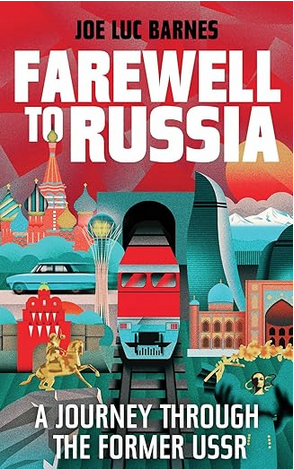 The Guildford Dragon’s Esme Campbell chats with Joe Luc Barnes who was brought up in Guildford and still spends time here. His first book examines the lives of the people living in the 15 republics that once formed the Socialist empire…
“People underestimate the worst case scenario,” journalist and now-author Joe Luc Barnes tells me, reflecting on the tone in Moscow just days before Russia’s invasion of Ukraine. This was, naturally, where his journey across the former USSR began – and his timing was befitting.
“Everyone in Moscow was in denial,” Joe recalls. He compares the atmosphere to his time in China, where he was when the Covid-19 pandemic began. “As people, we don’t like to examine the worst possibilities.”
We talk about his debut book, ‘Farewell to Russia’, in the aptly named Cosy Club just off Guildford’s High Street. It’s a far cry from the topic of conversation.
Intrigued by the post-Soviet legacy, Joe travelled across the 15 republics that once formed the Socialist empire to understand the various paths they’ve taken since independence. The result of his curiosity sits on the table between us. I open it to the page displaying a map, the former USSR a foreboding block of grey.
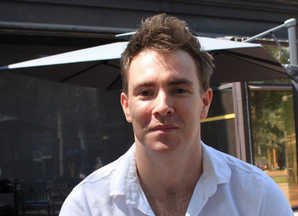
Author Joe Luc Barnes Elliott and Thompson
“I tried to write about something different for each country,” Joe says, considering his approach. “Not repeating myself was one thing. The other was the people I met. Every book I’ve ever read about the Soviet Union is ‘big bad dictators’. But there are people who have normal everyday lives.”
These everyday lives took centre stage throughout Joe’s book. From the amiable, anti-war Belarusians to the hospitable Armenians and the compromising Kazakhs, Joe tells the legacies of the post-Soviet countries through the people he met along the way.
“If someone’s got a good story, you have to find a way to include it.” He brings up the LGBT activist he met in Georgia, explaining: “I wasn’t necessarily expecting to write about gay rights.”
Regardless, there were, Joe feels, some non-negotiables to be included. “For Armenia, I made sure to include the genocide,” he says. “With Georgia, I had to get Stalin in there. I tried very hard with Ukraine to find something that lasted beyond the war. That’s why I called it the republic of resistance, rather than the war-torn republic,” he explains.
“I wanted to present them as people with agency, as people who like to make jokes. Who invite people for dinners and indulge in alcohol. Not just a list of casualties.” These scenes depict the everyday lives Joe wanted to capture, but there was added caution involved when it came to Ukraine.
“There is a danger of romanticising the situation,” Joe says, explaining the difficulty of toeing the line between conveying morale and sensationalism. “There is a good spirit I wanted to present. The Slavic sense of humour is unique. I think some of it comes from having endured a lot. They laugh about it, but they’re not really laughing.”
When it comes to the attitudes and sentiments shared in each republic, some were more united than others, Joe found. Generational divides are prominent across the former Soviet region, but Georgia paints a particularly clear example of that. While the younger folk may roll their eyes at Stalin’s name, the USSR generation view him as an emblem of pride and patriotism.
When I express my surprise at this, especially given their anti-Soviet sentiment that Joe describes, he offers a simple explanation: “People want to be perceived on the world stage.”
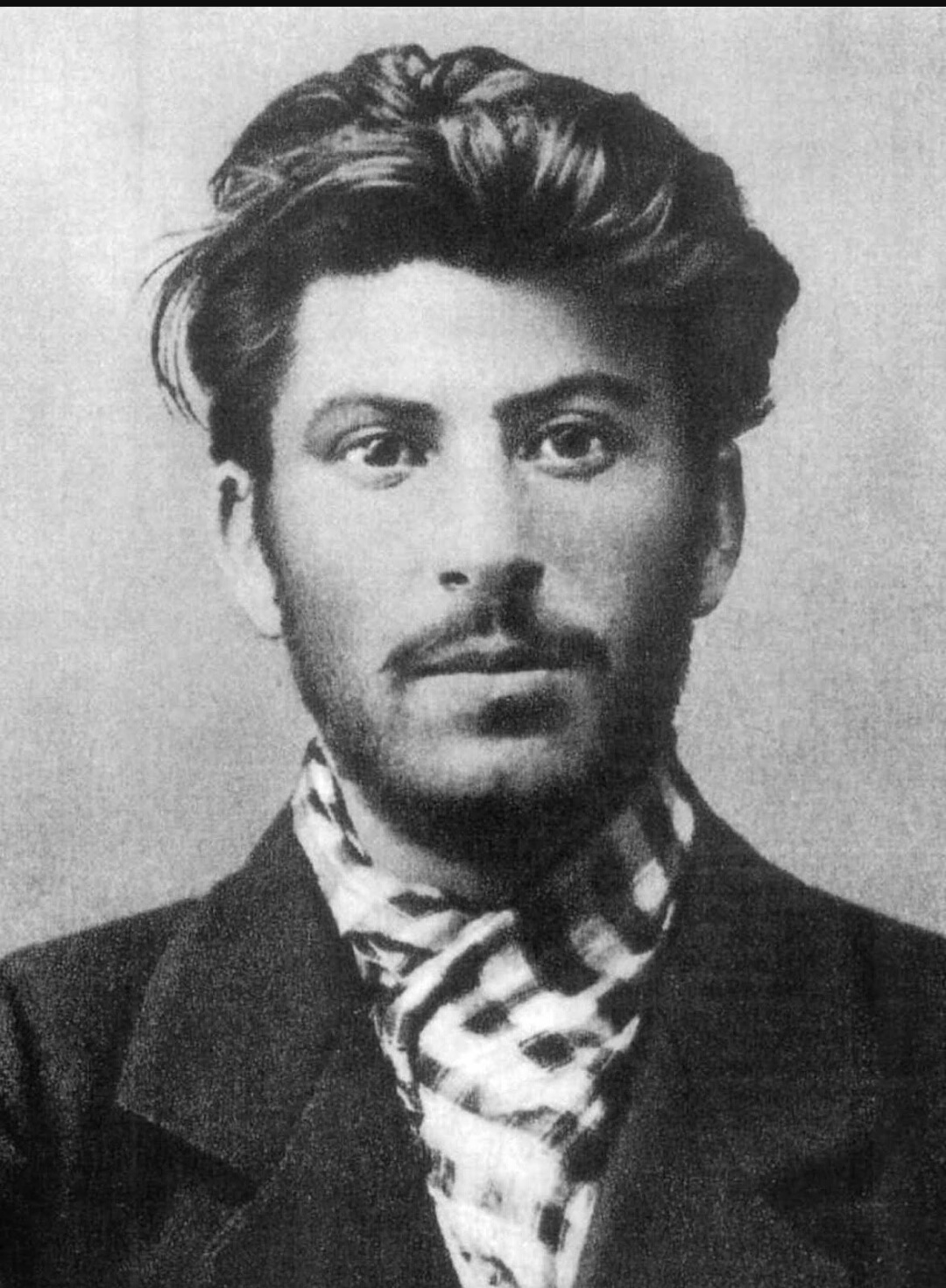
Police photo of Stalin after his arrest in 1902. Wikipedia
Globally, Britain is renowned for many things, he points out, and begins listing them off. “People might think of the monarchy, or the empire,” he says. But this isn’t the case for Georgia, its main notoriety being the Soviet dictator. It’s well summarised by a think-tank director Joe quoted from his travels: “Stalin is Georgian, and everybody knows him, and that’s why people are proud of him.”
Across the nations he navigated, Joe found a common sentiment among the people of each republic. Some attitudes surprised him more than others, whether finding the people more exasperating, more charming, or in the case of Belarus, less pro-Russian than his preconceptions told him. “Belarus was my favourite country. The people were unexpectedly open.” He compares this to the Baltics, who he found notably more reserved – something else he hadn’t anticipated.
On the topic of things that surprise him, Joe brings up the number of people he met on his travels who “were a product of their dad kidnapping their mum.” There’s also something to be said for the somewhat vertiginous driving he hadn’t envisioned across the region. Between the hitchhiking, the ‘marshrutka’ minibuses and a Moscow cabbie’s blunt reaction to Joe’s use of a seatbelt (“You are coward”) we start to reflect on the similarities across these countries.
The hospitality he was shown was one consistency. Museums displaying a rather selective history was another. But among them all, migration and ethnicity sticks out as a prominent theme. From the various aspects we discuss, our conversation seems to keep circling back to this.
In the book’s introduction, Joe writes that what he thinks binds the republics today is the fact they gained independence at the same time. “Each has had to confront dilemmas facing any country learning to stand on its own two feet,” he writes. The dilemmas and their impacts each republic has faced range vastly, but for all the aspects that pushed the post-Soviet countries down different paths, evidence of a shared history lingers – the Soviet diasporas in particular.
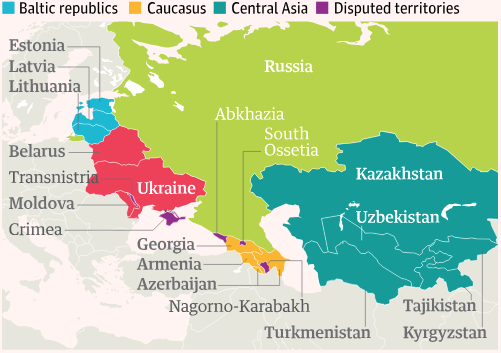
Post Soviet States Guardian
“I would have liked to write more on migration,” Joe tells me. “One of the ironies of the fall of the Soviet Union is that there was more migration after its collapse than under its rule.” This has produced a newfound integration between many of the post-Soviet states, and Joe writes how Uzbeks, Tajiks and Kyrgyz mix and interact more with the Russian population now than they did under the USSR.
He also mentions ‘Kazakhstani’ identity as a key example of integration, a label created to describe those who weren’t ethnically Kazakh, but were from the country.
“Russia uses it as a weapon, as well,” Joe says. “Like, ‘it would be a shame if anything happened to these migrants.’”
This multiculturalism, however, is eroding in a trend of nationalism. The motives behind this shift are multi-faceted, Joe says, but some of it can be attributed to the political efforts of the states. Ethnic Kazakhs, for example, who’d moved away under Soviet rule, were encouraged to return to the country by its president.
Russophobia has also had a stake in it, having become prominent across the former Soviet states, Joe says. “Latvia is questioning the loyalty of their Russian population.” The Russian diaspora “had to get used to the idea that they weren’t the top dog anymore.”
“Most European countries have become stable after some form of ethnic cleansing,” Joe tells me. Our conversation has moved to Estonia, which has, in many ways, strived to scrub itself of its Soviet past. Some of these measures were more extreme than others, and Joe explains in his book how its citizenship policies left thousands of residents stateless, yet the country is seemingly the most stable of the post-Soviet republics.
It’s a tough prospect to confront. I ask Joe if ethnic cleansing is really something that supported Estonia’s stability, rather than the many other measures taken. Appearing to anticipate my question, Joe doesn’t hesitate in his response. “It has contributed towards stability more than we would like to admit. It contributes to strengthening the state and the sense of identity.”
Ultimately, opportunities are what steered the course of independence for each post-Soviet republic. ‘Farewell to Russia’ makes this apparent. Enabled and restricted by economics, relations with neighbouring countries and language – to name a few factors – the paths treaded by the post-Soviet states have hinged largely on opportunity.
When we part ways on Guildford High Street, I’m left pondering something Joe said. “Borders create problems but they also create opportunities.” He was talking about transport links between nations, but I think the sentiment can be applied more holistically to the USSR and its former countries’ farewell to Russia.
Joe Luc Barnes will be doing a book-signing in Waterstones in Guildford on Wednesday, March 18.
Share This Post




I'm living well for nothing at all! (See: No Trifling Matter: Magpie Trapped in Godalming Sainsbury’s)



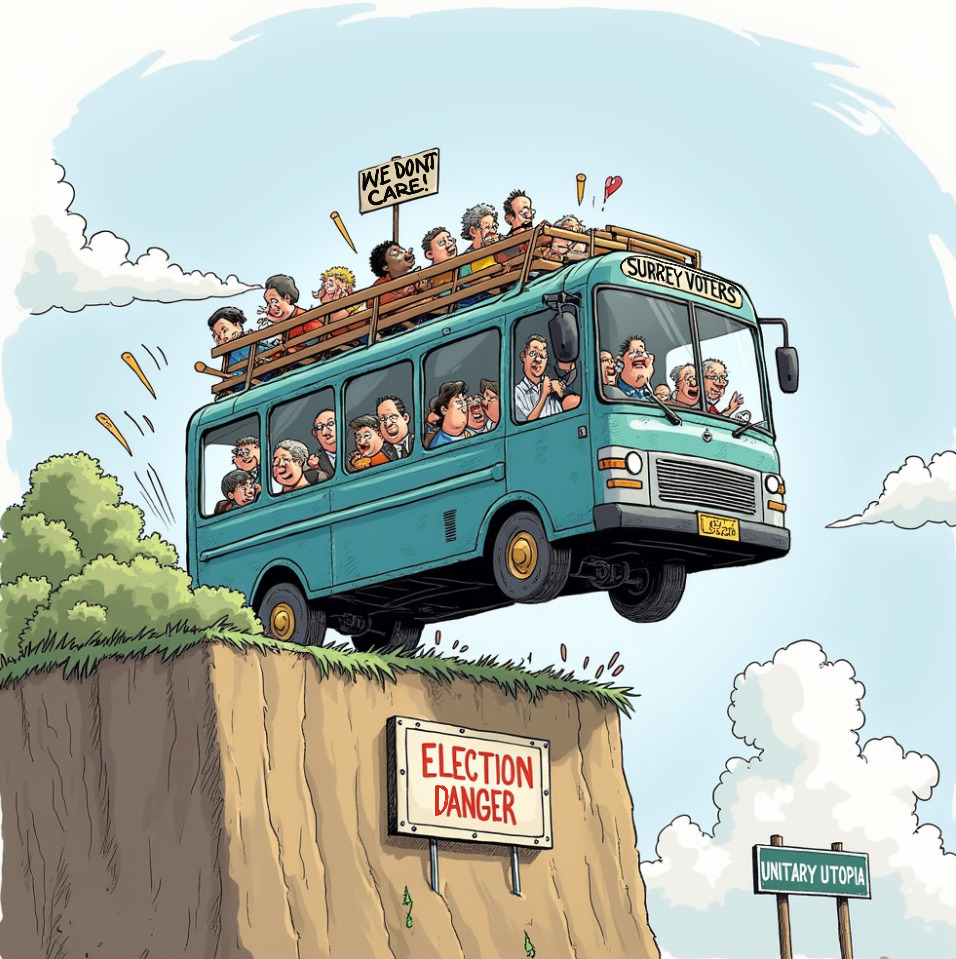
Next stop, Debt Chasm! (See: We Should All Be Outraged About the Failure to Deal with Legacy Debt)




Recent Comments