- Stay Connected

Socialize

 Abraham Lincoln
If given the truth, the people can be depended upon to meet any national crisis...
Abraham Lincoln
If given the truth, the people can be depended upon to meet any national crisis...

 Guildford news...
for Guildford people, brought to you by Guildford reporters - Guildford's own news service
Guildford news...
for Guildford people, brought to you by Guildford reporters - Guildford's own news service
Commissioners Tell Indebted Council To ‘Get a Grip’
Published on: 12 Feb, 2026
Updated on: 13 Feb, 2026
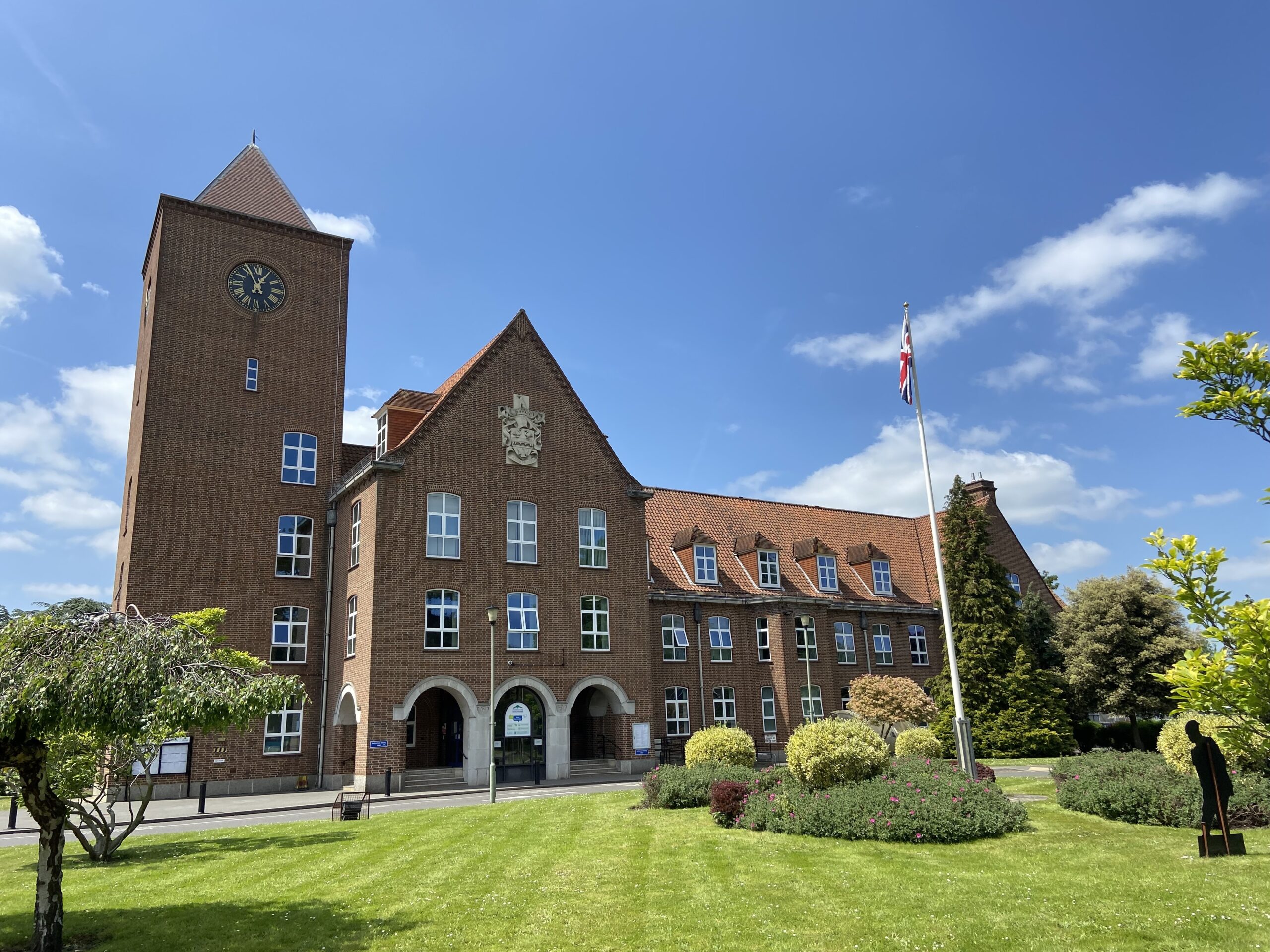
Spelthorne Borough Council offices in Knowle Green, Staines.
By Emily Dalton
local democracy reporter
A Surrey council is still not out of the woods yet just months into government intervention, according to commissioners’ first report. Spelthorne Borough Council must take “urgent action” to effectively get a grip of itself, says the new report.
Concern remains in Guildford, and other parts of the county, about the legacy debt from Spelthorne, Woking, Surrey Heath and Surrey County councils, to be taken on by the new West Surrey Unitary Authority.
The watchdog said the Spelthorne council is still weighed down by massive debt, poor governance, strained internal relationships and need for cultural change, despite early steps to improve the situation. The report confirms the findings of last year’s damning “Best Value Inspection” which said the council is in a “critical condition” but warned that most of the hard work is still to come.
“The work of improvement remains largely ahead,” the commissioners warned.

Leader of Spelthorne Borough Council, Ashford East councillor Joanne Sexton
Spelthorne responds
Leader of the council, Joanne Sexton, said: “The report rightly recognises the significant steps the Council has already taken, particularly in stabilising our financial position.
“The publication of our Improvement and Recovery Plan, the agreement of an MRP policy and the successful completion of debt restructuring represents an important milestone and demonstrates our commitment to taking difficult but necessary decisions in the best interests of our residents.
“We are well aware that this is the early stage of a longer journey. More improvement is required and we are determined to maintain the momentum as we move into the Local Government Reorganisation. The priorities set out for the coming six months are clear and we will focus on these as priority.
“I remain confident that, working constructively with the Commissioners, members, officers and our partners, this Council can continue to build on the progress already made and deliver the improvements our communities rightly expect from us.”

Map showing location of Spelthorne Borough.
‘Stark’ finances
The financial picture is still being described as “stark”. At its peak in March 2025, Spelthorne’s debt stood at more than £1 billion, making it the second most indebted district council in England, behind Woking. Most of the debt was racked up buying office blocks, many outside the borough, around Heathrow, in a bid to generate extra cash, the report said.
But those investments have badly backfired with properties losing around 45 per cent of their value on average. What was once forecasted to deliver about £10 million a year is now closer to £4 million – and this is before new accounting rules kick in next year. After these are applied, the properties are expected to start losing the council money, putting even more pressure on stretched budgets.
A key issue was that the council had been underestimating how much it needed to set aside each year to pay off its borrowing, the Minimum Revenue Provision (MRP). That figure was just £13 million a year, based partly on assumptions about how long its investment properties would hold their value.
Now, after some work from the commissioners and restructuring the loans payment plans, Spelthorne’s debt stands at £715 million. Under this new policy, last November, the annual cost will jump to over £59 million from 2025/26. Commissioners said further asset sales are planned to reduce it more.
 Spending far higher than similar councils
The report also flagged that Spelthorne has been relying heavily on income from its property investments to fund day-to-day services. Since 2019, it assumed a £10 million annual contribution from those investments which makes around 30 per cent of its core spending, excluding housing benefit. With that income no longer reliable, commissioners say the council must urgently bring spending down. They note that Spelthorne spends around 30 per cent more than similar councils.
Tensions inside the council
While commissioners noted that some councillors and officers are engaging positively with the process and want to “leave a legacy”, they add there are deep tensions inside the council.
The report said: “However, there is a lack of understanding amongst some members about the purpose of the intervention and a lack of acceptance about the necessity of financial steps the council needs to take. Some have stated publicly that they believe the intervention has been politically motivated.”
The report paints a picture of deep internal mistrust with both officers and councillors blaming each other. In some areas, councillors feel officers are unresponsive. In others, officers see councillors as inconsistent or even hostile. For the next few months rebuilding trust will be a “top priority” to improve working relationships, the commissioners said.
The report is particularly blunt about standards in the council chamber. Commissioners said councillor behaviour during meetings has been “disrespectful” to chairs, officers and fellow members, making effective decision-making difficult. Political group leaders have already been written to over concerns.
‘Poor governance’
Behaviour was not the only concern about council meetings. The commissioners have called for “urgent action to improve governance”, including show reports presented to the council, on which members make their decisions.
“In many cases reports proceed unchallenged through layers of clearance with significant errors or omissions. In other cases, the failure to develop common approaches between different functional areas in the council has meant that reporting is confused or incomplete,” the commissioners said. They added sometimes the errors have been so serious they have had to step in and rewrite them before decisions were made.
They also warned the council does not have enough staff in key areas, particularly finance, housing and regeneration, and that gaps in senior roles are not being filled quickly enough. This lack of capacity, they say, is a major risk to the council’s ability to deliver its improvement plan, especially with local government reorganisation in Surrey looming.
Housing company under scrutiny
Commissioners are also reviewing the future of the council’s wholly owned housing company, Knowle Green Estates, which owes the council £45 million. An earlier review produced no clear results, but external experts have now been brought in to assess whether the company is viable. The findings are expected soon.
Some progress, but most work still ahead
Despite the long list of concerns, commissioners acknowledge some progress. The council has published an Improvement and Recovery Plan, agreed a new accounting policy and restructured its debt.
But they stress this is only the beginning. The report concludes that Spelthorne is still in the early stages of recovery, with major reforms needed all while preparing for the shake-up of local government in Surrey.
Commissioners have set out nine key priorities for the next six months, including stabilising the budget, cutting spending, selling off risky assets, fixing governance, resolving the future of the housing company and urgently improving trust, behaviour and decision-making at the council.
Share This Post




I'm living well for nothing at all! (See: No Trifling Matter: Magpie Trapped in Godalming Sainsbury’s)




Next stop, Debt Chasm! (See: We Should All Be Outraged About the Failure to Deal with Legacy Debt)





Recent Comments