- Stay Connected

Socialize


 Abraham Lincoln
If given the truth, the people can be depended upon to meet any national crisis...
Abraham Lincoln
If given the truth, the people can be depended upon to meet any national crisis...

 Guildford news...
for Guildford people, brought to you by Guildford reporters - Guildford's own news service
Guildford news...
for Guildford people, brought to you by Guildford reporters - Guildford's own news service
Opinion: A Brave New World – with No Party Politics Please
Published on: 17 Feb, 2026
Updated on: 18 Feb, 2026

The logos of some of Guildford Borough’s parish councils.
By John Ferns
Whether anyone likes it or not, Guildford is moving towards a “unitary authority” model of local government, so it is timely to reflect on what works – and what does not – at parish-level governance.
I am a long-standing Tongham resident of 44 years with a keen interest in local governance and planning. The contrasting experiences of close neighbours, Ash and Tongham, offer a clear lesson: parish councils function best when they are civic bodies rooted in place, not extensions of party political machinery.
 Ash Parish Council serves a significantly larger population and levies a higher parish precept. With that scale has come a more overtly political culture.
For years, Ash was dominated by the autocratic influence of senior members of the, then, ruling Conservative group at Guildford Borough Council. More recently, that dominance has largely transferred to the Liberal Democrats, now the controlling group at borough level.
This has occurred despite Ash-based Liberal Democrat councillors constituting a significant proportion of the party’s Executive at GBC (currently, three of its seven members). Yet there has been little visible or tangible benefit to Ash residents in terms of much-needed infrastructure delivery, service outcomes, or effective mitigation of development impacts.
Why? Because in this model, parish governance has too often mirrored borough-level party dynamics. Loyalties flow upwards; local scrutiny is diluted by wider political considerations.
Proponents of this system will argue, of course, that their councillors are accountable to the residents who elected them. But this is a divided accountability, split between the constituent and the party group.
A councillor’s ability to speak and vote freely is shaped by a party whip, peer pressure, or “groupthink”, linked to the “need” to support an Executive agenda, and the desire for promotion with a political group and future party endorsement. The result can be a gap between representation and true local democracy.
Tongham presents a striking and successful contrast. Serving a smaller population with a modest precept, Tongham Parish Council has historically been free of party political rivalries. Councillors are selected for their commitment to the village, not a manifesto. The result is continuity, independence of thought, and a strong sense of personal responsibility.
Here, accountability is direct and unambiguous. With no party machinery to answer to, each councillor’s sole imperative is the village. Their path to re-election depends 100 per cent on their local record. This fosters a closer attention to detail, better scrutiny of proposals, and a consistent focus on what genuinely benefits the community.
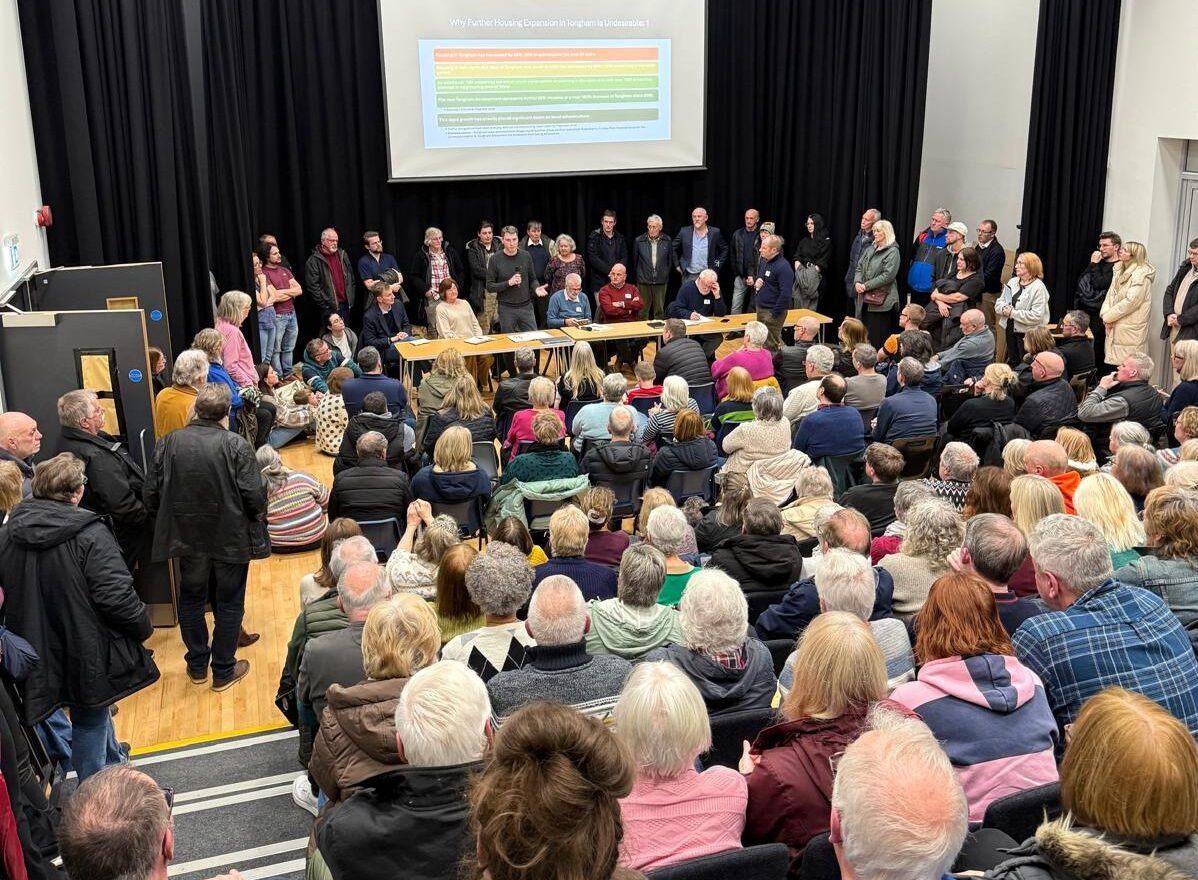
Sir Jeremy Hunt attended the public meeting in Tongham to discuss the planning proposal.
This civic, non-partisan approach was evident at a recent, well-conducted public meeting, earlier this month (February 6), attended by more than 250 residents. It provided an orderly forum for residents to articulate long-standing frustrations about the disproportionate share of Guildford’s housing numbers being directed towards Tongham and South Ash, without any credible provision of supporting infrastructure.
The concerns expressed were not party-political; they were practical, local, and grounded in lived experience. The councillors present were there purely as community advocates – a clear, strong voice for residents, not an echo of party headquarters.
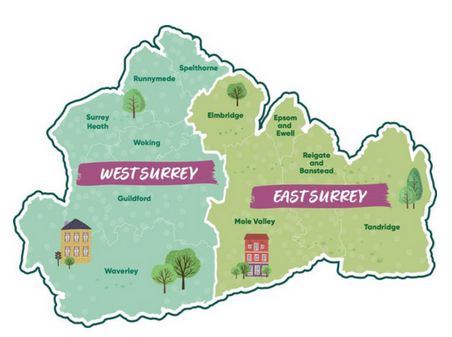
Surrey is to be divided into two unitary authorities. SHBC
As Guildford transitions to a unitary authority, real decision-making will reside with a larger, more distant body. Parish councils – the tier of government closest to residents – will therefore have an increasingly vital role as statutory consultees and fierce advocates.
 In this brave new world, we must ask: which model better prepares us? A council where accountability is mediated by party loyalty, often resulting in upward-looking representation? Or the Tongham model – civic, independent, and directly accountable, ensuring the purest, most powerful form of local advocacy?
The choice has never been more important. For the health of our communities and the integrity of our most local democracy, we must choose the representatives who serve the place first, last, and only.
Share This Post


Responses to Opinion: A Brave New World – with No Party Politics Please
Leave a Comment Please see our comments policy. All comments are moderated and may take time to appear. Full names, or at least initial and surname, must be given.

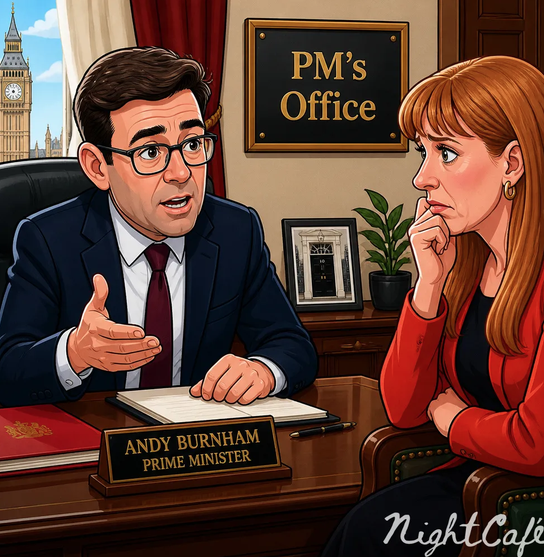
PM You say you're worried about the reaction in Surrey to council reorganisation. How many Labour MPs does Surrey elect? Angela Rayner: None, ever. PM Next item!










Jim Allen
March 1, 2026 at 12:58 am
The recent restructuring of the ‘fully accountable’ ‘grassroots’ councils appears to disregard the role of parish councils, which often serve merely as forums without any real authority.
This new arrangement seems poised to follow central government directives unconditionally, yielding to every demand regardless of the consequences. The democratic process will vanish (as it has with central goverment) unless public outcry becomes so overwhelming that it compels attention, but by then, it may be too late to effect meaningful change.
The only potential benefit touted is the centralisation of information for local government, which ultimately reduces resident interaction to a single contact number, where they are met with robotic excuses about the treatment of telephone staff rather than accountability for issues like potholes and missed waste collections.