- Stay Connected

Socialize


 Abraham Lincoln
If given the truth, the people can be depended upon to meet any national crisis...
Abraham Lincoln
If given the truth, the people can be depended upon to meet any national crisis...

 Guildford news...
for Guildford people, brought to you by Guildford reporters - Guildford's own news service
Guildford news...
for Guildford people, brought to you by Guildford reporters - Guildford's own news service
Opinion: Voters Should Decide How They Are To Be Governed Locally
Published on: 24 Oct, 2025
Updated on: 28 Oct, 2025
 By Bernard Quoroll
Former local government CEO
There is some measure of truth in Cllr George Potter’s comment that this Labour government has no mandate from its manifesto for the wholesale structural reorganisation (I might say, destruction) of shire England.
But the previous Conservative government was already doing that by stealth and long before the last election, on a piecemeal basis. The activities of both governments demonstrate how little regard they hold for local government as an institution, or for local government as an important part of our constitutional settlement.
Both parties have used “devolution” as the starting point for forced reorganisations. Devolution does get a mention in the manifesto but more detailed plans only appeared in a White Paper, hurriedly cobbled together at breakneck speed after the election.
In reality, the changes are designed to be exactly the opposite of devolution. What governments describe as devolution – the passing down of powers, means nothing without a fundamental reform of local government finance.
Without that, governments of all persuasions will continue to manage regional affairs on the basis of “deals” with regional mayors, something invented by previous governments and deployed more widely by this one.
The deals will be structured to achieve the aims of the government of the day with less opposition and mayors will happily cooperate because it enables them to justify a role as super mayors. In practice they will be lackeys of the centre. You could not make it up.
Guildford’s former Conservative MP Angela Richardson implies that if something is in a party manifesto we cannot complain when that party later gets elected and tries to implement it. I think that statement deserves a lot of unpicking but that is a subject for another day.
Ms Richardson may of course be saying less about the current proposals for local government reform and rather more about what happens if you vote for the “wrong” political party or programme. More pragmatically, she says that it is now up to councils and resident voters to work out how to clear up the mess.
 There is a measure of truth about that in the real world but I am less enthusiastic about the idea of trying to make a silk purse out of a sow’s ear. Cllr Potter should also beware calling another party to account, for lacking a mandate.
It seems to me that all parties in power, including Potter’s Lib Dems, have form when it comes to the implementation or non-implementation of mandates. Politicians have conveniently short memories but people in glass houses should not throw stones, unless, apparently, you are a politician!
Sadly, I don’t know how we can clear up the reorganisation mess, given so many obvious signs that this government made no serious attempt in opposition to analyse and consult on the issues before inventing ground rules, failed afterward to involve or consult people locally in any meaningful way and ignored what ‘local’ means in favour of a disputed inference that larger councils will somehow help to avert the impending bankruptcy of local government.
It is a case of rubbish in, rubbish out. Nor will neighbourhood arrangements (a Liberal Democrat invention) bridge the gap between local communities and what will feel to many like remote, uncaring and unresponsive local administrations.
I can say this, as someone who managed neighbourhood arrangements in councils and was indirectly involved in the aftermath of two previous major local government reorganisations, as well as a significant direct, senior role in a third, (during the last wholesale attempt to remove the two tier system – one which collapsed in flames when Conservative PM Sir John Major was persuaded that it would lead to unacceptable political losses in shire areas).
I have a better solution, which is to stop digging a hole and start again on better foundations. That should include a constitutional settlement for local as opposed to national government, the ability to fund services locally via local taxation and the creation, after real consultation, of councils big enough to have economies of scale but small enough to be truly responsive to local needs and aspirations.
To claim that there is a size which fits all demonstrates a profound ignorance of the diversity of this country. Councils do not need to have a fixed population size. The current figure of 500,000 was spirited out of the air and there are many smaller sized councils that, properly resourced, can and do operate efficiently and responsively to local needs.
The savings claimed, are also very unlikely to be achieved in practice, or even be provable, once the cost of a lengthy underfunded transition and the plans of new administrations are factored in. In fact, the changes now proposed may even accelerate a local form of austerity.
Above all, local government needs to be able to balance the ever centralising and authoritarian trends being experienced in this country and elsewhere, not just be a delivery agent for central government. To do that, it needs to be revitalised not emasculated.
The immediate priority is to prevent the local ship of state from sinking before we start moving the deckchairs around. The next is to reverse further centralisation of what is already one of the most centralised states in the western world.
No political party during my working lifetime has understood the true value of local government or worked consistently to exploit its potential on behalf of local people. Local government, released from central diktat, can deliver more innovation and growth in partnership with the centre than any party yet understands or dreams of.
It could be a major underpinning of this government’s quest for growth.
Share This Post


Responses to Opinion: Voters Should Decide How They Are To Be Governed Locally
Leave a Comment Please see our comments policy. All comments are moderated and may take time to appear. Full names, or at least initial and surname, must be given.

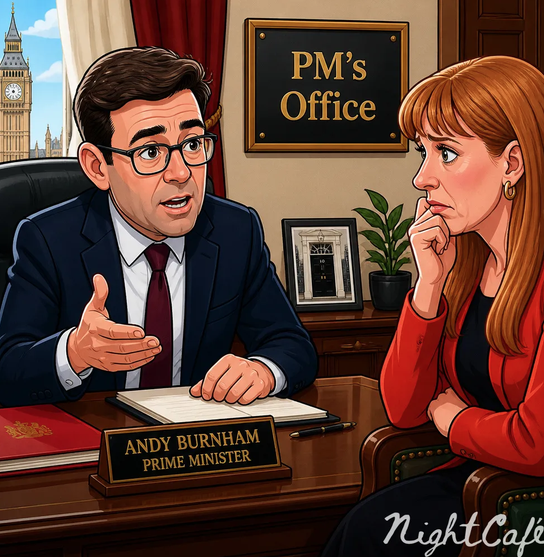
PM You say you're worried about the reaction in Surrey to council reorganisation. How many Labour MPs does Surrey elect? Angela Rayner: None, ever. PM Next item!











Mike Smith
October 25, 2025 at 6:44 am
If we’re going to be forced to have devolution in England let’s have the same level of devolution as the elsewhere in the UK – an English parliament.
Jack Bayliss
October 26, 2025 at 12:16 pm
You are absolutely right. Local accountability will all but disappear. But how can we stop it from happending? Sometimes I am glad I am old.