- Stay Connected

Socialize


 Abraham Lincoln
If given the truth, the people can be depended upon to meet any national crisis...
Abraham Lincoln
If given the truth, the people can be depended upon to meet any national crisis...

 Guildford news...
for Guildford people, brought to you by Guildford reporters - Guildford's own news service
Guildford news...
for Guildford people, brought to you by Guildford reporters - Guildford's own news service
Opinion: Insights – What Now For Local Government? Part 2 The Challenges
Published on: 27 Nov, 2025
Updated on: 29 Nov, 2025
 By Bernard Quoroll
former local authority CEO
In yesterday’s article I considered further the ramifications of the Local Government Reorganisation.
See: What Now for Local Government Reorganisation? The Devil Is in the Detail…
In this article I list some of the challenges…
1. Change management. The biggest immediate issue in my view is a nerdy one – the management of change. The time allowed for preparation is far too short for that to be done well in councils which collectively will deliver over 450 discrete public services. It will be a rush just to get the doors open for business.
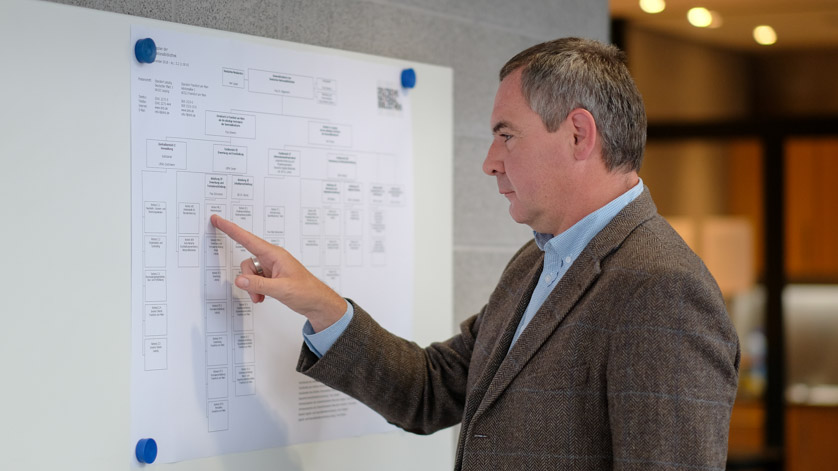
Change management is a well known challenge in any organisation.
A good starting point would be for every planning transition team to be trained now in the same project management technique using the same project language and methods. This should apply to every team, starting with the top managerial and political oversight teams. Not doing so is to create a managerial Tower of Babel.
2. Continuity. The day job is easily forgotten when faced with an immovable deadline. Some urgent decisions will get deferred until the new body is in place and some individuals will use it as an excuse to avoid accountability, both managerial and political.
As citizens, we should expect to see a credible statement about how these will be prioritised and managed in Guildford, including what has to go on the back burner.
Current high-risk issues in Guildford, like the Slyfield development and the management of social housing, are ongoing which makes this approach essential, not least because further failures will only add to the cost of change.

3. Customer engagement. It is easy in these situations to lose focus on your customers. Managers are caught between a rock and a hard place as they knuckle down to an intensity of work which many will not have previously experienced.
The temptation will be to want to get on with it behind closed doors, not particularly from a desire for secrecy but just to get on with the job. As citizens at the receiving end however, we need both to be engaged and actively kept informed, so the public reporting arrangements need to be robust. Engagement in that sense will also help to create ownership and trust in the new body.
4. Asset management. Elected members will already be thinking hard and territorially about legacy and loss of assets to a new council which is not yet in existence and whose geographical loyalty will be different.
What will they want to do to preserve assets in and for the benefit of their own current areas? What commitments might they try to make to ensure that a successor council is bound by last-minute decisions, not all of which will be benign or measured. That applies particularly to measures being taken to reduce debt and property disposals.
There needs to be a collective, cross-county arrangement in place to manage this process.

There will only be 80 councillors in the new West Surrey Unitary Authority.
5. Fewer councillors. Politicians will already have realised that there will be far fewer places for them in successor bodies. Council leaders in particular face the loss of a significant part of their incomes, especially if they are “double-hatted” county and borough councillors, like GBC’s leader Julie McShane.
Some respected councillors will decide to stand down, taking knowledge, experience and wisdom with them. Political focus for others may drift toward hoped-for new opportunities.
In short, it will be a time of immense churn for people who give up their time in public service for only modest financial return. In an age of social media, others will hope to leapfrog years of hard-earned experience and impose their views, some of them perhaps toxic, on the community.
Those who do, will find that local government is much more complex and arcane than they expect. It is not susceptible to populist remedies and after years of austerity, there is little low hanging fruit. Are parties thinking early enough about recruiting and training the next generation of local politicians?
6. Staffing. Staffing will be a huge preoccupation. You can expect that all jobs within the County will be ring-fenced, both for fairness and to reduce the redundancy bill, which on any basis will be substantial. Many ‘round pegs’ will need to be fitted into square holes and be retrained at a cost.
Faced with so much uncertainty, some more marketable employees will jump ship. They have families to support. Some recently recruited senior staff in councils which have suffered huge criticism in recent years, will feel released from any moral obligation to stay long enough to fix things.
The cost of lost skills, competencies and local knowledge is simply incalculable. But it is real and nowhere quantified. For example, it costs around a year’s salary to recruit a new senior staff member and once they arrive they need time to become productive.
These are just a few of the issues confronting Surrey’s communities following the Government’s decision. No doubt front line staff will continue to deliver daily services and many citizens will not know the difference, except perhaps in their bills which will inevitably rise and in the quality and responsiveness of local decision making which I believe will plummet.
There will also be a much higher risk of failure in trying to make costly and widely divergent systems, and their disparate IT platforms, for financial control, service delivery and procurement compatible, some of which will make Guildford’s recent improvement strategy irrelevant. We should meanwhile have some sympathy for the staff on whom the biggest burden falls and in respect of a task which was not of their making.

Integrating IT systems will be a huge and expensive task
The biggest sting in the tale is the legacy debt. This Government has offered a significant, but in reality only modest, contribution to the huge debts already amassed by some councils in Surrey. It has made no firm promises about the balance which is massive, and continuing to rise.
Reorganisation is in that sense a poisoned chalice. We can be sure that with the national debt out of control, weasel offers designed to overcome last minute local resistance are likely to be quickly explained away, especially by a government which has little political purchase in Surrey.
I have no doubt that talented people will deliver in due time. What I fear most is that whatever sense of localness resides in the current boroughs and districts will be extinguished. Surrey is a huge and diverse area. Larger councils might recognise that in a theoretical way but in practice they find it hard to get down and dirty.
This is most true of senior staff. Citizens benefit from a sense of loyalty to each other and to place, (preferably a place with a local office). It is part of what makes us human. I personally have no feelings of allegiance toward Staines-upon-Thames, Camberley, or Chertsey. Woking is among the last places I would chose to live. I suspect those feelings would be reciprocated!
And of course we are still waiting with bated breath for our “super mayor” whose costs will not be negligible. Add to this the recent announcement of the demise of police and crime commissioners, without consultation and without a considered approach to police accountability, and you really do get the picture of a government which is making it up as it goes along.
Share This Post


Responses to Opinion: Insights – What Now For Local Government? Part 2 The Challenges
Leave a Comment Please see our comments policy. All comments are moderated and may take time to appear. Full names, or at least initial and surname, must be given.

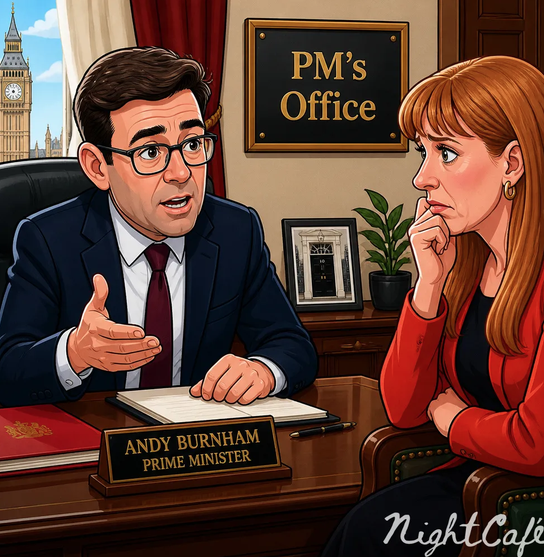
PM You say you're worried about the reaction in Surrey to council reorganisation. How many Labour MPs does Surrey elect? Angela Rayner: None, ever. PM Next item!












John Thorp
November 28, 2025 at 5:59 pm
What will happen to the boroughs’ current property portfolios? There are at least three distinct types, social housing, commercial investments/business units and what I would call local use buildings – small community centres, historic buildings, charity hubs etc.
The Electric Theatre in Guildford comes to mind as its future is currently under consideration. I suspect there is something in place which prevents the obvious answer of transferring sites downwards which are of little interest to the new West Surrey Council but important to the local community.